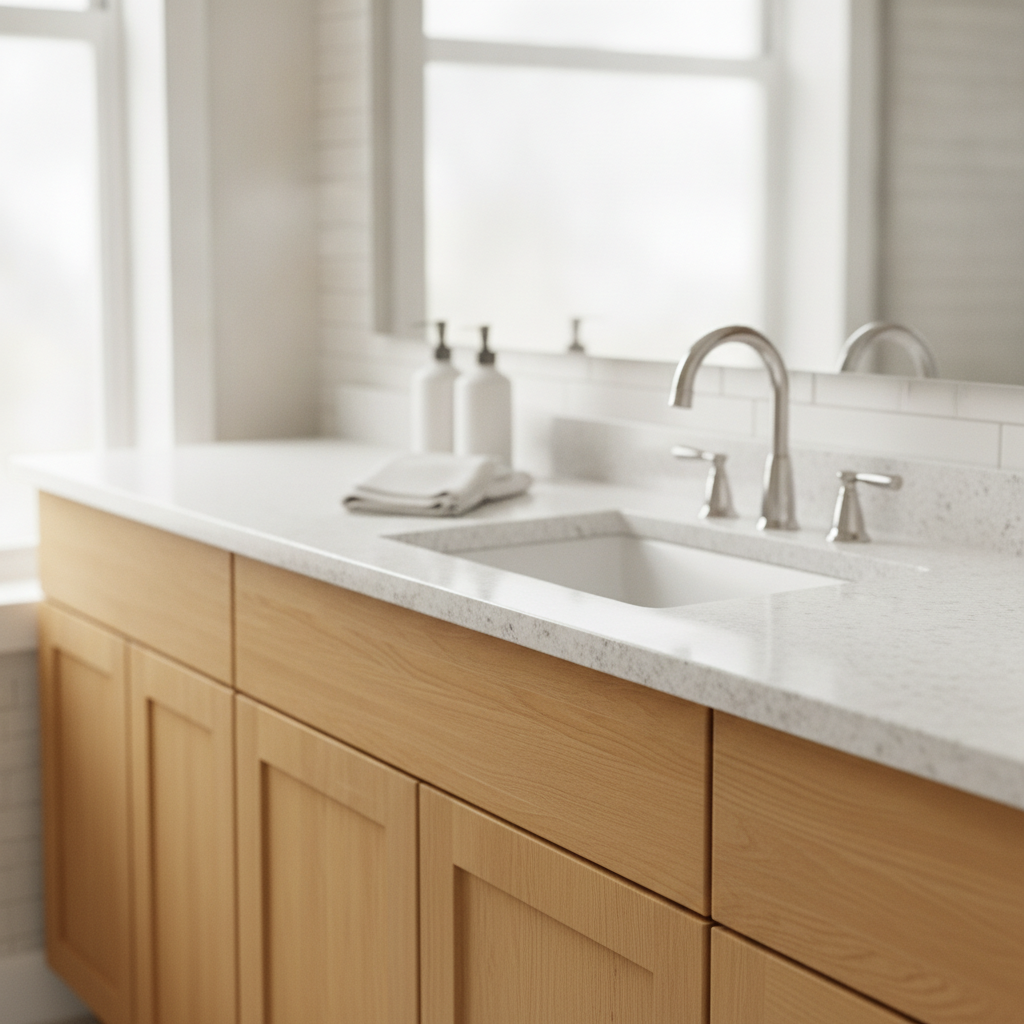
A granite vanity countertop runs $200 to $1,200 fully installed for most bathroom jobs in Central Texas, with a standard 36-inch single-sink top in mid-grade granite landing at $300–$500 all-in. Granite sits in the practical middle ground for bathroom materials: less porous than marble, more heat-resistant than quartz, and available in a wide variety of natural colors. Most vanity tops use 3cm slab thickness and a polished finish for best moisture resistance. Bathroom granite needs sealing every one to three years — far less often than kitchen countertops. For Austin and San Antonio homeowners, a granite vanity upgrade offers strong resale upside: midrange bathroom remodels return 80% ROI as of 2026.
A granite vanity countertop is one of the most affordable ways to bring real natural stone into your home — and most Austin and San Antonio homeowners don't realize it until they get a quote. Bathroom vanity tops are small (typically 4 to 8 square feet of surface), which means the same material that costs thousands in a kitchen runs a few hundred dollars in a bath. This guide covers the six decisions you need to make before contacting a fabricator: cost, thickness, edge profile and color, material comparison, sealing, and templating. Read through once and you'll walk into any consultation knowing exactly what to ask.
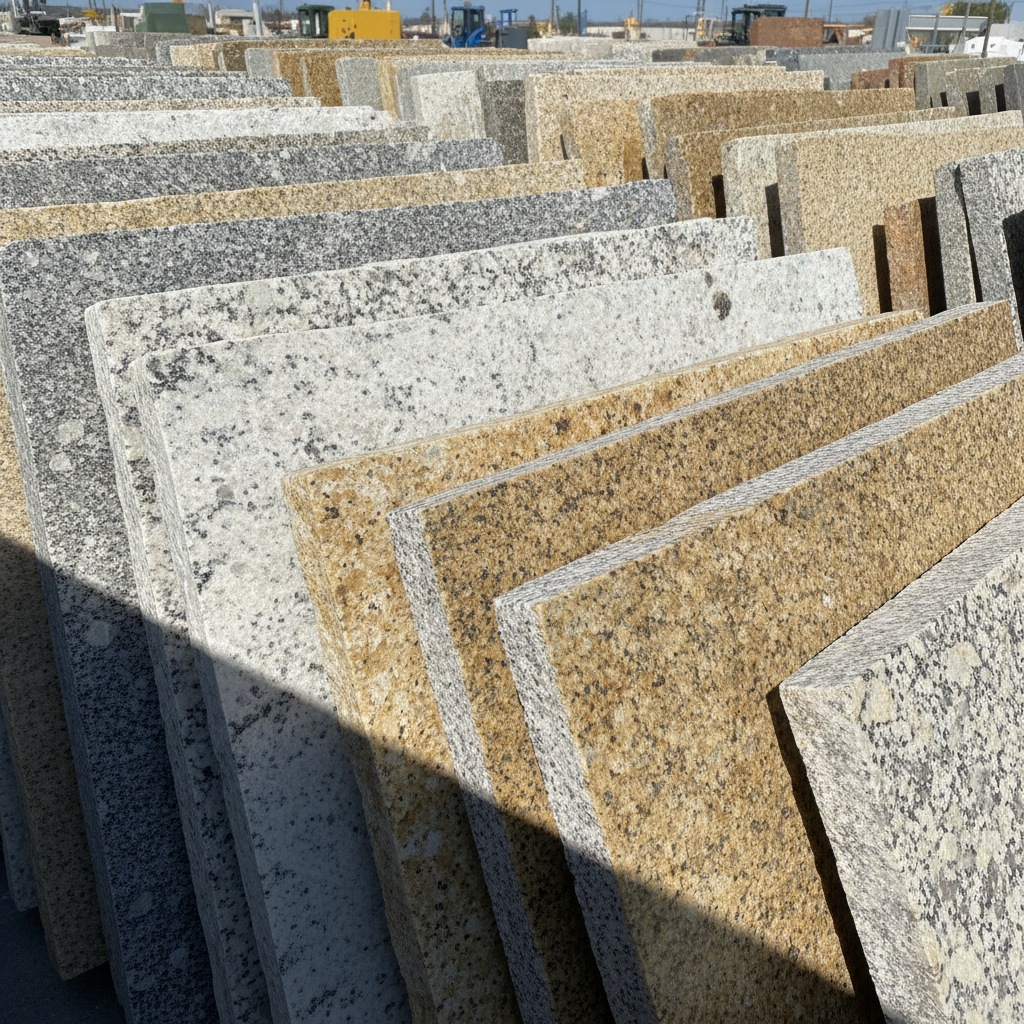
A granite vanity countertop runs $200 to $1,200 fully installed for most standard bathroom jobs in 2026. That range comes down to five variables: slab grade, linear footage, number of sink cutouts, edge profile, and local labor rates. A small 36-inch single-sink vanity in mid-grade granite lands closer to $300–$500 all-in. A double-sink master bath vanity in a premium slab pushes toward the top of that range.
Granite and quartz countertops both run $50 to $120 per square foot installed — granite sits squarely in the mid-range for natural stone. Marble pushes $75 to $200 per square foot installed and demands more maintenance. Most bathroom vanities cover only 4 to 8 square feet of surface, which is exactly why a granite vanity upgrade is so accessible. Labor for a standard single-cutout installation runs $300 to $500. Old vanity top removal and disposal adds $115 to $500 on top of that if you're not handling it yourself.
Ask your fabricator upfront whether removal is included in the quote. At Fox Granite, pricing is transparent with no surprise fees added after the fact. If you want to save money on the front end, pull the old top yourself before the templating appointment — it's one of the few steps in this process a homeowner can handle without special tools.
$10–$20
Measure vanity cabinet width and depth before your consultation so you can get an accurate quote on the spot
Ask your fabricator about remnant pieces. Fabricators cut large slabs for kitchen jobs and often have leftover pieces exactly the right size for a bathroom vanity. Remnant granite sells at significantly discounted prices — same quality stone, lower cost. It's one of the easiest ways to save on a small vanity project without compromising on material.
Granite vanity tops come in two standard thicknesses: 2cm (about 3/4 inch) and 3cm (about 1-1/4 inch). For bathroom vanity countertops, 3cm is the better choice in almost every situation. It's stronger, requires less cabinet support below, and produces fewer visible seams on larger tops — which matters on a double-sink master bath vanity.
2cm slabs cost less per square foot but often require a plywood substrate underneath for proper support. When you factor in that substrate cost, the price difference shrinks. On a small guest bath vanity under 36 inches wide, 2cm works fine. On anything larger, ask your fabricator to spec 3cm and get a comparison quote before deciding.
Thickness also affects how an undermount sink is mounted. A 3cm slab gives the installer more material when securing the sink clips and applying the adhesive seal. If you're adding an undermount sink as part of this project — which produces a cleaner, more contemporary look — 3cm makes the installation more straightforward and more durable long-term. It's also worth noting that 3cm is the current industry standard for kitchen countertops, meaning your fabricator will almost always have a wider selection of stones and color options available in that thickness.
If you fall in love with a particular slab and only 2cm is available, that's worth a conversation with your fabricator about substrate options before ruling it out. It's not a dealbreaker — it just adds a step and a small cost.
The edge profile is the detail most homeowners underestimate, and it has a noticeable visual impact on the finished vanity. A simple eased edge is clean and contemporary, suits most modern bathroom styles, and costs the least. Decorative profiles — bullnose, beveled, half-bullnose, and ogee — add $10 to $30 more per linear foot. On a standard 49-inch vanity top, that edge upgrade runs $120 to $480 total depending on the profile. Choose a profile that matches your bathroom's design language: traditional spaces favor ogee; transitional and modern spaces look best with eased or beveled edges.
For color options, the most popular granite choices for bathroom vanity tops in 2026 are whites with natural veining (Bianco Antico, River White), blacks (Black Pearl, Nero Mist), and warm golds and browns (Titanium, Alpine Valley). Neutrals — whites, grays, warm tones — offer the best resale value because they appeal to the widest range of buyers. Bold or trendy color choices can look great to you personally and narrow your buyer pool later. If resale is part of your thinking, pick a stone that reads as timeless rather than of-the-moment.
Polished granite is the right finish for a wet bathroom environment. A polished finish naturally repels water better than honed or leathered alternatives because fewer tiny pits are exposed on the surface. In a space where water splashes from the sink constantly, polished granite means less moisture penetration between sealings and faster daily cleanup — usually a simple wipe is all it takes. Honed and leathered finishes have their place in design, but for a high-use bathroom vanity, polished is the practical choice.
Free
See actual granite samples against your bathroom's existing cabinetry, tile, and lighting before committing to a slab — color reads very differently under a showroom light than under your bathroom fixture
Bring a photo of your cabinet finish and flooring to your consultation. Warm cabinet tones — honey oak, walnut — pair naturally with warm stones like Titanium or Giallo Ornamental. Cool gray or white cabinets work beautifully with River White or Black Pearl. Your fabricator can pull samples that match your existing palette so you can view the pairing in your actual space before committing.
Granite sits in the practical middle ground for bathroom vanity materials. It's less porous than marble, which means it resists stains from toothpaste, cosmetics, and hair products better than marble does without constant attention. It's more heat-resistant than engineered quartz — important in a bathroom where curling irons and flat irons regularly make contact with countertop surfaces. And it costs less than most premium quartzite while still being a natural stone with unique veining and character.
Quartz is non-porous and never needs sealing, which appeals to low-maintenance buyers. The trade-off: quartz can discolor or warp under direct heat from styling tools, and each slab is engineered to look consistent rather than unique — meaning you lose the one-of-a-kind quality that draws many homeowners to natural materials in the first place. If you want the look and feel of stone that no other bathroom has, granite wins that comparison.
Marble is beautiful — no natural stone rivals it for elegance — but in a daily-use bathroom vanity context, it etches easily from acidic substances like mouthwash, some facial cleansers, and citrus-based products. It also requires sealing every 6 to 12 months to maintain its appearance. For a guest bath that sees light use, marble can work beautifully. For a master bath used every day, granite gives you natural beauty with far more forgiving maintenance and a lower per-square-foot cost than marble.
Granite: $50–$120/sq ft installed, seals every 1–3 years, heat-resistant, stain-resistant with proper sealing. Quartz: $50–$120/sq ft installed, never needs sealing, not safe for direct heat. Marble: $75–$200/sq ft installed, etches from acidic products, needs sealing every 6–12 months. All three are beautiful — the right choice depends on how your bathroom actually gets used day to day.
Granite vanity tops need sealing every one to three years — significantly less often than kitchen countertops, which may need sealing every six to twelve months due to daily cooking exposure. The lighter use in a bathroom means sealant lasts longer. Most homeowners find every two years a reliable cadence for a master bath vanity, and every three years reasonable for a guest bath that sees only occasional use.
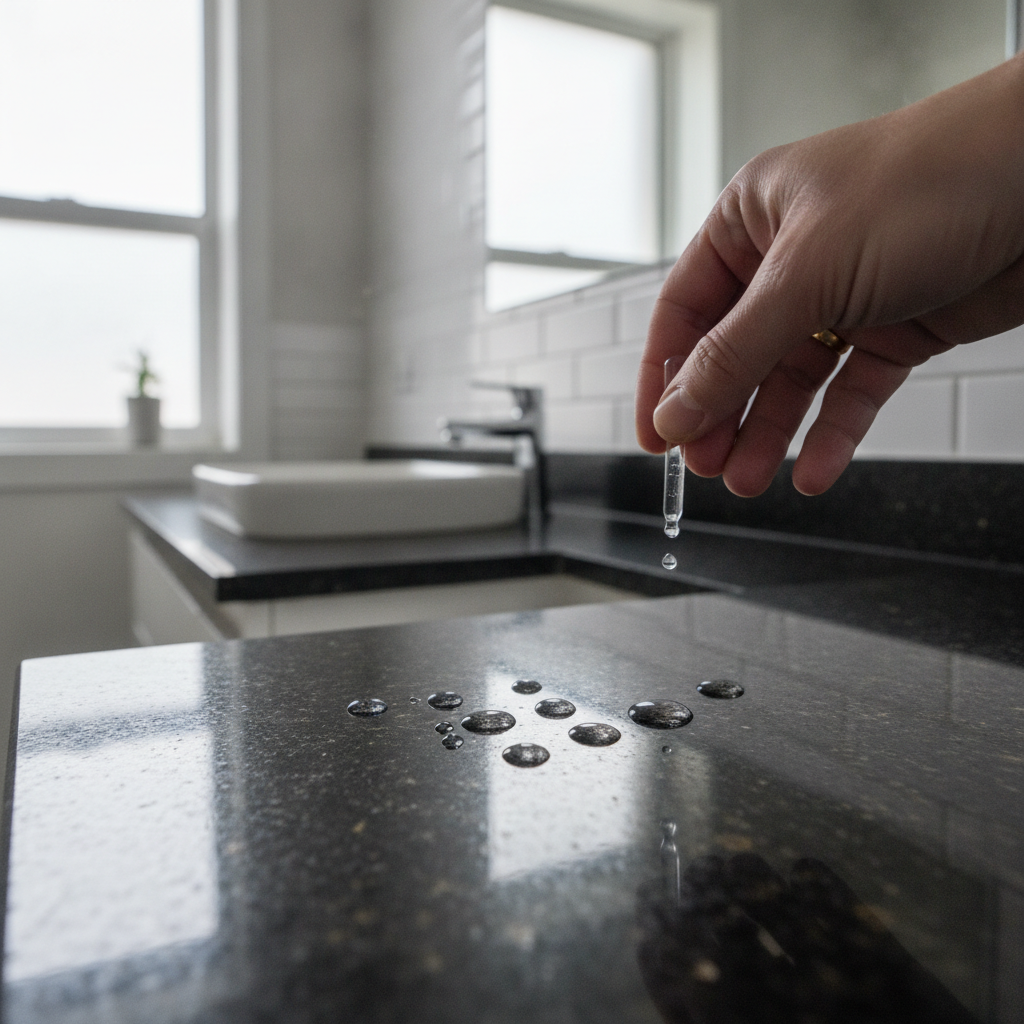
The water bead test tells you when it's time to reseal. Pour a small amount of water on the granite surface. If it beads up, the seal is still working. If the water soaks in and darkens the stone within a few minutes, it's time. The DIY resealing process takes about 30 minutes with a stone-specific penetrating sealer — apply, let it absorb, wipe the excess, and let it cure. Products like Tenax Hydrex or StoneTech BulletProof are designed specifically for this use and cost $20 to $40 per bottle.
Your daily cleaning routine matters as much as your sealing schedule. Warm water and mild dish soap is all you need for routine upkeep. Bleach, vinegar, ammonia-based sprays, and generic multi-surface cleaners all degrade granite sealant over time — avoid them entirely on granite countertops. Prompt cleanup of spills, especially acidic or oil-based products like some makeup removers or nail polish, prevents staining between seal cycles. Simple habits extend the time between resealings and keep your granite looking sharp for years.
$20–$40 per bottle
A penetrating sealer soaks into the granite's pores rather than sitting on the surface, giving longer-lasting protection than topical sealers in a wet bathroom environment
Fox Granite professionally seals every vanity top as part of the installation. Your first DIY reseal typically isn't needed for one to two years after install. When you're ready, we're happy to walk you through the process or handle it for you as a service.
A midrange bathroom remodel returns 80% ROI as of 2026 — a $26,138 average investment adds roughly $20,910 in resale value nationally. The vanity is often the focal point that buyers and appraisers notice first when they view a bathroom. A granite vanity countertop paired with an updated sink and faucet is one of the highest-impact, lowest-cost pieces of that upgrade. Spending $400–$800 on a granite vanity top to make the whole bathroom feel finished is a strong move whether you're staying for another decade or preparing to list.
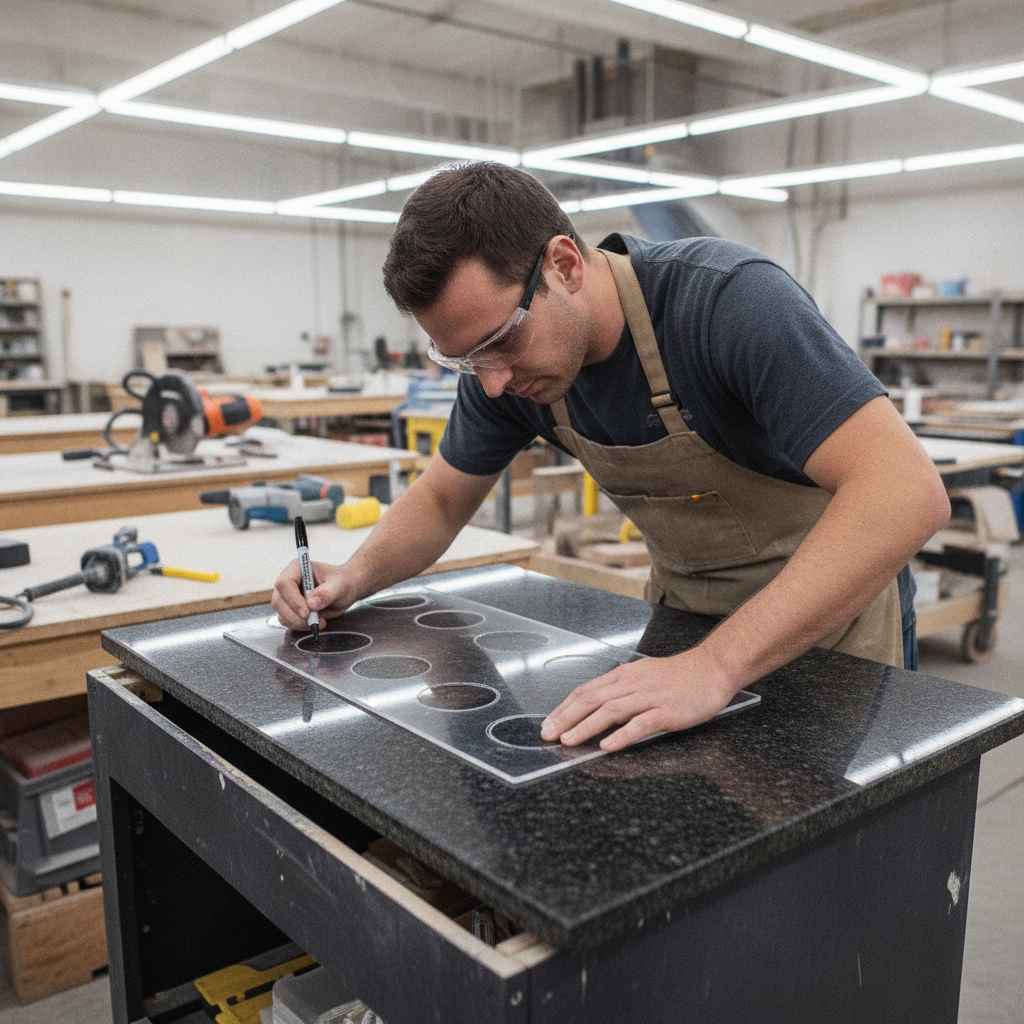
Once you've chosen your slab and edge profile, your fabricator schedules a templating appointment. This is where precision matters most. Fox Granite uses an overlay template method to capture the exact shape of your vanity cabinet, faucet hole positions, and sink cutout dimensions. That template goes directly into our in-house stone-cutting software, which drives our fabrication equipment. The result: a top designed to fit the first time, with faucet holes and the undermount sink cutout exactly where they need to be.
Standard installation on a same-size vanity replacement takes four to five hours. Smaller single-sink vanities often finish in two hours. From your templating appointment to your installation date, the typical turnaround at Fox Granite is about one week. No subcontractors, no handoffs — our own team templates, fabricates, and installs your granite vanity top from start to finish. That continuity is one of the clearest benefits of working with an in-house fabricator.
If you're remodeling for a specific date — a home listing, a family visit, a seasonal deadline — book your free consultation early. The one-week window from template to install assumes the slab is already selected. Slab selection at our New Braunfels showroom is fastest with a scheduled appointment so we can pull samples that match your bathroom's existing finishes and color palette before you arrive.
A granite vanity top cut without a precise template is the most common source of post-installation problems: gaps at the wall, faucet holes in the wrong position, or a sink that doesn't sit flush. Custom granite countertops cannot be accurately cut from measurements alone — the template captures the real-world shape of your cabinet, including any walls that aren't perfectly square. At Fox Granite, we never cut from measurements. Every job starts with an in-person template so your slab fits your space exactly, not just approximately.
When the install is done and the seal is fresh, a granite bathroom vanity countertop looks like it belongs — clean, solid, and finished in a way that no cultured marble or prefab laminate top replicates. For homeowners in Austin, San Antonio, New Braunfels, and throughout Central Texas, Fox Granite offers free in-home consultations with real granite samples so you can see exactly how each stone looks in your bathroom's actual light. In-house fabrication means one team handles your project from template to installation, with transparent pricing and no surprise fees. Call (512) 653-5541 or contact us online to get your free estimate and explore your options — most consultations take less time than you'd expect, and you'll leave with a clear quote and a plan.
Ready to get started? Contact Fox Granite today.


BY APPOINTMENT ONLY
1379 Wald Road
New Braunfels, TX 78132
Austin, San Antonio, Cedar Park, Kyle, New Braunfels, Del Valle, Elgin, Lago Vista, Shady Hollow, Onion Creek, Buda, San Marcos, Lockhart, Temple, Wimberley, Dripping Springs, Bee Cave, Lakeway, Leander, Anderson Mill, Jollyville, Spicewood Springs, Round Rock, Georgetown, Pflugerville, Manor, Taylor, Manchaca, Mountain City, Hutto, West Lake Hills, Bastrop, Liberty Hill, Driftwood, Sun City, Steiner Ranch.