
Vetting granite countertop fabricators comes down to 10 questions covering pricing transparency, license and insurance, crew accountability, warranty terms, and references. In Central Texas as of 2026, installed granite countertops run $40–$55 per sq ft for standard grades — a typical 40–50 sq ft kitchen lands at $2,000–$4,500 all-in from a shop with transparent pricing. Quotes that come in far below that range almost always exclude templating ($50–$150), edge profile upgrades ($15–$30 per linear foot), cutouts ($50–$150 each), and removal ($100–$300). Ask every fabricator to itemize those line items, produce an ACORD 25 insurance certificate, confirm in-house installation services, and put warranty terms in writing before you commit to a deposit.
Granite countertop fabricators are not all quoting the same scope. A price difference of 20–30% between shops for identical material and layout is common in Central Texas — and the cheaper quote often excludes templating, cutouts, edge profile upgrades, and old countertop removal. These 10 steps give you a concrete checklist to work through with every fabricator before you hand over a deposit. They cover pricing transparency, license and insurance verification, installation accountability, warranty terms, slab quality, and references. Good fabricators — the ones who have been proud to stand behind their work for years — will answer every question without hesitation. Work through all 10, and you'll know within one conversation whether you're talking to a professional team or a liability waiting to happen. Bring this list with you to every showroom visit or phone call with a fabricator, and you'll be ready to make a choice that meets your individual needs and budget with confidence.
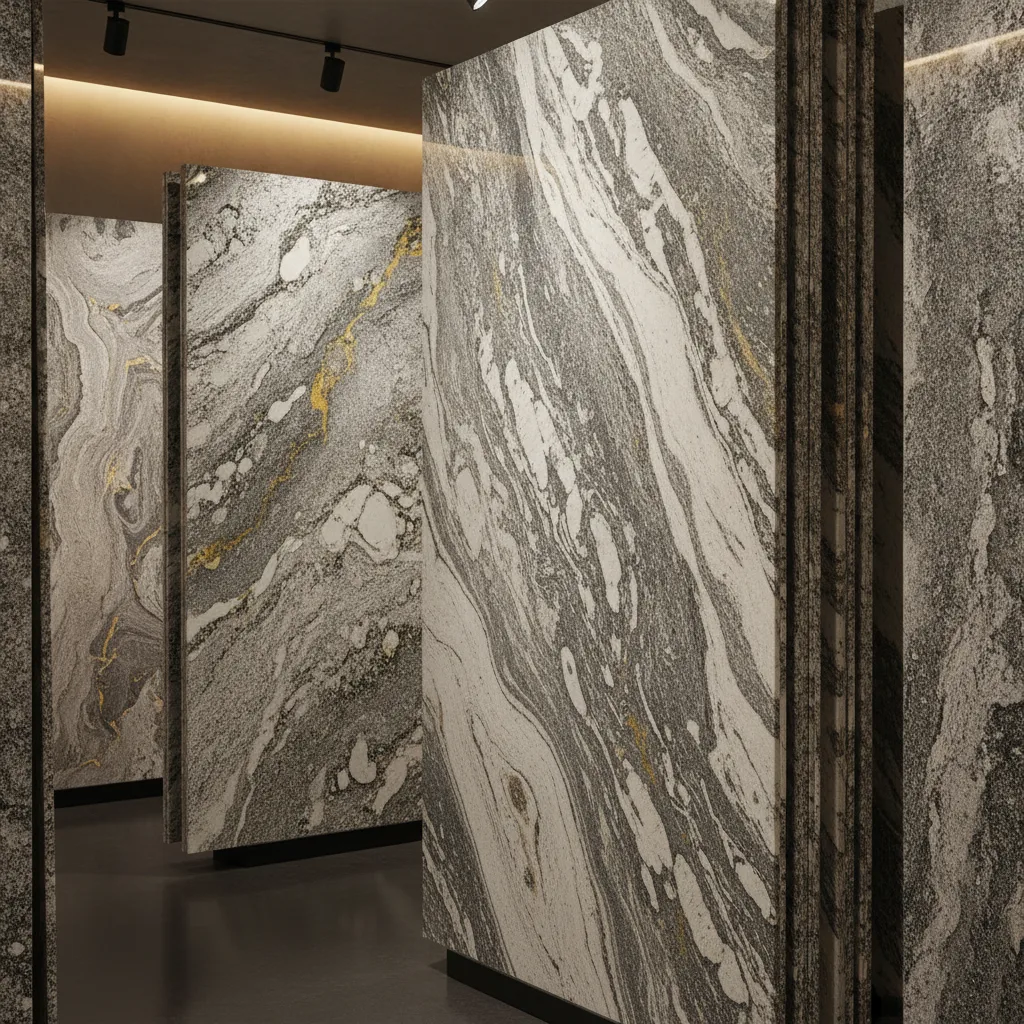
A granite countertop quote that looks cheap often excludes costs you will definitely pay. Template visits run $50–$150, edge profile upgrades add $15–$30 per linear foot over a standard eased edge, sink and cooktop cutouts cost $50–$150 each, and old countertop removal adds $100–$300 depending on material and square footage. If the quote does not list these items separately, ask the fabricator to itemize them — check every line before you go any further. A quick review of the quoted items at this stage will save you from a budget shock later. Good fabricators are happy to provide a full breakdown; do not hesitate to ask. It is also worth asking whether the shop offers any products or remnant slabs that might work for a smaller area like a bathroom vanity at a lower price point.
In Central Texas, installed granite countertops land at $40–$55 per sq ft for Level 1 or Level 2 slabs — a typical 40–50 sq ft kitchen runs $2,000–$4,500 all-in at a shop with transparent, all-in pricing. Quotes that come in well below that range almost always exclude the add-ons above. Get every line item in writing before signing anything, and compare competing quotes on the same itemized basis. When you find quotes that meet your needs and your budget, you are ready to ask the questions that follow. Experts in this area will help you learn the difference between a complete estimate and a low-ball number designed to win the job and surprise you later.
As of 2026, U.S. tariff actions have pushed material costs on granite slabs imported from Brazil, India, and China up by 5–15%. A quote from early 2025 may no longer reflect current slab prices. Confirm the estimate accounts for current material costs, and ask whether the price is locked at signing or subject to change before fabrication begins. An honest fabricator will give you an exact answer on price lock — not a vague one. If you start this conversation and feel something is being left ambiguous, ask again until you get a clear, written commitment.
Any fabricator who quotes a single total number and won't break it into line items is hiding something. Transparent pricing means you can see exactly what you're paying for — material, fabrication, templating, cutouts, edge profiles, and installation services — before you commit.
General liability insurance of at least $1 million per occurrence is the industry standard for countertop fabricators. Ask for an ACORD 25 certificate of insurance naming you as the certificate holder, then call the insurer directly to confirm the policy is active. Fabricators who refuse to provide a certificate are likely uninsured — and if their crew damages your cabinets, plumbing, or floors during installation, you're paying for it out of pocket. Don't hesitate to make this request; every reputable shop will provide the certificate without complaint. Knowledgeable, experienced companies are proud of their coverage and glad to share it.
Texas contractor license verification runs through the TDLR (Texas Department of Licensing and Regulation) at tdlr.texas.gov. The check takes under five minutes. Confirm the license is active, not expired or suspended, and that the license class covers countertop or finish work. An unlicensed company isn't automatically a bad stone fabricator, but it is a gap in accountability you should weigh carefully before committing. You can also check the BBB listing and read through Yelp reviews while you're doing your research — look for patterns across multiple reviews, not just individual star ratings. Lots of consistent feedback about the same issue is a signal worth taking seriously. Called-out patterns in Yelp reviews are data; don't ignore them.
These two checks — insurance and license — take less than 10 minutes combined. Skipping them to save time is a decision that can cost thousands if something goes wrong on installation day. Every reputable granite fabricator will hand over that certificate without hesitation. The experts who work at established shops are proud of their credentials and happy to share them. Once these boxes are checked, you can move forward with confidence and peace of mind.
Free
Verify any Texas contractor's license status, class, and expiration in under five minutes.
Free (request from fabricator)
Confirms the fabricator carries active general liability coverage of at least $1 million per occurrence.
When subcontractors install granite countertops, they are typically paid a flat fee per job — which incentivizes speed over precision. If a seam lands wrong, an edge chips during install, or a cutout is off-center, the retailer may defer to the installer and the installer may point back to the fabricator. You end up caught between two companies, and customer satisfaction takes a back seat to the argument over who caused the defect. People who have been through this experience consistently say the same word: frustrating. That kind of situation is exactly what these steps are designed to help you avoid.
A full-service company that handles fabrication and installation in-house keeps one professional team responsible from templating through final polish. That single point of accountability matters enormously for customer satisfaction — especially if a problem surfaces three months after the install. In-house installers also know exactly how the slab was fabricated, which makes fitting and seam placement more precise from the start. When the same staff members who cut the stone also install it, the results are consistently better. Clients who choose this model are regularly pleased with the outcome and quick to recommend the shop to others.
Ask specifically: 'Are the people who fabricate my countertop the same company sending the installers?' A yes is the answer you want. If the fabricator uses subcontractors, ask how warranty claims are handled when the fabricator and the installer disagree on who caused a defect — and watch carefully for a vague answer. A knowledgeable, experienced team will have a clear process for this scenario and won't leave you to figure it out alone. Thanks to their in-house model, the best fabricators can assist you through any issue without pointing fingers.
Vague answers like 'we work with trusted partners' often mean subcontractors. A fabricator with in-house installation services will say so directly and be able to name the crew lead or describe the installation process in specific detail.
The standard workmanship warranty for granite fabrication is one year, covering defects in fabrication quality: seam consistency, edge profile accuracy, cutout placement, and surface finish. For natural granite and quartzite countertops, no quarry manufacturer warranty exists — the fabricator's workmanship warranty is the only protection you have. This is different from engineered quartz countertops, where brands like Cambria offer a manufacturer pass-through warranty on the slab material itself. Make sure you understand exactly what is and isn't covered before you sign. Customers who learn this after the fact are rarely pleased.
Even with a quartz manufacturer warranty, read the fine print carefully. A manufacturer replacing a defective slab does not automatically cover labor, tear-out, plumbing disconnect, or reinstallation. Those costs fall back on you unless the fabricator's own warranty explicitly covers them. Ask the fabricator to walk you through a hypothetical: 'If a seam opens up in six months, what happens, and who pays for what?' Their answer will tell you a lot about how they handle follow-through when things go wrong. A responsive company will give you a clear, prompt answer — not a vague one. Good fabricators are ready to provide that answer without making you feel like you're asking too much.
Some shops offer longer than one year on workmanship — that's worth noting as a real differentiator. Any fabricator who can't describe their warranty terms in plain language, or who says 'we stand behind our work' without specifics, hasn't thought it through. Get the warranty terms in writing as part of the contract before your deposit clears. A good warranty is the fabricator's word in writing — and it should be easy to find and easy to understand. Don't leave the office without it.
Accurate templating is where a countertop project succeeds or fails. A fabricator using digital laser templating produces more accurate measurements than physical luan-board templates, particularly for irregular shapes, out-of-square walls, and curved layouts common in older Central Texas homes. Ask whether the template data feeds directly into CNC cutting software — shops running a tight digital workflow have fewer fitment problems at installation. Exact measurements are non-negotiable when you're working with natural stone. The best fabricators use precise digital tools to ensure the finished counters fit perfectly the first time and meet your individual expectations for quality.
Find out who actually takes the template. Granite fabricators who handle fabrication and installation in-house send a trained technician who communicates directly with the cutting team. If templating is handled by a third party or a salesperson who then hands off measurements to a separate team, errors are more likely to slip through and create problems on install day. The person taking the measurements should be part of the same crew that will be making the cut. That continuity is a key factor in consistent, high-quality results — and experts who have been doing this for years will tell you the same thing.
Also ask what happens if the template reveals a problem — an out-of-level cabinet run, for example, or an unexpected corner that requires a specialty cut. A good fabricator flags these before cutting stone. You want that conversation to happen before your slab is on the CNC table, not after the granite countertop is already fabricated to a bad dimension. A prompt, clear answer here is a sign of an organized, experienced operation. If you don't get one, don't wait — ask again until you do.
Some fabricators include templating in their all-in price; others charge $50–$150 as a separate line item. Confirm which applies to your quote during Question 1 so there's no surprise on the day of the template visit.
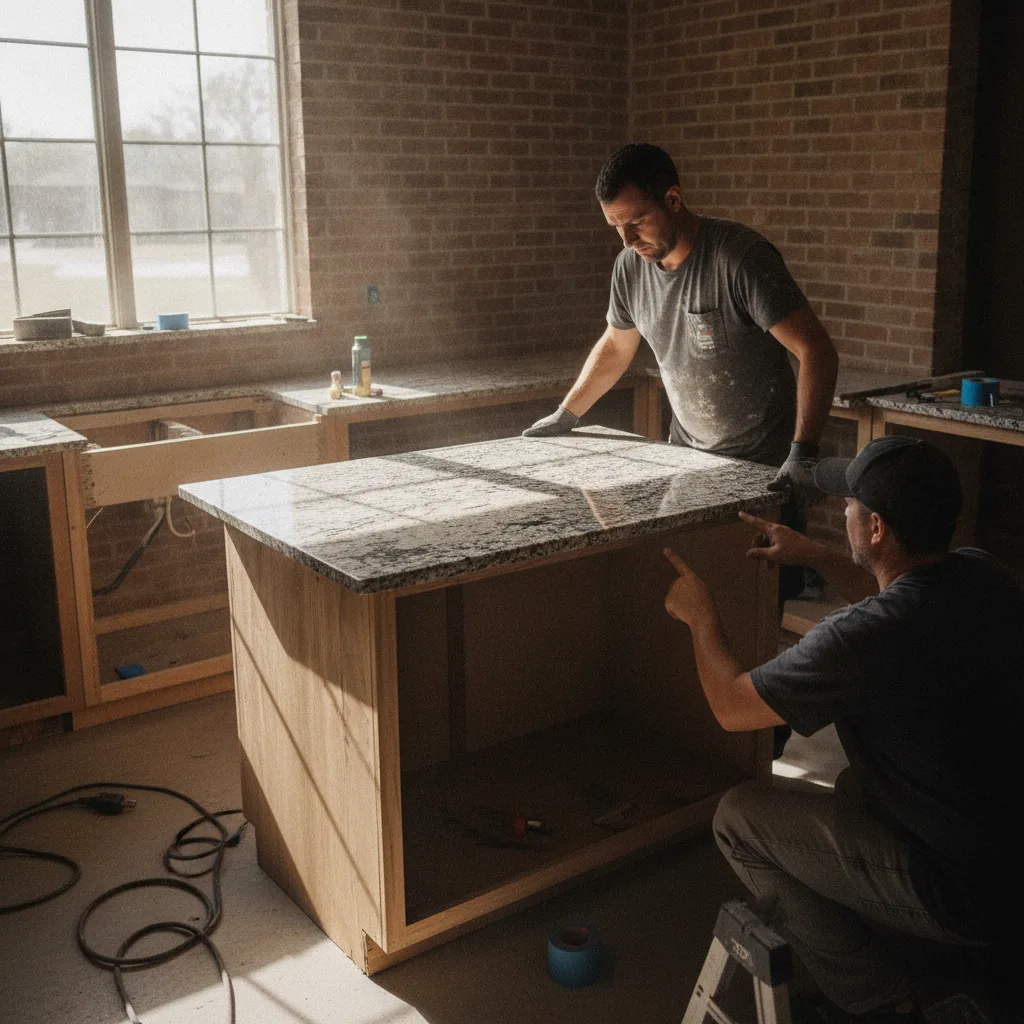
Natural stone countertops — granite, quartzite, soapstone, and marble — vary significantly from slab to slab in color, veining, shades, and quality. Lower-quality slabs can have fissures, pits, or resin patches that affect both durability and long-term surface finish. Some granite fabricators won't disclose these issues unless you ask directly. A visit to the showroom to see and touch the actual slab before fabrication begins is the best way to confirm you're getting the finest materials for your project — and to ensure the color and style match your vision for the space. Learn what you're getting before it's cut. People who love their finished countertops are almost always the ones who made their choice in person, seeing the exact color and character of the stone before committing.
For heavily veined natural stone, seam placement has a significant impact on the finished appearance. Ask for a proposed seam layout before fabrication starts — not on installation day. You should understand where seams will fall relative to your sink, cooktop, and high-visibility areas like a kitchen island. Reputable granite fabricators will show you a digital or paper layout and explain the reasoning behind each seam location. Choosing the right slab and seam layout together gives you the best results. This is especially important when you're working with exotic or highly patterned stone that runs $80–$120 per sq ft.
If the shop doesn't have a showroom or can't let you see your slab in person, that's a gap worth noting. Reviewing a small sample chip is not the same as approving the full stone slab — the variety in natural stone means two pieces from the same quarry can look completely different in color and character. A professional stone fabricator welcomes that visit because it protects both sides and ensures the finished counters match your individual preferences and your vision for the space. Don't hesitate to ask for that viewing appointment; the best shops offer it as a standard part of the process.
The typical fabrication lead time in most markets runs 3–5 weeks from deposit to installation as of 2026. A well-staffed shop in a slower season can turn a residential project in 2–3 weeks. If you have a hard deadline — a home sale closing, a renovation milestone, or a holiday gathering — confirm the timeline in writing before signing, and ask whether that date is guaranteed or estimated. Don't wait until the week before your deadline to start following up. Get a schedule commitment from the start so you can plan the rest of your renovation around it.
Ask what factors could push that timeline out. Specialty or exotic slabs may require a longer lead time to source. If the shop is running high volume, a 5-week estimate can drift to 7 or 8 weeks without proactive communication. Ask how the fabricator handles delays and whether they'll contact you before the original deadline passes — or whether you'll be the one chasing them. A quick, confident answer about their scheduling process is a good sign. Silence or vagueness is not. The best shops are ready to give you an exact timeline and check in as it approaches.
Also ask about the sequence of events: when does templating happen relative to cabinet installation, when is the deposit due, and when is final payment expected? The standard deposit structure is 50% at contract signing with the remaining 50% due at installation or completion. Some shops handling specialty or custom slabs ask for 60–70% upfront. Requiring 100% payment before templating or installation is a red flag — full stop. Make sure you understand every step of the payment schedule before you commit.
Natural Stone Institute guidelines state that unsupported stone countertop overhangs should not exceed one-third of the total countertop depth. Overhangs beyond approximately 6–8 inches typically require support corbels or brackets. Exceeding this without proper support creates a cracking risk — and that crack often appears months after installation, well after the crew has left your home and the warranty conversation has gone cold. Make sure the fabricator brings this up proactively, not just in response to your question. Knowledgeable experts will mention it without being asked. Good fabricators are proud to offer that kind of guidance before you have to ask.
If your kitchen design includes a breakfast bar, peninsula seating area, or island with a seating overhang, ask the fabricator exactly how much unsupported overhang the solid surface stone countertop can handle at your chosen thickness. A 3 cm granite slab behaves differently than 2 cm material, and the fabricator should give you a specific number — not 'it depends' or 'we've done longer and it was fine.' Craftsmanship means knowing the limits of the material and being ready to provide clear guidance based on years of experience in the area.
Ask whether corbels or brackets are included in the quote if your design requires them. This is another common add-on cost that doesn't always appear in a first estimate. If your kitchen or bathroom design calls for an overhang, get the support solution and its cost on paper before you sign. Clients who skip this step are often the ones who feel surprised when the final invoice is higher than expected. Choose to have that conversation early — not after the job is already underway.
Google reviews and Yelp ratings tell part of the story, but references from recent jobs tell you how a company performs right now — with its current crew, current pricing, and current lead times. Ask for two or three references from projects completed in the last 90 days. A fabricator with nothing but reviews from two years ago may have had significant crew or ownership changes since then. Lots of positive reviews from a single time period followed by a gap is worth asking about directly. The most useful references are people who can speak to the full experience from start to finish.
When you call a reference, ask three specific questions: Did the installation team show up on the scheduled day? Were there any fitment problems at installation, and how were they handled? Would you hire this company again for new countertops? Those three questions surface more useful information than 'were you satisfied overall?' and force a concrete answer rather than a general impression. You want to hear from people who felt well cared for throughout the process — not just at the start. Find out whether the staff was responsive and friendly when issues came up. Experts in customer experience say this pattern of follow-through is one of the clearest indicators of a shop's long-term reliability.
Also check the BBB listing and study how the business responds to negative reviews online. A fabricator who addresses complaints professionally and resolves problems publicly is a better indicator of long-term customer satisfaction than one who has only five-star reviews with no detail. Look at Yelp reviews carefully — the most helpful ones describe specific steps of the process, call out how the staff handled problems, and mention whether the team was responsive and friendly throughout. Granite fabricators who argue with reviewers are showing you exactly how they'll treat you if something goes wrong on your project. Called-out patterns in reviews are data; don't ignore them. Pick the shop that handles criticism with professionalism and transparency.
Get at least three quotes for any countertop project over $1,500. Price differences of 20–30% between shops for the same material and scope are common — in Central Texas, two quotes for the same granite slab can differ by $30–$50 per sq ft before any upgrades are added. The goal isn't to find the cheapest option; it's to find competitive prices from a company that can explain every line item, meet your expectations, and stand behind the work with a professional team dedicated to delivering quality and craftsmanship. Pick the shop that offers the clearest answers and the most complete scope — not just the lowest number. Experts in the area will help you learn the difference and ensure you're making an informed choice.
Once you've compared quotes on an apples-to-apples basis — same material grade, same edge profile, same cutouts, same removal scope — ask your preferred fabricator to put the full scope in a written contract. The contract should list: slab material and grade, edge profile selected, number and location of cutouts, templating and installation services dates, payment schedule, and warranty terms. If anything is missing, ask for it in writing before you sign. Don't leave the office without a document that covers all of these items. Transparency at this stage reflects how the company operates through the entire project. Check every line and ensure nothing is left ambiguous.
Granite is heat resistant, durable, resistant to stains when properly sealed, and able to handle moisture well — making it one of the most amazing natural stone surfaces for kitchens and bathrooms. It's an incredible choice that can elevate the look and feel of any space for decades. That durability only pays off when the fabrication and installation are done properly by professionals committed to craftsmanship. A fabricator who says 'we'll figure out the details later' after you've signed is a fabricator who has already moved on to the next sale. The best results come from shops where the team is fully committed before your deposit clears — not after. Don't wait to get it in writing; your home deserves that level of care.
Run your final candidate through a quick checklist: itemized written quote, active TDLR license, $1M liability insurance, in-house installation services, clear warranty terms in writing, slab viewing available at their showroom, and references from the last 90 days. A fabricator who checks all seven is worth trusting with your kitchen or bathroom.
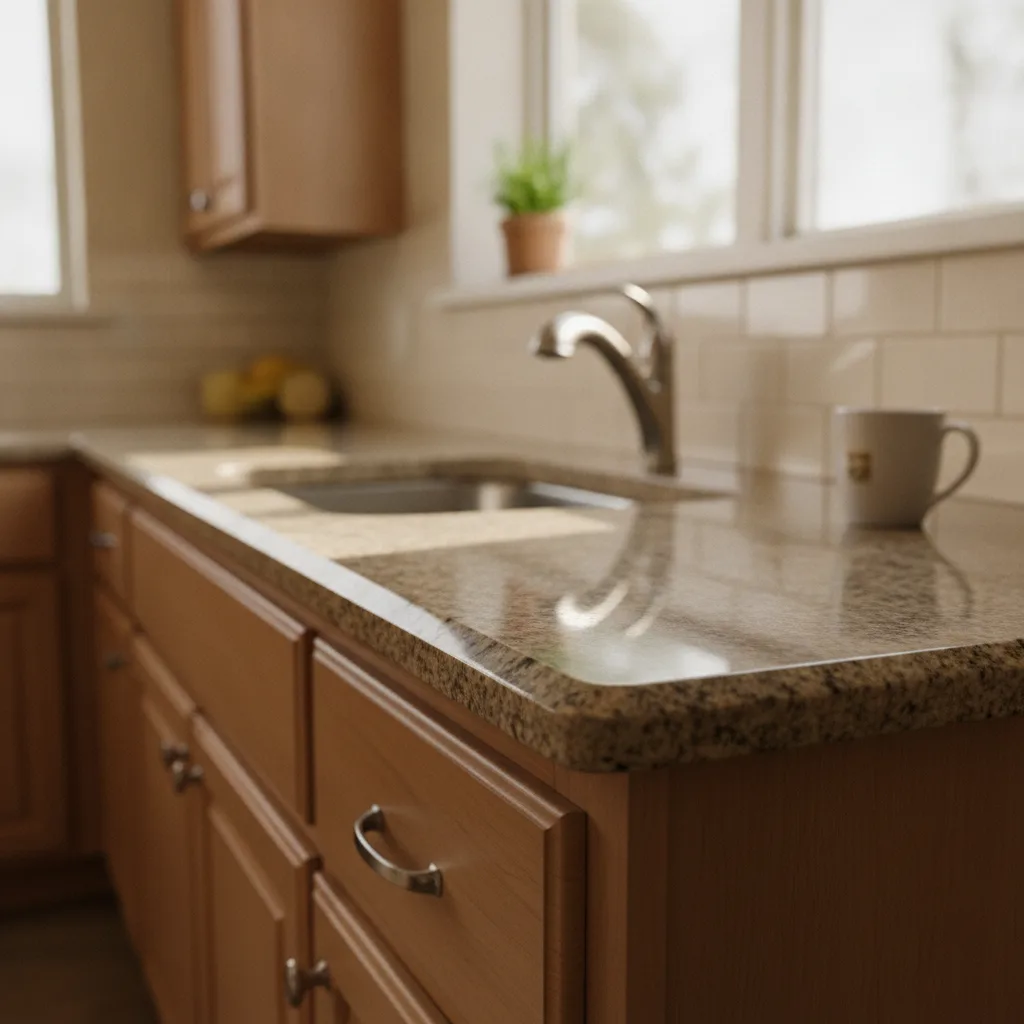
These two steps take less than 10 minutes and protect you against the most costly scenarios: an uninsured crew that damages your home, or an unlicensed shop that disappears after collecting your deposit. Request an ACORD 25 certificate of insurance ($1 million per occurrence minimum), verify it's active by calling the insurer directly, and confirm the TDLR license is current at tdlr.texas.gov. No reputable fabricator will object to either request. If they do, that's your answer.
Ready to get started? Contact Fox Granite today.


BY APPOINTMENT ONLY
1379 Wald Road
New Braunfels, TX 78132
Austin, San Antonio, Cedar Park, Kyle, New Braunfels, Del Valle, Elgin, Lago Vista, Shady Hollow, Onion Creek, Buda, San Marcos, Lockhart, Temple, Wimberley, Dripping Springs, Bee Cave, Lakeway, Leander, Anderson Mill, Jollyville, Spicewood Springs, Round Rock, Georgetown, Pflugerville, Manor, Taylor, Manchaca, Mountain City, Hutto, West Lake Hills, Bastrop, Liberty Hill, Driftwood, Sun City, Steiner Ranch.