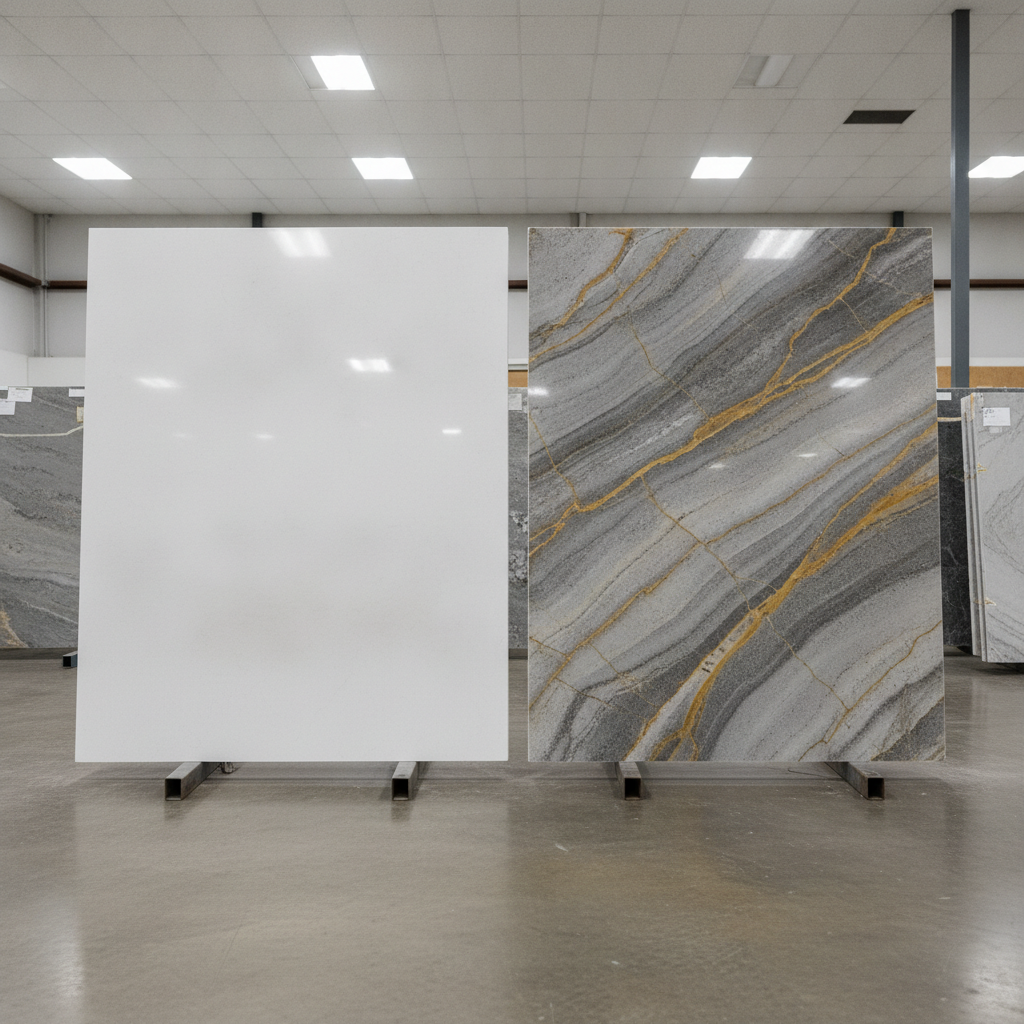
Quartz is an engineered stone made in a factory from 90-95% crushed natural quartz crystals bound with polymer resins. Quartzite is a 100% natural metamorphic rock formed when sandstone undergoes intense heat and pressure deep in the earth over millions of years. Quartz never needs sealing and costs $50-$200 per square foot installed. Quartzite rates 7-8 on the Mohs hardness scale, handles heat better, works outdoors, and costs $65-$200 per square foot installed but requires sealing every 6-12 months. As of 2026, both rank as the top two most popular countertop materials among design professionals surveyed by the NKBA.
Quartz vs quartzite countertops is one of the most common points of confusion in a kitchen remodel. The names sound nearly identical, but these are not the same material. Quartz is engineered in a factory by combining natural quartz crystals with polymer resins. Quartzite is a natural stone formed when sandstone undergoes intense heat and pressure deep in the earth over millions of years. One never needs sealing. The other rates harder than granite on the Mohs hardness scale. Both rank among the most popular countertop materials heading into 2026, and both are available at Fox Granite with in-house fabrication across Central Texas.
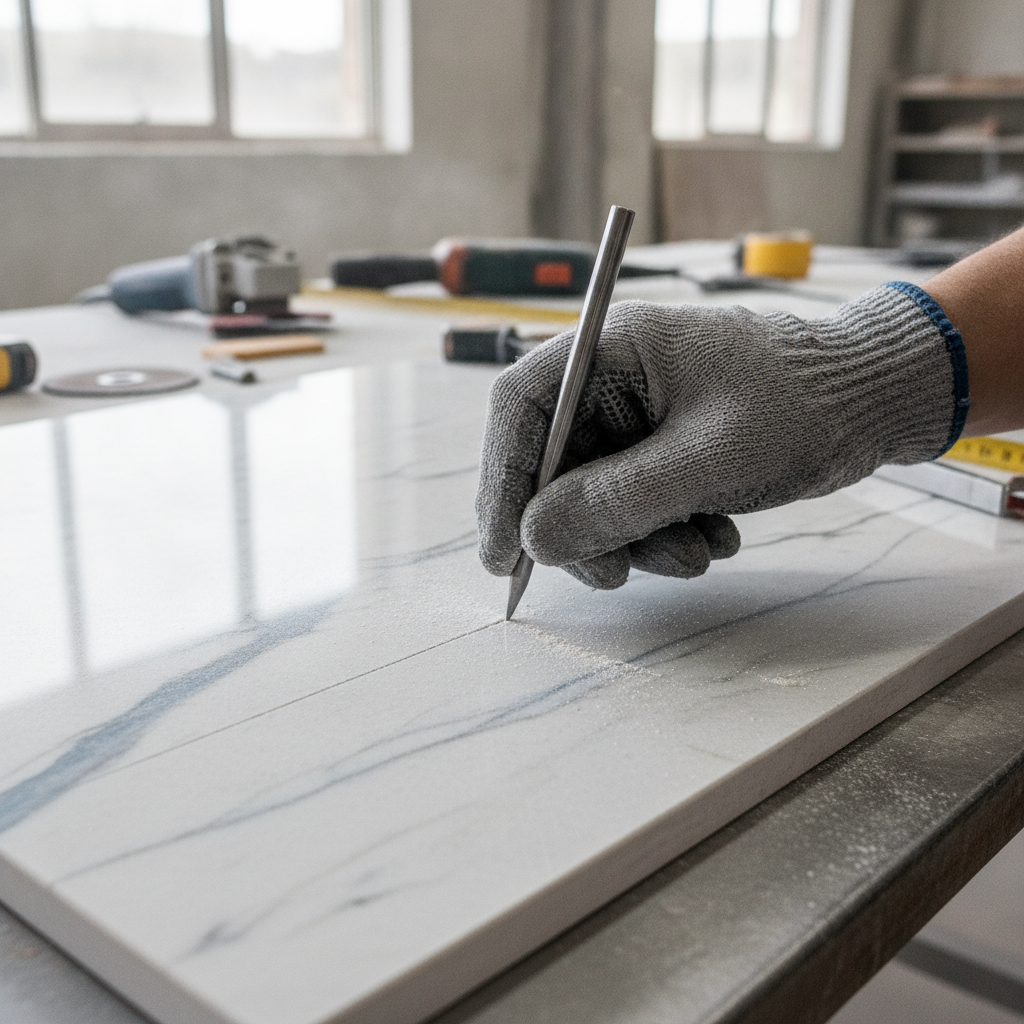
Engineered surfaces built for low maintenance and consistent design
Premium natural stone with one-of-a-kind beauty and superior heat resistance
Quartz is an engineered stone, not a quarried one. Manufacturers combine 90-95% crushed natural quartz crystals with 5-10% polymer resins and pigments under high pressure to produce slabs with specific colors, patterns, and performance properties. The resins and pigments are what give engineered quartz its uniform appearance and what make it a non-porous surface that never requires sealing.
Because the manufacturing process is controlled start to finish, quartz countertops deliver consistent design across every slab that comes off the production line. Two slabs from the same batch will look nearly identical, which is a real advantage for large kitchens with multiple countertop runs or an island where matching the veining matters. That level of repeatability is something natural stone simply cannot offer.
The engineered nature of quartz does create one hard limitation: the polymer resin content tops out at a heat resistance of roughly 150-300 degrees Fahrenheit. Above that threshold, the resin binders begin to break down, causing yellowing, scorch marks, or cracking that is permanent and not covered under warranty. Trivets are not optional on quartz. They are required. Similarly, the UV instability of the resin means quartz should never be installed outdoors, which is a firm limitation for anyone planning an outdoor kitchen.
Stain resistance is where engineered quartz genuinely excels as a countertop material. The nonporous surface means liquids cannot absorb into the slab. Wine spills, coffee rings, oils, and even acidic liquids like vinegar sit on the surface rather than seeping in. Wipe down quartz countertops with mild soap and warm water and you are done. Annual maintenance cost runs under $20 in basic cleaning supplies. That is the honest tradeoff: no sealing schedule, but always use trivets and avoid abrasive cleaners.
Quartzite is a natural stone formed deep in the earth when sandstone undergoes intense heat and pressure over millions of years, a metamorphic process that converts the original sandstone into one of the hardest natural stone surfaces available for countertops. Most quartzite countertops contain more than 90% quartz minerals, with some slabs approaching 99% purity. The result is a material that is harder than granite and significantly tougher than engineered stone.
At 7-8 on the Mohs hardness scale, natural quartzite is scratch-resistant to a degree that makes most quartzite countertops highly resistant to daily knife use and abrasion. Granite countertops rate 6-7 on the same scale, and engineered quartz rates only 5-7 depending on resin content. That hardness advantage is what makes quartzite a standout choice for high-traffic kitchens where durability is the first priority.
Natural quartzite also carries stronger heat resistance than any engineered surface because there are no polymer resins in the composition to break down under high temperatures. A hot pan set directly on quartzite will not produce the scorch or discoloration risk that same pan would create on quartz. This makes quartzite a practical choice for serious home cooks and for outdoor kitchens where a hot cookware piece or proximity to a grill is routine.
The tradeoff is that quartzite is a porous material. Without proper sealing, liquids including wine, oils, and acidic liquids can penetrate the surface and cause permanent staining. Busy kitchens require resealing every 6-12 months to maintain that protection. The standard water-drop test tells you when the sealer has worn down: if water beads, you are covered; if it soaks in, reseal. Many quartzite slabs also resemble marble in appearance, with white or gray backgrounds and dramatic veining that engineered surfaces can only attempt to mimic. That natural variation means no two quartzite slabs are identical.
| Dimension | Quartz | Quartzite |
|---|---|---|
| Composition | Engineered: 90-95% crushed natural quartz crystals + 5-10% polymer resins and pigments | 100% natural metamorphic stone: sandstone transformed by intense heat and pressure deep in the earth |
| Maintenance and Sealing | Non-porous surface; never needs sealing. Under $20/year in cleaning supplies. | Porous natural material; requires sealing every 6-12 months. About $100-$200/year in sealants and cleaners. |
| Heat Resistance | Heat-resistant only to 150-300 degrees F; resin binders begin breaking down above that, causing permanent discoloration | Superior heat resistance: no resin content means hot pots and pans cause far less risk of damage |
| Scratch Resistance | Scratch-resistant but softer at 5-7 Mohs; cuts and knives can dull the surface over time | Harder than granite at 7-8 Mohs: one of the most scratch-resistant natural stone surfaces available |
| Appearance and Consistency | Uniform colors and patterns across every slab; easy to match across a large kitchen or island | Natural variation and unique veining on every quartzite slab; two quartzite slabs are never identical |
| Outdoor Use | Not suitable outdoors: polymer resin is not UV-stable; yellows and degrades in sunlight; warranties voided | Well-suited for outdoor kitchens; natural composition handles UV exposure and temperature changes without degrading |
| Cost Per Square Foot | $50-$200 installed; entry-level options widely available | $65-$200 installed; exotic quartzite slabs with rare veining command the higher end of the range |
| Best Applications | Busy indoor kitchens, bathrooms, rental properties, families with kids: anywhere low maintenance matters most | Outdoor kitchens, high-heat cooking spaces, statement islands, and any project where natural stone beauty is the priority |
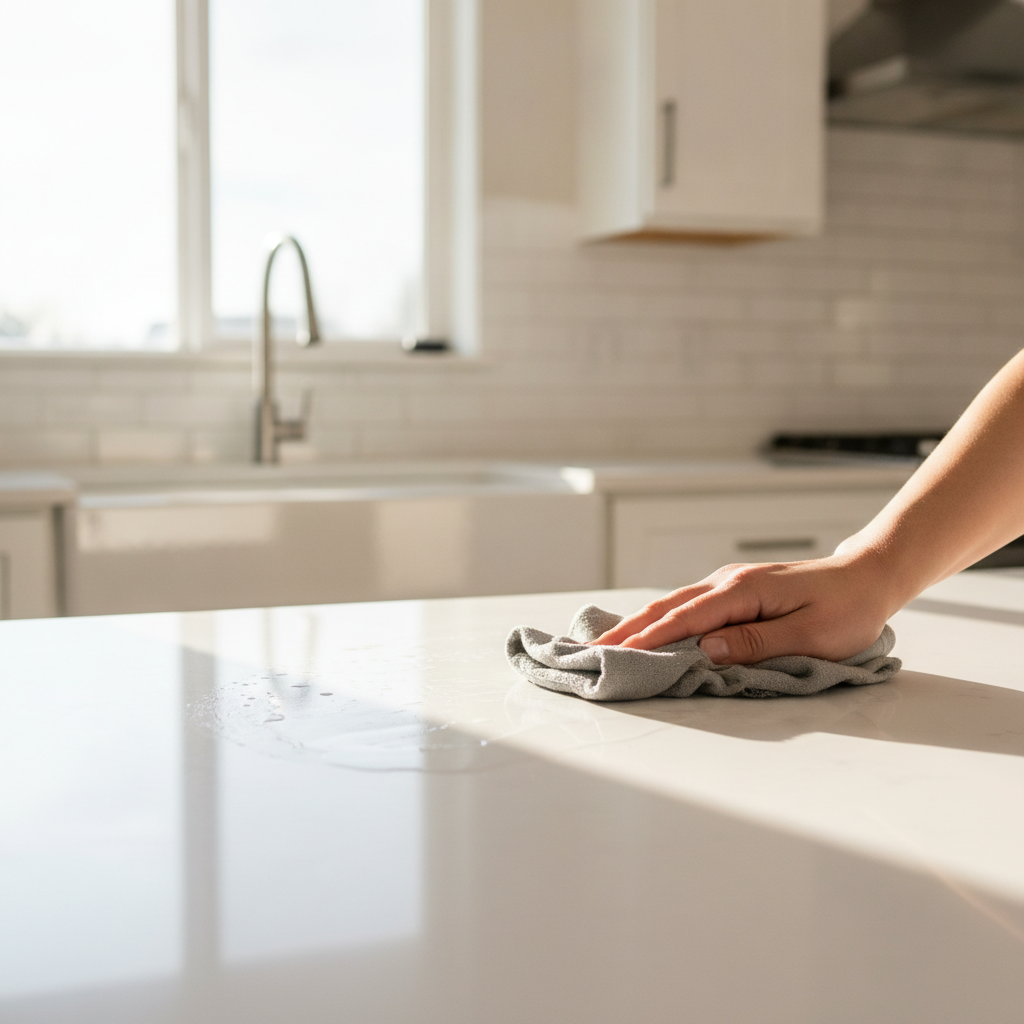
Industry mislabeling is a known problem in the quartzite market. Some slabs sold as quartzite are actually dolomitic marble or softer stone, and they will etch, stain, and scratch at rates that true quartzite never would. Before purchasing any quartzite slab, ask your fabricator to confirm it passes a hardness scratch test. At Fox Granite, we know our suppliers and our slabs. We will tell you exactly what you are looking at: no guessing, no surprises. That is part of our consumer-first approach, and it is why we have completed over 10,000 projects across Central Texas since 2010.
Quartz countertops are the right call when low maintenance, stain resistance, and design consistency across a large kitchen are the top priorities. As of 2026, 78% of NKBA-surveyed design professionals expect quartz to remain a top countertop material, and the reasons are practical: no sealing schedule, easy cleaning, and reliable color matching across every slab.
Quartz is one of the most popular countertop materials in the market for a reason. The engineered nature of the product delivers performance consistency that natural stone cannot replicate. For families, renters, and homeowners who cook daily and want a surface they do not have to think about, quartz is the honest first recommendation.
Natural quartzite countertops are the right call when natural beauty is the focal point, heat resistance matters, or the project includes an outdoor kitchen. Quartzite is harder than granite, handles high temperatures without resin-related risk, and delivers natural movement and dramatic veining that engineered quartz can only attempt to mimic.
Natural quartzite is a premium natural stone surface that rewards careful selection and consistent maintenance. The natural stone beauty it delivers, the strength it brings at 7-8 Mohs, and the outdoor versatility it offers make it the better material for the right project. Just go in knowing the sealing commitment is real, and verify every slab before you sign off on the purchase.
Some of the best kitchen designs combine quartz and quartzite in the same project, putting each material where it performs best rather than forcing a single choice across every surface. This split approach is more common than homeowners expect, and it is a practical way to compare quartz and quartzite on their actual merits rather than picking one as a universal answer.
A common approach: quartzite for the kitchen island and perimeter counters where the natural stone beauty becomes the visual centerpiece, and quartz countertops in the bathrooms, laundry areas, or utility spaces where low maintenance matters more than dramatic veining. This lets natural quartzite shine in the spots where its elegance has the most visual impact while keeping maintenance simple everywhere else.
This split strategy also makes sense for budget management. Quartzite slabs with rare veining can reach the top of the price range, so concentrating natural quartzite where it has the most impact and using engineered quartz elsewhere keeps the overall project cost in check without sacrificing the design you actually want.
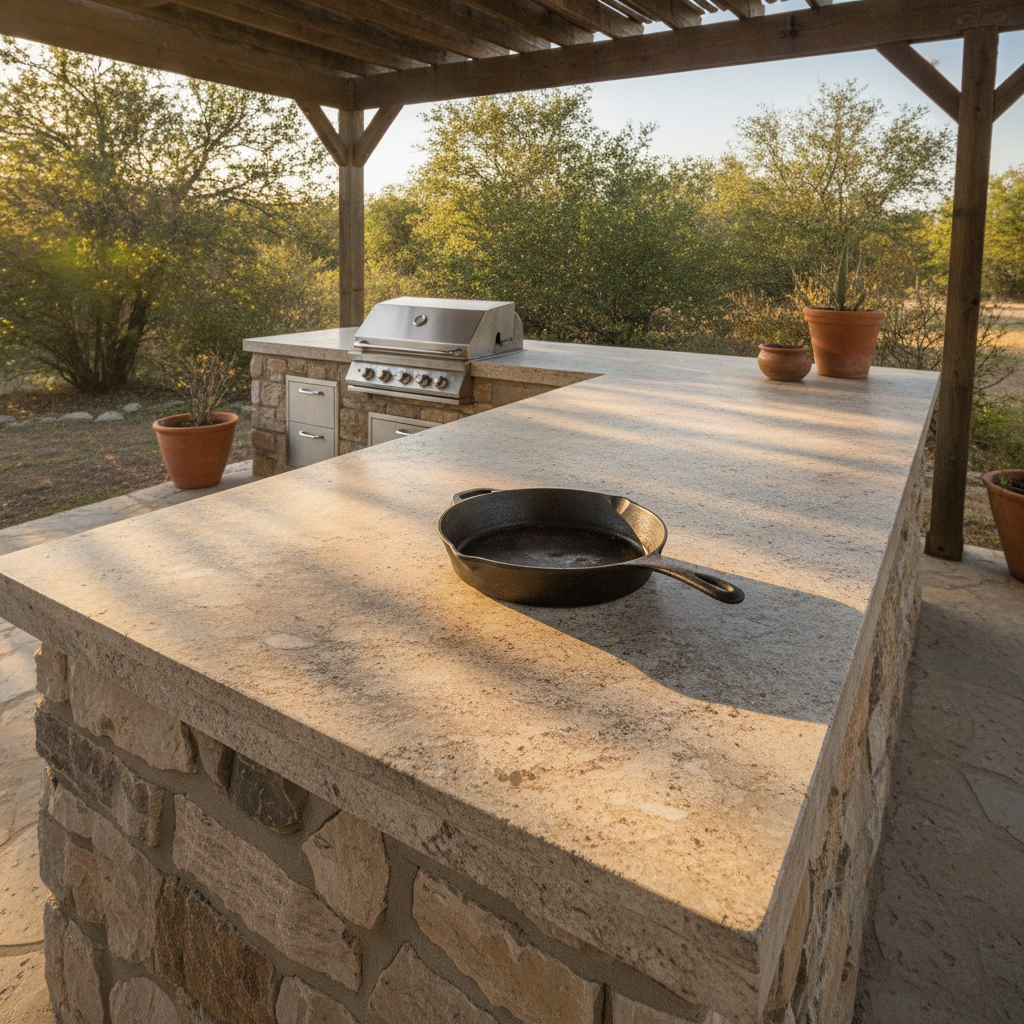
Quartzite is the material to choose when natural stone beauty is the focal point and you are willing to clean quartzite countertops with care and reseal them once a year. The natural variation, dramatic veining, and depth you get from a premium natural stone slab is something engineered surfaces can imitate but never quite replicate. If you want a kitchen that looks genuinely one-of-a-kind, quartzite delivers that in a way quartz simply cannot.
Quartzite is also the clear choice for outdoor kitchens and high-heat cooking environments. Standard engineered quartz cannot be installed outdoors: UV exposure causes the polymer resin to yellow and degrade, and every major manufacturer voids the warranty for outdoor use. Quartzite handles sun, temperature swings, and direct heat from outdoor grills without the same vulnerabilities.
For Austin and San Antonio homeowners with covered patios or outdoor kitchen setups, natural quartzite is the countertop material built for those conditions. The harder surface also makes it a better long-term choice for homeowners who cook heavily and want a durable material that withstands high temperatures and daily use without the resin-related limitations of an engineered surface.
Some of the best kitchen designs we have worked on at Fox Granite use quartz and quartzite together. A common approach: quartzite for the perimeter counters and kitchen island, where the natural stone beauty becomes the visual centerpiece, and quartz countertops in the bathrooms or laundry areas where low maintenance matters more than dramatic veining. This lets you put each material where it performs best.
This split approach also makes practical sense for budget management. Quartzite slabs with rare veining can reach the top of the price range, so concentrating natural quartzite where it has the most visual impact and using engineered quartz elsewhere keeps the overall project cost in check without sacrificing the look you are after.
Our team can walk you through both options in person at our New Braunfels showroom, where you can see full slabs side by side and feel the difference in texture and finish before committing to either material. Choosing between quartz and quartzite is much easier when you can stand in front of both and compare them directly.
Quartz is the right call if low maintenance is your top priority. Families with young kids, homeowners who cook daily and want a durable surface they do not have to think about, and anyone installing stone in a rental property all benefit from a non-porous countertop that resists stains without an annual sealing schedule. Wiping down quartz countertops with mild soap and warm water is genuinely all the care they need.
Quartz also wins on design consistency. If you are working on a large kitchen with an island, a peninsula, or multiple runs of counter, matching the veining and color across several quartzite slabs can be a real challenge because each one is unique. Engineered quartz gives you repeatable, uniform patterns that line up perfectly across every section.
For contemporary spaces and modern kitchens where a consistent look matters, that control is a real advantage. Quartz ranges from entry-level options at $50 per square foot installed up through high-end designer slabs at $200, giving you flexibility across nearly every budget without sacrificing the non-porous stain resistance that makes engineered surfaces so practical for daily kitchen use.
The difference between quartz vs quartzite countertops comes down to what you value in a kitchen surface. Quartz is engineered for consistency, stain resistance, and low maintenance. Quartzite is natural stone formed under intense heat and pressure, harder than granite, better for outdoor use, and built for homeowners who want natural variation and dramatic veining that no engineered surface can fully replicate.
Both are among the most popular countertop materials available in 2026, and both have legitimate cases depending on how you cook, where the surface is going, and how much annual maintenance you are prepared to do. Neither material is the wrong choice when it is matched to the right project.
For quartz vs quartzite countertops in Austin, San Antonio, New Braunfels, and across the Central Texas corridor, Fox Granite carries both materials, fabricates everything in-house, and gives you straight answers about which surface fits your kitchen and your life. Schedule your free in-home consultation today and see both options in person at our showroom before you decide.
Ready to get started? Contact Fox Granite today.


BY APPOINTMENT ONLY
1379 Wald Road
New Braunfels, TX 78132
Austin, San Antonio, Cedar Park, Kyle, New Braunfels, Del Valle, Elgin, Lago Vista, Shady Hollow, Onion Creek, Buda, San Marcos, Lockhart, Temple, Wimberley, Dripping Springs, Bee Cave, Lakeway, Leander, Anderson Mill, Jollyville, Spicewood Springs, Round Rock, Georgetown, Pflugerville, Manor, Taylor, Manchaca, Mountain City, Hutto, West Lake Hills, Bastrop, Liberty Hill, Driftwood, Sun City, Steiner Ranch.