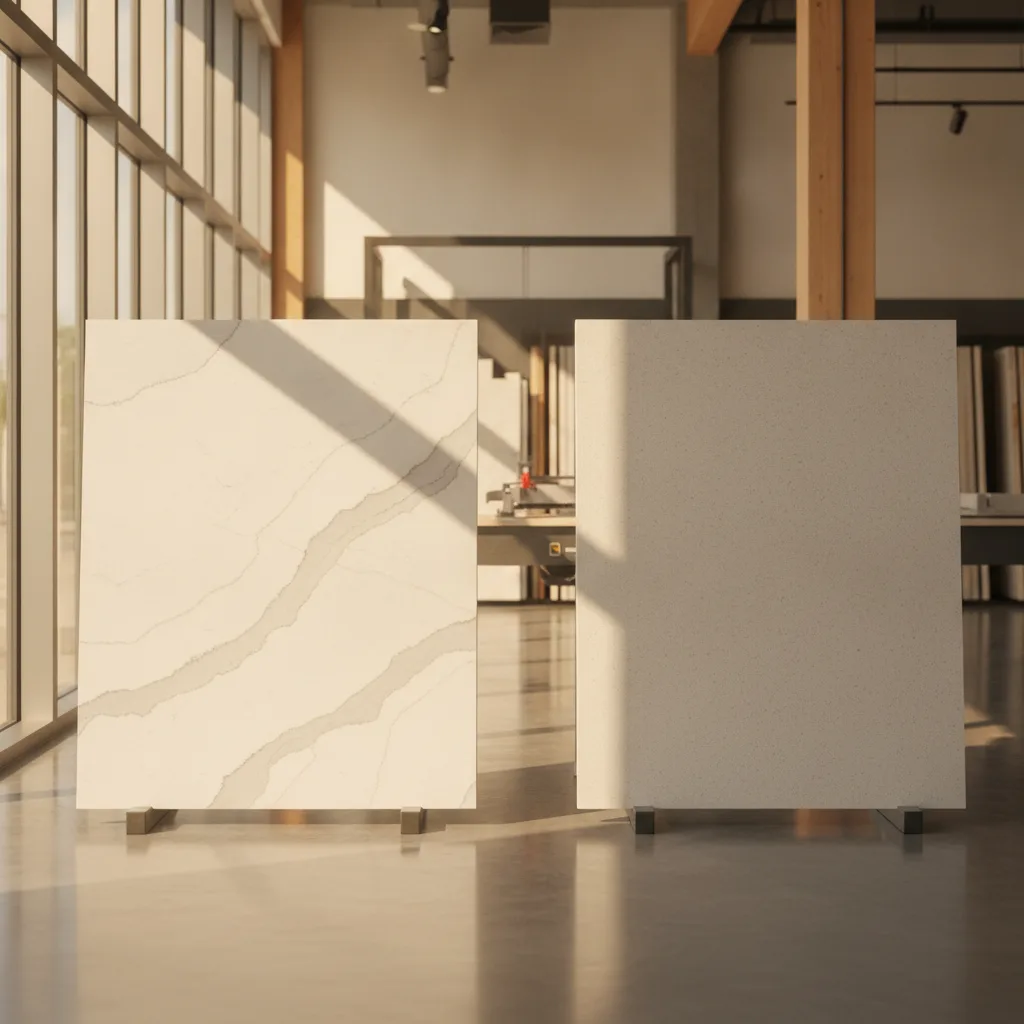
Quartz countertops cost $50–$150 per square foot installed and offer superior edge profile variety, better repairability, and stronger resale familiarity with Central Texas buyers. Porcelain countertops cost $40–$120 per square foot installed and win on heat resistance (fired at 2,200°F vs. quartz's 300°F resin softening point), UV stability for outdoor kitchens, and lighter weight for overlay installs. Neither material requires sealing. For indoor kitchen remodels with resale in mind, quartz is the safer bet. For outdoor kitchens, high-heat cooking households, or modern minimalist design goals, porcelain is the stronger functional choice. As of 2026, porcelain is the fastest-growing countertop category — but quartz holds the larger market and broader fabricator availability across Central Texas.
Quartz vs. porcelain countertops is the comparison that catches most homeowners off guard, because both materials are engineered, non-porous, and require no sealing — so the differences that actually matter are the ones buried in how each surface is made. Quartz countertops cost $50–$150 per square foot installed and dominate Central Texas remodels for good reason: design flexibility, proven repairability, and resale familiarity. Porcelain countertops cost $40–$120 per square foot installed, and they win on two counts that quartz simply cannot match: heat resistance and outdoor UV stability. If you cook at high heat or have an outdoor kitchen, that gap is not minor. This comparison gives you the specific numbers and honest tradeoffs to choose the right countertop material for how you actually live.
The engineered-stone standard — familiar, repairable, and design-flexible
The fast-rising challenger — UV-stable, heat-resistant, and featherlight
Quartz countertops are manufactured from natural quartz crystals combined with resins, pigments, and binders — typically 90–95% crushed natural quartz crystals combined with 5–10% polymer resins and pigments that produce color and veining. The process creates a highly durable, non-porous surface that outperforms granite and marble on maintenance: no sealing required, stain-resistant, and consistent in pattern from slab to slab. That consistency is something natural stone simply cannot replicate, and it's a primary reason quartz countertops dominate residential remodels.
The resin component is what makes quartz both versatile and vulnerable. Resins give quartz surfaces their flexibility — that's why quartz edges hold up to drops better than porcelain and why color-matched resin fills can address chips and minor damage for $200–$500. Resins also allow fabricators to produce a wide range of finishes: polished quartz with a high gloss finish, honed matte surfaces, and leathered quartz with a subtle texture that mimics natural stone with remarkable realism. Colors and patterns range from solid whites and blacks to intricate veining that replicates marble or quartzite with impressive accuracy.
The trade-off is heat. Resin binders begin softening around 300°F — and pans straight off a stove or out of a 450°F oven run 400–600°F at the base. Surface damage from direct contact with hot pots is excluded from every major quartz manufacturer's warranty, including Cambria. Repair costs start at $200–$500 for minor surface polishing and climb to $1,500–$5,000+ if a slab section must be replaced. Always use trivets with quartz. That's not optional advice — it's the only risk management strategy that works. UV rays present a second limit: prolonged exposure causes resin to discolor and degrade, which is why all major brands explicitly exclude outdoor use from their warranties.
Porcelain countertops are made from refined clay, natural clays, feldspar, and abundant minerals compressed under extremely high pressure and fired in a kiln at temperatures above 2,200°F. That firing process creates a surface so dense it achieves less than 0.5% water absorption — classifying it as a true non-porous surface that needs no sealing, resists bacteria, and holds up against stains, moisture, and spills without any special treatment. The composition is fundamentally different from quartz: no resin binders, no polymer additives. It's fired mineral through and through.
The practical result of that process is exceptional durability against the two things quartz cannot handle: extreme temperatures and UV rays. Porcelain is highly resistant to both. Hot pots and pans placed directly on the surface cause zero damage. Prolonged exposure to direct sunlight produces no fading or degradation — which is why porcelain is the default choice for outdoor kitchens and fireplace surrounds across Central Texas. Porcelain rates 7–8 on the Mohs hardness scale (quartz is 7), making it highly scratch resistant for daily use. Large-format slabs from Dekton and Neolith can cover significant surface area with minimal seams, offering a clean, modern look with high gloss, matte, or subtle texture finishes that mimic natural stone, concrete, or wood.
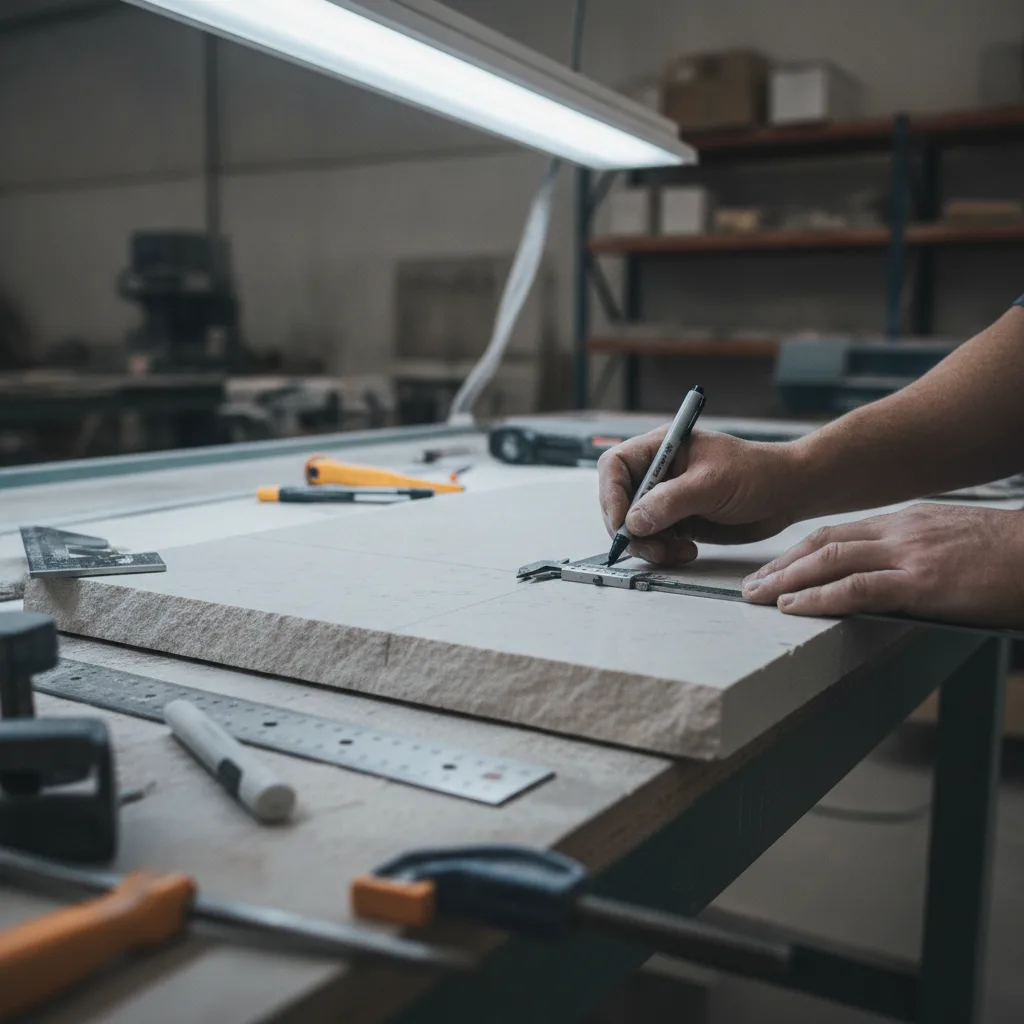
The limitations are real and worth naming. Porcelain's thinness (standard slabs run 6mm, 12mm, or 20mm) and brittleness mean edges chip more easily from heavy blunt force. The surface pattern is printed on the top layer only — it does not run through the full slab body — so chips are genuinely difficult to hide and professional repairs often fall short of invisible. Edge options are limited to squared or mitered profiles because the material's thinness and brittleness prevent complex custom cutting. Fabrication requires specialized tools and expertise distinct from standard quartz or granite work, so not every Central Texas stone shop handles porcelain. That limits your installer selection and can push labor costs higher than what you'd pay for quartz with the same square footage.
| Dimension | Quartz | Porcelain |
|---|---|---|
| Installed Cost | $50–$150 per sq ft installed | $40–$120 per sq ft installed (avg $75–$95) |
| Heat Resistance | Resin softens ~300°F — trivets required; scorch damage excluded from all warranties | Fired at 2,200°F — handles hot pots and pans placed directly on the surface |
| UV & Outdoor Use | Not UV-stable; resin yellows and fades in direct sunlight — all major brands void warranties outdoors | UV-resistant; no fading in direct sunlight — the go-to for outdoor kitchens |
| Scratch Resistance | Mohs 7; resin binders add flexibility and absorb impact — edges hold up well to drops | Mohs 7–8 (harder than quartz); edges chip more easily from heavy blunt force |
| Edge Profile Options | Full range: eased, beveled, bullnose, half-bullnose, ogee, dupont, and more | Limited to squared or mitered edge due to material thinness and brittleness |
| Repairability | Color-matched resin fills work well; minor repairs $200–$500; slab section replacement $1,500–$5,000+ | Chips are hard to hide — surface pattern is printed on top layer only and does not run through the slab |
| Weight & Install | ~20–25 lbs per sq ft at 3cm; may require cabinet reinforcement | ~10–12 lbs per sq ft at 12mm; can be installed over existing countertop without structural work |
| Resale Value | Widely recognized by homebuyers; stronger resale familiarity in Central Texas | Growing in popularity but still less familiar to average buyers — resale edge goes to quartz |
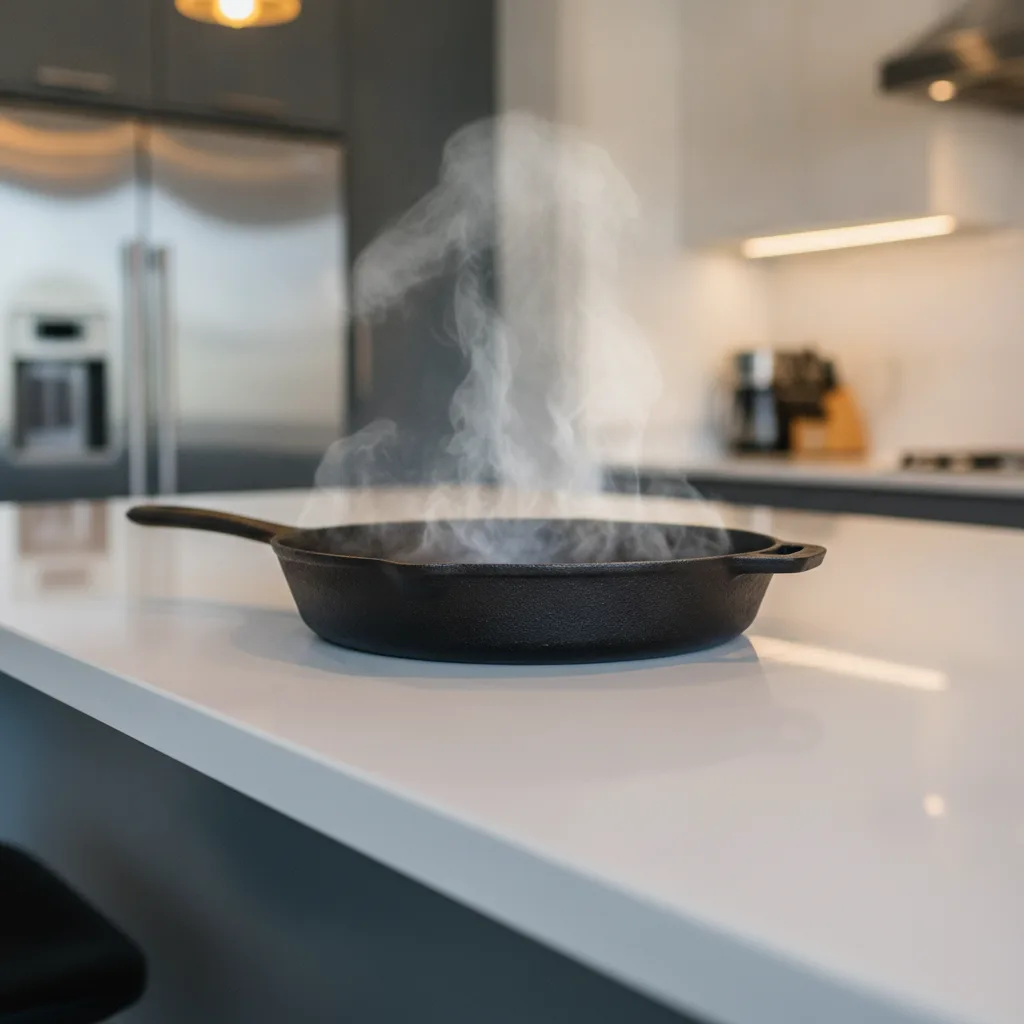
Quartz countertops are scratch-resistant and stain-resistant — but they are not heat-resistant in the way most homeowners assume. Resin binders in quartz begin softening around 300°F, and a pan coming off a 400–500°F oven burner can scorch the surface permanently. That damage is excluded from every major quartz manufacturer's warranty, and repair costs start at $200–$500 for minor surface work and climb to $1,500–$5,000+ if a slab section needs replacement. Porcelain, on the other hand, is fired at over 2,200°F during manufacturing — so hot pots and pans placed directly on the surface cause zero damage. If you cook at high heat regularly, this is the single biggest functional difference between quartz and porcelain countertops. Always use trivets with quartz. With porcelain, you don't have to.
Quartz is the right countertop material for the majority of Central Texas indoor kitchen and bathroom remodels — especially when design customization, repairability, and resale value are priorities. Every qualified stone shop in Central Texas handles quartz fabrication and installation, giving you the widest selection of fabricators, timelines, and price points. That advantage compounds when you need a repair or a replacement section years down the road.
Quartz countertops represent the perfect countertop material for homeowners who want lasting beauty with low maintenance, a non-porous surface that cleans up with regular cleaning and mild soap, and design flexibility that porcelain simply cannot match. The $14.8 billion global quartz market reflects a product that has earned its dominant position through consistent performance across millions of kitchens and bathrooms.
Porcelain countertops are the clear choice when your cooking habits, outdoor spaces, or design goals push past what quartz surfaces can reliably handle. As of 2026, porcelain is the fastest-growing countertop category in the U.S. market — and the growth reflects genuine functional advantages, not just aesthetics. For outdoor kitchens and serious cooking households, those advantages are decisive.
Porcelain surfaces deliver exceptional durability in environments where quartz simply isn't rated — outdoors, at high temperatures, and in spaces with prolonged exposure to UV rays. The material is extremely durable, highly scratch resistant, and requires zero upkeep beyond easy maintenance with soap and water. For the right project, porcelain is not a compromise. It's the better-performing choice.
Using quartz and porcelain slabs in the same home renovation is not a design inconsistency — it's sound material selection. The two surfaces have distinct properties that make each one the better performer in different environments. A Central Texas homeowner finishing both an indoor kitchen remodel and an outdoor kitchen addition doesn't have to default to one countertop material throughout. The right answer is to evaluate each surface on its own requirements.
The most common mix: quartz countertops for the indoor kitchen (edge profile variety, repairability, and resale familiarity all favor quartz here) paired with porcelain for the outdoor kitchen, a fireplace surround, or a bar top where UV rays and high temperatures are real daily factors. Both quartz and porcelain are non-porous, both are stain-resistant, and neither requires sealing — so day-to-day maintenance stays consistent across indoor and outdoor spaces. That symmetry makes mixing the two far more practical than homeowners initially expect.
Mixing also opens up design options that single-material projects foreclose. Porcelain's large-format slabs can mimic natural stone, concrete, or wood for a feature wall or fireplace application, while your indoor quartz countertops carry the full range of edge options and color depth your kitchen needs. Ask your fabricator to walk through each surface individually — not just quote a single material for the whole project. At Fox Granite, that's exactly what our free in-home consultation is designed to do.
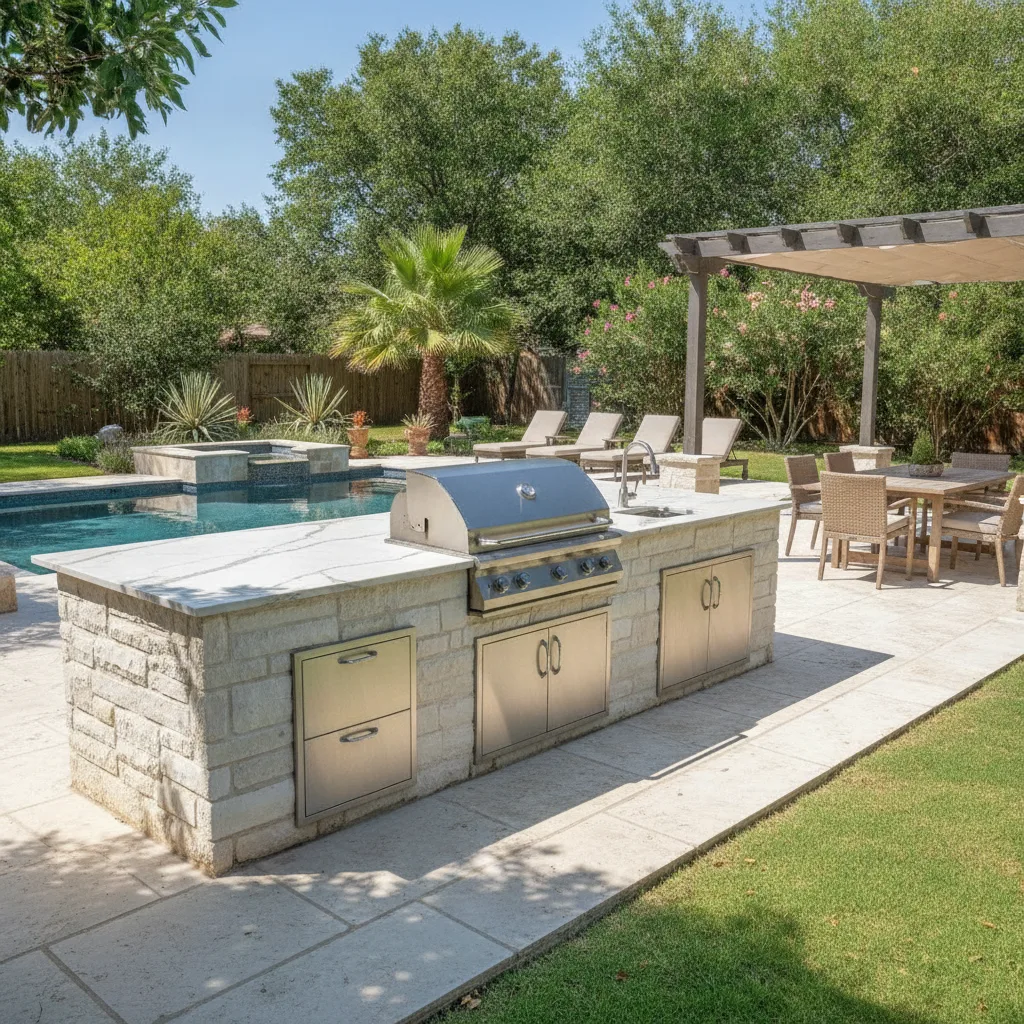
Porcelain is the clear choice for any Central Texas homeowner building or upgrading an outdoor kitchen. Quartz and porcelain are both engineered surfaces, but only porcelain slabs are UV-resistant — meaning direct sunlight will not cause fading or degradation over time. Every major quartz manufacturer explicitly excludes outdoor use from their warranties. Porcelain, fired at temperatures above 2,200°F, handles extreme temperatures and UV rays without warping, discoloring, or breaking down. That's not a minor footnote — it's the difference between a countertop that lasts decades and one that fails after a few Texas summers.
Porcelain also makes sense for serious home cooks who pull pans straight from a 450°F oven and set them on the counter without thinking. Quartz resin binders begin softening around 300°F, and surface damage from heat is excluded from every manufacturer's warranty. Repair costs for a deep scorch run $500–$1,000+ for resurfacing, or $1,500–$5,000+ if a slab section must be replaced. Porcelain surfaces handle that same heat without complaint. Premium porcelain brands like Dekton and Neolith offer large-format slabs with subtle texture, high gloss, or matte finishes that give modern kitchens and outdoor spaces a clean, continuous look.
Some Central Texas homeowners use quartz and porcelain in the same project — and it works well. A common approach: quartz countertops for the main indoor kitchen (where edge profile variety, repairability, and resale familiarity matter most) paired with porcelain slabs for the outdoor kitchen, fireplace surrounds, or a bar top where UV rays and high temperatures are real factors. Both materials are non-porous surfaces, both are stain-resistant, and neither requires sealing — so day-to-day maintenance stays consistent across the spaces.
Mixing the two also gives you design flexibility without compromise. Porcelain's large-format slabs can mimic natural stone, concrete, or even wood for a feature wall or fireplace surround, while your indoor quartz countertops carry the full range of edge profiles and color options your kitchen needs. If you're planning a full home renovation that includes outdoor spaces, it's worth asking your fabricator which material makes sense surface by surface — not just defaulting to one countertop material throughout. At Fox Granite, our free in-home consultation covers exactly these decisions so you don't have to sort through the trade-offs alone.
Quartz is the right countertop material for Central Texas homeowners doing a standard indoor kitchen remodel who plan to sell within five to ten years. Quartz countertops are what Austin and San Antonio homebuyers recognize and expect — and that familiarity translates to faster offers. With installed costs starting around $50 per square foot and a full lineup of edge options (eased, beveled, bullnose, ogee), you get a polished quartz surface that pairs with almost any cabinet style, from classic shaker to modern slab.
Quartz also wins when design customization matters. Natural quartz crystals combined with resins and pigments let fabricators produce colors, veining patterns, and even leathered quartz finishes that mimic natural stone with remarkable realism — and with more consistency than you'd get from a natural slab. If a chip happens, a color-matched resin fill can address minor damage for $200–$500. And because every qualified stone shop in Central Texas handles quartz, you'll have no trouble finding professional installation on your timeline with an accurate estimate before work begins.
Quartz vs. porcelain countertops is not a question with one universal answer — but it is a question with clear answers once you know your cooking habits, your outdoor space situation, and your resale timeline. Quartz wins indoors for most homeowners: better edge options, easier repairs, and proven resale familiarity in the Central Texas market. Porcelain wins where quartz is genuinely limited: outdoors, at high temperatures, and in modern-minimalist designs where large-format slabs and clean mitered edges are the goal. Both materials are extremely durable, highly scratch resistant, stain-resistant, and free from any sealing requirement — so the decision really comes down to where you're installing them and how you cook.
For quartz and porcelain countertops in Austin, San Antonio, New Braunfels, and the surrounding Central Texas area, trust Fox Granite. We've completed over 10,000 countertop projects since 2010 — all fabricated and installed in-house, with transparent pricing and no surprise fees. Not sure which countertop material fits your kitchen, cooking habits, and budget? That's exactly what our free in-home consultation is designed to answer. We'll bring samples, walk through your options, and give you a clear, accurate estimate. Contact us today to schedule yours, or visit our New Braunfels showroom to see quartz and porcelain slabs side by side.
Ready to get started? Contact Fox Granite today.


BY APPOINTMENT ONLY
1379 Wald Road
New Braunfels, TX 78132
Austin, San Antonio, Cedar Park, Kyle, New Braunfels, Del Valle, Elgin, Lago Vista, Shady Hollow, Onion Creek, Buda, San Marcos, Lockhart, Temple, Wimberley, Dripping Springs, Bee Cave, Lakeway, Leander, Anderson Mill, Jollyville, Spicewood Springs, Round Rock, Georgetown, Pflugerville, Manor, Taylor, Manchaca, Mountain City, Hutto, West Lake Hills, Bastrop, Liberty Hill, Driftwood, Sun City, Steiner Ranch.