Quartz vs Granite Cost for Central Texas Homeowners (2026)
💡 Quick Answer
Quartz countertops cost $10–$30 per square foot more than granite at comparable mid-range tiers. In Central Texas as of 2026, granite installs for $35–$55 per square foot and quartz runs $45–$75 per square foot. On a standard 35–40 square foot kitchen, the real dollar gap is $300–$700 — not thousands. Quartz earns much of that premium back over time through zero sealing requirements; granite needs a sealer every one to two years ($100–$300 per professional service). At the premium tier, exotic granite slabs like Blue Bahia can exceed $100 per square foot installed, pushing past mid-range quartz. Neither material is the clear winner on price alone: the right countertop depends on your budget tier, maintenance preference, and whether the surface is indoors or outdoors.
📊 Key Takeaways
Here are the numbers that matter most when comparing quartz vs. granite cost for a Central Texas kitchen or bathroom remodel in 2026.
$35–$55/sq ft installed
Entry granite price range in Central Texas
$45–$75/sq ft installed
Entry quartz price range in Central Texas
$300–$700 total gap
Real dollar difference on a standard 35–40 sq ft kitchen
$0 in sealing costs
Quartz lifetime maintenance vs. $150–$4,500 for granite
$90–$130/sq ft installed
Cambria (U.S.-made premium quartz) price range
51% U.S. market share
Quartz holds the top spot of any single countertop material in 2026
$504–$1,036 potential tariff impact
Max add-on cost for imported quartz at full pass-through (August 2026)
$70–$500 in hidden removal costs
Tearout fees often excluded from base countertop quotes
Quartz countertops cost $10–$30 per square foot more than granite at most mid-range tiers — but on a real Central Texas kitchen, that translates to $300–$700 in total additional spend, not thousands. As of 2026, granite installs for $35–$55 per square foot in the Austin and San Antonio market, and quartz runs $45–$75. The gap is real. It is just not the story most homeowners think it is. People who are wondering why their quartz quote came in so much higher are typically looking at hidden add-ons — removal, sink cutouts, edge profile upgrades — that dwarf the material difference on almost every job. And quartz earns much of its upfront cost back through zero sealing requirements over its lifetime, while granite needs a sealer every one to two years. This guide breaks down what you will actually pay at each tier, what the 2026 quartz import tariff means for your quote, and how to find the right countertop for your kitchen or bathroom remodel — whether you want the warmth and character of natural stone or the clean, easy daily maintenance of engineered quartz.
Quartz v Granite Cost by Tier: What It Costs in 2026
Tier
Price range
What's included
Best for
Entry-Level Granite
$35–$55/sq ft installed
Standard natural stone slab from domestic quarry, eased or beveled edge profile, basic undermount sink cutout
Budget-focused homeowners who want real natural stone at the lowest upfront cost
Entry-Level Quartz
$45–$75/sq ft installed
Engineered quartz slab (93% natural stone, polymer resin binder), consistent color and pattern, no sealing ever required
Homeowners who want low daily maintenance and a uniform look without stepping into premium brand pricing
Mid-Range Granite or Quartz
$60–$90/sq ft installed
Broader slab selection, upgraded edge profiles (bullnose, half-bullnose, ogee), full sink cutout, professional installation
Homeowners remodeling a kitchen who want design flexibility and are comparing both materials on equal footing
Premium / Exotic Slabs
$90–$180+/sq ft installed
Exotic granite (Blue Bahia, Titanium, etc.) or premium engineered quartz brands (Cambria, Silestone, Caesarstone), specialty edge work, full professional installation
Homeowners who want a statement kitchen island, a one-of-a-kind natural stone slab, or a specific premium brand name
What You Get at Each Price Point
Entry-Level Granite
Entry granite in the Austin and San Antonio market runs $35–$55 per square foot installed — below the national average of $40–$100. Texas benefits from a competitive fabrication industry and proximity to Houston's stone distribution hub, which keeps prices lower than most of the country. At this tier, color and pattern options are real and range from warm neutrals to dramatic dark tones; the selection is narrower than what you would find at a mid-range or premium slab yard, but there are still beautiful options that fit a tight budget. Every slab pulled from the same quarry at this grade shows natural veining and character that engineered stone simply cannot replicate.
Sealing is required every one to two years. A DIY sealer bottle runs $15–$25 and covers 100–200 square feet, so ongoing maintenance cost is manageable — but it is not zero. Over 15 years of ownership, DIY sealing adds $150–$300 in product cost alone, and more if you rely on professional sealing at $100–$300 per service. That math matters when you compare entry granite to entry quartz on a full-lifetime basis. Granite at this tier is also tough enough for daily family use: it is scratch-resistant, heat tolerant, and hard enough to last decades without replacement if properly maintained.
Entry-Level Quartz
Entry and mid-range engineered quartz lands at $45–$75 per square foot installed in Central Texas — roughly $10–$20 per square foot more than comparable granite at this tier. On a standard 35-square-foot kitchen, that gap works out to $350–$700 total. Engineered stone is made from approximately 93% crushed natural stone bound together with polymer resin and pigment in a factory process, which is why two slabs of the same color look nearly identical. Unlike natural stone, where every slab pulled from the same quarry varies in veining and color, quartz gives you predictable, consistent patterns across the full surface. That consistency is a big reason families with kids love it — spills wipe up easily, and there is no worry about whether a batch of grape juice will stain the counter.
Because the surface is non-porous, it resists stains from wine, coffee, and cooking oils without sealing — regular cleaning with mild soap and water is all it needs for its lifetime. No sealer costs, no annual maintenance. Quartz also resists bacteria better than porous granite at this tier. Over a 15-year period, that $350–$700 upfront premium starts closing fast against granite's cumulative sealing costs. Quartz is not heat-proof, though: the polymer resin binder can scorch under direct, sustained heat from hot pans, so always use a trivet. Granite has stronger heat resistance for everyday kitchen use and is a great choice near a range or cooktop.
Mid-Range Granite or Quartz
At the mid-range tier, granite and quartz prices converge. A mid-grade granite slab with a decorative edge profile and professional installation sits at $60–$80 per square foot nationally; mid-range quartz runs $70–$90. The $10–$30-per-square-foot gap holds, but the absolute dollar difference on a 40-square-foot kitchen is $400–$1,200 — still a fraction of total project cost when you factor in removal, sink cutouts, and backsplash work. This is where most Central Texas homeowners land when remodeling. The slab options at this tier are a lot more varied, and local fabricators typically carry hundreds of choices in both materials.
Both materials are scratch-resistant, heat-resistant (granite more so), and durable enough for everyday kitchen use. Edge profile upgrades at this tier run $10–$60 per linear foot for standard profiles; decorative ogee or full bullnose can reach $60–$100 per linear foot. A warm, inviting kitchen with elegant stone counters is worth the mid-range budget for most people — the difference between tiers is not just durability but design richness. At this price point, choosing the right finish and edge profile is just as important as the material choice itself.
Premium / Exotic Slabs
At the premium tier, granite can cost more than quartz. Exotic granite slabs like Blue Bahia or Titanium exceed $100 per square foot installed — sometimes reaching $200 — while U.S.-made Cambria quartz runs $90–$130 per square foot installed, and other premium brands like Silestone and Caesarstone land in the $80–$120 range. Sensa by Cosentino is another premium-tier option sold in this market, with built-in stain protection applied at the factory. The assumption that quartz is always cheaper breaks down entirely here. Both are gorgeous options for a kitchen island or statement countertop, and neither is the clear winner on price at this level.
The 2026 quartz import tariff (effective August 15, 2026) may push some imported premium quartz brands higher in the months ahead — but U.S.-made Cambria is exempt from the tariff entirely, and granite, quartzite, and marble are fully outside the tariff's scope. If you are drawn to a specific exotic granite slab for its natural character, dramatic veining, and warmth, the premium tier is the one place where its price can match or exceed the engineered quartz alternatives sitting next to it at the showroom. A geologist could tell you why every slab from the same quarry looks different — the short version is that natural variation in mineral deposits means no two are alike, which is part of the appeal.
Quartz vs Granite Countertops: Pros and Cons
Quartz costs $0 in sealing over its lifetime. No annual maintenance, no sealer products, just mild soap and water. Over 15 years, that saves $150–$300 in DIY sealer costs — or up to $4,500 if you would have been paying for professional sealing on your granite countertops. That makes quartz easy to live with long-term, especially for busy families.
Granite's entry price in Central Texas starts at $35/sq ft installed — below the national floor — giving budget-focused homeowners access to real natural stone without stretching their project budget. For a family that wants the warmth and character of stone but needs to keep things cheap, entry granite is hard to beat.
The real price gap is $300–$700 on a typical kitchen not thousands. On a standard 35–40 square foot layout, quartz runs just $350–$700 more than comparable granite — roughly 5% of total project cost. That kind of money is worth putting toward upgraded edge profiles or a nicer sink instead.
Granite is heat tolerant outdoors and the right call for Texas outdoor kitchens. Engineered quartz is not UV-stable and can fade or discolor in direct sun — a real concern in Central Texas's year-round outdoor living climate. For covered patio worktops or outdoor kitchen counters, granite or quartzite are the correct choices.
Quartz holds 51% of the U.S. countertop market in 2026 — the highest share of any single material — driven by its non-porous surface, consistent color patterns, and zero sealing requirement. People love quartz for its daily ease of care and stain resistance, which is a big reason it has grown into the dominant choice across the country.
Exotic granite and premium quartz brands cost roughly the same at $90–$180+ per square foot installed, so at the premium tier, the material you prefer wins — not the one with the lower price tag. At that price point, things like veining drama, color depth, and long-term design cohesion matter more than a couple of dollars per square foot.
The 2026 quartz import tariff adds up to $504–$1,036 to an average quartz kitchen at full pass-through (effective August 15, 2026). Actual homeowner impact is likely lower due to country exemptions (Canada, Mexico, Israel, South Korea) and the quota structure — but imported quartz pricing has shifted since mid-August. It is worth asking your fabricator which country their quartz slab was sourced from before you order.
Granite requires regular sealing every 1–2 years — professional sealing runs $100–$300 per service, and skipping it leaves the natural stone surface vulnerable to stains from wine, coffee, and oils over time. Homeowners who find that process a pain often wish they had chosen quartz from the start.
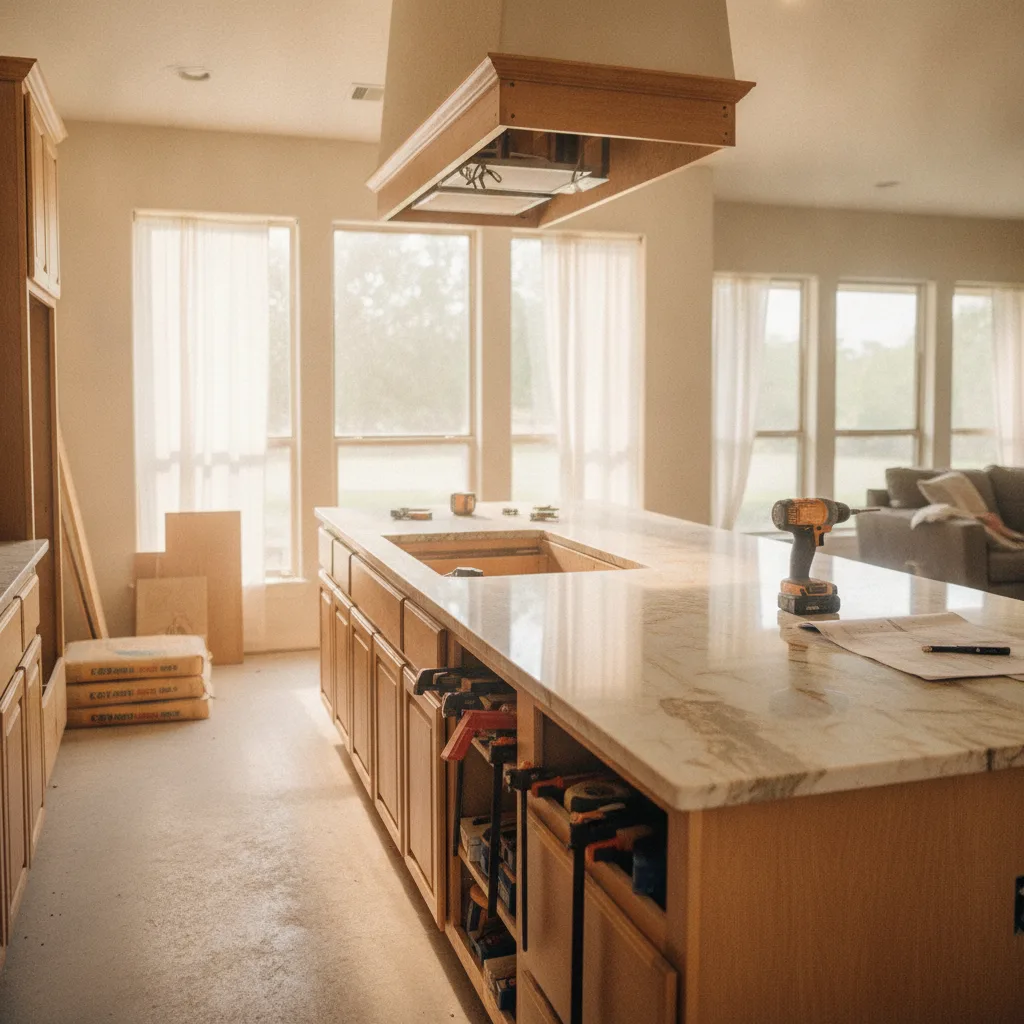
Hidden add-ons can dwarf the quartz-vs-granite price gap — old countertop removal ($70–$500), sink cutouts (up to $400 each), edge profile upgrades ($10–$60 per linear foot), and backsplash work ($800–$2,500) apply equally to both materials and often appear after the initial quote. These are the line items that make a cheap quote look expensive by the end.
Quartz chip and crack repairs are harder to hide than granite repairs. Color-matching engineered stone's uniform, factory-set patterns is difficult; a repaired spot often remains visible at $100–$300 per repair area. That is not a reason to avoid quartz, but it is worth knowing before you make your choice.
Quartz is not heat-proof — the polymer resin binder can scorch or discolor under direct, sustained heat from hot pans. Always use a trivet. Granite has stronger heat resistance for everyday kitchen use and is the better material near ranges and cooktops. In mixed-use spaces where hot pots land on the counter regularly, granite holds up better.
Every granite slab from the same quarry looks different — natural stone's character comes from that variation, but two slabs ordered for a large kitchen island may not match perfectly. Quartz's engineered consistency avoids this entirely, which is one reason designers find it easier to specify for large or multi-slab installations.
How to Choose the Right Countertop for Your Budget
Set your per-square-foot budget before you look at slabs Decide whether you are working with a $35–$55, $60–$90, or $90–$130 per square foot budget — because that tier determines your material and design options more than any quartz-vs-granite preference does, and it is the single most useful thing you can do in advance of visiting a showroom.
Measure your countertop square footage accurately A standard kitchen runs 30–40 square feet of countertop; adding a large island can push that to 60–80 square feet, which turns a $15 per square foot price difference between materials into a $900–$1,200 swing that is hard to close with negotiation alone.
Price out the hidden add-ons before comparing material quotes Ask every fabricator to itemize removal ($70–$500), sink cutouts (up to $400 each), and edge profile upgrades ($10–$100 per linear foot) — because two quotes that differ by $400 may simply have different line items buried or excluded, and the cheaper-looking job on paper can easily become the more expensive one on site.
Factor in outdoor use before defaulting to quartz If any portion of your countertop project is for an outdoor kitchen or covered patio, choose granite or quartzite — quartz is not UV-stable and will fade in Central Texas sun, making it the wrong call outdoors regardless of price, and no finish or coating will fix that over time.
Account for 15-year maintenance cost in your total budget Add $150–$300 for DIY granite sealer products over 15 years (or $1,500–$4,500 for professional sealing) to granite's upfront cost — quartz adds $0 in maintenance, which means that for many homeowners, quartz is actually the better value long-term even though it costs more upfront.
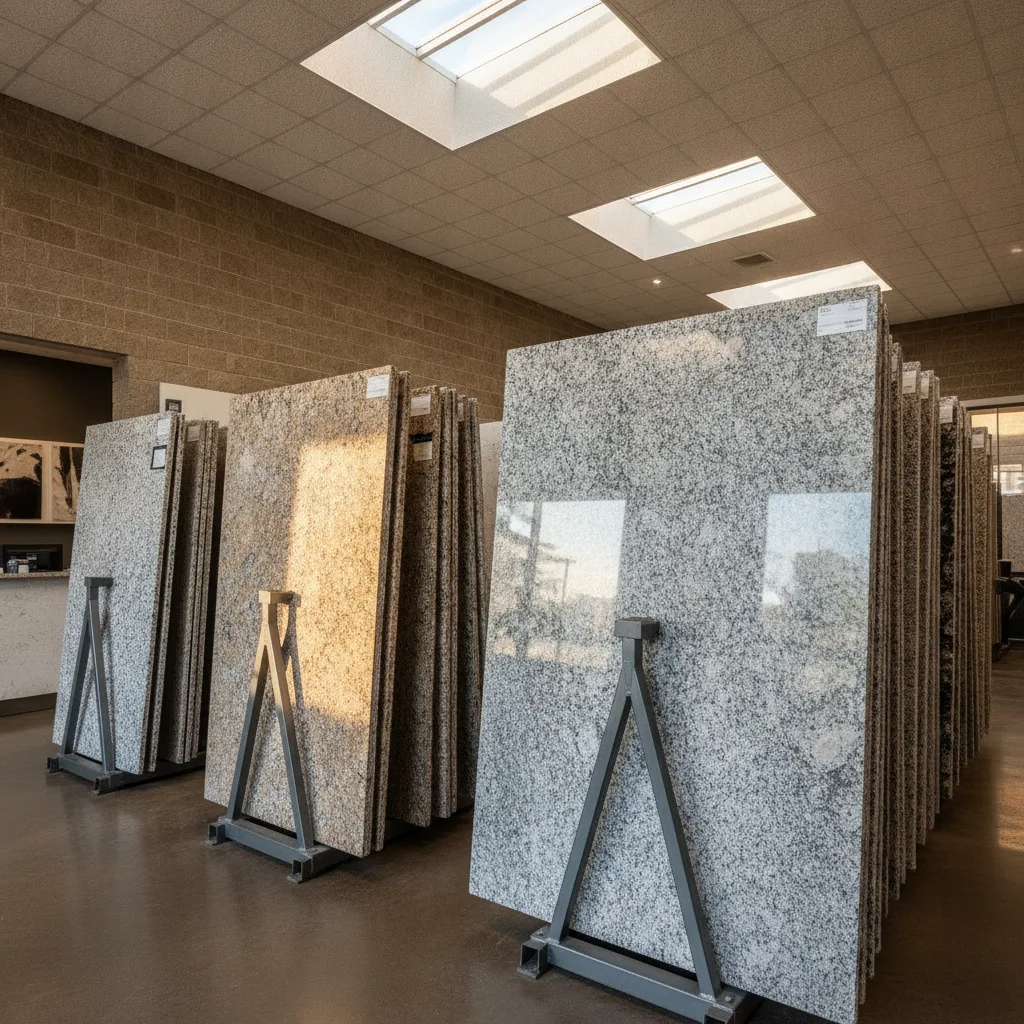
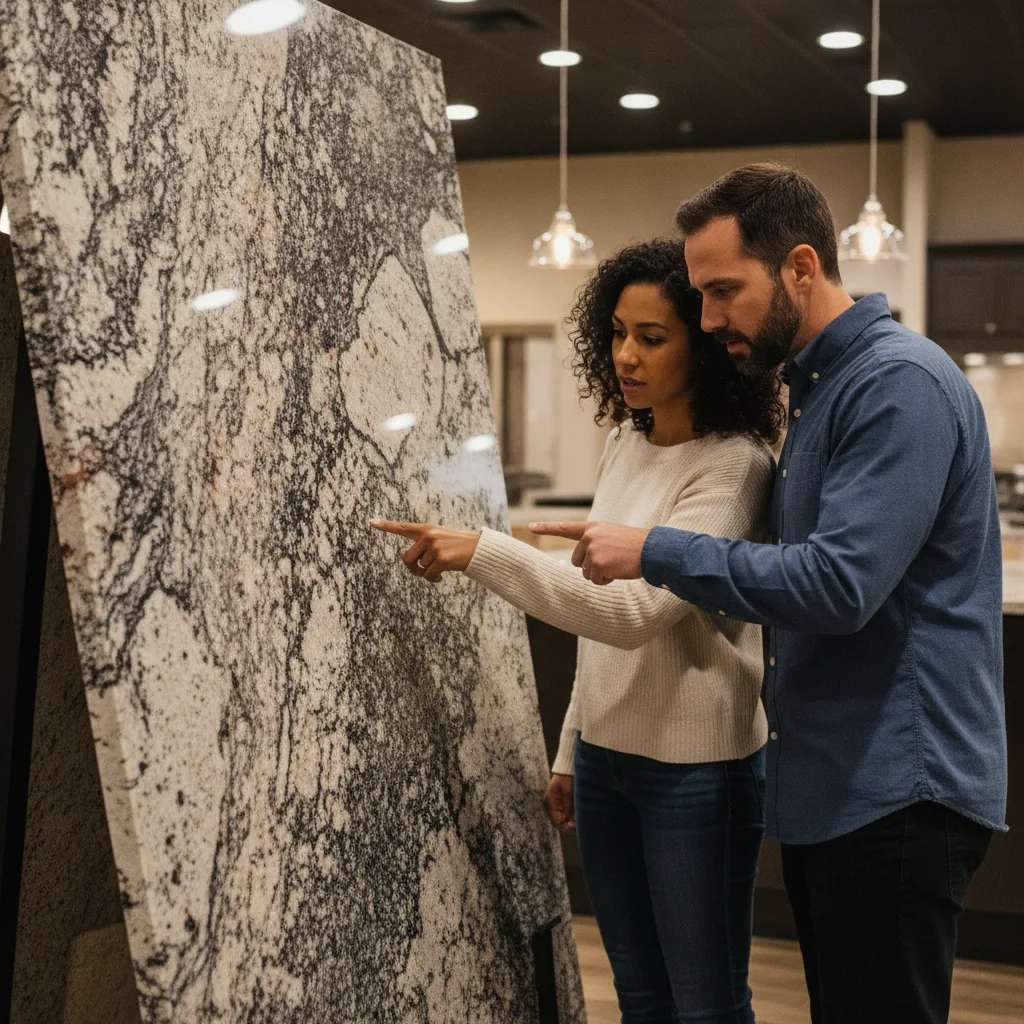
See real slabs in person before you commit Natural granite from the same quarry varies slab to slab in color and veining, so a sample chip never tells the full story — visiting a showroom to view full slabs is the only way to know what your remodeled countertop will actually look like installed, and it is the step that people who skip it most often regret.
The Quote That Looks Cheaper Often Isn't
A granite quote of $3,200 and a quartz quote of $3,700 can flip once you add a sink cutout ($400), a decorative edge profile ($240 for 8 linear feet at $30 per linear foot), and old countertop removal ($200) — add-ons that apply equally to both materials and are often excluded from the base number. Always ask for an all-in, itemized quote before comparing materials on price alone.
Quartz vs. granite cost is a real question with a real answer: quartz runs $10–$30 per square foot more upfront at most mid-range tiers, but on a standard Central Texas kitchen that gap is $300–$700 total — and quartz earns much of it back with zero maintenance cost over time. Granite is the right choice if you want the lowest entry price, the strongest heat resistance, a countertop for your outdoor kitchen, or the natural character of stone where every slab from the same quarry tells a different story. Quartz is the right choice if you want zero sealing, consistent color patterns, and a non-porous surface that resists spills and stains day after day without annual upkeep — making it easy to maintain and great for busy home kitchens where family life happens daily. Both materials are perfectly fine for an indoor kitchen remodel, and neither is the wrong choice if it fits your budget and your design goals. Fox Granite carries both, fabricates in-house, and can show you real slabs — not just sample chips — at the New Braunfels showroom. For granite countertops, quartz countertops, quartzite, marble, and everything in between across Austin, San Antonio, and all of Central Texas, contact Fox Granite today to schedule your free in-home consultation.
Not always. Quartz runs $10–$30 per square foot more than granite at most mid-range tiers, but exotic granite slabs like Blue Bahia or Titanium can exceed $100 per square foot installed — well above mid-range quartz pricing. At the premium tier, the quartz-is-always-cheaper assumption breaks down entirely. In Central Texas, entry-level granite starts at $35 per square foot installed while entry quartz starts at $45, so granite does have a real price advantage at the low end.
What does quartz vs. granite cost on a typical Central Texas kitchen in 2026?
A standard 35–40 square foot kitchen in Central Texas costs $1,225–$2,200 for entry-level granite and $1,575–$3,000 for entry-level quartz installed. The total project — including removal, sink cutout, and a standard edge profile — runs $1,750–$5,600 for most homeowners in the Austin and San Antonio market. The quartz-vs-granite price gap on that full project is typically $300–$700, which is roughly 5–10% of total project cost.
What hidden fees do countertop quotes usually leave out?
Four line items get excluded from most base quotes: old countertop removal ($70–$500 depending on existing surface type and size), sink cutouts (up to $400 per cutout), edge profile upgrades ($10–$60 per linear foot for standard profiles; $60–$100 or more per linear foot for decorative ogee or full bullnose), and backsplash work ($800–$2,500). These apply equally to granite and quartz projects. A granite quote that looks $400 cheaper than a quartz quote may simply have more costs buried or excluded — always ask for an all-in, itemized number before comparing materials on price.
How does the 2026 quartz tariff affect countertop prices?
A presidential proclamation signed July 31, 2026, imposed a four-year safeguard tariff-rate quota on imported quartz surface products, effective August 15, 2026: 25% on imports within quota and 50% above it. At full pass-through, this could add $504–$1,036 to an average quartz kitchen installation — but actual homeowner impact is likely lower. Several major supplier countries are exempt (Canada, Mexico, Israel, South Korea), and the tariff applies to the imported slab value, not the full installed price. U.S.-made Cambria quartz is fully exempt. Granite, quartzite, and marble are explicitly outside the tariff's scope.
When do countertop prices spike, and when is the best time to buy?
Countertop prices spike in spring (March through May) when kitchen remodel volume peaks across Texas, and again in September as homeowners rush to finish projects before the holidays. The 2026 quartz tariff created another pricing event after August 15 for imported quartz slabs. The best time to lock a price is January through February, when fabrication shops have slower order flow and more room to negotiate on edge profiles and removal fees. Getting quotes in the off-season and scheduling installation for spring is a legitimate way to save $200–$600 on a full kitchen project.
Is quartz or granite the better investment for a Central Texas kitchen remodel?
Both materials are perfectly fine long-term investments — neither is the wrong choice for an indoor kitchen. Granite is the better call if you want the lowest entry price, plan to use it outdoors (quartz is not UV-stable and will fade in Central Texas sun), or love the natural character of stone where every slab from the same quarry looks different. Quartz is the better call if you want zero sealing requirements, a non-porous surface that resists stains from wine, coffee, and oils without annual maintenance, and consistent color patterns across two slabs on a large island. Over 15 years, quartz's $0 maintenance cost closes most of its upfront premium versus granite.
Can quartz countertops be used in an outdoor kitchen?
No. Engineered quartz is not UV-stable and will fade or discolor with prolonged sun exposure — a real problem in Central Texas's year-round outdoor living climate. Granite, quartzite, or other natural stone are the correct choices for outdoor kitchen worktops and covered patio counters. This is one area where the material decision is not a matter of preference: quartz outdoors will degrade, and no sealer or treatment prevents UV-related discoloration in the polymer resin binder.
How much does granite sealing cost, and is it a dealbreaker?
Granite sealing costs $15–$25 per bottle for a DIY sealer product that covers 100–200 square feet. Professional sealing runs $100–$300 per service every one to two years. Over a 15-year ownership period, that adds up to $150–$300 in sealer products if you do it yourself, or $1,500–$4,500 if you pay a professional annually. It is not a dealbreaker, but it is a real ongoing cost that quartz eliminates entirely. If you skip regular sealing on granite, the natural stone surface becomes vulnerable to stains from coffee, wine, and cooking oils over time.