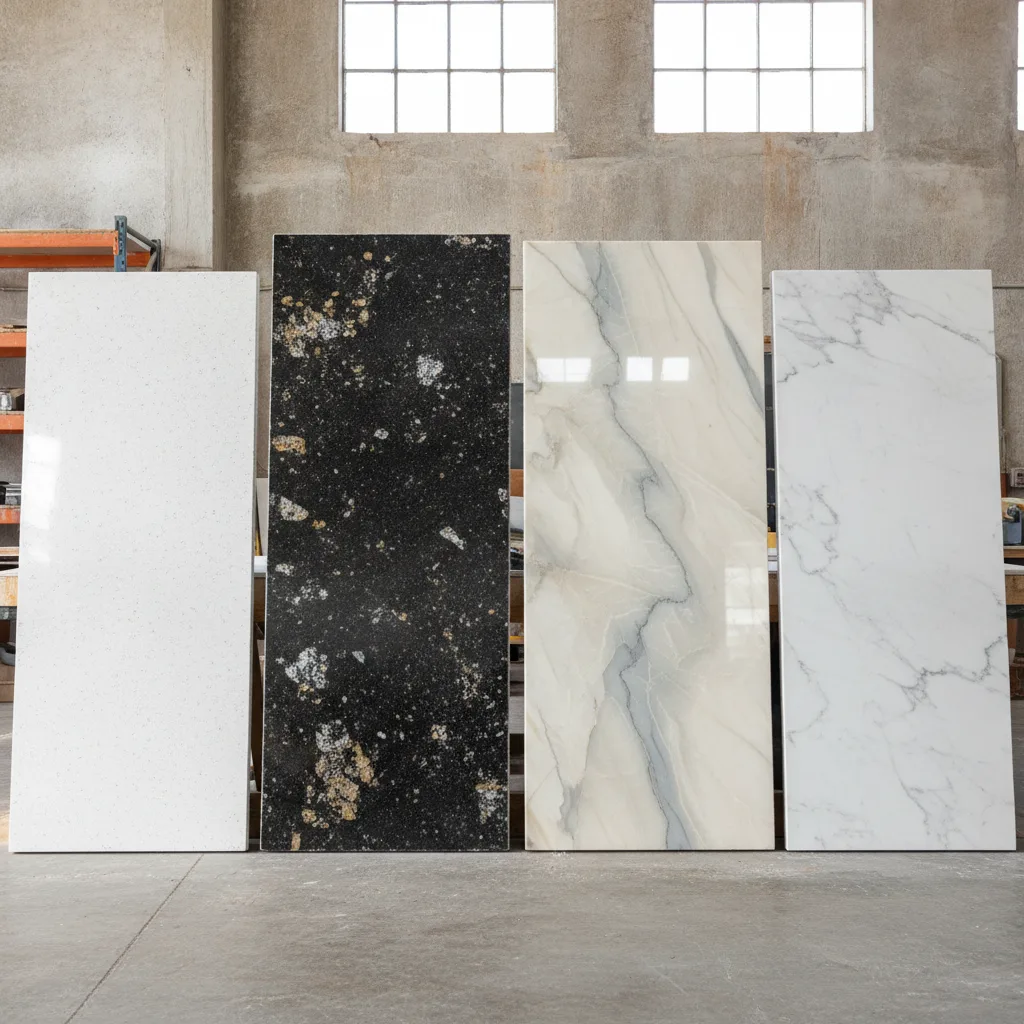
Quartz countertops are engineered from 90-95% ground quartz crystals and polymer resin binders, making them non-porous, stain-resistant, and maintenance-free (no sealing ever). They rate 7 on the Mohs hardness scale and cost $50-$150 per square foot installed in 2026. Their one real weakness: the resin binder begins degrading at 150 degrees F, so a frying pan at 400-600 degrees F causes permanent heat damage that voids every major manufacturer's warranty. Granite and quartzite handle 450 degrees F or higher without damage. If you cook on high heat daily, granite ($40-$100 per square foot installed) or quartzite ($60-$120 per square foot installed) is the more durable and practical choice. If you want low-maintenance, consistent color options, and strong stain resistance, quality quartz countertops are the better fit for most Central Texas families.
Quartz countertops hold 51% of the countertop market as of 2026, and the reasons are concrete: non-porous surface, no professional sealing required, consistent color options from slab to slab, and strong warranty coverage from premium brands. But quartz also has one real vulnerability that most sales pitches skip over — the resin binder that makes it non-porous starts degrading at around 150 degrees F, and a frying pan on high heat reaches 400-600 degrees F. For Central Texas homeowners comparing quartz to granite, quartzite, or marble before committing to installation, this guide scores each material across four categories that actually matter: scratch resistance, heat tolerance, stain resistance, and long-term lifespan. No filler, no cheerleading. Read this in 10-15 minutes and you'll know which countertop material fits how you actually cook.
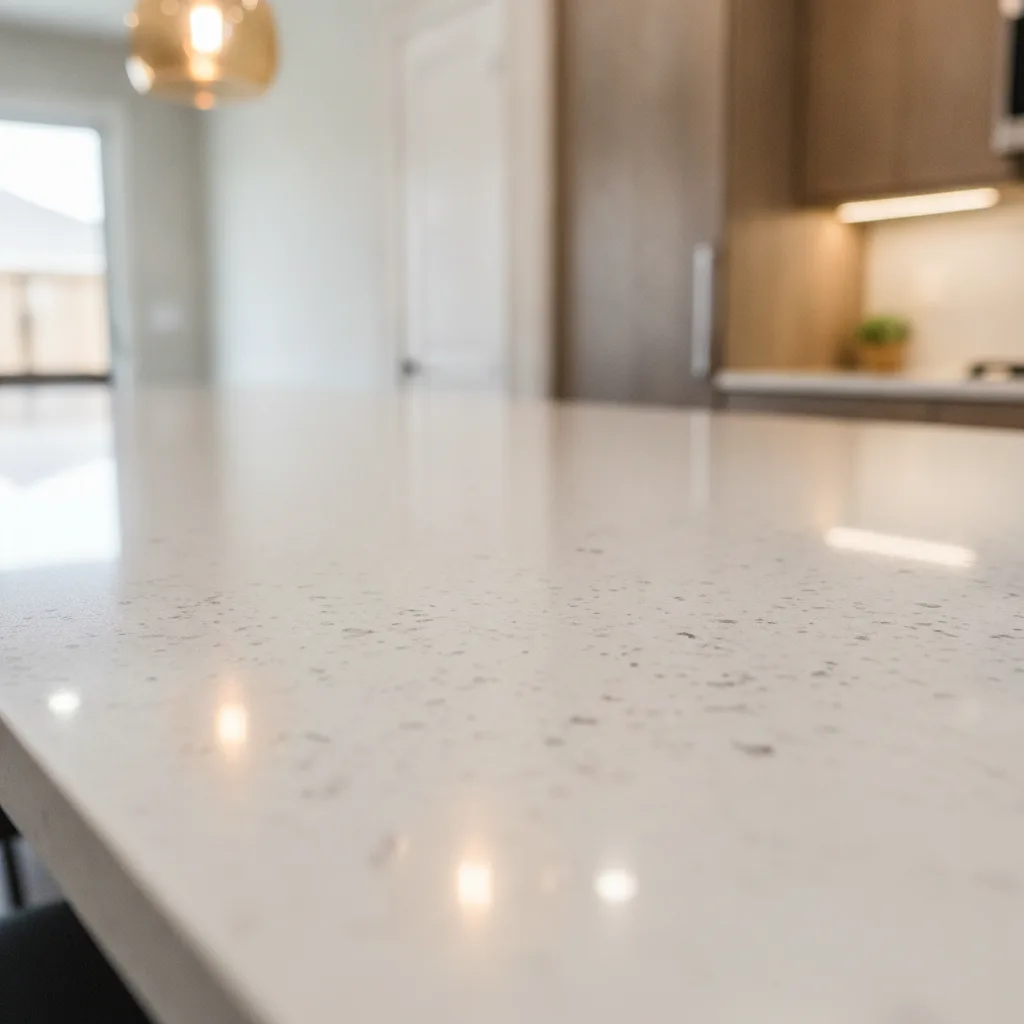
Quartz countertops are a man-made material, not quarried stone, and that distinction drives every durability tradeoff you'll face. Each slab is 90-95% ground natural quartz crystals bound together with polymer resin binders and pigments. The result is a non-porous, highly consistent countertop surface with no natural voids, fissures, or soft spots like you'd find in a quarried granite or quartzite slab.
That engineered construction is why quartz is the most popular countertop material on the market today, holding 51% market share in 2026. Color options are consistent from slab to slab, patterns are repeatable, and quality quartz countertops from premium brands like Caesarstone, Silestone, and Cambria carry warranty coverage that natural stone rarely offers. Not all quartz is created equal, though — budget slabs use less quartz mineral and more filler, which affects long-term durability and surface quality.
The resin binders that make quartz non-porous are also its soft spots. Resin reacts to extreme heat and prolonged UV exposure in ways that granite, quartzite, and marble simply do not. Understanding this upfront helps you evaluate each durability category honestly instead of buying into the idea that quartz is virtually indestructible. Quartz offers real advantages — but 'maintenance-free' does not mean 'indestructible.'
When sales reps describe quartz as maintenance-free, they mean no regular sealing — not zero care. Quartz still needs daily cleaning with a damp cloth, and it still needs protection from harsh chemicals, abrasive pads, and direct heat. The maintenance bar is lower, not nonexistent.
Scratch resistance is where quartz looks strongest on paper and still holds up well in practice, with one honest caveat. Quartz rates 7 on the Mohs hardness scale — harder than steel (5.5) and harder than most kitchen knives (5-6.5). Granite rates 6-7, quartzite rates 7-8, and marble rates only 3-5. That makes marble the clear loser for scratch resistance and quartzite the technical winner of all four countertop materials.
Real-world testing by geologist Karin Kirk for the Natural Stone Institute found that engineered quartz products can be scratched by tools rated 6 on the Mohs scale — slightly lower than the raw quartz mineral's rating suggests. The resin matrix between quartz crystals is softer than the crystals themselves, so the engineered countertop surface performs at roughly the same scratch-resistant level as granite, not above it. For everyday kitchen use — sliding ceramic plates, occasional knife contact — both quartz and granite are highly durable. You won't see a difference on your countertop surface in normal use.
Marble is a different story. Composed mainly of calcite (Mohs 3-3.25), marble scratches visibly from routine kitchen activity. A cast-iron skillet dragged across the surface or a ceramic bowl set down hard leaves marks. If scratch resistance is a priority and you're drawn to marble's natural beauty, quartzite gives you the veined look with Mohs 7-8 hardness — without the vulnerability. The pattern consistency of quartzite falls between marble's organic variation and quartz's engineered uniformity.
Free
A quick visual reference to compare stone hardness ratings side by side when evaluating slabs at a showroom or fabrication facility.
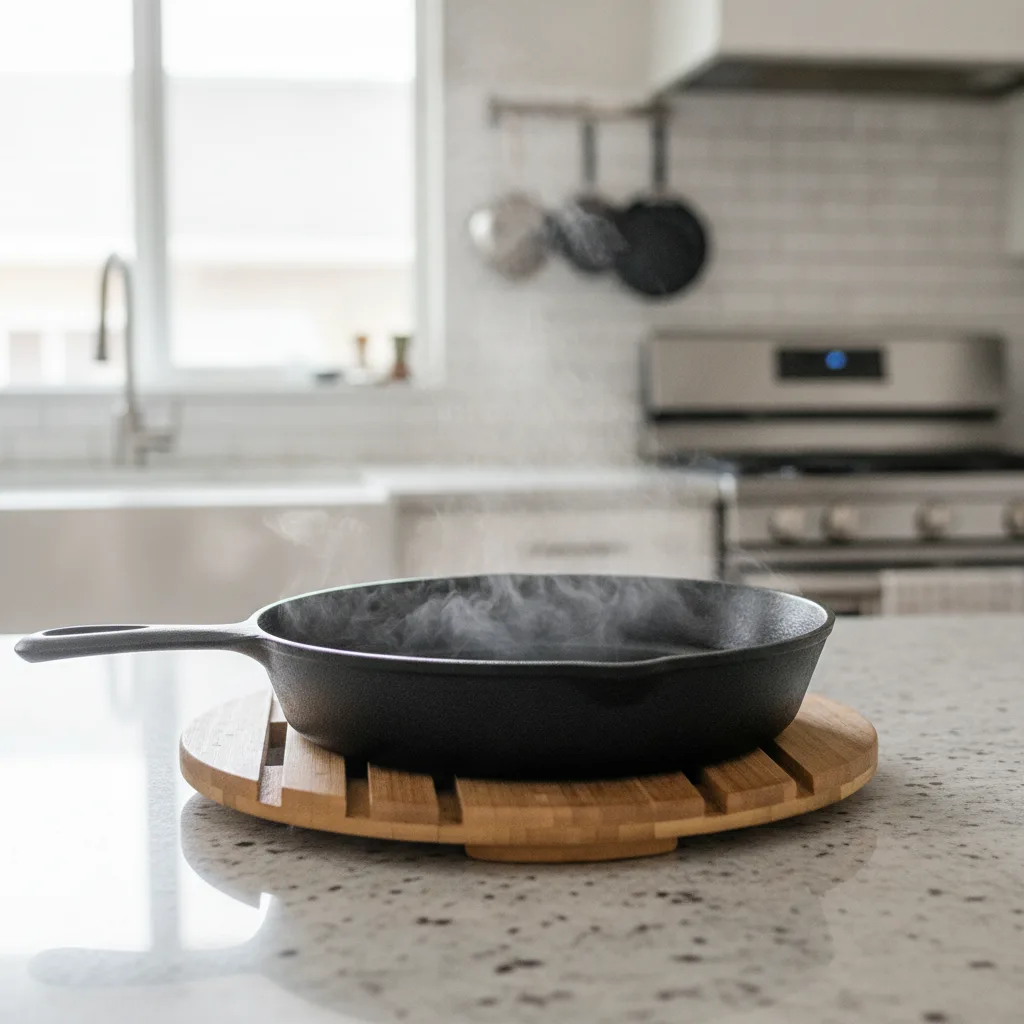
Heat resistance is the one category where quartz countertops lose clearly to granite and quartzite, and it's the durability fact most sales pitches gloss over. The resin binders in quartz begin to weaken at around 150 degrees F. Most manufacturers rate brief safe contact up to roughly 300 degrees F — but a frying pan on high heat reaches 400-600 degrees F. Set that pan directly on the countertop surface and you risk permanent scorch marks, discoloration, or cracks that no repair will fully fix.
Granite and quartzite have no resin binder. They can handle sustained temperatures of 450 degrees F or higher without damage. That's a real-kitchen advantage if you cook on high heat regularly, pull sheet pans straight from a 425-degree F oven, or use a slow cooker that traps heat over several hours. Unlike quartz, granite and quartzite won't discolor or crack from pots and pans set down without a hot pad.
Caesarstone, Silestone, and Cambria all classify thermal damage as misuse in their warranty language — meaning heat damage voids warranty coverage entirely. If you want heat-resistant countertops and cook seriously, granite or quartzite is the practical choice. If you choose quartz, use trivets and hot pads every single time. That's not a maybe — it's the only way to protect your investment and keep your warranty intact.
Slow cookers are a frequent and unexpected cause of quartz heat damage. A slow cooker running for 6-8 hours on a quartz countertop surface traps heat at the base, building temperatures that exceed the roughly 300-degree F safe limit over time. Always use a trivet or wooden board underneath — not just under hot pans, but under any appliance that runs warm for extended periods.
Stain resistance is where quartz countertops win outright, and for most Central Texas families, this is the deciding factor. Unlike granite, quartz is non-porous by design — its engineered surface has no microscopic channels for red wine, coffee, or cooking oil to seep into. Clean spills with a damp cloth and mild dish soap, and they're gone. No professional sealing required. Ever.
Granite requires resealing every 1-3 years depending on porosity. Quartzite typically needs annual professional sealing. Skip it on either material and staining risk climbs significantly — especially with darker liquids or acidic foods. DIY sealer products run $10-$30; professional sealing service costs $50-$150 per visit. It's not a huge expense, but it is a recurring maintenance task that quartz eliminates entirely. That zero-sealing convenience is a genuine quality-of-life advantage for busy households.
Marble is the worst performer for stain and chemical resistance among the four countertop materials. Composed mainly of calcite, marble etches chemically when it contacts everyday kitchen acids — lemon juice, vinegar, red wine. These aren't stains you can wipe away. They're surface-level chemical reactions that dull the polish permanently. Quartz, granite, and quartzite all avoid acid etching. If you cook with citrus or keep vinegar on the counter, marble is a poor fit for a working kitchen, regardless of its natural beauty and striking veining patterns.
Lifespan varies more between countertop materials than most homeowners expect. Granite and quartzite are rated 50-plus years — essentially lifetime surfaces. Replacements are almost always style-driven, not failure-driven. Quartz lasts 20-50 years in residential settings with proper care, but the resin ceiling is real: heat damage, harsh chemicals, and heavy edge impacts all shorten that range. Marble is structurally long-lived, but shows visible aging — etching, scratches, dulled polish — within 20-25 years under normal kitchen use. For a surface you're paying $65-$250 per square foot installed, that visible aging arrives fast.
Quartz's resin binder is also its outdoor weakness. UV exposure causes yellowing and color shift over time, making quartz a poor fit for outdoor kitchens or spaces with strong direct sunlight. Granite and quartzite are UV-stable and the right choice for Central Texas patios and outdoor cooking spaces. If you're planning both an indoor and outdoor kitchen, quartz slabs work indoors; granite or quartzite slabs belong outside. This split approach lets you match material performance to each environment without compromise.
On cost, installed prices in 2026 run: quartz at $50-$150 per square foot, granite at $40-$100 per square foot, quartzite at $60-$120 per square foot, and marble at $65-$250 per square foot. Quartz's higher cost versus granite is partially offset by zero sealing costs over its lifetime. A family that cooks daily on high heat gets more long-term durability from granite at a lower price per square foot. A family that prioritizes low-maintenance upkeep and consistent design options gets real value from quartz despite the higher upfront cost.
Free
Brings physical samples of quartz slabs, granite, quartzite, and marble to your kitchen so you can compare color options, veining patterns, and surface finishes in your actual lighting before committing to installation.
Quartz countertops are the best value for homeowners who want low maintenance, consistent color options, and strong stain resistance — and who don't regularly set hot pans directly on the surface. Busy families with kids, light-to-moderate cooking habits, and no interest in regular sealing will be happy with quality quartz countertops for decades. The non-porous surface keeps cleanup fast, the consistent pattern means no surprises between quartz slabs, and the design options from contemporary to traditional styles are broader than any natural stone category.
Granite is the better choice for serious home cooks who use high heat daily, want a lower cost per square foot, and don't mind resealing every one to three years. It's the clear winner for outdoor kitchens — UV-stable, heat-resistant, and highly durable in the Central Texas climate. Quartzite is the choice for homeowners who want the veined natural stone aesthetic with the highest scratch resistance of any material on this list (Mohs 7-8) and are willing to commit to annual professional sealing. Marble belongs in low-use bathrooms or fireplace surrounds where its natural beauty is on display and daily kitchen stress isn't a factor. Porcelain slabs are worth considering for ultramodern or commercial-look kitchens where UV stability and extreme heat resistance are both required — though fabrication complexity and visible seams are tradeoffs compared to quartz or granite.
At Fox Granite, we've completed over 10,000 projects across Austin, San Antonio, and the Central Texas corridor since 2010. Most homeowners who regret their countertop choice picked the material for looks alone and didn't account for how they actually use their kitchen. We bring samples to your home, walk you through the full fabrication and installation process, and give you transparent, all-in pricing with no surprise fees. Our in-house fabrication means no subcontractors and no gaps between the people who make your slab and the people who install it.

Every major quartz manufacturer — Caesarstone, Silestone, Cambria — classifies thermal damage as misuse and excludes it from warranty coverage. A single hot pan set directly on the countertop surface can cause permanent scorch marks or cracks with no recourse. If your household regularly pulls sheet pans from a hot oven or uses a slow cooker, ask your Fox Granite consultant about granite or quartzite before you commit to quartz. We'd rather you choose the right material the first time than deal with a damaged surface and a denied warranty claim later.
The right quartz countertop or natural stone surface is the one that matches how your household actually cooks — not the one that looks best in a showroom photo. Quartz wins on stain resistance and low-maintenance upkeep. Granite and quartzite win on heat tolerance, UV stability, and raw lifespan. Marble wins on aesthetics and loses almost everywhere else in a working kitchen. When you know which category matters most to your daily life, the choice becomes clear. For quartz countertop installation, granite, quartzite, and marble countertops in Austin, San Antonio, Round Rock, New Braunfels, and the surrounding Central Texas areas, Fox Granite is ready. We're a family-owned team with over 15 years of experience, in-house fabrication, and free in-home consultations with physical samples. Contact us today to schedule your consultation or call (512) 653-5541.
Ready to get started? Contact Fox Granite today.


BY APPOINTMENT ONLY
1379 Wald Road
New Braunfels, TX 78132
Austin, San Antonio, Cedar Park, Kyle, New Braunfels, Del Valle, Elgin, Lago Vista, Shady Hollow, Onion Creek, Buda, San Marcos, Lockhart, Temple, Wimberley, Dripping Springs, Bee Cave, Lakeway, Leander, Anderson Mill, Jollyville, Spicewood Springs, Round Rock, Georgetown, Pflugerville, Manor, Taylor, Manchaca, Mountain City, Hutto, West Lake Hills, Bastrop, Liberty Hill, Driftwood, Sun City, Steiner Ranch.