Quartz Countertop Cost Per Square Foot in Central Texas (2026)
💡 Quick Answer
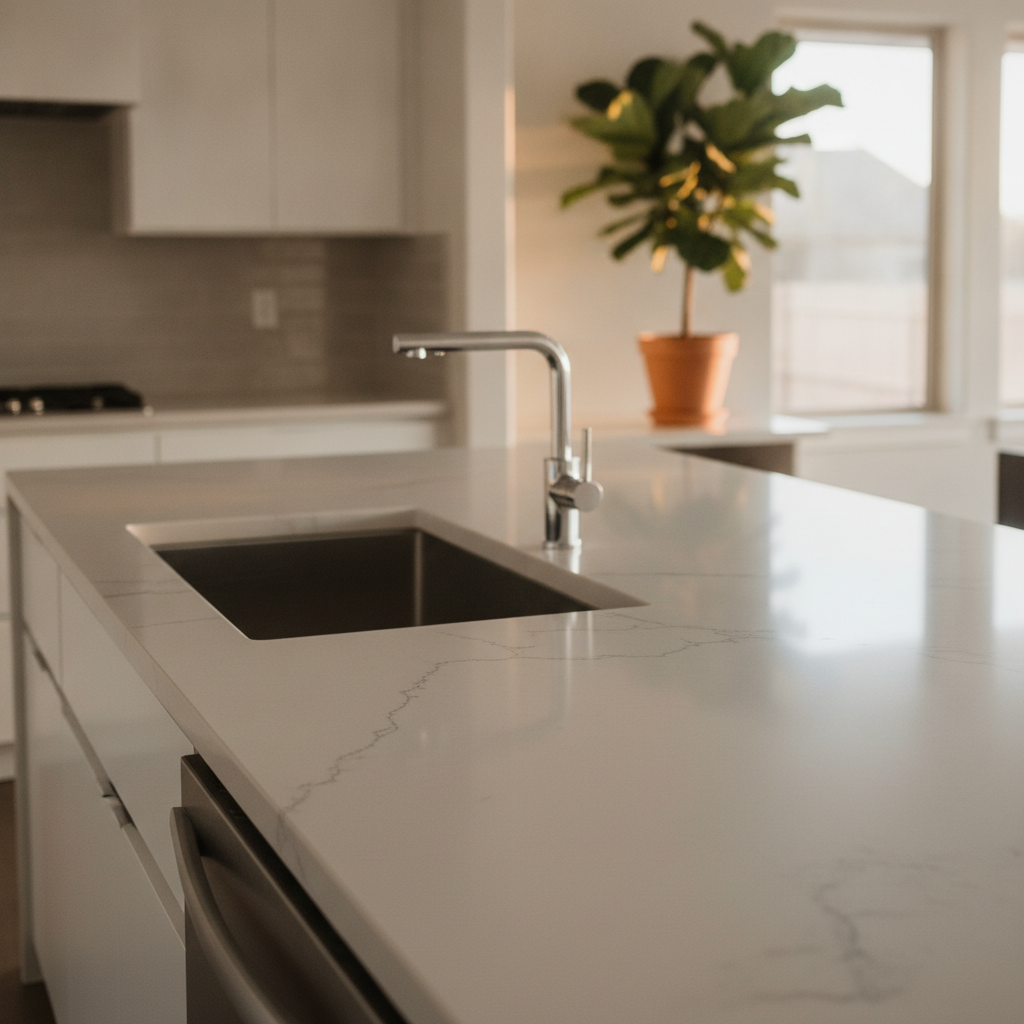
Quartz countertop installation in Central Texas costs $50–$150 per square foot installed in 2026, with most homeowners landing between $70 and $100 per sq ft for a mid-grade slab, standard edge profile, and one or two cutouts. A standard 40–50 sq ft kitchen runs $3,500–$7,500 all-in once you add fabrication, delivery, and installation. The slab itself is only 40–50% of the final installed price; fabrication and labor account for the other 50–60%. Edge profile upgrades, sink cutouts, and old countertop removal are the most common costs that push a $65/sq ft quote past $95/sq ft by the time the invoice arrives.
📊 Key Takeaways
Here are the numbers that matter most before you request a single quote on new quartz countertops.
$50–$150/sq ft installed
Full quartz countertop price range in Central Texas, 2026
$3,500–$7,500 all-in
Typical total cost for a standard 40–50 sq ft kitchen
50–60% of cost is labor and fabrication
The slab quote is never the whole story
$450–$1,200 in cutout add-ons
Sink, faucet, and cooktop cutouts on a typical kitchen
$15–$30/linear ft for ogee or dupont edges
Decorative edge profiles are one of the fastest budget surprises
$200–$400 for old countertop removal
Frequently omitted from first quotes; confirm before comparing bids
13–22% GC markup
Added cost when a general contractor manages your installation
36% U.S. countertop market share
Quartz leads all countertop materials in 2026 installations
Quartz countertop installation in Central Texas costs $50–$150 per square foot installed in 2026, but that range tells you almost nothing useful on its own. The slab price is only 40–50% of what you will actually pay. Fabrication, edge profiles, cutouts, and old countertop removal fill in the other half of the bill — and those line items are exactly what most initial quotes leave out. This guide breaks down the real quartz countertop per square foot cost for Austin, San Antonio, Round Rock, and New Braunfels homeowners, by tier, by add-on, and by the decisions that move the price the most. Every number here reflects actual 2026 Central Texas market pricing, not a national average.
How Much Do Quartz Countertops Cost Per Square Foot in 2026?
Tier
Price range
What's included
Best for
Entry-Level Quartz
$50–$80/sq ft installed
Solid or simple colors, MSI or comparable brand, eased edge, standard fabrication
Budget renovators, rental properties, or secondary bathrooms with low design complexity
Mid-Range Quartz
$80–$120/sq ft installed
Marble-look patterns, veining, Silestone or Caesarstone, beveled or bullnose edge options
Most Central Texas kitchen renovations — the sweet spot for design, durability, and total cost
Showpiece kitchens, large kitchen islands with waterfall edges, or homeowners who want Cambria's U.S. warranty
What You Get at Each Tier: Material Cost, Fabrication, and Installation Costs
Entry-Level Quartz
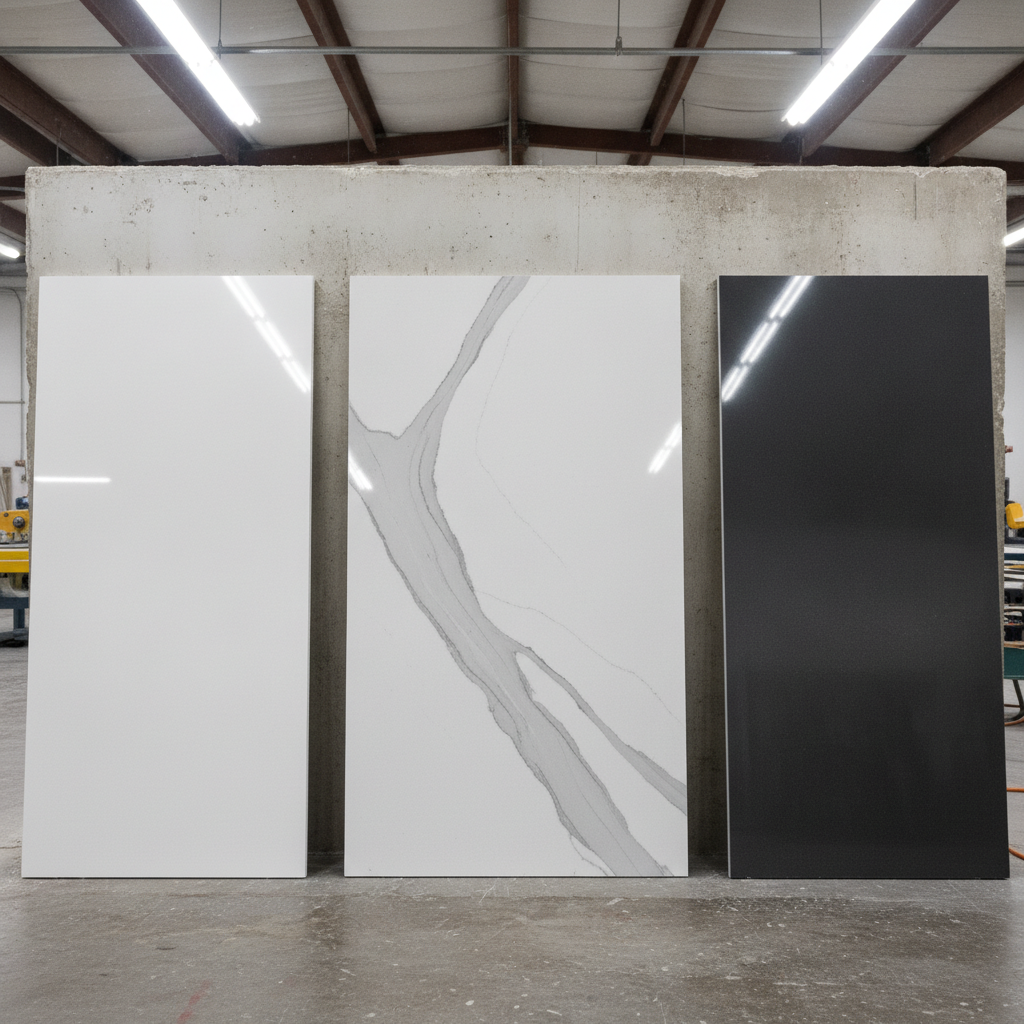
Entry-level quartz covers solid whites, grays, and neutral colors from brands like MSI, where material alone runs $40–$60 per sq ft before fabrication and labor. These slabs are non-porous, scratch-resistant, and stain-resistant — the same core benefits you get at any tier — but they skip the marble-look veining and unique patterns that push prices higher. For a standard 40 sq ft kitchen in Austin or San Antonio, an entry-level quartz installation lands between $2,000 and $3,200 all-in, assuming an eased edge and a single undermount sink cutout.
That is a solid result for homeowners who want durable, low-maintenance quartz surfaces without paying for design complexity they do not need. Entry-level quartz is also the right call for a rental property or a quick sale prep where long-term durability matters less than immediate visual appeal and budget control.
Mid-Range Quartz
Mid-range quartz is where most homeowners land, and for good reason. Caesarstone runs $70–$130 per sq ft installed, Silestone sits in a similar band, and both offer the marble-look veining and unique patterns that make a kitchen feel finished. Fabrication and labor make up 50–60% of the final installed price at this tier, so the slab cost is only part of the story. A 40–50 sq ft kitchen with a mid-grade slab, beveled edge profile, undermount sink cutout, and faucet holes typically totals $3,500–$6,000 all-in.
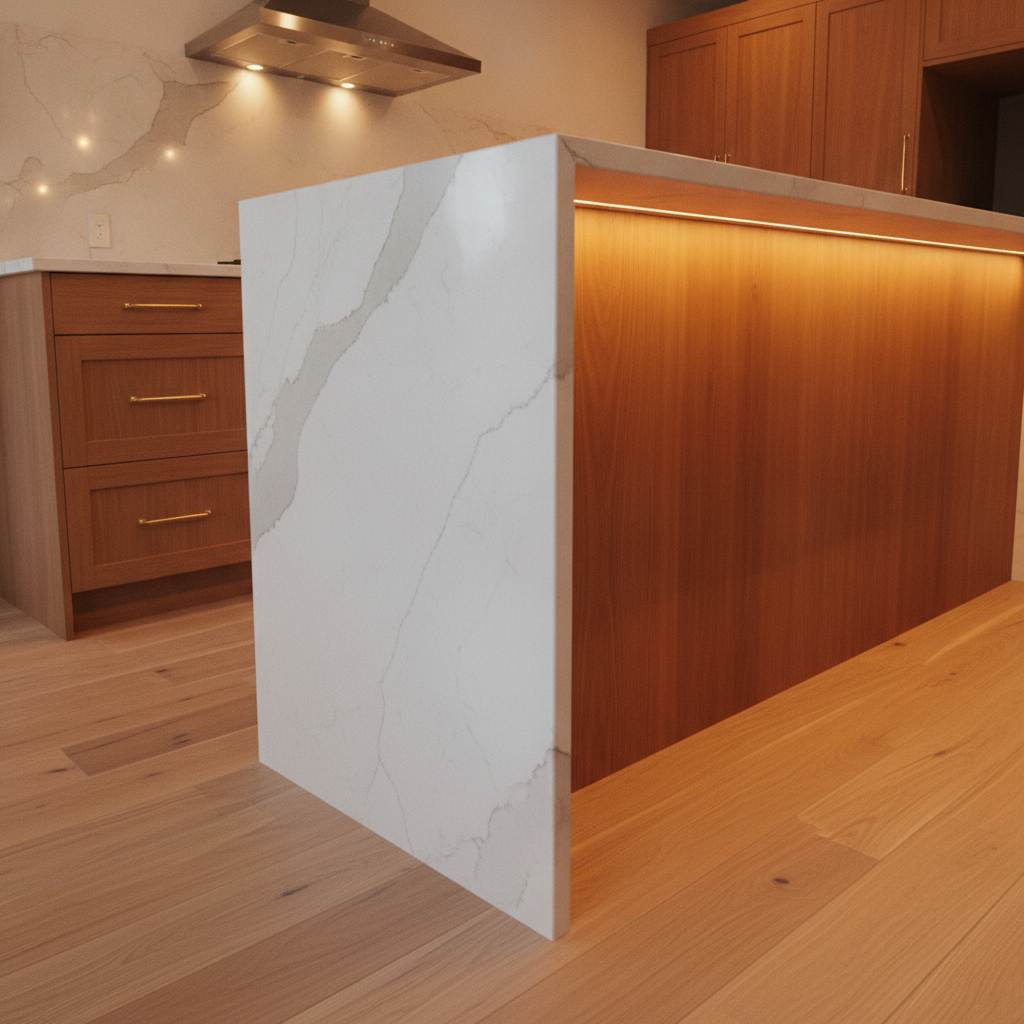
That range reflects real Central Texas quartz countertop pricing in 2026. Quartz quality at this tier is high enough to support a waterfall kitchen island edge if you want one — though that add-on costs $500–$1,500 per section, so factor it in before your estimate is finalized. The mid-range tier accounts for the bulk of quartz countertop installation projects across Austin, San Antonio, Round Rock, and New Braunfels.
Premium Quartz
Cambria leads the premium tier at $85–$150+ per sq ft installed. It is the only major quartz brand manufactured entirely in the United States, and it backs that distinction with the strongest warranty in the category. Rare patterns, deep veining, and jumbo slab formats — which reduce visible seams across a large kitchen island — are standard at this level. Waterfall edges add $500–$1,500 per section, so a kitchen island with two waterfall ends can add $1,000–$3,000 to the project total before you factor in the slab itself.
Premium quartz installation in Austin runs $6,000–$14,000 for a full 100 sq ft kitchen, depending on design complexity, edge profiles, and the number of cutouts. The long-term durability and warranty coverage make this tier a sound investment for a forever kitchen. For homeowners who want a surface that performs for decades with minimal maintenance and zero sealing requirements, the higher price per square foot reflects real, lasting value.
Pros and Cons of Quartz Countertops for Central Texas Homeowners
36% U.S. market share in 2026. More homeowners choose quartz than any other single countertop material, including granite at 24%, because the combination of durability and minimal maintenance is genuinely hard to match.
$3,500–$7,500 all-in for most standard kitchens. A 30–50 sq ft quartz countertop installation covering material, fabrication, delivery, and installation is a competitive price point against natural stone.
Non-porous surface, no sealing required. Unlike granite, which needs resealing every 1–3 years, quartz surfaces stay stain-resistant and scratch-resistant without annual maintenance costs — a real operational difference over a decade.
Consistent color and pattern across the slab. Because quartz is manufactured rather than quarried like natural stone, you get predictable veining and colors, which makes matching a kitchen island to perimeter counters straightforward.
Wide brand and quality range. From MSI entry-level to Cambria premium, quartz quality and price scale to almost any budget, giving homeowners genuine flexibility in material selection.
Durable and heat-resistant under normal kitchen use. Quartz resists chips and scratches in high-traffic kitchens and is engineered for long-term durability, making it a practical surface for households that actually cook.
Material is only 40–50% of the final installed price. A low per-square-foot slab quote does not reflect what you will actually pay. Fabrication and labor add 50–60% on top, which catches many homeowners off guard when the final invoice arrives.
Add-ons stack fast. An undermount sink cutout ($150–$300), faucet cutouts ($100–$200 each), and a cooktop cutout ($200–$400) can add $450–$1,200 to a project before you even pick an edge profile.
Edge profiles are a common budget surprise. A standard eased edge costs nothing extra, but ogee or dupont profiles add $15–$30 per linear foot, and waterfall edges add $500–$1,500 per section.
3cm thickness adds $10–$20 per sq ft over 2cm. On a 40 sq ft kitchen that is $400–$800 more. While 3cm is the North American standard for kitchens, it is a cost many initial quotes omit entirely.
Old countertop removal adds $200–$400. Removal and haul-away are frequently left out of first quotes — confirm this line item before comparing bids so you are not surprised on installation day.
A general contractor markup adds 13–22% to total project cost. Routing your quartz countertop installation through a GC rather than working directly with an in-house fabricator is one of the most reliable ways to overpay on an otherwise straightforward job.
How to Set Your Quartz Countertop Budget Before You Get a Quote
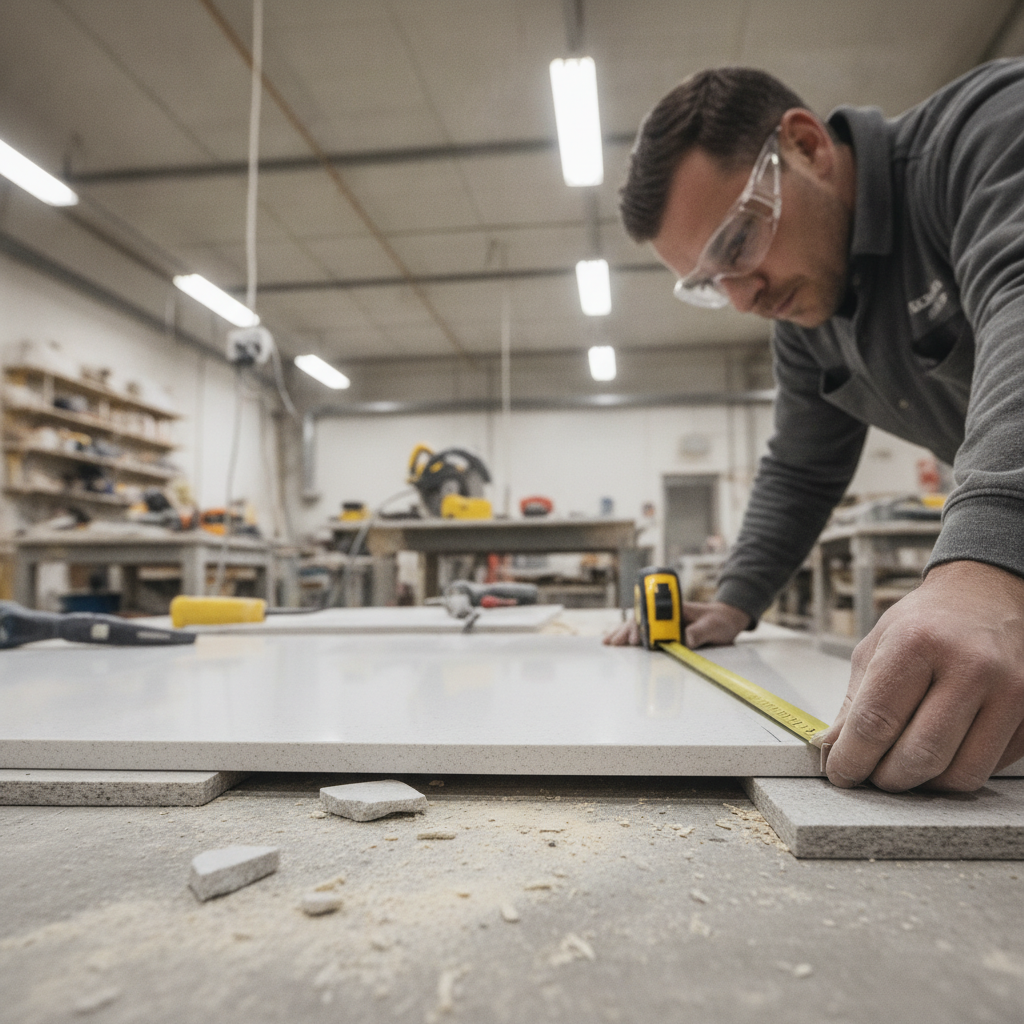
Pin down your square footage before you request any estimate Measure each countertop run in inches, multiply length by depth, divide by 144 to get square feet, then add 10–15% for waste and seams — a 40 sq ft kitchen at $80/sq ft installed means your material-and-labor baseline is $3,200 before any additional costs.
Decide on your slab tier based on how long you plan to stay If you are in the home for five or more years, mid-range quartz at $80–$120/sq ft installed delivers the best balance of quartz quality, design, and long-term durability; entry-level quartz at $50–$80/sq ft makes more sense for a quick sale prep or a rental property.
Choose your edge profile before you get a quote — not after An eased edge adds nothing to the base price, while an ogee or dupont profile adds $15–$30 per linear foot, so on a 20-linear-foot kitchen that is a $300–$600 swing that should be locked in before any estimate is finalized.
List every cutout your kitchen actually needs Count your undermount sink ($150–$300), each faucet hole ($100–$200), and any cooktop or range cutout ($200–$400) — multiple cutouts on a typical kitchen add $450–$1,200 to the final installed price and must appear as line items in any complete quote.
Ask whether old countertop removal and haul-away are included Removal adds $200–$400 to most projects and is one of the most common omissions in a first estimate — confirming this up front lets you compare bids on an apples-to-apples basis.
Book your project for late fall or winter if your timeline allows Spring and summer are the busiest seasons for countertop fabricators across Austin and San Antonio, so scheduling in November through January can mean faster turnaround and, in some cases, better pricing from shops looking to fill their calendar.
The Lowball Quote Trap: Why Your Estimate Keeps Growing
A common pattern in Central Texas: a fabricator quotes $65/sq ft, which sounds fair — until the final invoice adds sink cutouts, faucet holes, an ogee edge, old countertop removal, and delivery, pushing the real cost to $95/sq ft or more. The per-square-foot number only tells part of the story. Ask for a fully itemized quote that includes the slab, fabrication, edge profile, every cutout, removal, delivery, and installation — before you sign anything.
For most Central Texas homeowners renovating a primary kitchen, mid-range quartz at $80–$120/sq ft installed from an in-house fabricator is the right call: strong quartz countertops cost, durable stone surface, no sealing maintenance, and a final installed price that does not balloon with contractor markups. For quartz countertop installation in Austin, San Antonio, New Braunfels, and Round Rock, Fox Granite is a family-owned, in-house fabricator with transparent, all-in pricing — no lowball estimates, no surprise add-ons, and no subcontractors. Contact us today to schedule your free in-home consultation and get a complete line-item estimate for your kitchen or bathroom.
Frequently Asked Questions
How much does 40 sq ft of quartz countertops cost installed in Central Texas?
A 40 sq ft quartz countertop installation in Austin or San Antonio runs $2,000–$3,200 at the entry level and $3,500–$6,000 for a mid-grade slab with a beveled edge and standard cutouts. That range covers material, fabrication, delivery, and installation. It does not include old countertop removal ($200–$400) or a matching backsplash ($150–$400 for a 10-foot run), both of which are common add-ons that fabricators sometimes omit from the first estimate.
What hidden fees push quartz countertop quotes higher than expected?
The four most common add-ons that inflate a quartz installation quote are: edge profile upgrades (ogee or dupont profiles add $15–$30 per linear foot), multiple cutouts for the sink, faucet, and cooktop ($450–$1,200 combined on a typical kitchen), old countertop removal and haul-away ($200–$400), and the jump from 2cm to 3cm slab thickness ($10–$20 more per sq ft, or $400–$800 on a 40 sq ft kitchen). A quote that omits these line items is not a competitive price; it is an incomplete estimate.
What factors affect quartz countertop cost per square foot the most?
Six factors drive the biggest price swings in quartz countertop installation: (1) slab tier and brand — MSI entry-level material runs $40–$60/sq ft while Cambria runs $85–$150+ installed; (2) design complexity and veining pattern; (3) edge profile selection; (4) number of cutouts; (5) slab thickness (2cm vs. 3cm); and (6) whether you hire directly from an in-house fabricator or route through a general contractor, which adds 13–22% to the total project cost. Location within Central Texas also matters: San Antonio quartz installation typically runs 15–20% below Austin pricing.
When do quartz countertop prices spike, and how can I time my project to save money?
Spring and summer are the busiest seasons for countertop fabricators across Austin and San Antonio. Scheduling your project for November through January can mean faster fabricator turnaround and, in some cases, better pricing from shops looking to fill their calendar. Nationally, quartz prices spiked 15–25% between 2021 and 2023 due to container shipping costs and labor shortages, then stabilized by mid-2023. As of August 2026, prices sit roughly 8–12% above 2020 baseline levels and have held steady for about 18 months.
How can homeowners save money on quartz countertop installation without sacrificing quality?
The three most effective ways to save money on quartz countertop installation are: (1) work directly with an in-house fabricator rather than a general contractor, which cuts the 13–22% GC markup; (2) stick with an eased edge profile, which adds nothing to the base price vs. $15–$30 per linear foot for decorative profiles; (3) ask about remnant slabs for smaller projects like bathroom vanities or laundry rooms, where a remnant from a previous kitchen job can cut material cost significantly. Locking in your edge profile and cutout list before your first estimate also prevents scope-creep pricing.
Are quartz countertops worth it for a Central Texas kitchen renovation?
Yes, for most Central Texas homeowners planning to stay in the home five or more years, quartz countertops are worth the investment. Quartz now holds 36% of the U.S. countertop market — more than granite's 24% — because the combination of durability, stain resistance, and minimal maintenance is hard to match. Unlike granite, quartz surfaces require no sealing, which eliminates a recurring maintenance cost. The non-porous surface resists stains and scratches under daily kitchen use, and mid-range quartz from Silestone or Caesarstone carries a warranty that covers manufacturing defects for decades. For a renovation kitchen in Austin or San Antonio, the return on quality new countertops at $80–$120/sq ft installed consistently outperforms laminate alternatives at resale.
Is quartz cheaper than granite for Central Texas homeowners?
Quartz and granite installed costs overlap significantly in Central Texas, both landing in the $50–$120/sq ft range for mid-grade material. Granite can run cheaper on unique patterns sourced locally, but it requires sealing every 1–3 years, which adds ongoing maintenance cost over the life of the countertop. Quartz surfaces skip that upkeep entirely. For most homeowners comparing the two materials at similar quality tiers, the total cost of ownership over 10 years tends to favor quartz.