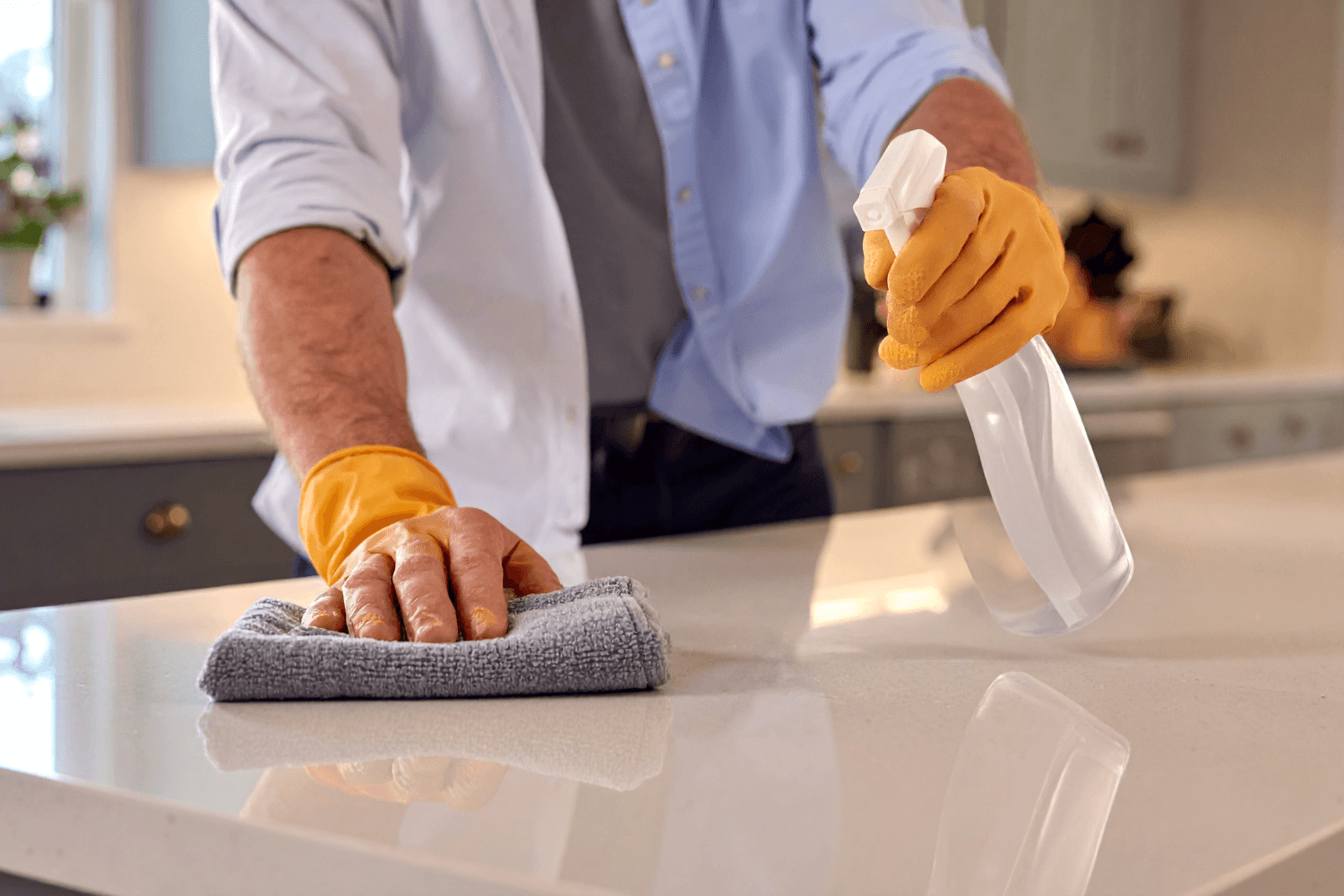
The safest non-abrasive cleaner for quartz countertops is Weiman Quartz Countertop Cleaner and Polish: pH-neutral, non-abrasive, UV-protective, and available for $7-$10 per 24 oz bottle at Walmart, Lowe's, and Target as of August 2026. For daily cleaning, warm water, a single drop of mild dish soap, and a soft microfiber cloth cost almost nothing and protect the resin binder just as well. Avoid the scratchy green side of any kitchen sponge, steel wool, Magic Erasers, undiluted vinegar, bleach, and ammonia-based sprays. All of those permanently damage quartz's polymer resin layer — the haze they leave cannot be polished out.
The scratchy green side of a standard kitchen sponge is the single most common cause of dull quartz countertops — and most homeowners never suspect it. Quartz countertops are engineered stone: approximately 90-94% ground natural quartz mineral bound with 6-10% polymer resin binders. The quartz mineral rates 7 out of 10 on the Mohs hardness scale, harder than marble and harder than most kitchen tools. The resin binder, though, scratches easily, degrades under acids and high-pH chemicals, and cannot be re-polished once damaged. This guide walks you through the six steps to choose the right non-abrasive cleaner for quartz countertops, retire the products causing harm, and build a daily routine that keeps the finish streak-free and flawless for years — for a total annual product cost of $25-$35.
Quartz countertops are engineered stone, not quarried natural stone: roughly 90-94% ground quartz mineral is bound together with 6-10% polymer resin binders and pigments. The quartz mineral itself rates 7 out of 10 on the Mohs hardness scale — harder than marble (3-5) and harder than most kitchen tools. The resin binder is an entirely different material with entirely different vulnerabilities.
That resin layer is what gives quartz its non-porous, stain-resistant surface — and it is also what gets wrecked by the wrong cleaner or sponge. Abrasive pads create microscopic scratches in the resin. Those scratches scatter light instead of reflecting it evenly, which is what makes a once-glossy counter look hazy and dull. Acidic cleaners like vinegar or lemon juice and alkaline cleaners like bleach or ammonia chemically degrade the polymer, causing cloudiness, discoloration, and permanent dulling that no amount of wiping will fix.
This matters because quartz does not need sealing the way granite or marble does — its non-porous surface is sealed at the factory. But that advantage disappears the moment the resin binder is degraded. Once the factory-polished finish is damaged at the micron level, you cannot re-polish quartz the way you would re-hone natural stone. Protecting the resin is the entire game — everything else in this guide follows from that fact.
Most homeowners reach for the nearest sponge and spray without knowing that quartz countertops have two distinct layers with completely different vulnerabilities. Skipping this context leads directly to the most common cleaning mistake: treating quartz like tile, laminate, or porcelain.
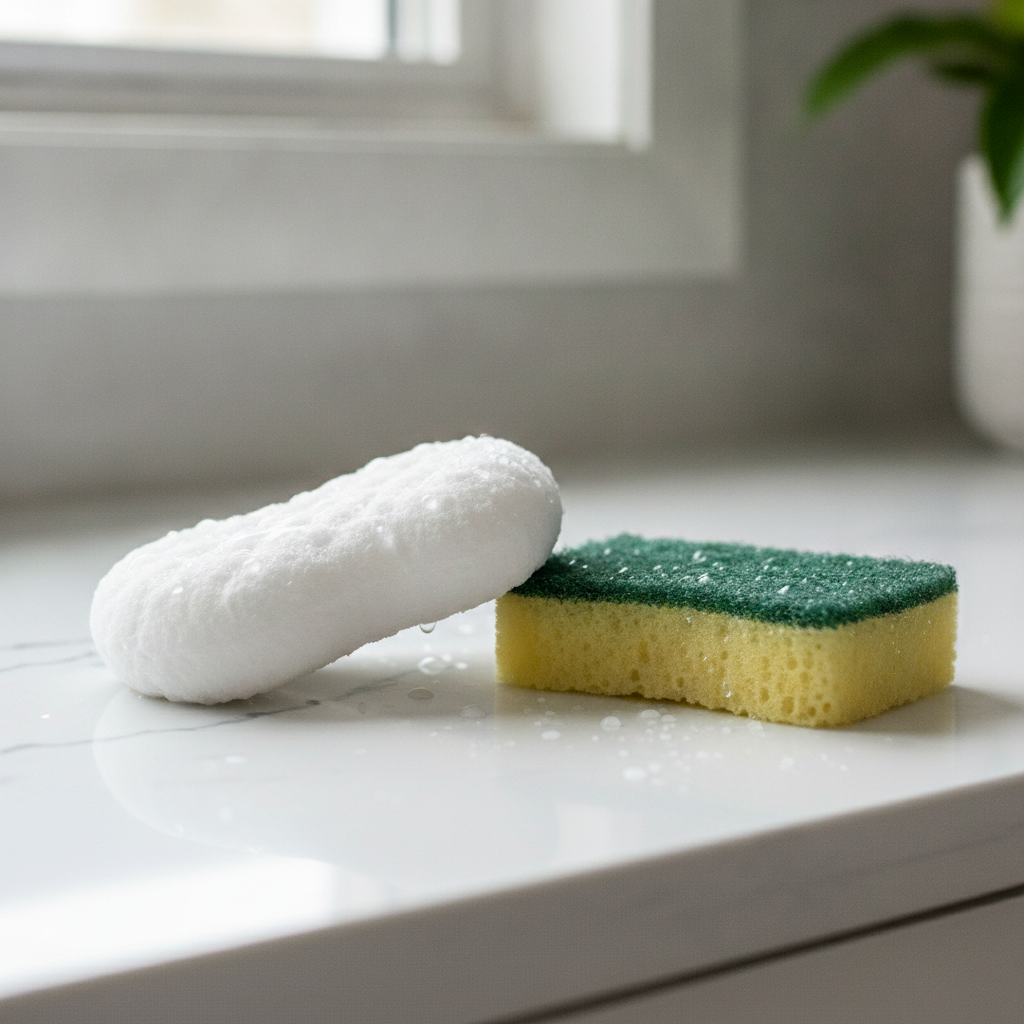
The scratchy green side of a standard kitchen sponge is the most common cause of dull quartz countertops. It feels harmless — it is not steel wool — but its abrasive texture is enough to scratch the resin binder and create a haze that builds up over months of daily use. Steel wool, stiff-bristle brushes, abrasive cleaners in powder form, and melamine sponges (Magic Erasers) belong in the same do-not-use category. Magic Erasers are too abrasive for gloss finishes and should never be used on polished quartz surfaces — the damage looks like streaks at first and becomes permanent haze.
On the chemical side, pull out anything with a pH that strays far from neutral 7. Undiluted vinegar sits around pH 2.5 — acidic enough to break down the resin binder over repeated use. Bleach and ammonia-based cleaners push into high-alkaline territory and cause the same degradation from the other direction. Multi-purpose household sprays not specially formulated for quartz often leave a filmy residue or cause streaks that build into a cloudy finish over time. Even mild dish soap, used too heavily or not rinsed well, can leave soap residue that dulls the surface.
Go through what is under your sink right now. If the label says all-purpose, check the pH on the manufacturer's safety data sheet — anything below 6 or above 8 is a risk for daily cleaning on quartz surfaces. If it contains bleach, ammonia, or acids like citric acid or vinegar, set it aside for tile, grout, or other stone countertops where those chemicals do less damage. A non-abrasive sponge and a pH-safe cleaner are the only tools that belong near engineered stone on a regular basis.
$8-$15 for a 12-24 pack
The only safe daily wiping tool for quartz — no abrasive texture to scratch the resin binder; rinses clean and lasts hundreds of uses
Back-and-forth scrubbing concentrates friction on the resin surface. If you ever need to work a stubborn spot, use gentle circular motion with a soft cloth — it distributes pressure more evenly and reduces the risk of visible haze.
The safest daily cleaner for quartz countertops costs almost nothing: warm water, a single drop of mild dish soap, and a dry microfiber cloth to finish. One drop of Dawn or a similar mild dish soap breaks down grease, cooking oils, and everyday grime without attacking the resin binder. The key word is mild — and a drop, not a squeeze. Too much soap leaves soap residue that builds up into a filmy haze over time, making clean counters look dirty even right after cleaning.
The routine is simple. Dampen your microfiber cloth with warm water, add the single drop of mild dish soap, then wipe surface dirt and spills using gentle circular motions. Follow with a second pass using a clean damp cloth to remove any soap residue. Finish by buffing with a dry microfiber cloth until the surface reaches a streak-free finish. Wipe spills as soon as they happen — coffee, wine, citrus juice, and cooking sauces all become harder to remove once they dry, and acidic spills can begin degrading the resin if they sit.
This soap-and-water method works for daily cleaning and light grime on most quartz surfaces. It will not leave a streak-free polish or protect against UV fading the way a purpose-built quartz countertop cleaner does, but it is your go-to baseline for quick daily wipes and costs nothing beyond the microfiber cloths. If you want to keep a spray bottle pre-mixed for convenience, plain warm water alone — no soap — is safe to mix in advance without risk of residue buildup.
$2-$5
Breaks down oils without harsh chemicals that degrade quartz resin binders — one drop per clean is all you need; rinse thoroughly to prevent soap residue
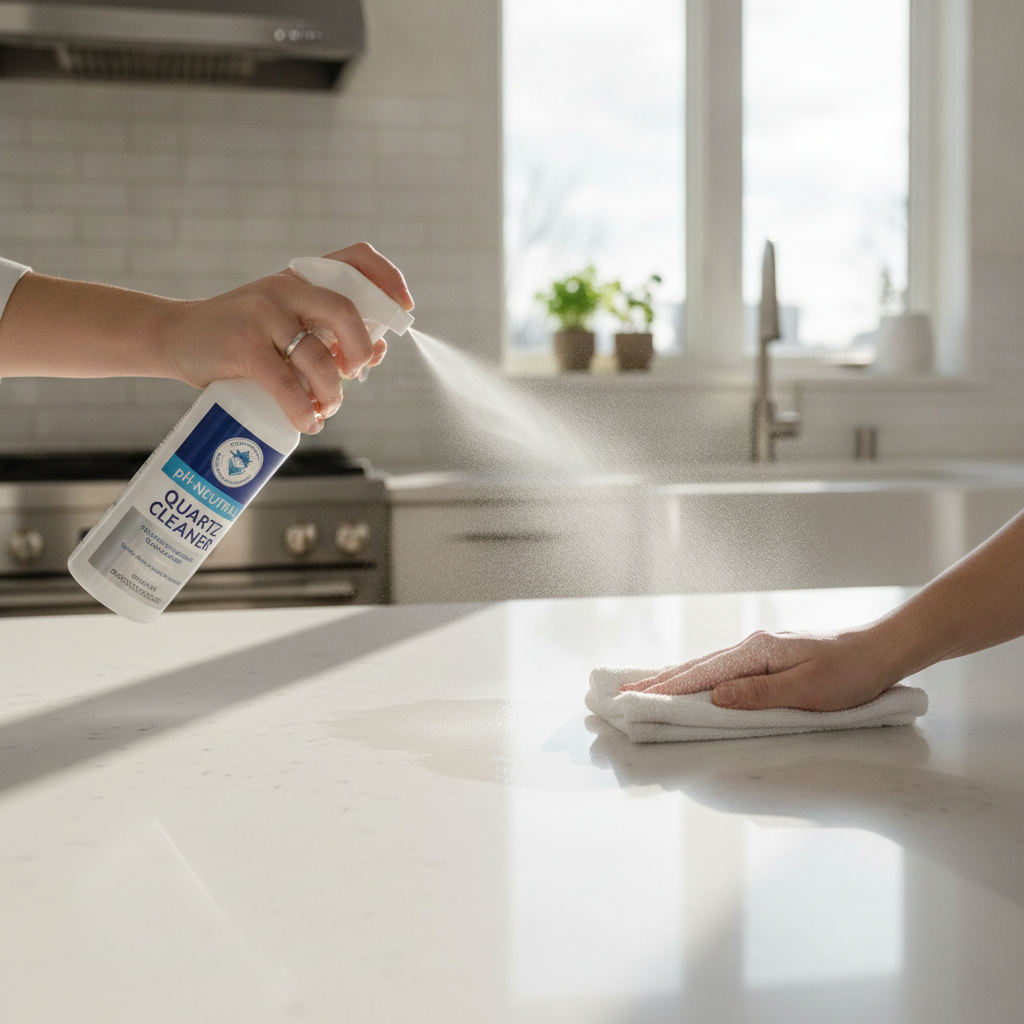
A quartz countertop cleaner specially formulated at pH-neutral (around 7) does what soap and water cannot: it removes residue buildup, leaves a streak-free finish, and — in the case of the better products — adds UV protection to the resin layer to prevent discoloration from sun exposure. As of August 2026, 13 non-abrasive, quartz-formulated products are stocked at Home Depot alone under the Non-Abrasive and Quartz filter. Three stand out for price, performance, and broad availability across the Austin and San Antonio metro areas.
Weiman Quartz Countertop Cleaner and Polish is the most consistently recommended quartz cleaner on the market as of 2026. It is pH-neutral, non-abrasive, and includes UV protection for the resin binders — something most budget cleaners skip entirely. A single 24 oz bottle runs $7-$10 at Walmart, Lowe's, Target, and Amazon. The 2-pack with a microfiber towel runs $21-$24 and is the smarter buy for a household that cleans counters daily. It holds a 4.7-star rating across 1,383 reviews. Spray it on, wipe with a microfiber cloth in circular motions, and buff dry — done in under two minutes.
HOPE'S Perfect Quartz Countertop Cleaner is the strong budget alternative at $15.45 for a 23 oz bottle with a microfiber cloth at Walmart. It is fragrance-free, pH-neutral, and leaves no hazy residue, silicone, or oil film on the surface — a genuine problem with some multi-purpose sprays. Rock Doctor Granite and Quartz Cleaner rounds out the list: non-abrasive, non-acidic, and safe on granite, marble, tile surfaces, and quartz surfaces alike — useful if you have mixed countertop material in your home. It runs about $21 for a two-pack and holds a 4.8-star rating on Amazon. For water spots near the sink or mineral buildup on stone countertops, any of these three products outperforms plain soap and water.
$7-$10 single / $21-$24 for 2-pack with microfiber
Best overall: pH-neutral, non-abrasive, UV-protective resin care, streak-free finish — 4.7 stars on 1,383 reviews; available at every major retailer
$15.45 with microfiber cloth at Walmart
Budget-friendly pH-neutral option with no hazy residue, silicone, or oil film — solid pick for fragrance-sensitive households
~$21 for two-pack on Amazon
Non-abrasive, non-acidic, safe on quartz and natural stone countertops — 4.8-star rating; best pick for kitchens with mixed countertop materials
If you already have a cleaner at home you want to test, look it up on the manufacturer's safety data sheet — pH is listed there. Anything below 6 or above 8 is a risk for regular cleaning on quartz surfaces. Anything that lists bleach, ammonia, or acids in the active ingredients list does not belong near engineered stone.
Tough stains on quartz — dried coffee, wine, grease buildup, water spots, or sticky residue — do not require abrasive cleaners. They require patience and the right non-abrasive approach. Start by dampening a soft cloth with warm water and letting it sit on the stain for 5-10 minutes to loosen it. For most dried spills, that is enough. Follow with a drop of mild dish soap, gentle circular scrubbing with a soft cloth, then rinse with clean water and buff dry with a dry microfiber cloth.
For tougher grime or residue buildup that will not lift with soap and water, spray a quartz-specific cleaner like Weiman directly on the spot. Let it dwell for 60 seconds, then wipe in circular motions with a soft cloth. Do not scrub hard. If the stain still resists, an ammonia-free glass cleaner — Windex is the most accessible option — applied briefly with a soft cloth is generally safe on quartz and can cut through greasy residue without damaging the resin. Use it sparingly and rinse thoroughly with clean water after. Never use abrasive cleaners or harsh cleaners to force a tough stain out. The damage to the resin finish is permanent and not covered by most countertop warranties.
For water spots and mineral buildup near the sink, the same method applies: warm water, a professional cleaner or quartz-specific spray, gentle circular motion, and a dry microfiber buff to finish. If water spots keep coming back, the issue is usually hard water rather than the countertop material itself. Wiping down counters near the sink after every use is the most effective way to prevent staining before it starts — and it costs nothing.
Porcelain and tile surfaces tolerate more aggressive scrubbing than quartz does. If you clean mixed-surface kitchens, do not carry the same sponge or habits from tile grout work over to your quartz countertops. Keep a dedicated soft microfiber cloth for quartz only.
Keeping your quartz countertops flawless long-term comes down to a few consistent habits. Always use hot pads or trivets under hot pots and pans — quartz is heat-resistant, not heat-proof, and concentrated direct heat can stress the resin binder and cause discoloration or cracking. Use a cutting board every time. Quartz is scratch-resistant, but dragging knives directly across the surface will eventually leave marks in the resin and dull the shine.
Wipe spills immediately, every time. The most acidic kitchen spills — citrus juice, wine, vinegar-based sauces, coffee — are also the ones most likely to degrade the resin if they sit. A dry microfiber cloth kept on the counter makes this easy. For regular cleaning, stick to the soap-and-water baseline for quick daily wipes and switch to a quartz-specific cleaner like Weiman two to three times a week for a streak-free polish and UV protection. That routine costs about $25-$35 per year in product and maintains the finish far better than any reactive deep-clean.
Unlike granite, marble, or quartzite, quartz countertops do not need sealing. The non-porous surface is one of the biggest reasons homeowners in Austin, San Antonio, and across Central Texas choose quartz for busy kitchens and bathrooms. But that low-maintenance advantage only holds if the resin binder stays intact. The right non-abrasive cleaner, a microfiber cloth, and a strict no-abrasive-sponge rule are the three maintenance habits that keep engineered stone looking as good in year five as it did on installation day.
A quartz countertop installation runs $2,000-$8,000 depending on size and countertop material. A year's supply of Weiman Quartz Cleaner costs roughly $25-$30. The math on using the right cleaner to protect that investment is straightforward.
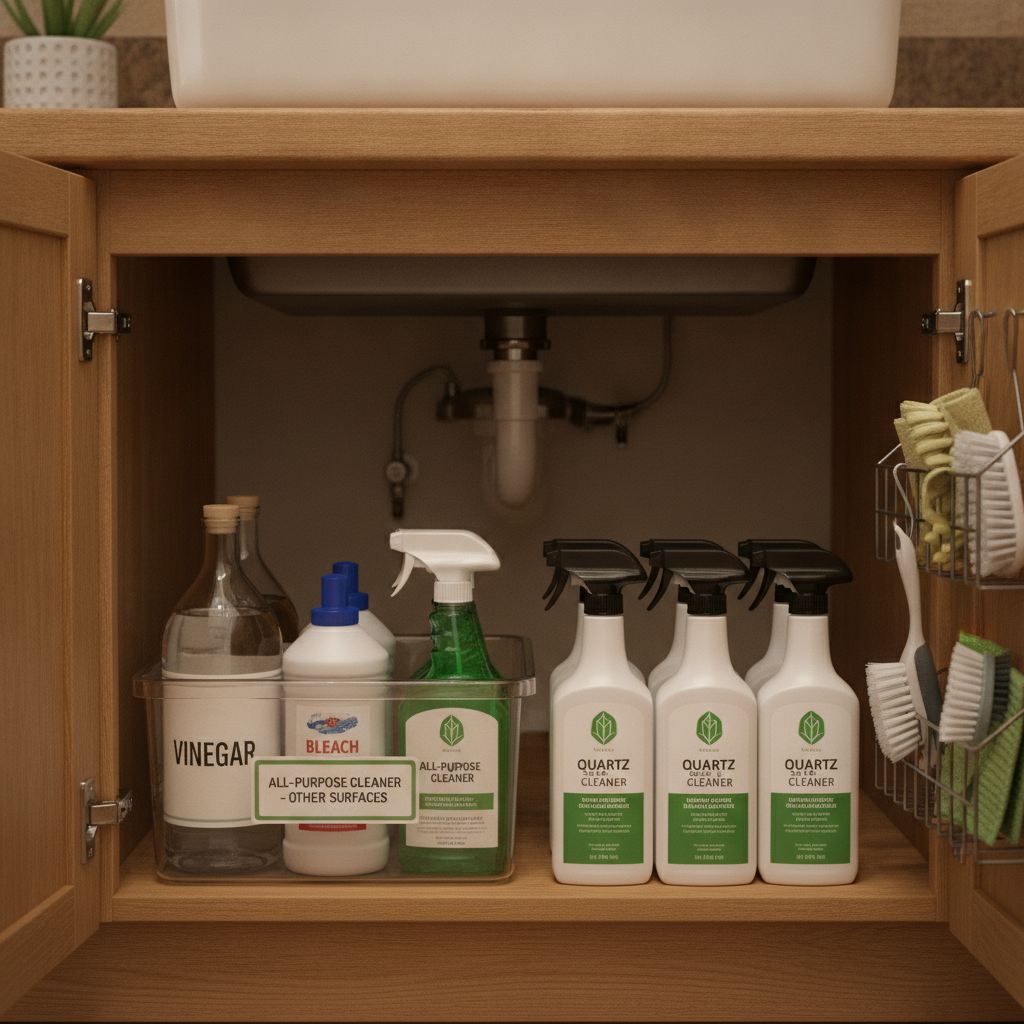
The following are the most common causes of permanent resin damage on quartz countertops: the scratchy green side of a kitchen sponge, steel wool, Magic Erasers (melamine sponges) on gloss finishes, undiluted vinegar, lemon juice, bleach, ammonia, and any multi-purpose spray not specially formulated for quartz or stone surfaces. Once the resin binder is scratched or chemically degraded, the haze and dullness are permanent — no amount of cleaning will restore a factory-polished finish that has been physically damaged. If you have already noticed a dull or hazy patch and you are not sure whether it is residue buildup or resin damage, contact a countertop professional before trying any stronger treatment. The wrong fix can make it worse.
Ready to get started? Contact Fox Granite today.


BY APPOINTMENT ONLY
1379 Wald Road
New Braunfels, TX 78132
Austin, San Antonio, Cedar Park, Kyle, New Braunfels, Del Valle, Elgin, Lago Vista, Shady Hollow, Onion Creek, Buda, San Marcos, Lockhart, Temple, Wimberley, Dripping Springs, Bee Cave, Lakeway, Leander, Anderson Mill, Jollyville, Spicewood Springs, Round Rock, Georgetown, Pflugerville, Manor, Taylor, Manchaca, Mountain City, Hutto, West Lake Hills, Bastrop, Liberty Hill, Driftwood, Sun City, Steiner Ranch.