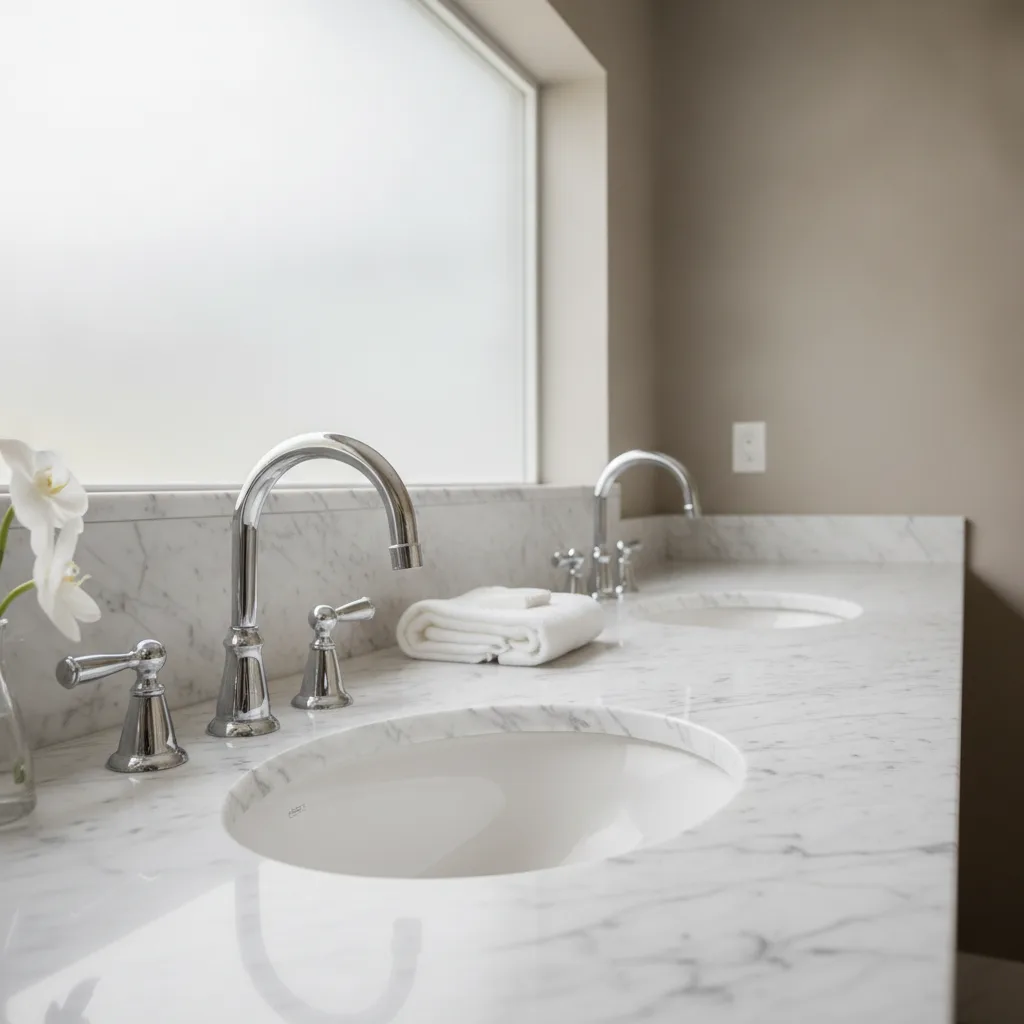
Marble bathroom countertops cost $75–$200+ per square foot installed in 2026, with Carrara at the affordable end ($40–$100/sq ft) and Calacatta or Statuario at the top ($80–$200+/sq ft). A 35-square-foot primary bath vanity runs $1,400–$7,000 installed depending on slab grade. Marble suits bathrooms better than kitchens because it sees fewer acids daily. The two real tradeoffs are etching (acid damage that sealing cannot prevent) and porosity (staining that sealing does prevent). Choose a honed finish for a primary bath to hide etching, and plan to reseal every 6–12 months. If daily maintenance feels unrealistic, quartzite or quartz delivers a similar look with far less upkeep.
Marble bathroom countertops have earned their place in interior design for centuries — and as of 2026, they remain one of the most requested materials for bathroom vanity tops in Central Texas remodeling projects. The beauty is real: no engineered stone fully replicates the natural veining patterns, the cool surface, or the sophistication that a genuine marble slab brings to a bathroom space. But marble is also a material that rewards buyers who go in with honest expectations. This guide walks you through six decisions — from marble grade and finish to the etching-vs-staining distinction most buyers get wrong — so you can confidently decide whether marble is right for your vanity, and if so, exactly which slab to choose.
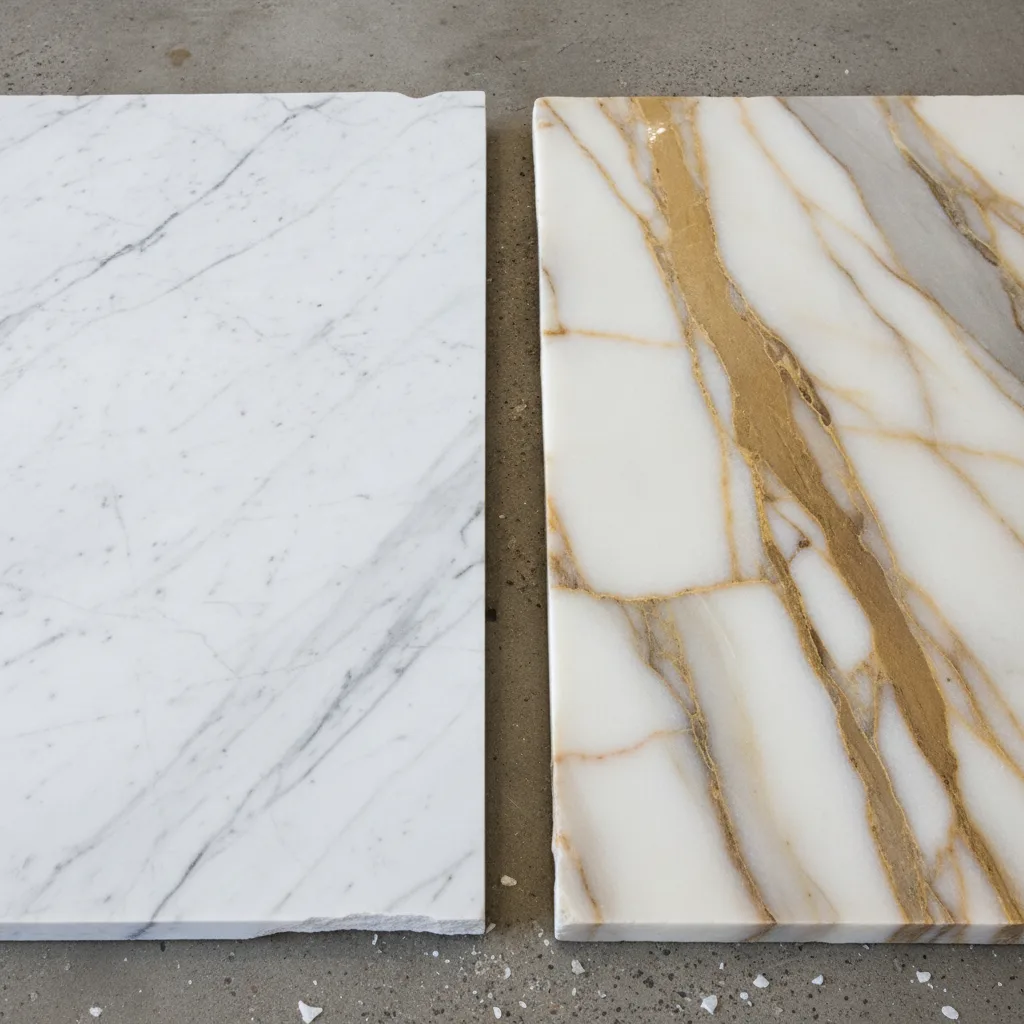
Marble bathroom countertops earn their place in design history for good reason: no two slabs are identical, the veining pattern adds natural drama that engineered stone can only approximate, and the material's cool, smooth surface brings a level of sophistication that holds up across interior design trends. Marble is a metamorphic natural stone formed when limestone is exposed to intense heat and pressure over millions of years. That process creates the distinctive veining patterns — from the soft gray streaks of Carrara to the bold, dramatic lines of Calacatta Gold — that make each slab unique.
The same chemistry that creates that beauty also makes marble softer than granite or quartzite on the Mohs hardness scale. That is the first honest tradeoff to understand when choosing marble. It is more susceptible to scratching than granite, and its calcium carbonate composition reacts to acids — which matters for maintenance decisions you will make later in this guide.
Bathrooms are actually a better fit for marble than kitchens. The acids that cause the most damage — vinegar, citrus, tomato sauce — show up constantly during cooking but far less on a bathroom vanity. A bathroom's primary contacts are water, toothpaste, soap, and cosmetics. That is still a list to manage, but it is a shorter, more controllable one than a kitchen sees every day. Marble also holds up beautifully against moisture when properly sealed, and the cool surface suits a bathroom space both functionally and aesthetically.
Marble is heat-resistant, which is a real functional benefit for a bathroom vanity. Curling irons and flat irons can be set directly on the surface without risk of damage — something quartz manufacturers actually warn against in their care documentation.
Carrara marble is the most affordable and widely available white marble for a bathroom vanity top, running $40–$100 per square foot installed in 2026. It features soft gray veining on a white or blue-gray background — clean, classic, and the go-to choice when clients want natural marble without paying a premium. Most of the white marbles you see in Central Texas bathrooms are Carrara, and the quality across that range is consistently strong.
Calacatta marble sits in the $80–$130 per square foot installed range and delivers bolder, thicker veining with a brighter white background. Designers specify it when the vanity is meant to be a focal point in the room. The color options within the Calacatta family are broader than most buyers expect: Calacatta Gold adds warm gold tones to the veining and is one of the most requested slabs in bathroom remodeling projects as of 2026. Statuario, the rarest Italian marble in this family, runs $130–$200+ per square foot installed and features striking, high-contrast veining on a nearly pure white field — a dramatic statement for a luxury bathroom.
For smaller bathroom vanities, ask your fabricator about remnant slabs. A marble remnant from a larger slab cut can bring the installed price down to $30–$60 per square foot — a genuinely cost-effective option for a single-sink vanity under 48 inches. A 35-square-foot primary bath vanity with one sink cutout can cost anywhere from $1,400 to $7,000 installed depending on the slab selected, so the grade decision matters far more than most buyers expect when they start planning. Beyond Italian white marbles, dozens of other varieties exist — Emperador brown, Noir Saint Laurent black, Verde Guatemala green — that can transform a vanity into a design statement entirely its own.
$40–$100/sq ft installed
Most affordable natural marble entry point; soft gray veining suits both contemporary and traditional bathroom design.
$80–$130/sq ft installed
Bolder veining and brighter white background for a more dramatic vanity statement; warmer tones available in Calacatta Gold.
$30–$60/sq ft installed
Best cost-saving option for vanities under 48 inches; same quality stone at a fraction of the full-slab price.
A honed (matte) finish hides etching far better than a polished finish, and that single fact explains why designers increasingly specify honed marble for bathroom vanity tops in 2026. When an acid contacts polished marble, the dull spot it leaves contrasts sharply against the glossy surrounding surface and is immediately visible. On a honed surface, that same chemical reaction produces far less visible contrast. The etch still happens — honed finishes do not prevent it — but it does not show as clearly. Honed finishes also hide water spots better than polished surfaces, which matters in a bathroom where the vanity sits inches from running water.
Polished marble delivers the mirror-like reflectivity that most people picture when they imagine a luxury bathroom. It amplifies light, makes the veining pattern pop, and photographs beautifully. If your bathroom is a low-traffic guest bath or a powder room, polished marble is a completely reasonable choice — the surface will not see enough daily acid exposure to create a visible etch pattern over time. Polished Carrara in a guest bath is one of the most elegant, low-risk applications of natural marble in any home.
As of 2026, honed and matte finishes are outpacing high-polish marble in bathroom remodeling projects across Central Texas. If you are choosing marble for a primary bath with daily use, honed is the practical call. If it is a guest bath you want to show off, polished gives you the full marble effect with manageable maintenance. Either way, the finish decision shapes your entire long-term experience with the stone more than almost any other choice you make at the showroom.
You cannot easily switch between honed and polished after fabrication without professional re-finishing. Decide on your finish before your fabricator cuts the slab — not after installation.
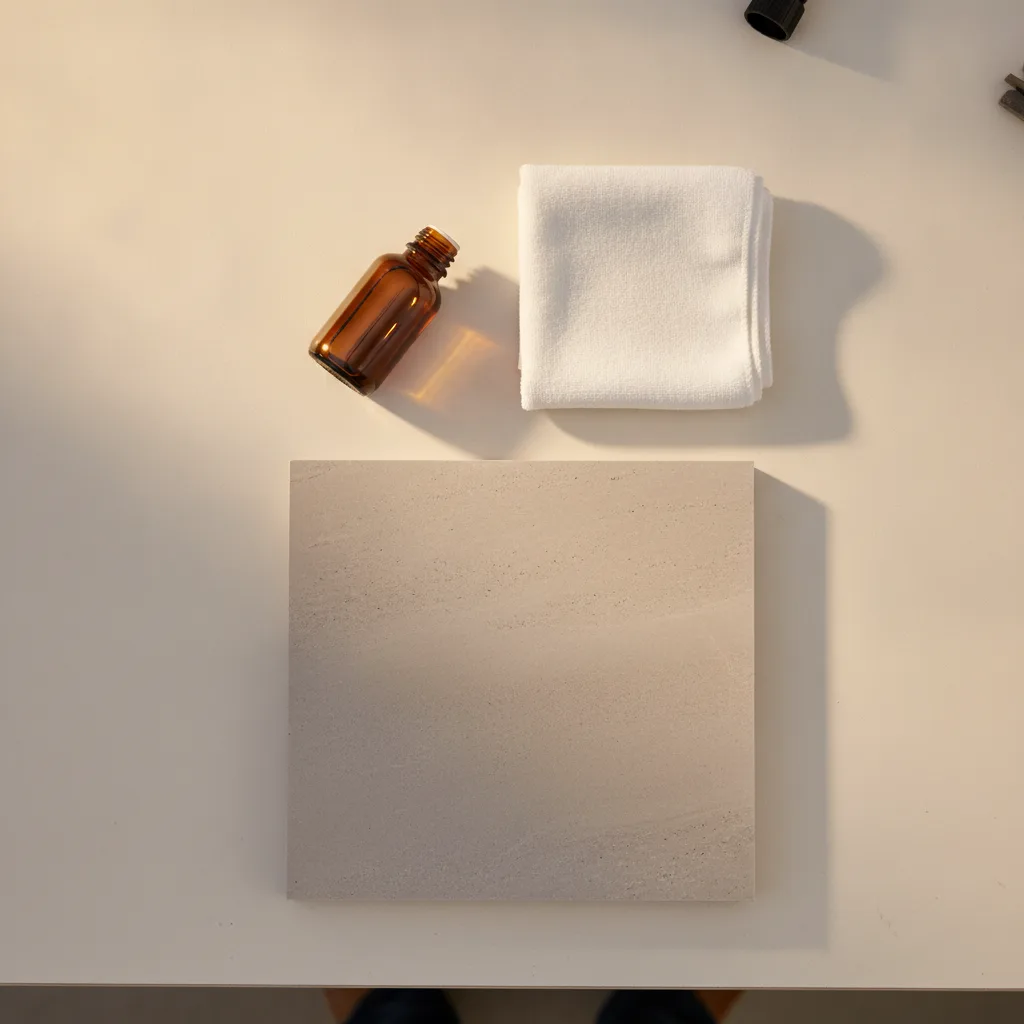
Etching and staining are two completely different problems, and confusing them is the single biggest knowledge gap among marble buyers. Staining is liquid absorption: coffee, wine, or oil soaking into the porous stone and leaving a colored mark. Sealing prevents staining by slowing that absorption into the surface. Etching is a chemical reaction: acids contact the calcium carbonate in the marble and dissolve the polished surface, leaving a dull spot. Sealing does NOT prevent etching. No sealer on the market does.
In a bathroom, the everyday acids that cause etching include toothpaste, mouthwash, face wash, some hair products, and makeup removers. Most of these hit the vanity surface at some point during a typical morning routine. That is not a reason to avoid marble — it is a reason to choose a honed finish, wipe spills quickly, and use a pH-neutral cleaner instead of standard bathroom sprays. Vinegar, lemon-based cleaners, ammonia, and hydrogen peroxide will all etch marble on contact. Any all-purpose bathroom spray is likely to cause damage; check labels before you use any product on natural marble surfaces.
The good news: minor etching on a honed surface is often barely visible, and deeper etches on polished marble can be addressed with a tin oxide-based marble polishing powder — a DIY repair most homeowners can handle with a soft cloth and about 20 minutes. Sealing is still worth doing every 6–12 months in an active bathroom because it protects against staining, and stains are harder to address than most etches. The overall value of sealing regularly is that it keeps your stone looking its best between professional cleanings — a simple maintenance investment that extends the life of the countertop significantly.
~$25
Widely used penetrating sealer that slows liquid absorption; apply every 6–12 months in an active bathroom to protect against staining.
~$40
Professional-grade penetrating sealer; longer-lasting protection and recommended for primary bath vanities that see daily use.
$15–$30
DIY solution for light-to-moderate etching on polished marble surfaces; works with a soft cloth and water in about 20 minutes.
Choosing marble for your bathroom vanity is the right call for many homeowners — but not all. Quartzite is a natural stone with marble-like veining patterns and significantly greater durability. It is harder than both marble and granite on the Mohs scale, scratch-resistant, and far more tolerant of heat, stains, and etching. Quartzite runs $90–$200+ per square foot installed — a similar price range to mid-to-upper marble — and is the strongest option when you want the natural stone look with greater forgiveness in a busy primary bathroom. Quartzite is durable enough that some fabricators recommend it for shower surrounds and flooring applications where marble would require more careful maintenance.
Engineered quartz is non-porous, never needs sealing, and does not etch from acids. That makes it the lowest-maintenance countertop surface available for a bathroom vanity. Marble-look quartz patterns have improved dramatically as of 2026 and are widely available from fabricators at $50–$130 per square foot installed. Quartz manufacturers now produce patterns that credibly suggest natural marble veining at a distance — though no custom quartz slab replicates the one-of-a-kind character of a genuine natural stone. If a homeowner loves the marble aesthetic but knows honestly that annual sealing will not happen reliably, quartz is the smarter long-term choice.
Granite is the cost-effective natural stone alternative for bathrooms where budget is the primary driver. Budget granite starts around $40–$50 per square foot installed — roughly 40% less than entry-level marble — and offers better scratch resistance and stain resistance. Granite is a great choice for a family bathroom where durability matters more than the specific aesthetic marble delivers. When you explore the full range of natural stone countertop options for a bathroom, granite, quartzite, and marble each suits a different priority set — the right material is the one that fits how you actually use the space, not just how you plan to.
Marble: $75–$200+/sq ft, requires sealing every 6–12 months, can etch. Quartzite: $90–$200+/sq ft, more durable, still a natural stone. Quartz: $50–$130/sq ft, non-porous, no sealing, no etching. Granite: $40–$175/sq ft, most durable natural stone for the price.
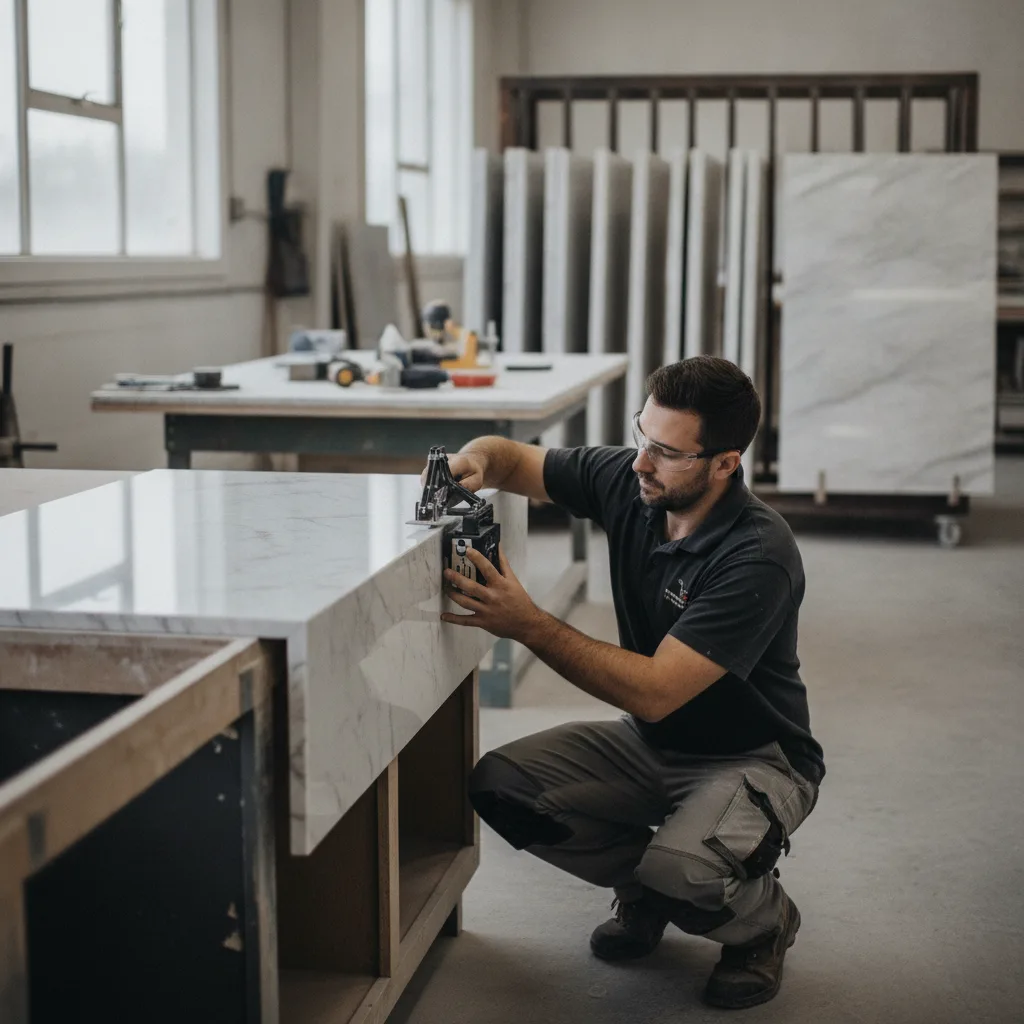
Marble is a heavy natural stone, and your vanity cabinet needs to support it. Most standard bathroom cabinets handle this fine, but floating vanities and older furniture-style cabinets should be checked for structural support before your fabricator arrives. Your fabricator will visit for a precision template measurement to capture the exact dimensions of your vanity before cutting the slab. At Fox Granite, we use an overlay template method to achieve a precise fit. That appointment typically happens after your cabinet is set and plumbing rough-in is complete — not before.
Edge profile selection happens at the template or showroom stage. For marble bathroom vanity tops, an eased or beveled edge is the most popular choice in 2026 — clean, contemporary, and less likely to chip than a more detailed ogee or half-bullnose profile on a softer stone like marble. A standard edge profile is included in most fabricator quotes. Decorative profiles like ogee or waterfall edges add to the price. Confirm exactly what is included in your all-in quote before signing anything — quotes that separate fabrication, edge profile, sink cutout, and sealing as individual line items often look cheaper at first glance but land at the same final number or higher.
From template to installation, most marble vanity top projects complete in one to two weeks. At Fox Granite, we fabricate every slab in-house — no third-party shop handoffs — which keeps that timeline tight and maintains quality control at every stage. Your undermount sink gets installed during the same appointment as the countertop. After installation, a professional sealer is applied before the vanity goes into daily use. Plan to reseal every 6–12 months going forward using a penetrating sealer; the process takes about 30 minutes and does not require a professional to achieve a quality result.
Get a complete, all-in quote that includes fabrication, edge profile, sink cutout, undermount sink installation, and sealing. Quotes that separate these line items often look cheaper but land at the same final number — or higher.
Marble bathroom countertops cost $150–$800 per year in ongoing maintenance when you factor in sealing, pH-neutral cleaners, and occasional professional restoration for deeper etching. That is not a reason to walk away — it is a reason to go in with open eyes. If you will reseal once a year and wipe spills before they sit, marble will hold up beautifully for decades. If daily wipe-downs feel unrealistic for your household, quartzite or quartz will give you a similar look with far less upkeep. The right material is the one that fits how you actually live, not just how you plan to live.
When you have decided on marble — or decided to explore quartzite or quartz before committing — the next step is seeing real slabs in person. No photograph captures the depth of a polished Calacatta slab or the texture of a honed Carrara surface the way standing in front of one does. For marble bathroom countertops in Austin, San Antonio, New Braunfels, and throughout Central Texas, Fox Granite is a family-owned fabricator with over 15 years of experience and more than 10,000 completed projects. We fabricate every slab in-house, so there are no middlemen, no outsourced shop handoffs, and no surprise fees. Visit our New Braunfels showroom to explore real marble, quartzite, and quartz slabs, or schedule a free in-home consultation and we will bring samples to you. Contact us today to get your free estimate and start planning your vanity remodel with confidence.
Ready to get started? Contact Fox Granite today.


BY APPOINTMENT ONLY
1379 Wald Road
New Braunfels, TX 78132
Austin, San Antonio, Cedar Park, Kyle, New Braunfels, Del Valle, Elgin, Lago Vista, Shady Hollow, Onion Creek, Buda, San Marcos, Lockhart, Temple, Wimberley, Dripping Springs, Bee Cave, Lakeway, Leander, Anderson Mill, Jollyville, Spicewood Springs, Round Rock, Georgetown, Pflugerville, Manor, Taylor, Manchaca, Mountain City, Hutto, West Lake Hills, Bastrop, Liberty Hill, Driftwood, Sun City, Steiner Ranch.