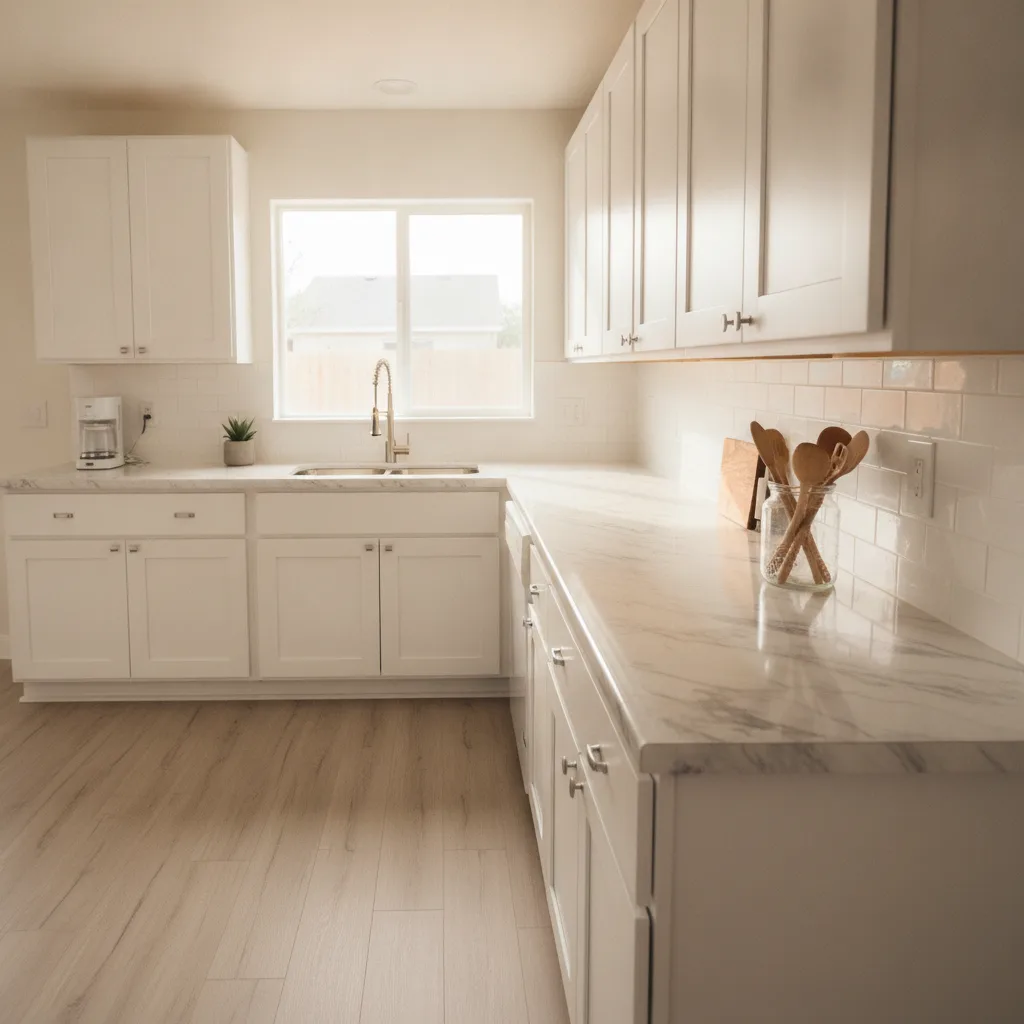
Laminate is the least expensive countertop material in 2026, running $15–$40 per square foot installed — a standard 40 sq ft kitchen lands at $600–$1,600 all-in. Porcelain and ceramic tile come in cheaper by the square foot ($10–$35/sq ft installed), but grout maintenance makes them a poor long-term kitchen choice. For small projects like a bathroom vanity, marble remnants from a local fabricator are the genuine budget surprise: at $5–$25/sq ft for the stone itself, a single-sink powder room top in real Carrara marble can total $350–$700 installed — less than entry laminate on a full kitchen. Entry granite colors like Uba Tuba and Santa Cecilia install at $40–$60/sq ft and are the cheapest natural stone countertop option for kitchens. Fabrication and installation add $25–$50/sq ft on any stone job, so always compare all-in prices, not just material costs.
The least expensive countertop materials in 2026 range from $10/sq ft for porcelain tile to $200+/sq ft for premium marble slabs — but the most cost effective option for your project depends entirely on square footage and room type. Laminate is the cheapest countertop material for a full kitchen renovation, landing a standard 40 sq ft kitchen at $600–$1,600 all-in. For a bathroom vanity, though, the math flips: marble remnants from a local fabricator install for $350–$700 total, making real stone cheaper per project than entry laminate on a kitchen. This guide walks every tier of the cost ladder from super cheap materials through the marble remnant strategy that most Central Texas homeowners never think to ask about.
| Tier | Price range | What's included | Best for |
|---|---|---|---|
| Super Cheap: Laminate, Tile & Concrete Overlay | $10–$40/sq ft installed | Laminate (Wilsonart, Formica), porcelain/ceramic tile, and concrete overlay products | Rental properties, tight renovation budgets, or homeowners refreshing a kitchen without committing to stone |
| Budget-Friendly Natural and Engineered: Butcher Block, Solid Surface, Entry Granite | $40–$80/sq ft installed | Butcher block (maple, walnut), solid surface (Corian), and Level 1 granite colors like Uba Tuba and Santa Cecilia | Homeowners who want a durable, natural-looking surface without quartz pricing — especially good for kitchen islands and prep areas |
| Mid-Range: Quartz and Standard Marble | $50–$150/sq ft installed | Entry-level veined quartz (MSI), mid-grade quartz, and Carrara marble — the most recognizable marble look at the most accessible slab price | Kitchen renovations where low maintenance and style matter equally, or bathroom vanities where full-slab marble is a feasible budget line |
| Best-Value Move: Marble Remnants for Small Projects | $350–$1,500 total installed (bathroom vanity or bar top) | Remnant marble or premium stone from a local fabricator's inventory, custom-cut and installed for a bathroom vanity, powder room, or bar top | Homeowners who want a genuine marble or premium stone surface on a small project — single-sink bathroom vanities (6–10 sq ft) are the perfect fit |
Laminate countertops are the cheapest countertop material you can buy in 2026, running $15–$40 per square foot installed. A standard 40 sq ft kitchen lands at $600–$1,600 all-in — no other countertop material comes close at that price point. Wilsonart and Formica now offer marble-look laminate finishes that photograph well: White Carrara runs about $28/sq ft in material and Calacatta around $34/sq ft. The tradeoff is real: laminate is vulnerable to heat damage and moisture at seams, and you cannot repair a burn or deep scratch the way you can sand out solid surface or butcher block. Full replacement is the only fix.
Porcelain and ceramic tile countertops install at $10–$35 per square foot — even cheaper by the square foot — but grout maintenance and an uneven work surface make tile a poor fit for heavy kitchen use. Bacteria and grease collect in grout lines and stains accumulate quickly, so tile countertops require more upkeep than laminate despite costing less. The concrete overlay is the sleeper pick at this tier: a basic overlay applied over existing countertops runs just $3–$15 per square foot, making it the ultra-low-cost path to a concrete look without demo, disposal, or replacement. Decorative micro-toppings run $7–$10/sq ft and stamped finishes reach $10–$15/sq ft — still well below the cost of full concrete countertops at $65–$135/sq ft professionally installed.
Butcher block countertops cost $40–$100 per square foot installed in 2026, with a national average of $58/sq ft. Maple is the affordable entry point at $30–$55/sq ft for material; walnut runs $50–$90/sq ft and can add $400–$900 in material cost on a 25 sq ft project. Butcher block is warm, durable, and easy to sand and re-oil — a practical choice for islands and prep areas where the wood aesthetic fits the kitchen design. The tradeoff: it requires regular oiling and is vulnerable to moisture near sinks. Skip the maintenance schedule and you risk warping, staining, and mold over time. Solid surface (Corian) runs $40–$80 per square foot installed, with standard Corian landing at $55–$70/sq ft. It is repairable — scratches and minor burns sand out — and allows integrated sinks, which saves on fabrication. Both materials require trivets; heat damage is real with either one, though solid surface is more forgiving than laminate.
Entry-level granite is the cheapest natural stone countertop option in 2026. Colors like Uba Tuba, Santa Cecilia, and New Venetian Gold install at $40–$60 per square foot — putting a 40 sq ft kitchen at $1,600–$2,400 all-in. Granite is scratch-resistant and heat resistant in ways laminate simply is not, and it brings real durability with minimal upkeep compared to marble. Fabrication and installation consistently cost $25–$50/sq ft regardless of stone type, so price gaps between competing quotes come primarily from the slab itself. Cabinets and countertops are often quoted together by remodeling contractors, so ask fabricators for a stone-only all-in price to compare accurately.
Quartz holds 51% of the residential countertop market share in 2026 and installs at $50–$150 per square foot. Entry-level MSI veined quartz starts around $40–$85/sq ft and replicates Carrara's white-and-grey veining without sealing schedules or etching risk. For a 40 sq ft kitchen, budget $2,000–$4,000 all-in. Quartz is non-porous, scratch-resistant, and low maintenance — it cleans with soap and water and never needs sealing, which explains its market dominance. It is not heat resistant the same way granite is; trivets are still a good habit, since direct heat can discolor the resin binders. What looks like quartz but is cheaper? Marble-look laminate from Wilsonart or Formica is the honest answer — at $28–$34/sq ft in material, it undercuts entry quartz by $20–$50/sq ft, though it trades durability for price.
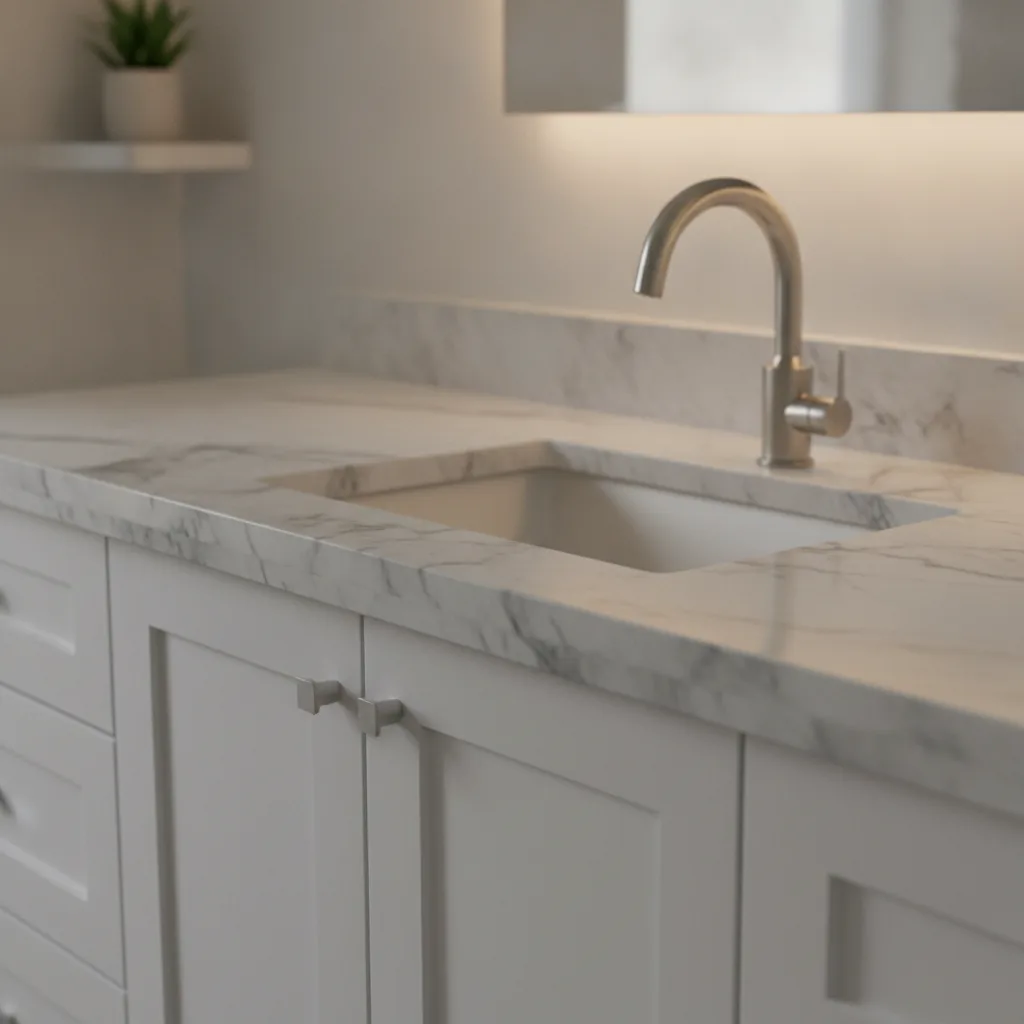
Carrara marble at full-slab pricing runs $40–$80 per square foot installed at the entry level, with a 40 sq ft kitchen totaling $3,200–$6,000. Marble is softer than granite (3–5 Mohs vs. 6–6.5 for granite), requires sealing 2–3 times per year for kitchen use, and etches with acidic liquids like lemon juice and wine. Those are real constraints for a high-traffic cooking kitchen. For bathroom vanities and powder rooms, though, marble's maintenance trade-offs nearly disappear — vanities see far less heat and acid exposure, making marble a stylish and practical countertop material in that application.
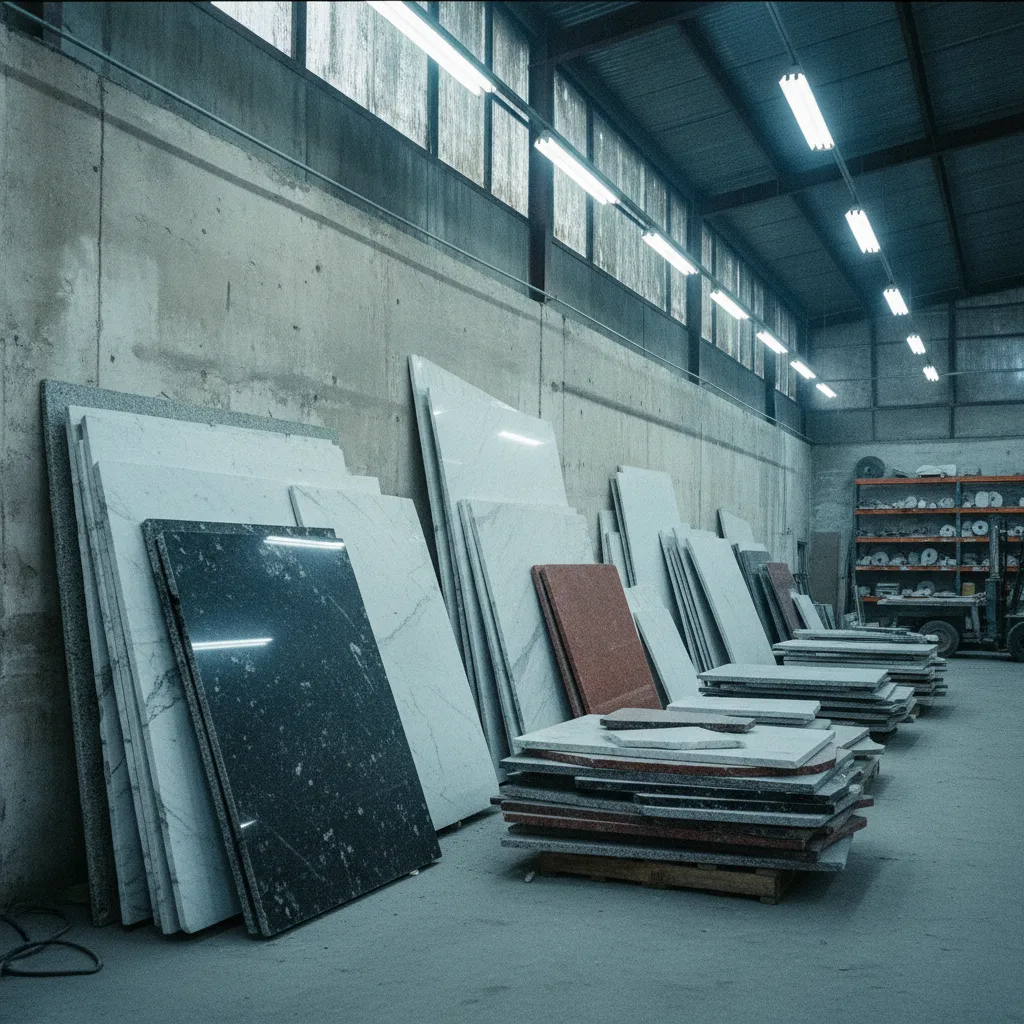
Marble remnant material from fabricators runs $5–$25 per square foot for the stone itself, compared to $20–$60 per square foot for a new full slab — a 30–70% discount because the original slab cost is already recovered from a prior kitchen job. Shops motivated to clear inventory price remnants at $2–$15/sq ft for basic material. A single-sink bathroom vanity needs only 6–10 square feet of stone, which fits squarely into remnant territory. A powder room top in Carrara marble or entry quartzite can total $350–$700 installed, including fabrication. That is real marble — not laminate, not quartz — at a price that undercuts even entry quartz for the same square footage.
Bathroom vanities are the ideal application for remnant stone because they see minimal heat and acid exposure, so marble's upkeep demands are nearly irrelevant. Bar tops and laundry room accents are equally good fits. Call 3–5 local fabricators and ask what remnants they have in stock. You will often find attractive colors and patterns in Carrara, quartzite, and even premium granite at a fraction of full-slab cost. The backsplash on a small vanity project can sometimes be cut from the same remnant piece, saving additional money. The practical constraint: remnant inventory changes weekly, so flexibility on color and pattern is the price of admission for this strategy.
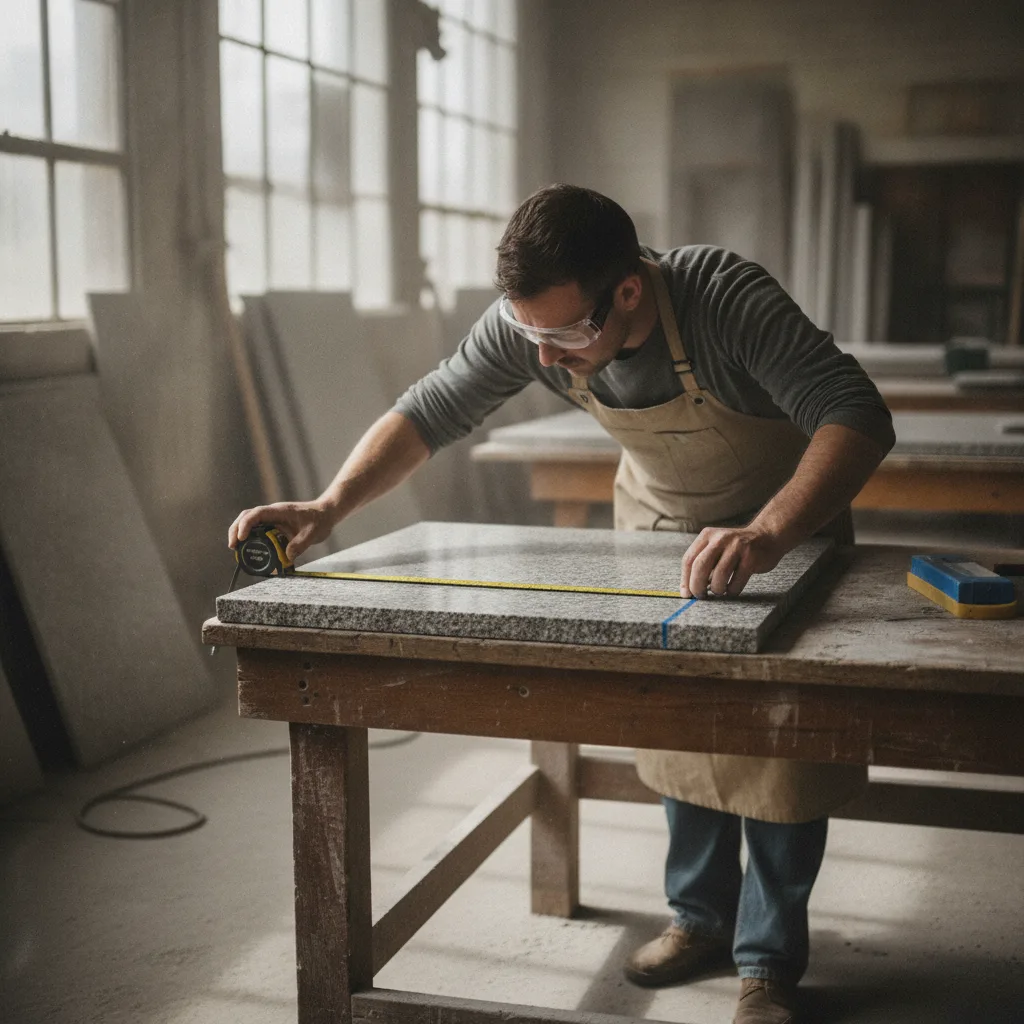
A remnant slab advertised at $5/sq ft sounds dramatically cheaper than quartz at $60/sq ft — until you add fabrication, edge profiling, templating, and installation, which run $25–$50/sq ft on any stone job. Always compare all-in installed prices. A free estimate from a fabricator who does in-house work with no subcontractors is the fastest way to get a real number and to avoid the lowball-quote-then-add-ons pattern that frustrates so many Central Texas homeowners mid-project.
For Central Texas homeowners in Austin, San Antonio, New Braunfels, and surrounding areas, the most affordable kitchen countertops and bathroom vanities come from a fabricator who carries remnant inventory in-house, does their own installation, and quotes a transparent all-in price from day one. Fox Granite does exactly that. Ask what remnants are in stock, or schedule a free in-home consultation and we will bring samples to you. Contact Fox Granite today to get your free estimate — no surprise fees, no subcontractors.
Ready to get started? Contact Fox Granite today.


BY APPOINTMENT ONLY
1379 Wald Road
New Braunfels, TX 78132
Austin, San Antonio, Cedar Park, Kyle, New Braunfels, Del Valle, Elgin, Lago Vista, Shady Hollow, Onion Creek, Buda, San Marcos, Lockhart, Temple, Wimberley, Dripping Springs, Bee Cave, Lakeway, Leander, Anderson Mill, Jollyville, Spicewood Springs, Round Rock, Georgetown, Pflugerville, Manor, Taylor, Manchaca, Mountain City, Hutto, West Lake Hills, Bastrop, Liberty Hill, Driftwood, Sun City, Steiner Ranch.