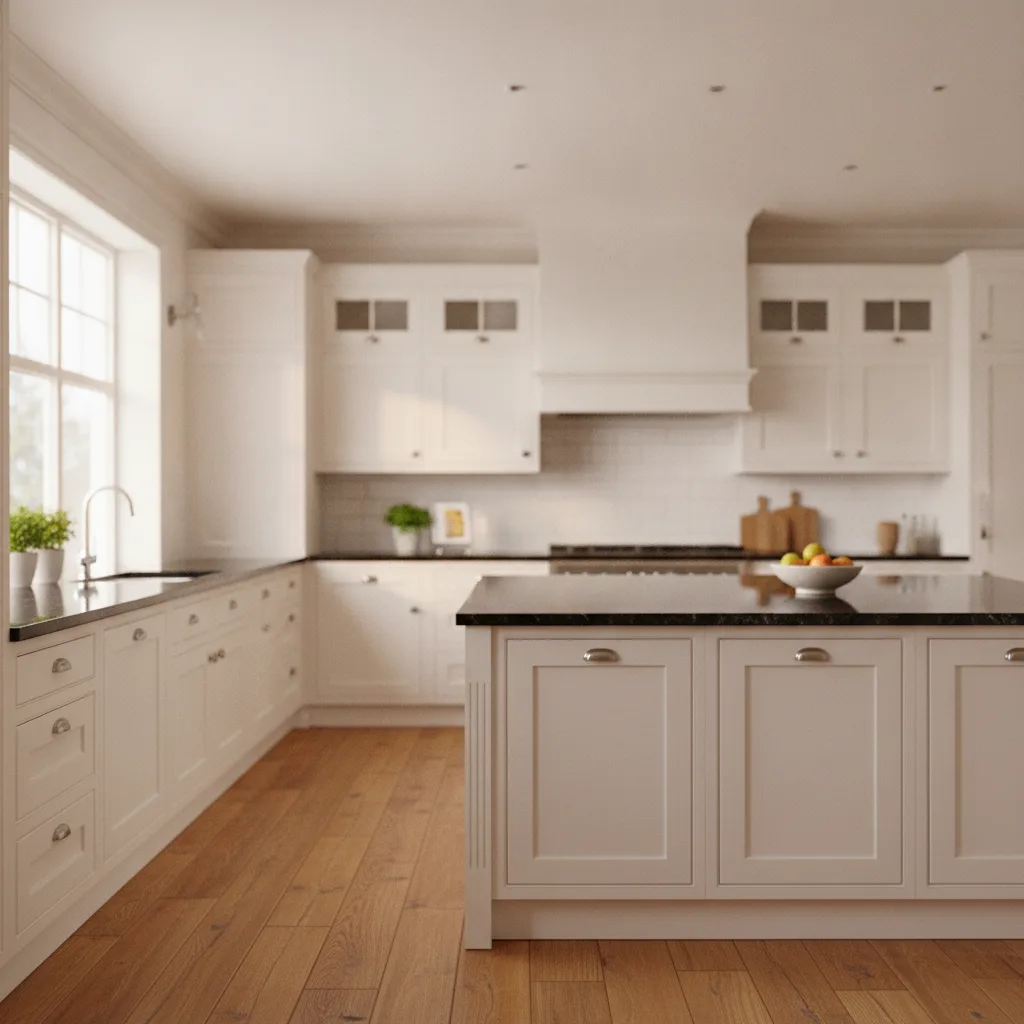
A kitchen remodel with granite countertops in Central Texas costs $14,600–$55,000+ all-in as of 2026, with a national average around $26,990. Granite countertops themselves account for roughly 10–15% of that total, not the whole number. Level 1 builder-grade granite runs $40–$60 per square foot installed; mid-range Level 2 runs $55–$80; exotic Level 3 slabs run $85–$150+. The countertop phase takes 1–3 weeks after cabinets are set. Advertised per-square-foot rates rarely include delivery, sink cutout, old countertop removal, or edge profile upgrades, which can push a quoted $49/sq ft rate to $90–$120/sq ft all-in. Always request an itemized quote before comparing bids.
A kitchen remodel with granite countertops in Central Texas involves more moving parts than most homeowners expect, and the price surprises almost everyone who starts with an advertised per-square-foot rate. This guide walks through the full process in six concrete steps: setting a realistic total budget, choosing the right slab grade, making design decisions that feel current in 2026, locking in features before templating, understanding the fabrication timeline, and setting up a simple maintenance routine. The goal is a new kitchen you understand before you sign anything, not after the invoice arrives.
A full kitchen remodel in Central Texas costs $14,600–$55,000+ in 2026, with the national average landing around $26,990 based on Angi's dataset of 13,100 verified projects. That range is wide because scope varies enormously. A cosmetic refresh with new countertops, paint, and hardware sits at the low end. A full gut remodel with custom cabinetry, appliances, and flooring pushes toward the top — and sometimes past it.
Knowing how the budget splits across a mid-range kitchen renovation keeps you from overspending in the wrong place. Cabinets consume 30–40% of the total; labor for all trades runs about 25%; appliances land at 10–20%; countertops and backsplash together are that 10–15% slice; permits, lighting, hardware, and contingency make up the rest. The stone is not the main event from a budget perspective. Cabinets are.
Build your countertop number from the total down. A $30,000 remodel puts roughly $3,000–$4,500 toward countertops and backsplash combined. A $50,000 remodel puts about $5,000–$7,500 toward that same line. Handing a fabricator that range before you visit a showroom filters the slab options fast and prevents the sticker shock that comes from falling in love with a Level 3 exotic stone on a Level 1 budget.
Advertised per-square-foot rates rarely include delivery ($150–$200), sink cutout ($75–$250), old countertop removal ($100–$200), or edge profile upgrades. A quoted $49/sq ft rate commonly becomes $90–$120/sq ft all-in once those line items appear on the invoice. Always ask for an itemized all-in quote before comparing numbers from different fabricators.
Granite countertops cost $40–$200+ per square foot installed in 2026, and the difference comes down to slab grade, not quality. The industry prices granite in levels based on rarity: Level 1 builder-grade slabs (Ubatuba, Santa Cecilia, Luna Pearl) run $40–$60/sq ft installed; Level 2 mid-range runs $55–$80/sq ft; Level 3 exotic stone with dramatic veining (Blue Pearl, Patagonia) runs $85–$150+/sq ft. A Level 1 and a Level 3 slab can be equally durable. Only the sourcing rarity and visual drama differ.
For a typical 40 sq ft kitchen, entry-level granite installed totals $1,500–$3,500. Scale up to a larger granite kitchen with an island — say 60 sq ft — in exotic stone, and the countertop budget reaches $6,000–$9,000. Those are the honest all-in ranges, not the number on the showroom sign. For small kitchens in the 20–30 sq ft range, entry-level granite can come in well under $2,000 installed, making it the most affordable natural stone option available.
Edge profile upgrades are a meaningful cost driver that most quotes bury. A standard eased edge is included in most base prices. Upgrading to a beveled or half-bullnose edge adds $5–$15 per linear foot; an ogee profile adds $15–$30/linear ft; a waterfall or mitered edge adds $25–$40+/linear ft plus extra slab material. On a typical 30-linear-foot kitchen perimeter, a decorative edge upgrade adds $300–$900 to the final number. Pick your edge profile before you approve a quote, not after.
Free to visit
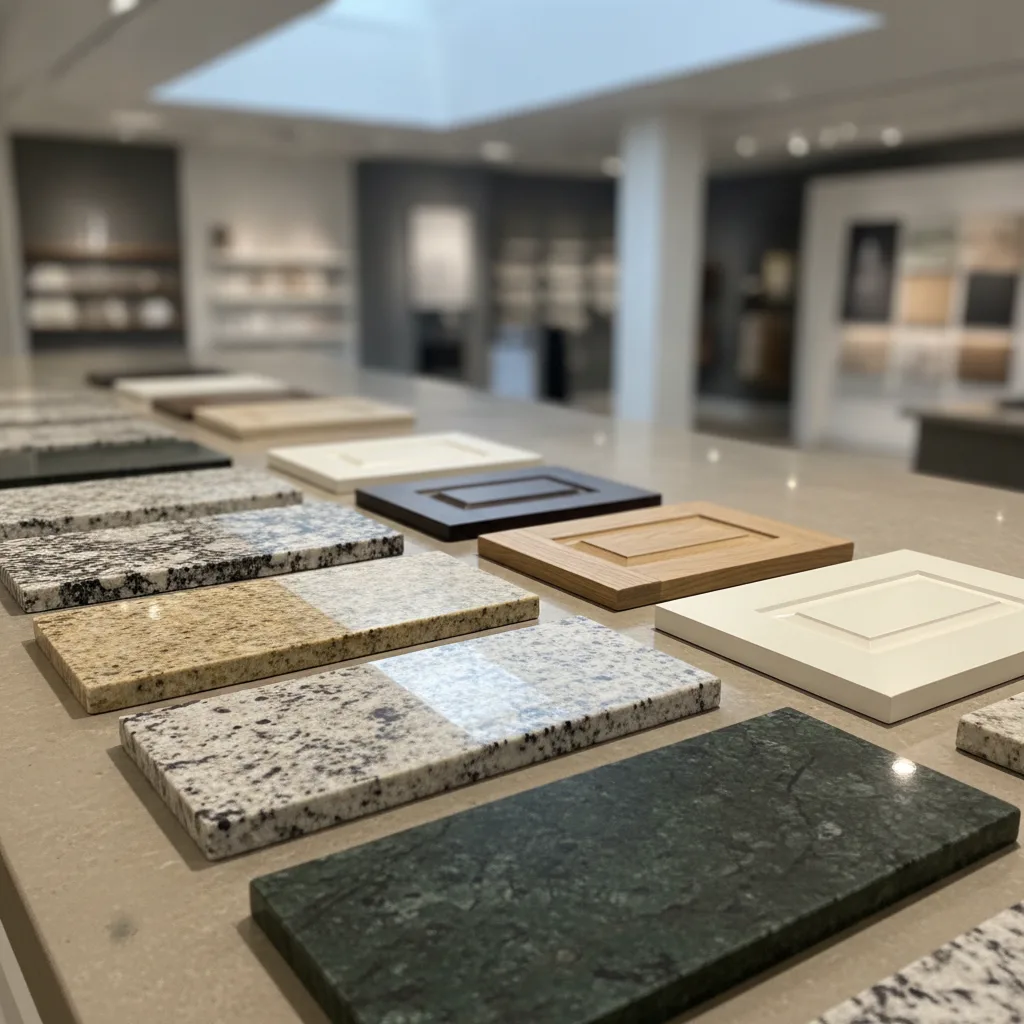
View full slabs in person with samples from your cabinet color. Photos and small chips don't show how a slab pattern reads at kitchen scale.
Free
A Fox Granite team member brings samples to your space so you can see slab tones against your actual lighting, cabinets, and flooring before committing to a material.
Granite is not outdated in 2026. The busy beige and gold speckled slabs from the early 2000s are. What reads as current: soft whites with subtle veining, warm neutrals, cool-toned grays, and deep blacks, especially in non-traditional finishes like honed or leathered surfaces. Per NKBA 2026 survey data, quartz is cited by 78% of design professionals and granite by 43%, but multiple fabricators report granite actively gaining ground again, driven by a broader design shift toward natural stone and organic materials. It's being used as a statement piece rather than a default material — waterfall islands, focal-wall surfaces, and bold black countertops in white kitchens.
Cabinet color is the first filter for granite selection when choosing materials for a kitchen remodel. White cabinets or painted white Shaker cabinets paired with black granite (Absolute Black, Black Pearl) create strong contrast and remain one of the most popular choices in 2026. It's a white kitchen that doesn't read cold. Espresso or dark wood cabinetry paired with mid-tone granite reads traditional-upscale and can be freshened with a lighter backsplash and clean hardware. Maple cabinetry with warm-toned beige or gold-veined granite reads warmer but can feel dated without updated lighting and a neutral backsplash to anchor the room.
Wall color and backsplash tile should follow the granite's undertones rather than compete with them. A classic white subway tile backsplash works with almost any granite and is the safest starting point. For dark granite paired with white cabinets, a white herringbone tile or simple neutral tile keeps the high-contrast palette clean. Cool blue or silver granite pairs well with brass hardware as a contrast accent; green-undertone granite conflicts with warm gold tones, so steer toward brushed nickel or matte black in that case. Pure white walls let the stone be the focal point, which is usually the right call for a granite kitchen.
Honed and leathered finishes are the fastest way to make a classic granite slab read contemporary. Polished black granite can look dated in certain kitchens; the same slab in a honed finish reads modern and pairs well with flat-front or Shaker cabinetry. If your desired look is clean and minimal rather than glossy and traditional, ask your fabricator to show you honed samples of the same slabs you're already considering.
Every decision that affects the slab cutout — sink type, faucet hole placement, cooktop cutout, edge profile — must be locked in before the fabricator templates. Changing any of these after fabrication begins means paying for new cuts or a new slab. This is the step most homeowners skip over, and it's where surprise costs are born. Think of templating as the point of no return: everything before it is design, everything after it is construction.
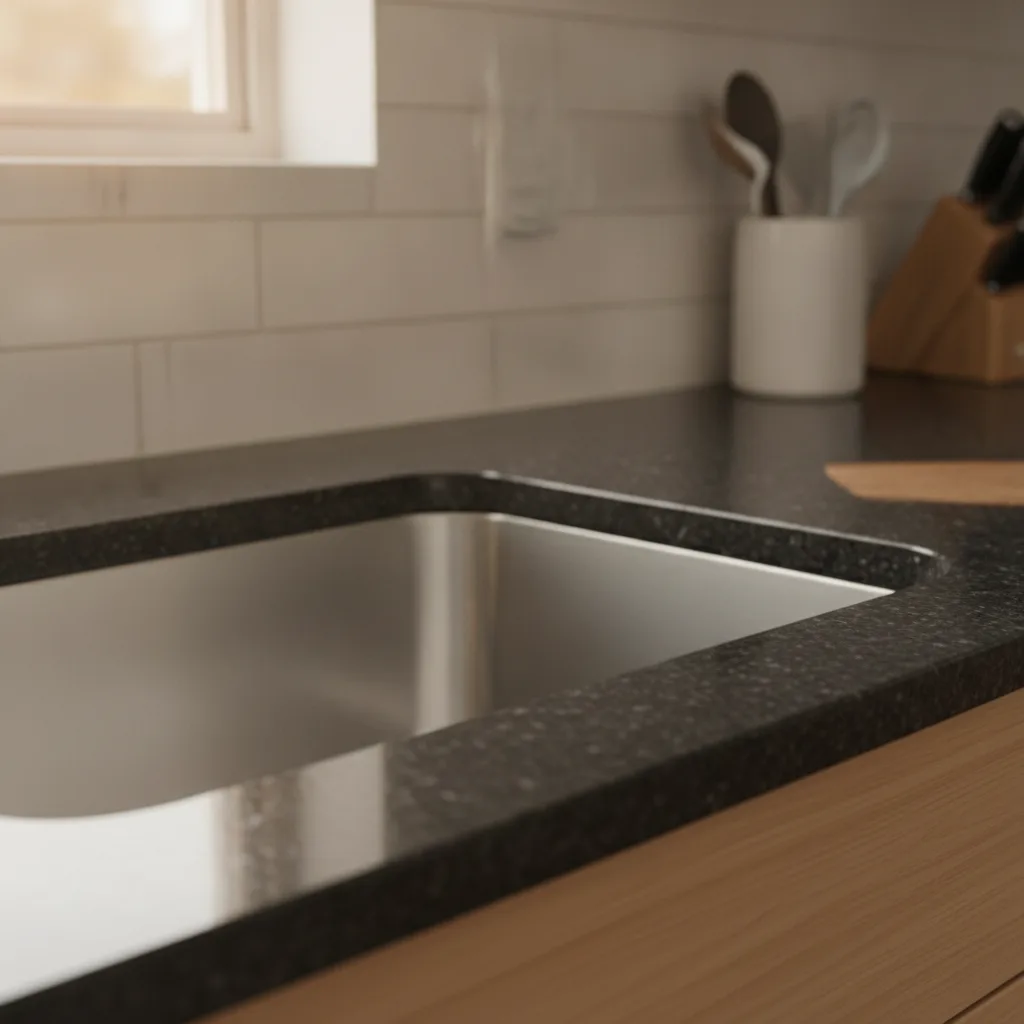
Undermount sinks are the standard choice with granite countertops. The sink mounts below the stone surface, which makes the counter easier to clean and shows off the full slab edge. The sink cutout adds $75–$250 to the fabrication bill depending on the sink shape and material. Composite and stainless steel undermount sinks are the most common; porcelain is an option but adds weight the fabricator needs to account for in the support structure.
If you're adding a kitchen island, confirm the island dimensions with your cabinet installer before the template visit. Island countertops are a separate slab — and sometimes require a seam depending on size — so the fabricator needs accurate measurements to price it correctly and select a slab with enough material. Seam placement on an island is a craft decision; a good fabricator will show you where the seam falls in the pattern before making any cuts. Accessories like soap dispensers, pot fillers, or bar faucets also need hole locations confirmed at this stage.
The countertop phase — from templating through completed installation — takes 1–3 weeks for most residential projects, but it cannot start until cabinets are fully set and level. This sequencing requirement is the detail that most catches homeowners off guard during a kitchen renovation. If your cabinet install runs long, your countertop timeline shifts with it. Plan for it.
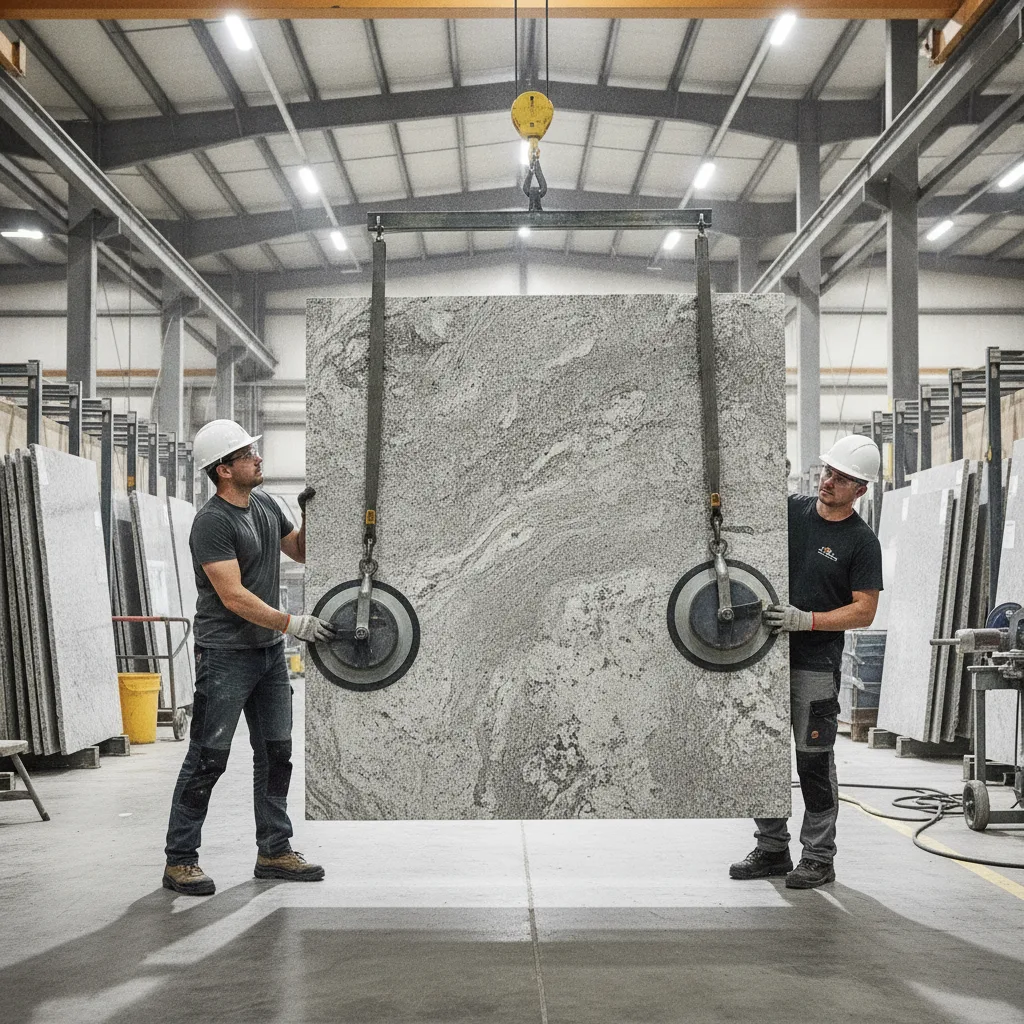
After templating, fabrication takes 7–14 business days. The fabricator is cutting, shaping, polishing, and profiling your specific slab to the exact overlay template of your kitchen. Installation day itself takes 4–8 hours for an average kitchen. The crew sets the slabs, makes final cuts for the sink and faucet holes, and seals the stone before they leave. Your kitchen is usable the same day, though caulk and sealer need a short cure time before the sink is reconnected.
Zoom out to the full kitchen remodel and the process is longer. Active construction on a mid-range kitchen renovation runs 6–12 weeks; total elapsed project time from first design meeting to finished kitchen commonly runs 3–6 months. The kitchen is genuinely unusable — no sink, no stove — for about 6 weeks in a typical midrange project. If you change your cabinet color or countertop material after ordering, add 8–12 weeks to that number. Lock in your selections early and hold them.
If you have a hard deadline, count back from that date and confirm your cabinet install start date first. The countertop fabrication window is fixed at 7–14 business days with no way to compress it. Missing the cabinet install date is what actually blows a kitchen remodel deadline, not the stone work itself.
Granite is scratch-resistant and heat-resistant, but it's a natural stone that needs periodic sealing to stay stain-resistant over time. A professional fabricator seals the stone at installation; after that, reseal every 1–3 years depending on how porous the specific slab is and how heavily the kitchen is used. The easy test: put a few drops of water on the surface and wait 10 minutes. If the water beads, the sealer is still working. If it absorbs and darkens the stone, it's time to reseal. That's the whole maintenance process.
Daily care is straightforward. Wipe spills promptly, especially acids like citrus juice, wine, and vinegar, which can etch the surface if left to sit. Use mild dish soap and warm water for everyday cleaning; skip abrasive pads and harsh chemical cleaners. A granite-safe daily spray cleaner keeps the surface looking polished between deep cleanings. Replacing laminate countertops with granite is a long-lasting durability upgrade when maintained this way, and the stone can outlast the rest of the kitchen if properly cared for.
Compared to quartz countertops, granite does require this additional sealing step. Quartz is non-porous and doesn't need it. That tradeoff is worth naming plainly: at the entry level, granite is actually more affordable than most quartz options, which rarely drop below $50–$55/sq ft installed. At mid-grade, both materials land in a similar price range. The choice comes down to whether you want the natural beauty and character of real stone — with occasional sealing — or a lower-maintenance surface that offers no variation in pattern because it's engineered, not quarried.
The single biggest frustration homeowners report with granite countertop quotes is discovering add-ons after the fact. Delivery, sink cutout, old countertop removal, and edge profile upgrades are real costs that frequently don't appear in an advertised rate. At Fox Granite, every quote is itemized and all-in from the start. No surprise fees when the invoice arrives. We've been fabricating and installing granite countertops in Austin, San Antonio, and Central Texas since 2010, and we handle every step in-house: templating, fabrication, and installation. Contact us to schedule your free in-home consultation and see the real number before you commit.
A finished granite kitchen — slabs set, sink connected, backsplash tile grouted, everything sealed — is the result of a process that rewards early decisions and punishes late ones. Get the total budget right first, choose your slab grade and edge profile before templating, and confirm cabinet timing before you schedule anything else. For a kitchen remodel with granite countertops in Austin, San Antonio, New Braunfels, and across Central Texas, Fox Granite offers in-house fabrication, transparent all-in pricing, and a free consultation so you know exactly what you're getting before anyone picks up a template. Visit our New Braunfels showroom or contact us today to get started.
Ready to get started? Contact Fox Granite today.


BY APPOINTMENT ONLY
1379 Wald Road
New Braunfels, TX 78132
Austin, San Antonio, Cedar Park, Kyle, New Braunfels, Del Valle, Elgin, Lago Vista, Shady Hollow, Onion Creek, Buda, San Marcos, Lockhart, Temple, Wimberley, Dripping Springs, Bee Cave, Lakeway, Leander, Anderson Mill, Jollyville, Spicewood Springs, Round Rock, Georgetown, Pflugerville, Manor, Taylor, Manchaca, Mountain City, Hutto, West Lake Hills, Bastrop, Liberty Hill, Driftwood, Sun City, Steiner Ranch.