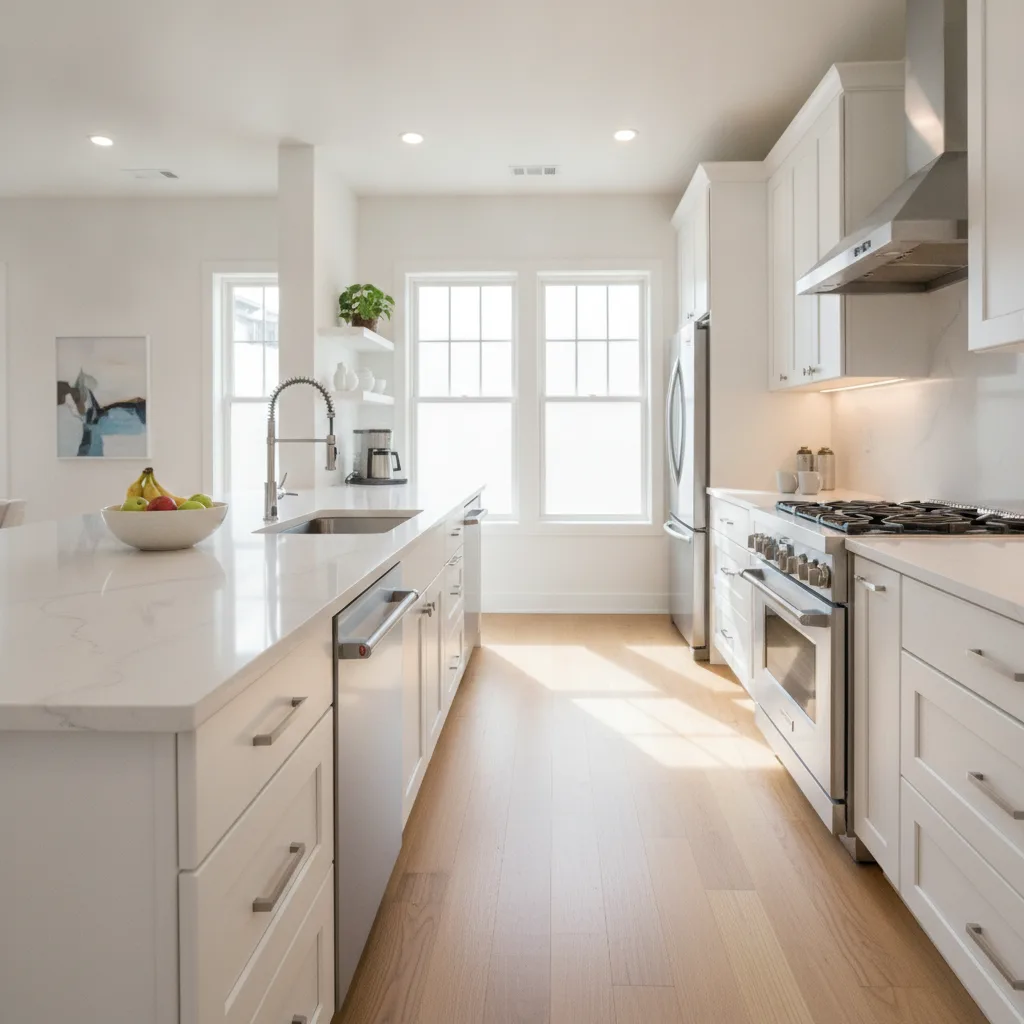
A targeted kitchen remodel anchored by new granite or quartz countertops returns 100–120% of its cost in Austin and close to that in San Antonio, according to 2025 Zonda/Remodeling Magazine Cost vs. Value data. Granite returns 70–100% of its installed cost at resale; quartz returns 70–85%, and both outperform marble, butcher block, and luxury vinyl in every Texas market. The single most important rule: never spend more than 15% of your home's current market value on a kitchen remodel. On a $400,000 home, that cap is $60,000. Exceed it and you will almost certainly recover less than half your investment at closing. Pick quartz or granite, keep scope tight, and get an all-in transparent quote before committing to any work.
A minor kitchen remodel returns more money at resale than almost any other home improvement project — but only if you spend the right amount on the right materials. The 2025 Zonda/Remodeling Magazine Cost vs. Value Report puts a targeted minor kitchen remodel at 113% ROI nationally, and Austin homeowners see 100–120% locally. The key word is 'minor.' A full gut renovation averaging $154,000 recoups only about 52% of its cost. For Central Texas homeowners planning to sell in Austin, San Antonio, New Braunfels, Round Rock, or San Marcos, this guide breaks down exactly which countertop choices pay off, how to set a budget that protects your return, and how to avoid the costly mistakes that leave money on the table at closing. Read time: 30–45 minutes to read, research, and finalize your countertop plan.
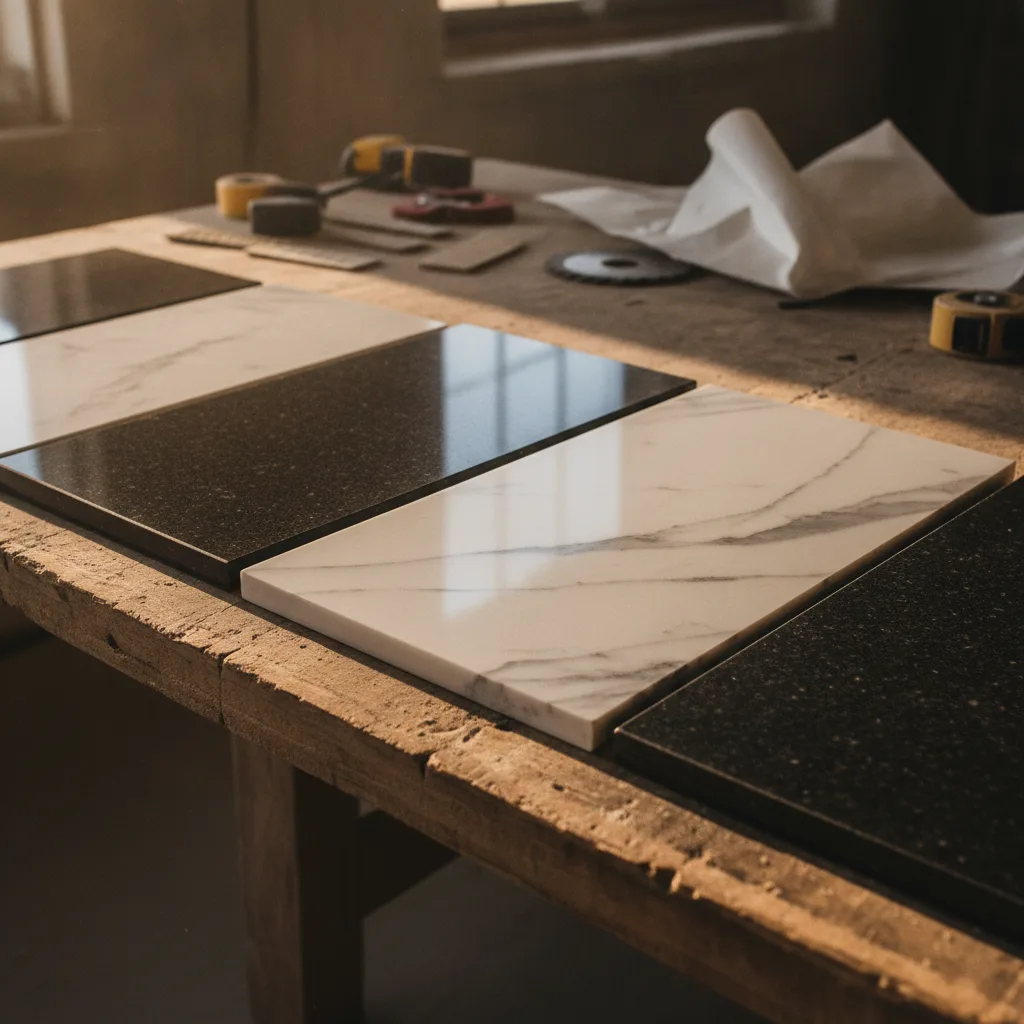
The single rule that protects kitchen remodel ROI is this: do not spend more than 15% of your home's current market value on any kitchen project. On a $400,000 home — close to the median in San Antonio as of 2026 — that cap is $60,000. Spend beyond it and you're almost certain to leave money on the table at closing.
This rule matters because appraisers assess value based on comparable sales in your neighborhood, not your personal investment. A $90,000 chef's kitchen in a street full of $420,000 homes will not appraise $90,000 higher. The neighborhood price ceiling is real, and no amount of polished cabinetry or premium stone changes it. Guests and buyers alike sense when a kitchen feels out of place with the surrounding homes — and appraisers make that call with hard data.
For most Central Texas homeowners, this math points toward a targeted cosmetic refresh rather than full replacement of the entire kitchen. A minor kitchen remodel — new countertops, updated cabinet fronts, new hardware, and energy-efficient appliances — costs roughly $25,000–$30,000 and returns about 113% at resale nationally. A major upscale kitchen remodel averaging $154,000 recoups only about 52%. Spend less. Recover more. That's the counterintuitive core of kitchen remodel ROI.
Austin minor kitchen remodels return 100–120% locally, above the national average. San Antonio's sweet spot is a $26,500–$30,000 targeted update focused on countertops, cabinets, and appliances. Spending $80,000+ in San Antonio's $350K–$400K price band recovers only about 50% at resale — nearly the same penalty as a national upscale remodel.
Granite and quartz tie for the best countertop resale ROI of any material available in 2026. Granite returns 70–100% of its installed cost at resale; quartz returns 70–85%, with room to exceed 100% when comparable homes in your neighborhood already have stone. Both are considered expected features in mid-to-high-end homes — their absence is a listing liability, not a neutral detail. Buyers who walk into a kitchen with laminate or worn tile countertops see a project, not a home.
Quartzite is worth a mention for Austin and San Antonio homeowners targeting the premium buyer pool. Demand for quartzite grew 12% from 2025 to 2026, and it delivers comparable ROI to granite in higher price bands while offering superior hardness (Mohs 7–8). It costs more per square foot than granite — installed prices typically run $70–$200 — so it works best when your neighborhood comparables are already stone-heavy and you want a material that stands out without crossing into marble territory.
Marble tells a different story. Marble countertops cost $80–$250+ per square foot installed and require sealing every 6–12 months. Buyers notice that maintenance burden, and appraisers do not reward it with proportionally higher value outside true luxury markets. Marble is only a strong ROI play in high-end Austin zip codes where comps already carry marble. At the bottom of the ROI hierarchy: butcher block and luxury vinyl. Both are low-cost alternatives that real estate appraisers treat as quality indicators pointing downward. A full replacement from laminate or butcher block to quartz or granite signals move-in readiness — that signal does not translate the same way with alternative surfaces.
The best countertop material for resale depends on your specific market, not just national averages. In Austin, quartz is the 2026 default specification for resale-focused projects. Buyers in Austin's competitive market are well-researched: 68% of buyers in 2025–2026 market surveys specifically sought quartz countertops. Quartz requires no sealing, resists staining better than granite, and photographs clean — all of which make it the safest choice when you're optimizing for marketability rather than personal preference. Sleek, light-colored quartz surfaces consistently perform well in listing photos and create a modern aesthetic that appeals to the widest buyer pool.
In San Antonio, the picture is slightly different. San Antonio's countertop market is the most resale-driven of any major Texas city, and white or near-white quartz dominates the top specification list for the same reasons — it photographs well, appeals to the widest buyer pool, and signals move-in readiness. That said, granite holds strong in San Antonio's mid-market. San Antonio granite installs run $35–$55 per square foot as of 2026 — the most affordable price floor among major Texas metros. For homeowners working with a tighter budget, granite is a reliable path to strong ROI without stretching the project cost. Opt for granite if your neighborhood comparables already show natural stone finishes; opt for quartz if the space needs a bright, low-maintenance look that photographs beautifully.
For new countertops on a standard 40-square-foot kitchen, installed cost ranges from $3,000–$8,000 depending on material and edge profile. That upgrade adds $3,000–$7,000 in perceived home value — a solid ROI range that gets stronger when the rest of the kitchen, including cabinets, hardware, and appliances, is cohesive and updated. Homes with premium countertops receive offers 3–7% higher than comparable homes with laminate or worn surfaces, and they tend to sell faster. The perceived value of a well-finished kitchen space extends beyond the countertop itself, but the countertop is where buyers form their first impression.
Free
Pull recent sales in your zip code and filter for kitchen photos to see what countertop finishes are standard in your price band — this tells you whether quartz or granite is the expected baseline in your neighborhood.
Free
Fox Granite brings slab samples to your home and gives you a transparent, all-in price quote with no surprise fees and no subcontractors. Covers Austin, San Antonio, and the Central Texas corridor.

New countertops make the biggest single visual impact in a kitchen refresh, but they work best when the surrounding space feels cohesive. Buyers who walk into a kitchen with sleek new quartz countertops still see 1995 cabinet doors and dated hardware — the upgrade loses half its appeal. A targeted cosmetic refresh that significantly improves buyer appeal hits four elements: countertops, cabinet fronts (refacing or a fresh coat of paint rather than full replacement), updated hardware, and energy-efficient appliances. Together, those four upgrades create the complete modern kitchen impression that moves buyers from interested to committed.
Cabinet refacing — not new cabinetry from scratch — returns 72–80% at resale and costs a fraction of full replacement. A fresh coat of paint on cabinet faces can update the look for under $1,500 with professional results. New hardware (pulls and knobs) runs $200–$600 for a full kitchen and gives buyers a modern, polished feel without touching the cabinetry structure. Storage functionality matters too: if your existing cabinets offer adequate storage, skip the new cabinetry spend and put that budget into countertop and appliance upgrades that buyers actually notice. New cabinetry can cost $15,000–$40,000 while refacing runs $4,000–$10,000 — and resale buyers rarely pay a premium for the difference.
Lighting and backsplash tile are supporting upgrades that boost the overall value of a kitchen refresh without significant cost. Under-cabinet lighting runs $300–$800 installed. A tile backsplash — especially in a cohesive material like subway tile or a matching stone mosaic — creates a polished, finished look that buyers associate with quality. These aren't the upgrades that make or break a sale, but they create the overall-value impression that supports your asking price and your daily living experience while you're still in the home. Bathroom upgrades follow the same logic: consistent finishes across the kitchen and bathrooms stage a coherent, updated home rather than a patchwork of improvements.
Don't invest in new cabinetry when refacing or painting will achieve 80% of the visual result at 30% of the cost. The ROI difference between cabinet refacing and full replacement is meaningful: new cabinetry can cost $15,000–$40,000 while refacing runs $4,000–$10,000 — and resale buyers rarely pay a premium for the difference. Preserve the budget for countertops and appliances, where buyers are most likely to notice and reward the investment.
Countertop quotes vary widely in Central Texas, and a low upfront number rarely tells the full story. Some fabricators quote material cost only, then add templating, edge profiling, sink cutout, and delivery as separate line items. On a $4,000 granite project, those add-ons can push the final invoice to $5,500–$6,000. Always ask for an all-in price that includes templating, fabrication, edge profile, sink cutout, and installation. A reliable fabricator will give you that number without hesitation; one that won't is a red flag before you commit to any scope of work.
Edge profile choice affects both cost and perceived value. Standard eased or beveled edges are typically included in base pricing. Ogee or half-bullnose profiles add $10–$20 per linear foot on average. For a resale-focused project, a clean eased or softened bullnose edge reads as modern — it doesn't need to be the most elaborate profile to boost appeal. Save the ornate profiles for a room where aesthetics align with the neighborhood's style expectations; buyers in most Central Texas price bands respond just as well to clean, simple lines.
In-house fabrication matters for quality control and turnaround time. When a fabricator subs out the cutting and finishing to a third party, you lose direct oversight of tolerances and seam placement. Ask whether the shop fabricates in-house, and ask to see recent completed projects similar to your plan. Fabricators who use precision templating — like the overlay template method — produce tighter fits and fewer callbacks on install day. The function of a well-fabricated countertop is just as important as its visual appeal: buyers test drawers, bump countertop edges, and notice imperfect seams during walkthroughs.
Transparent all-in quote — call (512) 653-5541
Fox Granite fabricates in-house using precision stone-cutting software and the overlay template method for tight fits. All-in pricing with no add-on surprises keeps the project on budget from day one.
Countertop upgrades deliver the best results when installed 2–8 weeks before listing, not two years before. Stone countertops can show wear, etching, and minor chips over time — particularly marble and lower-grade granite. Installing fresh stone close to your list date means buyers see the material at its peak, listing photos look sharp, and the upgrade still reads as new. Schedule fabrication first, then plan the cabinet paint refresh and hardware swap around the countertop install date.
There's one scenario where skipping the countertop upgrade makes sense: when your neighborhood comparables are selling in the $250,000–$300,000 range and already feature laminate or older tile. In that price band, buyers have different expectations, and a $6,000 quartz upgrade may return only $3,000–$4,000 because the neighborhood ceiling caps the overall value. Use the Redfin comparable sales filter from Step 3 to check what kitchens in your price band actually show. If none of the sold comps feature stone countertops, the ROI math may not support the investment — and it's better to save the budget than stretch it on an upgrade that won't recoup.
For long-term value — meaning you plan to stay in the home 5–10 years before selling — the calculus shifts. You'll enjoy the daily living experience of a quality countertop, the upgrade will have time to influence how buyers perceive the overall condition of the home, and you can factor in the practical benefits of a durable, scratch-resistant, heat-resistant stone surface that holds up in a working kitchen. In that scenario, invest in the material you'll genuinely enjoy using every day, not just the one that photographs best. Beautiful countertops create lasting satisfaction in a room you use multiple times a day — that value is real even before the sale.
If you're listing within 60 days, focus your budget on the countertop and cabinet paint refresh first. These two upgrades create the most visual impact in listing photos and in-person walkthroughs for the lowest combined cost. Skip flooring replacement unless the existing floor is actively damaged — buyers in the Austin and San Antonio markets are far more focused on the countertop surface than on flooring when both are in acceptable condition.
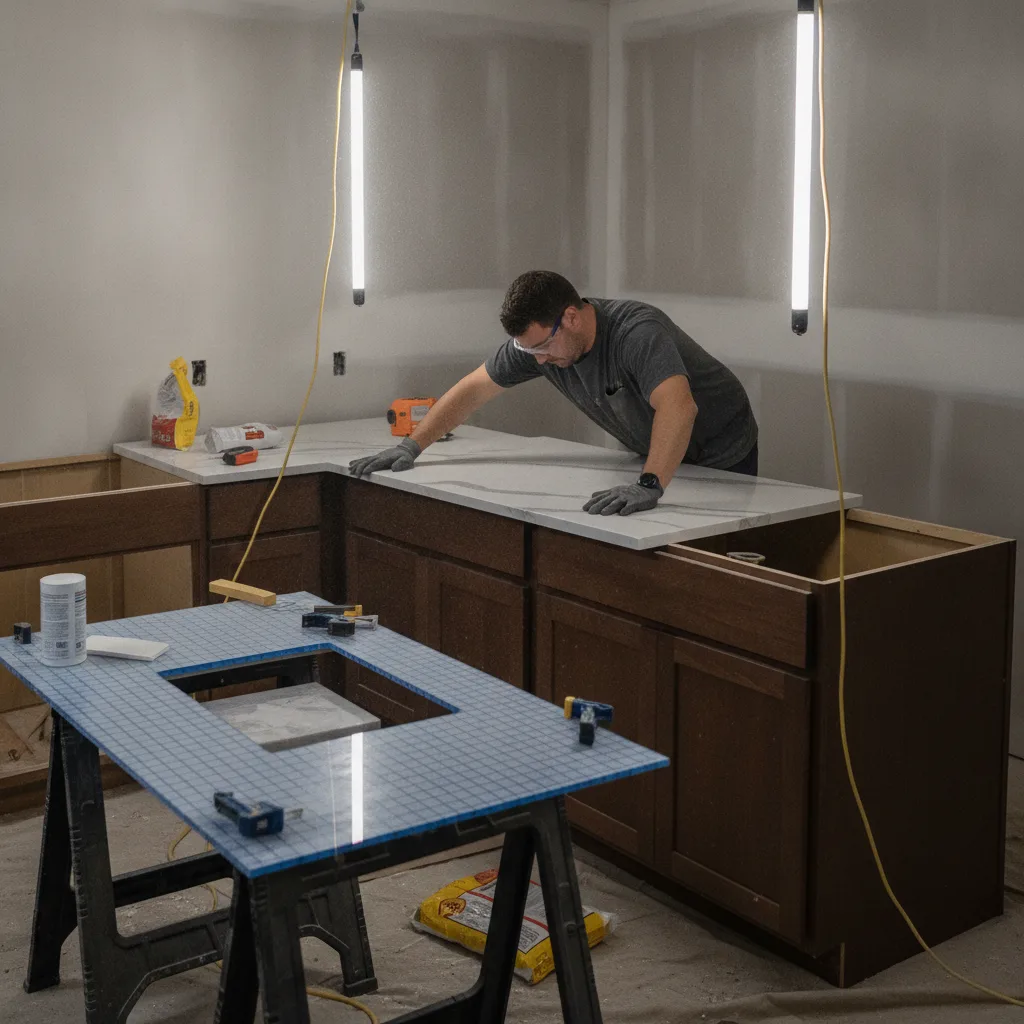
The most common kitchen remodel mistake in Central Texas is spending $80,000–$100,000 on a gut renovation in a neighborhood where homes sell for $380,000. That project recovers roughly 50 cents on every dollar. A targeted $25,000–$30,000 refresh anchored by new granite or quartz countertops — with updated cabinet fronts, hardware, and energy-efficient appliances — can return 100–120% in Austin and close to that in San Antonio. Know your neighborhood price cap (15% of current home value), pick the right material for your market, and get a transparent all-in quote before you commit to any scope of work.
When the countertop is right, the rest of the kitchen falls into place: buyers feel the quality, photos stand out in listing feeds, and offers reflect a home that's move-in ready rather than a project. For kitchen remodel ROI countertops guidance and professional fabrication in Austin, San Antonio, New Braunfels, and across the Central Texas corridor, Fox Granite is the team to call. With over 10,000 projects completed since 2010, in-house fabrication, and transparent all-in pricing from day one, Fox Granite gives homeowners the confidence to plan a smart kitchen upgrade without the surprise fees or the guesswork. Contact Fox Granite today to schedule your free in-home consultation and get your free estimate before you list.
Ready to get started? Contact Fox Granite today.


BY APPOINTMENT ONLY
1379 Wald Road
New Braunfels, TX 78132
Austin, San Antonio, Cedar Park, Kyle, New Braunfels, Del Valle, Elgin, Lago Vista, Shady Hollow, Onion Creek, Buda, San Marcos, Lockhart, Temple, Wimberley, Dripping Springs, Bee Cave, Lakeway, Leander, Anderson Mill, Jollyville, Spicewood Springs, Round Rock, Georgetown, Pflugerville, Manor, Taylor, Manchaca, Mountain City, Hutto, West Lake Hills, Bastrop, Liberty Hill, Driftwood, Sun City, Steiner Ranch.