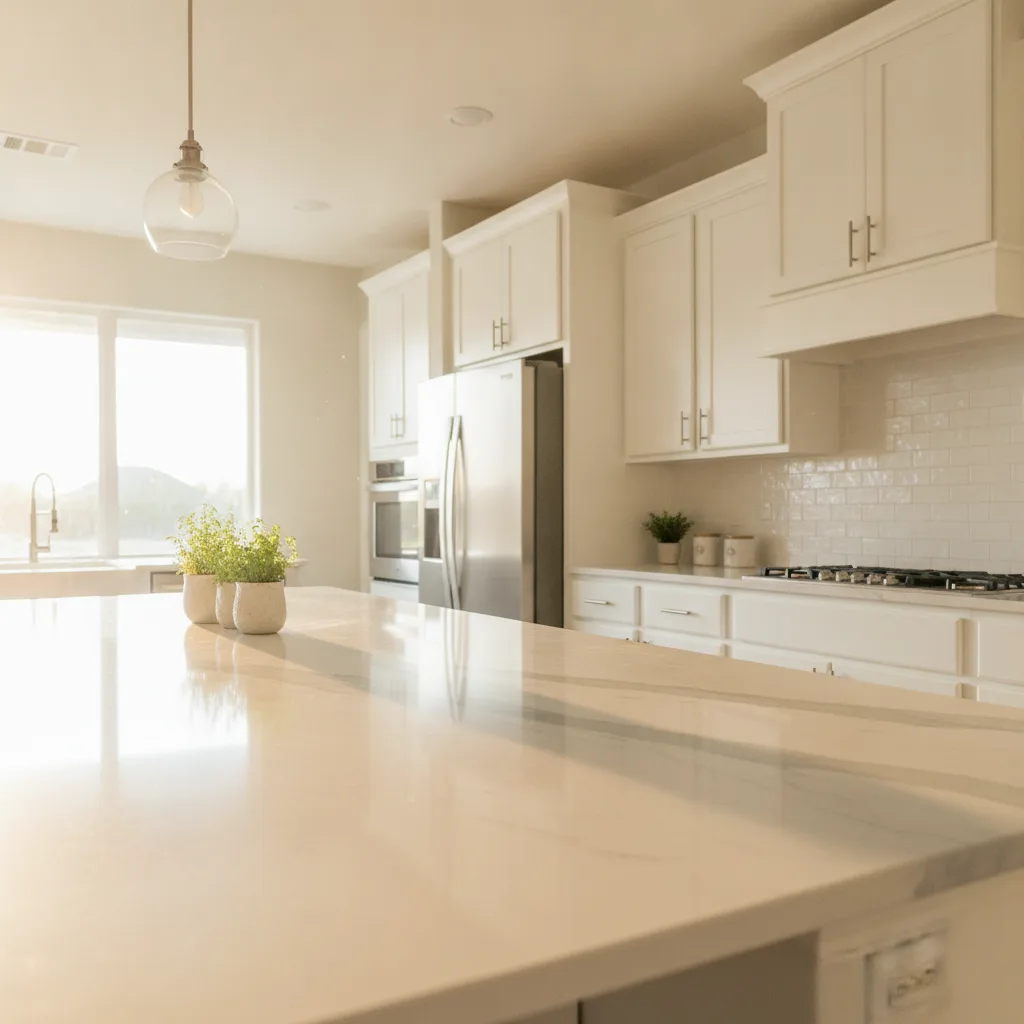
A full kitchen remodel in Central Texas costs $14,600–$55,000+ in 2026, with a national average of $26,990 based on Angi's dataset of 13,100 verified projects. Countertops represent 10–15% of that total: laminate runs $600–$1,600 installed for a typical 40 sq ft kitchen; granite and quartz run $1,600–$4,800; marble and quartzite run $3,200–$8,000 or more. Cabinet tariffs that doubled to 50% in 2026 pushed mid-range remodel costs well above 2024 baselines — but countertop prices have stayed relatively stable, making the countertop line one of the few you can still budget with confidence. Your material choice, layout complexity, and whether you move plumbing or walls are what move the final number most.
A kitchen remodel in Central Texas runs $14,600–$55,000+ in 2026, and countertops are the line item that anchors both the budget and how the finished space feels every day. Angi's 2026 data from 13,100 verified projects puts the national average at $26,990, while the Houzz U.S. Kitchen Trends Study found a median of $55,000 for major gut jobs and $75,000 for kitchens 250 sq ft or larger. That's a wide range — and it's wide because the countertop material you choose, whether you move plumbing or walls, and what's hiding behind your cabinets are what actually move the number. This guide breaks down what you'll pay at each scope level, what drives countertop prices by material, and where the hidden costs tend to land. If you're thinking about how to redo your kitchen without blowing the bank, the goal here is a budget you can actually defend before you sign anything. Read through each tier to find the option that matches your lifestyle and your home's real needs.
| Tier | Price range | What's included | Best for |
|---|---|---|---|
| Budget Refresh | $10,000 – $20,000 total | Countertops: $600 – $2,000 | Laminate or butcher block countertops, refaced or painted cabinetry, basic backsplash, cosmetic fixtures | Homeowners who want a fresh look without moving plumbing, walls, or appliances |
| Mid-Range Remodel | $25,000 – $42,000 total | Countertops: $2,000 – $4,800 | Semi-custom cabinetry, granite or quartz countertops with standard edge profile, undermount sink, new backsplash, updated lighting and fixtures | Homeowners doing a true kitchen overhaul — new cabinets, countertops, and appliances — without moving walls |
| Major Gut Job | $42,000 – $75,000+ total | Countertops: $3,200 – $8,000+ | Custom cabinetry, natural stone countertops (quartzite, marble, or premium granite), full appliance package, structural or layout changes, premium fixtures | Homeowners doing a full gut renovation, moving plumbing or walls, or finishing a large kitchen (200 sq ft or more) |
| Countertop-Only Upgrade | $600 – $8,000+ | Just the countertops | New countertop slab, professional fabrication, edge profiling, undermount sink cutout, and installation — cabinets and layout unchanged | Homeowners who love their kitchen but want to replace dated or damaged countertops without a full remodel |
Is $10,000 enough for a kitchen remodel? It depends on how much you leave in place. A budget refresh works when your cabinet boxes are structurally sound and your layout stays put — those two conditions are key. At this tier, laminate countertops are the honest answer for most kitchens. Professionally installed, laminate runs $15–$40 per sq ft and averages $1,251 on a standard kitchen, according to Angi's 2026 data from 1,643 verified projects. Modern high-definition laminate mimics stone convincingly with realistic textures, colors, and patterns — it's a cost-effective option, not a sacrifice. Budget-friendly countertops have made a genuine comeback in recent years, and today's laminate designs look great in both modern styles and classic farmhouse kitchen spaces. Butcher block countertops are the other real contender here, running $40–$100 per sq ft installed, with edge-grain maple at the lower end bringing real warmth to any kitchen design.
Laminate and butcher block are also the only two countertop materials where DIY installation meaningfully cuts cost — saving $400–$800 on laminate labor alone. For everything else at this scope, stick to what's already in place: the layout, the appliances, the plumbing. Replacing countertops while leaving the cabinet boxes intact is the cheapest way to redo kitchen countertops and still get an outsized visual change per dollar spent. If your renovation project is purely a countertop replacement, this tier covers it comfortably. You don't need to spend a fortune to create a kitchen that feels fresh and clean.
This is where most Central Texas homeowners land. Granite countertops and quartz countertops both become realistic choices at this scope. Granite runs $40–$100 per sq ft installed; quartz runs $50–$120. On a typical 40–50 sq ft kitchen, quartz costs $500–$1,500 more than comparable granite. Granite wins on upfront price and heat resistance; quartz wins on low maintenance (no sealing required, ever) and is a great option for busy households who prefer a clean surface that requires minimal upkeep. Countertops and backsplash together represent roughly 10–15% of a mid-range budget, which means on a $35,000 project you should budget $3,500–$5,250 for that line before you fall in love with a slab. Both materials add long term resale value and hold up well to daily traffic — making either a smart, durable choice at this tier.
One important thing to factor in as of 2026: cabinet tariffs doubled to 50%, pushing cabinetry costs significantly higher than 2024 baselines. A remodel that cost $35,000 two years ago now runs $42,000–$55,000. Hold your countertop budget firm — it's one of the few lines that hasn't been hit hard by tariffs. Domestic granite and quartz materials have remained relatively stable in price, which makes this the right place to lock in long term value. When making your countertop choices at this tier, a simple standard edge profile can save a bit of money compared to more complex designer options — and generally looks just as good in most kitchen designs.
The 2026 Houzz U.S. Kitchen Trends Study puts the median spend at $55,000 for a major remodel and $75,000 for kitchens 250 sq ft or larger — and one in ten homeowners spent $50,000 or more. At this budget, natural stone countertops are where the real decisions get interesting. Quartzite and marble run $70–$150+ per sq ft installed. On a 50 sq ft kitchen with an island, that's $3,500–$7,500 in countertops alone. Marble is attractive and heat resistant but does etch from acidic liquids and requires more upkeep than granite or quartz — it's a material that rewards homeowners who love its appearance enough to respect its maintenance needs. It continues to be a popular choice for designer kitchens, but it's not ideal for every lifestyle.
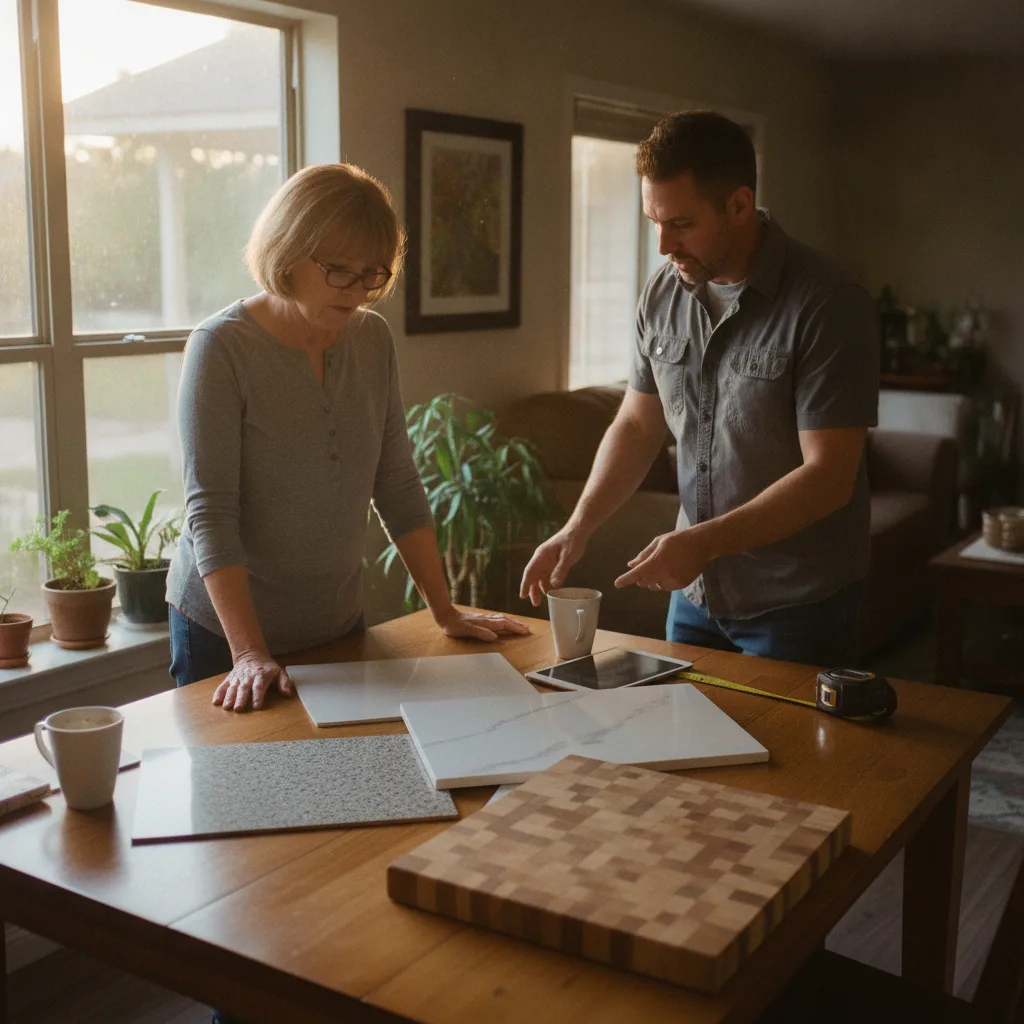
Quartzite is harder and more durable than marble, naturally heat resistant, and holds up better in active Central Texas kitchens — making it a great option for homeowners who want the look of natural stone without the ongoing damage risk that marble carries. Soapstone is another option at this tier ($70–$120 per sq ft installed): it's naturally non-porous, requires no sealing, and handles heat well. The tradeoff is that it scratches more easily than granite, though scratches sand and re-oil out at home. Concrete countertops also slide into this budget range at $50–$150 per sq ft professionally installed — ideal for an industrial or modern kitchen design, and fully customizable in colors and aggregates, though they require regular sealing and can crack under stress. At a $55,000–$75,000 budget, the slab selection done in person at a showroom is what separates a kitchen that looks right from one that looks perfect. No online photo captures how a specific stone pattern reads in your actual kitchen's light.
The cheapest way to upgrade kitchen countertops is to do only the countertops. If your cabinetry is solid and your layout works, replacing just the surface is a focused renovation project that delivers an outsized visual change for a fraction of a full remodel cost. For a 40 sq ft kitchen: laminate runs $600–$1,600 installed; butcher block $1,600–$4,000; granite $1,600–$4,000; quartz $2,000–$4,800; marble or quartzite $3,200–$8,000+. These all-in prices include material, fabrication, standard edge profile, and professional installation. Opting for remnant pieces — scraps of stone left over from larger projects at the fabricator's shop — is one smart way to buy quality material at a lower price when your countertop space is small enough to work with what's available.
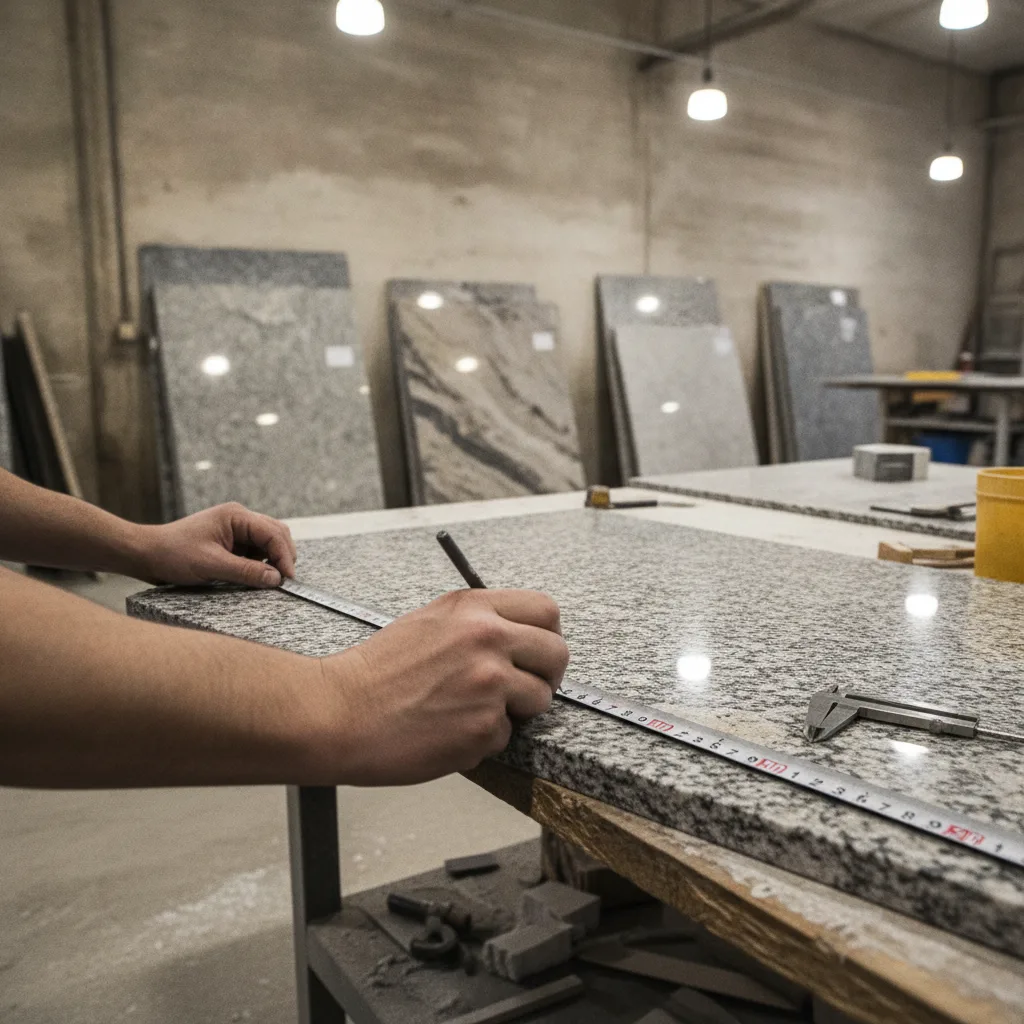
Stone countertops — granite, quartz, quartzite, marble — require professional fabrication regardless of skill level. Slabs must be cut with a diamond-blade wet saw and seams precisely joined. A cracked slab during a DIY attempt is the buyer's loss, and a slab costs more than the labor you were trying to save. There's real risk in opting out of professional installation for stone. Stick to laminate or butcher block if you want a real DIY path. For everything else, professional installation is non-negotiable and worth every dollar.
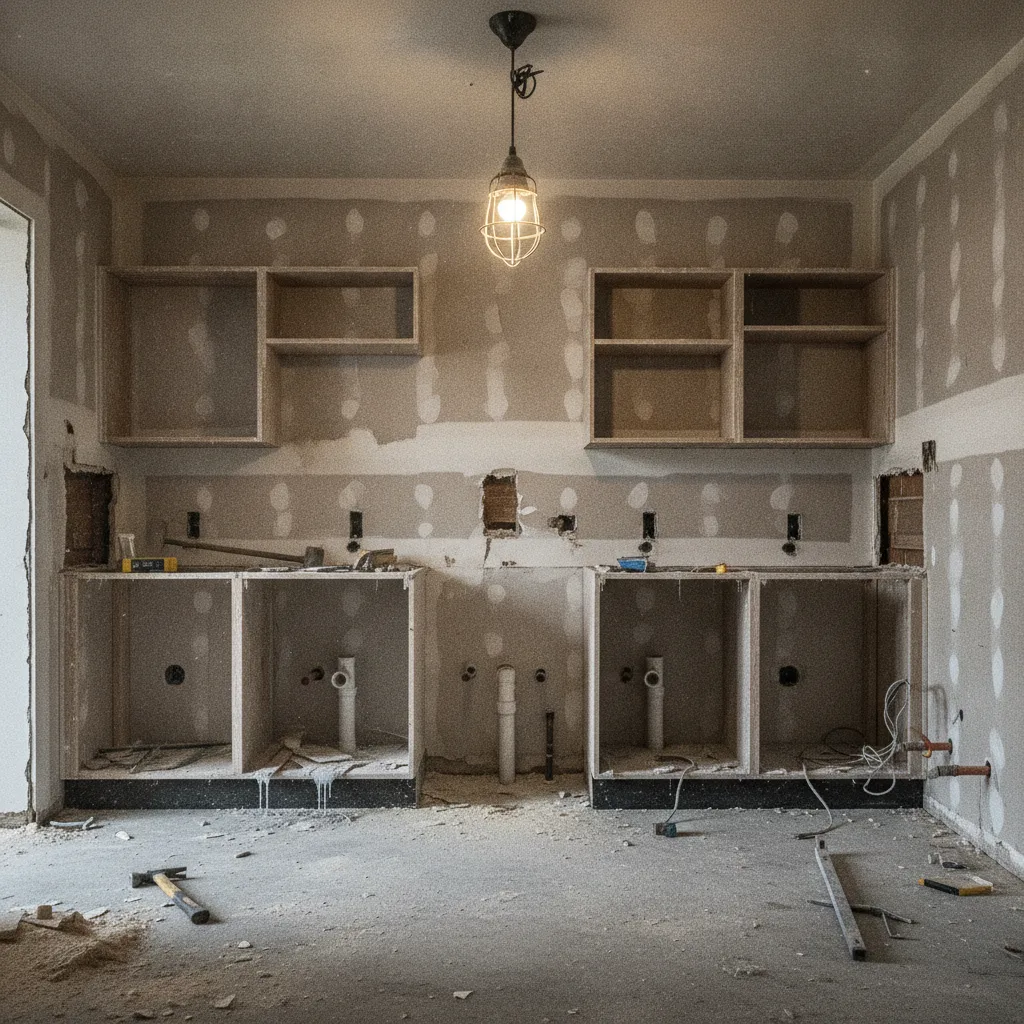
Permit fees, debris disposal, and electrical upgrades are consistently left out of standard contractor quotes — adding $2,000–$8,000 to the final bill. Before you sign any countertop or remodel contract, ask: 'Does this price include permits, haul-away, and any plumbing or electrical work needed for the install?' A transparent fabricator will answer without hesitation. One that hesitates is the one to walk away from.
For most Central Texas homeowners planning a kitchen remodel, the countertop decision is the one that locks in lasting value or costs money in upkeep they didn't plan for. Fox Granite has completed over 10,000 projects across Austin, San Antonio, New Braunfels, and the surrounding area — and we see this budget conversation every week. The right countertop material for your kitchen depends on how you cook, what your cabinet boxes can support, and what the rest of your remodel budget looks like after cabinetry. If you're ready to move forward, contact Fox Granite today to schedule your free in-home consultation. See actual slab options in your kitchen's light, get guidance on edge profiles and layout, and find the countertop choices that match your home, your lifestyle, and your budget — before you finalize a single number.
Ready to get started? Contact Fox Granite today.


BY APPOINTMENT ONLY
1379 Wald Road
New Braunfels, TX 78132
Austin, San Antonio, Cedar Park, Kyle, New Braunfels, Del Valle, Elgin, Lago Vista, Shady Hollow, Onion Creek, Buda, San Marcos, Lockhart, Temple, Wimberley, Dripping Springs, Bee Cave, Lakeway, Leander, Anderson Mill, Jollyville, Spicewood Springs, Round Rock, Georgetown, Pflugerville, Manor, Taylor, Manchaca, Mountain City, Hutto, West Lake Hills, Bastrop, Liberty Hill, Driftwood, Sun City, Steiner Ranch.