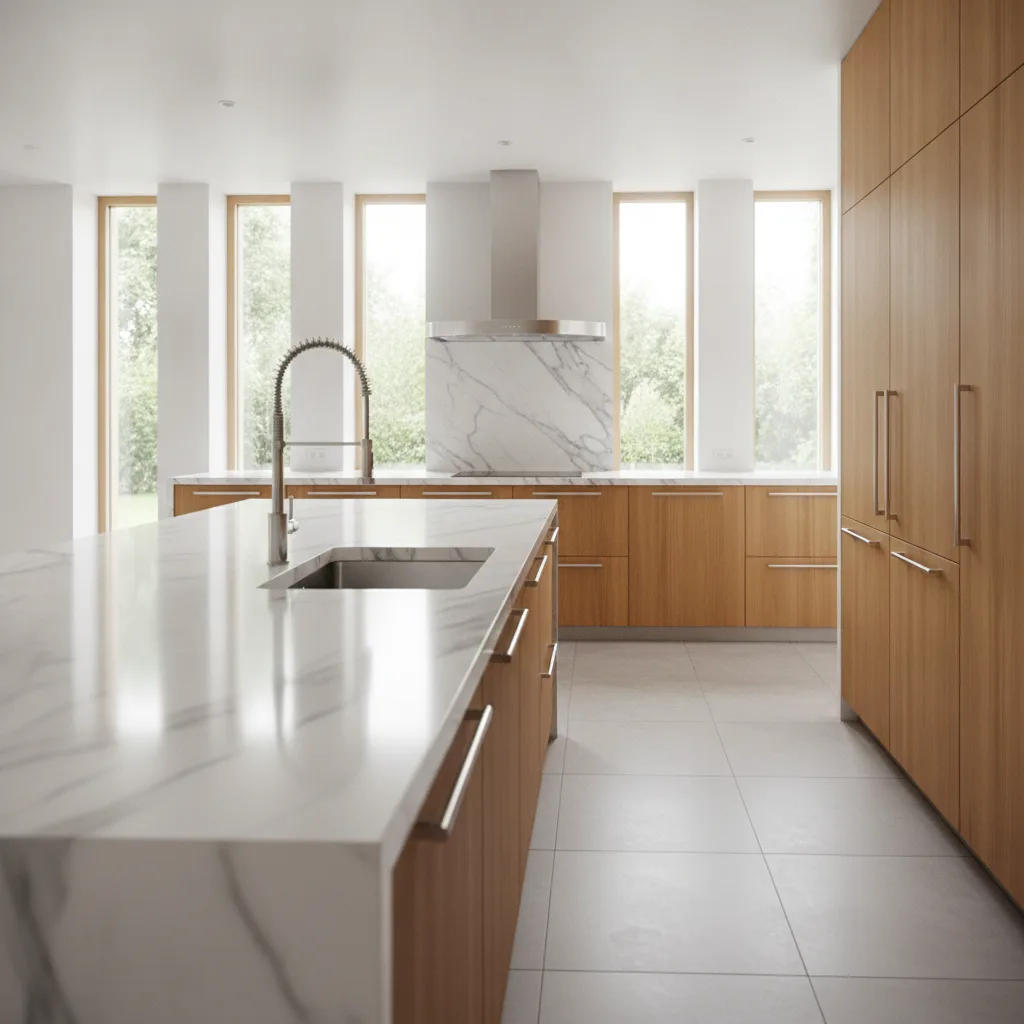
Marble countertops are not too high-maintenance for every busy kitchen — but they are the wrong fit for households that want a set-and-forget surface. The core issue is etching: acids like lemon juice and wine react chemically with the calcium carbonate in marble and leave dull spots that no sealer can prevent. Staining is a separate problem that sealing does address. Busy kitchens should plan to reseal every six months and budget for occasional professional re-honing. Quartzite gives you most of marble's visual appeal without the etching risk. Granite is the lowest-maintenance natural stone option for high-traffic family kitchens. The right answer depends on your household's cooking habits and tolerance for daily care routines, not on marble's quality as a material.
Marble countertops are not too high-maintenance for every busy kitchen — but that honest answer requires a real definition of what 'high-maintenance' means for this specific natural stone. The issue isn't cleaning. It isn't even sealing. The issue is etching: a chemical reaction between acids and the calcium carbonate in marble that leaves dull spots on the surface regardless of how well the stone was sealed. That single fact — widely misunderstood, underexplained at point of sale, and impossible to reverse without professional help — determines whether marble works for your household or frustrates you within the first couple of years. This guide walks through the geology that explains why the problem exists, the daily habits that manage it, the real costs over time, and how marble stacks up against quartzite and granite when you run an honest comparison.
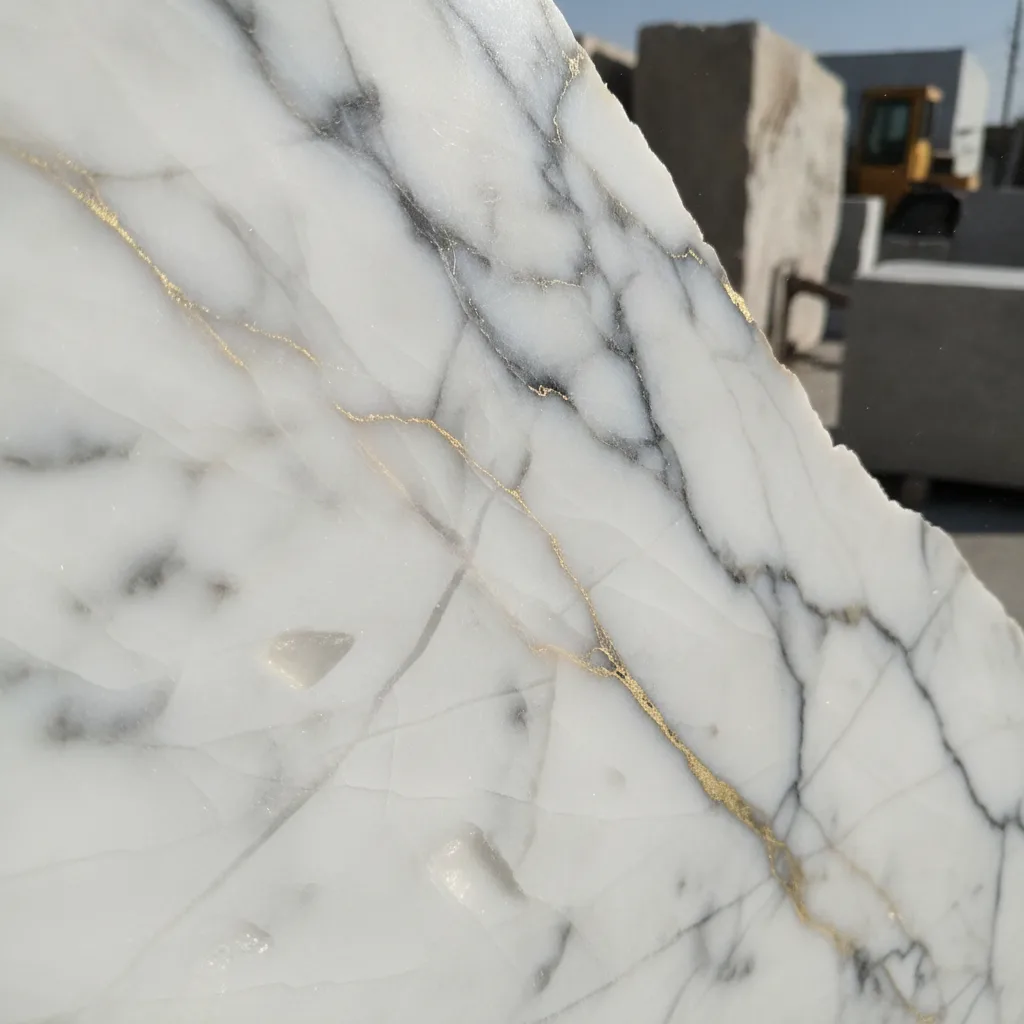
Marble is a metamorphic rock created when limestone — a sedimentary rock composed primarily of calcite, a form of calcium carbonate — is subjected to intense pressure and heat deep within the earth's crust, typically between 200 and 900 degrees Celsius. That transformation produces a crystalline rock with a uniform grain and the translucent depth that makes marble so visually striking. The mineral impurities present during metamorphism — serpentine, iron oxides, and others — produce the veining patterns that range from pure white Carrara to green, gold, and gray tones. Those same features found in sculptures from ancient Athens to Michelangelo's workshop are the ones you're buying for a kitchen countertop.
The calcium carbonate composition isn't geological trivia. It's the direct cause of every kitchen maintenance challenge marble presents. Acids react with calcite on contact, dissolving the surface and leaving dull spots — a process called etching. This is baked into the material's chemistry, not a defect in any particular slab. As of 2026, four countries — China, Italy, India, and Spain — account for almost half of world marble and decorative stone production. Italy's Carrara region, quarried for over 2,000 years, produces the most recognized varieties: the pure white field and soft gray veining that became the benchmark for what marble looks like in the Western design tradition. Dolomite marble — a variety where dolomite partially replaces calcite — is found in some slabs and derives slightly different coloring as a result, though it shares the same acid-sensitivity as standard calcite-dominant types. The word 'marble' itself, as the Merriam-Webster dictionary defines it, refers to a limestone that has been recrystallized through metamorphism — a definition that makes the maintenance behavior entirely predictable once you understand the chemistry.
Marble found in a kitchen is performing a job it was never designed for by nature. That doesn't disqualify it. It means the homeowner becomes part of the maintenance system. Understanding the geology upfront changes the questions you ask before buying — and the habits you build after installation. What makes marble worth considering for a kitchen is a combination of heat resistance, visual depth, and a centuries-long record as a valued building material — not a marketing claim, but a provable track record that spans millennia of construction and design.
If you remember one thing: marble's calcium carbonate composition is why lemon juice etches the surface regardless of sealing, while granite (silicate-based) and engineered quartz shrug off the same contact. That single fact explains most of the maintenance difference between marble and other stones.
Etching and staining are two separate problems on marble surfaces, and confusing them is one of the most common mistakes homeowners make. Etching is a chemical burn: acids — lemon juice, wine, vinegar, tomato sauce — react with the carbonate minerals in the stone and dissolve the surface, leaving dull spots or rings. No sealer stops this. Staining, by contrast, is liquid absorption into the porous stone, which a good penetrating sealer does help prevent. The distinction matters because it determines what you can fix and what you can only prevent through habits.
Light etching can often be buffed out at home using marble polishing powder and a soft pad worked in small circles. Deep etching and polish loss require professional re-honing, which typically runs $300 to $800 per visit (Soares Stone, 2026). That's a recurring cost most marble buyers don't budget for going in. A busy family kitchen that skips coasters and wipes down with a vinegar-based cleaner could need professional attention every few years — a meaningful addition to the total cost of ownership over the life of the countertop.
Honed (matte) marble is frequently recommended over polished marble for kitchen countertops precisely because etching is far less visible on a matte surface — the dull spot blends into the existing texture rather than standing out against a high-gloss shining stone finish. The trade-off: honed marble is more porous and absorbs stains faster, making consistent sealing even more critical. Neither finish eliminates the etching problem. It's a comparison of visibility, not risk.
Sealing protects against staining. It does not protect against etching. If a salesperson or online source tells you a sealed marble countertop won't etch, that's inaccurate. The only real protection against etching is keeping acids off the surface — through habits, cutting boards, and prompt cleanup.
The daily marble care routine is simple, but it has to be consistent. Wipe spills immediately — liquids can penetrate a marble surface within minutes. Use a soft microfiber cloth with a pH-neutral stone cleaner. Never use vinegar, citrus-based sprays, abrasive powders, ammonia, or scouring pads on marble. Place coasters under glasses, cutting boards under citrus and tomatoes, and trivets under anything warm. Doing these things consistently is what makes the difference between a marble surface that ages gracefully and one that accumulates visible damage year after year. The goal isn't to keep marble pristine forever, but to slow the accumulation of damage between professional visits.
The lifestyle reality check: in a household with young kids, a partner who sets wine glasses directly on the counter, or a cook who squeezes lemon over the cutting board onto the stone, these habits require active management. That's not a criticism of any household — it's just the honest picture. Homeowners who clean promptly, use cutting boards, and accept that marble develops a gradual patina as part of its character are generally happy with their choice over the years. Those who want a set-and-forget surface are not. That's the clearest framework for evaluating lifestyle fit before you buy.
Marble's one genuine performance advantage in a kitchen is heat resistance. It stays cool to the touch naturally — a real benefit for pastry work and baking, where a cool marble surface is a functional tool, not just a backdrop. This is one area where marble outperforms engineered quartz, which should not have hot pots placed directly on it. For a household where baking is central to the kitchen's purpose, this feature earns its place in the comparison. The cool surface also makes marble a popular choice for flooring in warm-climate homes, where the thermal mass that makes marble comfortable underfoot in summer is part of its long-term value.
$10–$20 per bottle
Safe for calcite-based marble surfaces; won't trigger the acid reaction that vinegar or citrus-based cleaners cause on contact with stone.
$15–$30
DIY repair for light etching; buff with a soft pad in small circles to restore surface sheen before damage deepens to the point of needing professional re-honing.
$25–$50 per application
Fills pores to slow stain absorption; reapply every 6 months in a busy kitchen per Natural Stone Institute guidance. This protects against staining, not etching.
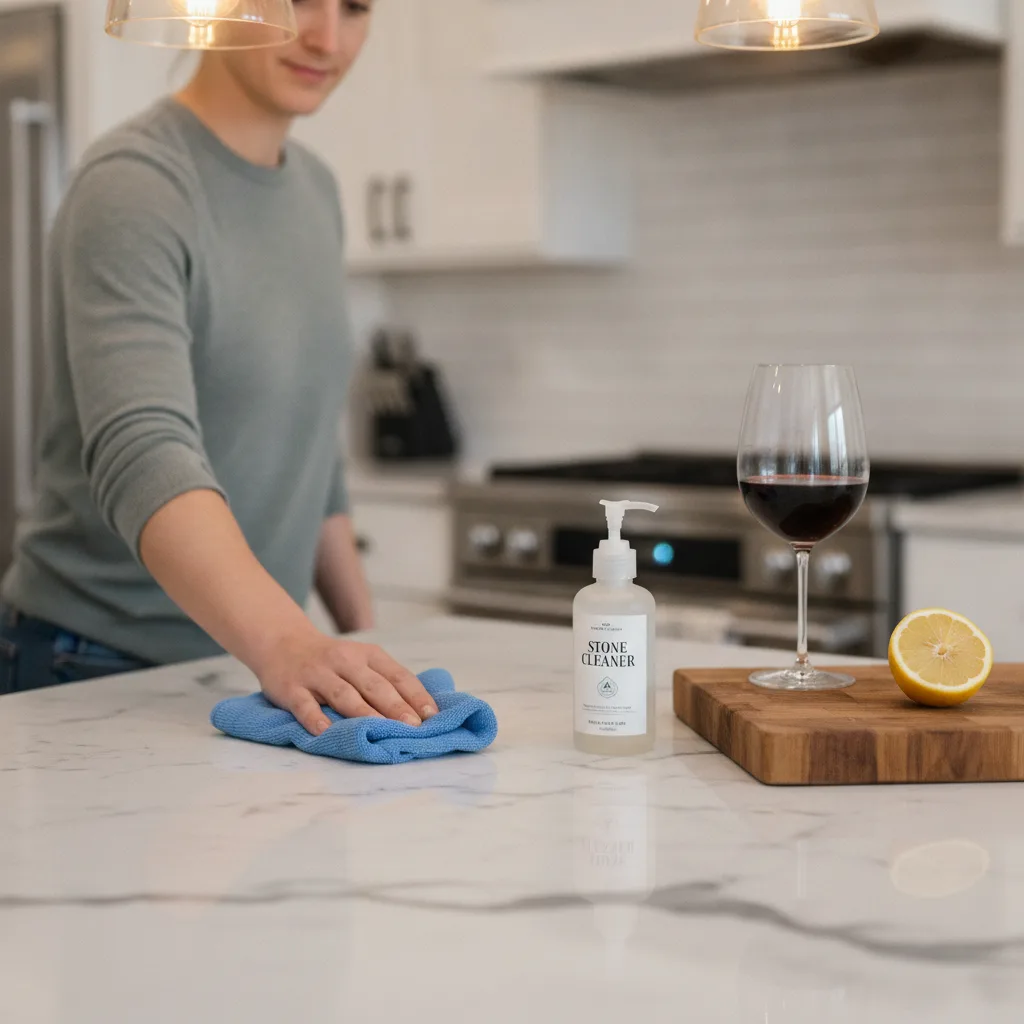
Busy kitchens should plan to seal marble countertops every 6 months; lower-traffic kitchens may extend to 12 months (StoneTech Arizona, 2026). Sealing is not a one-time task — the Natural Stone Institute frames it as routine, ongoing maintenance, similar to how a wood deck needs periodic treatment to stay protected. Skipping this step over several years is one of the most common ways homeowners let staining risk compound quietly until it becomes a visible problem. The annual cost for sealing products runs roughly $50 to $150 depending on kitchen size and product choice.
The water-bead test is the simplest way to know when reapplication is due: pour a small amount of water on the counter and watch how it behaves. If it beads up and sits on the surface, the sealer is still working. If the water soaks in and darkens the stone within a few minutes, it's time to reseal. You don't need to guess or track a calendar — the test gives you a direct result. Run it every few months and you'll never let the sealer lapse by accident.
Keep the Step 2 distinction in mind here: sealing handles staining risk. The etching problem is managed by the daily habits in Step 3 — specifically, keeping acids off the surface. Both are required. Letting sealing lapse doesn't cause etching, and perfect sealing doesn't prevent it. They address different categories of risk and work in parallel, not in place of each other.
Apply sealer in a well-ventilated space and let it cure fully before using the countertop. Most penetrating sealers need 24 to 48 hours before the surface sees heavy use. Rushing this step leaves the stone under-protected even if the product was applied correctly.
The 2026 national average for marble countertop installation runs $103 to $149 per square foot (Homewyse, via Blackburn's Interiors, 2026). Variety matters significantly within that range: Carrara marble — the most recognizable pure white marble with soft gray veining, quarried in Italy — installs for $75 to $120 per square foot. Calacatta marble, with bolder veining and a more dramatic look, runs $150 to $250 or more per square foot installed. Marble found at the lower end of the range often comes from India or China and may differ in veining density and color consistency from the Italian varieties most homeowners picture when they say 'marble.'
The upfront cost is only part of the picture. Add $50 to $150 per year in sealing products, and factor in professional re-honing at $300 to $800 per visit when etching accumulates beyond DIY repair. Over ten years, a marble kitchen that sees regular cooking can carry several thousand dollars in maintenance costs on top of installation — a figure that makes a real difference when you're comparing total project budgets. That's not disqualifying, but it should be part of the planning conversation before you sign, not a discovery after the slabs are in.
Compare that to granite, which runs roughly $55 to $130 per square foot installed and requires sealing only once every one to three years, or to engineered quartz at a similar installed price range but with virtually no sealing required and no etching risk at all. The question isn't which material is cheapest. It's whether the marble look and performance trade-offs fit your household and budget over the long haul. A table comparison of those features — hardness, etching risk, sealing schedule, and cost — is the clearest way to run this analysis before you commit.
Quartzite is the alternative most marble-intenders end up choosing after researching the maintenance difference. It's a natural stone — a metamorphic rock like marble — but composed of silicate minerals rather than calcium carbonate. That means acid contact does not cause etching: wine, citrus, and vinegar leave quartzite unaffected. Quartzite rates 7 on the Mohs hardness scale (marble sits at 3 to 4 by comparison), and that gap is wide enough that standard kitchen knives at Mohs 5.5 to 6 can mark marble but not quartzite. Cutting marble with standard knives is a real-world risk in busy kitchens; with quartzite it isn't. Many quartzite varieties — particularly the white and light-gray types — closely mimic marble's veining and translucent depth, giving you most of the visual result with far less daily vigilance. Quartzite sealing is needed every 6 to 24 months versus every 6 months for a busy marble kitchen, and that reduced frequency is one of the things that makes quartzite an easier long-term proposition for many households.
Granite is the right call for the highest-traffic family kitchens where low maintenance is the top priority. At 6 to 7 on the Mohs hardness scale, granite resists scratches that would mark marble surfaces. It doesn't etch. It's available in a wide range of colors and veining patterns — not just the speckled look people associate with 1990s installations. Granite's silicate-mineral composition is exactly what makes it capable of handling decades of Central Texas weather and heavy daily use without the same care burden marble demands. For outdoor kitchens in Central Texas specifically, marble is generally not recommended. The combination of moisture, UV exposure, and temperature swings accelerates both etching and staining faster than any indoor kitchen could. Granite and quartzite, as dimension stone options with silicate-mineral composition, hold up significantly better in that environment.
The honest framework: if you love the specific look of marble, want the heat resistance for baking, and are genuinely willing to build the daily habits around it — marble can work beautifully and for decades. If you want most of the visual appeal with far less daily vigilance, quartzite is worth a serious look. If durability and minimal upkeep are the priorities above aesthetics, granite is the most forgiving choice in a busy kitchen. The word 'maintenance' in a marble context means something very specific: acids off the surface, sealer refreshed on schedule, and a willingness to let the stone develop character over the years rather than expecting it to stay showroom-perfect indefinitely. At Fox Granite, we carry all three. The comparison isn't abstract when you can see slabs side by side and feel the texture difference in person.
If you're planning an outdoor kitchen in the Austin, San Antonio, or New Braunfels area, skip marble entirely. Central Texas heat, UV exposure, and humidity cycles will accelerate etching and staining faster than any indoor kitchen. Granite and quartzite are the right materials outdoors — both are durable natural stone options that handle the conditions without the same maintenance burden.
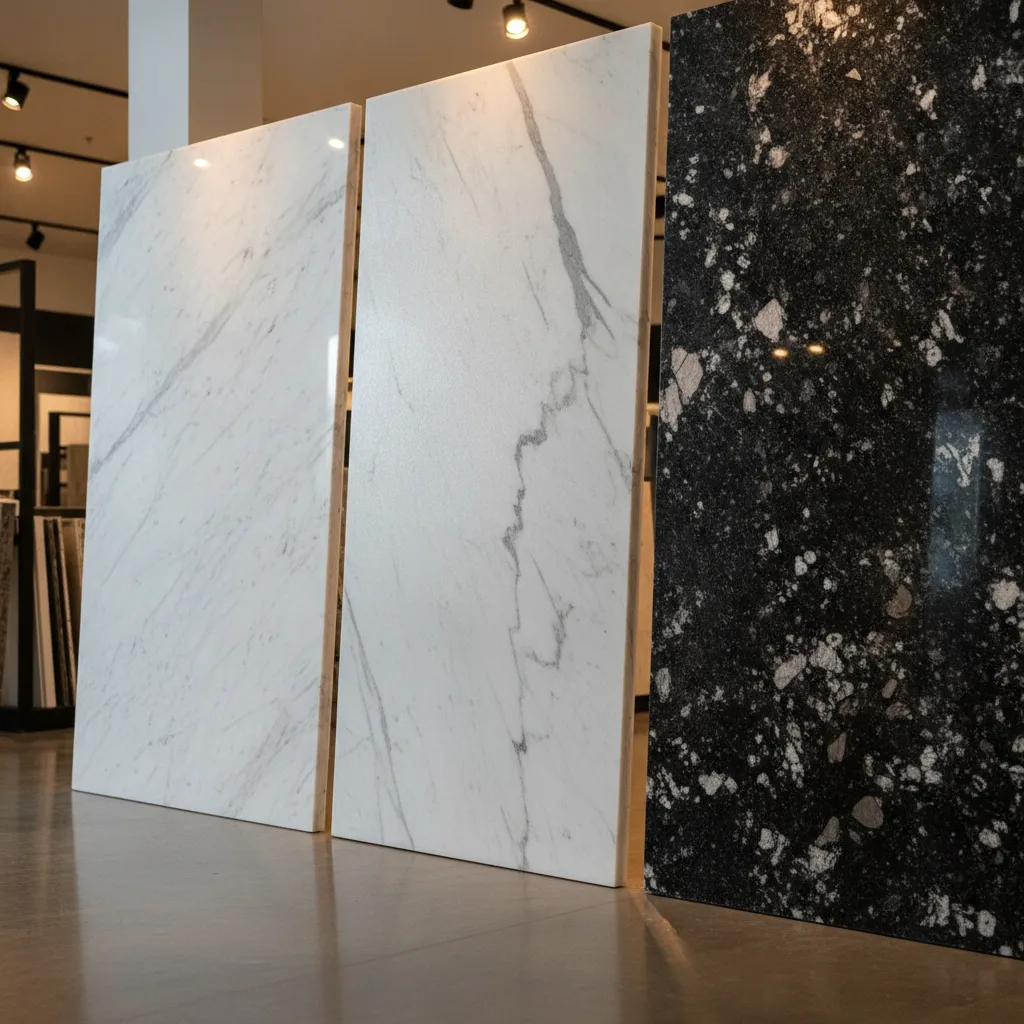
The homeowners who regret marble are almost always the ones who weren't told upfront about etching. Not staining — etching. The chemical burn that no sealer prevents. If your fabricator didn't walk you through that distinction before you signed, you were undersold the maintenance picture. At Fox Granite, that conversation happens before we ever talk price. We'd rather you choose the right material than a beautiful one that frustrates you in six months. Book a free in-home consultation and we'll bring samples of marble, quartzite, and granite so you can see and feel the difference before you decide.
Marble countertops are not too high-maintenance for every busy kitchen — but they are the wrong fit for households that want a surface they can ignore. The honest answer is that marble rewards consistent habits and punishes inattention, and that's a lifestyle fit question more than a material quality question. When the habits are in place and the expectations are accurate, marble is durable, heat-resistant, and genuinely beautiful for decades. When they're not, the etching accumulates and the maintenance costs follow. For marble, quartzite, and granite countertops in Austin, San Antonio, New Braunfels, and throughout Central Texas, Fox Granite has helped over 10,000 Central Texas homeowners choose the right stone for their actual lives — not just the prettiest slab in the showroom. Contact us today to schedule your free consultation or get your free estimate.
Ready to get started? Contact Fox Granite today.


BY APPOINTMENT ONLY
1379 Wald Road
New Braunfels, TX 78132
Austin, San Antonio, Cedar Park, Kyle, New Braunfels, Del Valle, Elgin, Lago Vista, Shady Hollow, Onion Creek, Buda, San Marcos, Lockhart, Temple, Wimberley, Dripping Springs, Bee Cave, Lakeway, Leander, Anderson Mill, Jollyville, Spicewood Springs, Round Rock, Georgetown, Pflugerville, Manor, Taylor, Manchaca, Mountain City, Hutto, West Lake Hills, Bastrop, Liberty Hill, Driftwood, Sun City, Steiner Ranch.