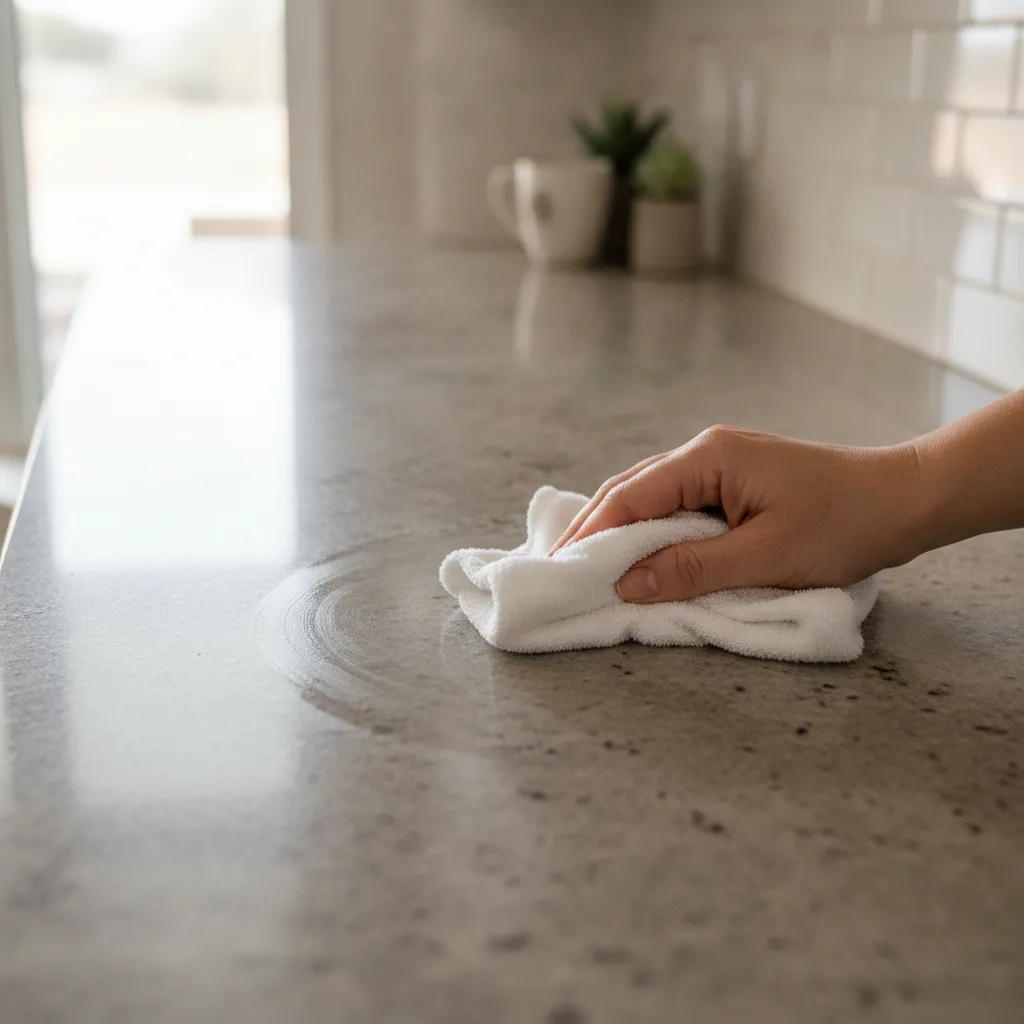
To reshine granite countertops without a full refinish, follow four steps: (1) run a clean-and-buff triage using dish soap and a 1:1 isopropyl-and-water mix in a spray bottle to rule out soap film and hard water buildup; (2) run the water bead test — drop a tablespoon of water and time it, stone that darkens in 4 to 5 minutes needs resealing; (3) apply a granite polishing cream like MB-20 or Faber STAR SHINE in circular motions across 2-square-foot sections with a soft cloth; (4) reseal with a penetrating impregnating sealer if the bead test failed. Total cost: $20 to $100. Total time: 45 to 90 minutes. Most dull granite does not need professional refinishing.
Dull granite countertops are one of the most common calls we get at Fox Granite — and in the vast majority of cases, the stone is not damaged. It's dirty, or its sealer is worn, or both. Knowing how to reshine granite countertops correctly means diagnosing the real cause before spending a dime on products or a professional. This four-step process covers the clean-and-buff triage, the water bead test, polishing granite with a granite polishing cream or granite polishing powder, and resealing with a penetrating impregnating sealer. Total cost: $20 to $100. Total time: 45 to 90 minutes. Most Central Texas homeowners who follow these steps get back the deep, reflective finish the stone had when it was first installed — no professional refinishing, no power tools, no significant investment in labor.
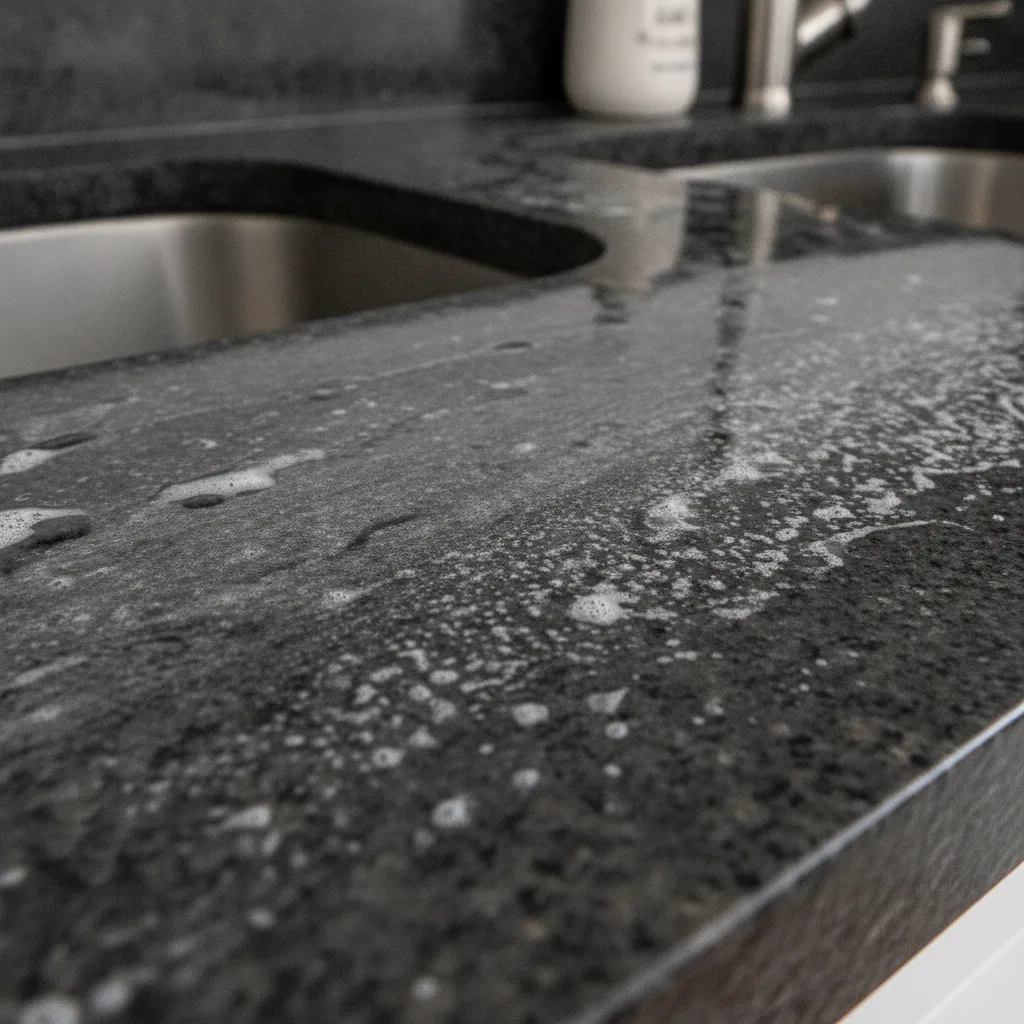
Most dull granite countertops are not damaged — they're dirty. Hard water deposits, soap film, grease, and residue from everyday cleaners sit on top of the stone and deflect light instead of letting it reflect. Before you buy a single product, do this triage: wash the dull section with a few drops of dish soap and hot water, scrub gently with a soft sponge, rinse clean, then wipe with a 1:1 mix of isopropyl alcohol and water from a spray bottle. Buff completely dry with a fresh microfiber cloth. If the surface gleams, you're done. The dullness was film, not stone damage. That's the quick and easy way to sort simple buildup from a real polish or seal problem.
Central Texas has some of the hardest water in the country — Austin, San Antonio, and New Braunfels all pull from limestone aquifers. That calcium and mineral content leaves chalky white deposits near the sink and a cloudy haze across the counter. A pH-balanced, granite-safe cleaner cuts through hard water stains safely without attacking the stone. Skip vinegar, lemon juice, bleach, and ammonia entirely: those acidic and alkaline chemicals cause etching, a chemical reaction that creates permanent dull spots and breaks down your sealer fast. One application won't ruin your granite, but regular use will. Many homeowners are surprised to learn their daily cleaning routine is the main cause of surface dullness.
If the clean-and-buff triage restores the shine, still check your sealer in Step 2 before calling it done. If the surface still looks dull and flat after fully drying, move on. The triage took five minutes and cost nothing — a few tips applied here can save you $200 or more in unnecessary professional fees.
$8–$12
pH-neutral formula removes soap film and hard water residue without etching the stone or stripping the sealer from natural stone countertops
$3–$5
Cuts grease and cleaner residue quickly; evaporates clean with no streaks on granite or marble
$8–$15 for a pack
Soft cloth buffs without scratching; paper towel leaves lint and light abrasives that scatter light and dull the surface over time
Never use a rough scrub pad, steel wool, or abrasive sponge on granite. Even light abrasives create microscopic scratches that scatter light and make the surface look permanently dull. Use a soft sponge or a soft cloth only — and never a scrub with any abrasive grit, even the green side of a standard kitchen sponge.
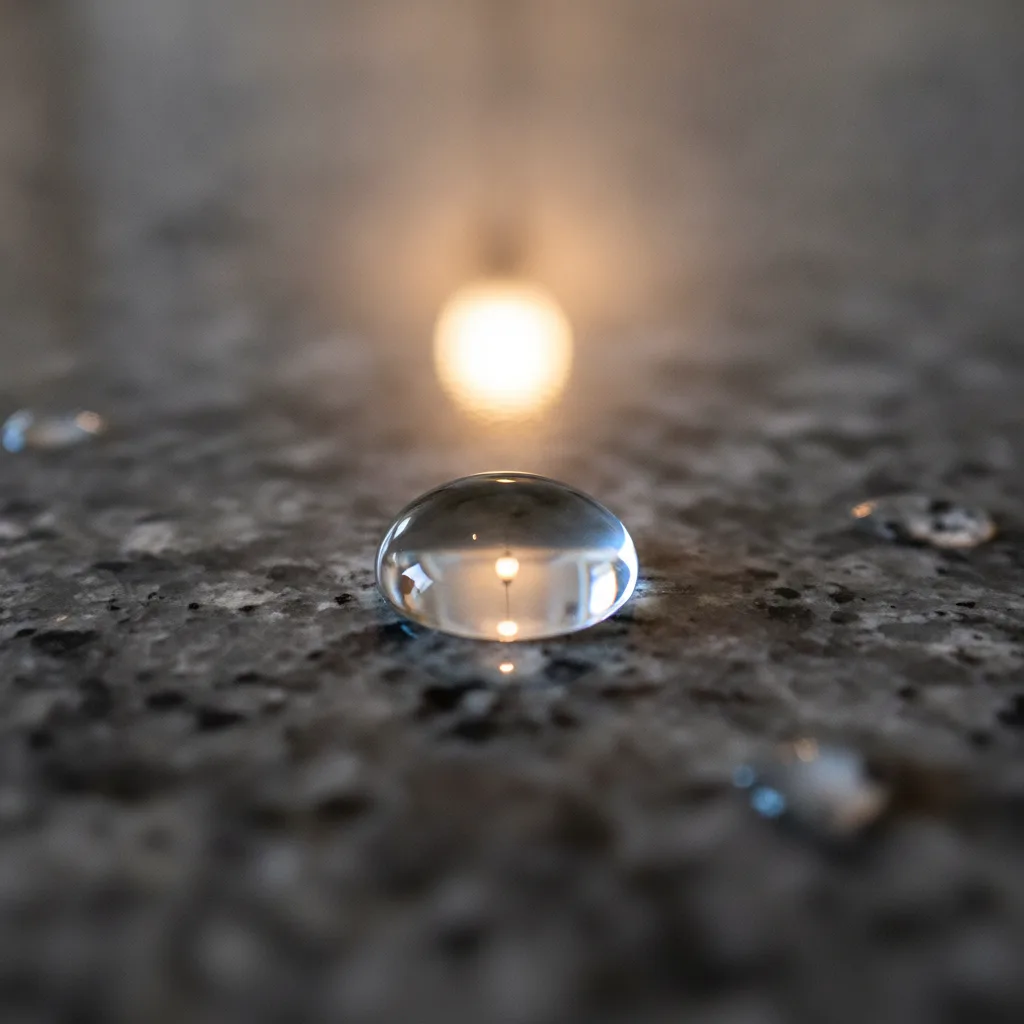
The water bead test is the field standard for diagnosing a failing sealant: drop a tablespoon of water on the counter and set a timer. Water that beads up and holds for 30 minutes means the sealer is fine and dullness is a surface issue. If the stone darkens within 4 to 5 minutes, the sealer is depleted and the granite is absorbing moisture — plan to reseal after Step 3. This test takes two minutes and tells you exactly what you're dealing with before you spend anything on products.
Granite isn't porous the way a sponge is, but it does have microscopic channels that absorb liquids when the sealer wears away. A worn sealant lets cooking oil, wine, and water work into the stone, and that absorbed moisture can make the surface look wet and dull even after cleaning. Most kitchen granite countertops need to be re-sealed every 12 to 18 months in high-use kitchens, though the real trigger is this test — not a calendar. Some dense granites go five years without needing it; softer, lighter-colored stones may need it annually. Sealed granite is durable granite; unsealed stone is susceptible to staining and dullness.
Run the water bead test in two or three spots — near the sink, on the main prep surface, and near the stove. Sealer wear is uneven across a counter. If the water beads for the full 30 minutes everywhere, skip ahead to Step 3 and focus on the polish. If it soaks in fast anywhere, complete Step 3 first to restore the shine, then move directly to Step 4. Resealing before polishing traps residue under the sealant and defeats the purpose — always polish granite countertops before you seal them.
The area near the sink almost always fails the water bead test first because water and dish soap break down sealer faster than dry cooking areas. If that one spot fails but the rest of the counter beads fine, you can spot-seal instead of resealing the entire surface.
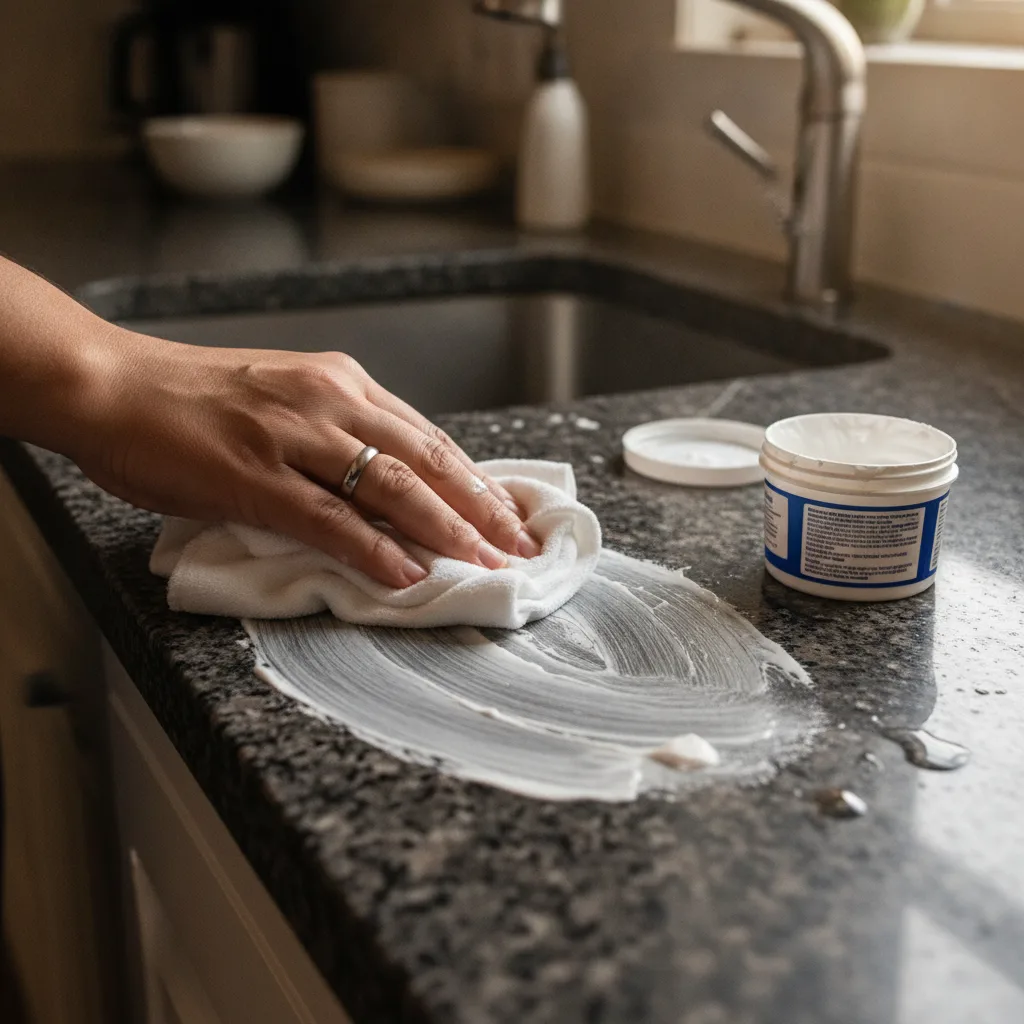
For light surface dullness that survived the Step 1 triage, a water-based granite polishing cream or granite polishing powder is the right tool to restore the shine — no power tools required. Products like MB-20 Granite Polishing Cream or Faber STAR SHINE restore gloss and depth on natural stone without adding coatings or requiring mechanical wet polishing equipment. These are not waxes; they're light polishing compounds that micro-smooth the surface so it reflects light the way it did when the countertop was first installed. A DIY polish job on an average kitchen costs $20 to $60 in supplies and takes 30 to 60 minutes.
Work in sections of about two square feet — larger sections let the polishing compound dry on the stone before you buff it off, which leaves residue rather than shine. Apply a small amount of the granite cream polish directly to the surface or onto a soft cloth, then work it in with firm circular motions. Let it sit 2 to 3 minutes — don't let it dry completely. Buff it off with a clean, dry microfiber cloth using the same circular motion. Flip to a fresh section of cloth as it loads up with compound. Repeat section by section across the entire counter, overlapping slightly at the edges.
Granite polishing powder works the same way but mixes to a paste with a few drops of water first. Both dry powder and cream formats produce the same result on light dullness. Neither can fix deep scratches or widespread etching — if you run your fingernail across a dull spot and feel a physical groove or rough texture, that's below-surface damage. DIY polish restores the shine on a smooth surface; it doesn't fill or cut away scratches. That level of damage requires professional stone restoration with wet polishing pads and diamond abrasive pads, which runs $300 to $700 for a typical kitchen. That's still a far better choice than full countertop replacement — granite is a significant investment worth protecting.
$15–$25
Water-based granite cream polish that restores shine on natural stone countertops by hand, no power tools or wet polishing equipment needed
$20–$35
Contractor-grade granite polishing cream that works on both granite and marble without mechanical wet polishing pads — a good polish option for first-timers
$12–$20
Mix to a paste with water; a good polish alternative to cream, especially for vertical surfaces like a granite backsplash where cream drips
If the dull area feels rough or shows a whitish haze that doesn't respond to two full passes of polishing compound, stop. That's likely acid etching from vinegar, citrus, or acidic chemicals — or physical scratches from abrasive scrubbing. Polishing cream won't fix etching. A professional using wet polishing pads and diamond abrasive pads ($300–$700) is the right call at that point, not another round of DIY polish.
Resealing is the final step if your water bead test in Step 2 showed failing absorption. DIY granite resealing costs about $100 all-in for an average kitchen — almost entirely the sealer itself at $15 to $65, plus a few microfiber cloths. That's compared to $200 to $350 to hire a professional for the same task, or $1.16 to $2.24 per square foot at national average professional rates as of 2026. The stone just needs to be clean, dry, and freshly polished before the sealer goes on. Applying sealer to a dirty or wet surface traps moisture and residue underneath, which prevents bonding and produces a cloudy film rather than protection.
Apply the penetrating sealer in a thin, even coat using a soft cloth or foam applicator. Work in sections so you keep track of coverage. Let it sit for the dwell time on the label — typically 10 to 20 minutes — then wipe off any excess before it hazes. Don't let sealer pool or dry on the surface; excess sealer leaves a film that's harder to remove than the original dullness. After the first coat, let it cure the full recommended time (usually 24 hours) before running water on the counter. A fan aimed at the surface speeds drying, which matters in Central Texas summers when humidity slows evaporation.
Most penetrating sealers for granite are impregnating formulas — they soak into the stone's pores rather than sitting on top as a coating. That's what you want for durable, long-lasting protection. Avoid topical sealers or enhancers that add a visible sheen on the surface, because those wear unevenly and can make granite counters look patchy within months. Once properly sealed, the stone is re-protected. Run the water bead test again in 24 hours to confirm the sealer took. If water still soaks in fast, apply a second coat. Most granites accept two coats before they're fully sealed.
$18–$30
Penetrating impregnating sealer that works on granite, marble, and quartzite with no professional equipment — single-coat application for most stone types
$15–$25
Widely available water-based penetrating sealer; forgiving on dwell time and wipes clean easily, a good first choice for homeowners sealing their own granite
$40–$65
Professional-grade penetrating sealer with protection intervals of 3 to 5 years on dense granite counters — worth the premium cost if you want longer maintenance cycles
The counter must be completely dry before sealing — moisture trapped under a sealer prevents it from bonding with the stone. Wait at least 2 hours after the polish step, or longer if your kitchen is humid. In Central Texas summers, air conditioning helps; a fan aimed at the counter cuts drying time significantly.
Four situations call for a professional instead of a DIY polish and seal: (1) Deep scratches you can feel with your fingernail across multiple sections of the counter — polish compounds work on smooth surfaces, not grooves. (2) Widespread etching — dull, whitish patches caused by acidic chemicals eating into the stone surface — that don't respond to two full passes of polishing compound. (3) Chips or cracks, even small ones near the sink or edges. (4) Dullness that returns within days of a fresh polish and seal, which signals deeper stone damage or a porosity issue. Professional stone restoration using wet polishing pads and diamond abrasive pads costs $300 to $700 for a typical kitchen in Central Texas — a significant investment, but far less than a full countertop replacement. If you're seeing any of these signs on your granite countertops in Austin, San Antonio, New Braunfels, or anywhere in the Central Texas corridor, contact Fox Granite for a free in-home consultation. We'll tell you honestly what your stone needs.
Dull granite countertops almost always have a fixable cause — soap film, hard water buildup, a worn sealer, or light surface oxidation that a polishing compound clears in one session. This four-step process (triage, test, polish, seal) costs $20 to $100 in supplies and takes under 90 minutes. Most homeowners who follow it correctly get back the deep, reflective finish they remember from day one, and the beauty of their natural stone countertops comes right back without a professional visit. For granite countertops in Austin, San Antonio, New Braunfels, and across Central Texas, Fox Granite is here whether you need a quick answer or a full professional assessment. We've been fabricating and installing countertops in this region since 2010. Book a free in-home consultation or call us at (512) 653-5541.
Ready to get started? Contact Fox Granite today.


BY APPOINTMENT ONLY
1379 Wald Road
New Braunfels, TX 78132
Austin, San Antonio, Cedar Park, Kyle, New Braunfels, Del Valle, Elgin, Lago Vista, Shady Hollow, Onion Creek, Buda, San Marcos, Lockhart, Temple, Wimberley, Dripping Springs, Bee Cave, Lakeway, Leander, Anderson Mill, Jollyville, Spicewood Springs, Round Rock, Georgetown, Pflugerville, Manor, Taylor, Manchaca, Mountain City, Hutto, West Lake Hills, Bastrop, Liberty Hill, Driftwood, Sun City, Steiner Ranch.