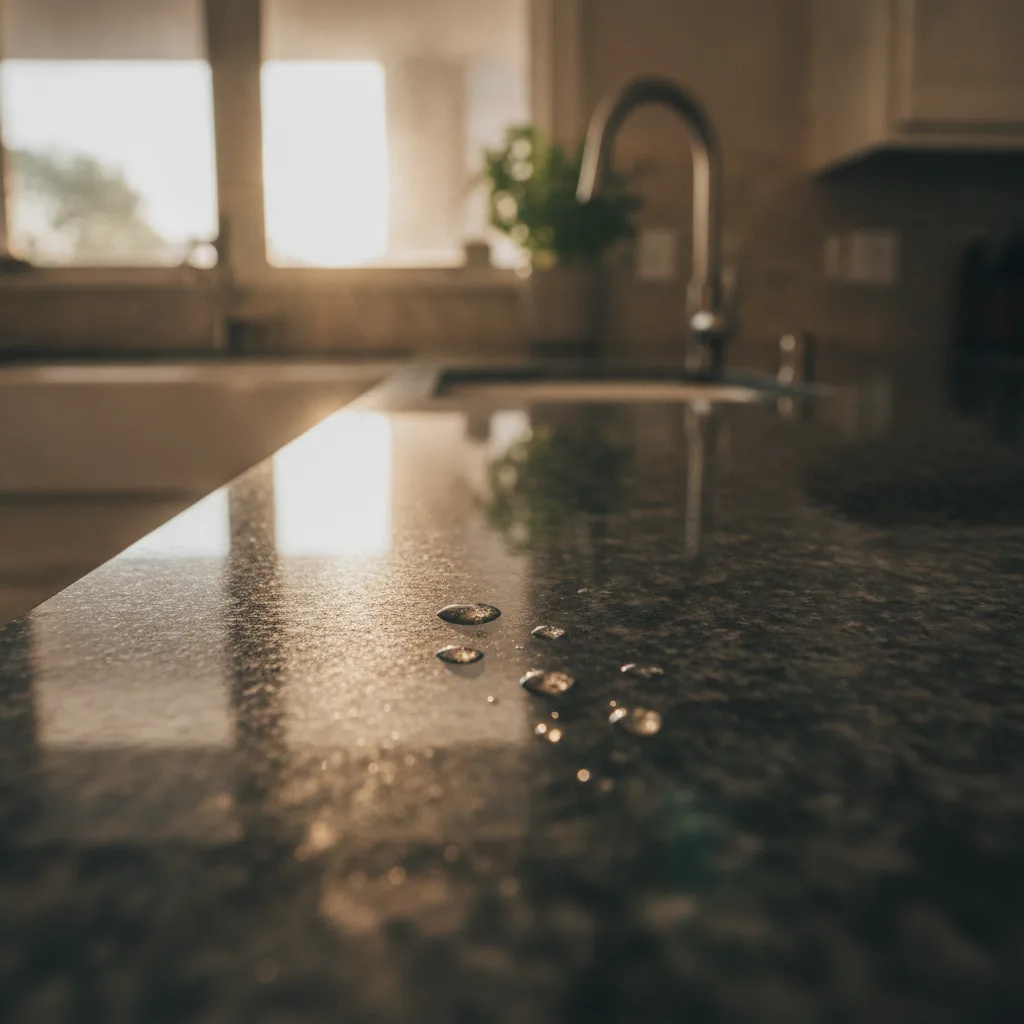
Resealing granite countertops starts with the water drop test: place a few drops of water on the granite surface and wait 10 to 15 minutes. If the water beads, the seal is fine. If the stone darkens and absorbs the liquid, it's time to reseal. The actual sealing process takes 30 to 60 minutes of hands-on work and requires a penetrating (impregnating) sealer, a clean dry surface, and microfiber cloths. DIY material costs run $25 to $65 for most kitchens. Allow 24 hours to cure before returning to normal use. Light granite may need resealing every 6 to 12 months; medium-tone granite every 1 to 2 years; dark, dense granite every 2 to 3 years or more.
Resealing granite countertops takes under 60 minutes of hands-on work and costs less than $100 in materials — but the job only protects your stone if you use a penetrating sealer on a completely dry, clean surface and apply it at the right time. The water drop test, not a calendar reminder, is what tells you when the time to reseal has actually arrived. This guide walks through six steps: confirming the seal has failed, reading the visual signs, understanding what's degrading your sealer faster than expected, choosing the right product, executing the sealing process correctly, and building a reseal schedule that fits your specific stone. These steps apply to kitchen countertops, bathroom vanities, and outdoor granite surfaces across Central Texas — where heat, humidity, and acidic cooking are all working against your sealant year-round.
The water drop test is the single most reliable diagnostic a granite owner has: place a few drops of water on the granite surface and wait 10 to 15 minutes. If the water beads up and stays on top, the sealant is still doing its job. If the stone absorbs the liquid and darkens, resealing is needed. This test takes less than 15 minutes and eliminates guesswork entirely.
Absorption timing tells you how urgent the job is and how many coats to apply. Water that darkens the stone within 5 minutes signals high porosity — plan on 2 to 3 coats of sealer. Absorption between 10 and 15 minutes indicates medium porosity; 1 to 2 coats will handle it. If the water still beads after 30 minutes, the seal is holding and no action is needed yet. Run the water test every six months on kitchen countertops — that's the standard professional recommendation as of 2026. Don't wait for visible staining to trigger a check. By the time dark rings and watermarks appear, the sealant has already been failing for a while.
Test a few spots across the entire surface rather than a single point. Daily use creates uneven wear patterns, so some areas of the countertop lose protection faster than others. A corner near the sink or a section where you regularly set hot pans will typically fail first. Soaking up that detail now saves you from undersealing a high-traffic zone.
Dense, dark slabs like Absolute Black absorb so little liquid that they rarely need sealing at all. Applying sealer to these stone surfaces can leave a hazy, sticky residue rather than adding protection. If water still beads on your dark granite after 30 minutes, skip the reseal entirely this cycle.
Several visual signs confirm that resealing granite countertops is overdue, even before you run the water test. New stains appearing more easily than before, a dulling or more matte appearance compared to the stone's original finish, visible watermarks or dark rings after spills, and a rougher or bumpier feel to the surface all indicate the sealant layer is gone. The stone is now absorbing liquids, oils, and cleaning product residue directly into its pores.
Granite color is the biggest factor in how quickly these signs appear. Light granite — white, cream, or beige slabs — is the most porous and may show wear in an active Central Texas kitchen within 6 to 12 months. Medium-tone granite (gold, brown, green) typically shows degradation after 1 to 2 years. Dense, dark granite can go 2 to 3 years or more before the seal breaks down enough to matter. A guest bathroom vanity sees far less acidic abuse than a kitchen, so bathroom granite usually holds its seal for 2 to 3 years regardless of color.
Finish matters as much as color. Leathered and brushed granite finishes open and enlarge surface pores compared to polished granite, making those textures far more permeable to liquids. If your own granite has a leathered finish, budget for more frequent resealing than the color-based timelines above suggest. Polished granite holds sealer longer — one reason many homeowners in Austin and San Antonio prefer that finish for high-use kitchen counters.
Acidic substances degrade granite sealer faster than plain water, and Central Texas kitchens see plenty of them. Lemon juice, wine, vinegar, and harsh cleaning chemicals are the main culprits. If you've been using acidic cleaners or abrasive scrubbers on your countertops, the seal may fail well before its expected interval. A chemical reaction between acid and the sealant layer is what causes premature breakdown — it's not just surface wear.
Bleach-based sprays, vinegar-and-water mixes, and generic all-purpose cleaners with harsh chemicals strip sealant with every application. The fix going forward is straightforward: use a pH-neutral cleaner formulated for natural stone countertops. Do not use lemon juice or vinegar to clean granite. The chemical reaction etches the stone surface and breaks down the seal at the same time, creating a problem that no amount of resealing will fully correct until the etching is addressed.
If your kitchen countertops take more punishment than the average home — daily cooking, frequent entertaining, or cutting directly on the granite surface without cutting boards — run the water test every four months rather than every six. Reseal as soon as absorption happens. Staying ahead of wear is far easier than dealing with deep stains once the stone is fully exposed. Regular maintenance is what separates granite that still looks great after a decade from granite that looks tired after three years.
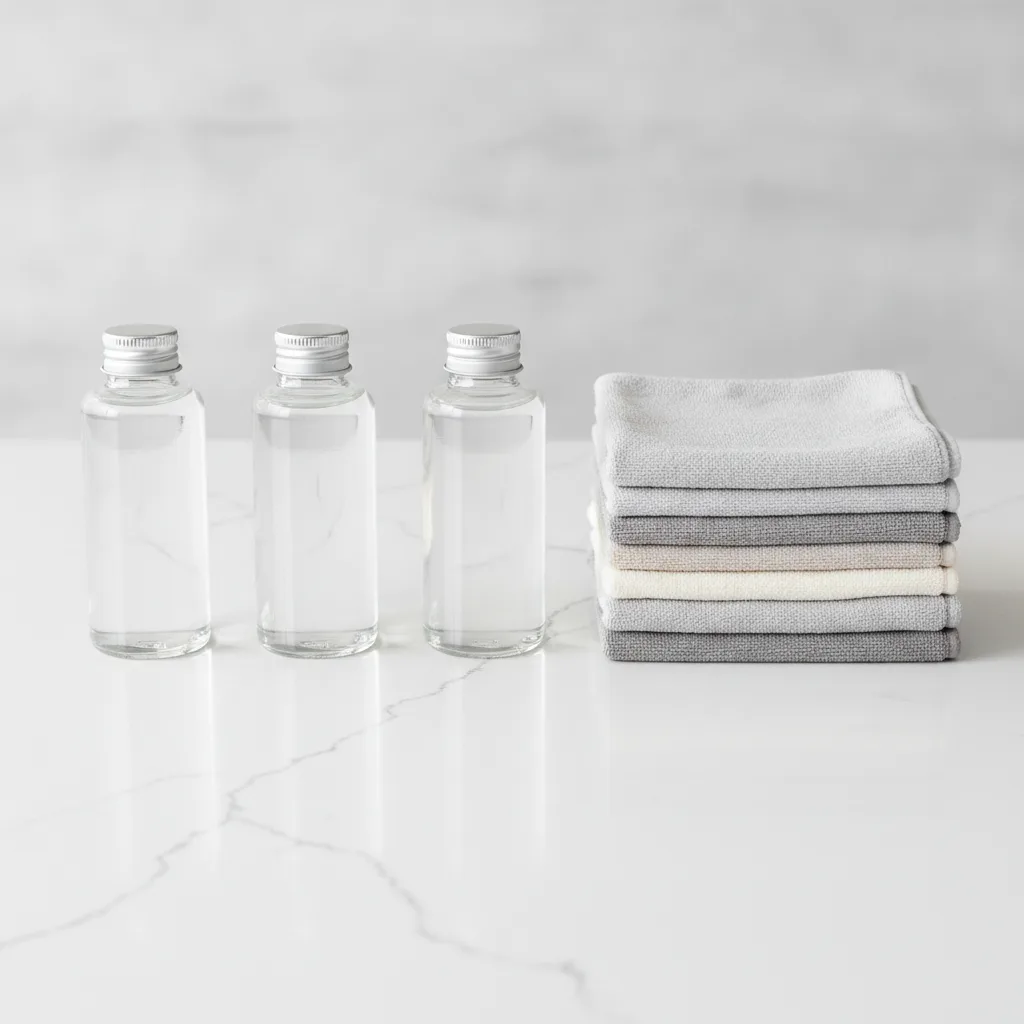
Penetrating sealers — also called impregnating sealers — are the correct choice for granite countertops. They absorb into the stone's pores and repel water, oil, and stains without forming a surface film. Topical sealers are not recommended for granite: they peel, scratch, and can trap moisture underneath, leading to cloudy discoloration over time. Read the label carefully before purchasing — the bottle should specifically say 'penetrating' or 'impregnating.' If it doesn't say one of those words, it's likely a topical product.
Three products consistently recommended by stone fabricators in 2026: StoneTech BulletProof Sealer runs $30 to $50 per quart and can provide more than five years of protection on dense granite slabs — a strong choice for dark countertops where infrequent resealing is the goal. TriNova Granite Sealer runs $15 to $25 per bottle and delivers 1 to 2 years of protection, making it a practical pick for medium-tone granite on a routine reseal schedule. Granite Gold Sealer is the most affordable at $10 to $20 per bottle and lasts roughly one year — solid for light granite that needs annual or more frequent attention. All three are penetrating sealers available through major retailers and on Amazon.
Always test in an inconspicuous spot first, especially on light granite. Some penetrating sealers can slightly darken the stone's color. Spray a small amount behind a cabinet or under the overhang and let it sit for 10 minutes. If the appearance is acceptable, proceed across the entire surface. Skipping this check on light granite is the one mistake most homeowners regret.
$30–$50 per quart
Long-lasting penetrating sealer — best for dense or dark granite needing 3 to 5-plus years of protection between applications
$15–$25 per bottle
Mid-range penetrating sealer with 1 to 2 year protection; right fit for medium-tone granite on a routine seal schedule
$10–$20 per bottle
Affordable annual sealer for light, highly porous granite that requires more frequent resealing
$10–$15
Needed for applying sealer evenly and buffing off excess sealer without scratching the granite surface
Start with a completely dry, clean surface. Use a pH-neutral stone cleaner and a soft cloth to wipe down the entire surface, removing grease, food residue, and any cleaning product film. Let the granite air dry fully — at least one hour, longer if your kitchen was recently cleaned with a wet cloth. Sealing a dirty granite surface locks in contaminants. Sealing wet stone blocks the sealer from penetrating the pores properly. Both mistakes produce poor protection and potential discoloration, so proper sealing prep is not optional.
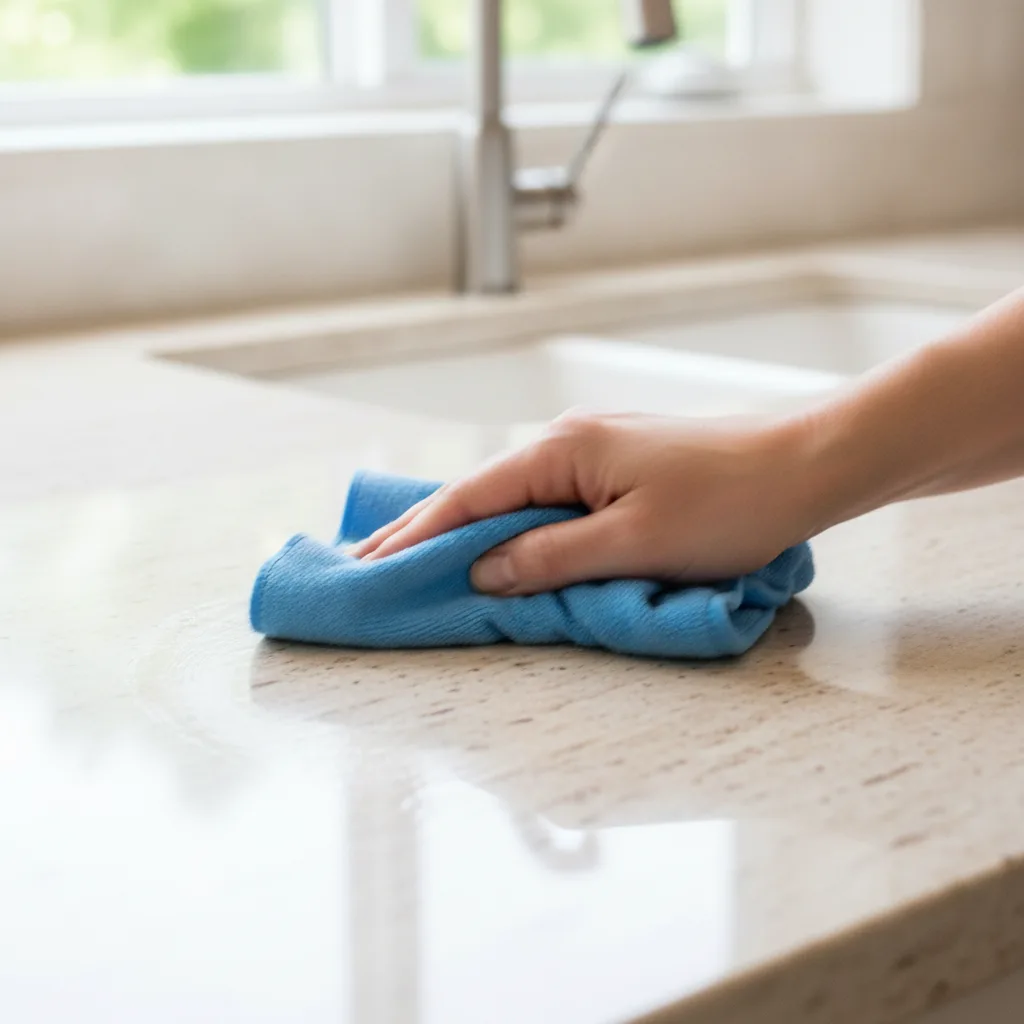
Apply the sealer in sections using a clean microfiber cloth or the spray method if your product includes a spray bottle. Work across the entire surface in small, overlapping sections so no areas are missed. Follow the product label carefully for recommended sit time — most penetrating sealers need to sit 5 to 15 minutes before the excess is removed. Do not let the sealer dry on the stone surface. Dried sealer residue creates hazy streaks that are difficult to remove without a solvent, and that's a problem you don't want on freshly sealed granite countertops.
Wipe off the excess sealer with a dry cloth before it dries, then buff the surface with a clean, dry microfiber cloth until no residue remains. For highly porous light granite that absorbed water within five minutes on the water test, apply a second coat immediately after buffing the first coat. Let the first coat penetrate for 5 minutes, wipe the excess, then apply the second coat following the same sealing process. For stone that absorbed within 2 to 3 minutes, a third coat may be needed — test between coats with a few drops of water to see how much more the stone will absorb. Let the countertop cure for 24 hours before returning to everyday use: no spills, no cleaning products, no wet items sitting on the stone surface.
The four most frequent errors: sealing a dirty granite surface (which locks in contaminants), not wiping off excess sealer promptly (which causes hazy streaks and dried sealer residue on the stone), sealing wet stone (which blocks proper absorption into the pores), and using a topical instead of a penetrating sealer. Each of these produces less protection — or visible damage — than no sealing at all.
Reseal granite depends on a few key factors, not a single universal timeline. Use color and finish as the starting framework: light or porous granite in an active kitchen every 6 to 12 months; medium-tone granite every 1 to 2 years; dark or dense granite every 2 to 3 years or more; and bathroom vanity granite every 2 to 3 years regardless of color. A leathered or brushed finish shifts each of those intervals shorter. Then let the water drop test confirm or adjust the schedule. Test every six months. Reseal when absorption happens. That is the complete system — and it's a good rule of thumb for any granite owner in Central Texas.
DIY resealing costs under $100 for a typical kitchen: $15 to $65 for quality sealer and $10 to $15 for microfiber cloths. The hands-on time is 30 to 60 minutes. Professional resealing runs $200 to $420 for an average kitchen, or $60 to $120 per hour depending on credentials and local market. For most homeowners, DIY is straightforward and cost-effective as long as they use a penetrating sealer and follow proper prep. Professional resealing makes more sense after deep staining, significant etching, or if the countertop also needs re-polishing or chip repair — situations where sealing over the problem would just lock the damage in.
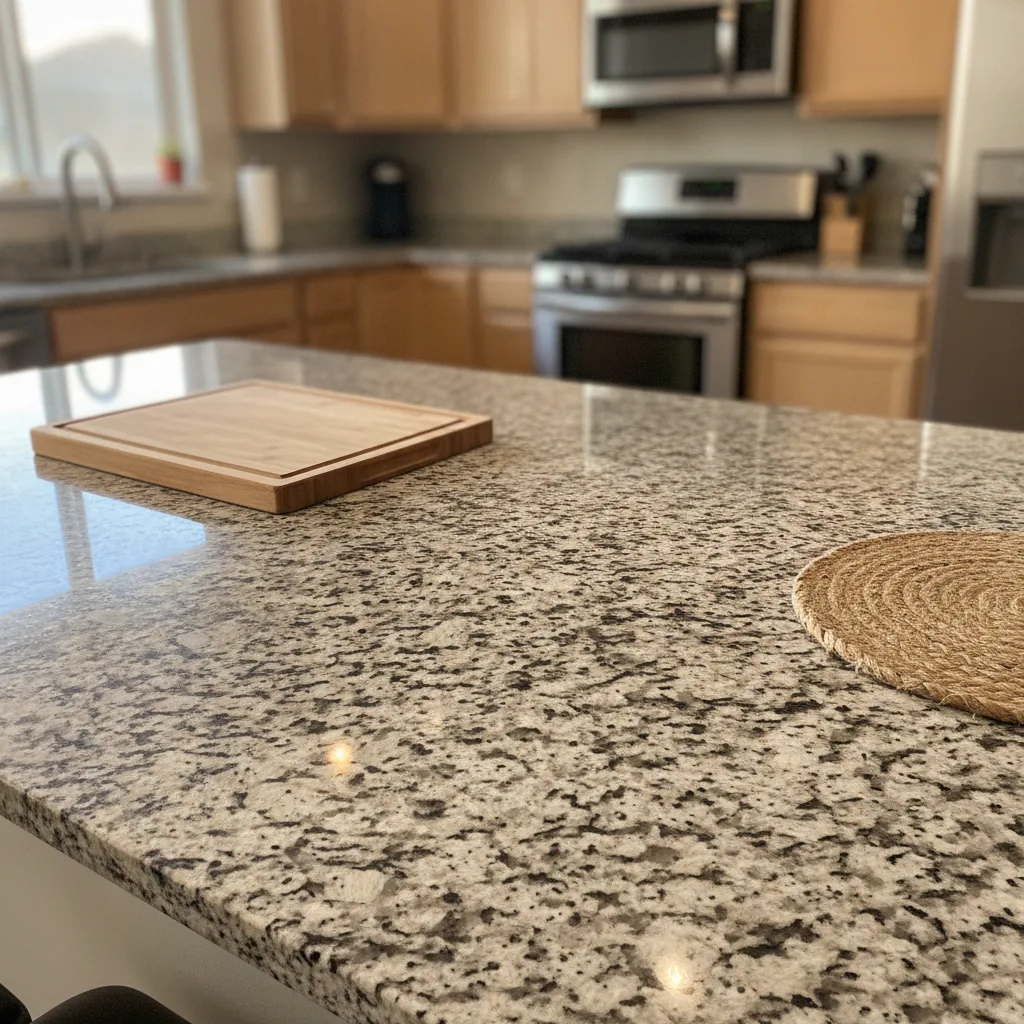
Protect the seal between applications by using pH-neutral daily cleaning products, wiping spills immediately rather than letting liquids sit, placing cutting boards on the granite surface instead of cutting directly on the stone, and setting trivets under hot pots rather than placing them directly on the countertop. Avoid abrasive scrubbers, bleach, vinegar, and harsh chemicals during regular maintenance. These habits add months to a seal's life — meaning fewer reseal cycles per decade, less material cost, and better long-term protection for your natural stone countertops. Marble and quartzite countertops follow similar sealing logic, though marble is more vulnerable to acidic etching and typically needs even more careful daily cleaning between seal applications.
DIY resealing works well for routine maintenance on a clean, undamaged granite surface. But if your countertops show deep set-in stains that won't clean up, visible etching or scratching across the polish, cracks or chips, or if the stone looks cloudy and dull even after a fresh seal — those are signs the stone needs professional attention beyond a DIY reseal. Sealing over existing damage doesn't fix it. At Fox Granite, we can assess the condition of your stone and recommend whether a professional reseal, a repair, or a full re-polish is the right call. Contact us for a free consultation and we'll give you a straight answer.
When resealing granite countertops is done right — penetrating sealer on a completely dry, clean stone surface, applied in sections, excess wiped off before it dries, and cured for 24 hours — the result is a countertop that sheds spills, resists stains, and holds its original appearance for years. Run the water test every six months. Reseal when the stone absorbs instead of beads. Keep acidic cleaners off the surface. Those three habits, consistently applied, are the difference between granite that looks installed last year and granite that looks tired and stained. For a professional eye on your natural stone countertops in Austin, San Antonio, New Braunfels, and across Central Texas, Fox Granite has been fabricating and installing stone countertops in this region since 2010. Contact us today to schedule your free consultation.
Ready to get started? Contact Fox Granite today.


BY APPOINTMENT ONLY
1379 Wald Road
New Braunfels, TX 78132
Austin, San Antonio, Cedar Park, Kyle, New Braunfels, Del Valle, Elgin, Lago Vista, Shady Hollow, Onion Creek, Buda, San Marcos, Lockhart, Temple, Wimberley, Dripping Springs, Bee Cave, Lakeway, Leander, Anderson Mill, Jollyville, Spicewood Springs, Round Rock, Georgetown, Pflugerville, Manor, Taylor, Manchaca, Mountain City, Hutto, West Lake Hills, Bastrop, Liberty Hill, Driftwood, Sun City, Steiner Ranch.