
Every countertop installation comes with two separate warranties: a fabrication warranty covering workmanship defects like seam failures, edge chips, and sink cutout accuracy, and a manufacturer warranty covering material defects in engineered stone like quartz. For granite, quartzite, and marble, no manufacturer warranty exists — the fabrication warranty is your only protection. Key exclusions across all brands include thermal shock, acidic substances like vinegar and wine, improper cleaning products, physical abuse, and normal wear like scratches and chips. Natural characteristics such as color variation, gloss level, inclusions, and fissures are never covered because they are inherent to the production process of natural stone. A verbal warranty cannot be enforced. Get everything in writing before you pay a deposit.
A granite countertop warranty sounds like a safety net until you actually read the fine print. Most homeowners sign fabrication contracts assuming they are covered for anything that goes wrong — then discover post-installation that their specific problem falls into a list of exclusions that runs two full pages. Spending 20–30 minutes with this guide before you sign can save you thousands in uncovered repair costs on a $3,000–$10,000 kitchen investment. Here is exactly what to look for, what to ask, and what the warranty documents from every major brand and fabricator type actually say as of 2026.
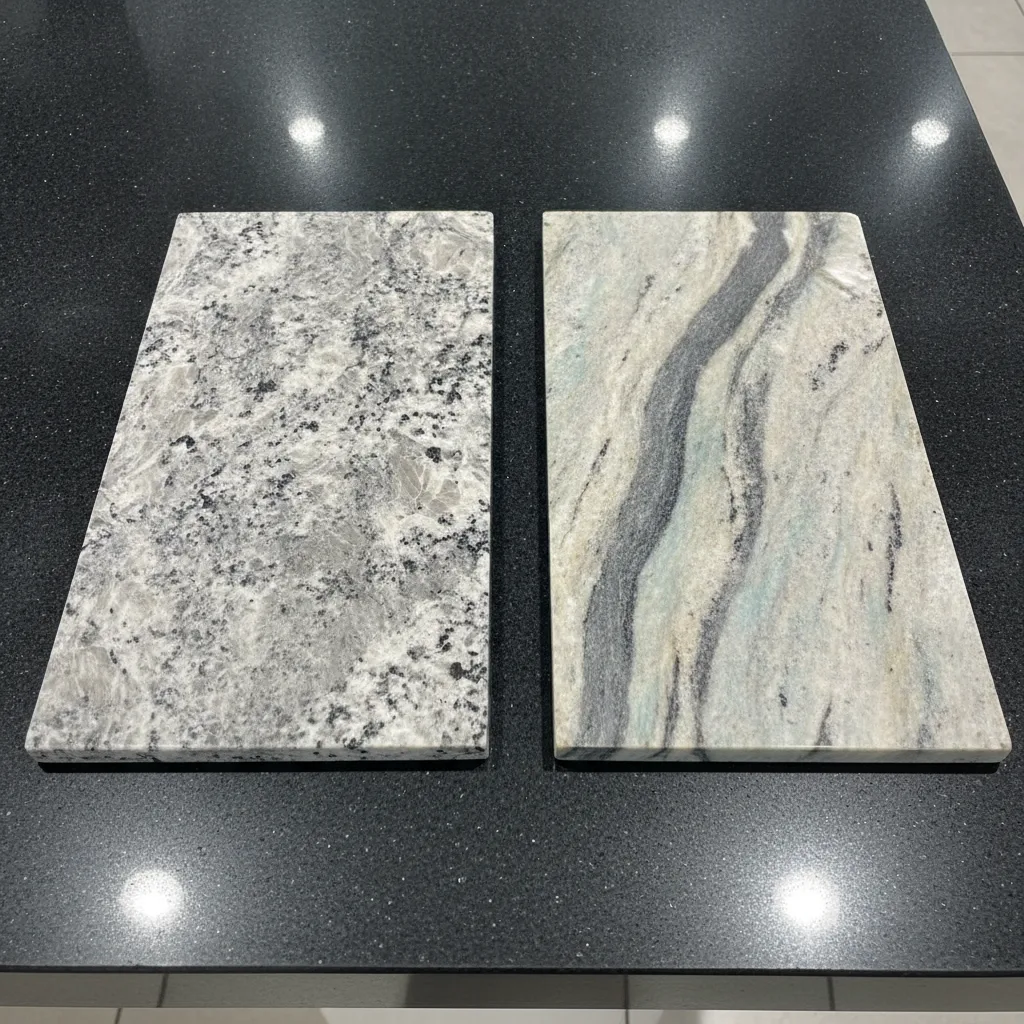
Most homeowners assume a countertop warranty is one document covering everything — it isn't. Every countertop installation is protected, or not protected, by two completely separate sources: the fabricator's workmanship warranty and, for engineered stone like quartz, a manufacturer's material warranty. They cover different problems, carry different time limits, and exclude different things. Treating them as one document is the most expensive mistake a homeowner can make before signing.
The fabrication warranty covers how the stone was cut, finished, and installed. Think seam quality, edge consistency, sink cutout accuracy, and whether the countertop was set level during installation. The manufacturer warranty, when one exists, covers defects in the material itself — problems that originated in the factory before the slab arrived at your home. Manufacturing defects might include structural flaws in the quartz composite or voids introduced during production, not surface issues that appear after installation.
For natural stone like granite, quartzite, and marble, no manufacturer warranty exists. The slab comes from the earth, not a factory — it is a product of nature, not a controlled production process. That means the fabrication warranty is your entire safety net. If your granite fabricator offers a weak workmanship warranty, you are paying $3,000–$10,000 for countertops with very little legal protection. This is why who fabricates your stone matters more than the price per square foot.
Granite, quartzite, and marble are natural products. No brand manufactures them, so no brand warranty covers the slab itself. Your fabricator's workmanship warranty is your only coverage — which is exactly why choosing a fabricator who puts their warranty in writing, before fabrication starts, is more important than saving $200 on the quote.
A solid fabrication warranty covers four categories of workmanship defects: seam failures caused by improper adhesive application, edge chips that originated during fabrication or delivery, sink cutout failures where the seal pulls away from the countertop surface, and surface damage caused by faulty tooling during the cutting process. If your fabricator's written warranty doesn't address all four of those categories, ask why before you sign anything or write a deposit check.
The industry standard for a fabrication warranty is one to two years on seam integrity and installation quality as of 2026. Some premium shops extend this further — a few offer lifetime seam warranties. Duration matters, but specificity matters more. A warranty that says 'we stand behind our work' is not the same as one that names seam failures, sink cutout accuracy, and edge consistency as covered defects in writing. Vague language protects the company, not the customer.
A written warranty must exist before fabrication starts, not after installation is complete. An enforceable warranty must cover four things in writing: what is warranted, for how long, what voids it, and the remedy procedure. A verbal promise from a salesperson covers none of those four things, and it provides no basis for a warranty claim if something goes wrong six months after your countertops are installed.
Free — request before signing
The only legally enforceable record of what the fabricator promises to repair or replace at no cost to you — covers seam failures, edge chips, sink cutout failures, and workmanship defects
If a fabricator cannot produce a written warranty document before you pay a deposit, treat that as a serious warning sign. Verbal warranties are nearly impossible to enforce. 'We'll take care of you' is not a guarantee — it is a sales line with no legal weight.
Quartz countertop manufacturer warranties vary widely by brand, and the differences are worth real money over the life of your home. As of 2026, here is where the major brands stand: Cambria offers a transferable Full Lifetime Warranty that follows the home to the next owner — the strongest mainstream quartz coverage available. Silestone offers a 25-year transferable limited warranty, but only if you register within 6 months of installation; miss that window and coverage drops to just 3 years. Caesarstone carries a lifetime limited residential warranty. MSI Q Premium is a residential lifetime warranty but non-transferable. Wilsonart and HanStone each offer 10-year limited warranties to the original purchaser, with Wilsonart requiring registration within 60 days of installation. Pental Quartz sits at 15 years residential and 10 years commercial.
Transferability is the detail most homeowners overlook until they go to sell. Install Cambria quartz and the warranty follows the home, adding a real selling point that can influence negotiations. Install a non-transferable brand and sell five years later, and the new buyer gets zero coverage — which most buyers and their agents will factor into the offer price. Cambria runs $100–$250 per square foot installed, which costs more than several competing brands, and that warranty transferability is one reason the premium exists.
Registration deadlines are a genuine risk that fabricators don't always track for you. Silestone's 6-month window and Wilsonart's 60-day window are easy to miss during a renovation. Mark the deadline on your calendar the day countertops are installed. Missing it doesn't void the product, but it cuts your quartz coverage from 25 years to 3 years for Silestone, or eliminates it entirely for Wilsonart. That is a costly oversight on a purchase of this size.
Skip the manufacturer warranty search for natural stone — none exists. Focus all your attention on the fabrication warranty in Step 2 and the exclusions list in Step 4. Your fabricator is your only warranty provider, full stop.
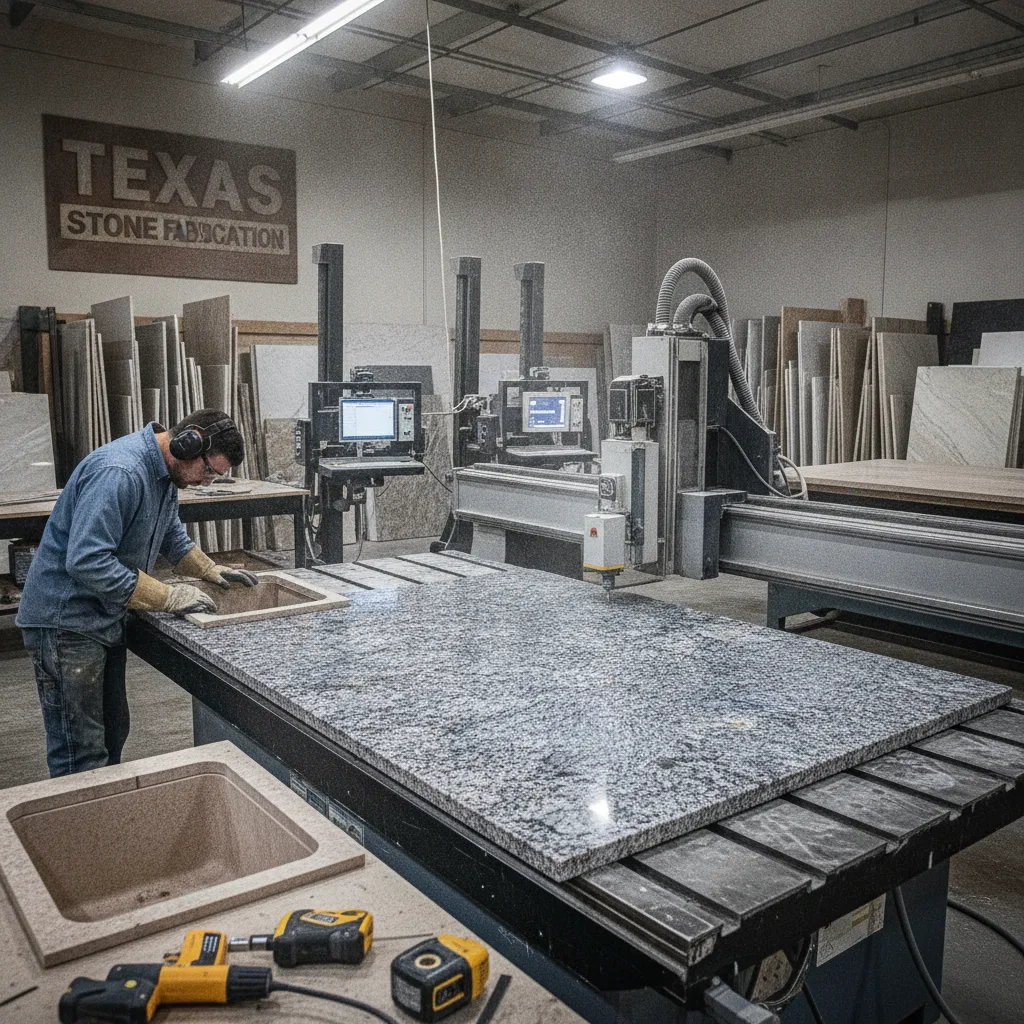
Most countertop warranties — fabricator and manufacturer alike — exclude the same core categories. Read specifically for these: thermal shock from placing hot pots, pans, or crock pots directly on the surface; acidic substances left in contact with stone, including lemon juice, vinegar, and wine; harsh chemicals and bleach-based cleaners used for improper cleaning; physical abuse from dropped objects or impacts; and normal wear including everyday scratches and chips. Every brand and every fabricator excludes these. They are considered misuse, not manufacturing defects — and any claim tied to them will be denied.
Natural characteristics of stone are also explicitly not covered. Color variation between the slab you approved and the installed piece, gloss level differences between sections, veining patterns, inclusions, fissures, pits, and surface graining are all part of the production process of natural stone — not defects. Some fabricator warranties go further and exclude seam appearance entirely, classifying visible seams as a natural characteristic of the fabrication process rather than a workmanship problem. Read your contract carefully on that specific point before you sign.
Outdoor installation, use in a sauna or steam shower, and sustained UV light exposure are typically excluded from standard countertop warranties across all materials. If you're planning an outdoor kitchen in Austin, San Antonio, or anywhere in Central Texas, confirm in writing that your granite or quartzite warranty explicitly covers that installation location before the slab is cut. Some warranties are voided the moment the stone leaves an interior residential setting — and 'outdoor use' exclusions are not always written in obvious language.
Labor costs are almost never covered even when a manufacturing defect is confirmed. Tear-out, plumbing disconnection, reinstallation, cabinetry repair, flooring repair, and freight are typically excluded from both fabricator and manufacturer limited warranties. If a defect requires complete replacement of the slab, you may still be paying out of pocket for everything except the stone itself — often $1,000–$3,000 in reinstallation costs.
Most countertop warranties give the manufacturer or fabricator sole discretion over the remedy. They choose between repair, replacement in slab form, or a refund of the purchase price — and you do not get to pick. More importantly, an exact color match is never guaranteed on replacements. Stone slabs are cut from different quarry lots and production runs, and even the same product name can look noticeably different between batches. A warranty claim that sounds good on paper can result in a replacement piece that reads as a different color in your kitchen.
Read the remedy section of your warranty for three specific things: who decides the remedy (the company, not you), whether 'complete replacement' means the full countertop or only the damaged piece, and whether associated costs like labor and plumbing reconnection are included. Most limited warranties cover the slab only. A warranty that sounds like strong protection can still leave you paying $1,000–$3,000 in reinstallation costs when a confirmed defect requires the countertop to come out.
For warranty claims on quartz countertops, most manufacturers require you to report a potential defect within 30 days of identifying it. Missing that 30-day reporting window can forfeit the warranty claim entirely. When you file, you will typically need proof of purchase, dated photos of the defect, the job address, and a description of installation conditions. Start documenting damage the day you notice it — do not wait to see if the problem gets worse before making contact.
Take photos of your countertops the day installation is complete — before any items are placed on them. Date-stamped photos showing the surface condition at installation give you clean proof of purchase condition if a warranty claim comes up 18 months later. This takes five minutes and costs nothing.
Before you commit to a fabricator, get written answers to these five questions: Is your workmanship warranty in writing and available before I pay a deposit? What specific defects does it cover — seam failures, edge chips, sink cutout failures? What voids it? Does it include labor costs if a repair is needed, or only materials? How do I file a warranty claim and what is the reporting window? These are not aggressive questions. Any reputable fabricator will have immediate answers. Hesitation on any of them is a signal worth taking seriously.
For quartz specifically, add two more questions: Is this material brand's warranty transferable, and does it require registration? Are you an authorized fabricator for this brand? Several major manufacturers, including Wilsonart, void the manufacturer warranty entirely if the product was not installed by an authorized fabricator. Using a non-authorized shop to save money up front can eliminate your full manufacturer coverage — which is the primary warranty protection quartz countertops carry over granite.
At Fox Granite, we do all fabrication in-house at our New Braunfels shop using precision templating and state-of-the-art stone-cutting software. There are no subcontractors and no handoffs between the team that cuts your countertop and the team that installs it — which means full accountability at every stage. We walk customers through exactly what our warranty covers before anyone signs anything, because a kitchen countertop is a significant investment and you deserve to know specifically what protection you have before the first measurement is taken.
Free — available on brand websites
The binding document defining your actual coverage, exclusions, registration deadlines, and remedy options for quartz countertops — do not rely on a summary from a salesperson
Free — request before signing
Your only warranty protection for granite, quartzite, and marble; must name covered defects, duration, void conditions, and the claim process in writing

Silestone's 25-year transferable warranty drops to just 3 years if you miss the 6-month registration window. Wilsonart's 10-year coverage requires registration within 60 days of installation. These deadlines are not extended for any reason, and fabricators don't always remind you. Write the registration deadline on your calendar the day your countertops are installed. It takes five minutes and protects years of coverage on a $3,000–$10,000 purchase.
When you understand both your fabrication warranty and manufacturer warranty before the contract is signed, you go into your countertop project with clear expectations — and a clear process if something goes wrong. For granite, quartz, quartzite, and marble countertops in Austin, San Antonio, New Braunfels, and throughout Central Texas, Fox Granite puts every warranty detail in writing before work begins and walks you through exactly what is covered and what isn't. Contact us today to schedule your free in-home consultation, or call (512) 653-5541 to get your free estimate.
Ready to get started? Contact Fox Granite today.


BY APPOINTMENT ONLY
1379 Wald Road
New Braunfels, TX 78132
Austin, San Antonio, Cedar Park, Kyle, New Braunfels, Del Valle, Elgin, Lago Vista, Shady Hollow, Onion Creek, Buda, San Marcos, Lockhart, Temple, Wimberley, Dripping Springs, Bee Cave, Lakeway, Leander, Anderson Mill, Jollyville, Spicewood Springs, Round Rock, Georgetown, Pflugerville, Manor, Taylor, Manchaca, Mountain City, Hutto, West Lake Hills, Bastrop, Liberty Hill, Driftwood, Sun City, Steiner Ranch.