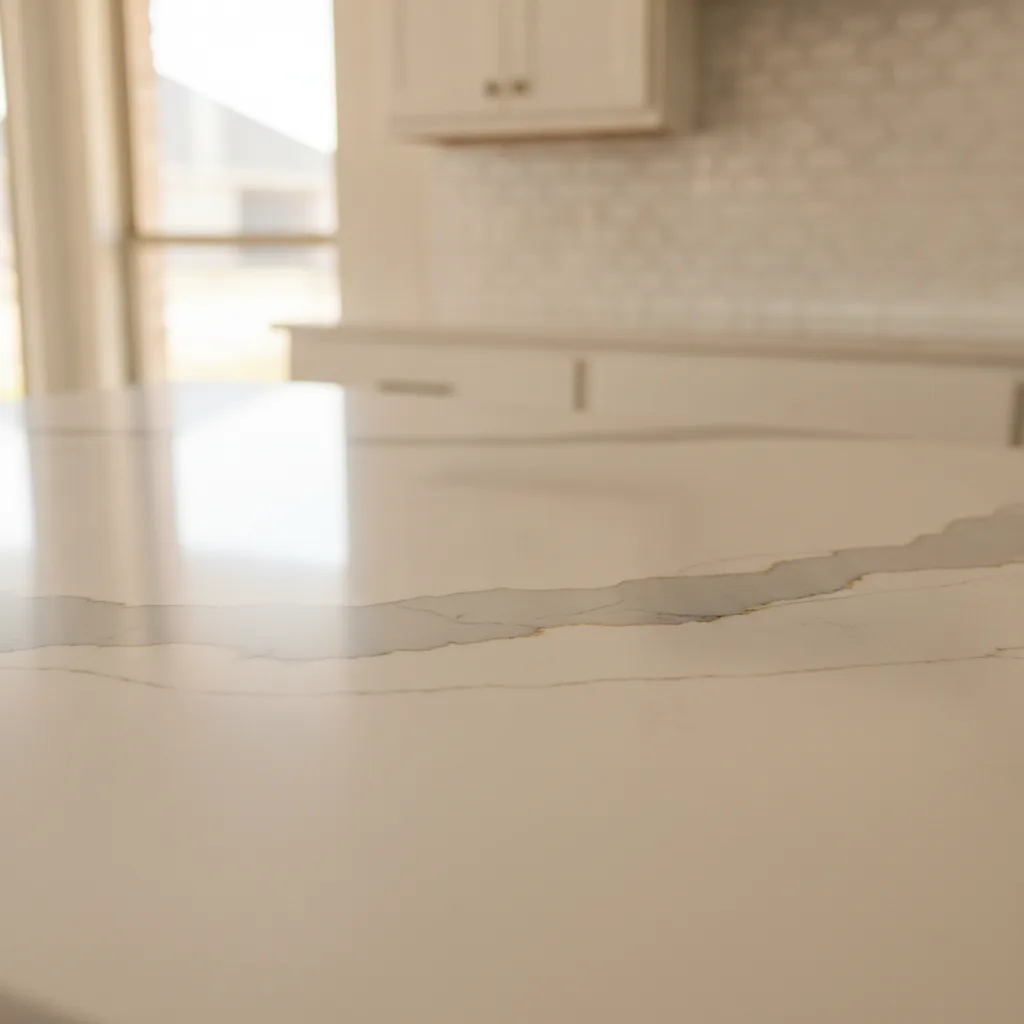
To clean quartzite countertops correctly: wipe crumbs with a dry microfiber cloth, clean with warm water and a few drops of a pH-neutral stone cleaner on a soft microfiber cloth, rinse with a clean damp cloth, and dry completely — never air-dry. Use mild dish soap only for grease spills, not daily cleaning. Avoid vinegar, lemon juice, citrus-based sprays, bleach, ammonia, Windex, Clorox wipes, and any abrasive pads. All of those either etch the polished stone or strip the sealer. Test the seal once a year with the water bead test; reseal when water stops beading up within four minutes.
The single most common way homeowners damage quartzite countertops is by reaching for a 'natural' cleaner — vinegar, lemon juice, or a citrus spray — and etching the polished finish permanently. Quartzite is a natural stone rated 7–8 on the Mohs hardness scale, harder than granite (6–7) and far harder than marble (3–4), but hardness does not make it acid-proof. This guide covers how to clean quartzite countertops the right way: a correct daily cleaning routine, stain removal by type, the right sealing schedule, and the specific products and habits that cause irreversible damage. Daily cleaning takes about two minutes; a full sealing session takes 20–30 minutes of active work plus a 24–48 hour cure window.
Quartzite is a natural metamorphic rock, and the care routine for quartzite countertops is fundamentally different from both engineered quartz and marble — so confirming what you actually have changes everything. Engineered quartz countertops are non-porous and need no sealing; you can wipe them with almost any mild cleaner without worrying about sealer depletion. True quartzite is porous, needs periodic sealing, and requires strict acid avoidance. Marble sits in its own category: it etches from lemon juice, vinegar, and even tomato sauce in seconds.
Some stone sold as 'quartzite' is actually marble or dolomitic marble — it looks similar but contains calcium carbonate, which reacts with acids. True quartzite resists etching because it has no calcite in its structure. Softer varieties with names like Super White and Fantasy Brown often contain dolomite or calcite and behave more like marble. If you're unsure what your slab is, do a quick field test: drip a few drops of vinegar on a hidden spot near the edge, wait 60 seconds, then wipe and check. A dull ring means carbonate minerals are present and your stone needs to be treated with the same acid caution as marble.
Quartzite sits at 7–8 on the Mohs scale — harder than granite and significantly harder than marble. That hardness makes it scratch-resistant and durable under daily kitchen use. But hardness does not mean the surface is impervious to chemical damage. Acids don't scratch quartzite; they etch it, leaving dull marks that no cleaner can fix. Getting the material ID right before you pick any cleaning products is the single most important step in this guide.
If your installer labeled the stone 'quartzite' but you notice dull marks near the sink or around the coffee maker, run the vinegar drop test on a hidden spot. Dull marks appearing within 60 seconds confirm carbonate content — treat those surfaces with the same strict acid avoidance you would use on marble.
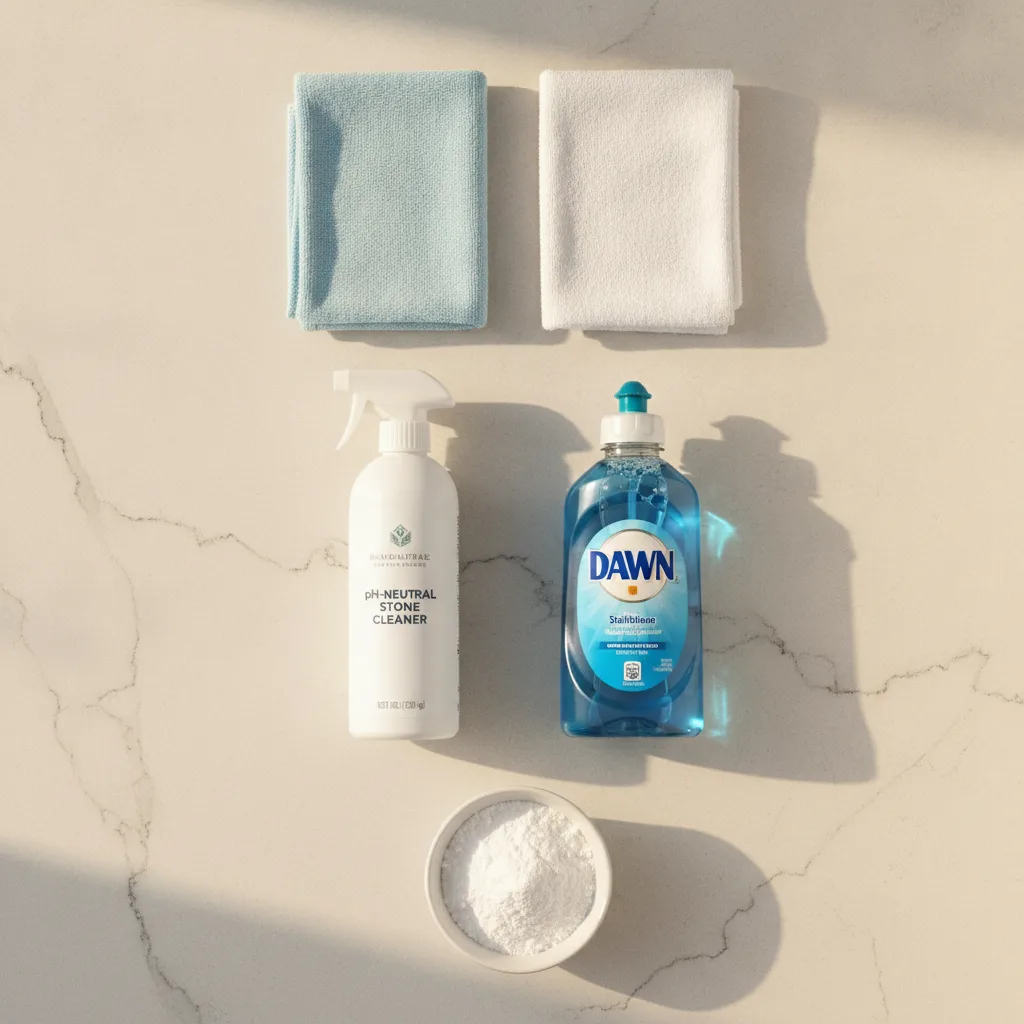
The correct daily cleaning routine for quartzite countertops takes about two minutes and protects the sealer as much as it cleans the surface. Start by sweeping crumbs with a dry microfiber cloth — never use a rough sponge or scouring pad, since abrasives scratch the polished stone. Then dampen a soft microfiber cloth with warm water and a few drops of a pH-neutral stone cleaner, and wipe the surface in straight passes. Follow with a second clean damp cloth to rinse away any soap residue. Finish by drying the surface completely with a dry microfiber cloth — never air-dry.
Standing water is the quiet enemy of sealed quartzite. Water left on the surface leaves mineral deposits and can work into under-sealed pores over time, leaving dark spots and cloudy residue that are hard to shift. This is especially true around the sink and along seams where water naturally pools. A quick dry after every cleaning pass costs nothing and adds years to your sealer's life.
Dawn dish soap is safe on quartzite in a pinch — a few drops of mild dish soap in warm water will lift grease and food residue without harming the stone. However, dish soap runs pH 8–10, which is mildly alkaline and can strip the sealer faster than a dedicated pH-neutral cleaner with daily use. Save Dawn dish soap for tough grease spills. For everyday cleaning, a pH-neutral stone cleaner keeps the sealer intact longer. Glass cleaners like Windex, multi-surface bathroom sprays, Clorox wipes, bleach, ammonia, vinegar, lemon juice, citrus-based cleaners, and any abrasive pads are all off the table — these harsh chemicals damage the sealer or etch the polished stone surface directly.
$10–$20 per bottle
Formulated for natural stone surfaces; cleans effectively without stripping the sealer the way dish soap or acidic cleaners do
$10–$15 for a multipack
Soft enough for polished stone; won't scratch; absorbent enough to dry the surface completely in one pass
Vinegar, lemon juice, citrus-based sprays, bleach, ammonia, Windex, Clorox wipes, multi-surface bathroom sprays, steel wool, rough sponges, and scouring pads are all off the table. Acids etch the finish; abrasives scratch the polished stone. The damage from these is permanent without professional re-polishing.
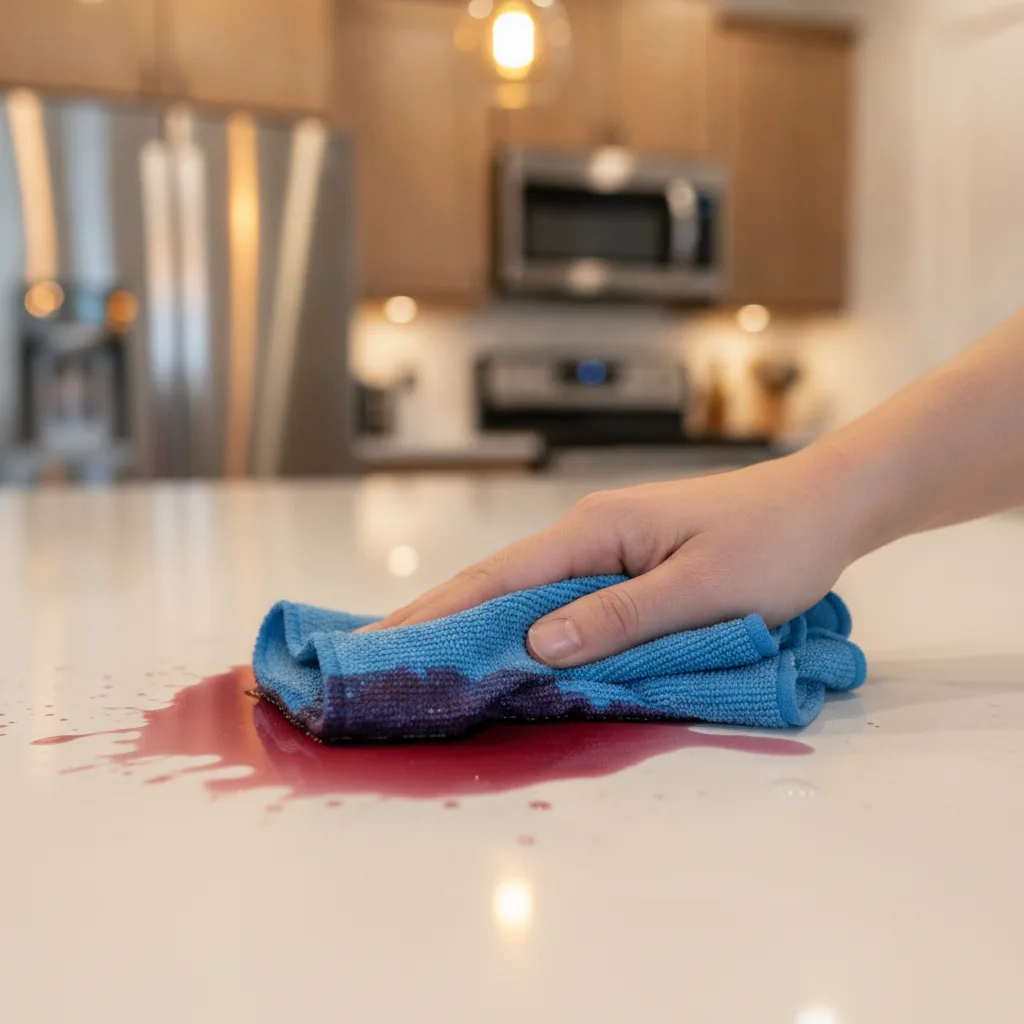
Wipe acidic spills immediately — the faster you act, the less risk there is of etching or staining. Quartzite handles acids better than marble, but it is not acid-proof, particularly on calcite-bearing varieties or on spots where the sealer has worn thin. Coffee, wine, tomato sauce, citrus juice, and vinegar-based dressings are the most common culprits in a kitchen. Blot the spill with a soft cloth — don't wipe it across the surface, which spreads the liquid into a larger area. Then wipe clean with a damp cloth and dry completely.
Even on well-sealed quartzite, prolonged contact with acidic substances can degrade the sealer in that spot, leaving that area vulnerable to future staining. After cleaning an acidic spill, check the area once dry: if it looks duller than the surrounding surface, that is actual surface damage (etching), not residue. No cleaner will fix that — see Step 6 for what to do about etch marks.
Hot pans are a separate concern. Quartzite handles heat better than engineered quartz, which can discolor above roughly 300°F due to its resin matrix. But repeated thermal shock from dropping very hot pans directly on the stone stresses the slab and can affect the edge caulk around the sink cutouts over time. Always set hot pans on a trivet or hot pad. Similarly, always use cutting boards — quartzite is scratch-resistant, but cutting directly on the stone can dull the edge over time. These daily habits protect quartzite for decades.
Most quartzite stains that won't lift with daily cleaning respond to a baking soda poultice — but the liquid you mix it with depends on the stain type. For oil stains (grease, cooking oil, butter) that won't budge with mild soap, mix baking soda with acetone to a peanut-butter consistency. Spread a quarter-inch layer over the stain, cover with plastic wrap, tape the edges down, and leave it for 24–48 hours. As the paste dries, it draws the oil out of the stone pores. Remove with a plastic scraper — never a metal one — rinse clean, and dry completely. If the stain is deep, a second application often finishes the job.
For organic stains — coffee, wine, tomato sauce, tea, and other food-based marks — swap the acetone for hydrogen peroxide. The process is the same: baking soda poultice mixed to a paste, spread over the stain, covered with plastic wrap and left 24–48 hours. Hydrogen peroxide is a mild oxidizer that breaks down organic pigment without harming the stone or its sealer. A commercial stone poultice product works on the same principle if you would rather not mix your own. Multiple applications may be needed for deep or long-sitting stains.
Hard water spots and cloudy residue around the sink are common in Central Texas, where the water is notoriously mineral-heavy. A soft sponge dampened with warm water and a few drops of pH-neutral stone cleaner, applied with light circular motions, lifts most hard water deposits. For stubborn mineral buildup, a stone-safe hard water remover — not vinegar, never vinegar on quartzite — is the right call. After treating the area, rinse with clean water and dry immediately to prevent the minerals from redepositing.
Under $2
The base of both oil and organic stain poultices; draws staining agents out of porous stone as the paste dries
$5–$10
Mixed with baking soda for oil-based stain poultice; cuts through grease and cooking oil absorbed into stone pores
Under $3
Mixed with baking soda for organic stain poultice (coffee, wine, tomato sauce); oxidizes organic pigment without damaging the stone
$15–$30
Pre-formulated alternative to DIY baking soda paste; useful for stubborn or deep stains and comes with application instructions for each stain type
Covering the poultice with plastic wrap and taping the edges is not optional — it slows the drying process so the paste pulls the stain out gradually rather than drying too fast on the surface. Remove it only after the full 24–48 hours.
The water bead test tells you exactly when to reseal quartzite — no calendar guessing needed. Pour about a tablespoon of water on the surface and wait four minutes. If the water beads up the way it would on a freshly waxed car, the seal is holding. If water stops beading and soaks in, leaving a dark spot on the stone, it is time to reseal. Never seal on a fixed schedule without testing first; dense slabs like Taj Mahal quartzite may only need resealing every 18–24 months, while high-porosity varieties like Super White or Fantasy Brown may need attention every 6–12 months. For most quartzite countertops in a standard kitchen, annual testing is the right default.
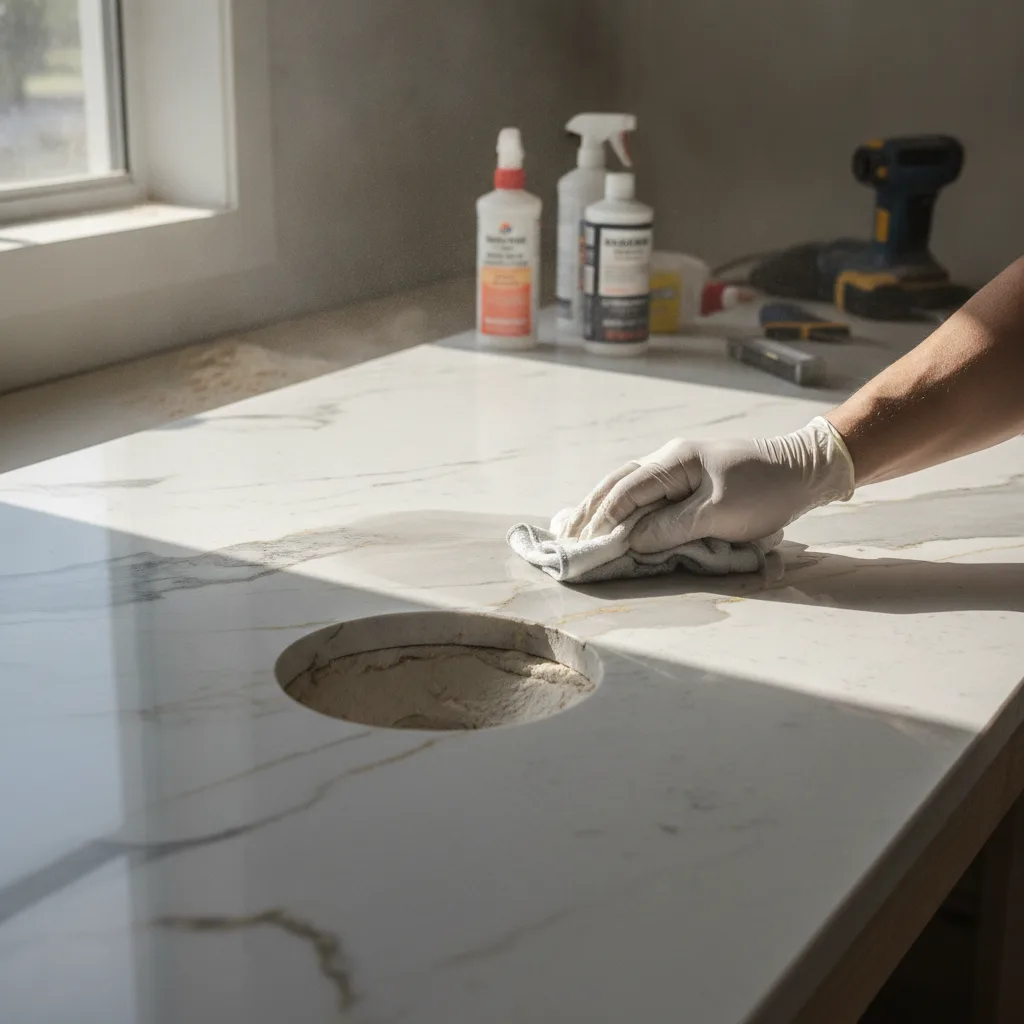
When it is time to seal, use a penetrating impregnator sealer — not a topical coating. Topical coatings sit on the surface and peel or haze over time; impregnators penetrate the stone and block moisture from inside. Well-regarded options include Miracle Sealants 511 Impregnator, StoneTech BulletProof, and Aqua Mix Sealer's Choice Gold. Apply two coats with a roughly two-hour gap between them. Work in sections, buff off any excess before it dries, and allow 24–48 hours cure time before putting the surface back into use. The application itself takes about 20–30 minutes for a typical kitchen slab.
DIY sealing costs $15–$40 per sealing session for a high-quality penetrating sealer that covers a standard kitchen. That comes to roughly $50 a year for most quartzite kitchens when you factor in the testing and occasional resealing of high-use areas around the sink. After treating a stain with any poultice, reseal the treated spot even if the broader surface passed the water drop test — the poultice process depletes the sealer in that area. Apply sealer to the whole surface if the treated spot is near the center of the countertop.
$20–$35 (quart)
One of the most widely recommended penetrating sealers for quartzite; covers a full kitchen slab with one bottle and is available at most hardware and tile stores
$25–$40 (quart)
Professional-grade impregnator frequently specified by fabricators; performs well on denser quartzite slabs that absorb sealer more slowly
$20–$35 (quart)
Water-based impregnator with low odor; a good option for bathroom vanity tops or indoor spaces with limited ventilation
Sealer left on the surface past its working time dries into a cloudy, hazy film that is difficult to remove. Work in small sections and wipe off the excess with a clean, dry cloth before it sets — typically within 3–5 minutes of application depending on temperature.
Etch marks are not stains — they are actual surface damage, and no cleaner, poultice, or pH-neutral stone cleaner will remove them. An etch mark is what happens when an acidic substance (vinegar, lemon juice, citrus juice, tomato sauce) chemically reacts with the stone's surface and leaves a dull, rough patch on the polished finish. It feels different from the surrounding surface and looks lighter or hazy. If you run your fingernail across it and feel a slight texture change, that is an etch. This kind of dullness will not respond to regular cleaning or any stone-safe products — it needs physical correction.
Mild etches on polished quartzite sometimes buff out with marble polishing powder and a soft buffing pad, applied with light circular motions. This works best on shallow etches caught early. Deep or widespread etch damage requires a stone restoration professional to re-polish the surface in place — that service runs $150–$400 for a typical kitchen surface depending on region, as of 2026. Trying to sand or aggressively buff the stone yourself risks uneven results and can remove the polish entirely from the surrounding area.
Knowing when to call a professional comes down to two situations: the etch is deep enough that polishing powder has not helped after two attempts, or the stone has gone dull across a wide area because acidic cleaners were used over time. In both cases, a stone restoration pro can re-polish and reseal in one visit. At Fox Granite, we have worked with quartzite slabs across Austin, San Antonio, and Central Texas since 2010 — and we do our own in-house fabrication, so we know exactly how your countertop was processed from day one. If you are not sure what your slab is, how it was sealed at installation, or whether that dull spot is an etch or just residue, reach out to us. That is what we are here for.
Never use wax, oil-based polishes, or generic furniture sprays on quartzite surfaces. These products leave a film that traps dirt, clouds the natural stone's finish, and interferes with the next sealing application. If the stone looks dull, the fix is re-polishing — not coating it with something that makes the problem harder to address later.
Reaching for vinegar, lemon juice, or a citrus-based 'natural' spray is the single most common way homeowners damage quartzite countertops — and the damage is permanent without professional re-polishing. These acidic cleaners feel safe because they are natural, but they etch the stone's polished finish on contact. The dull marks they leave are actual surface damage, not residue that wipes away. Stick to pH-neutral stone cleaners for daily cleaning and mild dish soap for grease. That is the full list of daily-use options. When in doubt, plain warm water and a microfiber cloth are always safe on quartzite.
When you follow the right routine — pH-neutral cleaner daily, blot acidic spills immediately, run the water bead test once a year, and use a high quality penetrating sealer when the stone needs it — quartzite countertops stay beautiful and structurally sound for decades. The natural stone options in quartzite are among the most durable available, and routine care is genuinely simple once you know the rules. For quartzite countertop installation, quartzite care guidance, or help figuring out what your slab actually is and how it was sealed at installation, trust Fox Granite. We have worked with quartzite slabs across Austin, San Antonio, New Braunfels, and the Central Texas corridor since 2010 — in-house fabrication means we know what went into your countertop from the start. Contact us to schedule your free consultation or visit our New Braunfels showroom to see our quartzite selection in person.
Ready to get started? Contact Fox Granite today.


BY APPOINTMENT ONLY
1379 Wald Road
New Braunfels, TX 78132
Austin, San Antonio, Cedar Park, Kyle, New Braunfels, Del Valle, Elgin, Lago Vista, Shady Hollow, Onion Creek, Buda, San Marcos, Lockhart, Temple, Wimberley, Dripping Springs, Bee Cave, Lakeway, Leander, Anderson Mill, Jollyville, Spicewood Springs, Round Rock, Georgetown, Pflugerville, Manor, Taylor, Manchaca, Mountain City, Hutto, West Lake Hills, Bastrop, Liberty Hill, Driftwood, Sun City, Steiner Ranch.