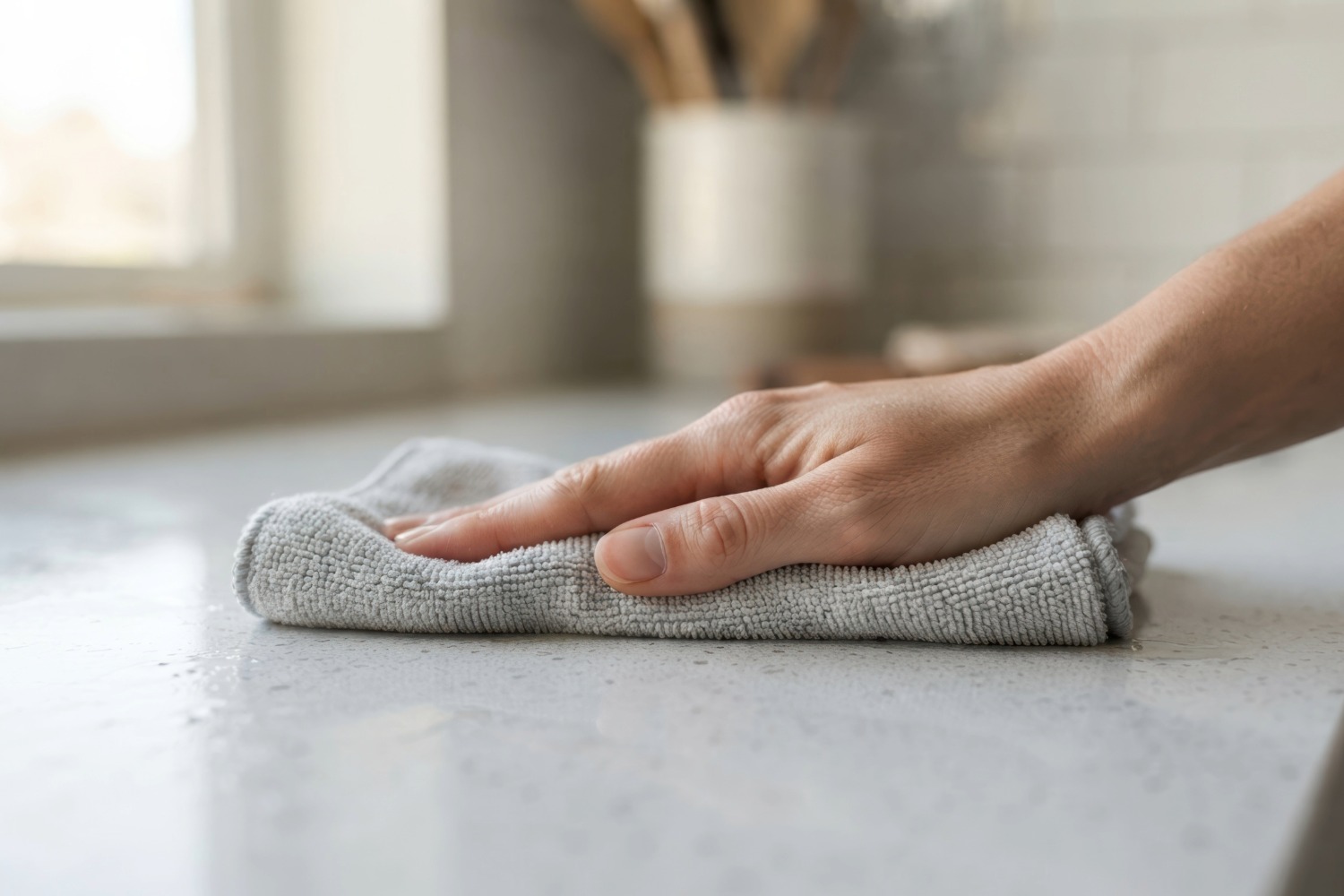
The best way to clean quartz countertops is warm water and a drop of mild dish soap applied with a soft microfiber cloth in gentle circular motions, then rinsed with a clean damp cloth and dried immediately. This handles 90% of daily kitchen messes. For stubborn stains — ink, marker, dried food, or metal scuff marks — use 70% isopropyl alcohol, a plastic scraper, or Bar Keepers Friend Soft Cleanser (liquid only). Never use bleach, ammonia, vinegar, Clorox wipes regularly, abrasive sponges, steel wool, or oven cleaner. These products degrade the polymer resin binder in quartz and cause etching, dullness, and discoloration that cannot be repaired at home.
Quartz countertops are engineered from 90–95% crushed quartz crystals bound with a polymer resin binder — and that single material fact explains every cleaning rule you'll ever need. The resin makes the surface non-porous, so grime sits on top instead of soaking in. Warm water and mild dish soap handle 90% of daily kitchen messes. But the same resin binder that makes quartz stain-resistant also makes it vulnerable to the wrong cleaner: bleach, ammonia, vinegar, and abrasive tools all degrade the resin permanently, causing dull spots, discoloration, and etching that no home repair can fix. This guide covers the complete six-step routine — daily upkeep, stubborn stain removal by type, safe disinfecting, and the protection habits that keep quartz looking sharp for years. Total time per cleaning session: 10–15 minutes.

Quartz countertops are engineered from 90–95% crushed quartz crystals bound together with a polymer resin — and that resin binder is the reason quartz behaves the way it does during cleaning. Because the resin fills every microscopic gap at the factory level, the surface is non-porous before it ever leaves the slab. Grime, spills, and bacteria sit on top of the surface rather than soaking in. That's why warm water and mild dish soap handle 90% of daily kitchen messes without any special cleaning solution.
The resin binder is also the reason the wrong cleaner causes permanent damage. Bleach, ammonia, oven cleaners, and acidic substances like vinegar and lemon juice don't bounce off quartz the way they might on sealed granite. They attack and degrade the resin itself — producing dull spots, discoloration, or etching that can't be repaired at home. Every cleaning rule in this guide flows from one simple fact: protect the resin, protect the countertop.
One more thing to clear up before you start: quartz never needs to be sealed. Granite requires sealing every 1–3 years. Marble needs frequent attention even with a sealer. Quartz skips that step entirely because the resin binder already makes the surface non-porous. If a product claims to seal your quartz, skip it — you'd be wasting money on a step that provides no benefit.
Central Texas has notoriously hard water — high in calcium and magnesium minerals. That mineral content leaves a white hazy film on dark quartz faster than you'd expect, especially in Austin and New Braunfels. The rinse-and-dry step at the end of every clean isn't optional here. It's what keeps your quartz looking polished instead of cloudy.
Start every cleaning session by clearing crumbs and loose debris from the quartz surface with a dry microfiber cloth or a quick hand sweep — never steel wool or an abrasive sponge. Once the surface is clear, add one drop of mild dish soap to a bowl of warm water. Dampen a soft microfiber cloth with the soapy solution and wipe the entire countertop surface using gentle circular motions. You don't need to scrub hard. The non-porous surface means dirt stays on top, and warm soapy water lifts it cleanly.
After wiping, rinse the quartz surface with a clean, damp cloth — no soap residue left behind. This step matters more than most people realize. Leftover dish soap dries into a filmy haze, especially on white or light quartz. Hard-water minerals in Austin-area tap water compound the problem. Wipe dry immediately with a second dry microfiber cloth or microfiber towel to prevent water spots and streaks.
For daily cleaning on a busy kitchen countertop, this entire routine takes under three minutes. Do it after every cooking session and you'll almost never need anything stronger. A paper towel works in a pinch for the dry step, but a soft cloth leaves less lint and keeps the polished finish sharper over time.
Skip the paper towels for your regular routine if you can. They leave small lint streaks on glossy quartz surfaces. A dry microfiber cloth buffs to a cleaner, streak-free finish in the same amount of time.
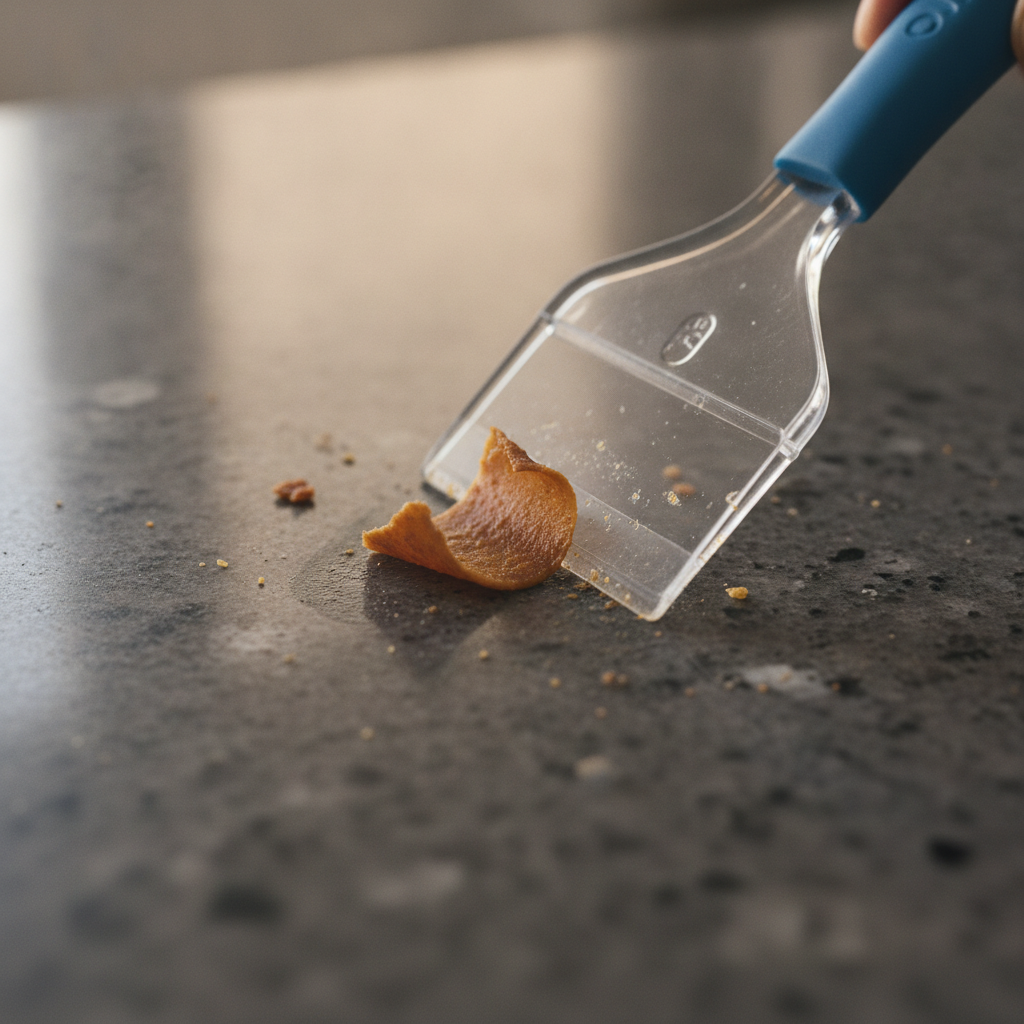
Dried-on food, hardened food splatter, or sticky residue needs a plastic scraper — not a metal scraper, not a knife, not steel wool, and not abrasive sponges or scouring pads. Metal tools scratch the polished finish on quartz permanently; that damage is cosmetic and cannot be buffed out. Hold the plastic scraper at a low angle and gently push the hardened food residue toward you in short strokes. The goal is to lift the debris, not gouge it off.
Once the bulk of the food residue is gone, follow with the soap-and-warm-water routine from Step 2 to clean the stained area completely. If any sticky residue remains after soap and water, apply a small amount of 70% isopropyl alcohol directly to the spot, let it sit for 30 seconds, then wipe with a clean microfiber cloth. Rinse thoroughly and dry. That combination handles most stubborn food spills without reaching for any harsh chemicals.
Metal scrapers, steel wool, abrasive sponges, and scouring pads all scratch quartz's polished surface. That damage is permanent — no home repair fixes it. Plastic only.
Matching the cleaning solution to the stain type is the fastest way to remove stains on quartz without reaching for a harsh cleaner that damages the resin binder. Here is what works for the four most common tough stains on quartz countertops as of 2026.
Ink, dye, marker, or wine: Apply 70% isopropyl alcohol (rubbing alcohol) directly to the stained area. Let it sit for 30 seconds — the alcohol dissolves the pigment that has bonded with the resin binder. Wipe with a clean microfiber cloth, rinse with clean water, and dry. For coffee or tea stains that have sat for a few hours, mix baking soda and water into a baking soda paste, apply to the stained area, let it sit for 5–10 minutes, then gently scrub with a non-abrasive sponge and rinse thoroughly. For tougher stains like red wine that have dried overnight, a baking soda and 3% hydrogen peroxide poultice — equal parts mixed to a paste — applied for several hours and then rinsed can pull out the remaining residue.
Grease: Warm water and dish soap handles most grease. For heavier grease buildup, a non-abrasive sponge with soapy water and a bit more dwell time (1–2 minutes before wiping) does the job. Do not use oven cleaner — its alkaline chemistry aggressively degrades the quartz resin binder and causes permanent discoloration. Metal scuff marks — the gray streaks left when a pot slides across the countertop surface — are not scratches. Bar Keepers Friend Soft Cleanser (liquid version only, never the powder) rubbed gently with a damp cloth removes them cleanly; rinse thoroughly afterward. For hard water stains and mineral deposits: a damp microfiber cloth with dish soap and warm water removes most water stains. If calcium buildup has formed, use a pH-neutral quartz-specific cleaner like Weiman Quartz Countertop Cleaner and Polish rather than vinegar to clean quartz — vinegar is the classic mistake here, and it will micro-etch the resin over time.
Vinegar runs at pH 2–3.5 (acetic acid). One splash rinsed off quickly won't cause harm, but using a 50/50 vinegar-and-water spray daily will micro-etch the resin binder over months — producing a dull, hazy finish that can't be buffed out. Never use vinegar to clean quartz countertops regularly.
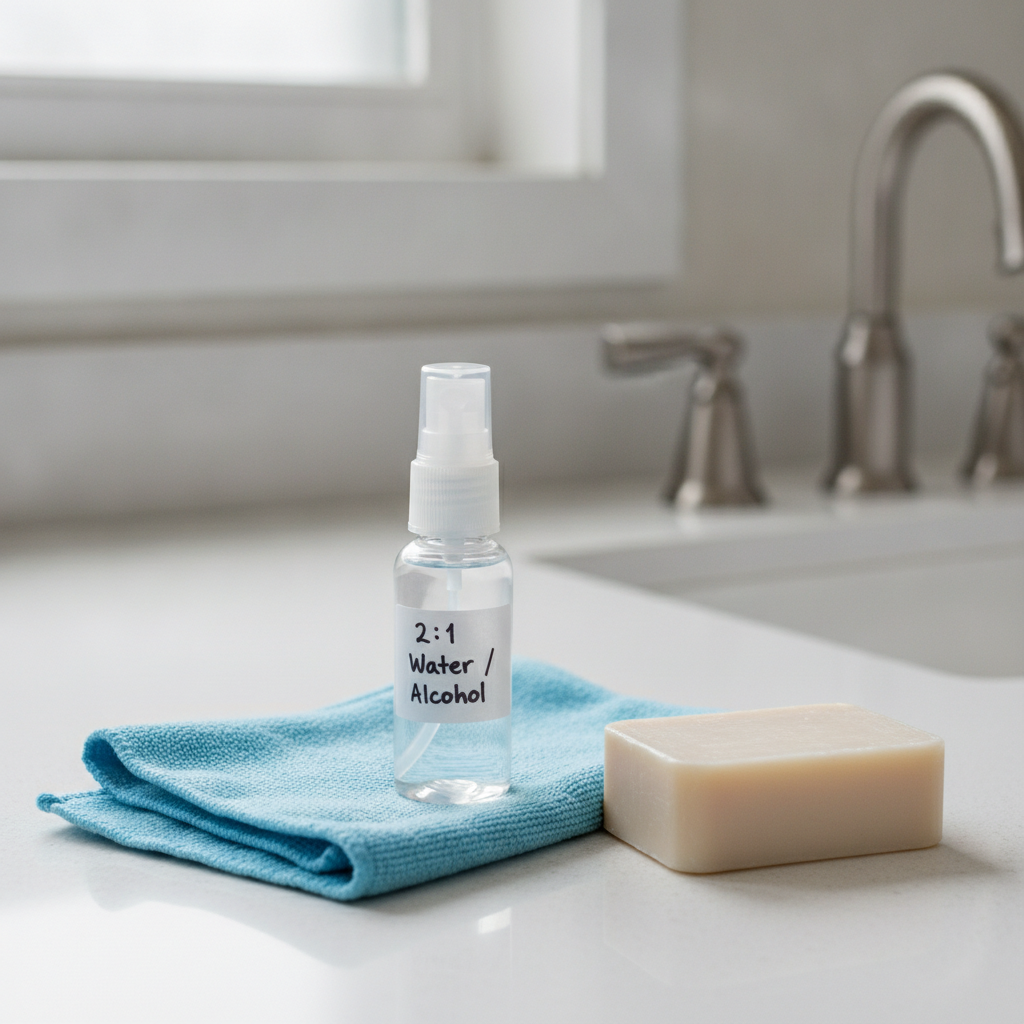
The safest way to disinfect quartz countertops is a 2:1 water-to-70% isopropyl alcohol spray: two parts water, one part alcohol, mixed in a spray bottle. Mist the quartz surface, let it sit for 3–5 minutes to kill bacteria, then rinse with clean water and dry with a microfiber cloth. This disinfects effectively without attacking the resin binder.
Clorox wipes and Lysol wipes are a common mistake. Used once in a while, they probably won't cause visible harm. Used daily — which is common in households with young kids — their quaternary ammonium compounds and bleach content degrade the quartz resin binder over time. The result is a dull, etched surface that looks worn well before its time. The same goes for bleach-based spray cleaners and ammonia-based glass cleaner like Windex: both are harsh chemicals that permanently damage quartz with repeated use. The 2:1 alcohol spray does the same disinfecting job safely. Keep a labeled spray bottle under the sink and you'll never need to reach for the wipes.
Windex and similar ammonia-based glass cleaners are frequently used on quartz for a streak-free shine — but ammonia is on the permanent-damage list. For streak-free results, use HOPE's Perfect Quartz or Weiman Quartz Cleaner instead. Both are formulated specifically for quartz surfaces and won't attack the resin.
Quartz is scratch-resistant and stain-resistant, but not scratch-proof and not completely immune to damage. Three habits protect the surface better than any cleaning product. First: always use cutting boards. Quartz can resist light knife marks, but direct cutting eventually dulls the polished finish and leaves fine scratches that accumulate over years. A $10 cutting board prevents that entirely. Second: use trivets for hot pans. Quartz's resin binder begins to weaken at approximately 150°F (65°C). A cast-iron pan fresh off a high gas burner reaches 450–500°F — well above that threshold. Placing hot pans directly on quartz causes thermal shock: permanent discoloration or cracking that no repair can fix. A trivet costs $10–$20 and prevents a countertop replacement that costs thousands.
Third: wipe spills immediately, especially acidic substances like lemon juice, wine, coffee, and tomato sauce. The non-porous surface means spills don't absorb — but acidic liquids left sitting for extended periods still react with the resin binder at the surface level. Blot first, don't spread the spill, then clean as outlined in Step 2. Regular cleaning done consistently keeps quartz looking polished for years without deep intervention. Proper maintenance here isn't complicated — it's consistent.
Unlike granite (seal every 1–3 years) and quartzite (which also needs sealing), quartz never needs to be sealed. The resin binder makes it non-porous at the factory level. If a product claims to seal or protect your quartz countertop with a penetrating sealer, skip it — it won't absorb, and you'd be wasting money.
These products degrade the polymer resin binder in quartz and cause discoloration, dull spots, or etching that cannot be repaired at home: bleach-based cleaners and sprays, ammonia-based cleaners (including Windex), oven cleaners, drain cleaners, vinegar used routinely (pH 2–3.5), lemon juice used as a cleaner, Clorox and Lysol disinfecting wipes used daily, abrasive sponges and scouring pads, steel wool, metal scrapers, and the powder form of Bar Keepers Friend. The damage from these products is cumulative and permanent. One accident won't always destroy the surface, but a daily routine built around any of them will dull and etch your quartz countertop over months. Stick to warm water, mild dish soap, 70% isopropyl alcohol, and pH-neutral quartz-specific cleaners — and your countertops will stay sharp for years.
Quartz countertops are highly durable and low-maintenance by design — but they are not indestructible, and the wrong cleaner does real, permanent damage. The entire routine comes down to one rule: protect the resin binder. Warm water and mild dish soap handle the daily work. Isopropyl alcohol handles tough stains. A plastic scraper handles dried food. Trivets and cutting boards handle heat and scratches. And in Central Texas, where hard water is a real factor, the rinse-and-dry step at the end of every cleaning session is what keeps dark quartz from looking cloudy and white quartz from looking dull. If your quartz countertops in Austin, San Antonio, or the surrounding Central Texas area are already showing etching, dull spots, or heat damage — or if you're ready to add new quartz to a kitchen or bathroom — Fox Granite has been fabricating and installing quartz countertops across Central Texas since 2010. Contact us today to schedule your free consultation, or visit our New Braunfels shop to see our full slab selection in person.


BY APPOINTMENT ONLY
1379 Wald Road
New Braunfels, TX 78132
Austin, San Antonio, Cedar Park, Kyle, New Braunfels, Del Valle, Elgin, Lago Vista, Shady Hollow, Onion Creek, Buda, San Marcos, Lockhart, Temple, Wimberley, Dripping Springs, Bee Cave, Lakeway, Leander, Anderson Mill, Jollyville, Spicewood Springs, Round Rock, Georgetown, Pflugerville, Manor, Taylor, Manchaca, Mountain City, Hutto, West Lake Hills, Bastrop, Liberty Hill, Driftwood, Sun City, Steiner Ranch.