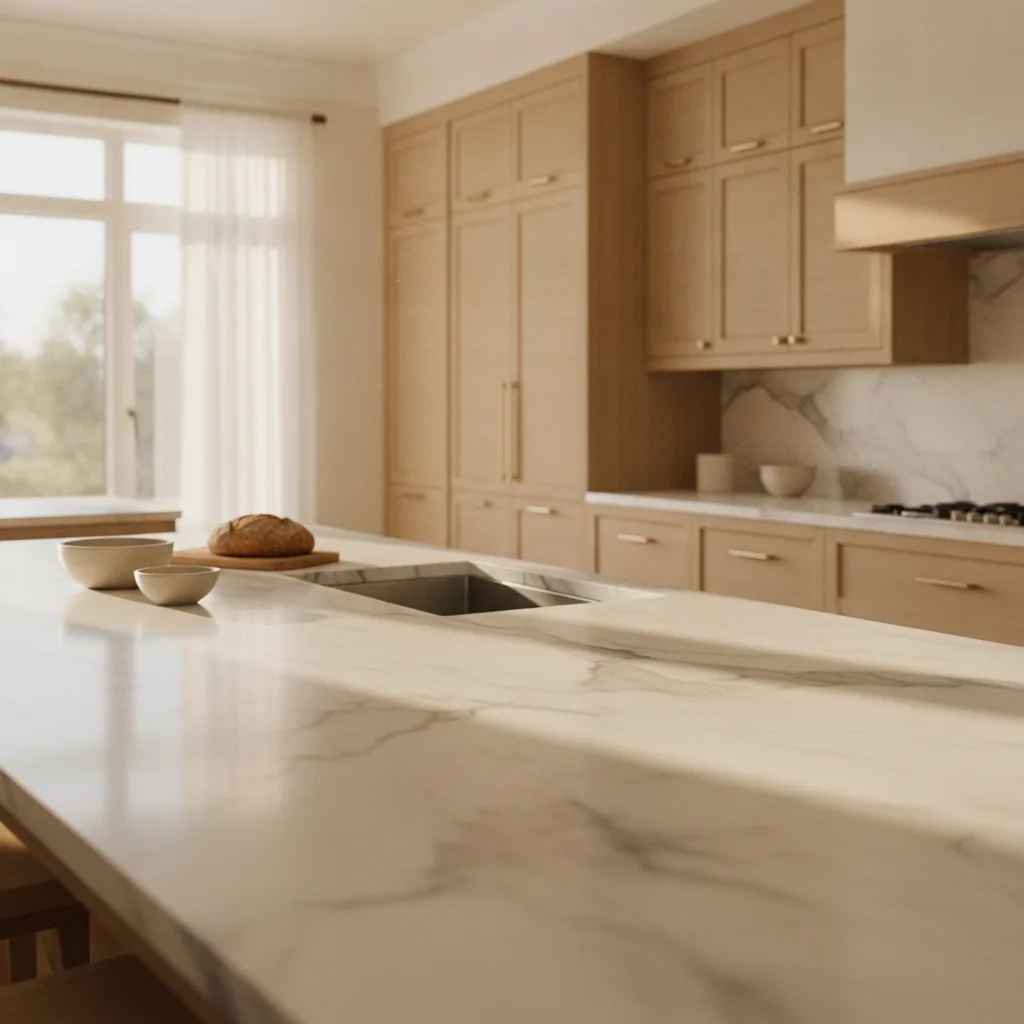
White marble countertops cost $40–$200+ per square foot installed in 2026, depending on marble type and edge work. Carrara marble runs $65–$110/sq ft installed, making it the most accessible Italian marble option. Calacatta starts at $175–$250/sq ft installed. The timeless beauty of marble comes from its unique one-of-a-kind veining, light-reflective surface, and natural elegance — qualities no engineered surface fully replicates. For most Central Texas homeowners, the key decision is choosing the right marble variety, the right finish (honed for kitchens, polished for bathrooms), and going in with a clear understanding of the etching-vs-staining distinction before committing to the material.
White marble countertops are the most-requested countertop look in Central Texas kitchens and bathrooms — and as of 2026, that hasn't changed. Nothing else in the countertop category delivers the same combination of timeless beauty, natural veining, and light-reflective elegance that a genuine marble slab provides. But marble is also one of the most misunderstood materials homeowners can choose, and the gap between expectation and reality has left more than a few buyers disappointed. This guide closes that gap: real 2026 pricing, honest maintenance requirements, a clear comparison of Carrara vs. Calacatta vs. Statuario, and a straight decision framework so you can choose the right material for your actual life — not just the one that looks best on Pinterest.
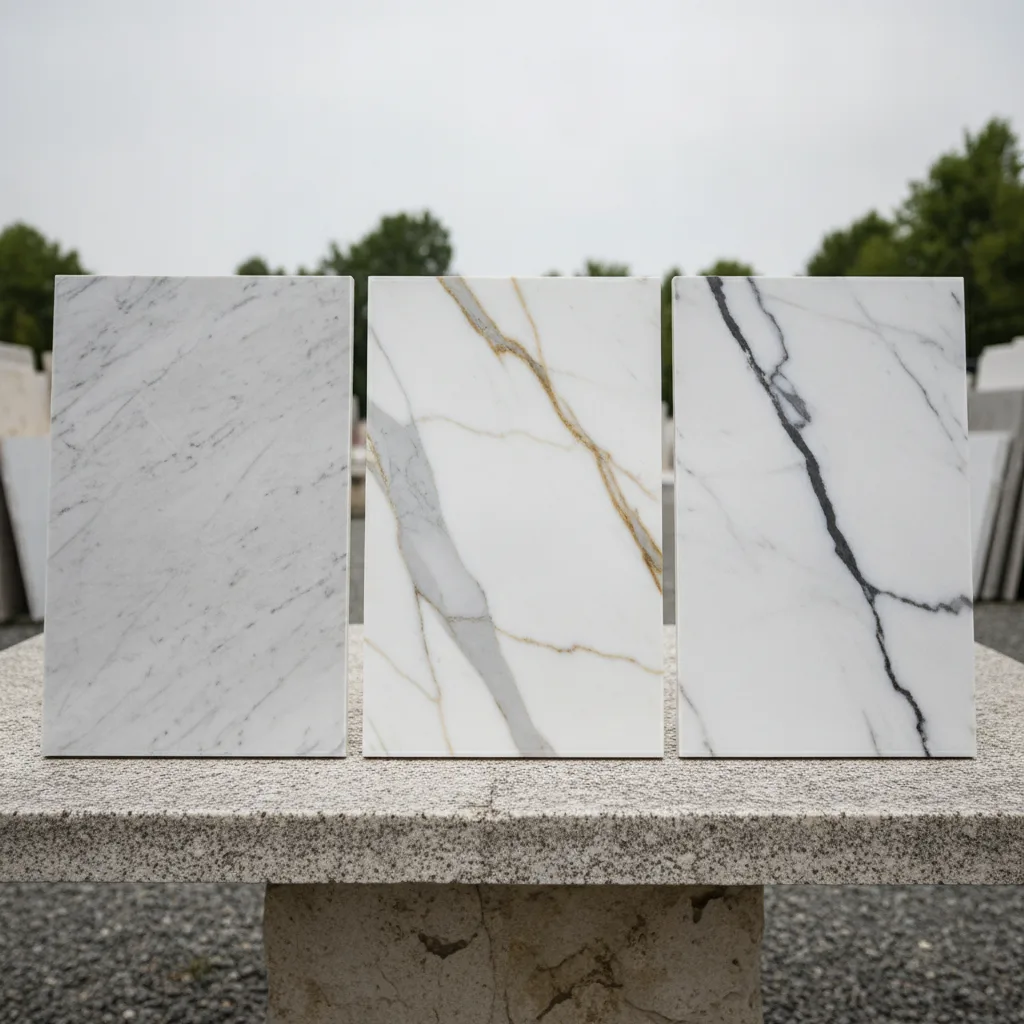
No manufactured surface fully replicates the look of white marble — not quartz, not quartzite, not porcelain. Each slab is cut from a single block of natural stone, so the gray or gold veining running through it is completely one-of-a-kind. That's the core reason homeowners keep requesting it: the surface you get is the only one like it in the world. Marble has adorned monuments, sculpture, and palaces for centuries precisely because that combination of rarity and beauty is impossible to manufacture.
White marble also reflects light in a way that other materials simply don't. The crystalline structure of the stone catches and scatters light across the surface, making rooms feel brighter and more open. In a smaller bathroom or a kitchen with natural wood cabinetry, that light-reflective quality can make the whole space feel larger without moving a single wall. This is especially valuable in Central Texas homes where open-plan kitchens and compact bathrooms are both common.
As of 2026, interior designers consistently name marble and natural stone as enduring classics. Designer Kathryn Murphy notes that homeowners continue to be drawn to marble's texture, beauty, and timeless appeal. The look works equally well in modern interiors with flat-front cabinets and matte hardware as it does in traditional kitchens with raised-panel doors and warm wood cabinetry. That versatility across design styles — contemporary and classic alike — is rare, and it's a big part of why marble counters never cycle out of style the way trendy colors or finishes do.
Marble's timeless beauty is real, but so are its maintenance needs. This guide covers both honestly so you can choose the right material for your actual lifestyle — not just the one that photographs best.
Carrara marble is the most accessible white marble for most homeowners. It has a soft gray-white background with fine, feathery gray veining — the classic look that most people picture when they think of white marble countertops. Bianco Carrara brings a calm, elegant appearance that pairs beautifully with nearly every cabinet color, from white and charcoal gray to dark navy and natural wood cabinetry. It's the top professional choice for light-filled kitchens and refined bathroom countertops because its soft, flowing look makes spaces feel more open. Slab material runs $18–$35 per square foot, with installation landing at $65–$110 per square foot all-in.
Calacatta marble is a different animal entirely. The background is a brighter, cleaner white, and the veining is bolder and thicker — often tinged with gold or warm beige tones. It reads as more dramatic and striking than Carrara, which is why interior designers describe it as classic, soft, and very elegant. Popular varieties include Calacatta Borghini, Calacatta Michelangelo, and Arabescato. Calacatta creates a striking aesthetic appeal and a sense of sophistication that elevates any room it's installed in. The tradeoff: Calacatta costs 2 to 4 times more per square foot than Carrara, with installed pricing running $175–$250 per square foot.
Statuario is the rarest of the three. It has a very white background with dramatic, sweeping veining — historically the stone Michelangelo used for sculpture, including the David. So many types of white marble exist in the broader market, but Statuario sits at the top of the hierarchy for exclusivity. Most people will only encounter Statuario in high-end residential or commercial projects. If a one-of-a-kind appearance matters above all else and budget is not the primary constraint, it's the pinnacle of white marble choices — with the highest price per slab to match.
Free to visit
Viewing actual slabs in person is the only reliable way to compare Carrara, Calacatta, and Statuario veining side-by-side before committing to a material
Free
Lets you see how slab samples look under your home's actual lighting and next to your existing cabinets and flooring — critical for any white marble decision
White marble countertops run $40 to $200+ per square foot installed in 2026, depending on the variety, slab grade, edge profile, and fabricator. Carrara marble installed in a standard kitchen typically lands at $65–$110 per square foot. For a kitchen with 40 square feet of countertop, that puts the project at $2,000–$4,000 for Carrara — the most affordable Italian marble option in the white marble category. Calacatta slab material alone starts at $120–$175 per square foot, with installation pushing the all-in cost to $175–$250 per square foot, or $6,000–$8,000+ for the same 40-square-foot kitchen.
The national median installed cost for marble countertops sits at $75–$100 per square foot based on 2026 contractor pricing surveys. Edge profile choice adds cost: a simple eased edge is usually included in the base price, while an ogee or half-bullnose profile can add $10–$20 per linear foot. Undermount sink cutouts and complex layout runs with lots of corners add fabrication time and cost. Those line items add up fast, which is why an all-in quote is the only number worth comparing.
Is white marble the most expensive countertop material? Not always. High-end quartzite and some exotic granites can match or exceed Calacatta pricing. But among commonly requested materials, Calacatta marble sits at the top of the residential price range. Carrara, by contrast, competes directly with mid-range engineered quartz — making it one of the most accessible natural stone choices for homeowners who want the real thing without the Calacatta price tag.
Always get an all-in quote that includes fabrication, edge profiling, sink cutout, and installation. A low per-square-foot number that excludes those line items is not a real price — it's a starting point for add-ons.
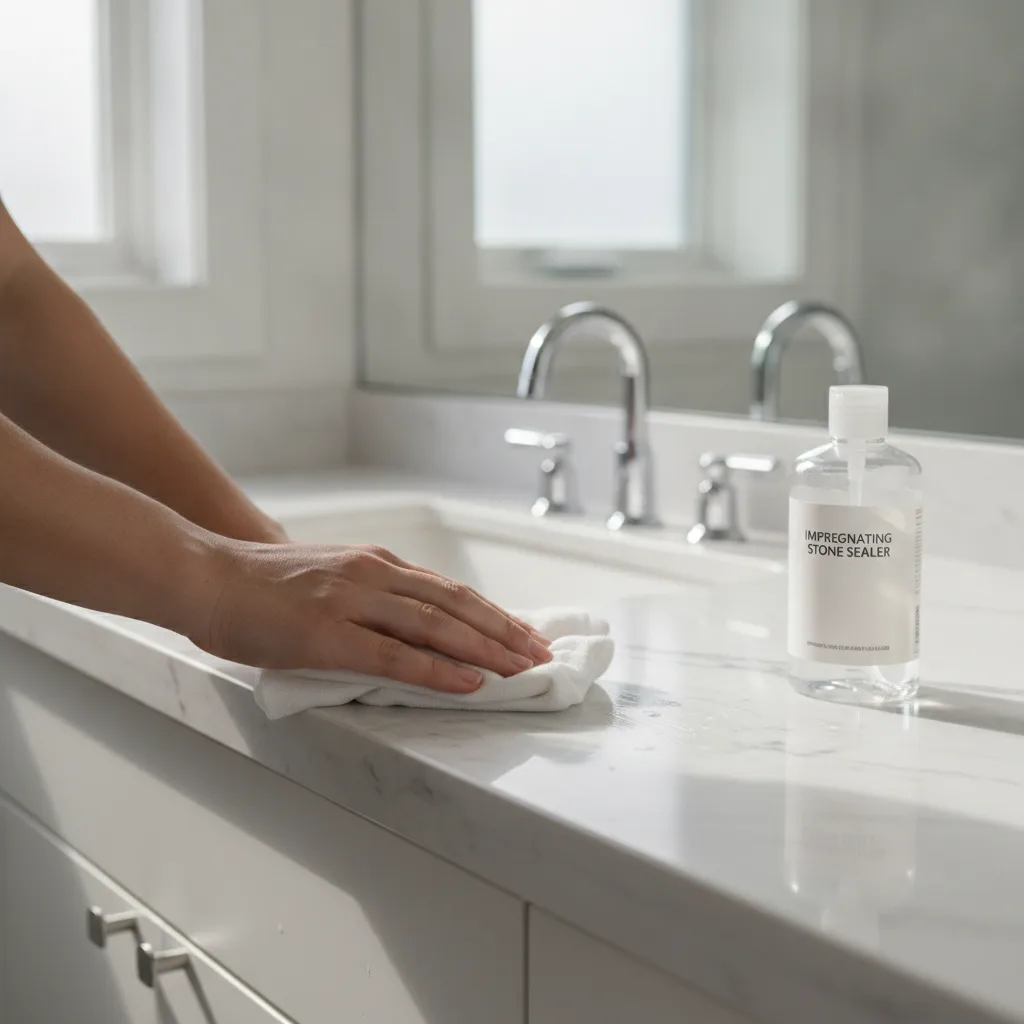
Most homeowners worry about staining on white marble, but etching is the more common and more misunderstood problem. Etching is a chemical reaction between acid and the calcium carbonate in marble's composition. When citrus juice, wine, tomato sauce, or vinegar-based cleaners touch the surface, they dull the finish — leaving a lighter, slightly hazy mark on the stone surface. No sealer stops etching. Sealing only prevents liquid from absorbing into the stone (staining), not the surface chemical reaction that causes etch marks. Understanding this distinction is the single most important thing a homeowner can learn before choosing marble.
Staining, by contrast, happens when a liquid soaks into unsealed marble and leaves a colored residue — think red wine sitting on an unprotected surface for an extended period. A high-quality impregnating sealer fills the pores of the stone and blocks that absorption. That's why sealing matters and why the schedule is non-negotiable: kitchen marble surfaces need sealing every 6–12 months, and bathroom countertops need sealing every 12–18 months due to lower acid exposure. The sealer itself costs $20–$60 per bottle and covers 100–200 square feet per application — an easy, low-cost maintenance task.
Marble scores 3–4 on the Mohs hardness scale, making it softer than granite (6–6.5 Mohs) and more susceptible to scratching. For scratch damage, prevention is the only real answer: use cutting boards, avoid dragging cast-iron pans across the surface, and don't use the counter as a workspace for anything abrasive. Marble is heat resistant — it's a natural stone that formed under intense geological pressure and temperature — but that's not a reason to set hot pans directly on it repeatedly. Trivets are a good habit that protects the seal and the surface finish.
$20–$60 per bottle
One bottle covers 100–200 sq ft of marble surface; applying on the correct schedule is the single most important maintenance action for white marble countertops
Many homeowners apply sealer expecting it to prevent etch marks, then feel misled when dull spots appear anyway. Sealer stops staining from liquids soaking in — it does not create a chemical barrier against acid etching. Know the difference before you choose marble for a high-use kitchen.
For kitchen countertops, a honed finish is almost always the better choice on marble. Etch marks are far less visible on a matte surface than on a polished one — the dull chemistry of the etch blends into the already-matte background rather than creating a stark contrast against a glossy surface. A polished finish looks dramatic and beautiful on the slab, but every etch mark becomes immediately noticeable. Most fabricators and designers who work with marble daily recommend a honed finish for kitchen applications, especially in active households.
Polished finishes make more sense in bathroom countertops and vanity tops, where acid exposure is minimal. The polished marble surface reflects light dramatically, creating the spa-like feel that many homeowners are looking for when they picture a luxurious master bath. Marble's cool, smooth surface and light-reflective quality give a bathroom a sense of calm and sophistication that no other material matches at the same price point. A honed Carrara vanity top, sealed annually, can look essentially new after 20 years of use.
Bathroom vanities are genuinely where white marble performs best in residential settings. The lower intensity of use means fewer opportunities for etching and scratching. If you want the marble look in your kitchen, the smarter application is often the island or a baking section — marble's natural cool temperature is genuinely ideal for rolling dough, and a dedicated area is less likely to see acidic foods set directly on the surface. White marble pairs beautifully with dark cabinets, warm wood cabinetry, charcoal gray walls, or bright white cabinetry. It adapts to modern interiors and classic settings equally well — few other natural stone surfaces offer that level of design versatility.
Granite is the stronger, more durable countertop material for busy kitchens. It ranks 6–6.5 on the Mohs scale versus marble's 3–4, needs sealing only every 1–3 years (versus marble's 6–12 months), and resists everyday scratches and acid etching that marble cannot. If your household cooks every day, has young kids, or you simply don't want to think about maintenance schedules, granite delivers durability with a natural stone look and competitive pricing. Many granite varieties — particularly lighter, white-toned options — deliver a visually striking result at lower maintenance cost, and their appearance can match the elegant look of a marble surface when selected carefully.
Engineered quartz is the most practical marble-look alternative for busy kitchens. It runs $50–$150 per square foot installed, requires zero sealing, and resists acid etching because it's a non-porous engineered material. The tradeoff is that quartz doesn't look exactly like marble up close. The veining is consistent and repeated across slabs — it lacks the organic depth, patina, and drama of a genuine marble slab. For some homeowners, that's a perfectly acceptable tradeoff for a surface that's far easier to live with daily. Black marble and other darker natural stone varieties are also worth considering if you want the marble aesthetic with more visual contrast against light cabinetry.
The honest decision rule: choose white marble if the look is non-negotiable and you're willing to maintain it properly. Choose granite if durability and easy maintenance come first. Choose quartz if you want the marble aesthetic with the lowest possible upkeep. For Austin, San Antonio, New Braunfels, Round Rock, Georgetown, and the surrounding Central Texas area, Fox Granite stocks all three material categories in-house and can walk you through real slabs — not just samples — so you can see exactly what you're getting before any commitment is made. The craftsmanship and professional installation are handled in-house, never subcontracted.
Free
Get an all-in price for marble, granite, or quartz countertops with no surprise fees — Fox Granite's transparent pricing covers fabrication, edge profiling, and installation in one number
Daily cooking household with kids: lean toward granite or quartz. Bathroom vanity or low-traffic kitchen island: marble is a great fit. Want the marble look with zero maintenance: engineered quartz is your answer. Not sure? A free in-home consultation with Fox Granite will get you to the right material without pressure.
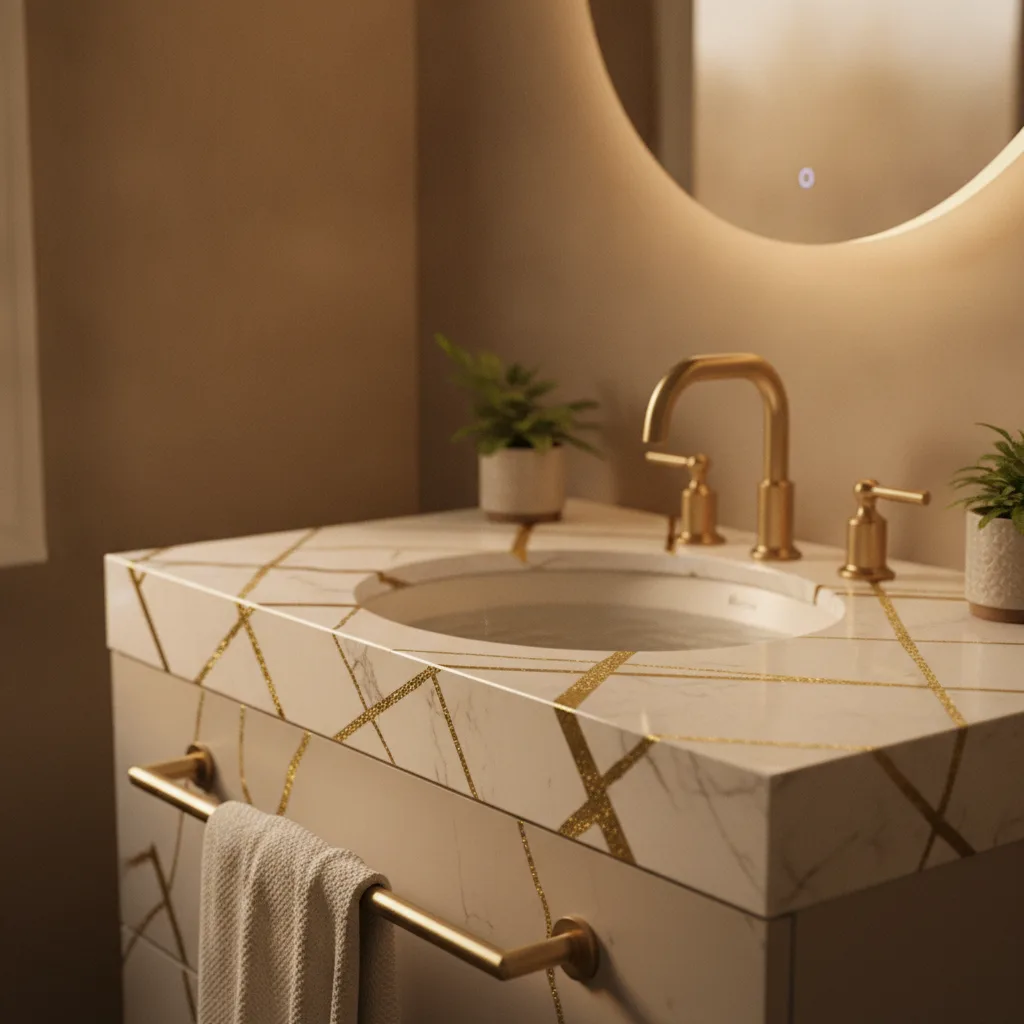
White marble is a natural stone, which means no two slabs look the same. The Carrara slab you see online may have completely different veining density and tone than the one available at the yard. Always view and approve the actual slab — not just a sample tile or a stock photo — before you sign a fabrication agreement. Fox Granite's showroom in New Braunfels lets you do exactly that, and our team brings samples to your home during a free in-home consultation so you can see how the stone looks under your specific lighting. Call (512) 653-5541 or contact us today to book your free estimate.
White marble countertops earn the attention they get — nothing else in the countertop category delivers the same combination of timeless beauty, natural veining, light-reflective elegance, and genuine uniqueness at the slab level. The key is choosing the right marble type for your budget, the right finish for your space, and going in with a clear-eyed understanding of what maintenance actually looks like. For white marble countertops in Austin, San Antonio, New Braunfels, Round Rock, Georgetown, and across Central Texas, trust Fox Granite. We've been helping homeowners choose the right natural stone for their actual lives since 2010 — with transparent pricing, in-house fabrication, and professional installation that's never subcontracted. Contact us today to schedule your free consultation and see real slabs in person.
Ready to get started? Contact Fox Granite today.


BY APPOINTMENT ONLY
1379 Wald Road
New Braunfels, TX 78132
Austin, San Antonio, Cedar Park, Kyle, New Braunfels, Del Valle, Elgin, Lago Vista, Shady Hollow, Onion Creek, Buda, San Marcos, Lockhart, Temple, Wimberley, Dripping Springs, Bee Cave, Lakeway, Leander, Anderson Mill, Jollyville, Spicewood Springs, Round Rock, Georgetown, Pflugerville, Manor, Taylor, Manchaca, Mountain City, Hutto, West Lake Hills, Bastrop, Liberty Hill, Driftwood, Sun City, Steiner Ranch.