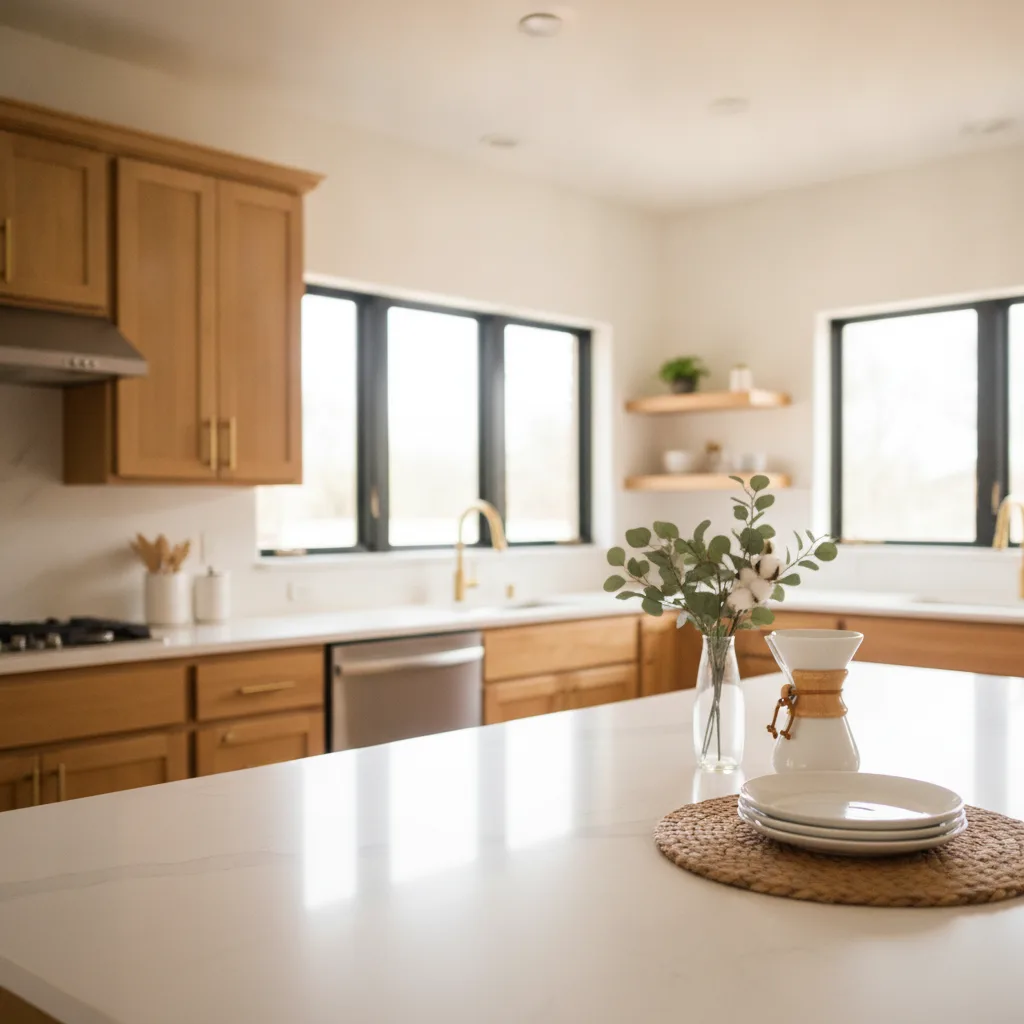
For most Central Texas kitchens in 2026, warm white quartz with subtle veining is the safest, most versatile choice. It works across virtually all kitchen styles — traditional, contemporary, and farmhouse — reflects natural light well in both north- and south-facing kitchens, and holds strong resale appeal. The five real variables that determine the right quartz countertops colors are: window orientation and natural light, cabinet undertones (warm vs. cool), lifestyle and maintenance tolerance, room size, and your resale horizon. Match undertones before visible color, take a large sample home for 24–48 hours, and evaluate it in morning, afternoon, and evening light before committing. Quartz runs $70–$100 per sq ft installed in Austin — this decision deserves the time.
Choosing quartz countertop colors is the decision that trips up more Central Texas homeowners than any other part of a kitchen remodel — not because the options are bad, but because there are too many of them and most of the advice online is a trend listicle, not a decision framework. As of 2026, engineered quartz holds 36–39% of the U.S. countertop market, making it the single largest segment ahead of granite at 24%. That popularity means the collection available today spans hundreds of colors, finishes, and veining patterns — warm hues, bold statement slabs, subtle neutrals, dramatic veining that mimics marble, and concrete-look surfaces that deliver a sophisticated industrial edge. This guide cuts through the noise. By the time you finish reading, you will know how to evaluate quartz countertops colors based on five real variables specific to your kitchen — and you will be ready to make a confident final decision.
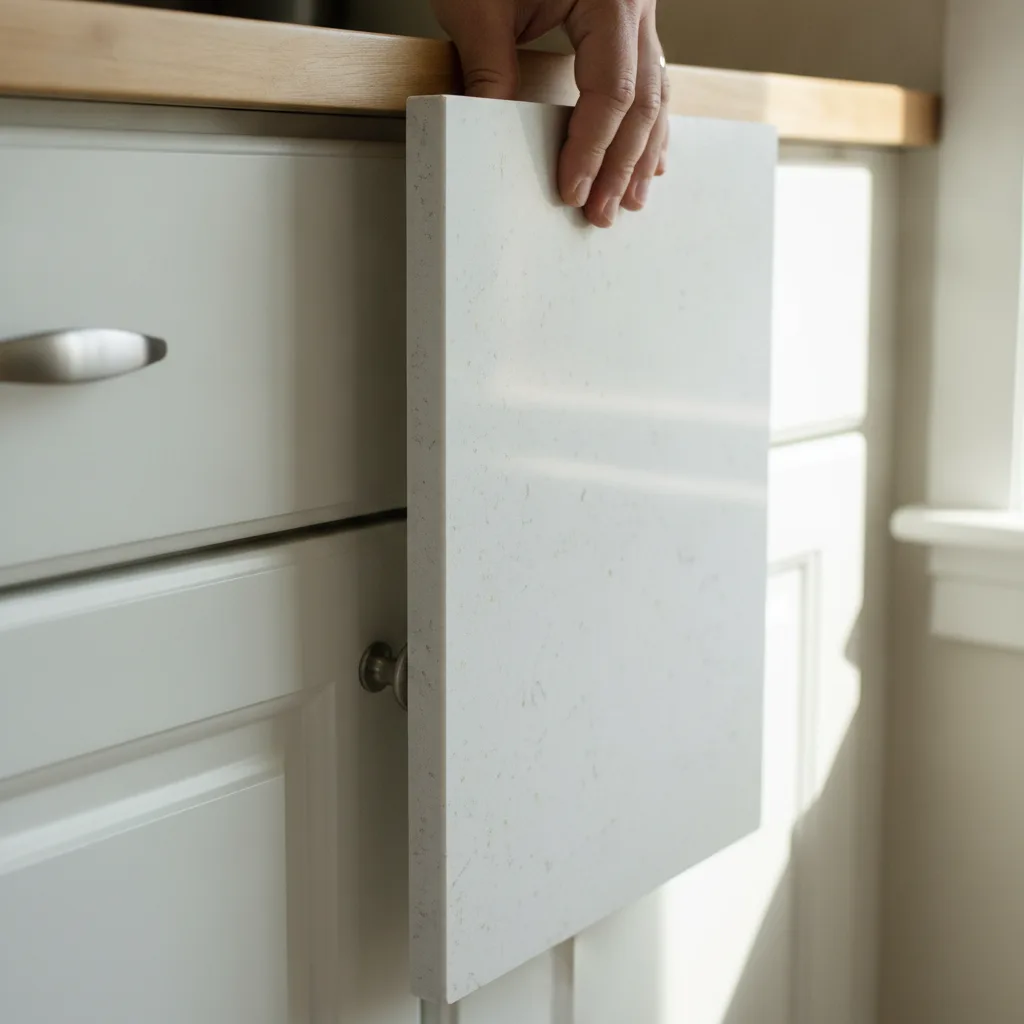
Quartz countertops are engineered stone: 90–95% crushed natural quartz crystals bound with 5–10% resins, polymers, and pigments. That formula is what makes quartz countertops colors consistent, repeatable, and available in options that natural stone simply cannot produce — solid arctic white, concrete grays, deep blacks, and dramatic veining that mimics marble without marble's maintenance demands. The beauty of engineered quartz is that every slab of the same SKU looks nearly identical, which matters when you're creating long countertop runs or matching a future repair.
Unlike granite, marble, or natural quartzite, quartz is non-porous. It does not require sealing and will not absorb stains the way natural stone does. That matters for color longevity and durability: a white quartz surface stays white with simple soap-and-water cleaning, no periodic resealing required, no color-dulling sealers to apply every one to two years. The color you choose on day one is the color you will live with for years. This low-maintenance reality is one of the primary reasons 78% of NKBA professionals surveyed in 2026 identify quartz as the dominant countertop material.
One quality distinction worth knowing before you shop: through-body quartz runs veining and pigment through the entire slab. Non-through-body quartz only carries color on the surface. If a non-through-body slab chips, it reveals a plain undercolor — a real problem with dark or heavily veined designs that creates obvious damage that cannot be repaired invisibly. Always ask your fabricator which type you are looking at, especially for darker quartz colors, bold veining, and any slab where a chip would show sharply against the surface design.
As of 2026, engineered quartz holds 36–39% of the U.S. countertop market — the single largest segment, ahead of granite at 24%. That popularity means the color collection available today is wider than ever, which is great for options and overwhelming for decisions. This guide cuts the list to what actually matters for your specific kitchen.
The single most important rule for choosing quartz countertops colors is this: match undertones before you match the visible color. A quartz slab that looks beige from three feet away might carry a strong yellow undertone or a subtle pink one — and that undertone will either complement or clash with your cabinets and flooring every single day. This is where most homeowners go wrong, and it is the mistake that is most visible to visitors even when they cannot articulate why the kitchen feels slightly off.
Warm quartz — slabs with yellow, gold, cream, or beige undertones — pairs naturally with stained wood cabinets, natural wood floors, and warm-toned hardware like brushed brass or oil-rubbed bronze. Cool quartz — slabs with blue, green, or true gray undertones — pairs with painted white or gray cabinets, polished chrome or nickel fixtures, and cooler tile or stone floors. Mixing warm quartz with cool cabinets, or vice versa, is the number-one color mistake homeowners make. It shows immediately in person and becomes more obvious as the light changes throughout the day.
In 2026, the dominant direction in Central Texas kitchens is warm, not cool. The market is moving away from blue-toned grays toward warm whites, creamy beiges, soft mushroom grays, and taupes — a design direction called organic modern or quiet luxury. Warm wood cabinets now outpace white cabinets for the first time in a decade, claiming 29% versus 28% of renovated kitchens per a 2026 Houzz study. That shift means warm-undertone quartz with subtle movement is the safer, more versatile call for most Central Texas remodels right now. It complements today's cabinet trends and will hold its appeal as the cycle continues to evolve.
Free
Hold it directly against the quartz sample in your actual kitchen light — no app or screen can replicate how undertones read in your specific space.
Free
We bring large samples to your home so you can compare quartz colors against your cabinets, flooring, and lighting before you commit — no showroom guessing required.
Your kitchen's window orientation is one of the two biggest factors in which quartz countertop color will actually look good once it's installed. South- and west-facing kitchens flood with warm, strong natural light for most of the day. These spaces can carry darker quartz colors, bold veining, and even deep charcoal or black quartz without the room feeling heavy or closed in. The light does the work of keeping the space visually bright even when the countertop surface is rich and dark.
North-facing and galley kitchens with limited windows are a different story. In those spaces, lighter quartz — crisp whites, warm white, and soft cream tones — reflects available light and keeps the kitchen feeling open and inviting. A dark quartz in a north-facing Austin kitchen absorbs the limited light and can make the space feel smaller than it is. For those rooms, warm white quartz with subtle veining is almost always the right answer. It adds depth and visual interest without stealing the light the room needs.
Lighting also creates a phenomenon called metamerism: a slab that looks cool gray in the showroom under fluorescent light can read slightly bluish or even greenish under warm residential LED bulbs at home. This is why we always recommend taking a large sample — at minimum 6x6 inches, ideally 12x12 — home and evaluating it over 24–48 hours under morning, afternoon, and evening light before making a final decision. The showroom is a starting point, not the finish line. What you see on the slab at 2 p.m. under natural light may look different at 8 p.m. under your kitchen's LED fixtures, and that evening version is what you will live with most nights of the week.
South- and west-facing kitchens are common throughout Austin, San Antonio, and the Central Texas corridor — and they are exactly why white quartz (Calacatta veining, pure Carrara whites, and solid crisp whites) is the top-selling countertop color in Texas year after year. Strong natural light amplifies the brightness of lighter slabs and gives you more flexibility across the entire color spectrum.
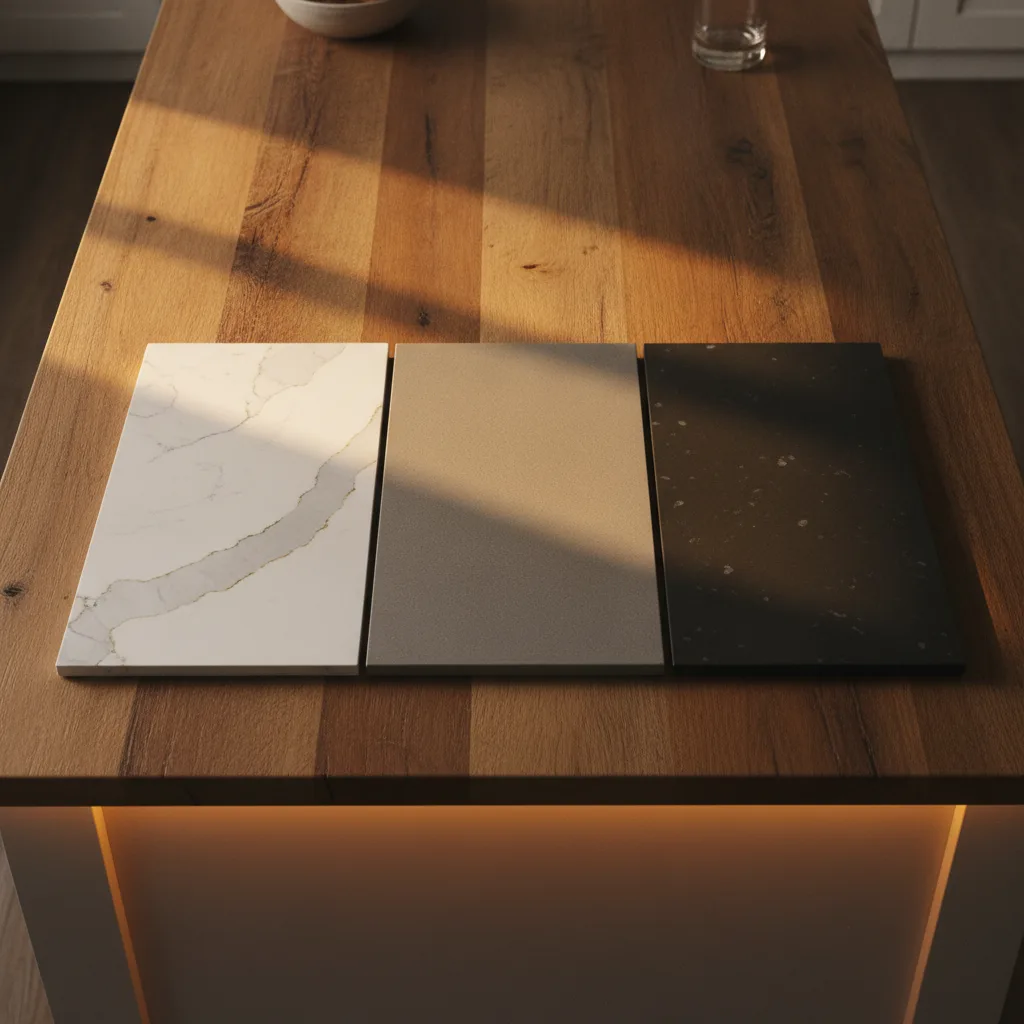
White quartz is the most popular quartz countertop color in Texas and the safest choice for broad cabinetry compatibility and resale value. Crisp whites like arctic white and solid bright whites work with nearly every kitchen style — traditional, contemporary, farmhouse, and modern. Calacatta-veined whites add visual interest and depth with dramatic veining that mimics marble without requiring sealing. For north-facing kitchens specifically, a warm white quartz with subtle gold or cream veining adds an inviting feel and a classic elegance without the cool flatness of pure bright white. White quartz is a timeless great option that rarely dates itself, which makes it a popular choice among resale-minded homeowners.
Gray quartz splits into two camps. Cool grays with blue or silver undertones pair with painted white and gray cabinets for a sleek, modern feel. Warm grays — mushroom, greige, and taupe tones — bridge wood cabinetry and painted surfaces and are gaining fast among younger Austin and San Antonio buyers who want a versatile, sophisticated look without the starkness of stark white. Concrete-look gray quartz with a matte or honed finish is one of the strongest 2026 design directions, delivering a rich, natural look that feels crafted and intentional rather than cold. These slabs complement both the industrial and organic modern styles that are dominant in new Austin construction.
Black quartz, including midnight-dark slabs and options like Midnight Corvo, creates bold contrast with white or light wood cabinets and adds depth in kitchens with strong natural light. Black quartz looks rich and sophisticated, but it shows fingerprints, skin oils, and water spots more readily than lighter quartz colors — especially in matte or honed finishes. Busy households with kids should think carefully before committing to a large perimeter run of dark quartz; a black island paired with lighter perimeter countertops is a more practical compromise. For accent colors, bold blue and deep green quartz are the 2026 breakout choices: Pinterest searches for golden quartz are up 40% year-over-year, and the NKBA projects green quartz interest up 200% from 2025 to 2026. These are beautiful, personal style statements — but they are statements, not timeless neutrals, so factor your resale horizon before committing.
Quartz is stain-resistant and scratch-resistant, and unlike granite, it does not need periodic sealing — but not all quartz colors perform equally in real daily life. Lighter quartz colors (crisp whites and soft creams) show dried coffee rings, spills, and cooking grease more quickly, though they clean up easily with soap and water. Avoid abrasive cleaners on any polished quartz finish; they dull the surface over time and can damage the resin layer that makes quartz so easy to keep clean. Darker quartz colors hide most food debris but amplify water spots and fingerprints. Mid-tone slabs — warm grays, beiges, and taupes with subtle veining or natural movement — are the practical sweet spot for high-traffic family kitchens where both beauty and durability matter equally.
Finish choice also affects daily maintenance and the overall feel of the space. Polished quartz is the classic look: reflective, bright, and easy to wipe clean with minimal effort. Honed and matte finishes are the leading surface trend for 2026–2027 because they feel soft and natural rather than shiny — and they hide minor surface marks better than polished finishes. Leathered finishes add texture and are excellent at masking fingerprints, making them a smart choice specifically for darker quartz colors where oils and smudges show the most. Always use hot pads on quartz; the surface is heat-resistant but not heat-proof, and sudden direct heat from pots and pans can stress the resin binders over time, creating discoloration or micro-fractures.
Mixing quartz colors across the same kitchen is a mainstream 2026 design strategy and a great option for homeowners who want visual interest without high maintenance across every surface. A bold, heavily veined slab on the island paired with a quieter, coordinating solid or subtly patterned quartz on the perimeter creates a statement design and keeps the demanding color in a lower-traffic area. This works well when both slabs share consistent undertones. Exploring this approach is especially smart for dark quartz like Midnight Corvo — it delivers the drama on the island where it photographs beautifully without creating a fingerprint-maintenance burden across your full countertop run.
Choosing your perfect countertop color gets concrete when you put physical samples in your actual kitchen. Pull your two or three finalists from the showroom or request a free in-home consultation where samples come to you. Set each sample on your existing countertop surface, push it up against your cabinet doors, and look at it throughout the day — morning, midday, and evening under your LED fixtures. The color that still looks right at 8 p.m. under kitchen lights with the overhead fixtures on is the one to choose. That 24–48 hour evaluation window is not optional; it is the only reliable way to account for metamerism and to find the perfect fit for your specific space.
For resale-focused buyers: neutral quartz colors — white, gray, beige, cream — consistently outperform bold or saturated colors for buyer interest. Softer veined whites photograph well in online listings and deliver an elegant style that appeals broadly, which is a real advantage in Central Texas's active resale market where many buyers encounter homes digitally before scheduling a tour. If you're planning to sell within three years, white or warm gray quartz with marble-inspired veining is the most reliable choice. It is timeless, broadly appealing, and maximizes the visual quality of listing photos. Your personal style still has room to express itself through hardware, backsplash, and fixtures.
Once you have made your selection, the process at Fox Granite moves quickly. Our experienced team templates your countertops using a precision overlay method, fabricates your slab in-house using state-of-the-art stone-cutting software, and installs within the same week in most cases. The average all-in cost for a standard Austin kitchen running 40–60 sq ft is $3,500–$7,500 depending on edge profile, cutouts, and design complexity. There are no surprise fees after the quote. Contact us today to schedule your free in-home consultation — we bring the samples to you so you can make your color decision with full confidence, not showroom guesswork.
Free
Brings your top quartz color choices directly into your home so you can evaluate them against your real cabinets, flooring, and light — the only reliable way to access a final color decision with confidence.
If you are choosing quartz for a kitchen island only, you have more freedom to go bold. A dramatic veining pattern or a deep color on the island against a quieter perimeter quartz creates visual interest and a natural focal point without overwhelming the space. Just confirm both slabs share consistent undertones before you sign off — that is the one rule that does not bend regardless of which color combination you are working with.
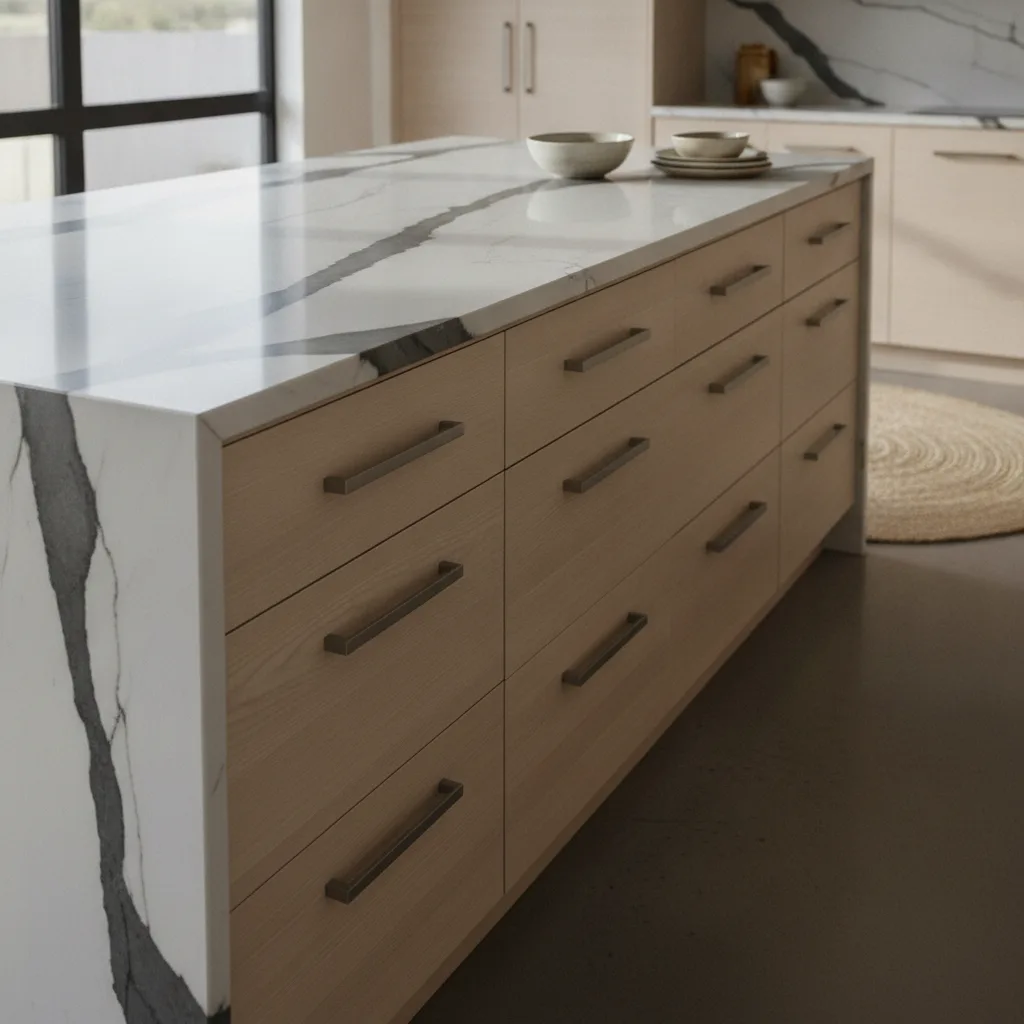
The biggest color mistake homeowners make is deciding in the showroom. A slab that looks warm and creamy under showroom lighting can shift noticeably under your home's LED bulbs — this is metamerism, and it is real. Always take a large sample (6x6 inches minimum, ideally 12x12) home, place it on your actual countertop surface, and evaluate it in morning light, afternoon light, and evening light before you commit. Quartz is a long-term investment; 48 hours of sample testing is cheap insurance against a color you will not love in two years.
Success looks like this: you have a color confirmed in your own kitchen, under your own light, next to your own cabinets — not a color you talked yourself into at a showroom. For quartz countertop fabrication and installation in Austin, San Antonio, Round Rock, New Braunfels, Georgetown, and across the Central Texas corridor, Fox Granite has completed over 10,000 countertop projects since 2010. Our family-owned, experienced team will bring samples directly to your home — no showroom trip required — so you can make your color decision with real confidence. Contact us today to schedule your free in-home consultation and get your free estimate.
Ready to get started? Contact Fox Granite today.


BY APPOINTMENT ONLY
1379 Wald Road
New Braunfels, TX 78132
Austin, San Antonio, Cedar Park, Kyle, New Braunfels, Del Valle, Elgin, Lago Vista, Shady Hollow, Onion Creek, Buda, San Marcos, Lockhart, Temple, Wimberley, Dripping Springs, Bee Cave, Lakeway, Leander, Anderson Mill, Jollyville, Spicewood Springs, Round Rock, Georgetown, Pflugerville, Manor, Taylor, Manchaca, Mountain City, Hutto, West Lake Hills, Bastrop, Liberty Hill, Driftwood, Sun City, Steiner Ranch.