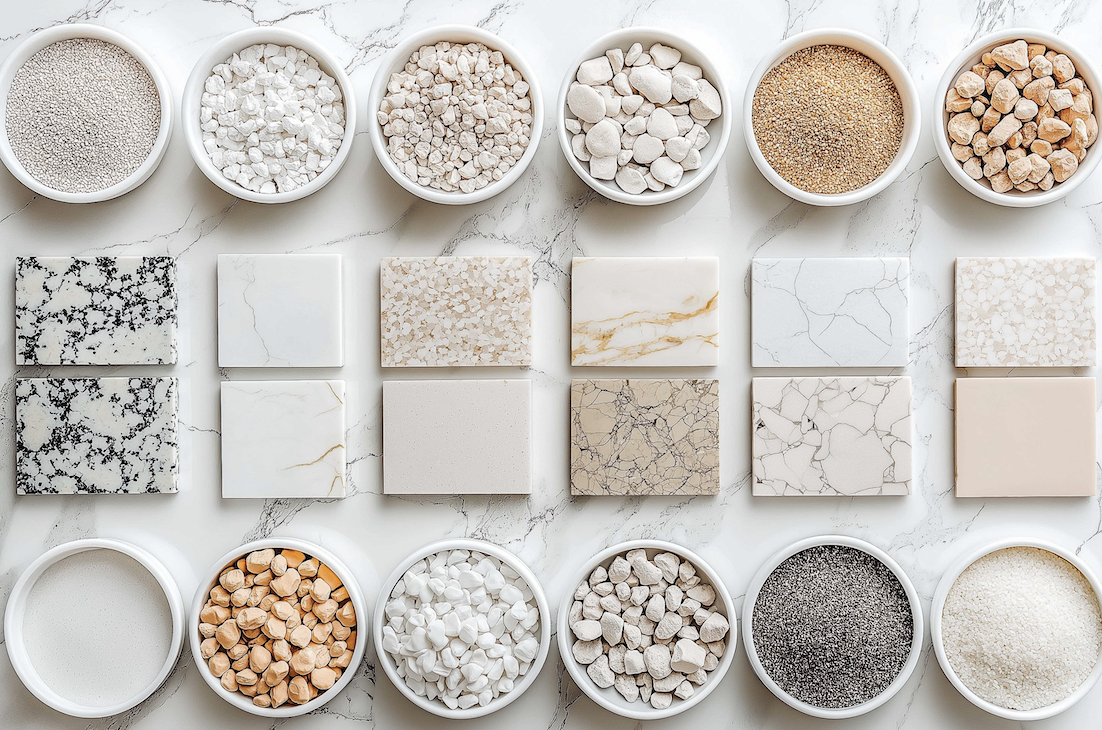
Quartz is the best countertop material for most bathroom vanities as of 2026, accounting for more than 50% of new installs nationwide. Its water absorption rate of 0.01%–0.05% makes it effectively non-porous, so it never needs sealing, resists mold and mildew, and shrugs off the makeup, toothpaste, and soap residue that stain porous surfaces like granite and marble. A standard 48-inch single-sink quartz vanity top costs $550–$1,300 installed in Central Texas. The one real caveat: hot styling tools above 300°F can scorch the resin binder. Use a silicone mat and quartz will outlast your bathroom design cycle with almost no maintenance.
Quartz bathroom countertops now account for more than 50% of new vanity installs nationwide as of 2026, and the reason is practical, not trendy. Bathrooms are the most punishing environment in any home for a countertop surface: daily water exposure, steam, toothpaste, makeup, hair dye, and styling products sit on that vanity top every single day. Materials that absorb moisture stain, mold, and degrade over time. Quartz is engineered to be non-porous from the start, which makes it the default choice for most bathroom applications. This guide walks Austin, San Antonio, and New Braunfels homeowners through the full decision: when quartz is the clear right call, when granite or quartzite might be a better fit, what a realistic budget looks like in 2026, and how to get from decision to installed countertop in 5–15 business days.
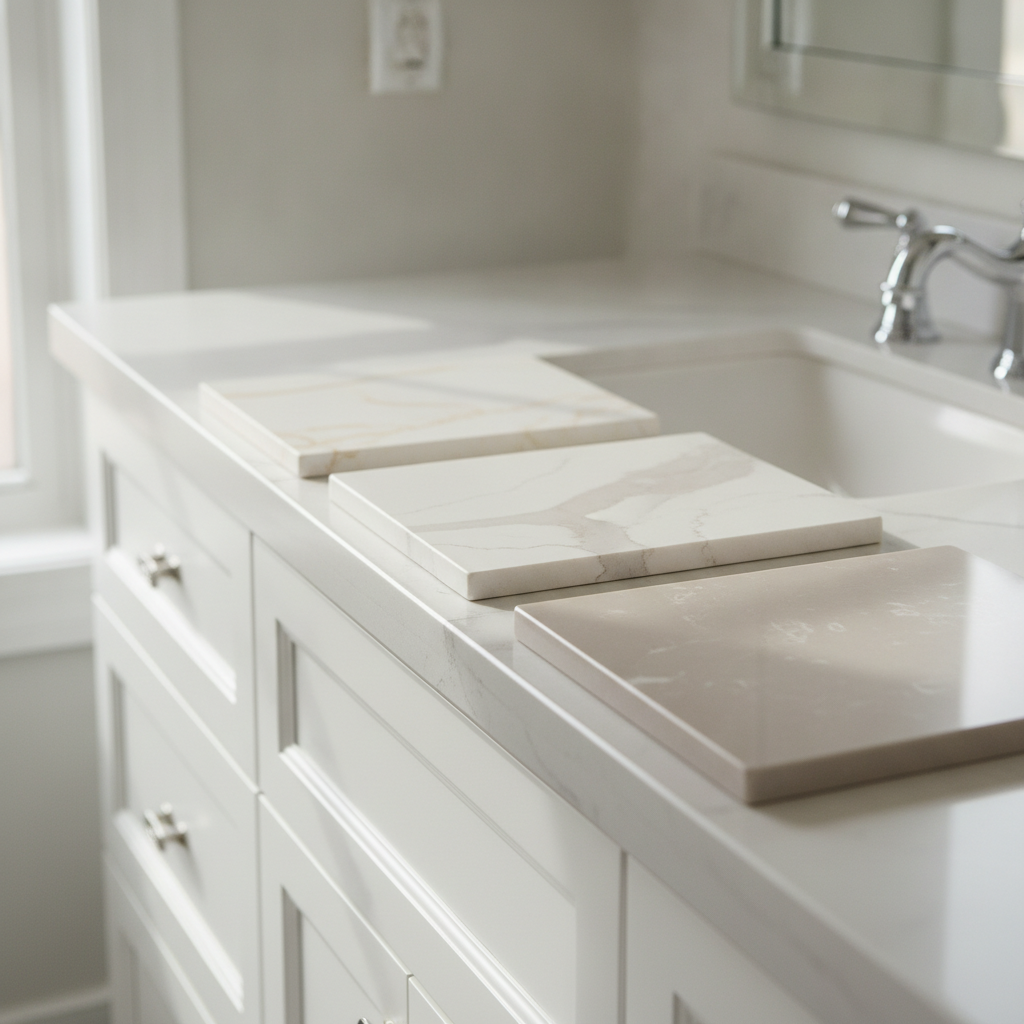
Quartz is the most-selected bathroom vanity countertop material as of 2026, and the reason comes down to how the bathroom environment punishes porous surfaces. Water sits on vanity tops constantly. Toothpaste, makeup, hair dye, and soap residue are acidic or pigmented enough to stain a surface that absorbs moisture. Quartz's water absorption rate is just 0.01%–0.05%, making it effectively non-porous by design and highly durable in the conditions your bathroom creates every single day.
That non-porous quality comes from the manufacturing process: ground natural quartz crystals are bound with polymer resins and pigments under heat and pressure, filling every pore in the stone. The result is a surface that cannot harbor mold or mildew inside the material, a real advantage in a room that stays humid all day. With granite, you'd reseal the surface once or twice a year to maintain the same protection. With quartz, sealing is never required. That's not a minor convenience; it's years of maintenance eliminated.
Quartz also scores 7–8 on the Mohs hardness scale, making it scratch-resistant against virtually every object in your daily routine: razors, cosmetic jars, hairbrush handles, and toiletry bottles. It won't scratch from normal bathroom use. The one durability caveat worth knowing upfront: quartz is sensitive to heat above roughly 300°F. A hair straightener or curling iron set directly on the surface can scorch the resin binder. Always use a heat-resistant mat near styling tools. That's the whole maintenance list.
Hot styling tools are the number-one cause of quartz vanity damage in family bathrooms. A silicone mat costs about $10 and prevents permanent scorching. Buy one before your countertop is installed — not after.
Quartz is the practical default for most bathroom vanities, but it's not the only right answer. Granite runs $50–$120 per square foot installed versus $55–$130 for quartz, a slight price edge, but granite is a porous natural stone that requires periodic sealing in high-moisture environments. Skip a sealing cycle in a busy bathroom and you risk stains from makeup or hair products that are difficult to reverse. If you love granite's natural variation and are committed to resealing it annually, it's a solid option. If you'd rather never think about maintenance, quartz wins on pure functionality.
Quartzite is a natural metamorphic stone with exceptional hardness and the organic veining patterns that many homeowners associate with marble. It's highly durable and heat-resistant, making it a legitimate alternative, but it is porous and requires sealing. Do not confuse it with quartz — the names are similar but the materials are fundamentally different. Marble brings undeniable natural beauty and elegance to a vanity, but it etches from acidic products like citrus-based cleansers and vitamin C serums, and it stains easily in bathroom conditions. Designers still specify marble for low-traffic powder rooms where aesthetics matter more than daily rigors.
For the average Central Texas family bathroom — one that sees daily shower steam, makeup routines, and kids with wet hands — quartz is the low-maintenance, highly durable countertop that doesn't ask much from you after installation. Granite and quartzite are reasonable alternatives if you accept the sealing upkeep. Marble is a specialty choice for spaces where it won't take heavy daily use. Explore all three options with physical samples before committing, because the natural stone category has genuine variation that photos don't capture.
A standard 48-inch single-sink quartz vanity top costs $550–$1,300 installed in 2026, with the national average landing around $800–$1,200 all-in. A 60–72-inch double vanity runs $825–$1,950 installed. The per-square-foot range is $55–$130; mid-grade vanity projects typically land at $75–$120 per square foot when fabrication, templating, and installation are included. These numbers cover everything except removal of your old countertop, which adds $50–$150. Get that line item confirmed upfront so you're comparing quotes on equal footing.
One pricing quirk that catches homeowners off guard: most fabrication shops charge a minimum of 15–20 square feet even on small vanity jobs. A compact single vanity might only cover 6–8 square feet of actual stone, but you'll be billed for at least 15. This is standard across the industry and explains why the effective per-square-foot cost on a small vanity can feel higher than the headline rate. Plan for it rather than be surprised at invoice time.
Two reliable ways to keep costs down without sacrificing quality. First, ask about remnant slabs. Fabricators regularly have leftover pieces from larger kitchen projects, and a bathroom vanity rarely needs a full slab. Remnants are full-grade material, not inferior stock, and typically sell for 30–50% off standard slab pricing, often landing between $250 and $850 for a vanity-sized piece. Second, specify a 2cm slab thickness instead of 3cm. Kitchen counters benefit from extra thickness for structural reasons, but bathroom vanities do not. A 2cm slab saves 15–20% on material cost with no functional downside.
Sink cutouts add $100–$300 per opening. Edge profiles add $5–$25 per linear foot: eased edges run $5–$8, half-bullnose $8–$12, and ogee $15–$25. Get these itemized in your quote so you can compare fabricators on equal terms.
The 2026 quartz color market has shifted decisively toward warm-veined slabs: creamy off-whites with gold or taupe veining, soft beiges, and earthy neutrals. Cool monochromatic grays, the dominant bathroom color of the early 2020s, are declining in new installs. If you're planning to sell within five years, a warm-toned quartz with subtle organic veining reads as current. If you love gray, it's still a clean, modern choice and pairs well with brushed nickel and matte black fixtures — just know the broader trend is moving toward warmer tones.
For smaller bathrooms, lighter quartz colors do the most work. Soft whites, creams, and light beiges with subtle veining reflect light, create a sense of space, and keep the room from feeling closed-in. A dark quartz vanity in a small bathroom can look dramatic in photos but feel heavy in daily use. Save saturated colors and bold patterns for larger bathrooms with good natural light, where the size of the space gives bold design room to breathe.
Many quartz lines now mimic marble patterns — flowing veins, soft movement, organic variation — with none of marble's maintenance requirements. These marble-look quartz options are extremely popular with designers right now and make a strong case for quartz in bathrooms where you want the elegance and natural beauty of stone without the upkeep. Cambria, for example, offers colors featuring the clean lines and veining depth that make a vanity look genuinely luxurious. Bring home samples before you decide. Lighting in a showroom reads differently than lighting in your actual bathroom, and the right color is the one that works in your specific space.
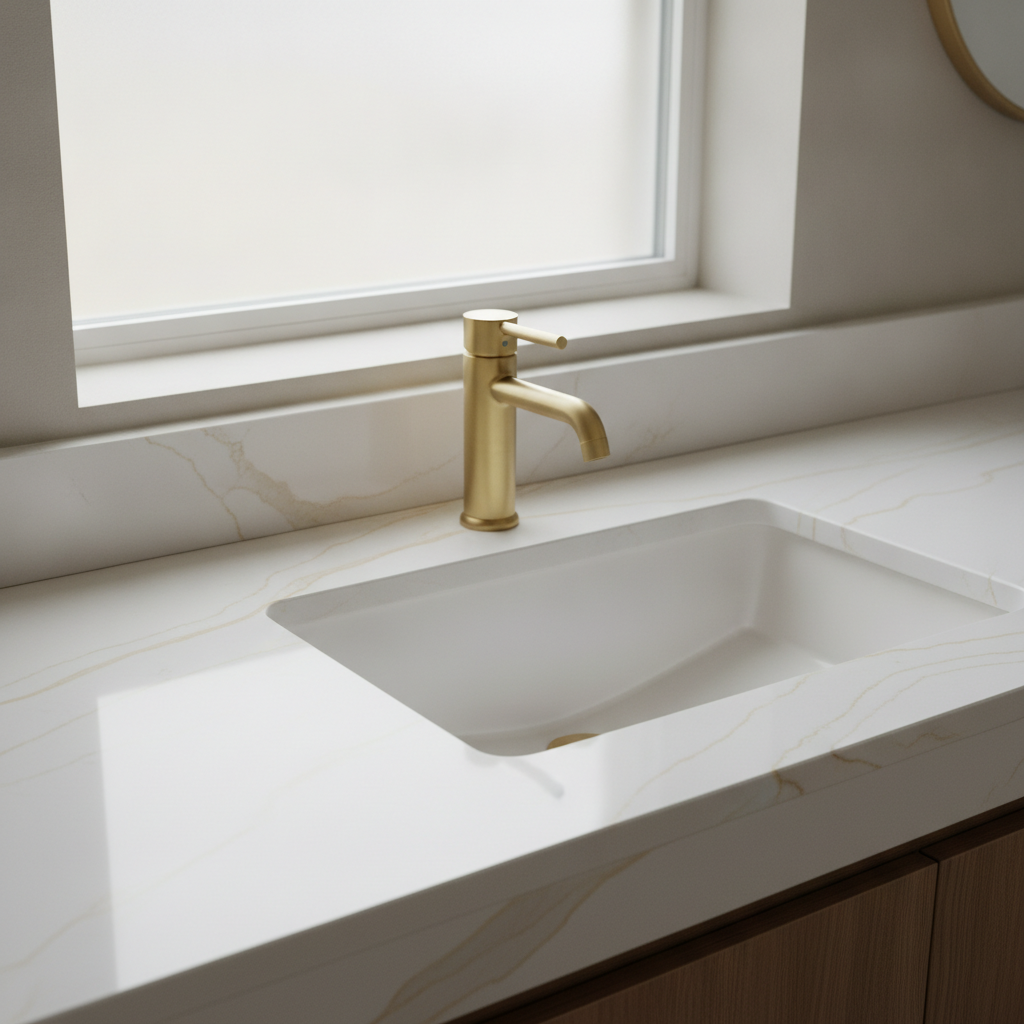
Undermount sinks are the industry standard for quartz vanity tops as of 2026, and for good reason. The sink mounts below the countertop surface, leaving a continuous, smooth quartz field that wipes clean completely — no raised lip to trap water, soap scum, or debris. This pairing also shows off the full surface of the quartz, with sleek, clean lines uninterrupted by a sink rim. If you're replacing an old drop-in sink at the same time as your countertop, budget an additional $100–$300 for the sink cutout and confirm the new sink dimensions before your fabricator templates.
Edge profiles change the whole character of the vanity. An eased edge — a slightly softened square edge — is the cleanest, most modern option and costs $5–$8 per linear foot. A half-bullnose is softer and works well in transitional bathrooms, at $8–$12 per linear foot. An ogee profile adds traditional elegance and costs $15–$25 per linear foot. For a standard 48-inch vanity with roughly 10–12 linear feet of exposed edge, the difference between an eased and ogee profile is $100–$200: a meaningful but very manageable upgrade that transforms the overall aesthetic.
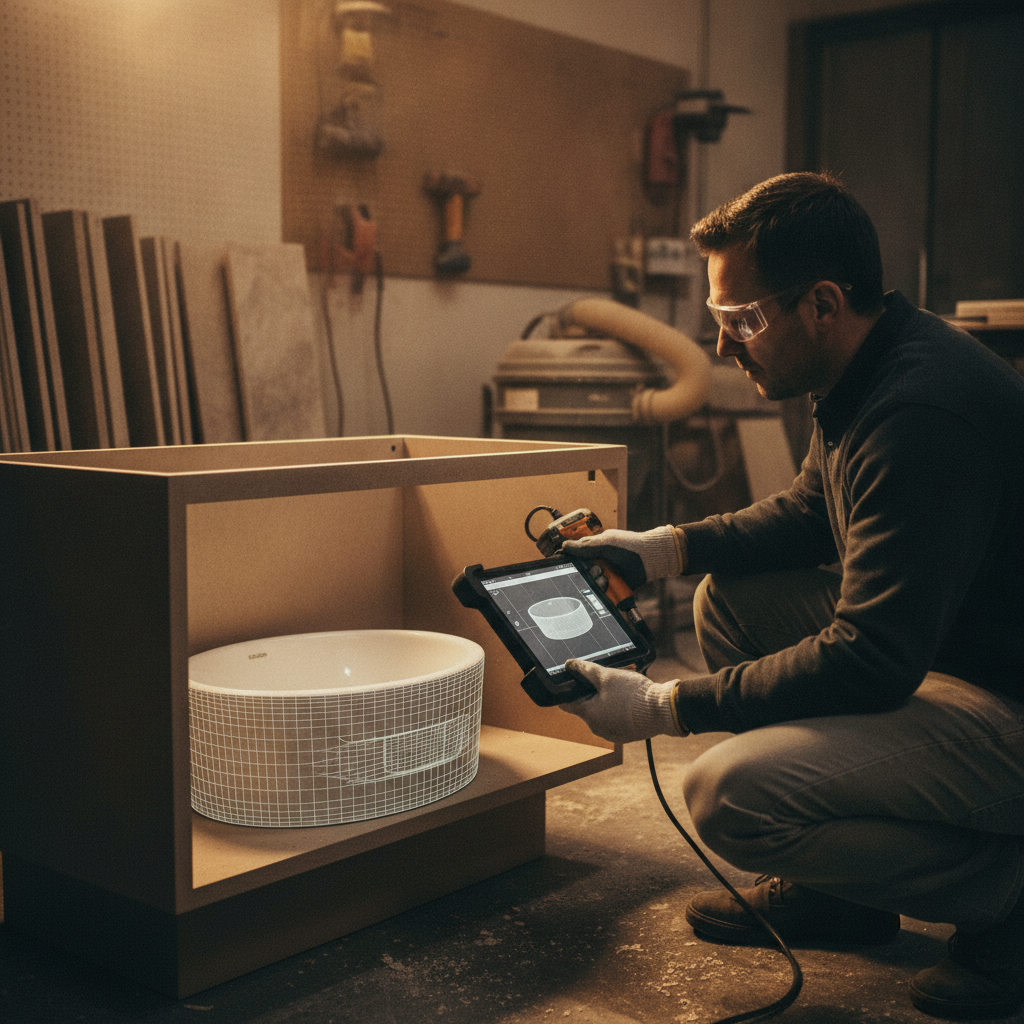
Make both the sink and edge decisions before your fabricator comes out to template. Changes after templating can delay your project or add fees. The templating visit, where your fabricator takes precise measurements using an overlay template method, is the point of no return for your design spec. Come prepared with your sink model number, your edge profile selection, and any questions about the design so the fabricator can capture everything in a single visit.
Once your quartz vanity top is installed, the maintenance routine is genuinely simple. Wipe spills with a damp cloth and mild soap. That covers 95% of everyday bathroom messes. For tougher buildup — dried toothpaste, hairspray residue, hard-water spots — a non-abrasive cleaner and a soft cloth handle it without any risk to the surface. No sealing, ever. No annual upkeep appointments. No special stone cleaner required. Quartz is designed to maintain its appearance without intervention, which is the core reason it has become the most practical bathroom countertop on the market.
You can use Clorox wipes on quartz for disinfecting, but avoid letting bleach-based products sit on the surface for extended periods. A quick wipe and rinse is fine. Day-to-day bathroom bacteria and soap scum don't penetrate the non-porous surface, so a quick daily wipe-down keeps quartz looking clean without effort. Avoid abrasive scrubbing pads, harsh solvents like acetone or paint remover, and any cleaner with a very high pH. Oven cleaners, for example, will dull the finish. Mild soap is almost always the right tool for the job.
Watch the edges in a high-traffic family bathroom. Quartz can chip if a corner takes a hard direct impact from a dropped toiletry bottle or bathroom hardware. Edge chips are repairable, but prevention through edge profile selection is more practical. A slightly softened profile, eased or half-bullnose rather than a sharp square edge, reduces chip risk in busy bathrooms. Fabrication turnaround from templating to install runs 5–15 business days at most shops; prefab vanity options can arrive in 3–5 days if you need a faster timeline. Fox Granite's in-house fabrication keeps your project under one roof from template to install, with no third-party handoffs that add time or create communication gaps.
Do not place a hot hair straightener or curling iron directly on quartz. The polymer resin that makes quartz non-porous begins to break down above roughly 300°F. A $10 silicone trivet eliminates this risk entirely. It's the only real rule quartz asks you to follow.
Quartz is the right call for most Central Texas bathrooms, but not every one. If your bathroom gets direct outdoor sun exposure, quartz is not rated for outdoor use — the resins can discolor with prolonged UV exposure. Outdoor vanities in covered patios should use granite or quartzite instead, both of which Fox Granite fabricates and installs. If you want a true natural stone look with visible mineral variation that no engineered product can fully replicate, quartzite or granite may be worth the added sealing upkeep. And if you're furnishing a low-use powder room and want real marble for its elegance, the maintenance tradeoff is more manageable there than in a daily-use family bath. Come into the showroom with your priorities, and we'll help you find the right material for your specific space — not just the popular one.
Ready to get started? Contact Fox Granite today.


BY APPOINTMENT ONLY
1379 Wald Road
New Braunfels, TX 78132
Austin, San Antonio, Cedar Park, Kyle, New Braunfels, Del Valle, Elgin, Lago Vista, Shady Hollow, Onion Creek, Buda, San Marcos, Lockhart, Temple, Wimberley, Dripping Springs, Bee Cave, Lakeway, Leander, Anderson Mill, Jollyville, Spicewood Springs, Round Rock, Georgetown, Pflugerville, Manor, Taylor, Manchaca, Mountain City, Hutto, West Lake Hills, Bastrop, Liberty Hill, Driftwood, Sun City, Steiner Ranch.