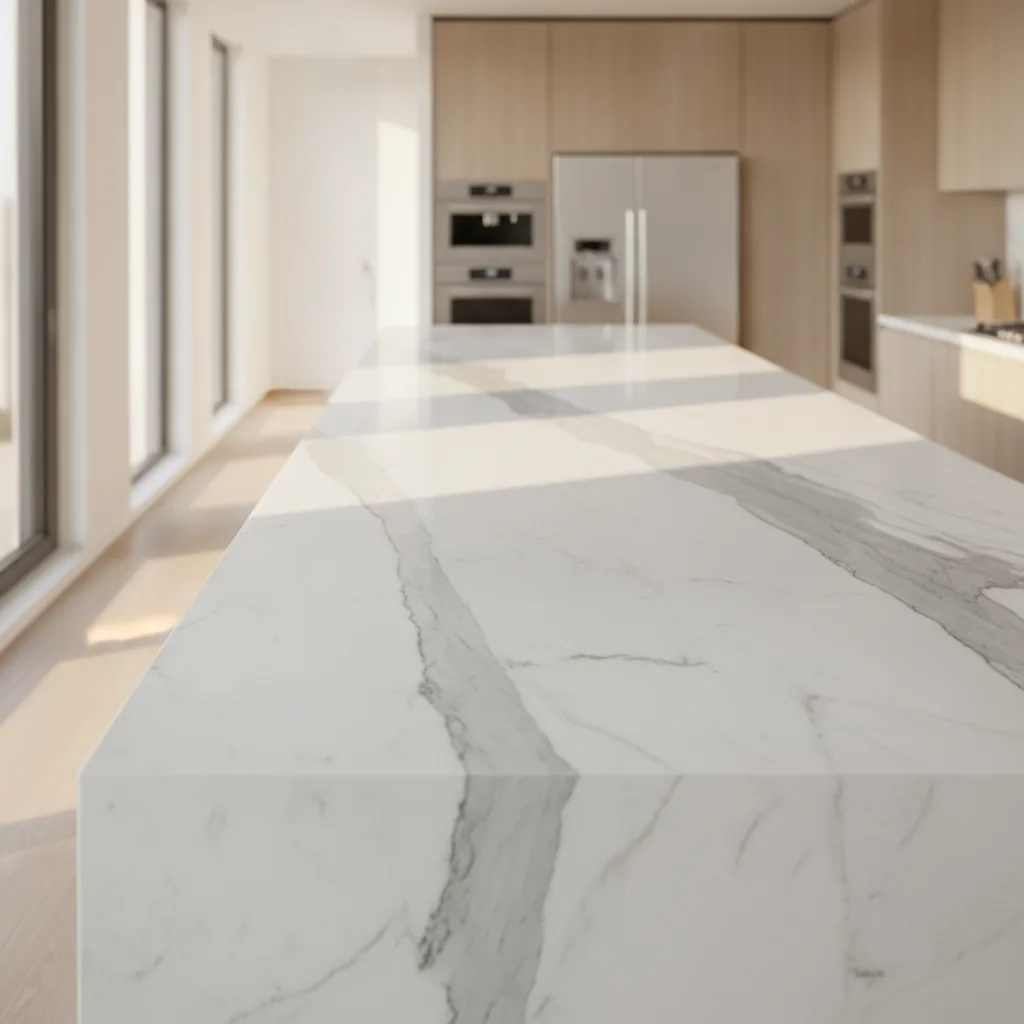
Marble is a metamorphic rock formed when limestone recrystallizes under heat and pressure. Its primary mineral, calcite, rates just 3 on the Mohs hardness scale — soft enough that a steel knife can scratch it and lemon juice will etch it chemically. Sealing marble countertops every 6–18 months stops staining but does nothing to prevent etching, because etching is a dissolution reaction, not an absorption problem. Carrara marble runs $40–$100 per sq ft installed; Calacatta grades reach $100–$250. If you cook with acidic ingredients daily, honed marble, quartzite, or engineered quartz will serve you better. If you want the look and will commit to the maintenance routine, natural marble countertops remain one of the most beautiful and timeless surface choices available.
Marble countertops are beautiful, timeless, and — if you walk into a showroom without understanding what marble actually is — genuinely surprising to live with. The geology behind natural marble explains everything: why it scratches at Mohs 3, why red wine leaves a dull patch even on a freshly sealed surface, why a cutting board is non-negotiable, and why the maintenance routine belongs in your remodel budget from day one. This guide covers the geological truth about marble for counter surfaces in six concrete steps, so you can make an honest comparison against granite, quartzite, and engineered quartz before you commit to a slab. As of 2026, installed marble countertops range from $40 for commodity Carrara to $250 per sq ft for premium Calacatta Gold — a wide spread that only makes sense once you understand what drives the differences in the stone itself.
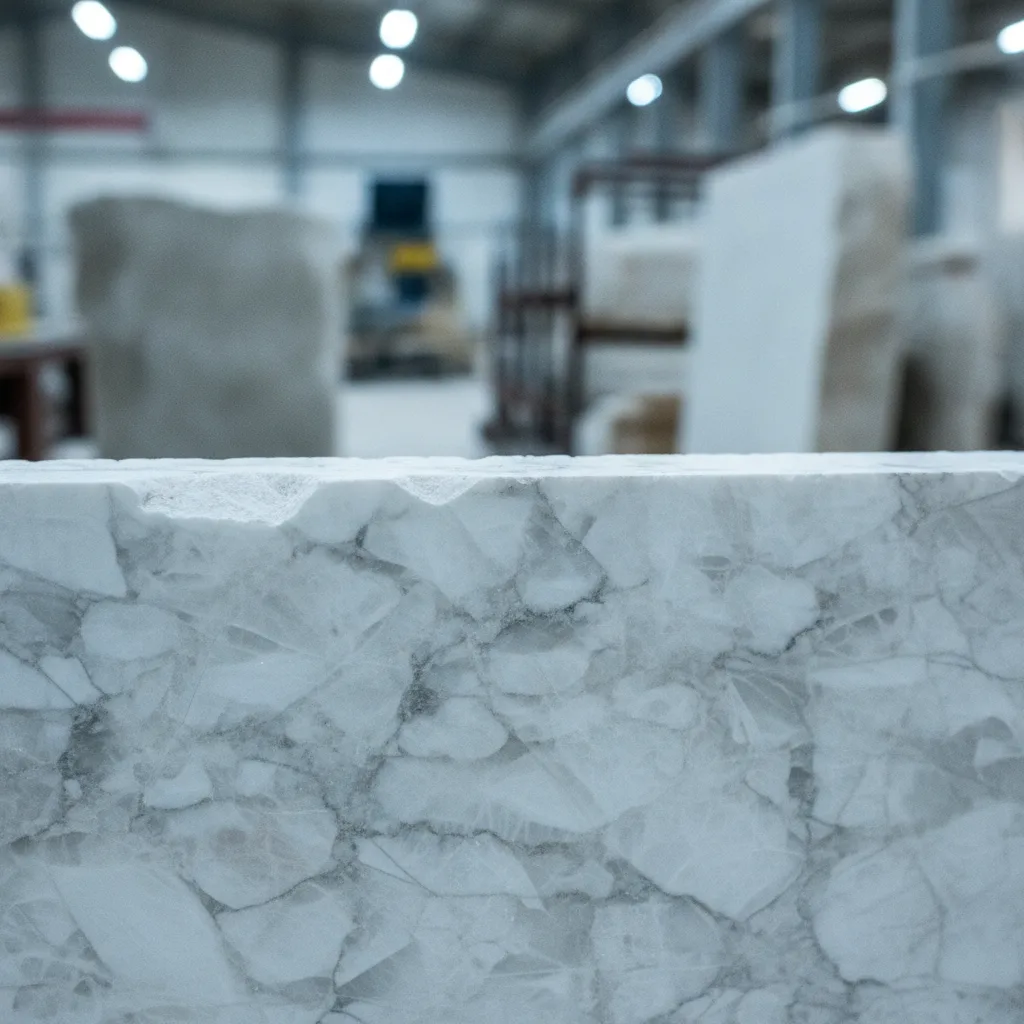
To a geologist, marble is a non-foliated metamorphic rock that forms when limestone — composed primarily of calcium carbonate (CaCO3) — is subjected to intense heat and pressure deep in the earth, causing calcite grains to recrystallize into a tight mosaic of interlocking crystals. That transformation is what gives natural marble its characteristic density and its capacity to take a high polish. No limestone, no marble; the starting material is everything.
The stone trade uses the word 'marble' far more loosely. Stone yards and showrooms routinely label coarse-grained limestones, dolomites, and even polished gypsum varieties as 'marble' if they polish up attractively. That gap between the geological definition and the commercial one matters when you're buying countertops. A slab sold as 'marble' at your local yard may be true metamorphic marble, a softer limestone that behaves similarly, or a dolomitic stone that's actually more acid-resistant than standard calcite marble. Knowing which one you're buying changes how you care for it and what wear and tear to expect.
A quick acid field test helps close that gap: place a drop of white vinegar on an inconspicuous spot of the slab. True calcite marble fizzes slightly as the acid reacts with calcium carbonate. Quartzite — frequently mislabeled as marble in showrooms because slabs can look nearly identical — does not react at all. If the slab fizzes, you're looking at a calcite-based stone and all of the maintenance realities that come with it. Treated as a quick pre-purchase check, this test alone can save homeowners from choosing a material they didn't fully understand.
Dolomitic marble, formed from dolostone rather than limestone, is slightly more acid-resistant than standard calcite marble. If acid sensitivity is a concern, ask your fabricator specifically whether the slab is calcite-dominant or dolomitic before you commit to it for your kitchen.
The veining and colors that make marble countertops so visually appealing are direct products of geology — not dye, not pattern printing. Pure calcite marble with no impurities would be uniformly white. The dramatic veins — gray, gold, green, burgundy — come from mineral impurities like clay, sand, iron oxides, and chert that were present in the original limestone and got redistributed when heat and pressure drove metamorphism. Every slab is a one-of-a-kind record of what that particular rock went through underground, and no two slabs will look exactly the same.
This is also why marble slabs from the same quarry can vary significantly in tone, veining density, and color depth. Carrara marble from Italy tends toward soft white and subtle gray veining because its original limestone had relatively few iron-oxide impurities. Calacatta marble comes from a different part of the same Carrara region but shows bolder, more dramatic veining because its protolith had a different impurity profile. When you're selecting slabs for your kitchen design, view them in person under lighting similar to your actual space — photos rarely capture what you'll live with. The natural depth and character of a real marble slab is something a screen simply cannot reproduce.
That natural variation is also why book-matching matters on large installations. When a fabricator cuts two consecutive slabs and mirrors them so the veining flows continuously across a backsplash and counter surface, the result is a design statement that can't be achieved with engineered materials. It's one area where the natural stone choice pays off visually — but only if your fabricator has the in-house capability to manage slab placement precisely from template through install.
Calcite, the primary mineral in marble, rates just 3 on the Mohs hardness scale. Granite sits at 6–7, and quartzite lands at roughly 7. Engineered quartz countertops are also in the 7 range. In practical kitchen terms: a steel kitchen knife has a Mohs hardness of about 5.5, which means dragging a knife across natural marble — even gently — can leave a visible scratch. A gritty sponge or abrasive cleaner will do the same. This is not a defect in your particular slab; it's a direct consequence of what marble is at a mineral level. Marble is soft. That's not a dealbreaker, but it's not negotiable.
Granite is an igneous rock crystallized from magma — not a metamorphic rock like marble. That different origin gives granite a harder, denser structure and far less porosity than marble. Quartzite is metamorphic like marble, but it starts from quartz sandstone rather than limestone, and the quartz mineral that fuses during metamorphism rates 7 on the Mohs scale. Quartzite and granite resist scratches and acids the way marble simply cannot. If you want a natural stone look with lower day-to-day maintenance, quartzite is the honest comparison to explore alongside marble — many homeowners who fall in love with white marble aesthetics find that white quartzite gives them 80% of the visual appeal with a fraction of the upkeep.
Engineered quartz countertops are not mined stone at all — they're about 90–95% ground quartz bound with polymer resins. They don't etch from acids, require no sealing, and score around 7 on the Mohs scale, making them among the most durable countertop options available. The tradeoff: engineered quartz lacks the visual depth and natural variation of a true marble slab. The surface reads as uniform in ways that natural stone never does. For homeowners who want the look with low-maintenance day-to-day upkeep, engineered quartz is the most practical alternative on the comparison list.
$15–$40
Lets you scratch-test a slab corner at the showroom to confirm the stone's actual hardness before buying — useful for distinguishing marble from quartzite when labels are ambiguous
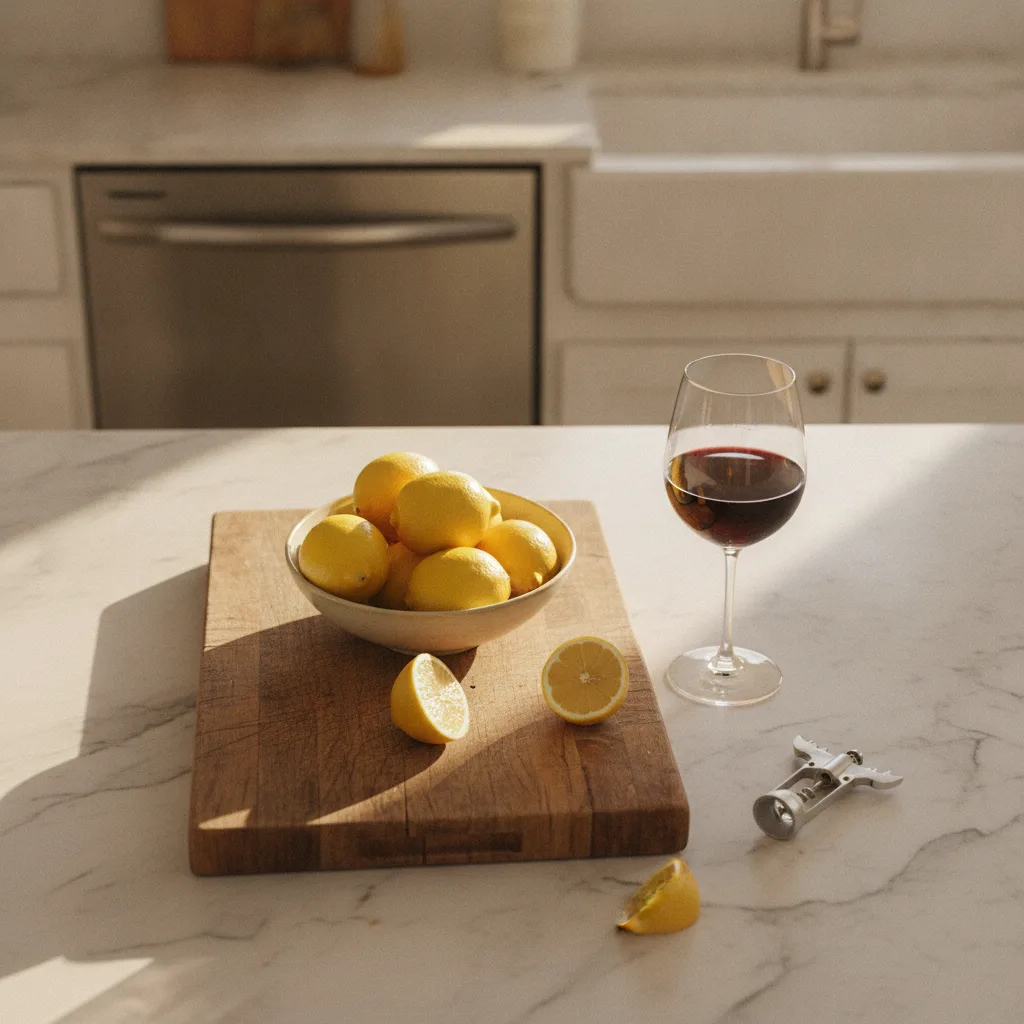
Etching and staining are two separate issues, and many homeowners discover this difference the hard way after installation. Staining happens when a colored liquid — coffee, red wine, olive oil — soaks into the porous stone and leaves a discolored spot. Etching is a chemical reaction: weak acids like lemon juice, vinegar, red wine, or tomato sauce dissolve the calcite on the surface of the marble, leaving a dull, roughened patch that looks like a water mark or a foggy spot. Sealing addresses staining by filling the microscopic pores in the stone. It does nothing to stop etching, because etching is not an absorption problem — it's a dissolution reaction. A sealed marble surface will still etch every time acid touches it.
This is the single most important piece of chemistry for any marble countertop owner to understand. You can re-seal your marble perfectly and still get etch marks every time citrus juice hits the surface. If your kitchen sees heavy cooking with acidic ingredients, or if you pour red wine directly on the island, marble is going to show it. The question is whether the character that develops over time — what some homeowners call a 'patina' — fits the look they want, or whether it will be a source of frustration. Be honest with yourself about that before you commit, not after the slab is installed.
Spills on marble should be blotted immediately, not wiped. Wiping spreads the liquid and increases contact time with the surface, worsening both staining and etching risk. For acidic spills specifically, rinse the area with water right away. Even with fast action, some etching may occur. Honed marble hides etch marks and everyday scratches far better than polished marble because the surface is already uniformly matte — a new etch mark blends in rather than standing out against a reflective background. For active kitchen countertops, many homeowners who choose marble recommend the honed finish strongly and forget the polished look entirely.
Polished marble is taken to 1,500–3,000+ grit, giving it a glossy, mirror-like surface that makes veining and colors look beautiful but makes every etch mark visible. Honed marble is stopped at 220–400 grit for a smooth, matte surface that hides day-to-day wear. For active kitchen countertops, honed is the more practical choice for most homeowners.
Marble countertops require resealing every 6–18 months for kitchen surfaces, and up to 4 times per year under heavy use. A penetrating impregnator sealer soaks into the pores of the stone to slow liquid absorption — it does not coat the surface like a wax, so it won't change the look or feel of the marble. Applied correctly, it buys you time to wipe up spills before they stain. Over 5 years, marble maintenance costs run approximately $750–$1,250 versus $240–$360 for granite, because granite is far less porous and needs sealing far less frequently. That investment is real and belongs in your remodel budget planning from day one.
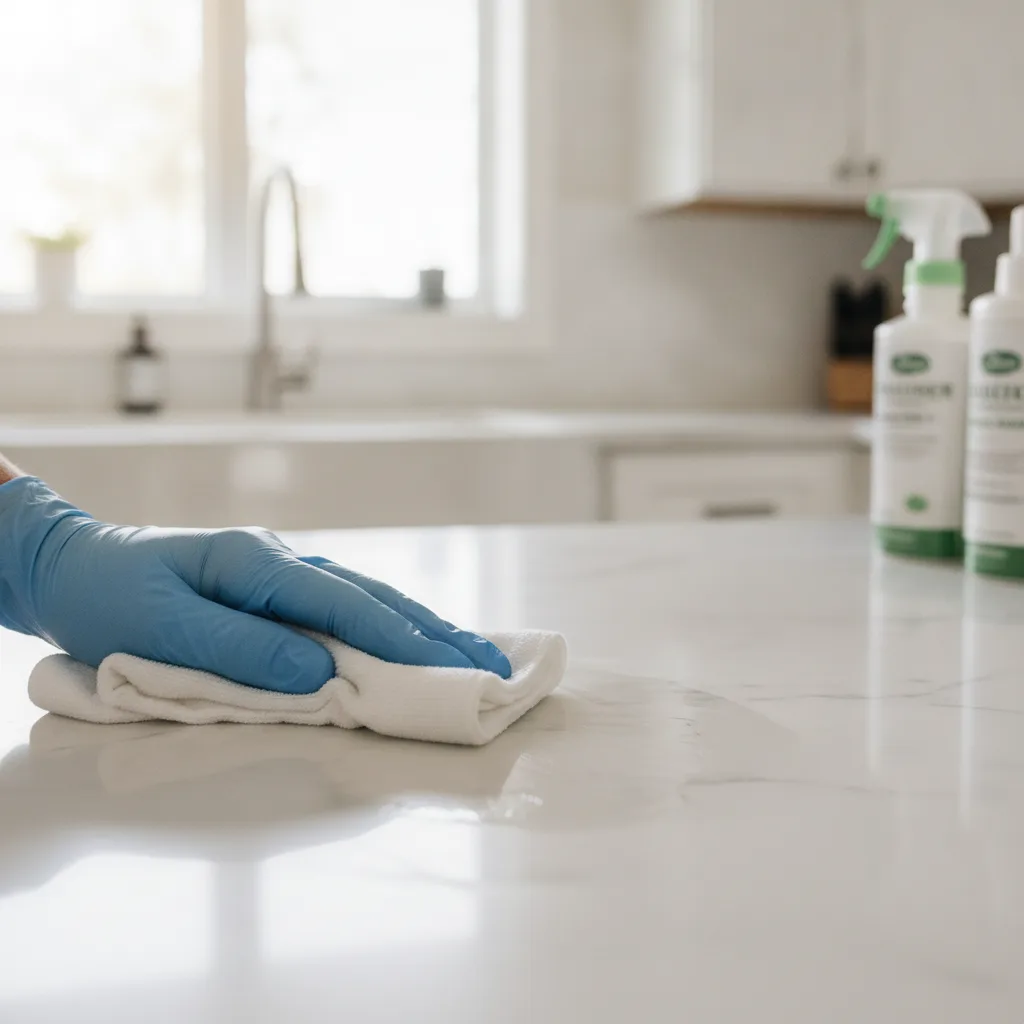
Daily care for marble countertops is straightforward but non-negotiable. Use a pH-neutral dish soap and warm water for routine cleaning — no vinegar-based cleaners, no bleach, no citrus sprays. Always use a cutting board; cutting directly on marble will scratch it. Use trivets or heat-resistant pads under hot pots, even though marble stays cool to the touch naturally. The stone's cool surface is a genuine advantage for bakers rolling dough — it's one of the few kitchen tasks where marble is objectively superior to any other countertop material. Keep a dedicated pH-neutral marble cleaner on hand and protect the surface from anything gritty or abrasive.
The sealing process itself is a Saturday-morning task. Most penetrating sealers require a clean, dry surface, 15 minutes of application time, and a 24-hour cure before the counter sees water again. Your fabricator will seal the stone at installation. After that, the water-absorption test tells you when to re-seal: pour a tablespoon of water on the surface and wait 10 minutes. If the stone darkens where the water sat, it's time. Don't forget this step — an under-sealed marble surface in a busy kitchen will pick up stains within weeks of regular use.
$20–$35 per bottle
pH-neutral penetrating sealer safe for natural marble; one bottle typically covers 50–100 sq ft per application and is widely recommended by stone fabricators for kitchen countertop maintenance
$10–$18 per bottle
Formulated without acids or harsh surfactants that would etch or strip sealer from the stone surface; safe for daily use on marble, granite, and quartzite
As of 2026, installed marble countertop costs range from $40–$100 per sq ft for Carrara (the most widely available variety) to $100–$200+ per sq ft for premium Calacatta grades, with Calacatta Gold reaching $250 per sq ft in high-demand markets. A Carrara marble island in the 15–30 sq ft range typically runs $1,125–$3,600 installed; a Calacatta island in the same size runs $2,250–$7,500. Granite runs $40–$175 per sq ft installed with a mid-range of $60–$100, and quartzite sits in a similar band but trends higher for premium slabs. Engineered quartz typically runs $50–$120 per sq ft installed. Marble's commercial median of $51.75 per sq ft actually sits below granite's median of $56.25 — thanks to high Carrara volume pulling the average down — which surprises many homeowners who consider marble the expensive option.
When you visit a showroom or slab yard, ask to see full marble slabs rather than tile samples. The veining pattern shifts dramatically across a slab, and a 4-inch sample gives you almost no information about what a full counter will look like in your space. If you're doing a kitchen and a backsplash together, ask whether your fabricator can book-match the slab — cutting two consecutive pieces and mirroring them so the veining flows continuously across both surfaces. This is one area where in-house fabrication matters: a team that templates, cuts, and installs under one roof can manage slab placement much more precisely than a shop that outsources any step in that chain.
Before you finalize your choice, compare marble honestly against other materials for your actual cooking habits. Marble is timeless and beautiful, and it genuinely stays cool to the touch — a real, practical benefit for bakers and anyone doing regular dough work. It's also porous, soft relative to other natural stone options, and prone to etching from acidic kitchen staples. Granite and quartzite deliver natural stone character with significantly more durability. Engineered quartz gives you a smooth, clean look with the lowest maintenance of any option. The right choice depends on how you cook, how much wear you're willing to accept, and how consistently you'll stick to the care routine. Those are the only variables that matter.
Ordering marble countertops from a photo or a small tile sample is the most common way homeowners end up disappointed. Veining, tone, and background color vary widely across a single slab — and even more between slabs from the same batch. Before you sign off on any natural marble or stone selection, view the full slab in person. Ask your fabricator to mark exactly which section of the slab will be cut for your counter, and confirm the finish (polished vs. honed) before templating. At Fox Granite, we walk you through slab selection at our New Braunfels showroom and bring samples to your home so you can see them in your actual kitchen lighting. That step is free, and it changes the decision every time.
When you walk out of the slab yard with a clear picture of what marble is geologically — calcite at Mohs 3, porous, acid-reactive, beautiful, timeless — and how that geology maps to your kitchen habits, you make a decision you'll be confident in for decades. For marble countertops, granite countertops, quartzite, and engineered quartz in Austin, San Antonio, New Braunfels, and across Central Texas, Fox Granite has completed over 10,000 projects since 2010. Our in-house fabrication and installation team handles everything from slab selection through final sealing, with transparent all-in pricing and no surprise fees. Contact us today to schedule your free in-home consultation and see real stone samples in your own kitchen light before you decide.
Ready to get started? Contact Fox Granite today.


BY APPOINTMENT ONLY
1379 Wald Road
New Braunfels, TX 78132
Austin, San Antonio, Cedar Park, Kyle, New Braunfels, Del Valle, Elgin, Lago Vista, Shady Hollow, Onion Creek, Buda, San Marcos, Lockhart, Temple, Wimberley, Dripping Springs, Bee Cave, Lakeway, Leander, Anderson Mill, Jollyville, Spicewood Springs, Round Rock, Georgetown, Pflugerville, Manor, Taylor, Manchaca, Mountain City, Hutto, West Lake Hills, Bastrop, Liberty Hill, Driftwood, Sun City, Steiner Ranch.