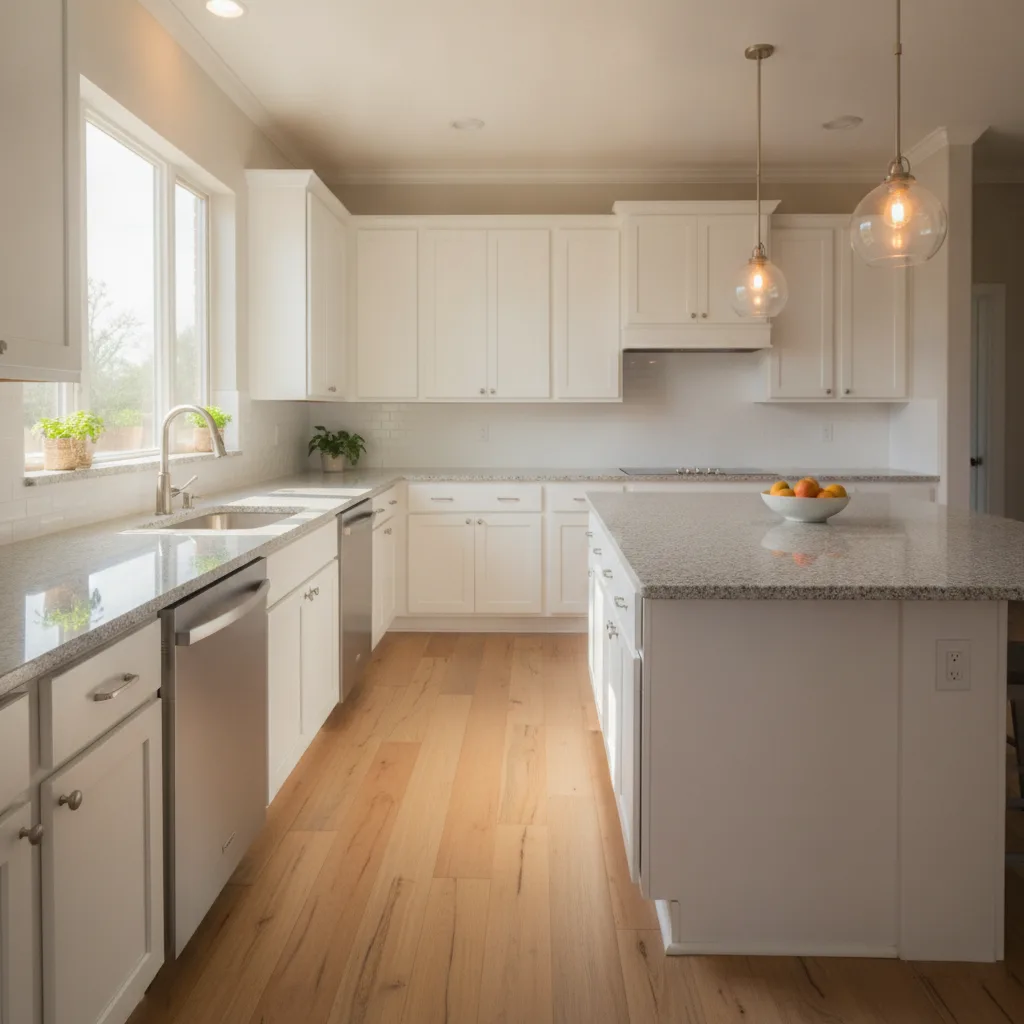
Kitchen remodel countertops cost $1,500–$6,500 all-in for a standard 30-square-foot kitchen in 2026, with a national average around $3,200. The right material depends on three factors in this order: your budget, your cabinet color, and how hard you cook. Lock in your budget first ($50–$130/sq ft for granite, $65–$150 for quartz, $80–$175 for quartzite). Choose cabinets before countertops — they anchor 60% of your kitchen's visual space and must be set and level before templating can happen. Then match your material to your lifestyle: quartz for low-maintenance households, granite or quartzite for cooks who set hot pans down without thinking, and marble only if you're prepared to seal it every 6–12 months. Always view physical samples in your actual kitchen before committing to any slab.
Kitchen remodel countertops are one of the highest-visibility investments in your home — and one of the most common sources of regret when the decision gets rushed. The installed cost ranges from $15 to $200+ per square foot depending on the material, which means a 40-square-foot kitchen with an island can land anywhere from $600 to $8,000+. This 6-step framework walks you through the decision in the right order: budget first, cabinet sequence second, lifestyle match third — so you pick the right material before you fall in love with the wrong slab. Budget 30–45 minutes to work through the framework. Full project planning and slab selection typically runs 2–4 weeks once you know what you're looking for.
Kitchen countertop replacement in 2026 costs $1,500–$6,500 all-in for a standard 30-square-foot kitchen, with a national average of $3,200 — and that number covers removal of old counters, new material, fabrication, and installation. Knowing this range before you visit a showroom keeps you from building a vision around a $175/sq ft quartzite slab when your total countertop budget is $2,800.
Installed prices in 2026 span a tenfold range: laminate runs $15–$40 per square foot, granite $50–$130, quartz $65–$150, quartzite $80–$175, and premium marble $75–$200+. A 40-square-foot kitchen with an island can land anywhere from $600 (budget laminate, material only) to $8,000+ (exotic quartzite, fully installed). Write your number down before you go shopping — it cuts the decision tree in half and protects you from the most expensive showroom mistake homeowners make.
Countertops typically account for about 10% of a full kitchen remodel budget, per NKBA data as of 2026. If your remodel is $40,000 total, your countertop budget is roughly $4,000. That puts you comfortably in mid-grade granite or entry-level quartz territory for most Central Texas kitchens — and there are a ton of beautiful options in that range. Treat this percentage as your anchor when a sales conversation starts pulling you toward the premium tier before you're ready.
Ask your fabricator for an all-in quote that includes edge profiling, sink cutout, and sealing. Hidden add-ons after a low base price are the most common complaint homeowners share after a countertop project — and a bit of upfront clarity prevents all of it.
Material selection order matters in a kitchen remodel: choose cabinets first, then countertops, then flooring, then backsplash last. Cabinets anchor roughly 60% of the visual space in a kitchen — your countertop choice has to respond to that foundation, not compete with it. Choosing countertops before your cabinets are decided is how homeowners end up with combinations that clash, and no amount of fresh backsplash tile rescues a mismatched pairing.
There is a practical reason for this sequence, not just an aesthetic one. Countertops can only be templated after cabinets are physically set and confirmed level. Your fabricator sends a templating crew to measure the exact layout — and any change to your cabinet run after that point can void the template entirely. Skipping this order costs time and money, and it delays the rest of your project: backsplash tile goes in after countertops are set, not before, because the tile cut height depends on the countertop thickness and finished edge profile.
Once cabinets are confirmed, bring your cabinet color, door style, and a photo of your flooring to the countertop showroom. Warm wood-tone cabinets pair naturally with granite's earthy variation or butcher block accents that create contrast and warmth. White or gray shaker cabinets open up options across the full material range. Knowing what you're responding to makes the countertop choice faster and more confident — and it helps your fabricator pull relevant samples rather than showing you everything in the yard.
Your cooking habits are the most important filter when choosing countertop materials — more important than color or trend. A household that bakes daily, sets hot pans directly on the surface, and deals with red wine and tomato sauce needs a different material than one that mostly orders takeout and keeps the kitchen spotless. One thing most homeowners skip at this step: be honest about how you actually use your kitchen, not how you plan to use it.
Quartz is engineered, non-porous, and never requires sealing — it holds roughly 51% of countertop installations in 2026 and is favored by 78% of design professionals because it handles everyday life with almost no maintenance. The one real weakness: quartz is susceptible to heat damage because the resins that bind the material can discolor from hot pans placed directly on the surface. Always use a trivet. That is not optional with quartz counters.
Granite and quartzite are fully natural stones that handle hot pans without damage and bring unique variation to every slab. Granite costs $50–$130/sq ft installed and needs sealing every 1–3 years depending on color density — lighter colors seal more often because they are more porous. Quartzite sits at 7 on the Mohs hardness scale versus 6–7 for granite, making it the most scratch-resistant natural stone option available, but it costs $80–$175/sq ft installed and also requires sealing every 6–24 months depending on variety. Marble is the highest-maintenance choice of the natural materials: it requires sealing every 6–12 months and etches from acidic liquids like wine, vinegar, and lemon juice. Beautiful, but demanding. If you want marble's aesthetic without the upkeep, ask your fabricator about quartzite slabs like Taj Mahal — they look nearly identical and are far more durable.
Free
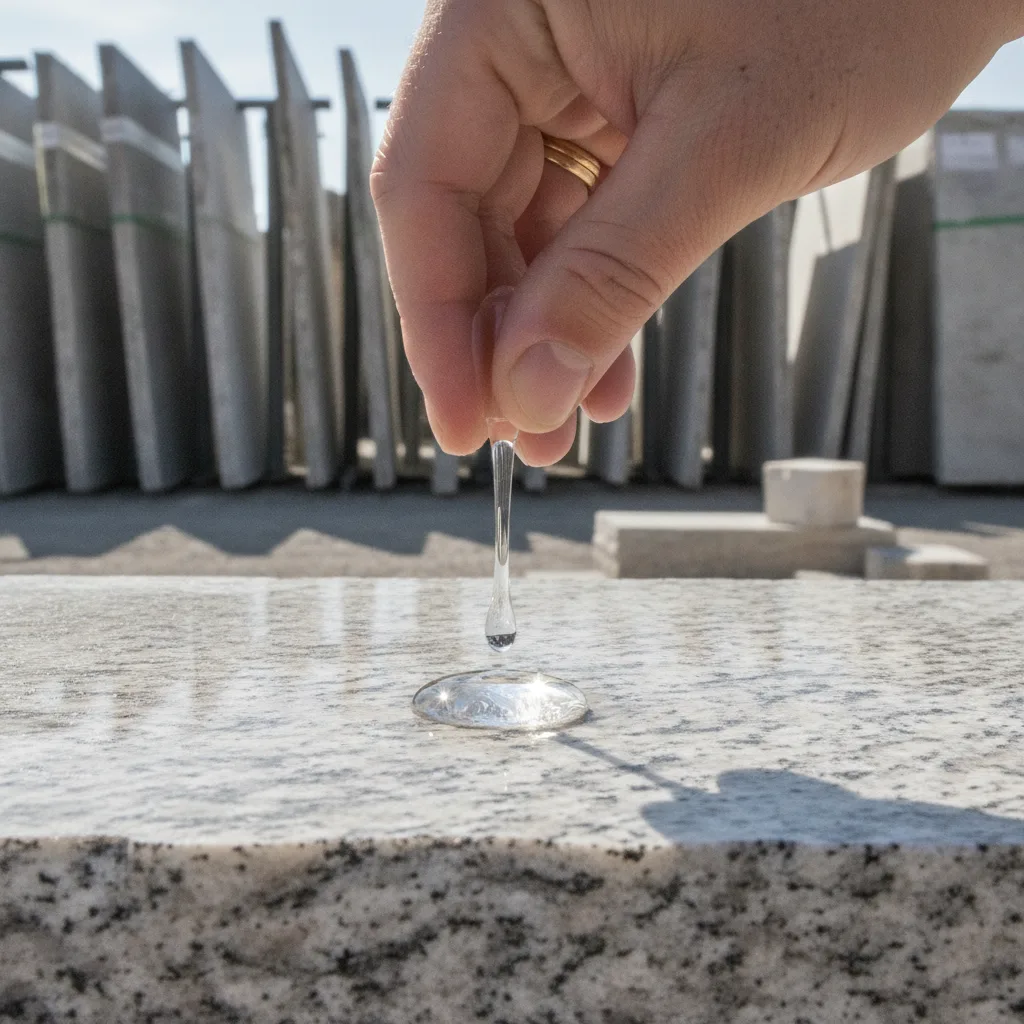
Drop water on a granite or quartzite sample at the slab yard — if it absorbs within 5 minutes, that stone needs sealing sooner rather than later. Use this before you commit to a specific slab, not after it is installed.
Natural stone countertops — granite, quartzite, and marble — each bring something different to the kitchen. Granite gives you heat resistance, a hardness rating that resists most scratching, and a price range ($50–$130/sq ft installed) that fits a wide range of budgets; every slab is unique, so two kitchens with the same granite color will never look identical. Quartzite offers marble-like aesthetics with superior durability and is the fastest-growing natural stone choice as of 2026 — more than 60% of design professionals expect its popularity to increase significantly, driven by its look and its performance edge over marble. Marble delivers a classic, timeless aesthetic, but its high maintenance requirements make it a better fit for low-traffic kitchens or bathroom vanity tops than for a busy residential cooking surface.
Quartz countertops sit in a category of their own as an engineered stone. Non-porous, never sealed, highly consistent in color and pattern — quartz is the practical choice for families who want kitchen counters that stay clean without much thought. The $65–$150/sq ft installed range puts it above entry-level granite but well within reach for most remodels. The 2026 trend shift toward leathered and honed finishes applies to quartz too, which now comes in matte and textured surfaces that hide fingerprints better than a polished slab and look more modern in contemporary kitchen designs.
Secondary countertop materials are worth knowing about even if they are not your primary surface. Butcher block costs $40–$100/sq ft installed, adds warmth and contrast in wood tones from maple to walnut, and works especially well for kitchen islands or dedicated prep areas — and it can be sanded and refinished if it scratches, unlike stone or laminate. Laminate countertops run $15–$40/sq ft installed, making them the most affordable option, but chips and scorches cannot be repaired. Solid surface countertops (the Corian category) cost $40–$130/sq ft, are non-porous and seamless, and have surface-level scratches that can be buffed out — a durability advantage over laminate. Concrete countertops run $65–$135/sq ft installed, require regular sealing, and are best suited to industrial or modern kitchen designs where a custom shape or color is the priority. Each of these options can work as an accent surface alongside a primary stone countertop to create contrast and keep the overall budget in check.
The top countertop looks of 2026 are warm neutral stone tones, bold dramatic veining used as a focal point, and leathered or honed finishes replacing high-gloss polished slabs. If you want a kitchen that still looks fresh in five years, ask your fabricator to pull honed or leathered samples alongside the standard polished options — this finish choice applies to granite, quartzite, and quartz alike.
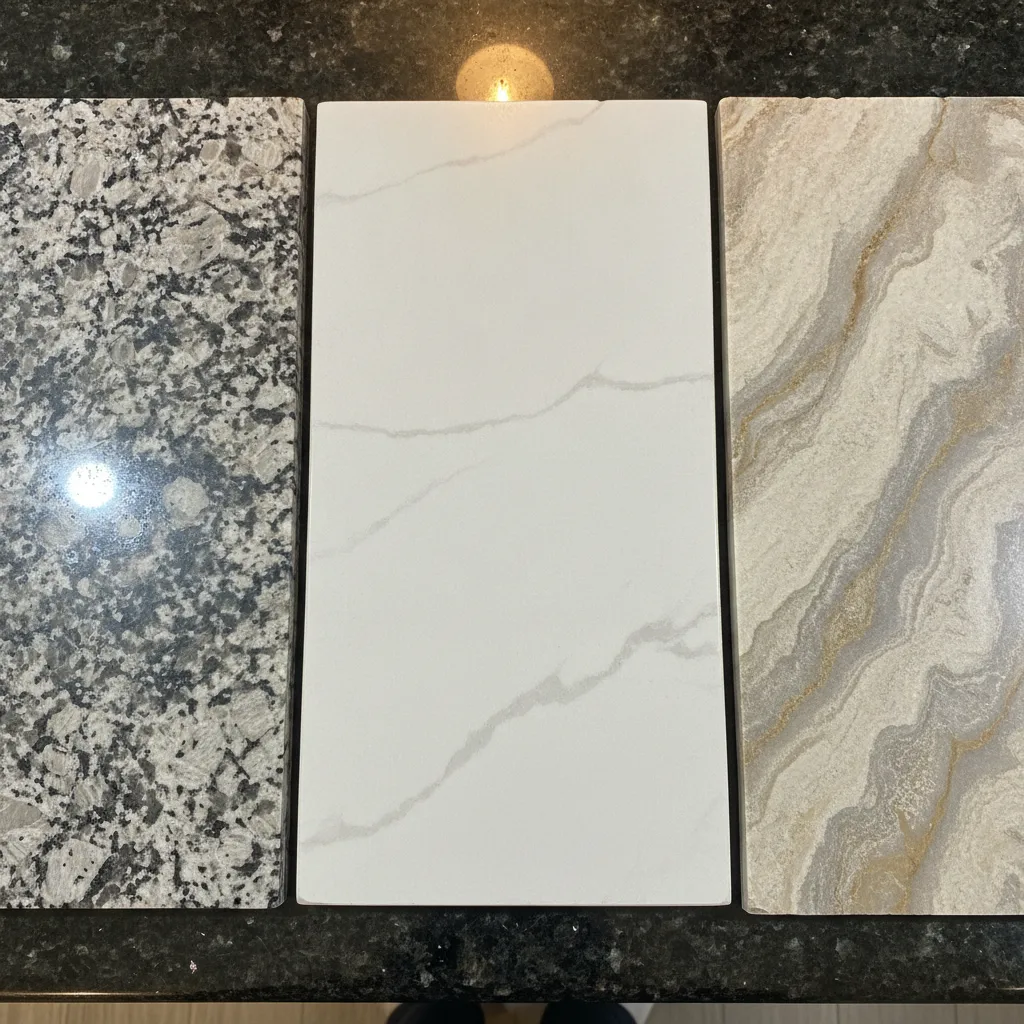
A countertop that looks perfect in a showroom can read completely differently under your kitchen's lighting, next to your actual cabinets, against your flooring. This is the step most homeowners skip — and it is the one that causes the most regret on a countertop project. Always view physical samples in your own space before finalizing a material and color choice. No photo, no website rendering, and no showroom display substitutes for seeing the real slab surface in your home.
Lighting is the biggest variable here. Warm incandescent or Edison-style pendant lights shift beige and cream tones warmer and make cool gray slabs look blue. Natural north-facing light reads differently than a south-facing kitchen flooded with afternoon sun. A white quartz slab in a showroom with neutral lighting can look almost yellow under warm pendant lights. Bring a large sample home — or better, invite a fabricator to bring samples to you — before you place an order. This one step removes most of the second-guessing that comes with a countertop investment of this size.
For Central Texas homeowners in Austin, San Antonio, and New Braunfels, Fox Granite offers free in-home consultations where we bring samples directly to your kitchen. You see each material under your actual lighting, next to your cabinets, against your floors. There is no similar substitute for that experience when you are choosing between two slabs that look identical on a page but read very differently in your home's specific space and light.
Once you have chosen your material and color, get a written all-in quote that includes: material cost, fabrication, edge profile, sink cutout (if applicable), delivery, installation, and sealing. Any quote that breaks these into ambiguous line items with open-ended add-ons is a red flag. Transparent, all-in pricing is the standard to hold your fabricator to — it is also the clearest signal of a skilled, professional operation versus one that pads margins after the contract is signed.
Confirm the installation sequence with your contractor and fabricator before scheduling. Cabinets must be fully installed and leveled before the templating crew arrives. After templating, fabrication typically takes 3–7 business days for granite and quartz. Installation day is usually 2–4 hours for a standard kitchen. Backsplash tile goes in after countertops are set — not before — because the tile cut height depends on the countertop thickness and finished edge profile. Skipping this sequence is how projects end up with tile that does not align with the counter and has to be torn out and reset.
Ask about edge profiles at the quote stage, not after fabrication has started. An eased edge is clean and modern at no upcharge. A bullnose, half-bullnose, or ogee profile adds visual weight and a traditional feel — some fabricators charge $10–$20 per linear foot for upgraded profiles. Knowing this before you sign protects your budget and makes sure the finished kitchen looks exactly like what you planned. For similar reasons, apply the same scrutiny to seam placement before you approve a template: ask where seams will fall on your layout, especially on islands and L-shaped counters where seam location affects both the look and the structural integrity of the finished installation.
Free
A Fox Granite advisor brings material samples to your home, measures your space, and delivers a transparent all-in quote — no surprise fees, no subcontractors, and no pressure to pick a slab on the spot.
Seam placement is decided during templating, not during the sale. Ask your fabricator where seams will fall on your layout before you approve the template — especially on islands and L-shaped runs where seam location affects both aesthetics and structural integrity of the finished counter.
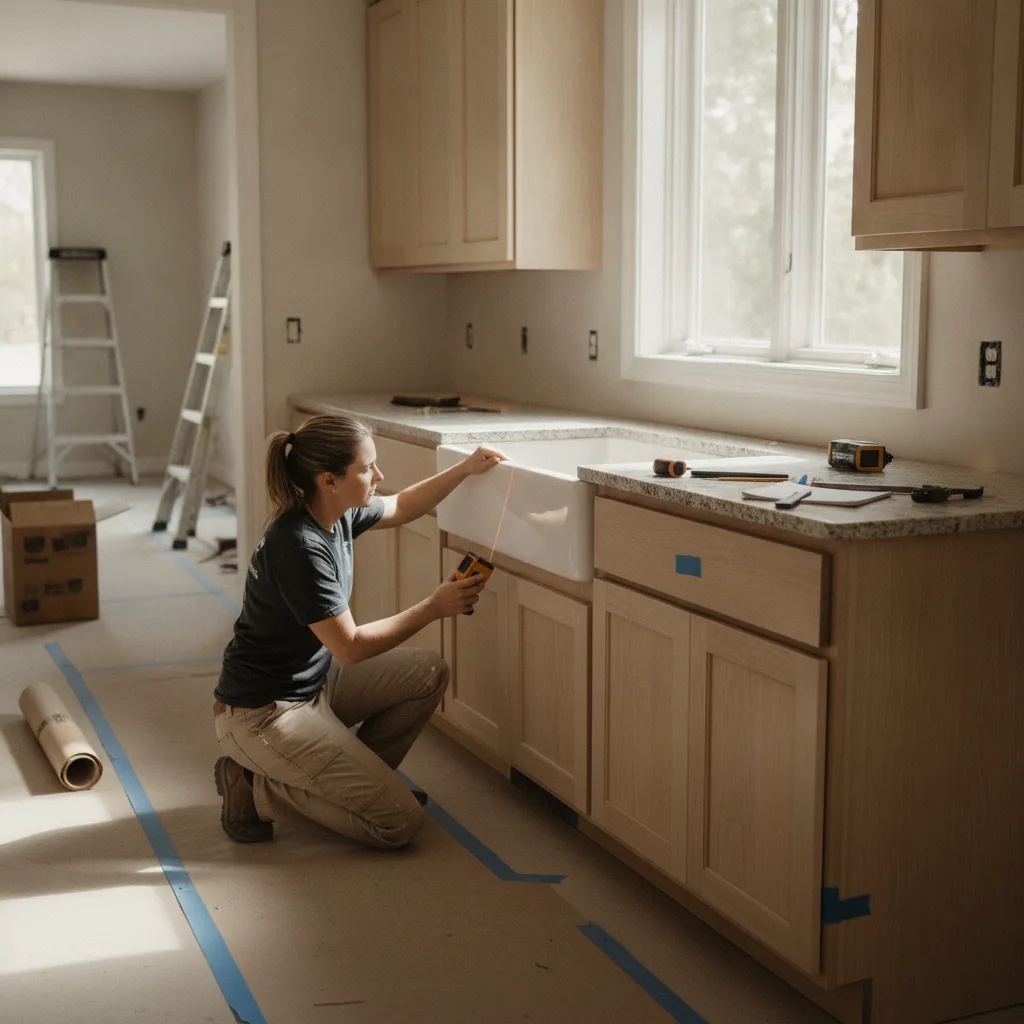
Choosing a countertop material before cabinets are finalized — or before seeing real samples in your actual kitchen — is the single most common source of regret in countertop projects. A slab that looks perfect at the slab yard can clash badly under your kitchen's lighting or against your cabinet color. Always confirm your cabinet selection first, bring samples home, and get a transparent all-in quote before signing anything. If a fabricator cannot give you a firm number that includes fabrication, edge profiling, sink cutout, and installation in one clear line, keep looking.
When you finish this framework, you will know your budget range, your material match, and the right installation sequence — and you will have seen your top choices in your actual kitchen before committing to a single slab. For kitchen remodel countertops in Austin, San Antonio, New Braunfels, and across Central Texas, Fox Granite is a family-owned fabrication and installation team with over 15 years of experience helping homeowners invest in the right material for their kitchen. We do it with in-house fabrication, transparent pricing, and free in-home consultations where we bring samples directly to your space. Contact Fox Granite today to schedule your free consultation and see how granite, quartz, quartzite, and marble look in your actual kitchen — before you commit to anything.
Ready to get started? Contact Fox Granite today.


BY APPOINTMENT ONLY
1379 Wald Road
New Braunfels, TX 78132
Austin, San Antonio, Cedar Park, Kyle, New Braunfels, Del Valle, Elgin, Lago Vista, Shady Hollow, Onion Creek, Buda, San Marcos, Lockhart, Temple, Wimberley, Dripping Springs, Bee Cave, Lakeway, Leander, Anderson Mill, Jollyville, Spicewood Springs, Round Rock, Georgetown, Pflugerville, Manor, Taylor, Manchaca, Mountain City, Hutto, West Lake Hills, Bastrop, Liberty Hill, Driftwood, Sun City, Steiner Ranch.