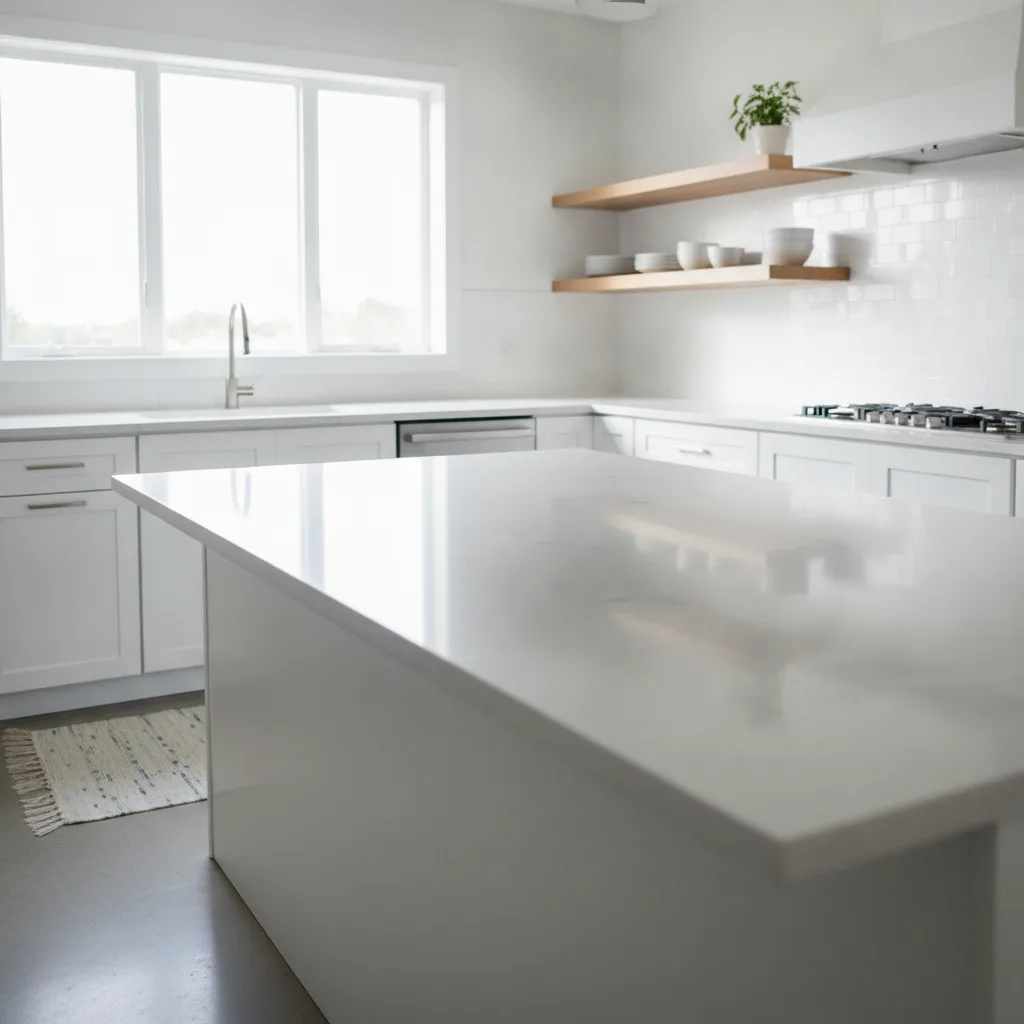
Gray quartz countertops dominate new builds in 2026 because they pair with more cabinet and flooring combinations than any other single countertop color. Quartz holds 51% of the U.S. countertop market, and 78% of design professionals expect it to remain the preferred surface material going forward. Gray quartz installed in Central Texas costs $70–$100 per sq ft for mid-grade material with a standard edge profile, putting a typical kitchen project between $5,000 and $20,000. The 2026 color shift moves away from stark cool grays toward warmer tones — taupe, mushroom, and greige — while the core gray family stays firmly dominant. Choosing the right shade comes down to reading undertones in your actual lighting, matching your cabinet style, and deciding between polished, honed, or matte finish before you walk into a showroom.
Gray quartz countertops are the most specified countertop color in new construction across Central Texas in 2026 — and the reason is practical, not trendy. No other single countertop color pairs cleanly with as many cabinet styles, flooring choices, and design directions. White oak, walnut, navy, black, white, and gray cabinets all coordinate with gray quartz without visual conflict. Production builders in Austin, San Antonio, Round Rock, and the surrounding corridor default to gray quartz for the same reason every person designing a kitchen lands there: it works, it holds resale value, and it doesn't lock you into a look you'll want to redo in five years. This guide walks through exactly what makes gray quartz countertops the dominant choice, what the 2026 shift toward warmer tones means for your slab selection, and how to pick the right shade for your specific kitchen or bathroom in about 20–30 minutes.
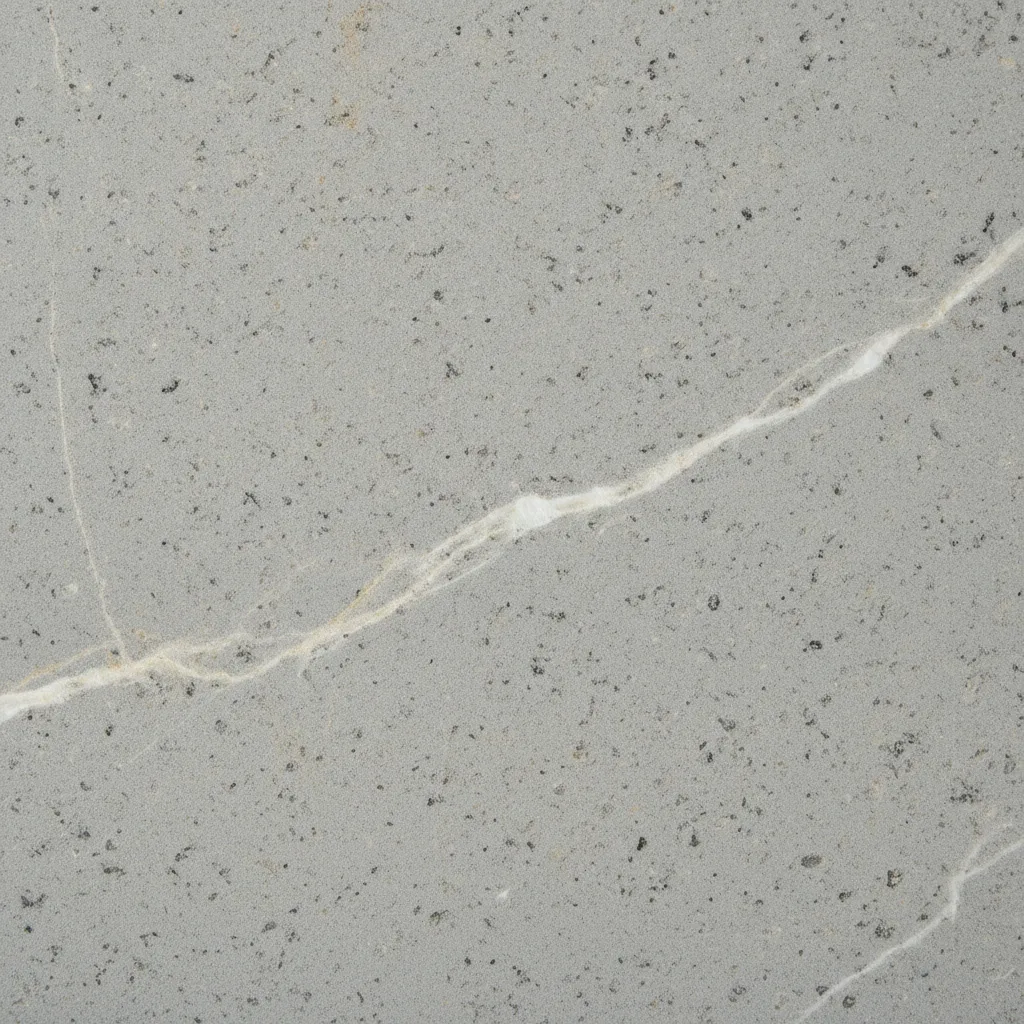
Gray quartz countertops hold their position as the most-specified countertop color in new construction because they pair with more cabinet and flooring combinations than any other color family. White oak, walnut, navy, black, white, and gray cabinets all coordinate with gray quartz without conflict. That versatility is not accidental — it's why production builders across Austin, San Antonio, and Central Texas default to it when they need one slab color to appeal to the broadest pool of buyers.
Quartz now holds 51% of the U.S. countertop market as of 2026, and 78% of design professionals surveyed by the NKBA expect it to remain the preferred countertop surface going forward. The material is engineered from 90–95% ground natural quartz crystals bound with polymer resin, making it non-porous. No periodic sealing is required — a concrete advantage over natural granite or marble. Gray quartz delivers that low-maintenance surface in a neutral color that doesn't lock you into one design direction. The global quartz countertop market reached $14.8 billion in 2026, with the U.S. accounting for roughly $7.9 billion of that total.
For homeowners thinking about resale, the numbers back the choice. Roughly 78% of homebuyers prefer neutral countertop tones — white, gray, and beige — because those colors complement whatever furniture and decor they bring in. Gray quartz signals move-in-ready without committing to a bold statement that may not match the next buyer's taste. The durability of engineered quartz also matters to buyers: a surface that maintains its look for 15-plus years without sealing reads as a genuine upgrade, not just a cosmetic one.
Gray quartz is not one look. The color family spans soft, airy light grays and concrete-inspired charcoals, plus warm-leaning taupe and greige tones. The step that matters most is identifying undertones — covered in Step 3.
The gray quartz family is evolving in 2026: cool, stark grays dominated through 2024, but the current direction moves toward warm-leaning grays — taupe, mushroom, and greige tones that read as gray from a distance but carry beige or brown undertones up close. Designers describe this as the gray family maturing rather than disappearing. Choosing gray today is not a dated move — the question is which side of the family fits your space.
Warm grays pair naturally with white oak and ash wood cabinets, warm-toned flooring, and organic textures. Cool grays work harder against navy, black, and painted white cabinetry where you want clean, sleek contrast. If your kitchen leans industrial or coastal, a cooler concrete-look gray — think honed or matte finish — still makes sense. If your space feels more transitional or farmhouse, a slightly warm greige is the 2026-forward move for creating that inviting, finished feel.
MSI, Caesarstone, and Cambria have all expanded their warm gray and greige lines in the past 18 months. Silestone and MSI Q Premium both offer mid-range options in the $65–$90 per sq ft installed range that reflect this shift well. Knowing which direction your kitchen leans before you visit a showroom saves you from getting overwhelmed by shades of grey that all look similar under fluorescent lighting. Explore the warm vs. cool distinction at home — not under a showroom's curated light.
$65–$90/sq ft installed
Wide spectrum from light marble-look to dark concrete tones, with clear warm and cool options to compare side by side.
$65–$90/sq ft installed
Strong warm-gray and greige offerings that reflect the 2026 color direction; widely stocked through Central Texas fabricators.
$90–$120+/sq ft installed
Premium movement and veining in gray tones for kitchens where the countertop is meant to be a striking focal point.
The single biggest mistake homeowners make with gray quartz countertops is choosing a slab under showroom lighting and then watching it read purple, blue, or greenish at home. Undertones in gray quartz are real, and they shift based on your light sources, wall color, and flooring. A slab labeled soft gray may carry a distinct blue cast in a south-facing kitchen with warm afternoon light — a true undertone surprise that a 6-inch showroom tile will never reveal.
The right method: bring a physical sample home before you commit. At Fox Granite, free in-home consultations include samples so you can see exactly how a slab's undertones behave in your specific space — morning light, evening light, and against your existing cabinet and flooring combination. A 12-inch sample sitting on your actual countertop surface tells you far more than anything you'll discover in a showroom or on a product page.
Light gray quartz with white or silver undertones works best in bright, open kitchens with plenty of natural light — it keeps the space feeling airy without washing out. Dark gray quartz with charcoal or concrete tones works better in larger kitchens where you want depth and a striking contrast against white or light wood cabinets. Mid-toned warm grays — taupe, mushroom, greige — are the safest all-around choice for transitional and farmhouse spaces, especially where wood tones appear in the cabinetry or flooring. For bathroom design, the same principle applies: confirm the sample in your bathroom's artificial light before ordering.
Set the sample flat on your existing countertop at the exact height where your new surface will sit. Hold it there for 60 seconds in the morning and again in the evening. The undertone difference between those two light conditions often makes the decision obvious and turns a two-hour showroom visit into a 20-minute confirmation.
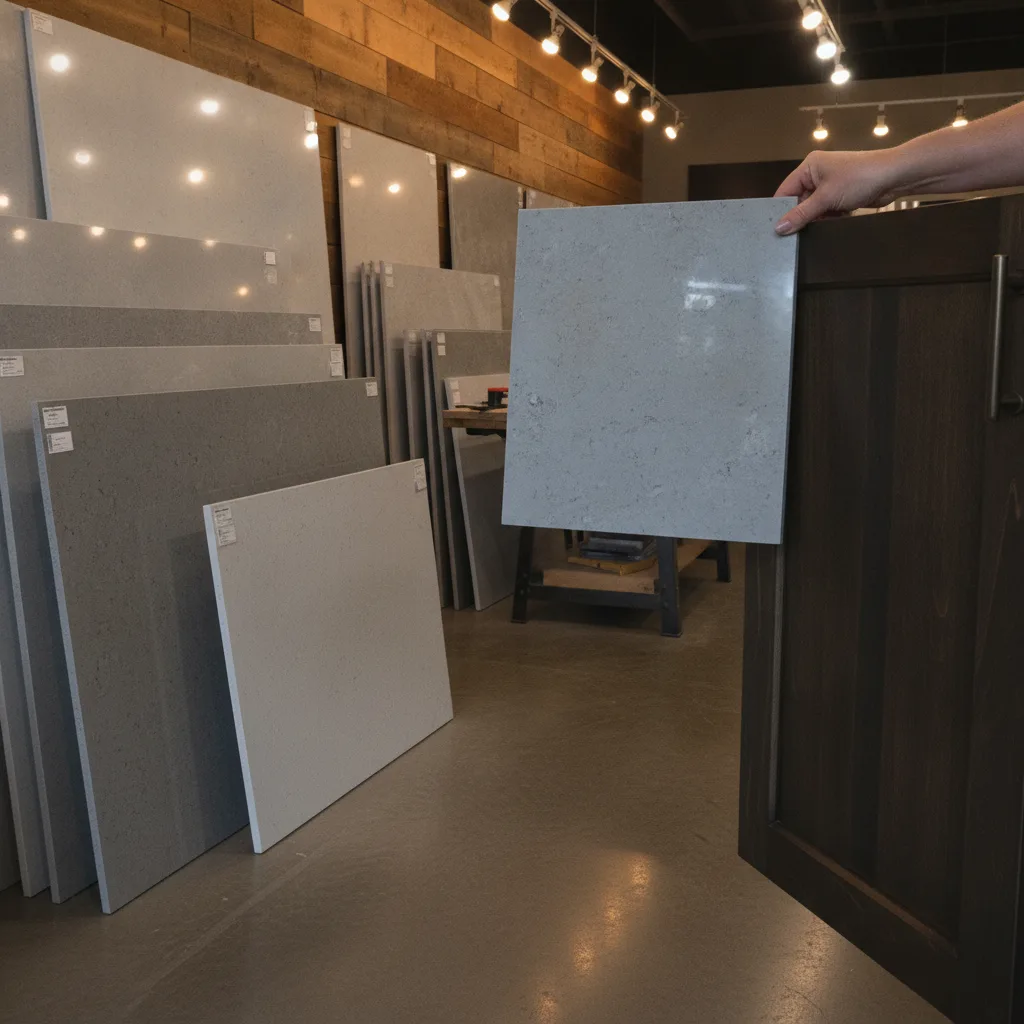
Gray countertops work across opposing design styles — industrial, transitional, coastal, farmhouse, and mid-century modern — but the shade and finish have to match the direction. Dark gray quartz in a concrete or charcoal tone pairs best with white, navy, or black cabinets for a sleek, modern or industrial kitchen. Light gray quartz pairs well with white cabinets for a classic, clean look, or with wood cabinets to complement warm wood tones without competing with them. That's the practical guide in two sentences.
Warm gray and greige quartz is the move for farmhouse and transitional kitchens. Paired with shaker-style white or cream cabinets and a subway tile backsplash, a warm gray countertop creates an inviting, finished feel without the clinical edge of a stark white surface. The same warm gray works in bathroom design — a taupe-leaning slab on a double vanity against navy or wood-stained cabinetry is a combination that photographs well and holds up in resale conversations. Gray quartz also reads beautifully against blue or green painted walls, where the neutral surface lets the wall color become the statement.
For mid-century modern kitchens, a solid, soft gray with minimal movement — close to a matte concrete look — complements flat-front cabinets in walnut or charcoal without visual competition. Gray quartz in a laundry room or bar top benefits from the same principle: the simpler the surrounding materials, the more impact the slab's texture and shade can carry. If you're choosing between a classic grey with fine aggregate and a grey with dramatic veining like marble, consider whether the countertop is a background surface or the room's focal point — that single question determines which direction to explore.
Gray quartz countertops installed in Central Texas cost $70–$100 per sq ft for mid-grade material with a standard edge profile and one or two cutouts, as of 2026. A typical kitchen project lands between $5,000 and $20,000 depending on square footage and complexity. That range collapses quickly once you know your kitchen's linear footage and your chosen slab tier — it's not as open-ended as it sounds.
Mid-range branded quartz — Silestone, Caesarstone, and MSI Q Premium — installs in the $65–$90 per sq ft range. Premium Cambria slabs and designer-grade products run $90–$120 or higher before edge profile and cutout add-ons. Edge profile choices (eased, beveled, bullnose, half-bullnose, ogee) each carry a different price, and a more complex undermount sink cutout adds to the total. Fox Granite prices transparently — every line item is visible before you commit, including templating, fabrication, and installation as one number with no subcontractor handoffs.
On the return side, quartz countertop kitchen remodels recoup 60–80% ROI at resale in mid-to-high-end projects. Remodeling Magazine's Cost vs. Value data shows minor kitchen remodels with new countertops returning up to 85.7%. Gray and neutral quartz surfaces specifically appeal to approximately 78% of homebuyers — a meaningful advantage over bolder color choices when you're thinking about long-term home value. For homeowners in Austin, Round Rock, New Braunfels, and the surrounding corridor, that resale math is particularly relevant given the active mid-range and move-up market across Central Texas.
Free
Get an accurate, all-in quote with no surprise fees — templating, fabrication, edge profile, and installation in one number.
$65–$90/sq ft installed
Mid-range pricing with consistent gray tone options and strong warranty coverage across the color line.
$90–$120+/sq ft installed
Premium U.S.-made quartz with deep movement and veining in the gray family — worth the step-up cost when the countertop is the room's focal point.
Choosing gray quartz countertops comes down to three decisions made in order: tone direction (cool vs. warm gray), shade depth (light, mid, or dark), and finish (polished, honed, or matte). Make these calls before you walk into a showroom and you'll spend 20 minutes confirming a choice instead of two hours feeling overwhelmed by shades of grey that all look similar under artificial light. This sequence is the practical guide every designer uses and rarely shares.
Cool, light gray quartz is the classic choice for white cabinet kitchens — it adds contrast without drama and keeps the overall look bright and clean. Warm, mid-toned gray — taupe, greige, mushroom — is the 2026 direction that works across the widest range of cabinet colors and design styles, creating depth and warmth that a stark cool grey cannot. Dark gray quartz — concrete-look or charcoal — works best as a deliberate design statement in a modern or industrial kitchen where you want the countertop to anchor the space. Polished finishes show off movement and depth; honed and matte finishes reduce glare and suit concrete-look slabs particularly well, maintaining that chic, understated look over time.
At Fox Granite, we've completed more than 10,000 projects across Austin, San Antonio, Round Rock, New Braunfels, San Marcos, Georgetown, Cedar Park, Leander, Kyle, Buda, Dripping Springs, and the broader Central Texas corridor since 2010. We bring samples directly to your home so you can see how a gray quartz slab behaves in your real lighting before anything gets measured or cut. Once you pick your slab, our in-house team handles precision templating, fabrication, and installation — no subcontractors, no handoffs, no surprise fees. If you're comparing quartz with quartzite, marble, granite, or porcelain options, we walk you through those trade-offs too, including where natural stone's unique surface character genuinely earns its higher maintenance requirement and where it doesn't.
If you're torn between two shades of gray quartz that look similar in photos, place both physical samples in your kitchen at the same time. The difference in undertone almost always becomes obvious within one natural-light cycle — making a $5,000–$20,000 decision far easier and keeping you from discovering the wrong answer after installation.

Gray quartz countertops photograph differently than they look in person, and they look different in your kitchen than they do in a showroom. Undertones — the blue, green, purple, or warm beige cast hiding inside a grey slab — only reveal themselves in your actual lighting conditions. Committing to a slab from a website photo or a small tile sample is the fastest route to a countertop that reads wrong in your space. Schedule a free in-home consultation with Fox Granite and we'll bring full samples to your kitchen so you can see the real color before you spend a dollar on fabrication.
For gray quartz countertops in Austin, San Antonio, Round Rock, New Braunfels, Georgetown, San Marcos, Cedar Park, Leander, Kyle, Buda, Dripping Springs, and across Central Texas, trust Fox Granite. We're a family-owned team with more than 10,000 projects completed since 2010, and we bring the samples to you — free. Contact us today to schedule your free in-home consultation and discover exactly which shade of gray fits your kitchen, your cabinets, and your budget.
Ready to get started? Contact Fox Granite today.


BY APPOINTMENT ONLY
1379 Wald Road
New Braunfels, TX 78132
Austin, San Antonio, Cedar Park, Kyle, New Braunfels, Del Valle, Elgin, Lago Vista, Shady Hollow, Onion Creek, Buda, San Marcos, Lockhart, Temple, Wimberley, Dripping Springs, Bee Cave, Lakeway, Leander, Anderson Mill, Jollyville, Spicewood Springs, Round Rock, Georgetown, Pflugerville, Manor, Taylor, Manchaca, Mountain City, Hutto, West Lake Hills, Bastrop, Liberty Hill, Driftwood, Sun City, Steiner Ranch.