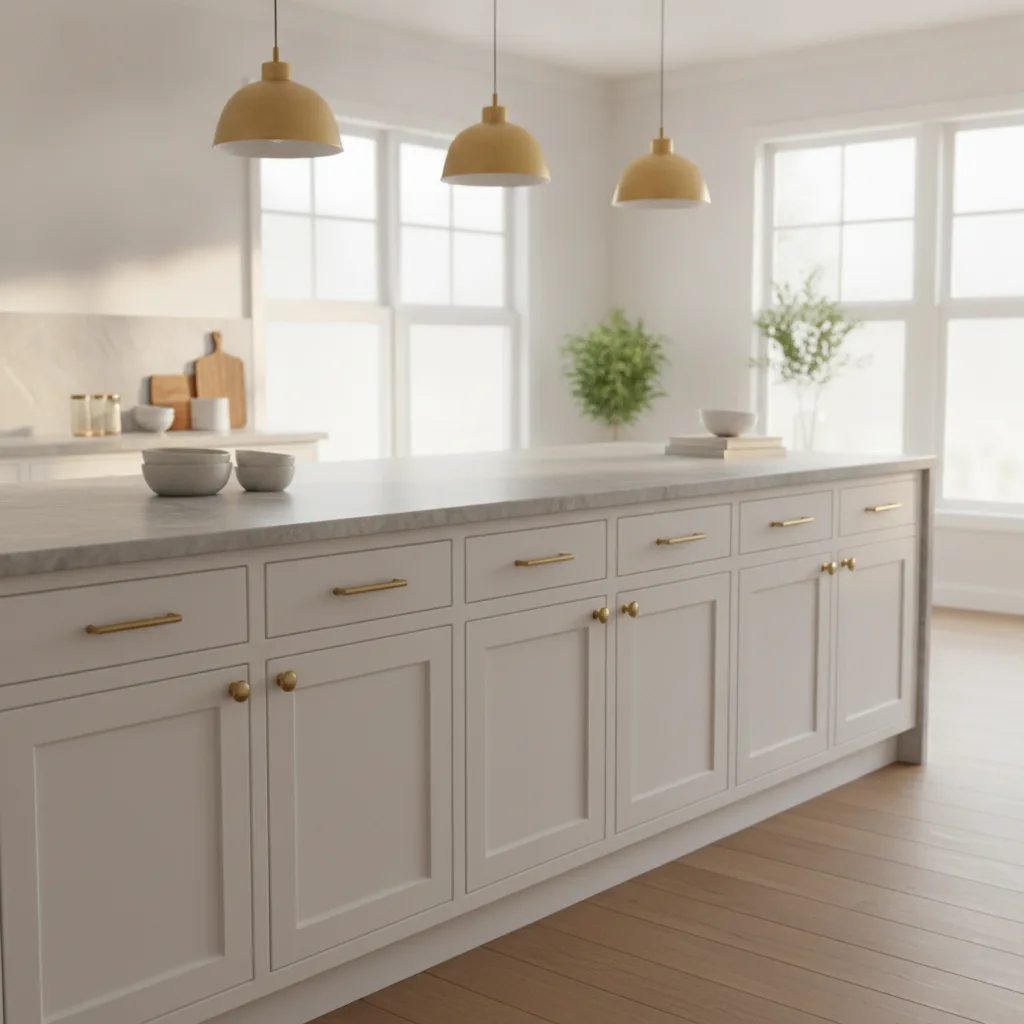
Gray marble countertops occupy a practical middle ground between bright white marble and darker stone: they add visual depth and warmth to a kitchen or bathroom without demanding a stark, high-contrast palette. Installed cost runs $40–$200 per sq ft depending on variety, with Carrara at the accessible end and book-matched Calacatta at the top. The right choice comes down to six decisions: understanding how gray marble differs from white, picking the right variety, matching it to your cabinet colors and hardware, choosing a finish, committing to the maintenance schedule, and honestly comparing it against quartzite or quartz alternatives. Gray marble hides everyday smudges and watermarks better than white marble, but it still etches from acids — sealing prevents staining, not etching. That distinction is what most homeowners miss before they commit.
Gray marble countertops are the most versatile natural stone choice for a Central Texas kitchen or bathroom remodel. They occupy a genuinely useful middle ground: more visual interest and depth than engineered quartz, more forgiving day-to-day than bright white marble, and compatible with a wider range of cabinet colors and design styles than almost any other stone. Installed cost runs $40–$200 per sq ft depending on variety — Carrara at the entry point, book-matched Calacatta at the top. The six steps below will walk you through every decision between first seeing a gray marble slab and signing off on your installation, including an honest look at the maintenance commitment and when quartzite or quartz is the smarter fit for your household.
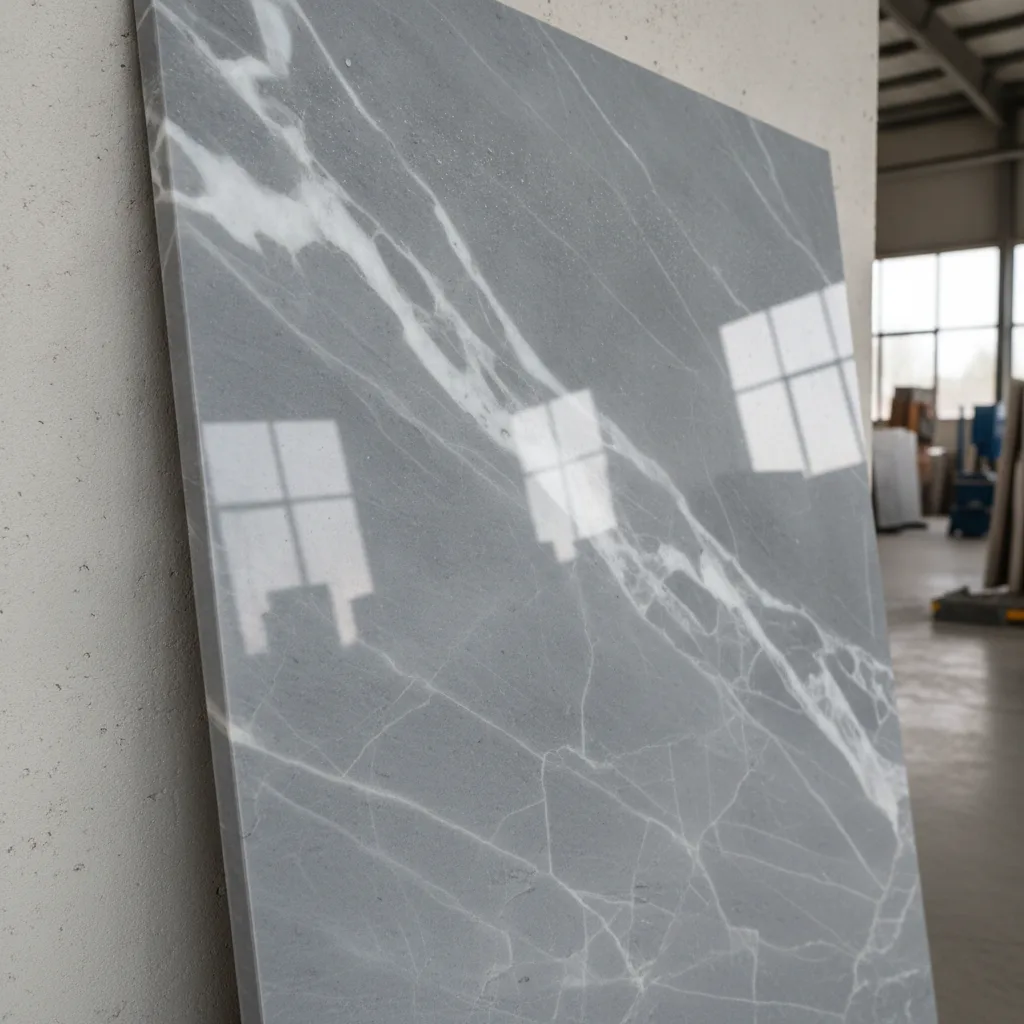
Gray marble countertops sit in a genuinely useful middle ground: they add visual depth and warmth without the starkness of bright white marble or the drama of black stone. That is not just a style preference — it is a practical distinction. White marble makes a room feel brighter and more open, but every smudge, watermark, and traffic pattern shows. Gray marble hides everyday wear far better, which matters a lot in an active kitchen or a busy Central Texas household.
The gray family also spans a wide tonal range. Light gray Carrara reads almost white from a distance and reveals its character through soft, feathery veining up close. Deep Bardiglio reads as a moody, cloudy dark grey with fine mineral movement throughout the slab. In between, varieties like Pietra Grey offer a medium-toned, contemporary look with strong linear patterns. Knowing where on that spectrum your kitchen needs to land is the first decision — and it is driven by your cabinetry, lighting, and how bold you want the stone to feel.
Gray marble is also more forgiving visually than very bright white marble when minor surface variation or wear occurs over time. That is a real, practical advantage in a kitchen where a pristine white surface would be difficult to maintain aesthetically, even if it were well-sealed. Gray reads as intentional even when it is lived in — which is part of why it has held its appeal across so many design styles, from traditional shaker kitchens to minimalist flat-front cabinetry.
Gray marble hides smudges and watermarks better than white marble — but it still etches from acids like lemon juice and vinegar. The color buys you visual forgiveness, not maintenance forgiveness. More on that in Step 5.
Carrara is the right starting point for most homeowners: it is the most widely available gray marble in the U.S., the most commonly installed, and the most accessible on price. Installed cost runs $75–$120 per sq ft, which is the entry point for natural gray marble. The look is a white-to-light-gray background with soft, feathery gray veining — classic, timeless, and compatible with almost every cabinet color. If you are new to marble or working with a traditional or transitional kitchen, Carrara is worth seeing in full slab form first.
Bardiglio steps up in drama: a deep, cloudy dark grey with fine mineral movement throughout the slab. It suits contemporary kitchens with flat-front cabinetry and matte black hardware, and it works especially well on a kitchen island where you want a grounding, furniture-like presence that contrasts with lighter perimeter countertops. Pietra Grey is a medium-toned option that is also notable for being harder and more weather-resistant than typical marble, which makes it a reasonable candidate for covered outdoor countertop applications in a Texas climate. For something with a touch of warmth, varieties with brown or gold mineral movement — like some Calacatta slabs — can deliver a richer, more sophisticated palette.
Calacatta sits at the top of the range: a bright white background with bold gray and gold veining. Book-matched Calacatta slabs can exceed $200 per sq ft installed. It is a statement stone, not a background material. If you are drawn to Calacatta's look but have a busy kitchen, that tension is worth resolving honestly before you commit. Each variety has a distinct veining pattern and tonal character — always view full slabs in person before deciding, because tile samples and online photos do not capture how the stone reads at countertop scale.
Free to visit
View full gray marble slabs in person — Carrara, and comparable natural stone options — with no sales pressure and samples you can take home to compare against your cabinetry.
Light gray Carrara marble pairs especially well with white cabinets. The soft veining adds organic texture and contrast to an all-white kitchen without overpowering the room — it corrects the flat, one-note look that an all-white kitchen can have while keeping the palette clean and bright. This is one of the most reliable, low-risk combinations in residential kitchen design, and it works in both traditional shaker-door kitchens and more contemporary flat-front ones.
Dark cabinetry — black, navy, deep blue, or dark charcoal — creates a striking combination with gray marble countertops. Gray countertops stand out cleanly against dark cabinet colors, and the cool tones in the marble's veining patterns echo rather than fight the depth of the cabinetry. Greige and warm-neutral cabinet colors also work well: they warm up the cooler tones in gray marble without clashing, and they are a practical choice if you want to soften an all-gray palette. Even green cabinet tones — sage, forest, or olive — can work with the right gray marble slab, particularly those with warm mineral undertones in their veining.
Hardware matters more with gray marble than with most countertop materials. Brushed gold and unlacquered brass are the most designer-recommended pairings: both add warmth without looking precious, and they create a visual contrast that keeps the cooler stone from reading as cold. Matte black hardware reads as crisp and contemporary against gray marble, and suits a more minimalist or industrial-modern space. Extending the marble to the backsplash — either as a slab or large-format tile — is a technique designers favor for maximizing the visual impact of the stone's veining and creating a cohesive look that elevates the whole room.
If you are using dark gray marble on your island and lighter countertops on the perimeter, keep the cabinet color consistent throughout. Switching cabinet colors between island and perimeter in a small kitchen adds visual noise — the stone contrast alone is enough to deliver depth and visual interest.
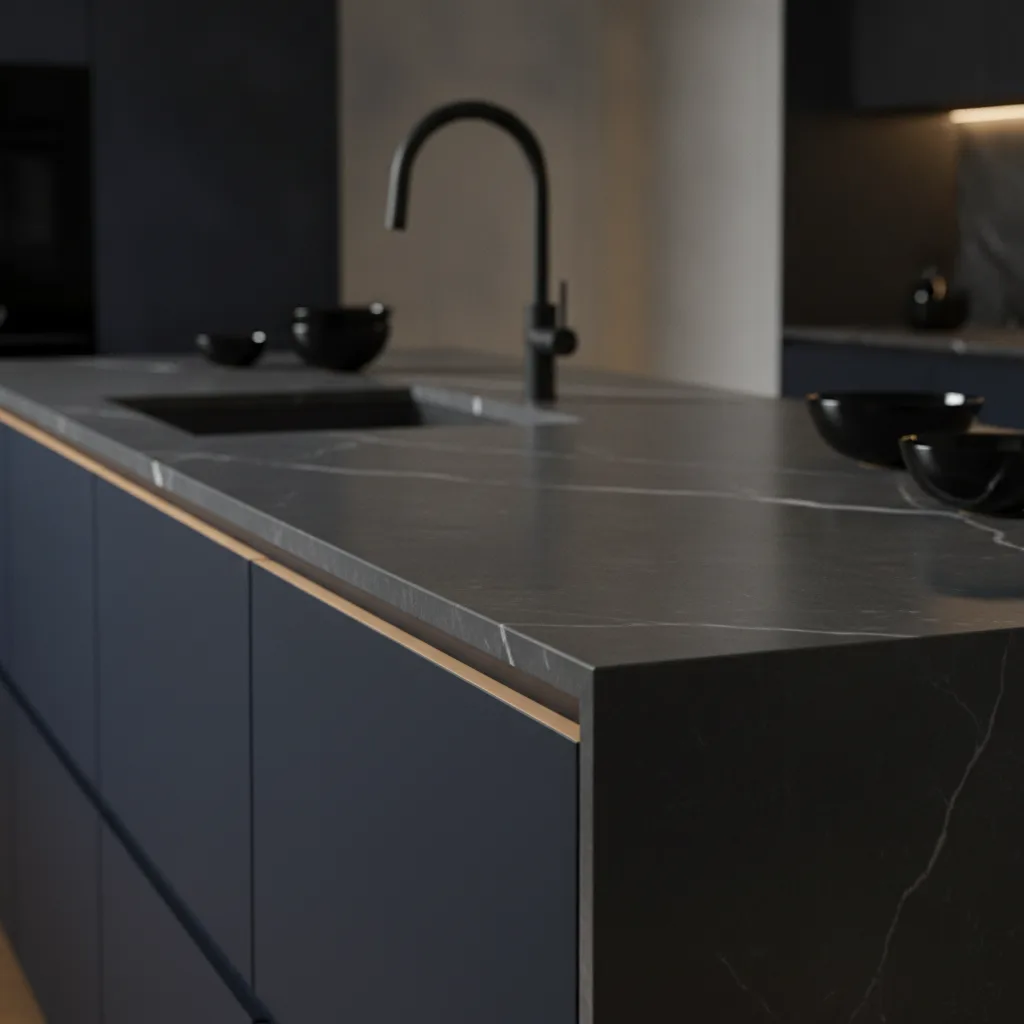
Honed (matte) gray marble is the preferred finish for kitchen countertops, and most stone professionals recommend it specifically for kitchen marble. The reason is practical: polished marble shows fingerprints, water rings, and light scratches more visibly than honed marble does. In a kitchen, that visibility adds up fast. A honed finish also gives gray marble a warmer, softer look — with a texture that suits the range of design styles it fits, particularly contemporary and minimalist kitchens where a high-gloss surface would feel too formal.
Polished gray marble is not wrong — it is just better suited to lower-contact surfaces. A polished Calacatta or Bardiglio slab on a bathroom vanity top, a fireplace surround, or a bar top that does not see daily chopping and prep is a perfectly appropriate choice. The polish deepens the color, amplifies the veining patterns, and gives the stone a more dramatic, sophisticated presence. For a bathroom vanity in particular, polished gray marble creates an elevated, spa-like feeling that honed finishes approach but do not fully replicate.
One tradeoff worth knowing: honed marble is slightly more porous at the surface than polished marble, which means it can be more susceptible to staining if a spill sits unwiped. Proper sealing (covered in Step 5) addresses this. The finish also affects how the stone reads in different lighting conditions — honed marble looks more consistent under natural light, while polished slabs can shift dramatically depending on where the light hits and the angle of view.
Marble must be sealed after installation and resealed every 6–12 months in a kitchen. Sealing prevents liquid absorption — which causes staining — but it does not prevent etching. Etching is a chemical reaction between acids and the calcium carbonate in marble: lemon juice, vinegar, tomato sauce, citrus-based cleaners, and even some sparkling waters will leave a dull mark on the surface even on a freshly sealed slab. This is the single most misunderstood fact about marble countertops, and it is worth sitting with before you decide.
The sealing process itself is not complicated. A penetrating (impregnating) sealer — brands like Tenax Hydrex or Miracle Sealants 511 — applied every 6–12 months in kitchen use, and every 1–2 years in lighter-use areas like bathrooms. Use a pH-neutral cleaner for daily cleaning: no vinegar, no citrus-based sprays. Wipe spills quickly, especially anything acidic. The discipline is straightforward, but it requires consistency. Marble rates 3–4 on the Mohs hardness scale, which makes it softer than granite or quartzite and genuinely susceptible to scratches and etching over time.
Gray marble holds up better visually than white marble as it ages — the patina that develops on gray marble over years of kitchen use reads as character, not damage. Some homeowners who cook daily and love natural stone accept the etching and scratching as part of the material's story. Others find it frustrating. Be honest about which household you have before you install it in a kitchen. For bathrooms, the calculus shifts completely: without acidic cooking ingredients in the picture, gray marble bathroom vanity tops perform far better and require far less vigilance.
Sealing prevents staining from liquids soaking into the stone. It does not protect against acid etching. Those are two different problems, and sealing only solves one of them. If your household uses a lot of lemon juice, citrus cleaners, or vinegar, marble countertops in the kitchen will etch regardless of how well they are sealed.
For homeowners who want the look of gray marble with less maintenance, quartzite and engineered quartz are the two most practical alternatives from the other materials category. Quartzite is a natural stone — it still requires sealing, but it rates 7 on the Mohs hardness scale and does not etch from acids the way marble does. Gray quartzite slabs can achieve a similar cool-toned, veined look to Carrara or Bardiglio. Engineered quartz (brands like Cambria, Silestone, and Caesarstone) is non-porous and needs no sealing at all — it is the lowest-maintenance option in the gray stone category, and installed cost runs $50–$150 per sq ft. Porcelain slabs are a third option worth mentioning: extremely hard, non-porous, and available in gray marble-look patterns, though the surface has a different feel underhand than natural stone.
The honest tradeoff is that neither quartzite nor quartz is exactly marble. Quartzite has its own distinct veining character. Engineered quartz — no matter how well the gray marble-look patterns are engineered — has a consistency to its patterns that natural stone does not. Some homeowners see that as a feature: predictability in matching slabs across a large project. Others find that the organic randomness of real marble is precisely what they are paying for, and no manufactured pattern fully delivers that sense of depth and uniqueness.
Properly maintained natural marble countertops can last 50–100 years in residential use. That longevity is real. But it comes with consistent care — the right sealer applied on schedule, pH-neutral cleaners, and an acceptance of the natural evolution of the surface. If you are in Austin, San Antonio, or anywhere in the Central Texas corridor, a side-by-side comparison of gray marble slabs, gray quartzite, and gray quartz options in person is worth making. The right material for your project becomes a lot clearer when you are holding a sample against your cabinet door in real light. That comparison — and the vision it creates for your finished kitchen — is exactly what a good showroom visit is for.
Free
Our team brings samples to your home so you can compare gray marble, quartzite, and quartz against your actual cabinetry and lighting before committing to a slab.
$20–$40 per bottle
Required for marble and quartzite after installation and on a 6–12 month schedule in kitchen use; not needed for engineered quartz.
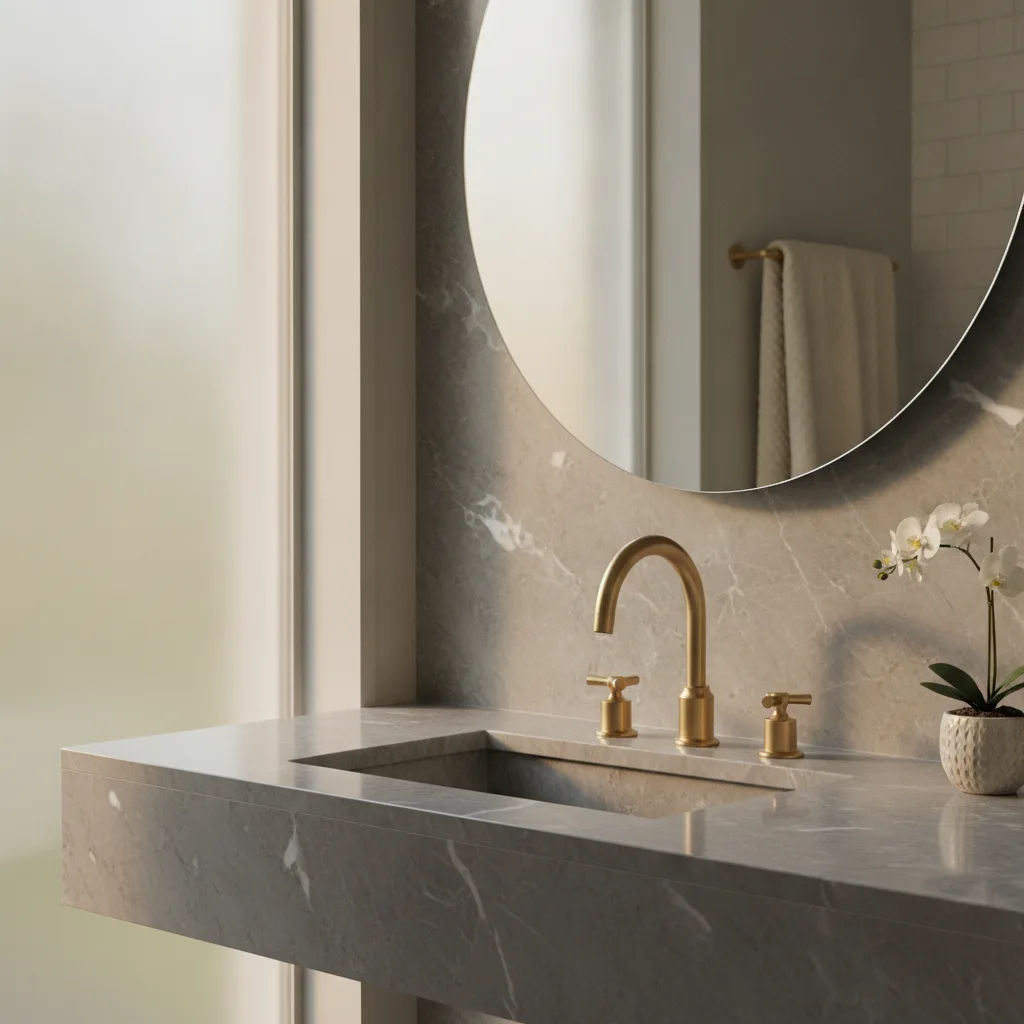
Gray marble is a genuinely versatile, timeless natural stone — but it rewards homeowners who go in with clear eyes about maintenance. The number-one regret we hear from marble kitchen owners is not the cost or the installation. It is discovering after the fact that sealing does not stop acid etching, and that their kitchen habits were not a match for the material. Ask hard questions before you commit: How often do you cook with citrus or vinegar? Do you have kids who leave spills sitting? Are you prepared to reseal every 6–12 months? If the honest answers give you pause, quartzite or quartz may be a better fit — and several gray options in both categories are genuinely beautiful. We will help you find the one that fits how you actually live.
For gray marble countertops, quartzite, and quartz countertops in Austin, San Antonio, Round Rock, New Braunfels, Georgetown, Cedar Park, San Marcos, Dripping Springs, Kyle, Buda, and across the Central Texas corridor, trust Fox Granite. We are a family-owned fabrication and installation team with over 15 years in the industry, in-house fabrication, and transparent all-in pricing — no surprise fees, no subcontractors, no runaround. Contact us today to schedule your free in-home consultation, or visit our New Braunfels showroom to see gray marble, quartzite, and quartz slabs side by side and find the right fit for your home.
Ready to get started? Contact Fox Granite today.


BY APPOINTMENT ONLY
1379 Wald Road
New Braunfels, TX 78132
Austin, San Antonio, Cedar Park, Kyle, New Braunfels, Del Valle, Elgin, Lago Vista, Shady Hollow, Onion Creek, Buda, San Marcos, Lockhart, Temple, Wimberley, Dripping Springs, Bee Cave, Lakeway, Leander, Anderson Mill, Jollyville, Spicewood Springs, Round Rock, Georgetown, Pflugerville, Manor, Taylor, Manchaca, Mountain City, Hutto, West Lake Hills, Bastrop, Liberty Hill, Driftwood, Sun City, Steiner Ranch.