
Quartz countertops are partially eco-friendly, not fully. The slab is 93–96% natural quartz mineral, which is abundant and domestically quarried, but the 7–10% petroleum-based resin binder carries a real carbon cost. The greenest options are GREENGUARD-certified slabs with high recycled content (post-consumer glass, reclaimed quartz aggregate) manufactured in the USA to cut shipping emissions. Quartz also earns points for durability — a 15–25 year lifespan with zero sealing chemicals needed — which beats laminate or marble on lifecycle math. The honest verdict: ask for the EPD, verify GREENGUARD on the product sheet, and prioritize domestic fabrication. Those three steps separate a responsible choice from a vague marketing claim.
Quartz countertops are not a perfectly eco-friendly material — and any fabricator who tells you otherwise is selling, not informing. But a GREENGUARD-certified, domestically manufactured quartz slab with recycled content is genuinely one of the more responsible countertop choices available in 2026, especially when you factor in a 15–25 year lifespan that requires zero sealing chemicals. This guide walks Central Texas homeowners through exactly what makes a quartz slab greener or less green, which certifications actually mean something, and what questions to ask at the showroom before you commit. The honest answer takes six steps.
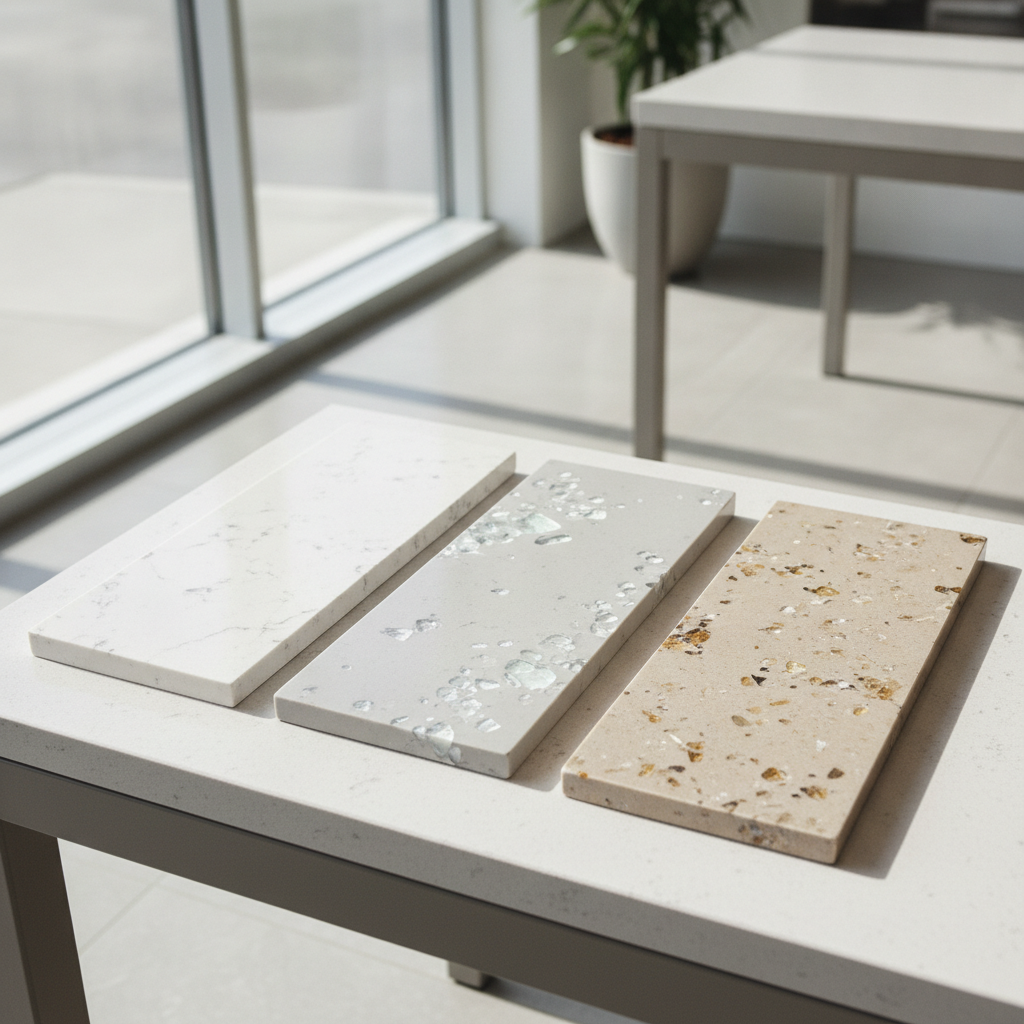
Engineered quartz slabs are 93–96% natural quartz mineral by weight, bound with 7–10% polyester or epoxy resin and pigments. That composition matters for the eco conversation because the vast majority of every slab is a naturally occurring, abundant mineral — not a synthetic product from top to bottom. The quartz mineral itself rates 7 out of 10 on the Mohs hardness scale, which is why quartz countertops resist scratch damage from knives and kitchen tools as well as they do.
Quartz is the most common mineral in the earth's crust, so raw-material scarcity is not a real concern. Primary US quarries are located in Arkansas, Virginia, North Carolina, and California — meaning domestic sourcing is possible and shipping distances from mine to manufacturer can be shorter than importing natural stone slabs from overseas quarries. That said, even abundant materials require petroleum-powered machinery to extract, and mining still causes erosion, habitat loss, and groundwater risk at the quarry site. Acknowledge those tradeoffs before deciding quartz is clean by default.
The 7–10% resin binder is where the primary environmental criticism lands. Standard binders use petroleum-based polyester or epoxy compounds — not renewable, and their production carries a measurable carbon cost. As of 2026, several manufacturers are actively transitioning to lower-emission and bio-based resin alternatives, but not every product on the market has made that shift yet. Knowing this split is the first step toward a genuinely greener choice, not just a green-sounding one.
93–96% of your quartz countertop is natural mineral. The eco debate is really about the remaining 4–7% — the resin binder and pigments — and how the slab was manufactured and shipped to your home.
Quartz countertop manufacturing is energy-intensive by design. The process — vibro-compression under vacuum, resin curing, and polishing — requires significant heat and electricity at every stage. That energy demand raises quartz's carbon footprint compared to lower-processed materials like reclaimed wood. It's the honest tradeoff eco-conscious buyers need to acknowledge before marking quartz as a green purchase. Theory and reality diverge here; the manufacture process is the biggest environmental cost in the slab's lifecycle.
The industry is making real progress. Cambria has invested in closed-loop water recycling systems that keep production water out of municipal waste streams. Some facilities have added solar-powered production capacity to cut grid electricity demand. These are documented operational changes, not just marketing claims, and they reduce the environmental impact of the manufacturing process even if they don't eliminate it. Cambria is the most visible domestic brand on this front as of 2026, though other manufacturers are continuing to update their operations.
Transportation is a factor that's easy to overlook. Unlike granite and quartzite, which must be cut from quarried slabs and shipped as heavy natural stone — often from Brazil, India, or Italy — engineered quartz can be manufactured regionally and distributed from facilities located inside the USA. Shorter shipping distances mean lower fuel consumption per slab. Ask your fabricator where a specific product is manufactured; a slab made in the USA and transported 500 miles carries a meaningfully smaller transportation footprint than one shipped across an ocean.
Free — available on manufacturer websites
An EPD gives you third-party verified data on a slab's carbon footprint, energy use, and water consumption across its full lifecycle — far more specific than general marketing claims.
Free at ul.com
Lets you verify a specific product's GREENGUARD or GREENGUARD Gold status before you buy — confirms low VOC emissions with independent test data, not just a brand's word.
GREENGUARD Indoor Air Quality Certification is the most relevant eco label for quartz countertops, and it measures something specific: VOC emissions inside your home after installation. MSI Q Premium, Cambria, Caesarstone, and Silestone all carry GREENGUARD certification as of 2026. GREENGUARD Gold is a stricter tier — it applies the same VOC standards but adds additional chemical thresholds designed for sensitive environments like schools and healthcare facilities. For a kitchen or bathroom, standard GREENGUARD is sufficient; Gold is a meaningful bonus.
NSF/ANSI certification covers food-contact safety — it verifies that surfaces won't leach harmful compounds into food or water during normal kitchen use. This is distinct from GREENGUARD and addresses a different concern: not indoor air quality, but direct surface contact. Products that hold both GREENGUARD and NSF certification give you coverage on both fronts. Check the product data sheet, not just the brand's homepage, because certification status can vary by product line within the same manufacturer — a detail that trips up a lot of buyers.
LEED compatibility is the third tier worth knowing. Quartz countertops carrying GREENGUARD certification can contribute credits under the LEED v4 Indoor Environmental Quality category. If you're building or remodeling to a specific green building standard — or simply want to confirm your countertop contributes to a healthier indoor environment — LEED-compatible products are the ones to specify. Request the certification documentation from your fabricator before your slab is ordered, not after it's already cut.
GREENGUARD = indoor air quality (VOC emissions). NSF = food-contact safety. LEED = green building program compatibility. A product can hold all three, some, or none. Always verify with the product's actual data sheet — not the brand's general sustainability page.
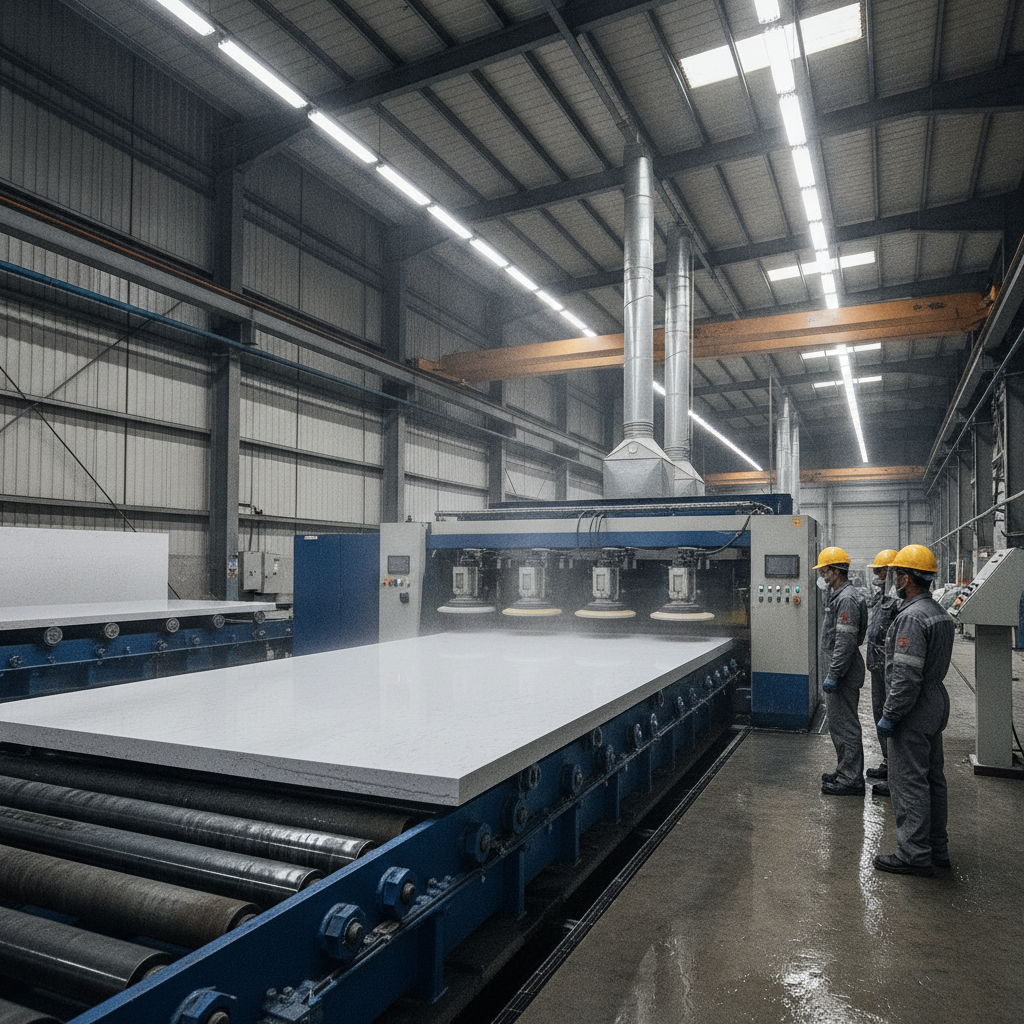
Recycled quartz countertops are engineered slabs that incorporate post-consumer recycled materials in place of some or all virgin quartz aggregate. Common recycled inputs include post-consumer glass, reclaimed quartz aggregate, pre-consumer porcelain, and reclaimed industrial waste — all diverted from landfills and reprocessed into the slab. The result is a countertop that reduces demand for freshly mined raw materials while maintaining the non-porous surface and durability you get from standard quartz. Recycled materials in this format also create a visible depth and variation in the glass pieces that many homeowners and designers find distinctive in a modern kitchen.
Recycled glass countertops are a related but distinct product category. In true recycled glass countertops, crushed post-consumer glass — bottles, windows, mirrors — replaces most of the quartz mineral content, bound with cement or resin. These products carry high recycled content by weight, sometimes 85% or more, but they trade off some of the scratch resistance and surface consistency you get with standard or recycled quartz. IceStone, a Brooklyn-based company, is one well-known brand producing recycled glass and resin surfaces with no crystalline silica and no VOCs — a useful comparison point when you're evaluating what the market offers beyond engineered quartz. Both product types appear under the eco-friendly countertop umbrella, so knowing which one you're actually looking at on a product sheet matters.
High recycled content is a meaningful signal, but the number needs context. A slab with 30% post-consumer recycled glass reduces virgin material demand by roughly that proportion — that's real. But if that same slab was manufactured with high-emission processes and shipped from overseas quarries, the full lifecycle impact may not be as favorable as a standard quartz slab made domestically with closed-loop water systems. Recycled content is one factor in the full picture, and the ideal choice stacks it alongside GREENGUARD certification and domestic fabrication.
Request the recycled content percentage, where the slab was manufactured, and whether it carries GREENGUARD certification. All three together tell you far more than recycled content alone — and a reputable fabricator should be able to answer all three quickly.
A well-maintained quartz countertop lasts 15–25 years on average, and under ideal conditions that lifespan can stretch to 50–100 years. Durability is one of quartz's strongest environmental arguments. A countertop that stays in place for two or three decades means no replacement manufacturing, no disposal, and no new raw materials consumed for that entire stretch. Compare that to a lower-cost laminate surface replaced every 8–12 years, and the lifecycle math shifts significantly in quartz's favor — even before you factor in the resin content.
Quartz is non-porous, which means it never needs sealing. Granite and marble require periodic chemical sealer applications — typically every 1–3 years — to protect against stains and bacteria. Quartz eliminates that maintenance step completely, which means zero sealer products purchased, stored, or applied over the life of your countertop. That reduction in long-term chemical use is easy to overlook because the savings spread across decades rather than showing up on a purchase receipt. It's a real eco advantage that cleaned-up surfaces don't have to show at the point of sale to count.
Scratch resistance matters for the same reason. Quartz countertops resist chips and scratches well enough that most surfaces stay intact without repair for their full lifespan. Surfaces that chip or crack frequently need patching or replacement, which creates waste and chemical exposure from repair products. A non-porous, scratch-resistant quartz surface that lasts 20-plus years and can be cleaned with soap and water is a responsible long-term choice. The planet benefits when you don't have to replace or repair something for 25 years — that's not a theory, it's basic lifecycle math.
The greenest quartz countertop you can buy in 2026 checks four boxes: GREENGUARD certification verified on the product data sheet (not just the brand page), domestic or regional manufacture to reduce shipping-related carbon, high recycled content where available (post-consumer glass, reclaimed quartz, or reclaimed industrial waste), and a manufacturer that publishes an EPD or LCA — transparent documentation of actual environmental impact, not marketing language. Not every slab checks all four boxes. The best eco-conscious options come close, and your fabricator should be able to help you identify which slabs in their inventory hold the most pieces.
In Central Texas, Fox Granite works with a wide variety of quartz suppliers and can identify which specific slabs and product lines carry GREENGUARD certification and recycled content options. We bring samples to your home during a free in-home consultation, so you can compare surfaces, patterns, and product documentation side by side — not in a showroom under fluorescent light. Our team is transparent about what certifications each product holds and where it comes from, because you deserve that information before you decide.
Ultimately, quartz is not a perfectly eco-friendly material. No countertop is. But a GREENGUARD-certified, domestically produced quartz slab with recycled content — installed once and maintained without chemicals for 20-plus years — has a far smaller lifetime environmental impact than most alternatives. That's an honest verdict and the kind of guidance every homeowner in Austin, San Antonio, Georgetown, New Braunfels, and across the Central Texas corridor deserves before making a high-ticket decision. If a product you love checks three of the four boxes, it's still a solid choice. The goal is an informed decision, not a perfect one.
Free — request from your fabricator or download from the brand site
Gives verified lifecycle carbon and energy data for the specific slab you're considering, so you're comparing real numbers rather than general brand claims.
Free at ul.com
Confirms certification status for individual quartz product lines — critical because certification varies by product line, not just by brand.
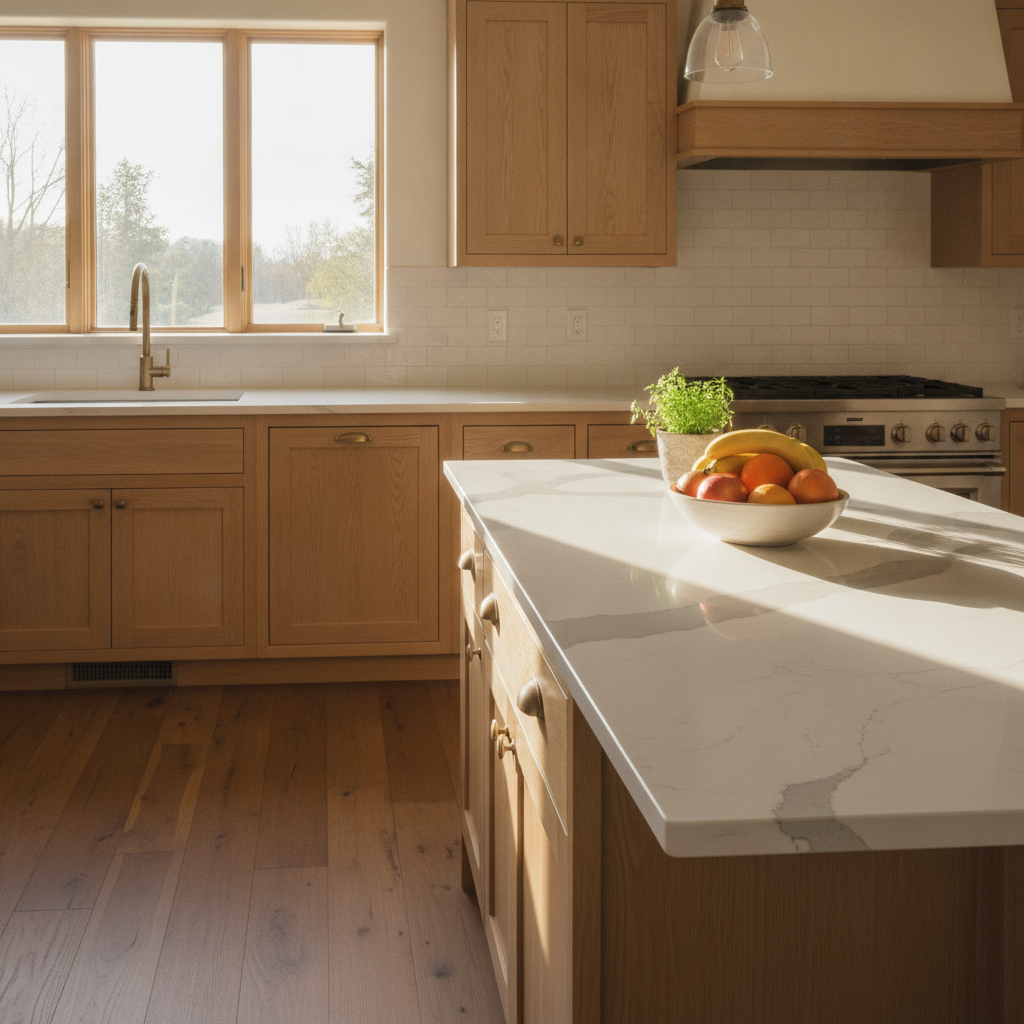
As of 2026, 'eco-friendly' and 'sustainable' are unregulated marketing terms — any manufacturer can use them without third-party verification. GREENGUARD, NSF/ANSI, and published EPDs are the verifiable standards. If a product page doesn't link to a specific certification database entry or a downloadable EPD, ask your fabricator for the documentation before you commit. A reputable fabricator should be able to produce it quickly — or point you to a product line that can. If they can't, that's a useful signal about whether this company's sustainability claims hold up to a basic bit of scrutiny.
Ready to get started? Contact Fox Granite today.


BY APPOINTMENT ONLY
1379 Wald Road
New Braunfels, TX 78132
Austin, San Antonio, Cedar Park, Kyle, New Braunfels, Del Valle, Elgin, Lago Vista, Shady Hollow, Onion Creek, Buda, San Marcos, Lockhart, Temple, Wimberley, Dripping Springs, Bee Cave, Lakeway, Leander, Anderson Mill, Jollyville, Spicewood Springs, Round Rock, Georgetown, Pflugerville, Manor, Taylor, Manchaca, Mountain City, Hutto, West Lake Hills, Bastrop, Liberty Hill, Driftwood, Sun City, Steiner Ranch.