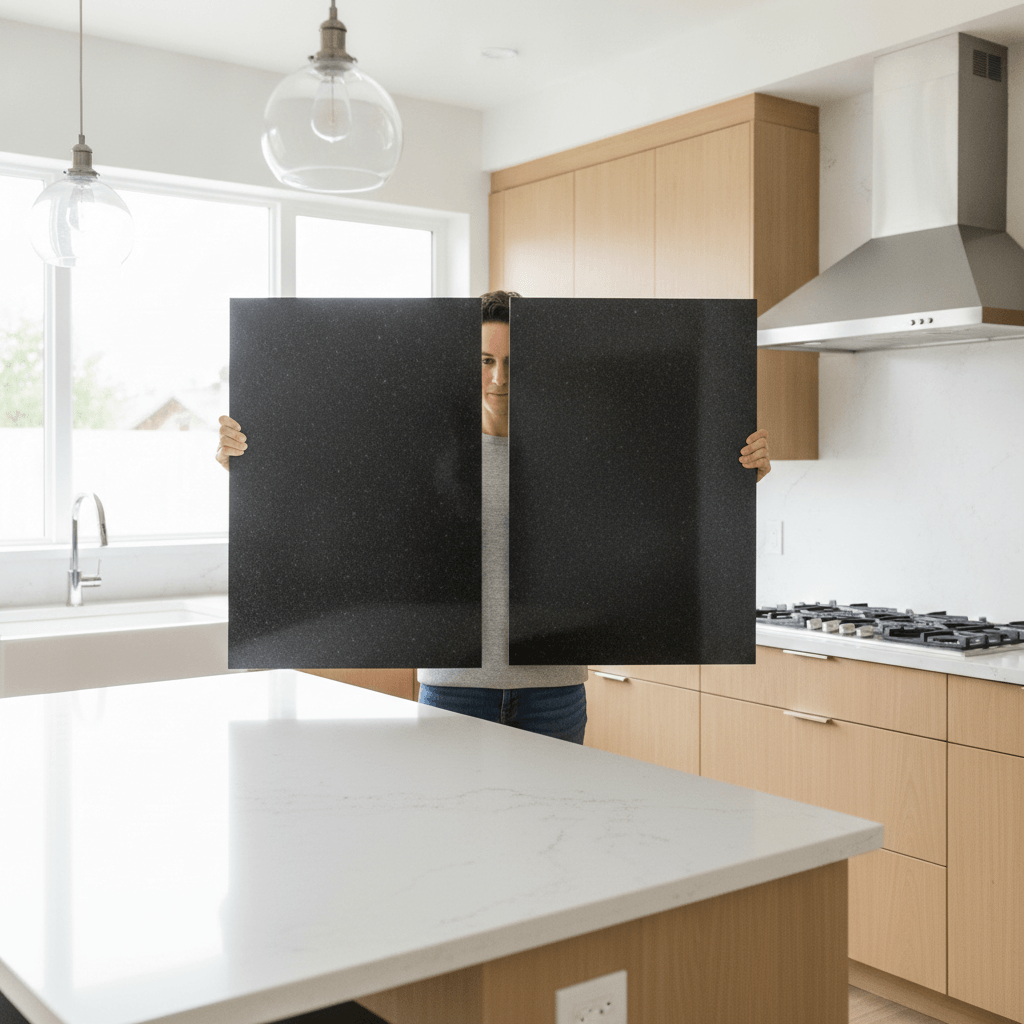
Black granite countertops are heat-resistant, scratch-resistant, and genuinely low maintenance when you choose the right finish. As of 2026, most Central Texas homeowners spend $2,000–$4,000 installed, with per-square-foot costs ranging from $40 (Absolute Black) to $200 (premium exotics like Via Lactea). The four varieties that dominate Austin and San Antonio kitchens are Absolute Black, Black Pearl, Black Galaxy, and Cosmic Black. Pick the finish before you pick the slab: polished shows fingerprints under direct light, while honed and leathered finishes hide daily wear far better. See full slabs in person before you commit — a tile sample cannot show you how a 40-square-foot counter will look under your kitchen's actual lighting.
Black granite countertops cost $40 to $200 per square foot installed, and most Central Texas kitchens land between $2,000 and $4,000 for the full project. That's a meaningful range — and the difference between landing at the low end versus the high end comes down to variety, finish, layout complexity, and whether your fabricator builds all-in pricing from the start. This guide walks Austin, San Antonio, New Braunfels, and surrounding area homeowners through six concrete decisions: what makes black granite different, which variety fits your kitchen, which finish matches your household habits, which cabinet colors work best, how to plan your layout, and what the real installed cost and maintenance commitment look like. You'll finish in 20–30 minutes with enough clarity to book a consultation and move forward without second-guessing a $3,000-plus purchase.
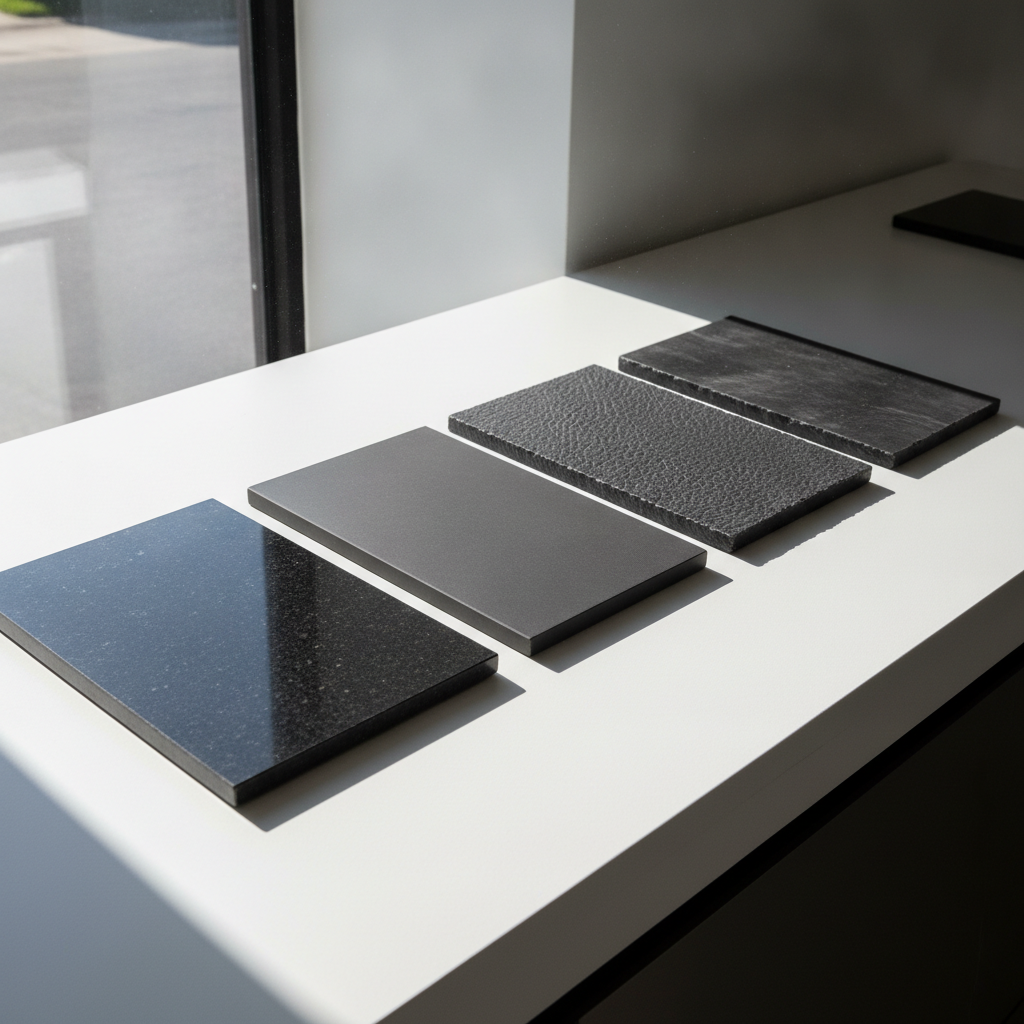
Black granite countertops are heat-resistant and highly scratch-resistant — two performance advantages that set them apart from black quartz in a working kitchen. Unlike black quartz, black granite can handle a hot pan placed directly on the surface without risk of scorching or discoloration. That's a meaningful difference if your household actually cooks most nights.
Black granite is a natural stone formed over millions of years, which means no two slabs are identical. The mineral composition — feldspar, quartz, mica, and hornblende — determines the base color and the pattern of flecks, veining, or movement you see. This is why Black Galaxy granite from India looks like a starry sky with copper-gold flecks, while Cosmic Black from Brazil carries white, amber, and burgundy swirls across a dark base. Both are granite. Both are black. They look nothing alike on a full slab.
One honest trade-off: polished black granite shows fingerprints and water spots more readily than lighter stones under direct light. That's not a flaw in the stone — it's a finish choice, and it's fixable. The key performance point is that dark granite's density actually works in your favor: varieties like Absolute Black and Black Pearl are denser and less porous than most light granites, which means they resist stains well and require less frequent sealing. Scratching is also far less of a concern with granite than with engineered surfaces — granite sits at a 6–7 on the Mohs hardness scale.
Run the water-drop test on any slab you're considering. Place a few drops of water on the surface and wait 10–15 minutes. If the stone darkens significantly, it's absorbing water and will need sealing right away. Most black granite slabs absorb very little — another reason dark granite is a genuinely low maintenance natural stone option for busy Central Texas kitchens.
There are 30-plus recognized black granite varieties, but four dominate Central Texas kitchens as of 2026: Absolute Black, Black Pearl, Black Galaxy, and Cosmic Black. Each has a distinct look, price point, and personality — and picking the wrong one from a screen is one of the most common mistakes homeowners make when they shop before visiting a showroom.
Absolute Black is the entry point: a uniform, solid black with almost no visible pattern. It runs $40–$70 installed and suits modern, minimalist kitchens where you want clean lines and no visual competition with bold cabinet colors or backsplash tile. Black Pearl is similar in cost but adds subtle silver and gray mineral movement — it's a great choice if you want a bit of depth without drama. Both are quarried in India and are among the densest black granites available, which contributes to their durability and stain resistance. Their high density also means the color stays rich and consistent year after year with minimal wear.
Black Galaxy is the showstopper. Quarried in India, its deep black base is scattered with copper-gold mineral flecks that catch light from every angle — the effect genuinely resembles a starry night sky. It runs $60–$100 installed and pairs beautifully with warm wood cabinetry or white uppers, where the gold tones create natural contrast. Cosmic Black granite, sourced from Brazil, goes the other direction: sweeping white, amber, and burgundy patterns cross a dark background with real movement. For homeowners who want that contrast and visual energy, Cosmic Black delivers. Budget $70–$110 installed. For maximum drama with bold white veining — something closer to a marble look on a black base — Via Lactea pushes $130–$200 installed but is unlike anything else in the black granite category. Explore these options in person to see how the pattern movement varies slab to slab.
Free to visit
Full slabs look completely different from tile samples — seeing Absolute Black vs. Black Galaxy side by side in person prevents a costly mismatch.
Free
Fox Granite brings samples to your home so you can check color against your actual cabinets and lighting — not a showroom's controlled lighting.
Ask to see the specific slab that will be cut for your kitchen — not just a sample tile. Granite is a natural stone, so two slabs of the same variety can look meaningfully different. This is especially true for Cosmic Black and Black Galaxy, where pattern movement and gold fleck density vary slab to slab.
As of 2026, honed and leathered finishes are rising fast while high-gloss polished remains the most common — but it's losing ground for good reason. The finish you choose affects daily maintenance, how fingerprints show up, and how the stone reads in your specific lighting. Get this decision wrong and you'll be wiping down your countertops after every single use.
Polished black granite has a mirror-like sheen that makes colors pop and looks sharp in photos. The trade-off: it shows water spots and fingerprints readily, especially under recessed or pendant lighting. If your household has kids, cooks frequently, or lives in Central Texas where hard water leaves mineral deposits, polished black granite requires a dry microfiber wipe-down after every wet clean to stay looking sharp. That's a real daily time commitment — not a dealbreaker, but an honest expectation to set before you commit.
A honed or leathered finish changes the equation completely. Honed is matte and smooth; it softens the look and hides fingerprints far better than polished. Leathered adds a subtle texture by brushing the surface with diamond-tipped brushes after polishing — the result is a tactile quality that makes the stone feel more natural and organic. Both finishes work beautifully with warm wood cabinetry, matte black hardware, and layered lighting, which is the dominant design direction in 2026. If low maintenance is your top priority, choose honed or leathered over polished. The beauty of these finishes is that they let the natural textures of the stone come forward rather than reflecting the room back at you.
Some fabricators charge an upcharge of $10–$20 per square foot for a leathered finish because of the additional processing time involved. Ask for this cost upfront so it's included in your total installed quote — not added as a line item after you've already agreed to a price.
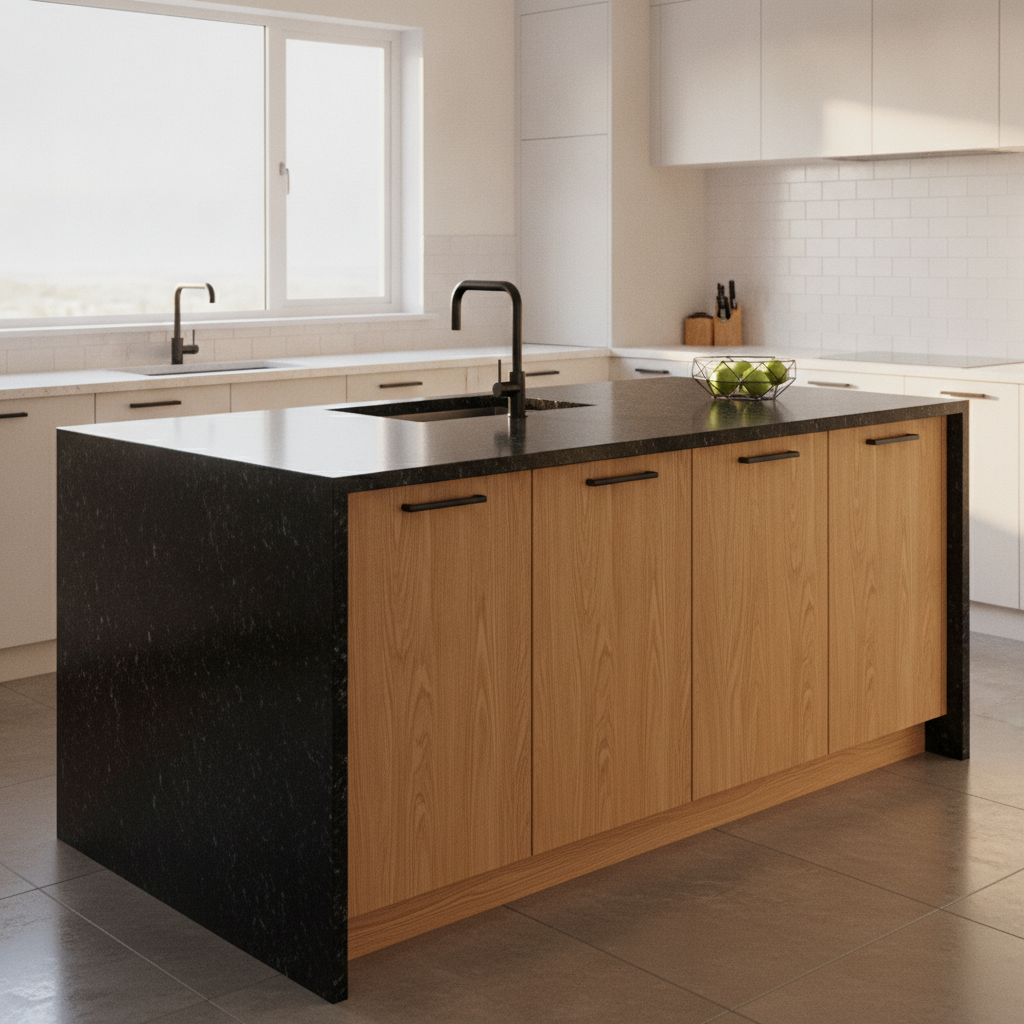
The six cabinet colors that pair best with black granite countertops in 2026 are pure white, warm greige, navy blue, forest or sage green, natural oak, and light gray. White-plus-black-granite is the safest choice for resale value and creates maximum contrast without risk. If you plan to sell within five years, white uppers with black countertops is the combination that buyers respond to most consistently — it photographs well, reads as timeless, and doesn't require any explanation.
Natural oak cabinetry with black granite is the defining pairing of the 2026 modern kitchen trend. The warm gold tones in the wood soften the darkness of the stone, and the organic textures of both materials create a room that feels grounded rather than cold. Add matte black hardware and you have a kitchen that looks current without chasing trends that date quickly. Black Galaxy and Cosmic Black granite work especially well here because their gold and amber mineral flecks echo the warm wood tones and make the whole room feel cohesive.
Navy blue and forest green cabinets are bold choices but they work — they're dark enough to let the black granite feel intentional rather than accidental. The key is contrast in texture: pair dark cabinets with a honed or leathered black granite rather than polished, so the two dark surfaces read as different materials rather than blending into one heavy mass. Light gray cabinets are the safest middle ground. They add softness and a bit of warmth without the high-contrast drama of white, making them a solid choice for larger kitchens where all-white can feel clinical. For any blue cabinet pairing, make sure your granite variety has enough mineral movement to stand on its own — Absolute Black with blue cabinets can flatten; Black Galaxy or Cosmic Black will hold.
Using black granite on just the island against white perimeter countertops is the designer-recommended approach for 2026 — it creates drama without making the kitchen feel heavy or dark. This strategy works in kitchens of almost any size because the black granite island becomes a sculptural focal point that anchors the room while the white perimeter keeps things feeling open and bright. It also lets you invest more of your budget in a premium variety like Black Galaxy for the island while keeping perimeter costs lower.
A waterfall island is one of the defining design moves of the current modern kitchen. The slab runs vertically down one or both sides of the island rather than stopping at the cabinet edge, creating a seamless, sculptural result that reads as furniture rather than just a countertop. Waterfall edges require precise templating and careful slab matching to align the pattern at the corner seam — this is where in-house fabrication and an experienced team make a real difference. Expect to budget for additional square footage, typically 8–15 extra square feet per waterfall side, and ask your fabricator to show you how the slab pattern will land at the seam before fabrication begins. A gap or mismatch at that corner is permanent.
For the backsplash, a full slab backsplash behind the range in matching black granite creates a cohesive, high-impact look. A simpler approach that works just as well: keep the backsplash light — white subway tile, pale marble, or warm travertine — and let the black countertops stand out as the room's statement element. Edge profile choices also deserve attention. An eased or beveled edge keeps things modern and clean; a bullnose or half-bullnose softens the look for transitional kitchens. Talk through your edge options during the templating visit so you can see how each profile touches the cabinet below and the backsplash behind.
Included in project
Precision templating ensures waterfall edge seams and island cutouts are measured exactly — no guesswork, no gaps at installation.
Black granite countertops cost $40 to $200 per square foot installed, and most Central Texas kitchens land between $60 and $120. Budget-grade options like Absolute Black and Black Pearl run $40–$70 installed. Mid-range varieties like Black Galaxy and Cosmic Black granite fall in the $60–$110 range. Premium exotics like Via Lactea and Black Fusion push $130–$200. For a full kitchen project, most homeowners spend $2,000–$4,000, with a median around $3,250. Large kitchens or complex layouts with waterfall islands can reach $9,000. Those are the real numbers — not the material-only figures that fabricator websites often lead with.
Those totals should include fabrication, installation, edge profiling, and the first seal — not just the slab material. A quote that shows only material cost with labor and finishing listed separately is a signal to ask more questions. Get the all-in number before you compare quotes across fabricators. Fox Granite builds transparent all-in pricing from the start, so you know the full installed cost before you sign anything. No line-item surprises after templating.
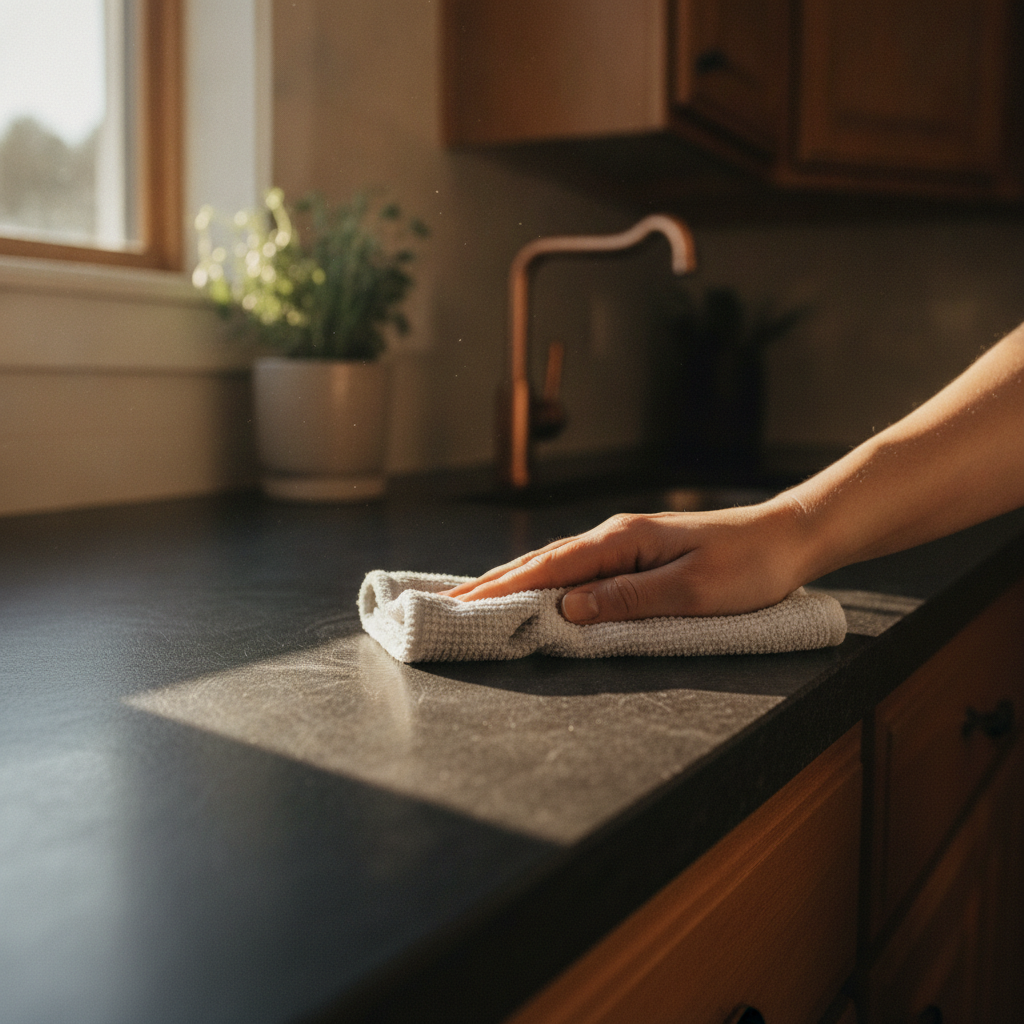
Maintenance is genuinely easy. Daily care is warm water and a soft cloth. After wet cleaning, a dry microfiber wipe-down prevents mineral deposits from Central Texas hard water — the one maintenance step that matters most in this region. Hard water is real here, and it will leave spots on polished black surfaces if you let wet cleaning air-dry. For sealing, most black granite varieties need a fresh coat of sealer once a year. Very dense specimens like Absolute Black may go longer between applications. DIY sealing materials cost $1–$3 per square foot. Many fabricators include the first seal at installation. Set a calendar reminder every 12 months and you're covered — that's the full annual maintenance commitment for a material that will protect and beautify your kitchen for decades.
Before finalizing your quote, confirm these four items are included: fabrication, installation, edge profile of your choice, and the first seal. If any of these appear as line-item add-ons rather than part of the base price, factor them in before comparing quotes from different fabricators. The answers to this four-point check will reveal whether a quote is genuinely competitive.
Black granite slabs vary dramatically in pattern, movement, and finish from one piece to the next — and phone or laptop screens cannot show you how the stone will look under your kitchen's actual lighting with your cabinets. Absolute Black and Black Galaxy can look almost identical in a small tile sample but completely different as a full counter. Before you commit to a $2,000–$9,000 project, see full slabs in person and bring a sample home. Fox Granite offers free in-home consultations with samples, so you can check the stone against your real cabinets and lighting before anything is cut. Call (512) 653-5541 or contact us today to schedule yours.
Ready to get started? Contact Fox Granite today.


BY APPOINTMENT ONLY
1379 Wald Road
New Braunfels, TX 78132
Austin, San Antonio, Cedar Park, Kyle, New Braunfels, Del Valle, Elgin, Lago Vista, Shady Hollow, Onion Creek, Buda, San Marcos, Lockhart, Temple, Wimberley, Dripping Springs, Bee Cave, Lakeway, Leander, Anderson Mill, Jollyville, Spicewood Springs, Round Rock, Georgetown, Pflugerville, Manor, Taylor, Manchaca, Mountain City, Hutto, West Lake Hills, Bastrop, Liberty Hill, Driftwood, Sun City, Steiner Ranch.