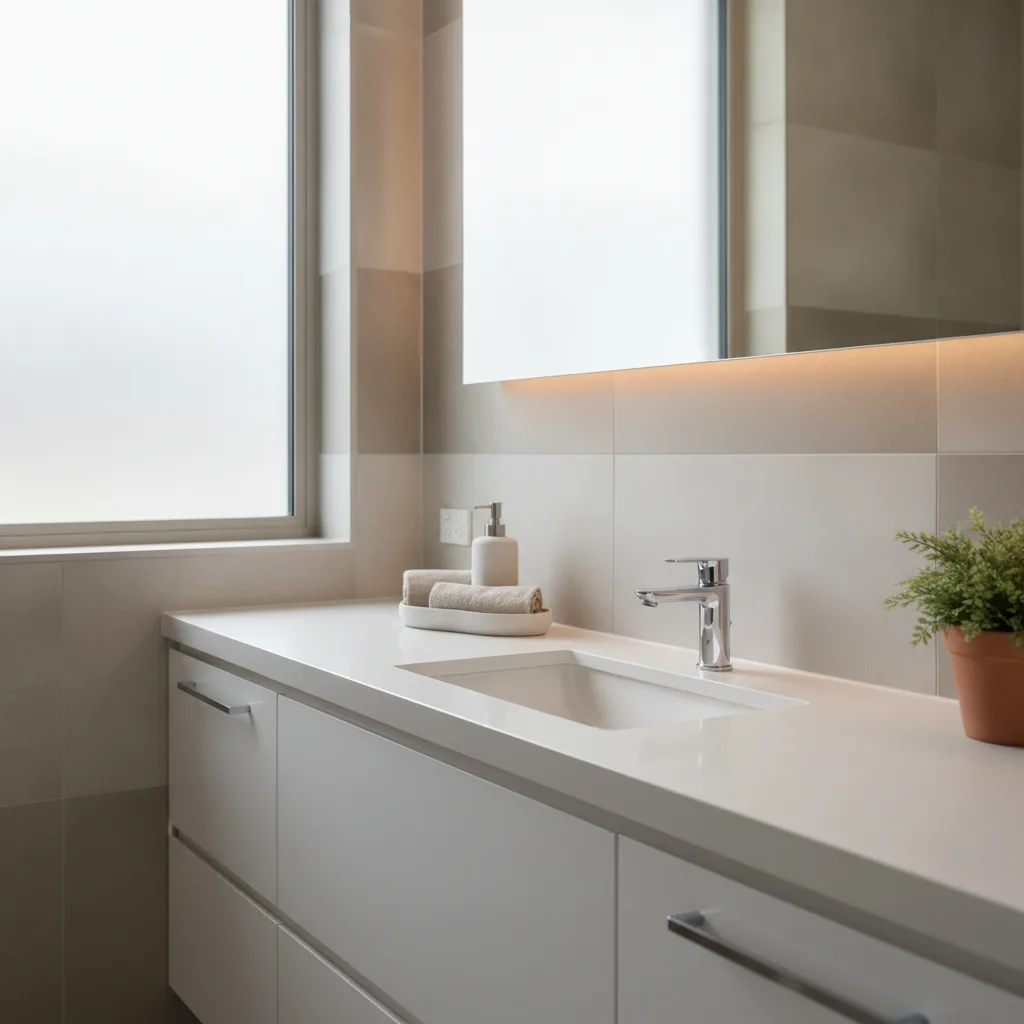
For most primary bathrooms, quartz is the best vanity top material in 2026 — it's non-porous, never needs sealing, and resists the acid etching that damages marble. Granite is a strong alternative if you want natural stone and can reseal every 1–3 years. Marble belongs in low-traffic powder rooms or guest baths, not in a primary bath or kids' bathroom where acidic toiletries will cause etching over time. Installed costs run $55–$130 per square foot for quartz, $50–$120 for granite, and $75–$200 for marble. A standard 48-inch single-sink vanity lands at $800–$1,200 installed for granite or quartz. Traffic level is the single biggest filter: choose your material based on how much daily wear the vanity actually sees, then refine by budget and design goals.
The right bathroom remodel countertops decision comes down to one thing before style, trends, or budget: how much daily wear does the vanity actually see? Get that answer right and the rest of the choice — granite, quartz, or marble — follows quickly. Get it wrong and you'll be staring at etched marble or an over-engineered powder room surface for the next decade. This guide walks Central Texas homeowners through the full decision in six steps, with 2026 installed costs, honest maintenance asks, and material-specific tradeoffs at every stage. Reading time is 20–30 minutes. Decision time, once you've finished, should be measured in hours — not weeks.
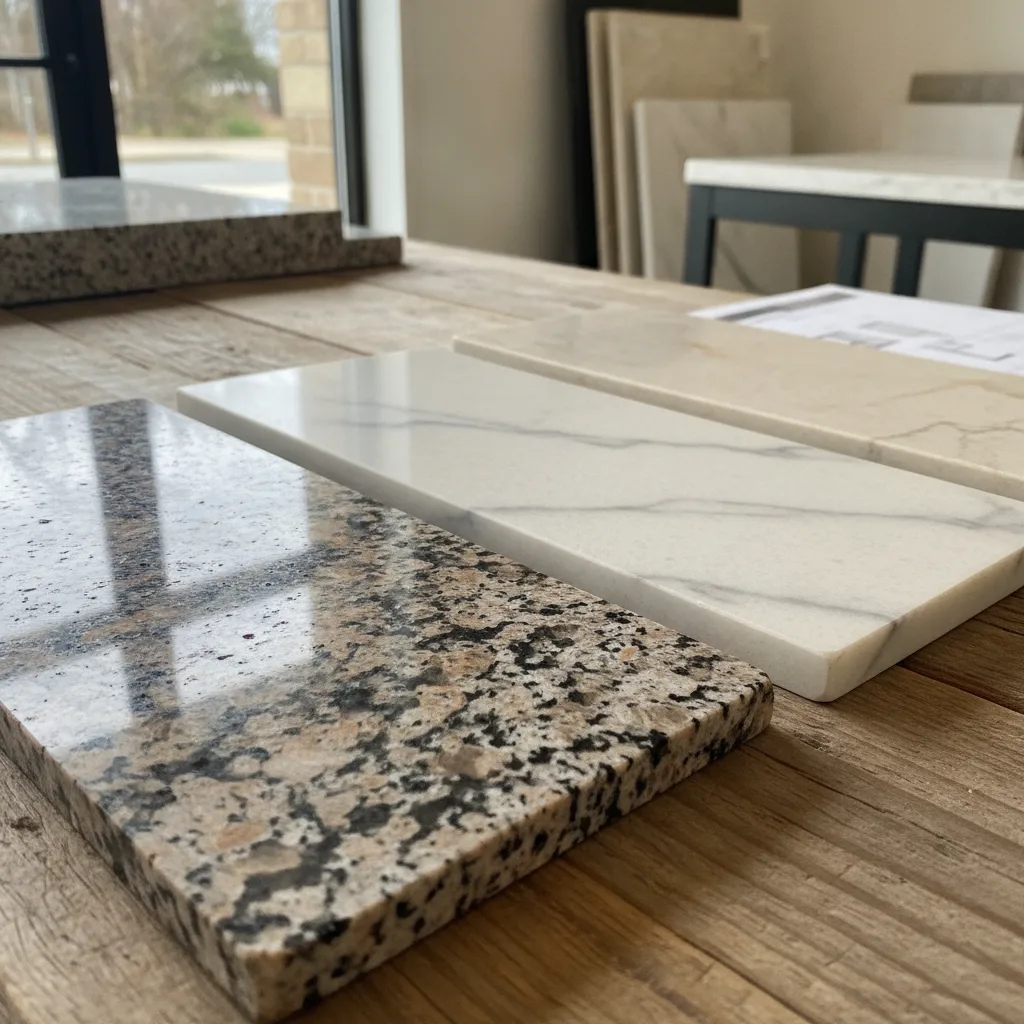
The right bathroom countertop material starts with one honest question: how much daily wear does this vanity actually see? A primary bathroom shared by two adults is a different project than a guest powder room used a few times a week — and treating them the same is where most homeowners end up with the wrong surface and a remodel they regret.
Primary bathrooms and kids' bathrooms need countertops built for daily moisture, toothpaste, soap film, hairspray, and the occasional dropped bottle. Quartz and granite are both strong choices here. Powder rooms and design-focused guest baths have much more room for materials like marble, which looks luxurious but requires careful daily habits to stay looking polished. That natural beauty and classic appeal can absolutely work in the right room — just not in the room with the heaviest daily use.
Use this as your routing filter before reading anything else. If the vanity gets heavy daily use, go to Steps 2 and 3 first. If it's a low-traffic space where design and inspiration matter more than bulletproof durability, Step 4 will be the most relevant. This one decision cuts your remaining research time in half and keeps you from falling in love with a slab that doesn't fit the room.
Primary bath or kids' bath: start with quartz or granite. Guest bath or powder room: all three materials are on the table, including marble. Matching the material to actual traffic is the fastest way to avoid regret.
Quartz is the most popular bathroom countertop material in 2026, accounting for more than 50% of new vanity installs — and the performance numbers explain why. It's engineered from 93–94% crushed quartz bound in resin, which makes it non-porous, stain-resistant, and immune to the acid etching that damages marble. It never needs sealing. Ever. That's not marketing language; it's a direct result of how the material is manufactured.
For a primary bathroom, quartz handles the full range of daily wear without fuss. Soap, makeup, toothpaste, hairspray — wipe it off with a damp cloth and you're done. There's no annual maintenance schedule, no water-drop test to remember, and no product restrictions at the sink. That low-maintenance reality is why it leads the market and why durability-focused homeowners consistently choose it for vanity tops in high-use bathrooms. Chrome fixtures and white walls pair well with warm-veined quartz slabs, and that combination is among the most-requested looks at our New Braunfels showroom right now.
Installed cost for a quartz vanity top runs $55–$130 per square foot as of 2026. A standard 48-inch single-sink vanity in quartz typically lands between $800 and $1,200 installed — right at the national average. Double-sink configurations run $600–$3,000 depending on slab choice and counter space. The 2026 color trend favors warm-veined quartz in creamy off-whites with gold or taupe veining — off-white leads all color categories at 58% of new design projects per NKBA 2026 data, a clear shift away from the cool gray slabs that dominated the last decade. Quartz does have one honest limit: hot styling tools placed directly on the surface can damage the resin binder. A small heat pad near the styling area solves this completely.
Free to visit
See full-size quartz slabs in person before committing — photos never capture how veining reads across a full vanity top width
$35–$100
Included here so you know to skip it entirely with quartz; budget this line item for granite or marble instead
Granite countertops bring natural beauty that no two slabs replicate — every piece has its own pattern, depth, and color movement. In a bathroom, granite is a great option for homeowners who want the warmth of natural stone and can do a small amount of maintenance to keep it protected. It's also the better choice if you style your hair at the vanity daily: granite handles heat better than quartz, so hot curling irons or flat irons left on the surface won't cause the resin damage that happens with quartz.
The maintenance ask is simple and infrequent. Granite is a porous natural stone, so periodic sealing is required to resist staining. In a bathroom vanity with low-to-moderate daily use, most slabs need resealing every 1–3 years. Dense, dark slabs can often go 3–5 years between applications. The process takes about 30 minutes with a DIY stone-specific penetrating sealer costing $35–$100 per bottle — one bottle typically covers multiple vanities or an entire kitchen worth of surfaces. That's one afternoon every few years. Not a constant commitment.
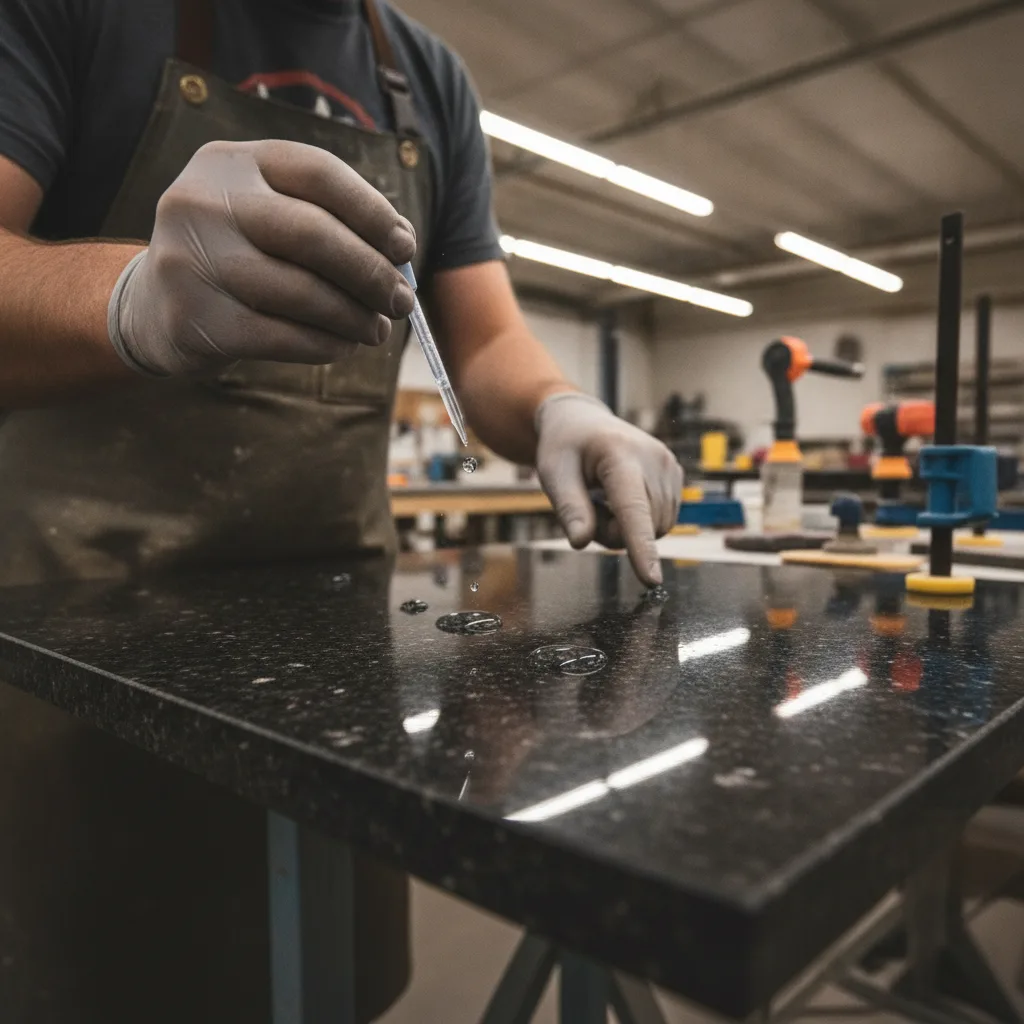
Installed cost runs $50–$120 per square foot in 2026. A standard 48-inch granite vanity top lands in the same $800–$1,200 installed range as quartz for mid-tier slabs. The 2026 trend toward leathered and honed finishes is strong in granite — leathered surfaces hide fingerprints and water marks noticeably better than polished finishes, which matters on a vanity that sees daily use. When you're at the slab yard, ask your fabricator to run the water-drop absorption test on any slab you're considering. A properly sealed slab will bead water; an unsealed slab will absorb it within a few minutes. Lighter, more porous slabs need sealing more often — factor that into your material selection when you explore the collection.
Pour a few drops of water on your existing granite vanity top and wait 10 minutes. If the water beads up, the sealer is still working. If it darkens the stone, it's time to reseal. This test takes 10 minutes and costs nothing.
Marble countertops are genuinely beautiful — the veining, the depth, the classic look — and they're best suited to low-traffic powder rooms and design-focused guest bathrooms rather than a primary bath or kids' bathroom. That's not a knock on marble. It's just being honest about what the material handles well in a vanity setting and what it doesn't.
Here's the core issue: marble etching is chemical surface damage caused by acids dissolving the calcium carbonate in the stone. Sealing does NOT prevent etching. Even a few drops of vinegar left on polished marble for 10 minutes can leave a visible dull mark. Common bathroom culprits include certain toothpastes, acidic toners, face washes with citric acid, and hairspray residue. In a guest bathroom with light use and disciplined product habits, those risks are manageable. In a primary bath where someone moves fast every morning, etching is almost inevitable over time. Sealing is still recommended every 6–12 months to slow staining — just understand it won't stop the etching that creates dull spots on polished surfaces.
If marble fits your lifestyle and room, installed cost runs $75–$200 per square foot in 2026, making it the priciest of the three by a meaningful margin. A powder room with blue walls or a guest bath designed as a calm, spa-like space can be exactly the right setting for marble — and a well-chosen slab in that context creates an appearance that's hard to match. Ask your fabricator about honed marble finishes for bathroom vanity tops. A honed finish shows etching less visibly than a high-polish surface, which gives you a bit more forgiveness in daily life if you love the look of marble but want balance between style and practicality.
Granite, quartz, and marble are the most popular options for bathroom vanity tops in 2026, but two other materials are worth knowing before you finalize your plan: solid surface and quartzite. Each fills a specific gap that the three main materials don't cover equally well.
Solid surface countertops (the Corian category) offer a seamless, non-porous integrated sink option with no grout lines and no sealing required. Installed cost runs $26–$80 per square foot — the most budget-friendly no-sealing alternative to quartz. The tradeoff is that solid surface scratches more easily than stone and can't be polished back to a factory finish without professional help. For a tight-budget bathroom remodel where a smooth, integrated sink look matters more than stone character, solid surface is a practical choice. It's particularly well-suited for families who want an easy-clean surface in a kids' bath without worrying about stains or sealing schedules. Laminate and wood countertops exist at lower price points but are not recommended for bathroom vanity tops: wood warps from moisture cycling, and laminate can delaminate at the sink edge over time.
Quartzite is a natural stone — not to be confused with engineered quartz — that has risen sharply in popularity through 2026. It's harder than granite, genuinely heat-resistant, and carries dramatic veining that works as a design focal point in a vanity setting. Installed cost runs $80–$200 per square foot, closer to marble pricing. It requires sealing like granite, but its durability stands well above marble and makes it a strong alternative for homeowners who want natural stone surfaces with more confidence than marble offers. Leathered quartzite finishes are among the strongest 2026 trends for bathroom countertops, particularly in warm neutral tones. Concrete countertops also come up in design-forward projects — they're heavy, require significant sealing and ongoing maintenance, and work best as a specialty choice for a specific aesthetic. For most Central Texas homeowners remodeling a bathroom, granite, quartz, quartzite, or solid surface will serve the space better with less long-term hassle than concrete.
Free
Bring samples directly to your bathroom so you can see how each material reads against your existing tile, fixtures, and lighting before you commit to a slab
The national average cost to replace a bathroom countertop is $2,300 installed as of 2026, with a typical range of $400–$4,300 depending on material, vanity size, and sink configuration. That wide range exists because a small single-sink vanity in an entry-level granite slab is a very different project from a double-sink primary bath in a premium marble slab with an undermount sink and a custom edge profile. Expect the final number to reflect those specifics — a vague quote that doesn't account for them is a quote to push back on.
Here's how the math breaks down by material and size in 2026. A standard 48-inch single-sink vanity runs $800–$1,200 installed for granite or quartz. Double-sink configurations run $600–$3,000 installed. Per-square-foot: granite at $50–$120, quartz at $55–$130, marble at $75–$200, quartzite at $80–$200, solid surface at $26–$80. Old countertop removal adds $100–$500 to most projects, or roughly $3–$8 per square foot — confirm whether demo is included in the quote or billed separately before you sign anything. Storage improvements or furniture-style vanity upgrades sometimes happen at the same time as a countertop swap, which can affect the total project scope.
A few decisions affect the final number beyond the slab itself. Edge profile selection — eased, beveled, bullnose, half-bullnose, ogee — adds visual detail and can affect cost depending on profile complexity. Sink type matters too: an undermount sink is the most popular choice for vanity tops because it keeps the counter space easy to wipe and creates a clean look at the sink edge. A vessel sink sits on top of the counter and doesn't require a sink cutout. An integrated sink built into a solid surface slab is the seamless option with no gap between counter and basin. Each has a fabrication implication — which is why getting a complete, all-in quote before you commit to a slab is the right move. Fox Granite provides transparent, all-in pricing with no surprise fees added after templating. Our precision overlay template method captures your vanity dimensions exactly so the slab fits right the first time. From your free in-home consultation to finished installation, most projects across Austin, San Antonio, and the Central Texas area move quickly — contact us and you could have your new vanity top installed within a week of the template appointment.
Get one number that includes fabrication, edge profiling, sink cutout, and installation. Lowball quotes often exclude the sink cutout fee or charge separately for the undermount sink drop-in. Ask for an itemized breakdown before you sign anything.
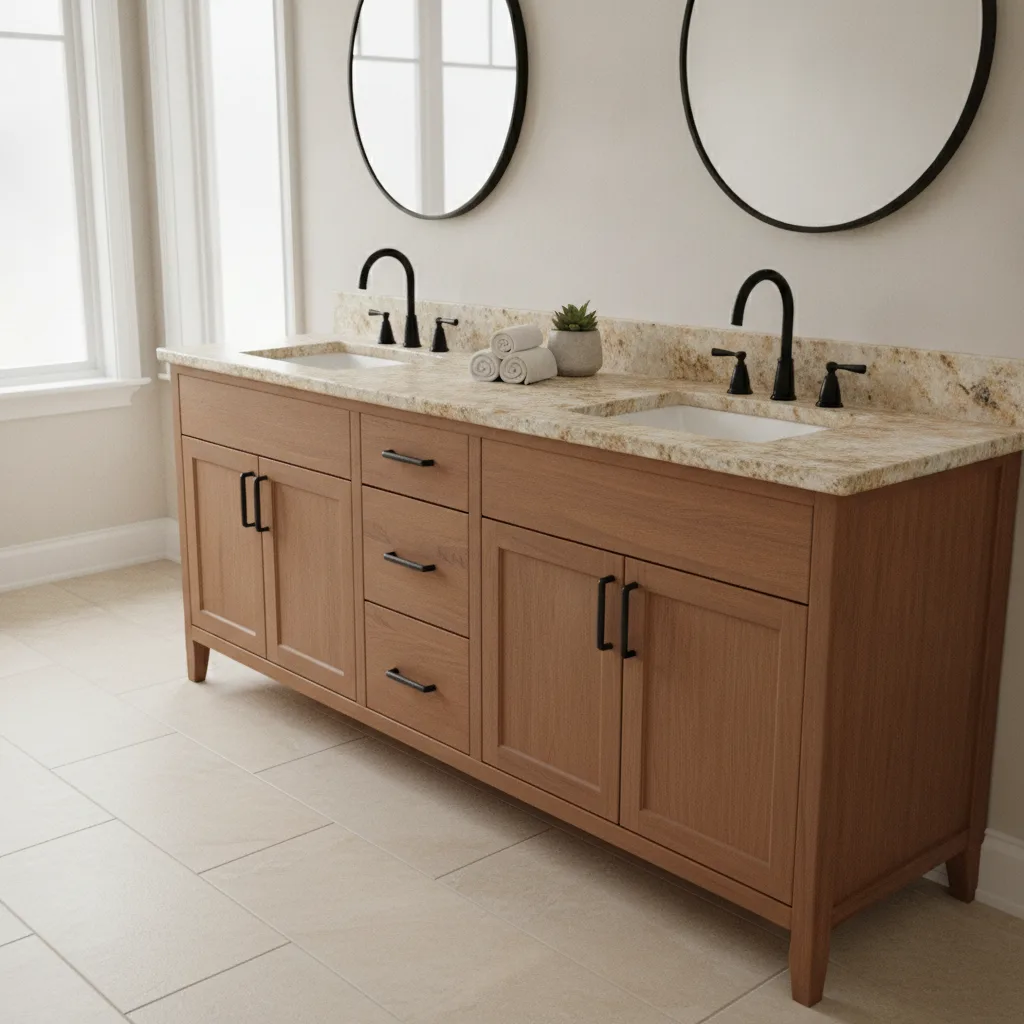
If a fabricator quotes marble or granite for your primary bathroom without mentioning sealing frequency, that's a gap in the sales process — not a feature. Sealing protects against staining but does nothing to prevent marble etching. Make sure you understand the full maintenance ask for whatever material you choose before the slab is cut. A good fabricator walks you through this at the consultation, not after installation. Ask directly: how often does this slab need to be resealed, and what products do you recommend?
When you match the right material to the right bathroom — quartz or granite in high-traffic primary baths, marble or quartzite in design-forward low-traffic spaces, solid surface where budget and integrated sinks matter — the vanity top you choose will still look sharp a decade from now. For bathroom remodel countertops in Austin, San Antonio, New Braunfels, Round Rock, Georgetown, San Marcos, and throughout the Central Texas corridor, Fox Granite is a family-owned team with over 15 years of experience, in-house fabrication, and a consumer-first process that takes you from free in-home consultation through professional installation — with transparent, all-in pricing and no surprises. Contact us today to schedule your free consultation and discover exactly how granite, quartz, or marble reads in your bathroom before you commit to a slab.
Ready to get started? Contact Fox Granite today.


BY APPOINTMENT ONLY
1379 Wald Road
New Braunfels, TX 78132
Austin, San Antonio, Cedar Park, Kyle, New Braunfels, Del Valle, Elgin, Lago Vista, Shady Hollow, Onion Creek, Buda, San Marcos, Lockhart, Temple, Wimberley, Dripping Springs, Bee Cave, Lakeway, Leander, Anderson Mill, Jollyville, Spicewood Springs, Round Rock, Georgetown, Pflugerville, Manor, Taylor, Manchaca, Mountain City, Hutto, West Lake Hills, Bastrop, Liberty Hill, Driftwood, Sun City, Steiner Ranch.