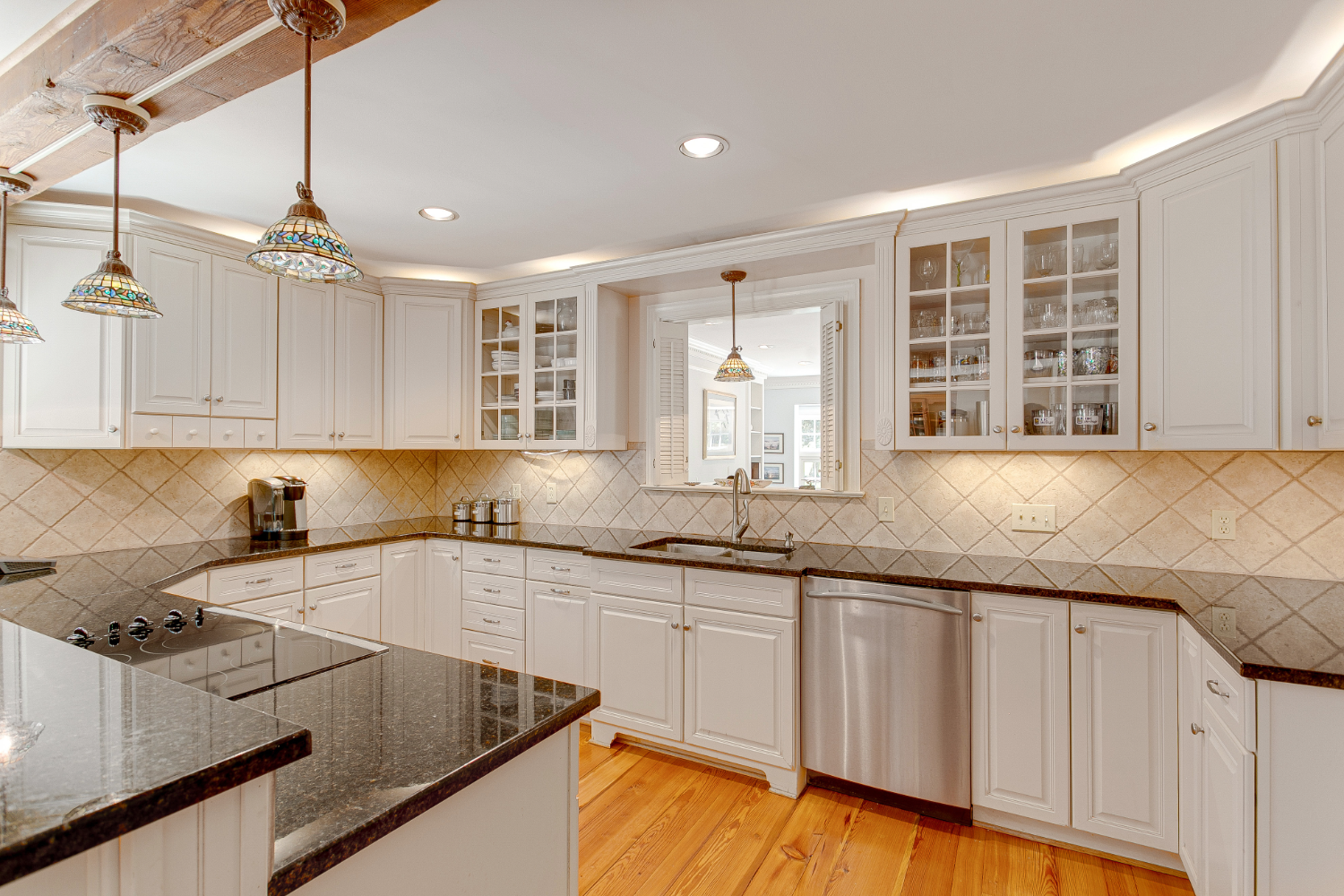
Granite countertops are a natural fit for rustic kitchen design. Their organic patterning, earthy tones, and textured variation complement the raw materials, warm woods, and handcrafted details that define the rustic aesthetic.
Rustic design is rooted in natural materials, honest craftsmanship, and surfaces that look like they were shaped by the earth rather than a factory. Granite fits that language instinctively. No two slabs are alike, and the natural variation in veining, color, and texture gives granite a character that manufactured surfaces cannot replicate. In a style built around authenticity, that matters.
Granite is quarried directly from the earth, which gives it an inherent connection to the natural world that rustic design celebrates. The movement in the stone, the irregular patterning, and the way light interacts with its surface all echo the organic imperfection that defines the aesthetic. Unlike engineered surfaces with consistent, predictable patterns, granite brings a one-of-a-kind quality that strengthens a rustic kitchen's sense of place.
Rustic kitchens are not meant to look precious. They are designed to feel well-used, functional, and lived-in. Granite is one of the most durable countertop materials available, resistant to scratches and heat in everyday use. It holds up to the kind of heavy, frequent use that a kitchen styled around honest hard work should be able to withstand.
Not all granite reads as rustic. Color, pattern, and finish all influence whether a slab reinforces the aesthetic or works against it. The goal is to choose a stone that feels grounded and organic rather than sleek or formal.
Rustic kitchens lean on warm, earthy tones drawn from nature. Granite in shades of brown, gold, amber, forest green, and soft black integrate most naturally into this palette. Heavily veined white or grey granite with high contrast patterning can pull the space in a cooler, more contemporary direction, which tends to work against the warmth rustic design depends on.
Some granite varieties that tend to work well in rustic settings include those with warm undertones, subtle movement, and a mix of earth-toned minerals. Avoid slabs that read as too uniform or too stark, as visual consistency conflicts with the layered, textured quality rustic interiors rely on.
The finish on granite changes how it reads in a room more than most people expect. A high-polish finish reflects light sharply and gives granite a formal, refined appearance that can feel out of place in a rustic kitchen. A leathered or honed finish is a better match for the aesthetic.
Leathered granite has a soft, textured surface that scatters light rather than reflecting it, which reinforces the raw, natural feel of the stone. Honed granite has a matte, flat finish that is more understated. Both work well in rustic settings and are easier to maintain in terms of visible fingerprints and smudging compared to polished surfaces.
The edge detail on a countertop is a small decision that has a visible impact on the overall feel of the kitchen. For rustic design, simpler, more natural-looking edge profiles work best. A chiseled or eased edge reinforces the handcrafted quality of the aesthetic. Highly ornate or sharp, modern edge profiles introduce a formality that conflicts with rustic design's relaxed character.
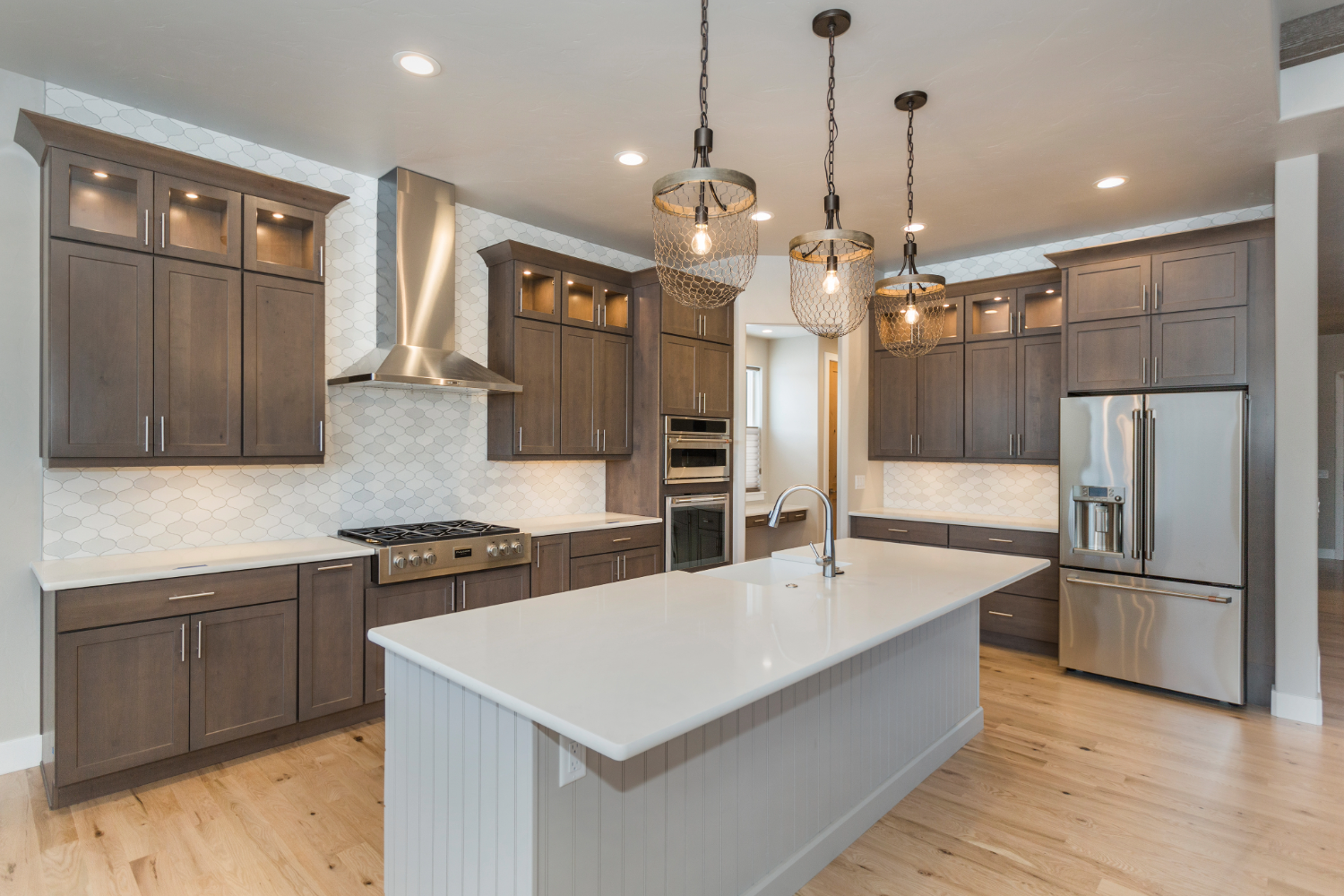
Granite does not define a rustic kitchen on its own. The materials around it, cabinetry, flooring, hardware, and accents, determine whether the space comes together as a cohesive whole.
Wood cabinetry is the most natural pairing for granite in a rustic kitchen. Knotty alder, hickory, pine, and oak all carry the grain variation and warmth that complement granite's organic patterning. Cabinets with a distressed, hand-painted, or furniture-style finish reinforce the rustic character of the space. Flat-front or highly minimal cabinetry tends to read as too contemporary alongside natural stone.
Stone tile, slate, terracotta, and wide-plank hardwood floors all work well beneath granite countertops in a rustic kitchen. The goal is to build a layered palette of natural materials that feel like they belong to the same world. Flooring that introduces a contrasting finish, high-gloss tile or polished concrete, for example, can disrupt the warmth the rest of the materials are working to create.
Hardware is one of the easier places to reinforce the rustic aesthetic. Matte black, oil-rubbed bronze, and wrought iron finishes on pulls, knobs, and faucets complement granite's earthy tones without competing with the stone. Brushed nickel and polished chrome hardware tends to feel too modern and cool in contrast.
Open shelving made from reclaimed wood or rough-hewn timber is a common feature in rustic kitchens and works particularly well alongside granite. The visual contrast between the texture of natural wood and the weight of stone creates the kind of layered, collected feel that defines the style. Exposed beams, brick backsplashes, and stone range hoods all reinforce the same material language.
The backsplash sits directly behind and above the countertop, making it one of the most important visual decisions in the space. In a rustic kitchen, the backsplash should feel like a natural extension of the materials already in the room.
Standard glossy subway tile can feel too polished for rustic design, but handmade or tumbled subway tile with slight variation in surface and size reads very differently. The imperfection in handmade tile echoes the organic character of granite and gives the backsplash a texture that polished tile cannot offer.
A stacked stone or stone mosaic backsplash creates a direct material connection to the granite countertop. Travertine, slate, and fieldstone all carry the earthy, layered quality that reinforces the rustic aesthetic. The key is ensuring the stone in the backsplash complements rather than competes with the patterning in the granite slab.
In areas away from the immediate cooking zone where moisture is less of a concern, reclaimed wood or shiplap used as a backsplash adds warmth and texture that ties the granite to the cabinetry. This approach works especially well in open-plan kitchens where the backsplash functions as a design element across a wider wall.
Granite countertops in Austin, TX, are the best choice for a rustic kitchen. Its natural origin, organic variation, and earthy character align with the core principles of the aesthetic in a way that few other materials can match. The right slab, finished correctly and paired with complementary materials, becomes one of the most defining elements of the entire space.
For those who want a surface that looks more natural with every passing year and gains character rather than losing it, granite in a rustic kitchen is a choice that holds up well over time. Visit our showroom or contact our team to start planning.


BY APPOINTMENT ONLY
1379 Wald Road
New Braunfels, TX 78132
Austin, San Antonio, Cedar Park, Kyle, New Braunfels, Del Valle, Elgin, Lago Vista, Shady Hollow, Onion Creek, Buda, San Marcos, Lockhart, Temple, Wimberley, Dripping Springs, Bee Cave, Lakeway, Leander, Anderson Mill, Jollyville, Spicewood Springs, Round Rock, Georgetown, Pflugerville, Manor, Taylor, Manchaca, Mountain City, Hutto, West Lake Hills, Bastrop, Liberty Hill, Driftwood, Sun City, Steiner Ranch.