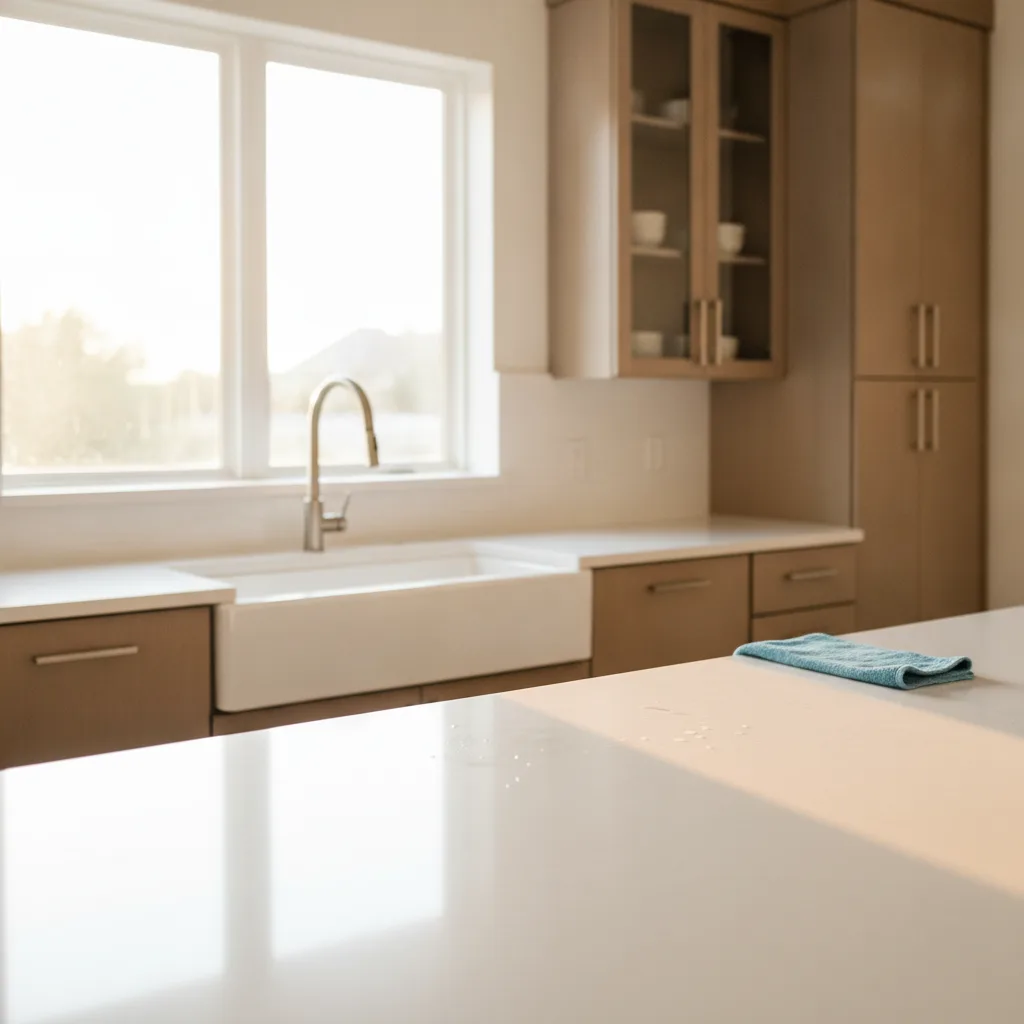
Austin tap water runs 10–16 GPG — classified as "very hard" by USGS standards — and some northwest Austin zones reach 20 GPG during drought years. That mineral load attacks quartz and granite countertops in fundamentally different ways. Quartz is non-porous engineered stone: calcium and magnesium deposits stay on the surface resin and never penetrate, so quartz never needs sealing. Granite is a porous natural stone: without consistent resealing every 1–2 years, Austin's hard water minerals seep below the surface and cause stains that are far harder to treat. Both materials can perform well in Central Texas kitchens and bathrooms — but the maintenance obligation, and the consequences of skipping it, are not the same.
Austin tap water runs 10–16 grains per gallon (GPG) — and in some northwest Austin distribution zones, it spikes to 20 GPG or higher during drought years. That puts Central Texas among the most mineral-aggressive water environments in the country, and it changes the countertop conversation in ways most showrooms won't tell you upfront. The mineral load from that water treats quartz and granite countertops differently, creates different maintenance obligations, and, if ignored, causes different types of damage. This guide walks through exactly what happens at each surface, how to test your current granite seal, what the real annual maintenance costs look like for each material, and how to make the right call for your Austin, TX kitchen or bathroom remodel. Working with a designer, a contractor, or going direct — no guesswork, no vague 'it depends,' just the specifics Central Texas homeowners need to find the right fit for their home and their life.
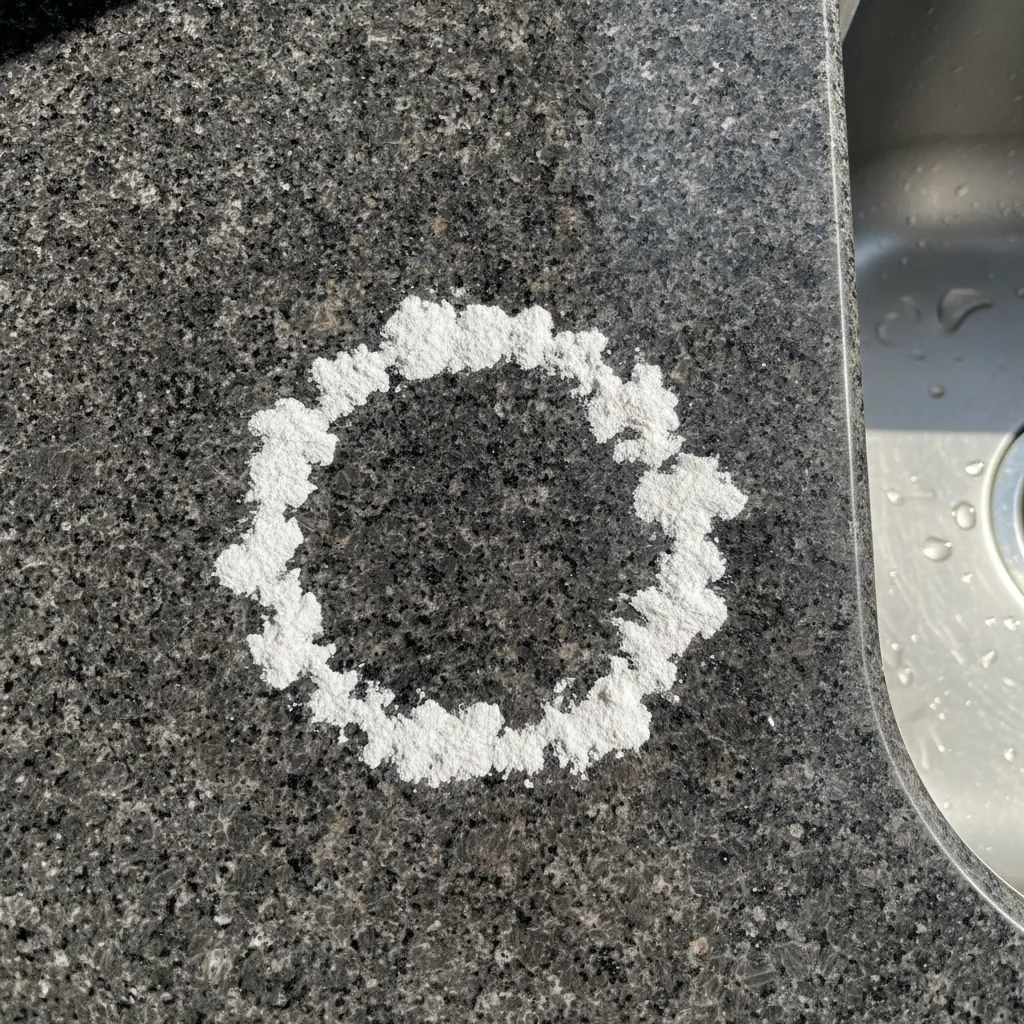
Austin tap water runs 10–16 grains per gallon (GPG) — classified as 'very hard' by USGS standards — and some northwest Austin distribution zones test as high as 20 GPG seasonally during drought years. San Antonio water from the Edwards Aquifer runs even harder, at 15–20+ GPG, making the entire Central Texas corridor one of the most mineral-aggressive environments in the country. Texas ranks 6th hardest water state in the US, with a statewide average above 200 PPM — and Austin's total dissolved solids (TDS) regularly measure 300–500 mg/L, near the EPA secondary guideline of 500 mg/L. These numbers are important to understand before you choose or maintain any countertop surface in the region.
Here's what that means at your countertop: every time water evaporates off a surface near your sink, it leaves calcium and magnesium behind. Those minerals don't evaporate — they bond. On a frequently used kitchen counter, this cycle repeats dozens of times a day. The result is the chalky white film, stubborn ring marks, and cloudy buildup that Central Texas homeowners know well. Round Rock and Georgetown average 12–18 GPG, so this is not just an Austin-proper problem — it's a metro-wide reality that affects every countertop material in the region. Note that the same hard water attacking your countertops is also cutting water heater tank lifespan to 6–8 years versus 12–15 years with softened water.
The critical distinction is what happens after those minerals land. Natural stone like granite absorbs them into its pores. Engineered quartz does not. That single difference drives almost every maintenance decision you'll make over the life of your countertops — and understanding it before you choose your material saves real money and frustration down the road.
During Central Texas drought cycles, reservoir levels drop and dissolved minerals concentrate. Austin water hardness can temporarily spike to 18–22+ GPG in some zones — meaning your countertop maintenance needs can intensify in the same seasons when you're already stretched thin. If your countertops looked fine last year and are suddenly cloudy, a drought hardness spike is a likely cause.
Quartz countertops are engineered with polymer resins that make the material non-porous — calcium and magnesium deposits from Austin's hard water accumulate only on the surface resin, never below it. That's the core advantage in a 10–16 GPG environment: there's no pathway for minerals to penetrate, so you're always dealing with a surface problem, not a subsurface one. Quartz also never requires sealing, because the resin itself is the barrier. Brands like Cambria build this non-porous composition into every slab, which is one reason quartz countertops in Austin, TX carry strong long-term durability ratings for hard water climates. Premium countertops don't have to mean premium maintenance — that's precisely what makes quartz such a popular selection for busy households, and it's easy to understand why so many Central Texas homes are built around this material.
Surface buildup on quartz still looks alarming, especially on white quartz slabs. Hard water spots on white quartz are visually identical to etch marks — which causes real confusion for homeowners and even for some installers. The difference matters: those marks are calcium, magnesium, and soap scum physically bonded to the resin, not chemical burns. A diluted white vinegar solution (50/50 with water), applied briefly and then rinsed and dried immediately, dissolves the mineral bond without damaging the quartz surface. That same vinegar approach on granite is a completely different story — covered in Step 3.
One caution specific to Austin's environment: while quartz's non-porous composition is a clear advantage, the resin surface itself can be damaged by acidic cleaners left to sit too long. Hard water deposits encourage homeowners to reach for stronger acids to 'cut through' buildup — resist that impulse. Brief contact with diluted vinegar is safe; undiluted acids or extended dwell times can etch the resin permanently. The simplest preventive habit you can build: wipe down the area near your sink with a dry microfiber cloth every time you use it. That one step eliminates most of the hard water problem on quartz before it starts.
$12–$18/bottle
Safe for daily use on quartz resin — won't degrade the surface or encourage mineral bonding the way alkaline or acidic products can
Under $3
Dissolves calcium and magnesium deposits on quartz surface without long-term damage when used briefly and rinsed immediately
$5–$10 for a pack
Lint-free drying after every sink splash is the single most effective hard water prevention habit on any countertop surface in Austin
White quartz slabs show hard water buildup most visibly — but they're also the easiest to diagnose. If the mark wipes away with a damp cloth and some diluted vinegar, it's mineral buildup. If it doesn't respond to that treatment and has a dull, matte appearance in the resin, it may be acid etching from a prior cleaning product. The fix for etching is a professional quartz polish, not more vinegar.
Granite is a porous natural stone. When hard water evaporates on an unsealed or under-sealed granite surface, calcium and magnesium minerals don't just sit on top — they seep into the stone's microscopic pores. Once below the surface, those minerals cause stains that are significantly harder to treat than surface deposits. In Austin's 10–16 GPG water environment, this isn't a rare edge case: it's the default outcome for any granite countertop that hasn't been properly maintained. The exceptional durability granite is known for assumes the sealant is doing its job — ensuring that the natural stone's beauty is delivered and protected year after year.
This is why sealing isn't a suggestion for granite in Central Texas — it's maintenance. A quality penetrating sealant creates a barrier that slows mineral absorption and gives you time to wipe up splashes before they sink in. High-traffic Austin kitchens should plan on resealing every 1–2 years; lower-traffic kitchens and bathroom countertops every 2–3 years. A DIY application of a product like Granite Gold Sealer runs about $20 per treatment; professional granite sealing costs $100–$300 per service. Fox Granite seals every granite countertop at installation — but that first seal is just the start of the maintenance cycle, not the finish line.
One common mistake in hard water areas: homeowners try to dissolve mineral deposits on granite with vinegar or lemon juice. Acids do dissolve calcium — but they also erode the sealant protecting the stone. After an acid cleaning on granite, the surface is more vulnerable to the next round of mineral penetration, not less. Use a granite-specific pH-neutral cleaner and a microfiber cloth for daily cleaning. Reserve any mineral deposit treatment for a product specifically labeled safe for natural stone, and retest the seal after any deep cleaning to confirm the barrier is still intact.
$20 per DIY application
Penetrating sealers fill granite's pores to slow mineral absorption — essential maintenance in Austin's hard water environment
$10–$15/bottle
Safe for granite sealant — won't strip the protective layer the way vinegar or acidic household cleaners will during daily kitchen use
Vinegar removes hard water calcium deposits — but it also strips granite sealant. Using it on granite in Austin's hard water environment accelerates the very damage you're trying to prevent. Stick to pH-neutral cleaners formulated for natural stone, and treat the sealant as the asset it is.
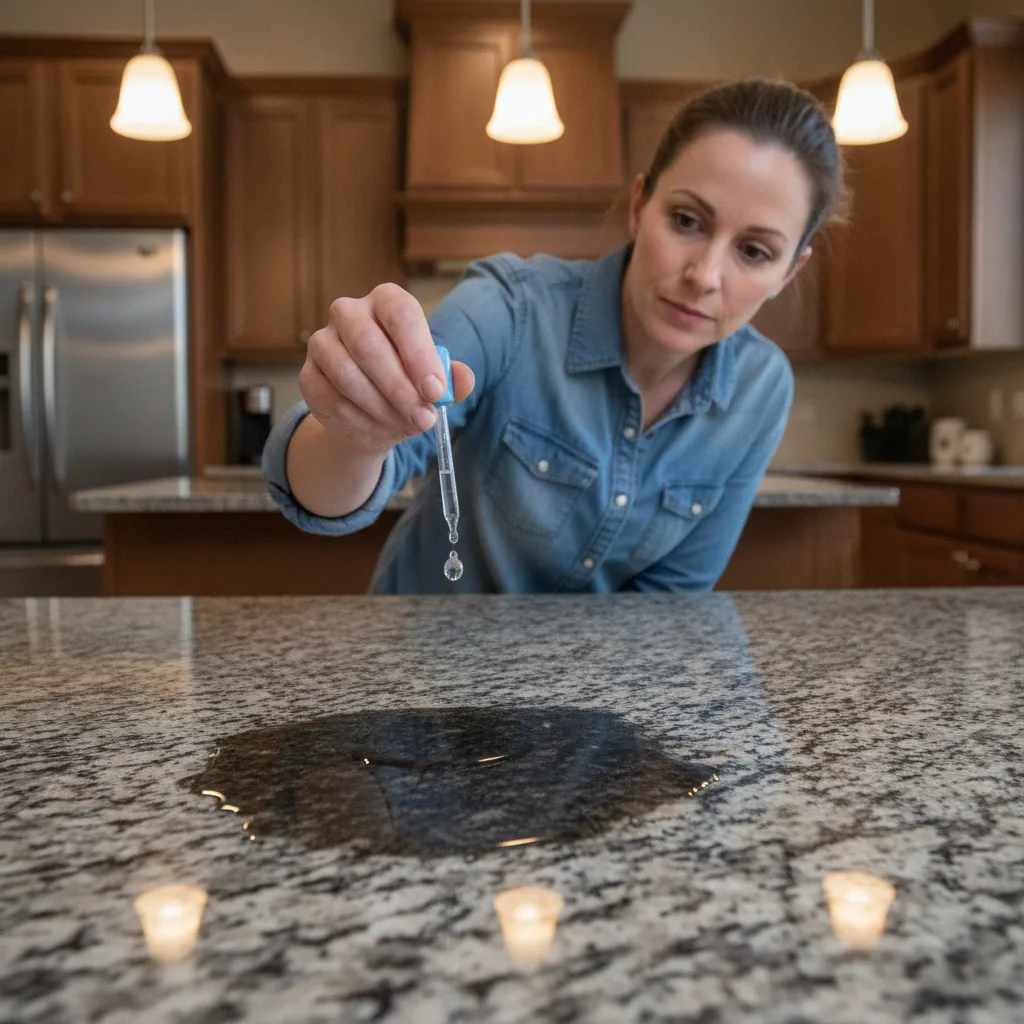
The fastest way to know if your granite countertops need resealing is the water-drop absorption test: place a small puddle of water — about a tablespoon — on the granite surface and wait 10–15 minutes. If the water beads and stays on top, your seal is intact. If the water darkens the stone — meaning it's absorbing into the pores — it's time to reseal. This test is more reliable than any calendar-based schedule because sealant wear depends on cleaning habits, product use, and how much water contact your counter actually sees in daily kitchen or bathroom life. Schedule this check every six months if your kitchen is high-traffic.
In Austin kitchens, the area around the sink takes the hardest hit. Hard water splashes constantly in that zone, and if your cleaner has any acidity — even mild dish soap with citrus additives — it's gradually degrading your seal in the highest-exposure area. Run the water-drop test near the sink specifically, not on a low-traffic area of the counter, for the most accurate read on where your protection actually stands.
If the test shows absorption, don't wait. An unsealed granite surface in Austin's 10–16 GPG hard water environment will develop subsurface mineral staining quickly, especially in the sink zone. Apply a penetrating sealer according to the manufacturer's directions, let it cure fully (24 hours minimum), and retest. If you're unsure about the product or process, Fox Granite's team can walk you through it — or handle the resealing professionally so you know it's done right and the quality of your stone is protected from the start.
Don't have time to wait 15 minutes? A faster indicator: look at the granite surface in raking light (hold a flashlight low and parallel to the counter). Dull, hazy patches near the sink often signal areas where the sealant has worn thin and mineral deposits have started to accumulate below the surface. Use that as your trigger to run the full water-drop test.
Quartz countertops in Austin, TX require no sealing — ever. The non-porous resin composition eliminates that maintenance category entirely, which is a genuine advantage when your water runs 10–16 GPG. Your ongoing cost is daily microfiber drying, a bottle of pH-neutral quartz cleaner every few months, and an occasional diluted vinegar treatment for stubborn calcium buildup. Annual cost in consumables: under $40 for most households. That simplicity matters in Central Texas, where hard water makes granite maintenance non-negotiable rather than optional. For commercial projects and high-volume kitchen environments, the reduced upkeep on quartz also translates directly into lower facility management costs over time — a great way to keep operations easy and predictable. Cambria's full gallery of quartz designs offers color options built to fit a wide range of kitchen and bath styles — browse the inventory and you'll find choices that work with virtually any cabinet finish or design vision.
Granite's ongoing costs are modest but real. A DIY granite sealer runs about $20 per application, applied every 1–3 years depending on traffic and sealant wear. Professional sealing costs $100–$300. Add a pH-neutral granite cleaner ($10–$15 per bottle, used regularly) and you're looking at $30–$60 per year in materials at minimum, plus time and consistent attention. That's not a dealbreaker — granite is genuinely beautiful, heat-resistant in ways quartz isn't, and the natural stone variation in slabs creates patterns and depth that no engineered surface fully replicates. The timeless elegance of a well-maintained granite kitchen is a real thing. But Central Texas homeowners should budget for that maintenance cycle from day one, not discover it after the first cloudy season.
Neither material is a wrong choice. Quartz offers lower long-term maintenance in Austin's hard water environment. Granite offers natural stone character and exceptional durability — with the trade-off that the hard water maintenance obligation is higher and less forgiving if ignored. Your lifestyle, cooking habits, and how hands-on you want to be with upkeep should drive the decision. Clients who are honest about their habits before they commit almost never have regrets. Hundreds of Central Texas homeowners have worked through exactly this decision with our team, and the ones who are pleased long-term are the ones who chose the material that fit their actual life — not just the one that looked perfect on a sample card.
Porcelain countertops are an alternative worth noting: like quartz, porcelain is non-porous and requires no sealing, and it's highly resistant to hard water buildup. It's a strong option for outdoor spaces and bar areas exposed to the elements, where UV resistance matters and mineral exposure is even higher than inside. Ask our team if porcelain belongs in your project conversation.
For households that want the lowest-maintenance profile in Austin's hard water environment, quartz countertops are the practical pick. Non-porous composition means mineral deposits stay on the surface resin, never penetrate, and never require sealing. The finished product holds up to daily kitchen and bathroom use with simple cleaning habits — daily drying, occasional pH-neutral cleaner, and a 5-minute diluted vinegar treatment when buildup appears. Countertops in Austin, TX work especially well in high-traffic kitchens where there's constant water contact near the sink and limited time or patience for detailed upkeep when quartz is the material. They are also a popular selection among builders working on multi-unit residential projects, because the ease of maintenance delivered to future homeowners reduces callbacks and warranty concerns. Cambria's full gallery of quartz designs offers color options built to fit a wide range of kitchen and bath styles — browse the inventory and you'll find choices that look great with virtually any cabinet finish or design vision. It's easy to understand why quartz has become a go-to for so many homes across Central Texas. Customers who love the look of natural stone but want to keep care simple often find that quartz is the perfect fit for their lifestyle.
Granite is the right call when you want expertly crafted surfaces with natural stone character that no engineered slab matches — unique patterns, depth, and the warmth of real stone pulled from the earth. Granite is also more heat-resistant than quartz, which matters in kitchens where hot pots occasionally land on the counter. In Austin's hard water environment, granite just requires consistent sealing and a daily dry-wipe habit near the sink. It's a modest commitment relative to what you get. Choose granite when you're willing to maintain it — and be honest with yourself about which camp you're in. Our team works with both homeowners and builders to match the right material to the right lifestyle, and we're direct about the tradeoffs because customer satisfaction over the long run matters more than any single sale. Quartzite is another option worth exploring: denser than granite but still porous, still requiring sealing, and offering a look that many customers love for its natural veining and stone-like feel. Quartzite pairs beautifully with a wide range of cabinet colors and design styles, and it's a surface that experts often recommend for homeowners who want natural stone character with slightly greater density than standard granite. Quartzite makes a great statement on kitchen islands and bathroom vanities alike, and its open veining patterns stand up beautifully to the scrutiny of a well-lit kitchen. Marble rounds out the natural stone selection as the highest-maintenance choice in Central Texas hard water conditions — open to etching from both acids and mineral deposits, so understand the commitment before you commit to the slab.
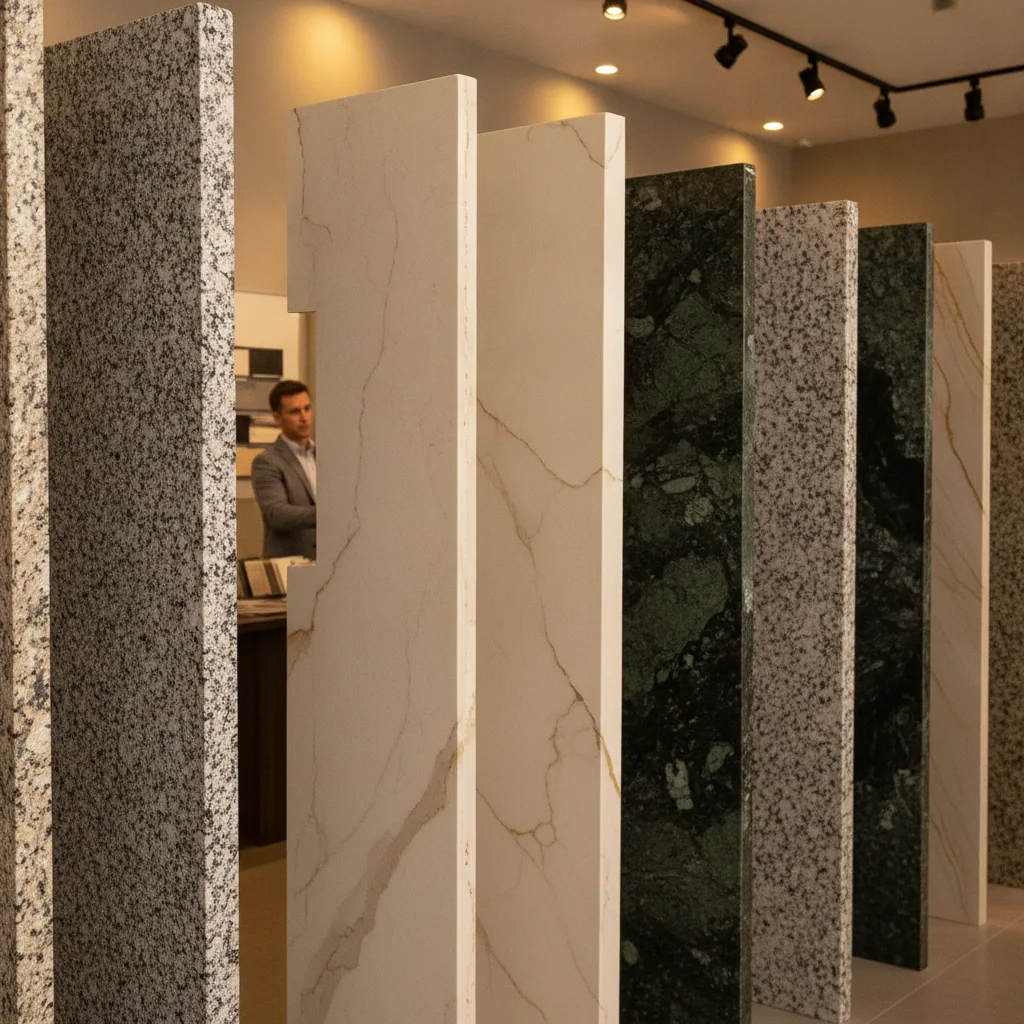
If you're still weighing your choices, the best next step is seeing actual slabs in person — or scheduling an in-home consultation so the stone comes to you. Colors and patterns look different on a 4x4 sample card than on a full kitchen installation — the veining, the depth, the way each stone responds to your specific cabinet style and lighting. Fox Granite's showroom in New Braunfels carries slabs in granite, quartz, quartzite, and marble, and our knowledgeable team brings samples directly to your home during a free in-home consultation so you can browse each option against your cabinets, lighting, and space before you commit. We fabricate and install both materials in-house as an experienced fabricator — no subcontractors, transparent pricing from the first conversation, and a team with the expertise to guide your next project from slab selection to final installation. Visit our showroom, preview the full inventory, or send us a request to get started — we work hard to make the process great from the first conversation to the final reveal.
Quartzite and marble are both natural stones with their own hard water considerations. Quartzite is denser than granite but still porous and requires sealing. Marble is softer and more susceptible to etching from both acids and mineral deposits — making it the highest-maintenance choice in Central Texas hard water conditions. If those materials inspire your vision, ask our team to walk you through the full comparison before you commit.
If you have granite countertops and haven't resealed in the past 1–2 years, Austin's 10–16 GPG hard water may already be working its way into the stone. Run the water-drop absorption test today. If the water darkens the granite in under 10 minutes, reseal before the next wave of mineral buildup sets in. For quartz, your priority is consistent drying near the sink and avoiding acidic cleaners — not sealing, which quartz never needs. Either way, the maintenance habit you build now protects the quality and durability of your countertops for years of daily Central Texas kitchen life.
For countertops in Austin, TX, San Antonio, New Braunfels, Round Rock, and the surrounding Central Texas areas, trust Fox Granite. As an in-house fabricator and installer with years of experience serving this region since 2010, we understand exactly what Central Texas hard water does to every surface we work with — granite, quartz, quartzite, marble, and porcelain — and we bring that expertise to every client consultation. We are not an exclusive dealer for a single brand; we offer the full selection so every homeowner finds the right fit for their space, style, and lifestyle. Our process is attentive and courteous from the moment you reach out: we start by communicating openly about your project goals, take precise measurements during your home visit, and keep you informed through fabrication and installation, ensuring the finished result is delivered on time and on spec. We do not sell directly through third-party platforms — every project is hand-delivered by our own team, start to finish, so you always know who to call. We are open for appointments and ready to help you transform your home. Explore the full selection, visit our Austin showroom or our New Braunfels location, or send us a request to schedule your free consultation — we'll bring samples to you, walk you through the honest tradeoffs, and help you discover the countertop that fits your space and your life in Central Texas. You can expect our team to be ready to help from the first conversation, and our hours are designed to accommodate busy homeowners across the metro. Hundreds of customers across our network have helped us build a reputation for great work and real attention to detail, and it's what we hand-deliver every single time. That is the great experience our customers have come to expect — and it's the standard we work to elevate on every project, transforming houses into homes, one perfectly chosen surface at a time.
Ready to get started? Contact Fox Granite today.


BY APPOINTMENT ONLY
1379 Wald Road
New Braunfels, TX 78132
Austin, San Antonio, Cedar Park, Kyle, New Braunfels, Del Valle, Elgin, Lago Vista, Shady Hollow, Onion Creek, Buda, San Marcos, Lockhart, Temple, Wimberley, Dripping Springs, Bee Cave, Lakeway, Leander, Anderson Mill, Jollyville, Spicewood Springs, Round Rock, Georgetown, Pflugerville, Manor, Taylor, Manchaca, Mountain City, Hutto, West Lake Hills, Bastrop, Liberty Hill, Driftwood, Sun City, Steiner Ranch.