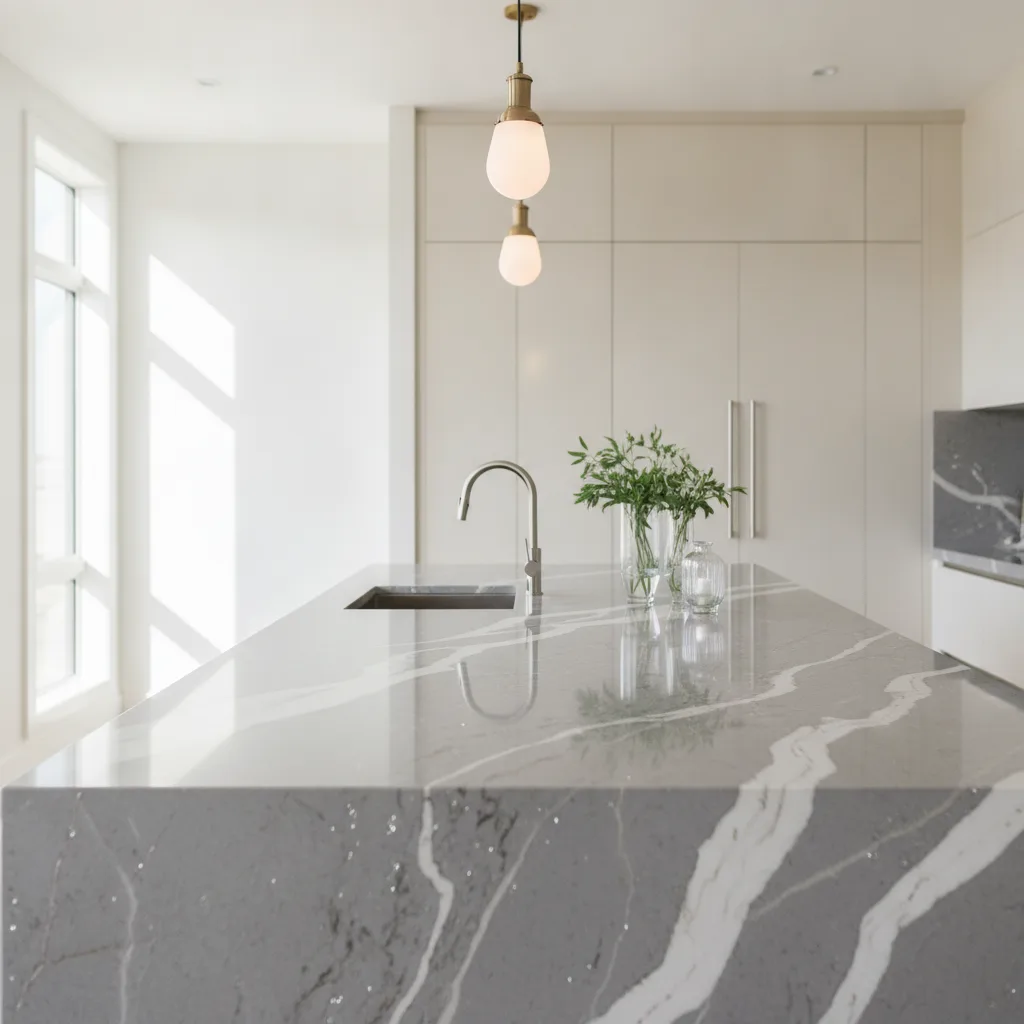
Gray quartzite countertops are a distinct category of natural stone that ranks 7–8 on the Mohs hardness scale, outperforming both marble (3–5 Mohs) and engineered quartz (5–7 Mohs). As of 2026, the most recommended gray varieties for kitchen countertops are Sea Pearl, Fantasy Grey, Denali, Milano, and Perla Venata — all sourced primarily from Brazil. Installed costs for mid-tier gray varieties run $60–$130 per sq ft, with most Central Texas kitchens landing between $100 and $140 per sq ft all-in. Unlike marble, quartzite resists etching from kitchen acids. It does require sealing every one to two years. The single most important step before buying: verify you're purchasing true quartzite, not dolomitic marble sold under the quartzite name.
Gray quartzite countertops occupy a distinct design category in 2026 — described by designers as cooler and more contemporary than the cream-and-white stone family, with natural movement and depth that flat engineered surfaces can't replicate. For Central Texas homeowners who love the look of classic white marble or white quartzite but want more visual weight, better durability, and a stone that holds up under real kitchen conditions, gray quartzite is the most compelling answer on the market right now. This guide walks through the six steps to choose the right gray variety, pair it with your cabinets, verify you're buying real quartzite, and budget accurately before you visit a showroom or book a consultation.
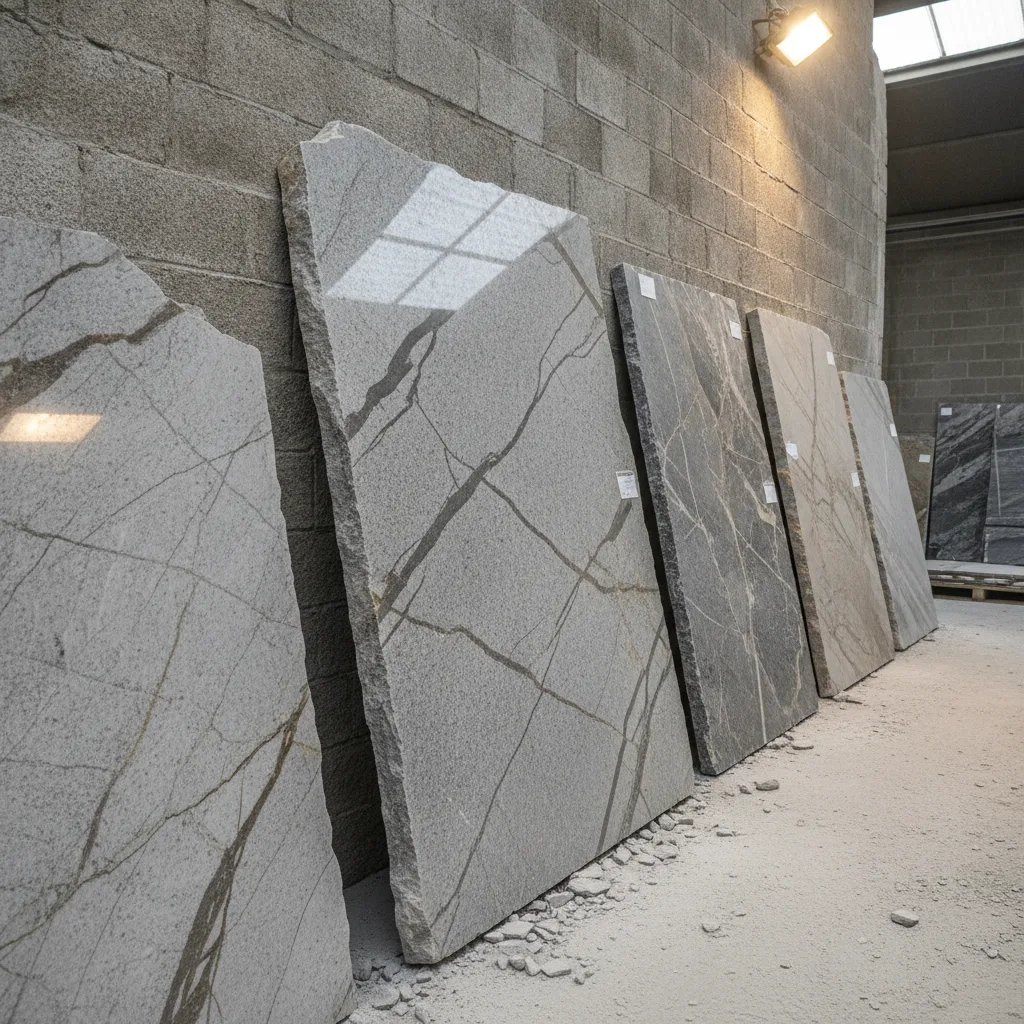
Quartzite is a 100% natural stone that starts as sandstone and transforms under intense heat and pressure into one of the hardest stone materials available, ranking 7–8 on the Mohs hardness scale. For context, that puts it harder than granite (6–7 Mohs), engineered quartz (5–7 Mohs), and significantly harder than marble (3–5 Mohs). That hardness is the foundation of quartzite's durability advantage in kitchen and bathroom countertops.
The confusion that trips up most shoppers: quartzite is not quartz. Engineered quartz is a manufactured material — roughly 90–95% ground stone bound with polymer resins — with a consistent, manufactured look. Quartzite is natural stone, quarried in full slab form with the variation and movement that comes from millions of years of geological process. The two look similar on a small chip sample but perform very differently outdoors, under heat, and over decades. That distinction matters especially for Central Texas homeowners building outdoor kitchen spaces. Quartzite is UV-stable; its color and structure hold up under prolonged sun exposure, while engineered quartz's polymer resins degrade over time.
The 2026 gray quartzite palette has also shifted from the flat steel-gray that dominated kitchens from roughly 2019 through 2023. The stones homeowners are choosing now layer white, silver, greige, and warm gray tones together. That layering is why gray quartzite reads as sophisticated rather than cold in a finished space — there's natural depth you can see from across the room, not a uniform industrial surface.
If a supplier's sample card says 'quartzite' but the stone feels silky-smooth and cool like polished marble, ask to do a simple scratch test with a steel knife on a hidden edge. True quartzite at 7–8 Mohs will resist scratching; softer dolomitic marble labeled as quartzite won't. The full field test is covered in Step 4.
Five gray quartzite varieties stand out for kitchen countertops in 2026: Sea Pearl, Fantasy Grey, Denali, Milano, and Calacatta Quartzite. Sea Pearl is the most recommended by designer guides this year for contemporary kitchens — it combines white and silver-gray tones with occasional subtle cool undertones, making it ideal across both transitional and modern interiors. Fantasy Grey runs darker with more dramatic white veining, best suited to a bold island or a kitchen with dark lower cabinets where that visual weight belongs.
Denali quartzite, featured by MSI Surfaces in their 2026 trend roundup, brings cool gray tones layered with greiges, taupes, and whites — a more complex palette than Sea Pearl and well-suited to kitchens mixing multiple finishes. Milano quartzite offers a softer gray backdrop with delicate veining, the closest option in this family to the refined look of Calacatta marble without marble's etching vulnerability. For mid-tier Brazilian gray varieties, Perla Venata (light gray with white veins) and Titanium (dark gray with metallic shimmer) are beautiful, well-priced options at $60–$130 per sq ft installed, according to 2026 slab pricing from SlabWise.
Most gray quartzite — including Sea Pearl and similar varieties — originates from Brazil, which is the world's dominant source for quartzite slabs. Brazilian quartzite covers a broad range from light, airy grays to darker metallic varieties, all sharing the same high hardness and natural movement that define the category. Seeing the full slab rather than a small chip sample is critical with these stones: the gray tones, veining scale, and warm-or-cool undertones shift considerably from the edges of a slab to its center, and what looks like a close match on a sample card can feel like a different stone entirely at full size.
Free to visit
Full gray quartzite slabs on display so you can compare varieties side by side under real lighting — far more accurate than chip samples or website photos
Free
Fox Granite brings physical samples to your kitchen so you can view gray quartzite against your actual cabinets and backsplash before committing
Gray quartzite works exceptionally well with white cabinetry, darker wood cabinets, black architectural details, and transitional interiors. With white cabinets, a mid-gray or dark-gray quartzite slab adds contrast and visual weight — the kitchen feels complete rather than washed out. With two-tone cabinet designs (white uppers, dark wood lowers), gray quartzite with natural veining ties the two colors together without introducing a third tone into the space.
For modern kitchens with flat-front cabinetry and minimal hardware, Sea Pearl or Milano quartzite in a polished finish keeps the look clean and contemporary. For transitional kitchens mixing Shaker cabinets with warmer wood accents, Denali or Perla Venata — both with greige and warm gray layers — feel softer and less industrial than a flat cool gray surface would. Fantasy Grey with bold white veining works best on an island where the drama has room to breathe; using it on every run of countertop in a smaller kitchen can feel overwhelming.
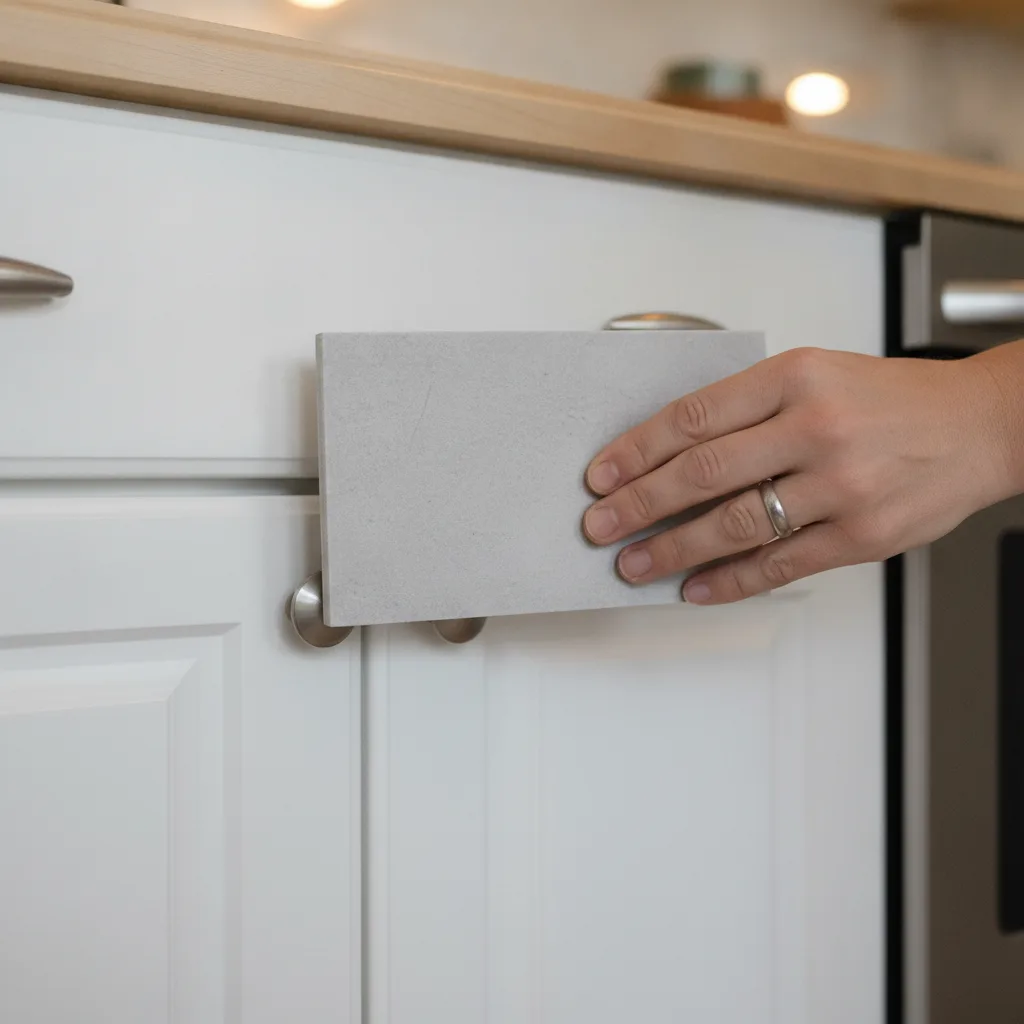
One style trap to avoid: choosing gray quartzite purely from a website photo. Screen color calibration, lighting conditions, and slab-to-slab variation mean the stone you find online may look noticeably warmer or cooler in your actual space. Bring a physical sample home, hold it next to your cabinet door under your kitchen lighting at different times of day, and look at it again the following morning before deciding. This single habit prevents the most common regret in countertop projects.
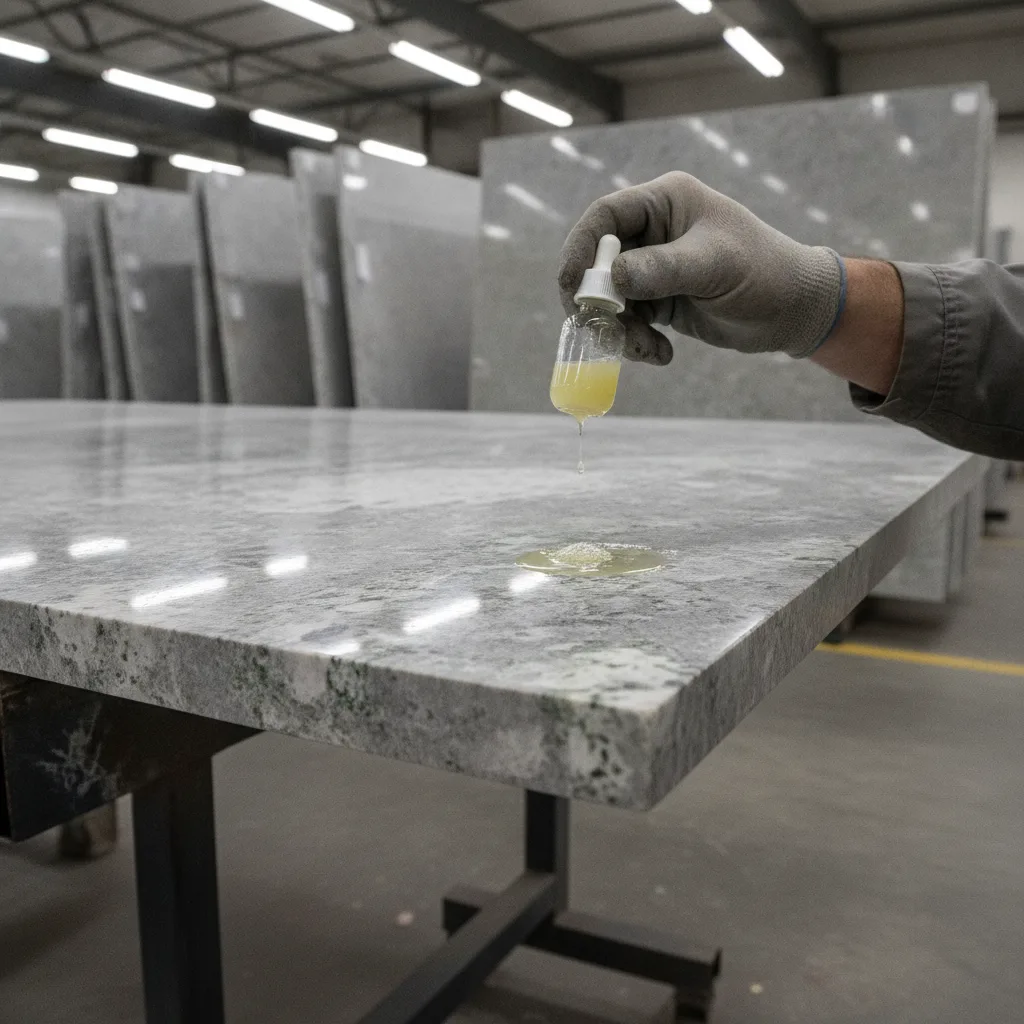
The mislabeling problem in gray quartzite shopping is real: some softer stones — including dolomitic marble — are sold as quartzite because they look similar in photographs and the 'quartzite' label commands a higher price. The practical consequence is that a homeowner buying mislabeled stone expecting quartzite's durability gets marble's etching vulnerability instead. A quick field test at the stone yard settles the question: apply a drop of lemon juice or white vinegar to an inconspicuous spot on the slab and wait two minutes. True quartzite is siliceous, not calcite-based, and won't react. Marble or dolomitic marble will show a dull etch mark where the acid made contact.
You can also scratch-test with a steel knife blade on a hidden edge. Quartzite at 7–8 Mohs resists scratching from steel; softer stone won't. Ask the supplier for the country of origin and the quarry name if possible — most legitimate gray quartzite comes from Brazil, and suppliers who know their inventory can confirm it. If a supplier resists either test or can't tell you the stone's origin, treat that as a reason to find a different stone yard.
Working with an in-house fabricator like Fox Granite removes most of this risk. We source slabs from established suppliers and can confirm material identity before your project begins. You're not navigating a slab yard alone and hoping the label is accurate.
The lemon juice test only works reliably on a raw or honed surface. A heavily sealed polished slab may mask the etch reaction temporarily. Ask the slab yard to test on a cut edge or unfinished back corner rather than the finished face if the surface has been freshly sealed.
The single biggest practical durability advantage gray quartzite holds over white or gray marble is etching resistance. Marble is calcite-based, and common kitchen acids — lemon juice, vinegar, wine, tomato sauce — dull its surface on contact. That reaction is chemical, not a surface coating issue, so sealing marble prevents staining but cannot prevent etching at all. Quartzite's siliceous composition means everyday kitchen acids pass over the surface without leaving a mark. For a working kitchen in Central Texas, that difference is felt every week.
On scratch resistance, quartzite's hardness means knives, ceramic dishes, and routine kitchen traffic won't mark the surface under normal use. The stone is also heat-resistant: the material itself tolerates direct pan contact that would damage engineered quartz's resin binders. We always recommend using a trivet as a matter of habit, but a hot pan briefly set on quartzite won't cause the kind of damage it would on a quartz or laminate surface.
The one durability trade-off is porosity. Quartzite is a porous natural stone and requires sealing every 1–2 years to prevent staining from wine, oil, and coffee. A properly sealed quartzite countertop resists everyday spills well; an unsealed one will absorb liquids and stain over time. Honed and leathered finishes are more porous than polished and may need annual sealing. This is the main maintenance reality to plan for — it's a 20-minute task once or twice a year, not a burden, but it isn't optional.
Gray quartzite countertop costs in 2026 vary by variety, finish, and fabricator. Mid-tier Brazilian gray varieties like Perla Venata and Titanium run $60–$130 per sq ft installed (SlabWise, 2026). Gray and greige-tone varieties broadly land in the $90–$130 per sq ft installed range according to Badger Granite's 2026 cost guide. The full quartzite range nationally is $80–$200 per sq ft installed, with most kitchens landing at $100–$140 per sq ft; a typical 40-sq-ft kitchen runs $4,000–$5,600 all-in based on Fox Granite's own 2026 pricing data.
What moves the number up: premium or rare slab varieties (Calacatta Quartzite, Fantasy Grey with dramatic veining), complex edge profiles like ogee or half-bullnose, an undermount sink cutout, or a full-height backsplash from the same stone. What keeps it closer to the floor of that range: choosing a mid-tier Brazilian gray like Perla Venata, an eased or beveled edge profile, and a straightforward layout without waterfall edges or angled cuts. The process of getting an accurate number starts with an in-home consultation, not a website estimate.
The process from here is straightforward. Schedule a free in-home consultation with Fox Granite, and we bring gray quartzite samples to your kitchen so you can compare varieties against your actual cabinets. We measure, provide a transparent all-in quote with no surprise fees, and handle fabrication and installation in-house. For gray quartzite countertops in Austin, San Antonio, New Braunfels, Round Rock, Georgetown, Cedar Park, San Marcos, Kyle, Buda, Dripping Springs, and throughout the Central Texas corridor, call Fox Granite at (512) 653-5541 or contact us online to schedule your free estimate.
Free
We measure your space, bring gray quartzite samples, and provide a transparent all-in quote — no slab-yard runaround and no surprise fees added at the end
Gray quartzite varies more slab-to-slab than almost any other stone category. A sample chip shows you the color family; the full slab shows you the veining scale, the warm or cool undertone shift from edge to center, and whether the movement is subtle or dramatic. Before you finalize any gray quartzite selection, see the actual slab you'll be cutting from — either at our New Braunfels showroom or through a Fox Granite in-home consultation with physical samples. It's the one step that prevents the most common regret in countertop projects.
Gray quartzite countertops give Central Texas homeowners the natural movement and sophisticated look of classic white stone with more visual depth, better hide of everyday kitchen marks, and a durability profile that outperforms marble under real kitchen conditions. When you choose the right variety, pair it with cabinets that let the stone do the work, and verify the material identity before you buy, the result is a beautiful kitchen surface that holds up for decades with minimal maintenance. Fox Granite is a family-owned, in-house fabrication shop with over 15 years of experience serving Austin, San Antonio, New Braunfels, and the surrounding Central Texas areas. Contact us today to schedule your free consultation — or visit our showroom in New Braunfels to see real gray quartzite slabs for yourself.
Ready to get started? Contact Fox Granite today.


BY APPOINTMENT ONLY
1379 Wald Road
New Braunfels, TX 78132
Austin, San Antonio, Cedar Park, Kyle, New Braunfels, Del Valle, Elgin, Lago Vista, Shady Hollow, Onion Creek, Buda, San Marcos, Lockhart, Temple, Wimberley, Dripping Springs, Bee Cave, Lakeway, Leander, Anderson Mill, Jollyville, Spicewood Springs, Round Rock, Georgetown, Pflugerville, Manor, Taylor, Manchaca, Mountain City, Hutto, West Lake Hills, Bastrop, Liberty Hill, Driftwood, Sun City, Steiner Ranch.