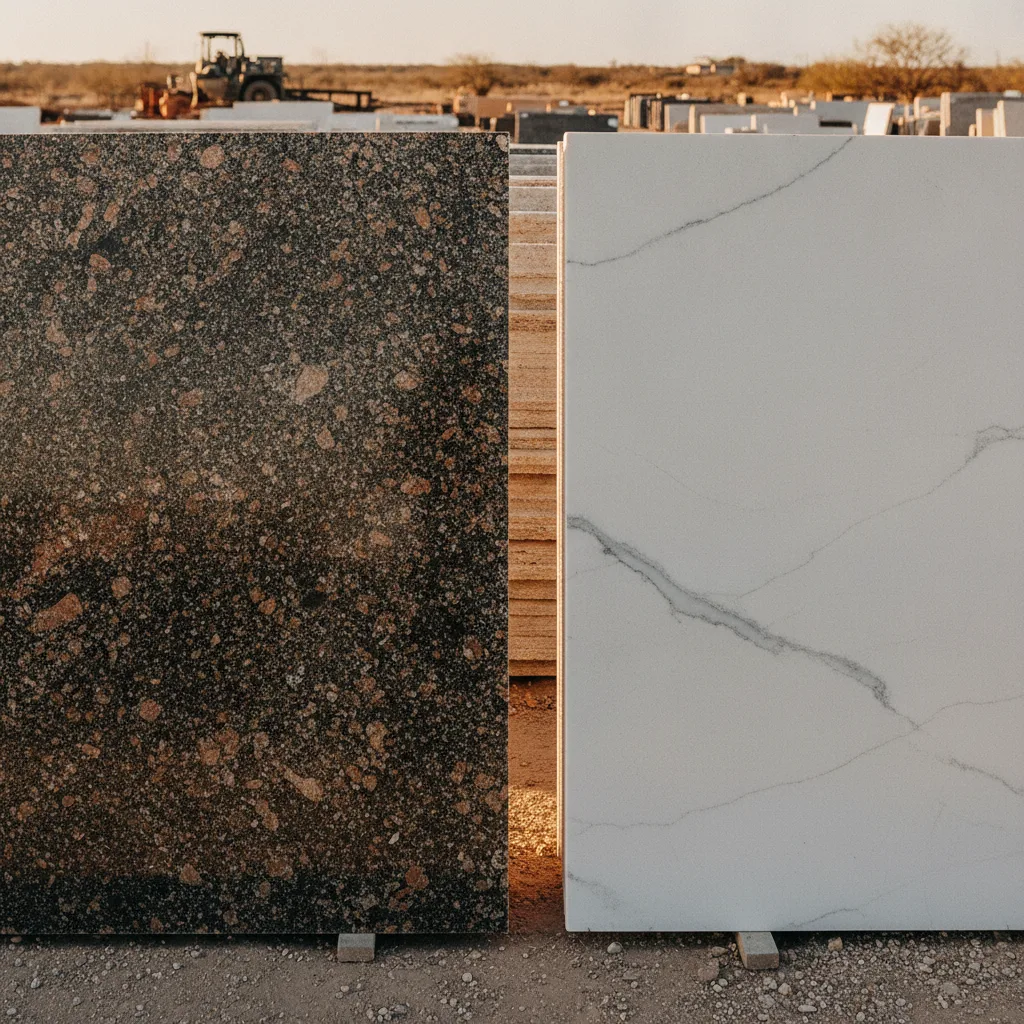
Granite and quartzite are both extremely durable natural stones, but they serve different priorities. Granite ($40–$100/sq ft installed) gives you the widest color and pattern range — deep blacks, ocean blues, rich golds — with heat resistance up to 1,200°F and a sealing schedule of every 1–3 years. Quartzite ($80–$200/sq ft installed) offers a marble-like appearance with soft veining, slightly higher Mohs hardness at 7, and superior acid and UV resistance — making it the better choice for heavy cooks and Central Texas outdoor kitchens. The biggest risk with quartzite: mislabeling. A large share of slabs sold as quartzite are actually marble or dolomite. Run a knife scratch test and an acid test at the slab yard before you buy.
Granite vs. quartzite countertops is one of the most confused comparisons in the natural stone market — and the confusion costs homeowners real money. Both are natural stones formed deep underground. Both are durable, heat-resistant, and beautiful. But they come from completely different geological processes, perform differently against acidic substances, and land at very different price points: granite at $40–$100 per square foot installed and quartzite at $80–$200. Add in the widespread mislabeling problem at stone yards — where dolomite and marble are routinely sold as quartzite — and choosing the right stone requires more than a quick look at two slabs. This guide cuts through the confusion with real numbers, field-tested advice, and a clear decision framework.
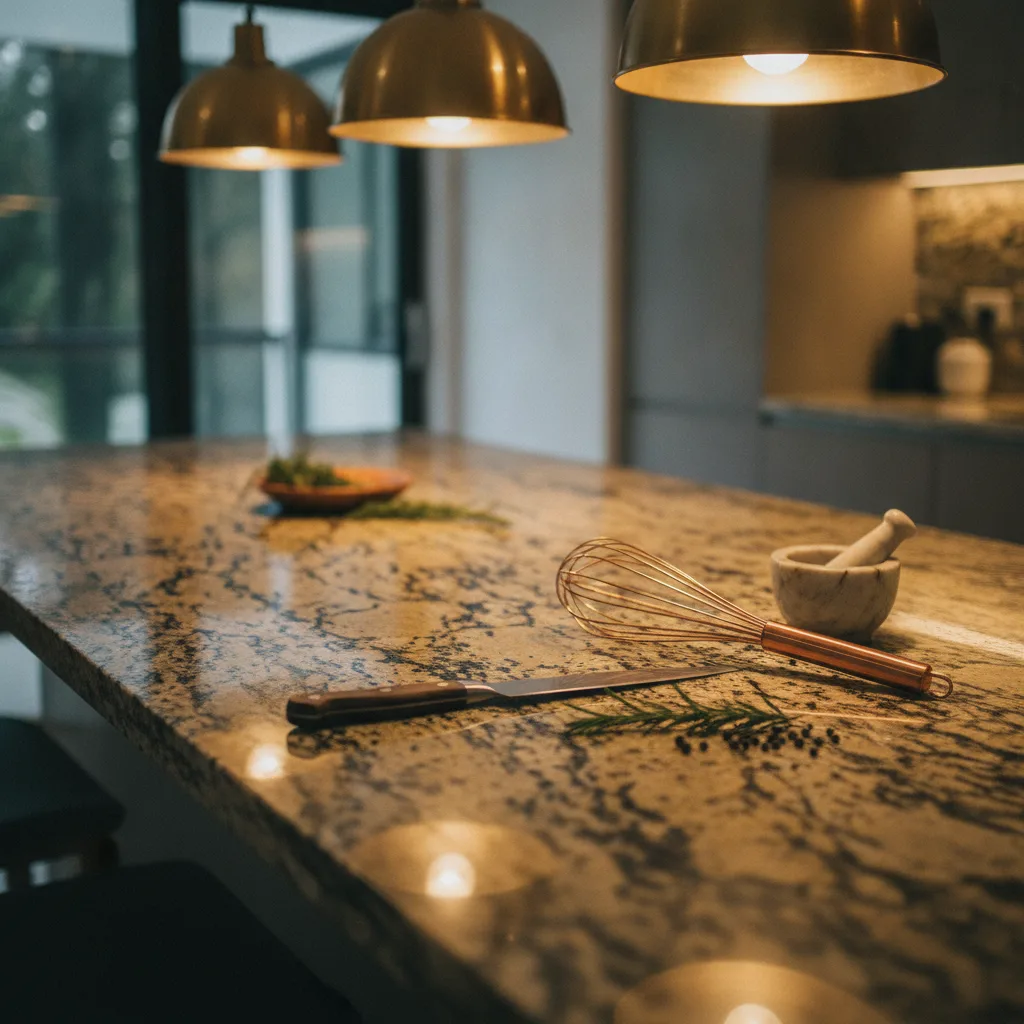
The versatile workhorse with the widest color selection and a more budget-friendly price point.
The harder, acid-resistant natural stone with marble-like beauty — and a price premium to match.
Granite is an igneous rock formed when molten magma cools slowly deep within the earth's crust. That slow cooling process allows large crystals of quartz, feldspar, and mica to grow together in an interlocking structure — and the resulting mineral composition is what gives granite its signature speckled, granular look. On the Mohs hardness scale, granite rates 6–7, placing it among the hardest countertop materials available.
The geological origin has direct practical consequences. Because granite formed from magma under intense heat, it is inherently heat-resistant — it can withstand temperatures up to 1,200°F without structural damage. Still, use trivets as a habit; the thermal shock of a screaming-hot pan set directly on a cold stone surface can stress the material over time, even if the stone surface itself doesn't visibly suffer.
Granite offers excellent scratch resistance and good stain resistance when properly sealed. The mineral mix of quartz and feldspar makes it chemically inert to most kitchen acids — citrus juice, vinegar, and wine won't etch it the way they etch marble. Lighter granite slabs are more porous than darker ones, so pale gray or white granite varieties need sealing more frequently — annually rather than the standard 1–3 year schedule for most kitchen countertops.
As one of the most popular countertop materials in American homes for decades, granite remains in high demand at slab yards, which keeps pricing relatively stable. You won't have trouble finding full slabs in your preferred color. The variety is genuinely staggering: from jet black to deep blue to warm amber to speckled green — granite offers a color palette no other natural stone comes close to matching.
Quartzite is a metamorphic rock formed when sandstone — already quartz-rich — is subjected to extreme heat and pressure deep underground. The sand grains recrystallize into an interlocking network of almost pure quartz, with a final composition of 90–99% quartz mineral. That recrystallization is why quartzite rates Mohs 7 on the hardness scale, a slight advantage over granite's 6–7 range. A steel knife (Mohs ~5.5) won't leave a mark on true quartzite.
The practical differences from granite show up most in acid resistance. True quartzite — Taj Mahal, Sea Pearl, Super White, White Macaubas — shows zero reaction to acidic substances like lemon juice, wine, or vinegar. That's a real advantage for busy households where cooking with citrus and wine is routine. It also gives quartzite a slight advantage over granite for high-traffic kitchen areas where spills happen constantly.
Here's where the mislabeling problem becomes a consumer-protection issue. A significant number of slabs in stone yards across the country are labeled quartzite when they're actually marble, dolomite, or dolomitic marble. The confusion happens at every level of the supply chain — sometimes through honest geological misclassification, sometimes not. 'Soft quartzite' containing calcium carbonate etches from acidic substances just like marble. A homeowner choosing quartzite for its acid resistance could end up with a slab that fails the one test they were trying to pass.
Two field tests take under ten seconds and cost nothing. First, the knife test: drag a steel blade across an inconspicuous spot on the unsealed surface. True quartzite shows no scratch; marble marks easily. Second, the acid test: drip lemon juice or vinegar on the unsealed surface and wait a few minutes. True quartzite shows zero reaction. A slab that dulls or etches is marble or dolomite — not quartzite — regardless of the label. Run both tests on any slab sold as quartzite before you buy.
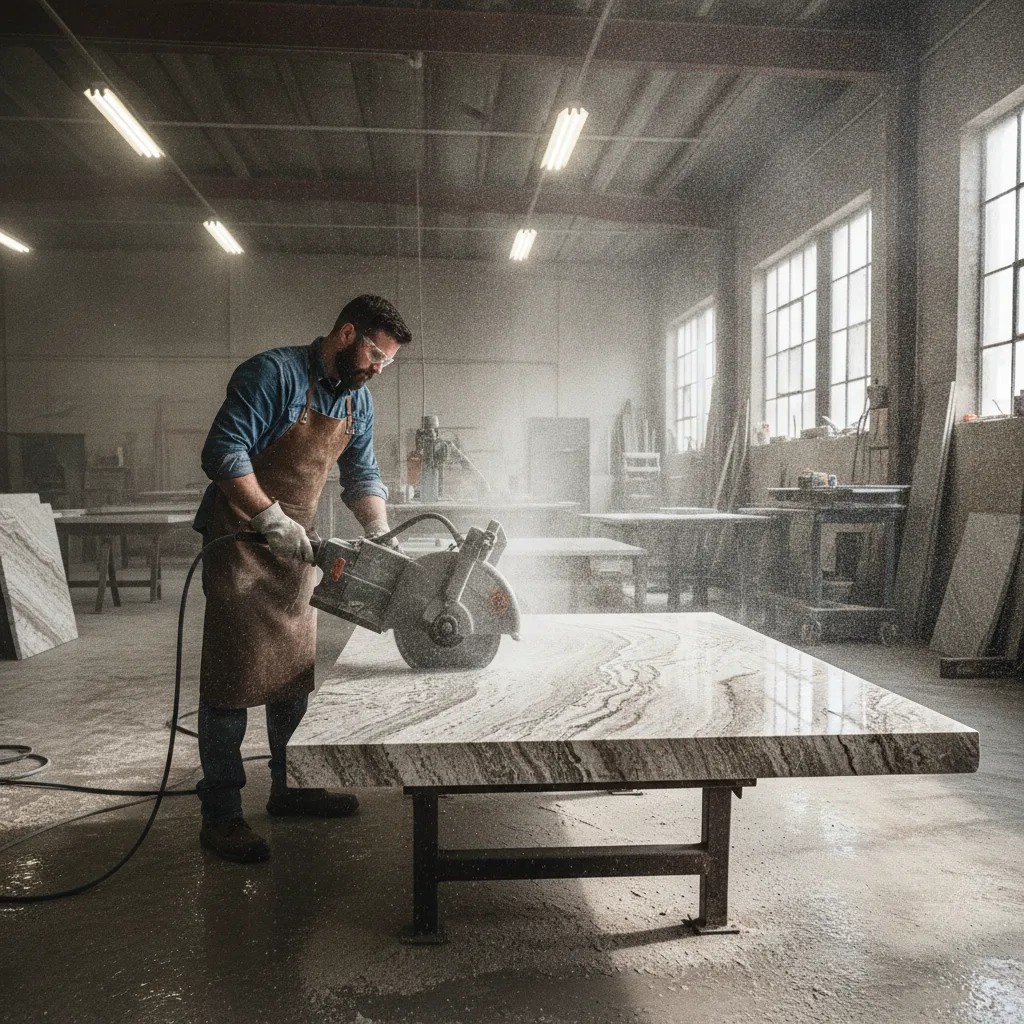
Quartzite is also harder to cut than granite during fabrication. Fabricators go through significantly more diamond blades cutting quartzite slabs, and the quarrying process is more demanding. Those production costs flow directly into the installation costs homeowners pay — and they explain why quartzite runs $1,500–$4,000 more than granite on a typical kitchen remodeling project.
| Dimension | Granite | Quartzite |
|---|---|---|
| Price (installed, 2026) | $40–$100/sq ft; exotic varieties up to $140–$200 | $80–$200/sq ft installed; average $100–$140/sq ft |
| Mohs Hardness | 6–7 (igneous mineral mix of quartz, feldspar, mica) | 7 (90–99% pure quartz — slightly harder) |
| Acid / Etch Resistance | Chemically inert to most kitchen acids when properly sealed | True quartzite does not etch; 'soft quartzite' (dolomite) may — verify before buying |
| Heat Resistance | Withstands up to 1,200°F; formed from magma; use trivets as a habit | Heat-resistant from metamorphic formation; same practical advice: use trivets |
| UV Resistance (Outdoors) | Good, but quartzite holds a slight advantage for full-sun outdoor applications | Superior — no synthetic binders to degrade; preferred for sunny Central Texas outdoor kitchens |
| Sealing Frequency | Every 1–3 years; lighter/more porous slabs annually | Annually recommended; requires more frequent sealing than most granite |
| Color & Pattern Range | Widest selection — blacks, greens, blues, reds, golds, browns, speckled patterns | Skews white, gray, and warm neutrals with soft veining (Taj Mahal, Sea Pearl, Super White) |
| Mislabeling Risk | Low — granite is what it is; easy to identify by speckled granular look | High — dolomite and marble frequently sold as quartzite; always run the knife and acid test |
A significant number of slabs in stone yards are labeled quartzite when they're actually marble, dolomite, or dolomitic marble. The mislabeling happens at every level of the supply chain. Before you buy any slab sold as quartzite, run two quick field tests at the yard. First, the knife test: drag a steel blade across an inconspicuous spot. True quartzite rates Mohs 7 — a steel knife (Mohs ~5.5) won't leave a mark. Marble scratches easily. Second, the acid test: drip a few drops of lemon juice or vinegar on the unsealed surface and wait a few minutes. True quartzite shows zero reaction. Marble etches and dulls. Both tests take under ten seconds and cost nothing. If the slab fails either test, you're not looking at true quartzite — and you should know that before you pay a quartzite price for a marble slab.
Granite is the excellent choice for homeowners who want a beautiful, incredibly durable natural stone surface with maximum color versatility and without a four-figure premium over quartzite. It has delivered timeless appeal in American kitchens for decades — and it still earns that reputation.
Granite remains one of the most popular countertop materials in American homes as of 2026 for a straightforward reason: it performs at a price point most homeowners can absorb without compromising the rest of the kitchen renovation budget.
Quartzite is the right call when your priorities are marble-like aesthetics, superior resistance to acidic substances, and outdoor durability — and your budget can absorb the premium. For those specific needs, no other natural stone delivers the same combination.
Just make sure the slab is actually quartzite. The beauty and durability differences between quartzite and granite and marble only materialize if you're working with the real material — run the field tests, or buy from a fabricator who verifies material identity before templating.
You don't have to choose just one material for your entire home. A practical approach we see often with quartzite and granite: quartzite for the kitchen island — the high-visibility surface that anchors the space — and granite for the perimeter counters where budget, color variety, and practicality matter more. Two slabs from the same natural stone family, different materials, chosen for the right reasons in the right spots.
The same logic works across rooms. Granite countertops in the bathrooms (more affordable, wide color options, low-maintenance for lower-traffic areas). Quartzite on the outdoor kitchen (UV resistance, superior durability for the elements, no synthetic binders to break down in the Texas sun). Quartzite and granite are both natural stones we fabricate and install in-house at Fox Granite — one team handles both materials from templating through installation, and we'll bring samples to your home so you can see full slabs of both side by side before committing.
Quartzite is the right call when you want that soft-veined, marble-like appearance but you're not willing to accept marble's maintenance demands. Marble etches from lemon juice in minutes. True quartzite — Taj Mahal, Sea Pearl, Super White — shows zero reaction to acidic substances. For families who cook with wine, vinegar, and citrus regularly, that's a real difference you'll notice every week.
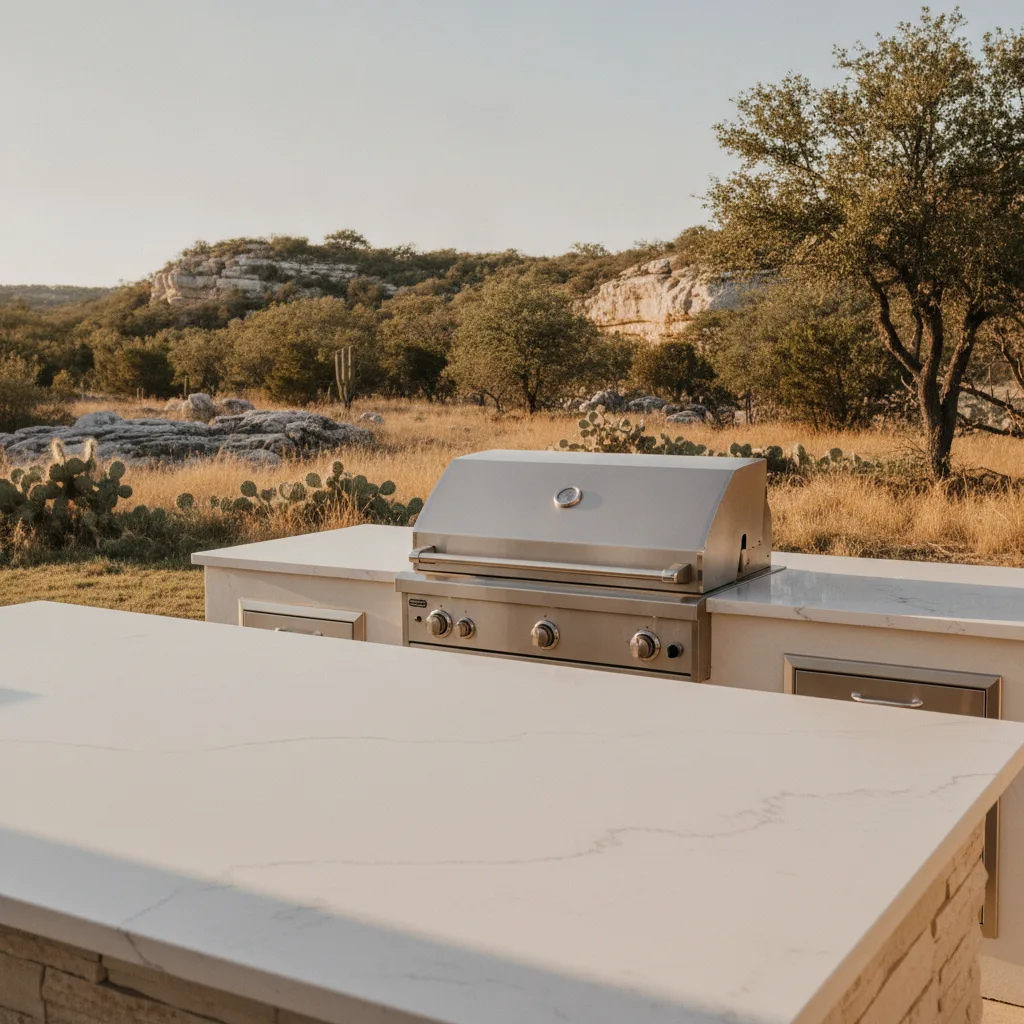
Quartzite also wins decisively for outdoor kitchen countertops. Central Texas summers mean full-sun UV exposure for months at a stretch. Quartzite contains no synthetic binders to degrade or discolor under that UV load — it's natural stones formed deep underground under extreme heat and pressure, and it performs accordingly. If you're adding an outdoor kitchen to your Austin, San Marcos, or Dripping Springs home, quartzite is the stone we'd point you toward first.
Expect to seal quartzite annually, and budget for the $80–$200/sq ft installation cost. The material's rarity and fabrication complexity justify the premium — exotic Brazilian quartzites are becoming harder to source, and slab quality at the upper end of the market is genuinely stunning.
You don't have to make one choice for your entire home. A practical split we see often: quartzite for the kitchen island — the high-visibility, conversation-starting stone surface — and granite for the perimeter counters where budget, color variety, and practicality make more sense. The two natural stones read as a cohesive story when the color palettes complement each other, and a good fabricator will help you match them before you commit.
The same logic applies across rooms. Granite countertops in the bathrooms (more affordable, wide options, low maintenance). Quartzite on the outdoor kitchen (UV resistance, ideal for the elements). Both are natural stones we fabricate and install in-house at Fox Granite, so you're not juggling multiple contractors. One team handles both materials from templating through installation — and we'll bring samples to your home so you can see both side by side before making your decision.
This approach also helps with overall project budget. Using granite in lower-visibility areas cuts the total installation costs considerably while still letting you feature the quartzite slabs where they'll make the most visual impact.
Granite is the right choice when you want a durable, beautiful natural stone kitchen countertop and you don't want to spend $1,500–$4,000 more than necessary. At $40–$100 per square foot installed, granite offers a heat-resistant, scratch-resistant, stain-resistant stone surface with more color and pattern options than any other natural stone on the market. It's among the most popular countertop materials in American homes for a reason — it performs, it lasts, and it comes in more patterns than any homeowner could fully explore.
Granite also wins when your priority is color. Quartzite's palette skews toward whites, grays, and warm neutrals with soft veining. Granite offers deep blacks, forest greens, ocean blues, burnt golds, and dramatic speckled patterns that quartzite simply can't match. If your kitchen design calls for a bold, high-contrast stone surface — or if you want a slab that catches light from across the room — granite is where that range lives.
For busy households with kids, granite's forgiving maintenance schedule (reseal every 1–3 years, daily wipe-down with mild soap and water, avoid harsh cleaners) makes it an excellent choice that won't add upkeep stress to your daily routine. It's an incredibly durable natural stone that handles everyday use without constant attention.
The granite vs. quartzite countertops decision comes down to three questions: What's your budget? What's your aesthetic? And how do you actually cook? Budget + color variety points to granite. Marble-like appearance + acid resistance + outdoor applications points to quartzite. Both are natural stones formed deep in the earth with genuine durability and timeless beauty — the differences are in the details, and the details matter when you're spending $2,000–$10,000 on a kitchen surface you'll live with for decades.
One thing that isn't negotiable: if you're buying quartzite, verify the material before you pay for it. The knife test and the acid test take ten seconds. Skipping them means you might end up with dolomite or marble at a quartzite price — and a stone surface that etches from the first glass of lemon water you set on it.
For granite countertops and quartzite countertops in Austin, San Antonio, New Braunfels, and across the Central Texas corridor, Fox Granite fabricates and installs both materials in-house — no subcontractors, no surprise fees, and no pressure to choose the more expensive option when the less expensive one fits your kitchen and lifestyle better. Visit our New Braunfels showroom to see full slabs of granite and quartzite side by side, or contact us today to schedule your free in-home consultation.
Ready to get started? Contact Fox Granite today.


BY APPOINTMENT ONLY
1379 Wald Road
New Braunfels, TX 78132
Austin, San Antonio, Cedar Park, Kyle, New Braunfels, Del Valle, Elgin, Lago Vista, Shady Hollow, Onion Creek, Buda, San Marcos, Lockhart, Temple, Wimberley, Dripping Springs, Bee Cave, Lakeway, Leander, Anderson Mill, Jollyville, Spicewood Springs, Round Rock, Georgetown, Pflugerville, Manor, Taylor, Manchaca, Mountain City, Hutto, West Lake Hills, Bastrop, Liberty Hill, Driftwood, Sun City, Steiner Ranch.