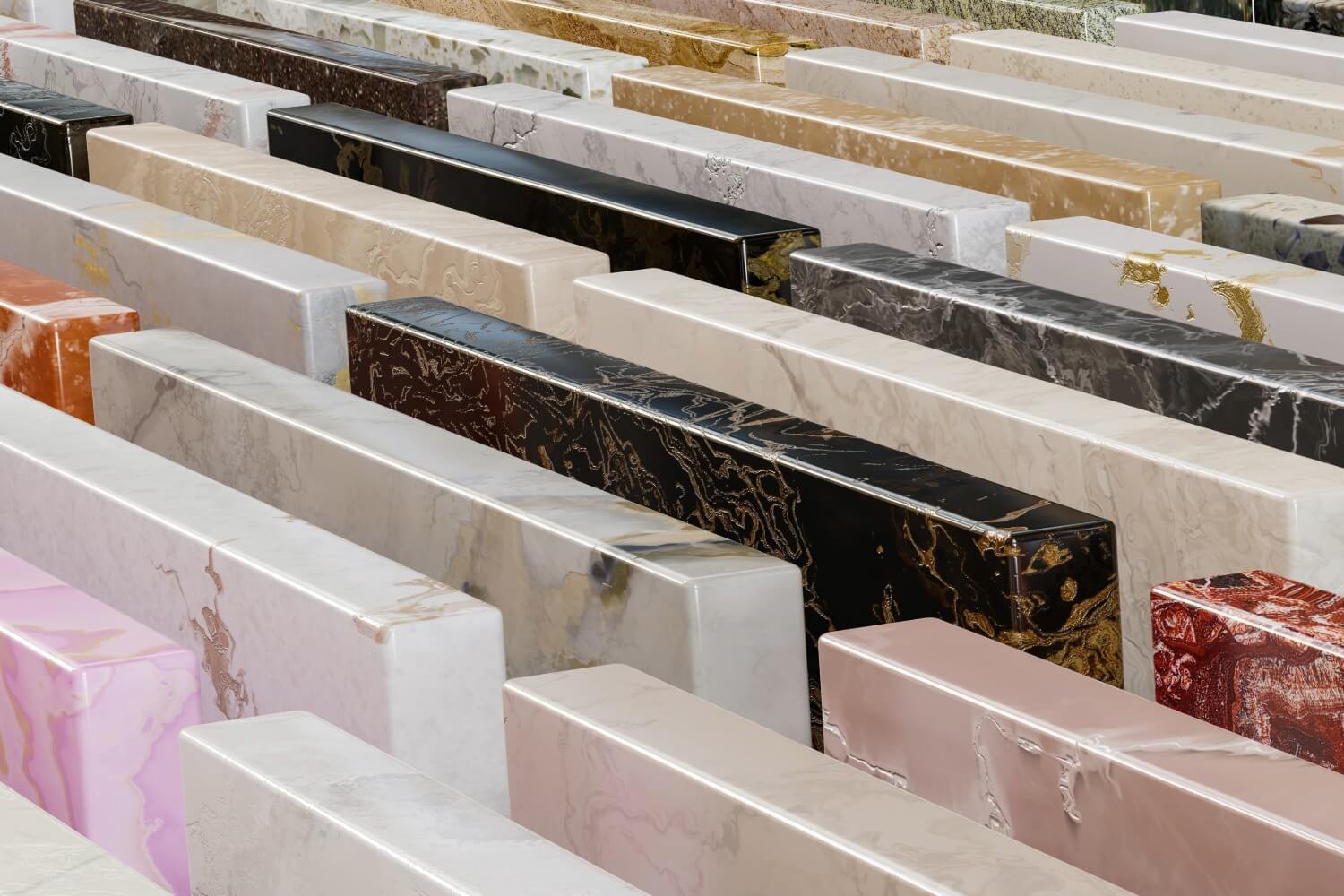
Granite and quartz countertops each win in different situations. Granite handles direct heat from hot pans without damage, costs slightly less at $40–$100/sq ft installed, and is the only standard countertop material that holds up in outdoor kitchens exposed to Central Texas sun. Quartz is completely non-porous, never needs sealing, resists stains and bacteria without any treatment, and appeals to the millennial and Gen Z buyers who now drive resale demand. Both materials return 60–80% of installation cost at resale. If you cook hard, plan an outdoor kitchen, or want a one-of-a-kind slab, choose granite. If you want zero maintenance and a consistent modern look, choose quartz.
Granite and quartz countertops cost roughly the same amount installed in 2026 — $70–$115/sq ft all-in for granite, $70–$100/sq ft for mid-grade quartz — but they perform very differently once they're in your kitchen. Granite handles direct heat from hot pans, holds up outdoors in Central Texas sun year-round, and gives you a slab with natural veining no two people on earth share. Quartz is completely non-porous, never needs sealing, resists stains and bacteria without any treatment, and now holds 36% of all U.S. countertop installations. The honest answer is that neither material is universally better. The right choice depends on how you cook, where the countertop will live, and what kind of upkeep fits your actual lifestyle — not just what looks good on a spec sheet.
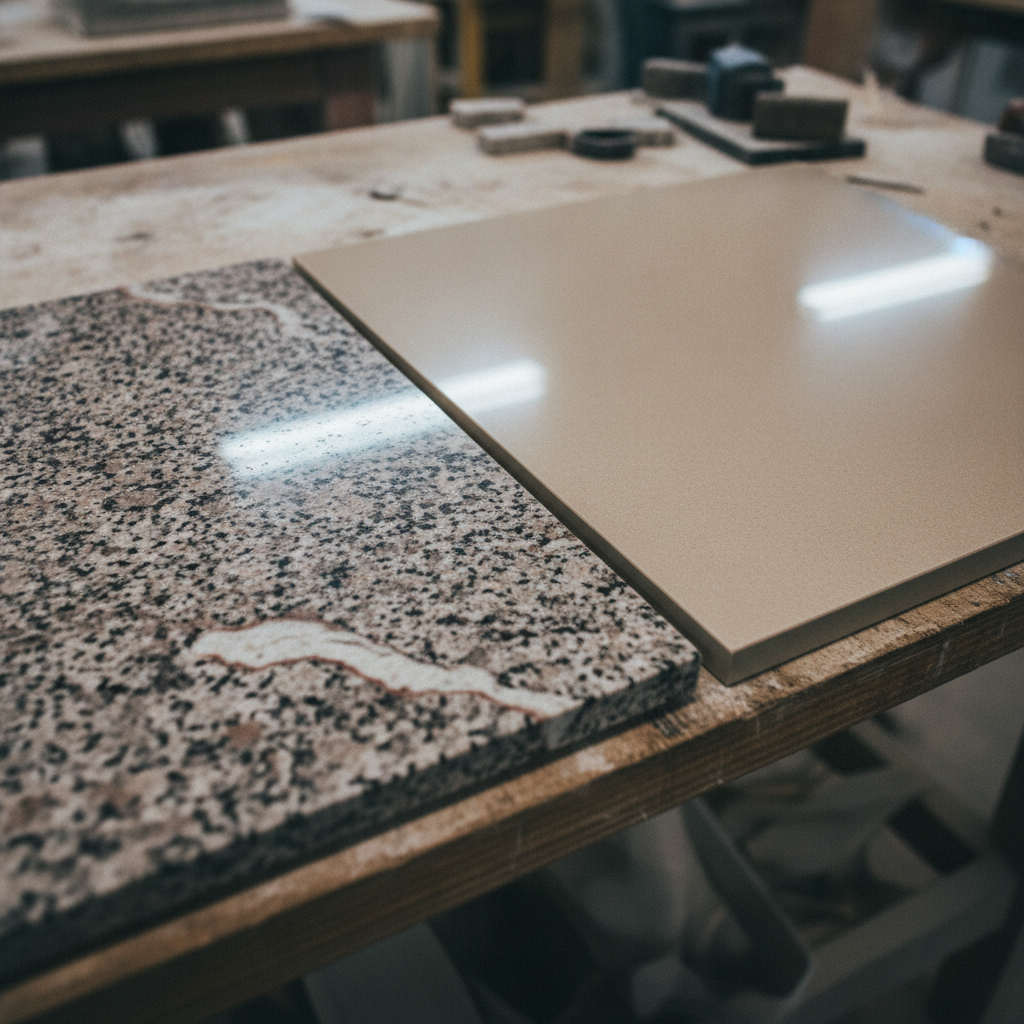
Natural beauty, heat-resistant, and one-of-a-kind — but it asks a little more of you.
Engineered for low maintenance and consistent looks — but it has real limits you should know about.
Granite is a 100% natural igneous rock, quarried in large slabs and cut to fit your kitchen. No resins, no binders, no manufactured components — just stone. That's what gives granite its heat resistance: there's nothing in the material that degrades when a cast-iron skillet lands on it fresh off the burner. For active cooks, this is a practical daily advantage, not just a selling point.
The tradeoff is porosity. Granite is a natural stone, which means it has microscopic pores that can absorb liquids if left unsealed. Wine, coffee, and oil can permanently discolor a granite surface if sealing is skipped or overdue. When sealed correctly and maintained on a 1–3 year schedule, granite is extremely durable and stain-resistant in normal kitchen use. Skipping that maintenance cycle is where problems start.
In 2026, the finish style driving granite's design comeback is honed and leathered — not the high-gloss polished look that defined the 2010s. Honed granite has a matte, smooth surface that shows fewer fingerprints and fits warmer, earthier kitchen aesthetics. Leathered granite adds slight texture for a more tactile, natural feel. Both finishes bring the stone's natural colors and patterns forward more than a polished surface does.
For outdoor kitchens across Central Texas, granite is not just a good option — it's the standard recommendation. Granite handles direct sunlight, temperature swings from 30°F to 105°F, and the moisture cycle of outdoor spaces without UV degradation or resin cracking. No other standard countertop material matches its outdoor durability.
Quartz countertops are engineered stone surfaces, not natural stone. They're manufactured from 90–95% crushed quartz bound together with resins and pigments, then pressed and cured into slabs. The result is a highly durable, non-porous surface that resists stains and bacteria without any sealing — ever. That non-porous quality is quartz's biggest practical advantage over granite in a daily kitchen environment.
The resins that make quartz non-porous are also its primary weakness. Above 150°F (65°C), those resins can discolor or crack permanently — a risk that's real every time someone sets a hot pan down without a trivet. This isn't a rare edge case; it's a common kitchen moment that quartz handles worse than granite. Trivets are non-optional on quartz countertops, not just recommended.
UV radiation is the other limit. Prolonged exposure to direct sunlight breaks down the resins in quartz, causing permanent yellowing and eventual cracking. Most quartz manufacturers void the warranty entirely for outdoor installations. In Central Texas, where outdoor living and backyard kitchens are genuinely year-round, this is a hard constraint — not a footnote.
On the style side, modern quartz manufacturing has gotten very good at mimicking marble veining, natural stone patterns, and even granite aesthetics. If you want the look of marble without marble's porosity and upkeep, quartz offers a convincing engineered alternative. As of 2026, warm beiges and creamy whites are replacing the stark white quartz that dominated kitchens five years ago, shifting quartz's aesthetic appeal toward warmer, more organic color palettes.
| Dimension | Granite | Quartz |
|---|---|---|
| Installed Cost (2026) | $40–$100/sq ft; most Central Texas kitchens land $70–$115/sq ft all-in | $50–$120/sq ft; mid-grade quartz typically $70–$100/sq ft all-in |
| Maintenance & Sealing | Requires professional sealing every 1–3 years ($150–$250/visit) or DIY with a $15–$30 sealant product | Completely non-porous; never needs sealing — wipe it down and you're done |
| Heat Resistance | Handles hot pans directly from the stove without damage — granite is the clear winner for active cooks | Resin degrades above 150°F (65°C); trivets are non-optional, not just recommended |
| Scratch Resistance | 6–7 on the Mohs scale; resists everyday knife and tool scratches under normal use | ~7 on the Mohs scale; a slight numerical edge, but the real-world difference is barely noticeable |
| Stain Resistance | Porous if unsealed — wine, coffee, and oil can permanently discolor granite if sealing is skipped | Non-porous surface resists stains and bacteria without any treatment; wins decisively here |
| Appearance & Uniqueness | Every slab is one-of-a-kind; natural veining, color, and mineral patterns can't be replicated | Engineered for consistency; modern manufacturing now mimics marble and granite looks closely |
| Outdoor Use | The only standard countertop material suitable for fully exposed outdoor kitchens in Central Texas | UV radiation causes permanent yellowing and cracking; most manufacturers void the warranty outdoors |
| Resale Value | 60–80% ROI at resale; adds roughly $2,400–$3,200 on a $4,000 project — comparable to quartz | 60–80% ROI at resale; quartz is the preferred choice for modern and transitional-style buyers |
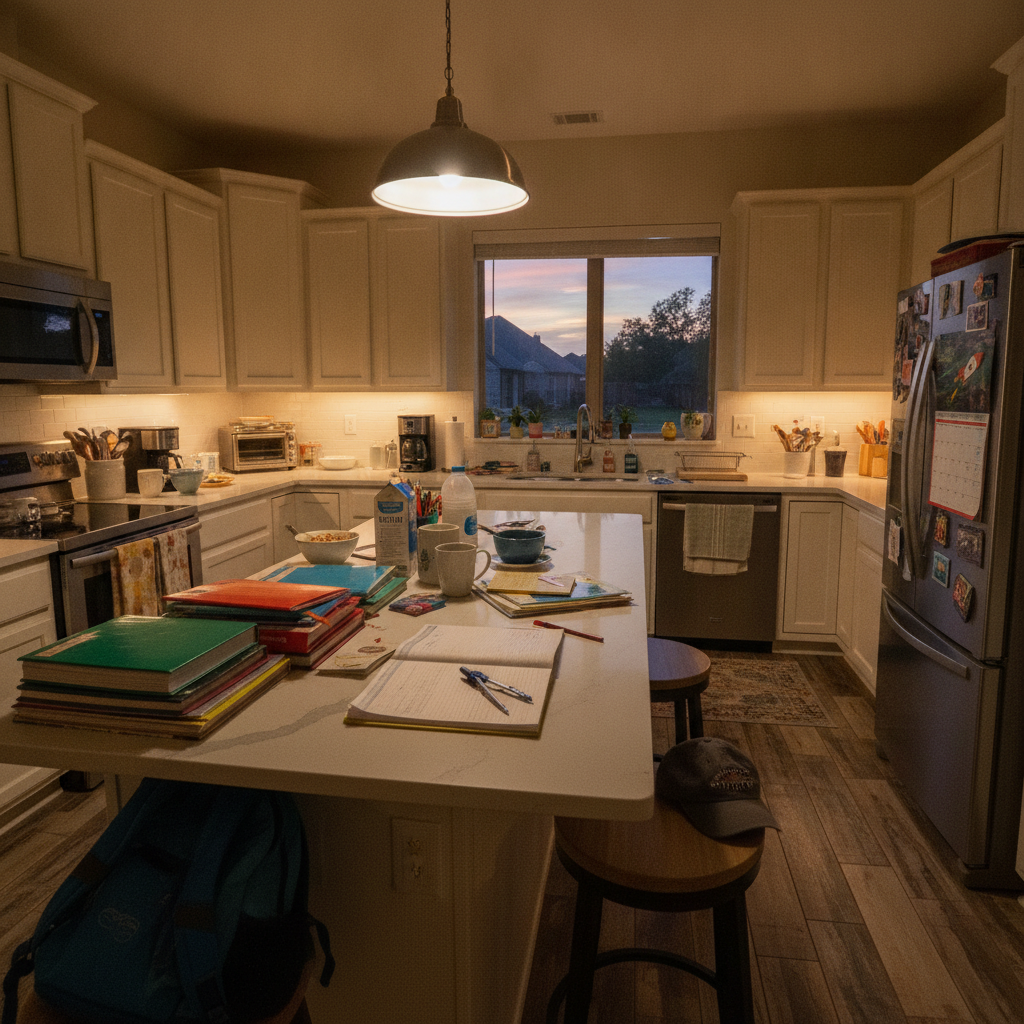
A granite or quartz countertop advertised at $40/sq ft sounds affordable until you see the real invoice. A typical 45 sq ft Central Texas kitchen lands between $3,800 and $7,500 installed once you add fabrication, sink cutouts, edge profiles, slab waste, tear-out, and plumbing reconnects. At Fox Granite, our quotes include all of that — no line items added at the end. The per-square-foot price you see from us is the all-in number. If another quote looks dramatically lower, ask what it doesn't include.
Granite is the right material when your cooking habits, your outdoor spaces, or your design preferences push past what engineered stone surfaces can deliver. These are the situations where granite wins clearly.
Granite's timeless durability as a natural stone and its unmatched heat resistance make it an excellent choice for Central Texas homeowners who cook seriously, entertain outdoors, or simply want a surface with genuine character. Honed and leathered finishes in particular elevate granite from a standard countertop material to a design statement that holds up for decades.
Quartz countertops are the right call when zero maintenance, stain resistance, and consistent modern style are the priorities. Here's exactly who quartz serves best.
Quartz is an extremely durable, highly practical countertop that fits the lifestyle of most busy Central Texas families. The non-porous surface means no worry about bacteria growth, no sealing schedule, and no annual maintenance cost — just a clean, consistent countertop that holds up to daily use without any special treatment.
Some Central Texas homes genuinely call for both granite and quartz — and that's not indecision, it's smart material matching. Quartz on the indoor kitchen perimeter gives you stain resistance and zero maintenance for daily cooking. Granite on the outdoor kitchen island or bar top gives you UV durability and heat resistance where quartz would yellow and crack within a season.
Both materials return 60–80% of installation cost at resale, so mixing them across spaces doesn't hurt your home's value. Matching color families and finish types across the two materials keeps the look cohesive — for example, a warm beige quartz indoors paired with a complementary warm-toned granite slab outdoors.
Fox Granite fabricates and installs both granite countertops and quartz countertops in-house, with no subcontractors and no upsell pressure toward either material. We bring samples directly to your home, walk through your cooking habits and each space, and tell you honestly which material fits which surface. If the honest answer is quartz inside and granite outside — or granite throughout — that's what we'll tell you.
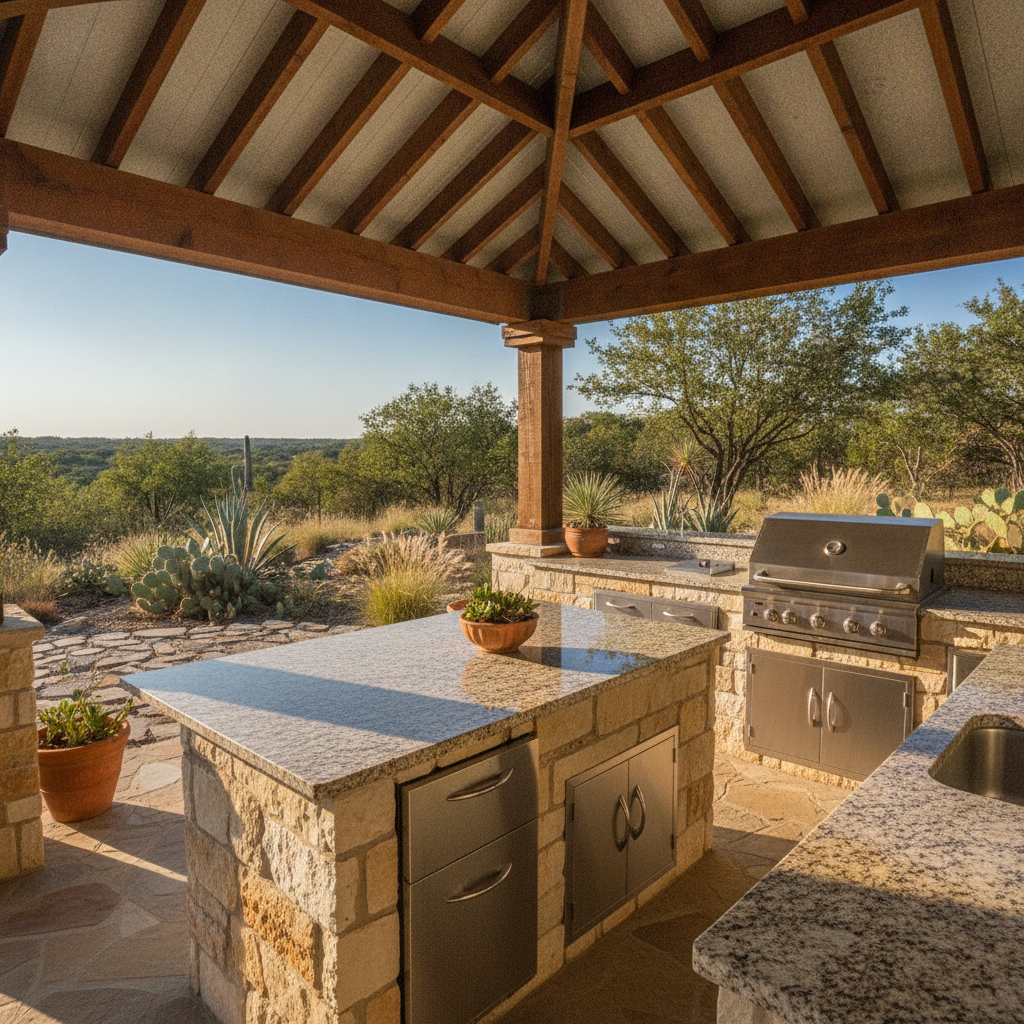
A family in Round Rock with three kids, a busy weeknight cooking schedule, and zero interest in a maintenance calendar is a textbook quartz household. Quartz is completely non-porous, so spilled juice, pasta sauce, or a knocked-over glass of wine wipes up clean with no staining risk and no sealing required — ever. That alone eliminates a recurring cost of $150–$250 every few years and the mental overhead of remembering to schedule it.
The consistent, modern look of quartz also fits the transitional kitchen style most common in new Central Texas builds. If this family is thinking about resale in five to ten years, quartz appeals strongly to the millennial and Gen Z buyers who now make up the largest share of the market. It's the low-friction choice for a high-use, forward-looking kitchen.
Some Central Texas homes call for both materials — and that's not a cop-out, it's smart design. A common approach: quartz on the main kitchen perimeter for daily cooking ease and stain resistance, granite on the outdoor kitchen island or bar top where UV exposure makes quartz a warranty-voiding risk. Both materials return 60–80% of installation cost at resale, so mixing them doesn't hurt your home's value.
Fox Granite fabricates and installs both granite and quartz countertops in-house, so there's no upsell pressure either direction. We'll bring samples to your home, walk through your actual cooking habits and space layout, and tell you honestly which material fits which surface. If the answer is granite in the backyard and quartz inside — or granite throughout — we'll say so. Schedule a free in-home consultation and we'll help you match the right material to every surface in your home.
Picture a family in Dripping Springs who grills and cooks outdoors three seasons a year and wants matching countertops on their covered patio and inside kitchen. Quartz is off the table the moment the outdoor kitchen comes into the conversation — UV exposure causes permanent yellowing and resin cracking, and most manufacturers void the warranty entirely for any outdoor installation. Granite handles both spaces without compromise.
Inside, the same homeowner pulls heavy cast-iron skillets off the stove regularly. Granite countertops handle direct heat from hot pans without damage, which means no frantic trivet search mid-cook. Add in the appeal of a honed or leathered finish — the look trending in 2026 — and granite is the clear, practical choice for this kitchen and lifestyle.
For granite countertops, quartz countertops, quartzite countertops, or marble countertops, Fox Granite serves Austin, San Antonio, New Braunfels, Round Rock, Georgetown, and the full Central Texas corridor. We fabricate in-house, install ourselves — no subcontractors — and bring samples directly to your home so you can see exactly how each material looks in your actual lighting and next to your actual cabinets before you commit.
Contact us today to schedule your free in-home consultation, or visit our New Braunfels showroom to see full slabs of granite and quartz side by side. Call (512) 653-5541 or schedule your free estimate online. When you're ready to choose the right countertop for your kitchen and your life, trust Fox Granite.


BY APPOINTMENT ONLY
1379 Wald Road
New Braunfels, TX 78132
Austin, San Antonio, Cedar Park, Kyle, New Braunfels, Del Valle, Elgin, Lago Vista, Shady Hollow, Onion Creek, Buda, San Marcos, Lockhart, Temple, Wimberley, Dripping Springs, Bee Cave, Lakeway, Leander, Anderson Mill, Jollyville, Spicewood Springs, Round Rock, Georgetown, Pflugerville, Manor, Taylor, Manchaca, Mountain City, Hutto, West Lake Hills, Bastrop, Liberty Hill, Driftwood, Sun City, Steiner Ranch.