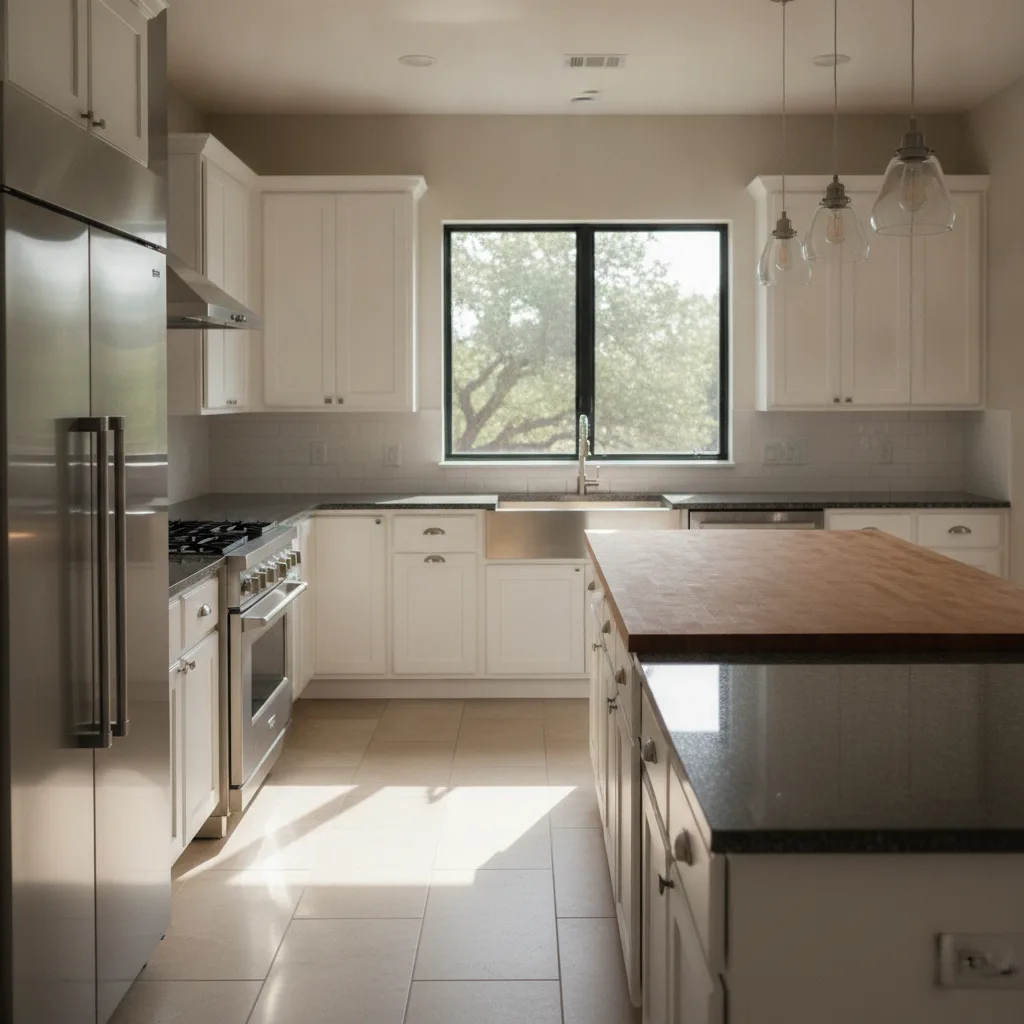
Granite countertops win on durability, heat resistance, and resale value — they last 100+ years, withstand temperatures up to 1,200°F, and deliver 60–100%+ ROI at resale in Texas. Butcher block countertops win on warmth, workability, and budget-friendliness — especially as a kitchen island surface for bakers who cut directly on the wood. The best 2026 kitchen remodel often uses both: granite on the perimeter near the sink and stove, butcher block on the island. If you can only pick one, granite is the lower-maintenance, higher-return choice for most Central Texas homeowners.
Granite vs. butcher block is not a coin flip — it's a cooking-style question with a clear answer once you know how your kitchen actually runs. Granite countertops last 100+ years, shrug off 1,200°F heat, and return 60–100%+ at resale in Texas. Butcher block countertops cost as little as $45 per square foot installed, cut directly without boards, and sand back to near-new when scratched. The 2026 Houzz U.S. Kitchen Trends Study confirms what Fox Granite sees daily: the smartest kitchen remodel in Central Texas uses both — granite on the perimeter, butcher block on the island. Here's how to decide what goes where.
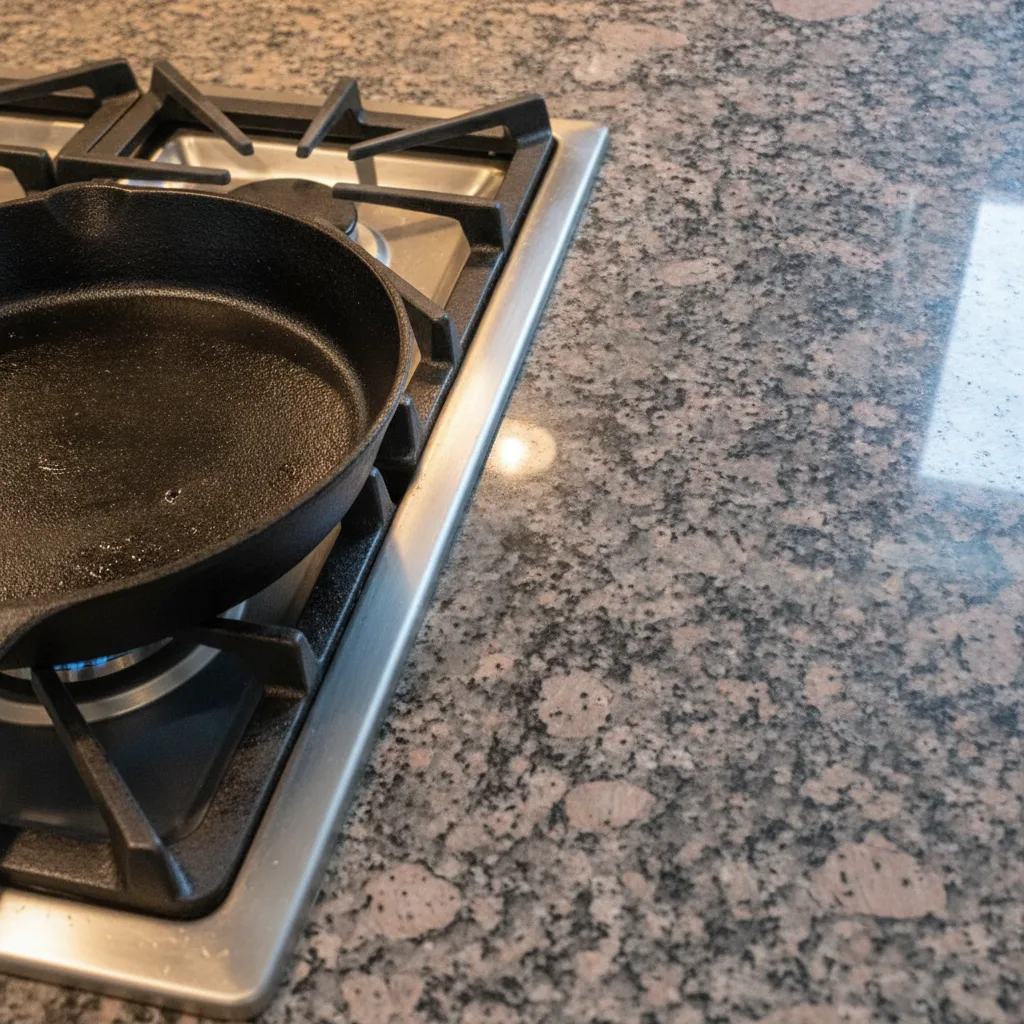
The natural stone workhorse built to last a lifetime — and then some.
The warm, cuttable wood surface that brings character to any kitchen remodel.
Granite is a natural stone formed under extreme heat and pressure, which is exactly why it performs so well in kitchens. Its Mohs hardness of 6–7 means your ceramic dishes, knife tips, and everyday countertop abuse won't leave marks on the stone surface. Cast iron from a 500°F oven goes directly onto the slab without damage. That's not a claim most other surfaces can make.
For Central Texas homeowners, the heat angle isn't just about cooking. South- and west-facing kitchen counters in Austin and San Antonio can reach 120°F+ from direct sunlight alone during summer. Granite's 1,200°F heat tolerance makes that a non-issue. Engineered quartz, by contrast, can discolor from sustained sun exposure — an important distinction for homes with large windows.
Maintenance for most granite slabs is minimal. Seal once every 1–3 years depending on slab density, then wipe with mild soap and water daily. Some denser leathered granite and honed granite finishes need sealing less often. Unlike butcher block counters, granite doesn't swell near the sink, won't warp in humidity, and won't develop mold from standing water when properly sealed. The upkeep is genuinely low maintenance compared to wood.
Leathered granite and honed granite finishes have made the material feel modern again in 2026. The matte textures complement flat-panel cabinets and concrete flooring in a way that polished slabs from 15 years ago never quite did. If you assumed granite meant shiny and formal, the current finish options prove otherwise — the material has evolved to match contemporary kitchen design without sacrificing its core durability.
Cost for a mid-range granite kitchen countertop runs $60–$100 per square foot installed, putting a standard 40 sq ft kitchen between $2,400 and $4,000. Exotic or rare slabs push past $100 per square foot, but most homeowners choose Level 2 granite and get excellent durability and visual character at the mid-range price point.
Butcher block makes one promise no other countertop surface delivers: you can cut directly on it. No cutting boards sliding around on granite, no dulling knife tips on stone. The wood absorbs the blade cleanly, and any scratches that accumulate over time can be sanded out and the surface refinished. That's a functionality no stone or quartz countertop can match.
The maintenance commitment is real, though. Butcher block counters need oiling every 2–4 weeks with food-safe mineral oil to prevent drying, cracking, and moisture damage. Skip the routine for a month or two in a dry Texas summer and you'll see the wood start to crack at the seams. Annual deep refinishing is standard for heavily used surfaces. This upkeep is genuinely less maintenance than it sounds once the routine is established — but it's a firm commitment, not optional.
Heat is the major limitation. Butcher block scorches and chars when hot pans land on it. Trivets near the stove are not optional — they're mandatory. The wood's beauty is also its vulnerability: it's organic, it reacts to its environment, and it won't forgive neglect near a heat source or a wet sink zone the way granite will.
Cost ranges from $45 to $65 per square foot installed for maple edge-grain, the most popular and budget-friendly entry point. End-grain butcher block, which is more durable and has a distinctive checkerboard look, runs higher — often $80–$150 per square foot installed depending on the wood species. A butcherblock island-only installation typically runs $500–$3,300, making it an accessible way to add warmth and character to a kitchen remodel without replacing every perimeter counter in the house.
| Dimension | Granite Countertops | Butcher Block Countertops |
|---|---|---|
| Cost (Installed) | $60–$100/sq ft; full kitchen $2,400–$6,000 | $50–$150/sq ft; avg kitchen $1,500–$6,000 (maple edge-grain: $45–$65/sq ft) |
| Lifespan | 100+ years with annual sealing (NAHB data) | 20–40 years with regular oiling and refinishing |
| Heat Resistance | Withstands up to 1,200°F — hot pots directly from stove are fine | Scorches and chars; trivets are mandatory near the stove |
| Scratch Resistance | Mohs 6–7 hardness; scratch-resistant, but skip the cutting boards at your peril | Cuts and scratches easily — that's the point; scratches sand out |
| Maintenance | Seal once every 1–3 years; wipe with mild soap daily | Oil every 2–4 weeks with food-safe mineral oil; annual deep refinishing if heavily used |
| Repairability | Chips filled professionally; cracks rare but require a pro | Scratches and stains sand out; surface can be fully refinished multiple times |
| Resale Value | 60–100%+ ROI in Texas; adds $4,500–$8,000+ in home value | Not considered a premium resale feature on its own |
| Best Location | Perimeter counters, near sink and stove, outdoor kitchens, high-traffic areas | Kitchen island, baking station, prep zone away from the sink and stove |
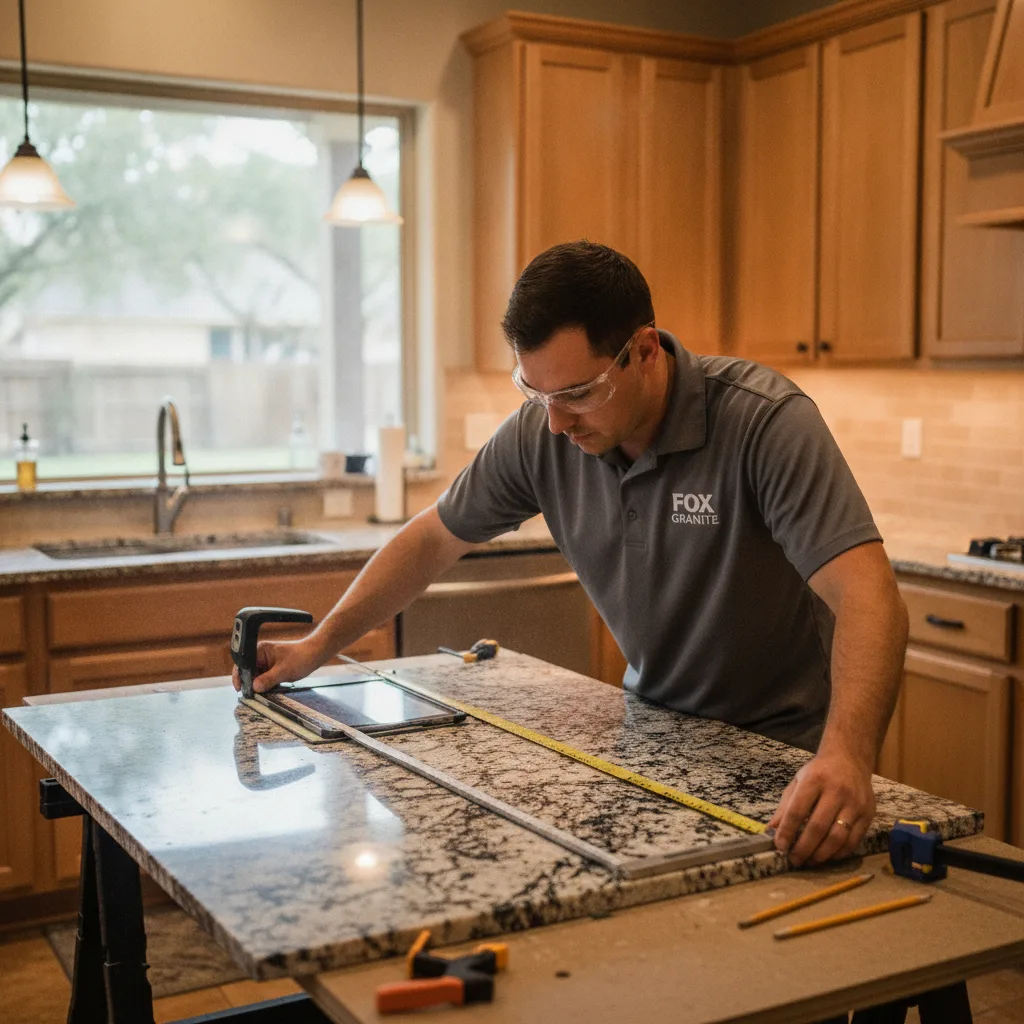
Choosing the right countertop comes down to how you actually use your kitchen — not just what looks good in a photo. At Fox Granite, we've helped Central Texas homeowners make this decision for over 15 years. We offer free in-home consultations with samples so you can see real granite slabs in your own lighting, next to your actual cabinets. No pressure, no surprise fees. Call us at (512) 653-5541 or schedule your free estimate online and we'll come to you.
Granite is the right countertop for homeowners who cook hard, hate upkeep routines, and want their kitchen investment to pay back at resale. It handles everything a busy family kitchen throws at it — heat, moisture, scratches, heavy pots — without asking much in return. One sealing per year is a fair trade for a 100+ year stone surface that adds real home value.
Most granite countertops are also a cleaner surface from a food-safety standpoint near raw meat prep zones. Sealing the stone prevents stains and keeps the surface non-porous in the areas where it counts most. For the perimeter counters in any Central Texas kitchen, granite is a hard argument to beat on durability, maintenance, and return.
Butcher block makes the most sense for homeowners who bake regularly, love the character of wood, and want their kitchen island to feel like the heart of the house rather than a lab surface. The beauty of wood is that it improves with use — a well-oiled maple butcher block island develops a rich patina over time that no stone or quartz countertop can replicate.
Butcherblock works beautifully when it's placed in the right location. An island that sits 4+ feet from the sink and away from the stove eliminates the two biggest risks — moisture damage and heat scorching. In that position, butcher block countertops are genuinely durable for everyday prep work, and their character only improves over years of use.
The granite vs. butcher block decision doesn't have to be either-or. The most popular kitchen remodel strategy in 2026 pairs granite countertops on the perimeter with a butcher block island as the prep-focused centerpiece. Each material does what it's best at: granite handles the heat, moisture, and sink zones; butcher block delivers warmth, workability, and visual character in the space where it performs without risk.
This mixed-material approach also sidesteps the biggest weaknesses of both options. Butcher block counters placed near the sink are vulnerable to swelling, warping, and mold. Move the wood to an island away from that wet zone and the risk is largely eliminated. Granite on the perimeter near the stove removes the trivet problem entirely. The result is a kitchen that's both more functional and more beautiful than one built entirely from a single material.
Unlike quartz, which carries a premium price for engineered consistency, combining granite and butcher block can actually be more budget-friendly than going all-stone — especially if the island was previously laminate or a dated surface that needed replacement anyway. The two materials also pair naturally in design terms: the cool, crystalline texture of a granite slab next to the warm, organic grain of maple creates the kind of contrast that feels intentional, not accidental.
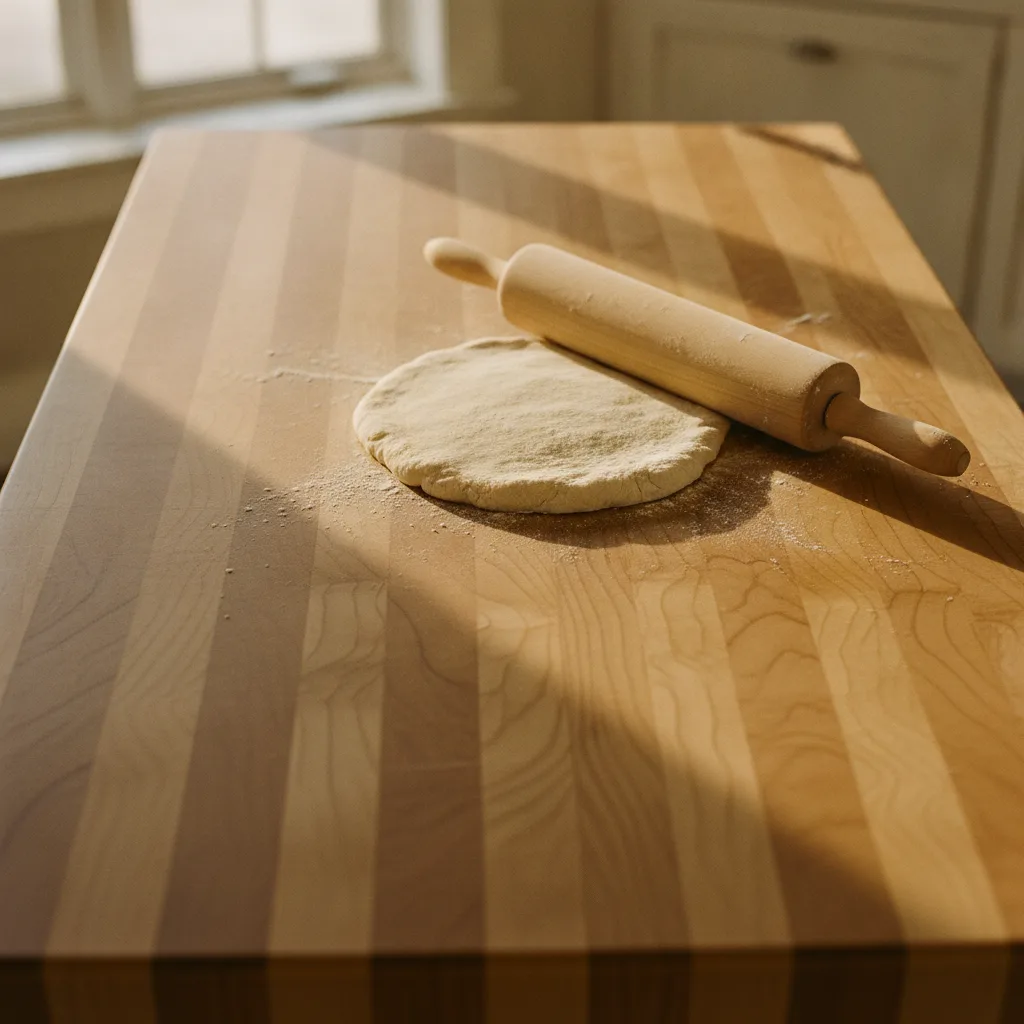
Butcher block makes the most sense when your kitchen island is your primary prep zone and you bake regularly. Wood stays naturally cooler than stone surfaces, which helps with pastry dough, and you can cut directly on it without a board dulling your knives or sliding around on granite. Scratches that appear over time aren't damage — they're just wood telling you it's being used. Sand them out and re-oil, and the surface looks close to new.
The 2026 Houzz U.S. Kitchen Trends Study backs this up: 39% of homeowners who chose a different material for their island than their perimeter counters went with wood or butcher block — the top alternate choice by a wide margin. If your island sits away from the sink and stove, the moisture and heat vulnerabilities of butcher block counters are largely managed. A budget-friendly maple edge-grain option starts around $45–$65 per square foot installed, making it a practical way to add warmth and character without a full kitchen remodel price tag.
The most popular kitchen remodel decision in 2026 isn't choosing between granite vs. butcher block — it's using both. Granite countertops on the perimeter handle the heat, moisture, and sink zones where natural stone outperforms every other surface. The butcher block island becomes the warm, tactile focal point of the space, purpose-built for prep and baking work.
According to the 2026 Houzz U.S. Kitchen Trends Study, 58% of remodeling homeowners are adding or updating a kitchen island, and 1 in 5 choose a different material for the island than their perimeter counters. Wood and butcher block is the #1 alternate choice at 39%. This mixed-material approach gives you the durability and resale value of granite quartz-grade stone on the perimeter, plus the warmth and workability of butcher block where it performs best.
Fox Granite can template, fabricate, and install your granite countertops in-house — and coordinate the full countertop layout so both surfaces work together from day one. No subcontractors, no hand-off miscommunication, no surprise gaps between the stone and the wood island.
Granite countertops are the right countertop for families who cook hard and clean fast. You're pulling a cast-iron skillet off a gas burner and sliding it straight onto the counter — granite handles that without flinching. Butcher block would scorch. A Mohs hardness of 6–7 means daily knife nicks and ceramic dish scrapes won't leave a mark on your stone surfaces.
Near the sink, granite is especially forgiving. Sealed granite counters don't absorb standing water, won't swell, and won't develop the mold that haunts butcher block counters placed too close to a wet zone. For Central Texas homeowners with south- or west-facing kitchens, where counters can reach 120°F from direct sunlight alone, granite's 1,200°F heat tolerance is a real practical advantage — not just a spec sheet number.
One annual sealing keeps granite protected and looking sharp for years. Sealing takes about 30 minutes and costs under $20 in materials. That's a reasonable ask for a countertop that adds $4,500–$8,000 in home value and outlasts the house it's installed in. If your dream kitchen needs to perform every day without fuss, granite is the answer.
Choosing between granite and butcher block comes down to three things: where the countertop goes, how much heat and moisture it'll face, and how much routine upkeep you'll realistically commit to. Granite wins on durability, resale, and low maintenance at the sink and stove. Butcher block wins on workability, warmth, and budget-friendliness as an island surface for bakers and home cooks who want a kitchen that feels lived-in. Most of the time, the right answer for a Central Texas kitchen remodel is both.
For granite countertop fabrication and installation in Austin, San Antonio, New Braunfels, Round Rock, and across the Central Texas corridor, trust Fox Granite. We fabricate in-house, template with precision, and install without subcontractors — so every slab looks exactly the way it should. Contact us today to schedule your free in-home consultation and see how granite countertops — or a granite and butcher block combination — can fit the way you actually cook.
Ready to get started? Contact Fox Granite today.


BY APPOINTMENT ONLY
1379 Wald Road
New Braunfels, TX 78132
Austin, San Antonio, Cedar Park, Kyle, New Braunfels, Del Valle, Elgin, Lago Vista, Shady Hollow, Onion Creek, Buda, San Marcos, Lockhart, Temple, Wimberley, Dripping Springs, Bee Cave, Lakeway, Leander, Anderson Mill, Jollyville, Spicewood Springs, Round Rock, Georgetown, Pflugerville, Manor, Taylor, Manchaca, Mountain City, Hutto, West Lake Hills, Bastrop, Liberty Hill, Driftwood, Sun City, Steiner Ranch.