A granite supplier (also called a slab yard or stone yard) imports and warehouses raw slabs — they do not cut, edge, or install anything. A fabricator is the shop that templates your space, cuts the stone with CNC equipment, profiles the edges, cuts sink openings, and installs the finished countertops on your cabinets. Most Central Texas homeowners need a fabricator, not a supplier. Installed granite countertops in Austin and the surrounding area run $40–$200 per square foot depending on slab grade and edge profile. Fabrication and installation labor accounts for 40–60% of that price, which is why the fabricator you choose matters more than any other decision in the process.
Granite suppliers near me returns four completely different types of businesses in a single search results page — and most of them will not install your countertop. Slab yards, fabrication shops, kitchen remodeling companies, and sales offices all show up under similar names, and none of those labels are regulated. Before you call anyone, you need to know exactly who does what in the supply chain, why that distinction changes your price and your accountability, and the five questions that separate a full-service fabricator from a middleman. This guide gives you that clarity in plain language, with real numbers from the Central Texas market as of 2026 — so you can start making an informed choice today.
When you search granite suppliers near me, the results mix at least four different types of companies — and most of them won't install your countertop. You'll see slab yards (also called distributors or stone yards) that import and warehouse raw slabs, fabrication shops that cut and install stone, kitchen remodeling companies that subcontract the actual stone work, and sales offices that hand off every step to someone else. None of these labels are regulated, so a company can call itself a supplier, manufacturer, or specialist regardless of what it actually does. Homeowners dealing with this confusion for the first time often spend hours calling the wrong type of business before finding someone who can actually complete the job.
The clearest split is this: a supplier sells stone; a fabricator turns stone into countertops and puts them on your cabinets. A granite slab yard stocks slabs roughly 9–10 feet long by 5–6 feet wide, imported from quarries in Brazil, India, Italy, and other stone-producing regions. Shipping from quarry to a U.S. port adds roughly $5–$10 per square foot before the slab ever reaches a fabricator's floor. That shipping cost is one reason exotic imported stone costs more than domestic granite even when raw quality is comparable. The slab yard does zero cutting, polishing, or installation — they are wholesalers, full stop.
As of 2026, tariff-driven price increases on imported granite from Brazil, India, and China have added an estimated 5–15% to material costs on mid-range and exotic slabs in Central Texas. If you're comparing quotes and one seems unusually low, ask whether that price reflects current import costs or a pre-tariff holdover. Understanding who is quoting you — a slab yard passing along wholesale price, a fabricator giving you an all-in number, or a general contractor marking up a fabricator's bid — changes how you read every line item. The difference between those three types of quotes is not always obvious on the surface.
Companies frequently market themselves as manufacturers when they are fabricators, as suppliers when they are middlemen, and as specialists when they are sales offices subcontracting every stage of the work. Always ask: Do you fabricate and install in-house? before you assume the company quoting you will be the company showing up on install day.
The full granite supply chain has five stages, and a homeowner typically only sees the last two. First, a quarry extracts a raw granite block from the earth — quarries in Brazil, India, Italy, and domestic U.S. sites produce most of the natural stone on the market. Granite has been quarried for centuries, prized for its strength, resilience, and beauty across the world. Second, a gang saw slices that block into slabs at roughly 3/4-inch to 1.25-inch thickness. Third, the slabs are polished and loaded into shipping containers headed for U.S. slab yards. Fourth, a fabricator buys selected slabs from the distributor — or, if vertically integrated, pulls from its own imported inventory. Fifth, the fabricator templates your space, cuts the stone to exact measurements, profiles the edges, cuts sink openings, polishes the finished pieces, and installs them on your cabinets.
That fifth stage is where most of the skill and most of the cost live. Fabrication and installation labor — templating, cutting, edging, polishing, and setting the stone — accounts for 40–60% of your final installed price. The slab itself runs $25–$75 per square foot at wholesale depending on stone grade and origin; fabrication and installation labor adds another $15–$40 per square foot on top of that. For a standard kitchen with 40–50 sq ft of countertop, the all-in installed cost typically runs $2,000–$5,000 for common granite grades in Central Texas. Exotic or imported slabs push that number higher, and the 2026 tariff environment has added real pressure to the upper end of that range — a detail homeowners need to check when comparing bids.
Granite, quartz, quartzite, and marble each travel this same general supply chain, but fabrication varies by material. Engineered quartz slabs are manufactured rather than quarried, so they arrive at more consistent dimensions and colors — quartz offers a more predictable appearance and easy maintenance but lacks the one-of-a-kind beauty of natural stone. Granite and quartzite carry unique veining and colors that make slab selection personal and the fabricator's precision more important. Marble is softer and more prone to etching, which affects how the fabricator handles polishing and which sealer they apply after installation. Whatever material you choose, the fabricator's equipment and skill determine how well the finished countertops fit your space and how long they last — and how happy you'll be with the result for years to come.
Kitchen remodeling companies and general contractors often hire a fabricator behind the scenes, then mark up that line item 10–20% when billing the homeowner. If a GC quotes you $4,800 for countertop installation, the fabricator doing the actual work may have quoted the GC $4,000. That 20% covers the GC's coordination time — scheduling trades, managing the sequence of cabinet install, plumbing disconnect, templating, and reinstall — but it also adds a layer between you and the people cutting your stone. When something goes wrong on install day, you talk to the GC, who talks to the fabricator, who may or may not respond promptly.
Working directly with a fabricator cuts out that markup and puts you in direct contact with the team doing the work. The tradeoff: you take on more coordination yourself — scheduling the template appointment, confirming cabinet installation is complete, arranging any plumbing disconnects. For most homeowners doing a straightforward kitchen countertop swap, that coordination is a few phone calls, not a project management job. The savings and the cleaner accountability are usually worth it. It makes sense to go direct whenever the countertop work stands alone. For a full kitchen renovation with new cabinets, rough-in plumbing, and tile work, a GC's coordination value justifies their fee — but for countertop-only jobs, skip the middleman.
One more scenario worth knowing: some homeowners try to source their own slab from a stone yard, then hire a fabricator separately to cut and install it. Many fabrication shops will do this, but they will warranty only their labor — not the material. If the slab cracks during cutting, the liability question gets murky fast. Buying the slab and the fabrication work from the same company keeps everything under one contract and one warranty. That single-contract structure is the most important accountability advantage a homeowner can secure before any work begins — and it's the one detail folks most often forget to confirm before signing.
Most wholesale stone yards operate on a trade-account basis and expect buyers to arrive with their fabricator. You can often visit a slab yard to hand-pick a specific slab — and seeing your actual slab in person before fabrication is worth doing for natural stone — but call ahead to confirm they allow homeowner visits without a fabricator present.

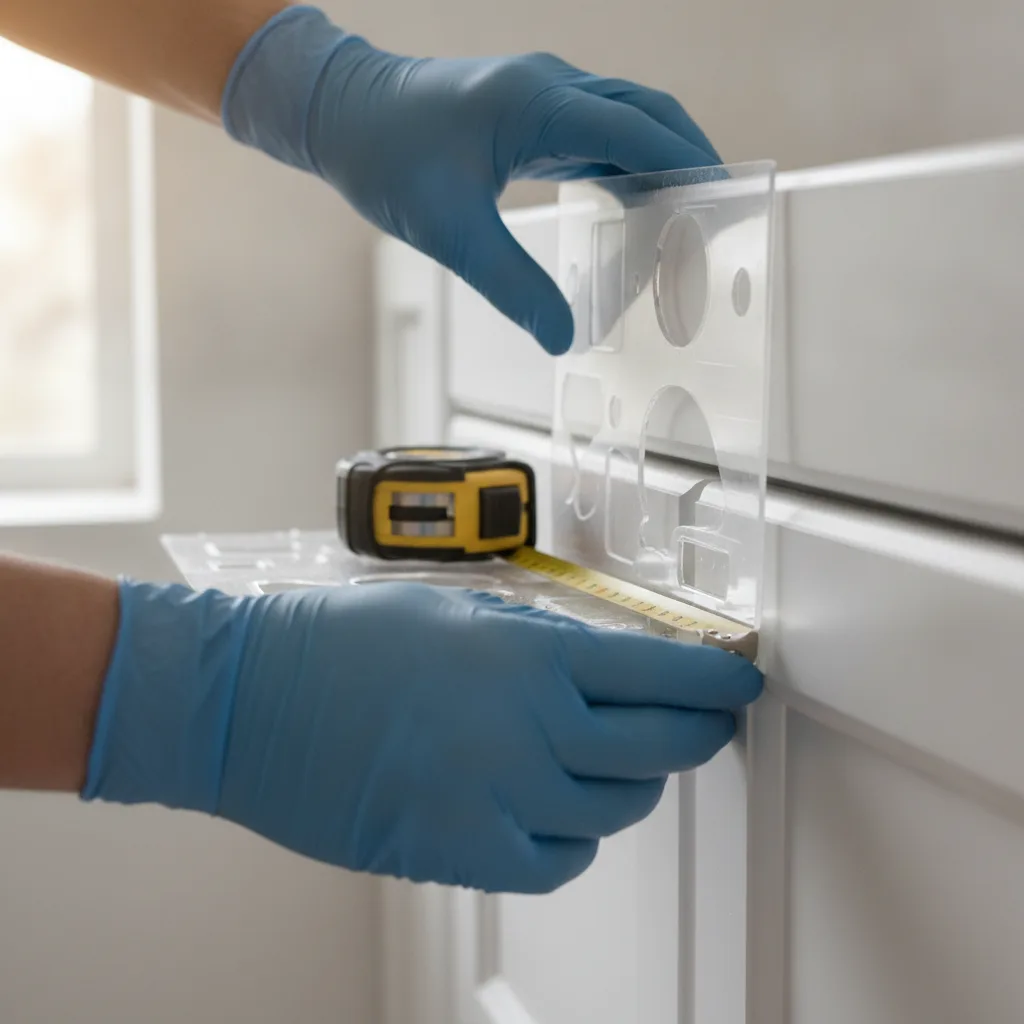
A fabricator's job starts the moment your cabinets are level and ends when your new countertops are sealed and ready for use. The process runs in four phases: templating, cutting, finishing, and installation. Templating is a 1–2 hour on-site appointment where the crew measures your exact cabinet layout using an overlay template method — this precision is what ensures your countertop pieces fit without gaps or overhangs. Fabrication then takes 7–14 business days for most granite or quartz projects. Installation day runs 4–8 hours for a standard kitchen. A small bathroom vanity top wraps up in 2–3 hours. If you need to learn exactly what hours to block off on your calendar, those are the numbers to hold.
The equipment in a fabrication shop matters more than most homeowners realize. CNC and waterjet cutting machines handle precise cuts, curved shapes, and sink openings that hand tools can't match cleanly. CNC nesting software also determines how efficiently the fabricator lays out your countertop pieces on the slab — a well-run shop wastes 15–20% of a slab on a typical kitchen project; a disorganized shop may waste 30% or more and price to cover it. That waste difference can add hundreds of dollars to your final bill without appearing as a line item on the quote. State-of-the-art stone-cutting software is a meaningful differentiator that affects your price and your outcome — it's one of the key reasons to ask a fabricator to walk you through their shop before you purchase.
Edge profiling and sink cutouts are where fabricator skill shows up most visibly in the finished product. Common edge options include eased, beveled, bullnose, half-bullnose, and ogee profiles — each requires different tooling and finishing time, and each adds elegance or simplicity to the overall style and design of your kitchen or bathroom. Clean, tight seams between countertop sections are another mark of a skilled shop; poorly cut seams are nearly impossible to repair after installation and can collect bacteria and moisture over time. Undermount sink cutouts need clean, polished edges that sit flush against the sink rim. If a fabricator subcontracts any of these steps to outside shops, quality control and scheduling both get harder to manage. An in-house fabrication floor with its own CNC equipment gives you one team responsible for every cut, every edge, and every seam.
Not a homeowner purchase — ask your fabricator if they own this in-house
CNC cutting produces precise countertop pieces and sink cutouts; in-house ownership means the fabricator controls quality, turnaround, and slab waste — shops without CNC nesting software may waste 30%+ of your slab and charge accordingly
Included in templating appointment — no separate charge from a full-service fabricator
The overlay method captures exact cabinet dimensions so your countertop pieces fit your space precisely; ask any fabricator you interview whether this is their standard templating method
A full-service fabricator handles slab sourcing, in-house cutting, and installation with its own crew — giving you one point of contact and one warranty covering the entire job. A middleman may look the same on a website but subcontracts fabrication to a shop across town and sends a separate installation crew that doesn't report to the company that sold you the job. When a subcontracted installation crew causes damage, the chain of responsibility blurs. When an in-house crew causes damage, the fabricator owns the problem completely and directly. That accountability difference is important to understand before you sign — and a knowledgeable fabricator will be honest about their own process without you having to press hard.
The best price is not always the one from the cheapest company. A fabricator that uses CNC nesting software, employs its own installation crew, and sources slabs through established supplier relationships can often deliver a more competitive all-in price than a sales office that marks up a subcontractor's work. Ask for an itemized quote that separates material cost, fabrication labor, edge profiling, sink cutout, and installation. A company that can't break those out is probably not doing all of that work itself. Top quality materials and professional labor should be clearly represented in any quote you receive — and the details of each line item are where honest shops set themselves apart from middlemen.
Vertically integrated fabricators — those that import their own containers and run their own fabrication floor — often offer better pricing on commodity stones like granite or quartz because they're not paying a distributor's margin on every slab. This matters in the current market: as of 2026, tariffs on imported stone have pushed mid-range slab costs up 5–15%. A fabricator with direct supplier relationships absorbs less of that increase than one buying retail from a stone yard. The aesthetic appeal and durability of your finished countertops depend on the slab grade, but the value you receive for that investment depends heavily on the supply chain your fabricator uses. People who discover this distinction early in the process consistently find better affordability and consistency across their final product.
Five questions separate a reliable full-service fabricator from a company that will hand your job off the moment you sign. First: Do you fabricate in-house, or do you send slabs to an outside shop? In-house fabrication means faster turnaround, direct quality control, and a single point of accountability. Second: Do you install with your own crew, or do you subcontract installation? Your own crew means the company is fully on the hook if anything goes wrong on install day. Third: Is templating included in the quoted price, or billed separately? A transparent fabricator bundles the 1–2 hour templating appointment into the project quote — no surprise charge when the template crew shows up. These three questions alone will help you find and choose the right partner for your home.
Fourth: What does your warranty cover — labor only, or material and labor? If you're buying the slab through the fabricator, the warranty should cover both. If a company only warranties labor, ask why. Fifth: Are the slab and fabrication both under one contract? One contract means one company to call if something cracks, chips, or doesn't fit. Two separate agreements — one for material, one for fabrication — put you in the middle of a dispute between vendors. These five questions take a few minutes to ask, and they filter out most of the accountability problems homeowners run into on countertop projects. Put the answers in writing before you purchase. A friendly, client-focused team will answer all five without hesitation and be happy to provide everything in writing before you commit.
For granite countertops, quartz countertops, quartzite, and marble in Austin, San Antonio, New Braunfels, Round Rock, Georgetown, and across Central Texas, the right fabricator answers all five questions confidently and puts the answers in writing. If a company hedges on any of them — or says it sources, fabricates, and installs everything but can't explain how — keep asking. The best fabricators are inspired by their craft and proud of their in-house process; they'll walk you through it before you commit. Their great selection of slabs in a beautiful range of colors and styles, their professional installation crew, and their transparent pricing are easy to verify when you visit the showroom or schedule a free in-home consultation. That visit is the single most helpful step you can take before signing any contract — and it sets the right expectations for every step that follows.
If you're working on a small bathroom vanity or a bar top with limited square footage, ask about remnant slabs. Remnants are cut-off pieces from previous kitchen projects — fully finished natural stone offered at 20–40% below full-slab pricing. A good fabricator keeps a selection of remnants on hand and will tell you upfront whether your project qualifies. It's one of the fastest ways to get top-quality materials into a small space without paying full-slab price.

The granite and countertop industry is full of companies that describe themselves as one thing and operate as another. A supplier that does fabrication, a manufacturer that's actually a sales office, a specialist that subcontracts every step — these labels aren't regulated, and they make comparison shopping harder than it needs to be. Before you sign any contract, confirm in writing that your fabricator handles templating, cutting, and installation under one roof with one crew. Ask for an itemized quote. Ask who shows up on install day and who you call if something goes wrong. That clarity protects your budget and your timeline — whether you're replacing kitchen countertops, adding a bathroom vanity top, selecting a backsplash, or building out an outdoor space with porcelain or natural stone. Builders, designers, and homeowners who have been through this process before all recommend the same approach: get the details in writing, check references, and connect with a team that has years of satisfied clients on record.
For granite countertops, quartz countertops, quartzite, and marble in Austin, San Antonio, New Braunfels, Round Rock, Georgetown, and the surrounding Central Texas areas, trust Fox Granite. Family-owned since 2010 — with decades of combined experience, in-house fabrication, our own installation crew, and transparent all-in pricing with no surprise fees. Our team is patient, knowledgeable, and easy to work with from the first appointment to the final install. We've saved hundreds of clients from the accountability gaps that come with dealing with middlemen, and we're ready to do the same for you. Contact us today to schedule your free in-home consultation and get your free estimate — and transform your kitchen or bathroom into the elegant, durable space you've been inspired to create.
Ready to get started? Contact Fox Granite today.


BY APPOINTMENT ONLY
1379 Wald Road
New Braunfels, TX 78132
Austin, San Antonio, Cedar Park, Kyle, New Braunfels, Del Valle, Elgin, Lago Vista, Shady Hollow, Onion Creek, Buda, San Marcos, Lockhart, Temple, Wimberley, Dripping Springs, Bee Cave, Lakeway, Leander, Anderson Mill, Jollyville, Spicewood Springs, Round Rock, Georgetown, Pflugerville, Manor, Taylor, Manchaca, Mountain City, Hutto, West Lake Hills, Bastrop, Liberty Hill, Driftwood, Sun City, Steiner Ranch.