
When searching for granite countertops near me, the most important things to verify are: (1) in-house templating and installation — no subcontractors; (2) a crew running 2–3 installs per day, not 5+; (3) laser digital templating, not cardboard; (4) an in-person showroom visit to see actual slabs; (5) a fully line-itemized quote covering slab, fabrication, edge profiles, sink cutouts, removal, and sealing; (6) confirmed seam placement before templating starts; and (7) sealing included in the install price. As of 2026 in Central Texas, all-in installed granite countertops cost $95–$185 per square foot — not the $40–$80 you'll see on national averages.
Searching 'granite countertops near me' puts you in front of a long list of fabricators, most of whom look identical on the surface: showroom photos, a price range, and five-star reviews. The difference between a shop that delivers a beautiful, precise installation and one that creates months of headaches is almost never visible in a Google listing. It shows up in seven specific, operational questions — and how confidently the shop answers them. This guide gives you those seven checks, the numbers behind each one, and what a trustworthy answer sounds like, so you can walk into any fabricator conversation in Central Texas with a clear vetting framework.
The single most important question to ask any fabricator is: 'Does your own crew do the templating and installation, or do you subcontract those out?' A shop that owns every step of the process — templating, CNC cutting, edge profiling, seaming, sealing, and installation — is the only shop that can be held fully accountable when something goes wrong.
Shops that farm out templating or installation to third parties create an accountability gap that almost always costs the homeowner. If the template is off and the countertop doesn't fit, you're stuck playing phone tag between the salesperson, the fabricator, and the installer — none of whom will own the mistake. That handoff problem is one of the most common sources of project delays and dispute costs in the countertop industry.
Fox Granite handles fabrication and installation with its own in-house team out of New Braunfels. One crew is responsible from the template appointment through the finished install. That's not a marketing line — it's the structural reason customers get a clean result and a single point of contact if anything needs to be addressed after the job is done.
Ask: 'Will the same company that templates my kitchen also cut and install it?' A confident 'yes' with a direct answer is a good sign. Vague answers like 'we work with trusted partners' usually mean subcontractors are in the picture.
A well-run fabrication crew completes two to three installs per day. Five or more installs per day is a red flag — at that pace, crews are rushing, and rushing produces seam errors, poor epoxy color matching, and countertops that don't sit level.
This question catches over-booked shops that look fine on paper but move too fast to do careful work. A shop running five installs a day isn't cutting corners on purpose — they're simply out of time to check fit, adjust seams, and clean up edges the way a precise installation requires. The craftsmanship suffers not because the team is unskilled, but because the schedule doesn't allow for care.
The install volume question also tells you something about how long your project will actually take. A normal-capacity shop runs 7–14 calendar days from template appointment to finished installation. During Austin's busy season (April through October), that window can stretch to 3–4 weeks. Build that into your timeline before you commit to any fabricator.
Ask: 'What's your current lead time from template to install?' If the answer is under five days and the shop seems very busy, press on how many jobs run per day. Fast turnaround and rushing are not the same thing.
Laser digital templating systems — such as Prodim or LT-2D3D units — capture your wall angles and cabinet positions with measurable repeatability, and the digital file feeds directly into the CNC saw. Manual cardboard templating relies on human measurement at every transfer point, and small errors compound across a 20-foot kitchen run.
The practical difference shows up at seams and corners. A laser-measured file produces seams that close cleanly and corners that sit flush against the wall. A slightly off cardboard template produces small gaps that need to be filled with caulk — or, worse, a section that has to be recut at the shop's expense, which then delays your project.
Fox Granite uses a precision overlay template method that feeds directly into state-of-the-art stone-cutting software. Ask any shop you're considering: 'What templating system do you use, and how does it connect to your CNC machine?' A shop that can answer that question in plain terms knows its process. A shop that can't give you a clear answer is worth a follow-up visit to their facility before you sign.

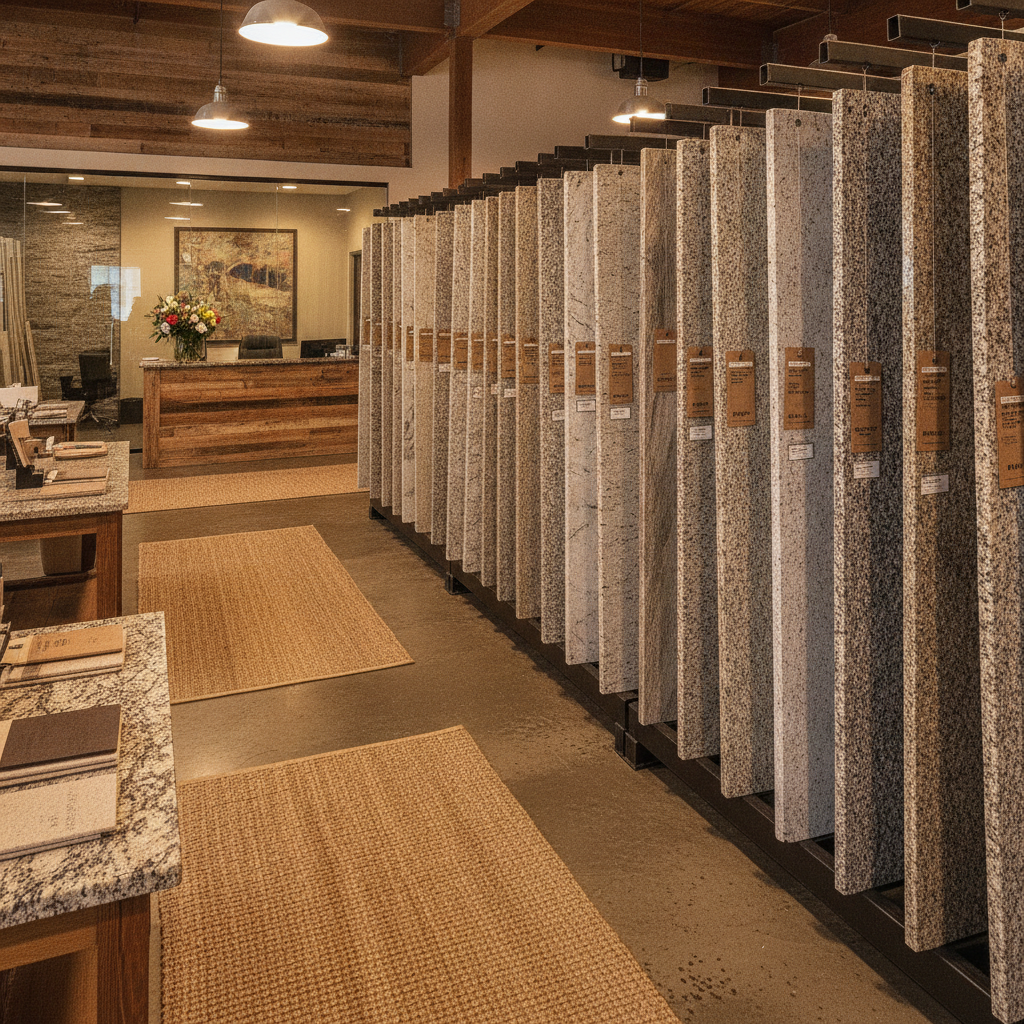
A 4-inch sample tile tells you the color family. It does not tell you the movement, veining pattern, or variation across the full slab — and with granite, quartzite, or marble, those things vary significantly from one slab to the next within the same color name. The natural beauty of each stone slab is unique to that individual piece.
Visit the showroom in person. Run a hand across the display edges to feel the finish quality. Check that slabs are labeled with origin and grade. Look at how the space is organized — a shop that keeps its showroom orderly typically applies the same workmanship to fabrication. Fox Granite's New Braunfels showroom carries slabs across granite, quartz, quartzite, and marble so you can see what you're actually purchasing before the template appointment, not approve a photo after the fact.
Big-box programs at Home Depot and Lowe's subcontract to local shops and add a margin and scheduling layer on top. For similar or lower pricing, an independent fabricator gives you direct access to the slab yard, more flexibility on edge profiles, and a faster scheduling path. The selection at a quality independent showroom often exceeds what a big-box program can offer in both range of colors and stone origin options.
Check that slabs are labeled with stone name, origin, and grade. Look at the edge profiles on display pieces — eased, beveled, bullnose, half-bullnose, ogee — and feel the finish. Rough or uneven edges on display pieces are a craftsmanship signal worth taking seriously before you commit.
A lowball quote wins jobs and loses homeowners money. Some fabricators quote a low per-square-foot price to get the contract signed, then add charges for edge profiles ($10–$30 per linear foot above base for decorative profiles like ogee), undermount sink cutouts ($100–$250 per opening), old countertop removal ($150–$400 for a standard kitchen), and sealing — none of which appeared in the original number.
A trustworthy quote covers: slab cost per square foot and total square footage, fabrication labor, edge profile selection and any upcharge, sink cutout fees, removal and haul-away if applicable, installation, and sealing. If any of those line items are missing, ask for them explicitly before you sign. A shop with nothing to hide will provide a clean written breakdown without pushback. One that resists itemizing is giving you a signal worth heeding.
As of 2026 in Central Texas, expect all-in installed granite countertop costs of $95–$185 per square foot when you account for stone origin, fabrication complexity, and installation standards. A 50-square-foot kitchen using mid-grade stone, fully installed, typically runs $6,000–$9,000 through a well-run shop. If a quote comes in well below that range, ask specifically what's not included before you compare it to other numbers.
A reasonable contractor deposit is 10–25% of the total project cost, up to 30% for custom or material-heavy orders. A fabricator asking for more than 50% upfront before templating is a red flag worth pausing on before you proceed.
A competent fabricator can tell you exactly where seams will land before a template is ever pulled. Seams should sit away from the center of the sink, never directly over the dishwasher cavity, and ideally out of the sightline as you walk into the kitchen. If a fabricator can't give you a confident seam placement answer during the estimate conversation, that's a skill gap — not a scheduling issue.
Seam placement is where cheap fabrication shows up most visibly after installation. A seam directly over the dishwasher carries vibration stress every time the appliance runs. A seam centered on the sink creates a weak point at exactly the spot where the countertop takes the most daily load. Good seam planning is a sign of a crew that has fabricated thousands of countertops and thought through more than just the cut.
Sink cutout precision matters just as much. A properly cut undermount sink opening must match the manufacturer's sink template to within 1/8 inch. Cut too tight and the sink won't drop in cleanly. Cut too large and you get a gap that eventually leaks or collects mold. Ask the fabricator how they verify sink cutout dimensions — the answer should reference the manufacturer template or a digital file, not 'we eyeball it' or a vague reference to experience.
Most granite should be sealed with a penetrating impregnating sealer before or just after installation — that's the recommendation from the Marble Institute of America. A fabricator who doesn't mention sealing, or who adds it as a surprise line item after the contract is signed, is either cutting corners or padding the bill. Ask directly: 'Is the initial sealing included in the installation price?'
Granite is stain-resistant and scratch-resistant, not stain-proof or scratch-proof. The sealer fills the microscopic pores in the stone and slows liquid absorption, but it needs to be refreshed over time. You can check whether your granite needs resealing with a simple water-drop test: pour a tablespoon of water on the surface and wait a few minutes. If the water beads, the seal is holding. If it soaks in and darkens the stone, it's time to reseal.
Ask the fabricator: 'How often should I reseal this specific stone?' The answer varies by stone density. Some granites need resealing every one to two years; others hold for three to five years. A fabricator who can answer by stone type is one who understands the material. Marble countertops and quartzite countertops require the same sealing conversation — and marble etches from acidic liquids like lemon juice or vinegar regardless of sealer status. If you're choosing marble for a high-traffic kitchen, ask the fabricator to walk you through realistic care expectations before you commit to the slab.
Marble etches from acidic liquids — lemon juice, vinegar, citrus cleaners — regardless of the sealer. Quartzite is harder and more acid-resistant, but the terms are sometimes misused by suppliers. Ask your fabricator to confirm the Mohs hardness rating of any slab sold as quartzite before you purchase.
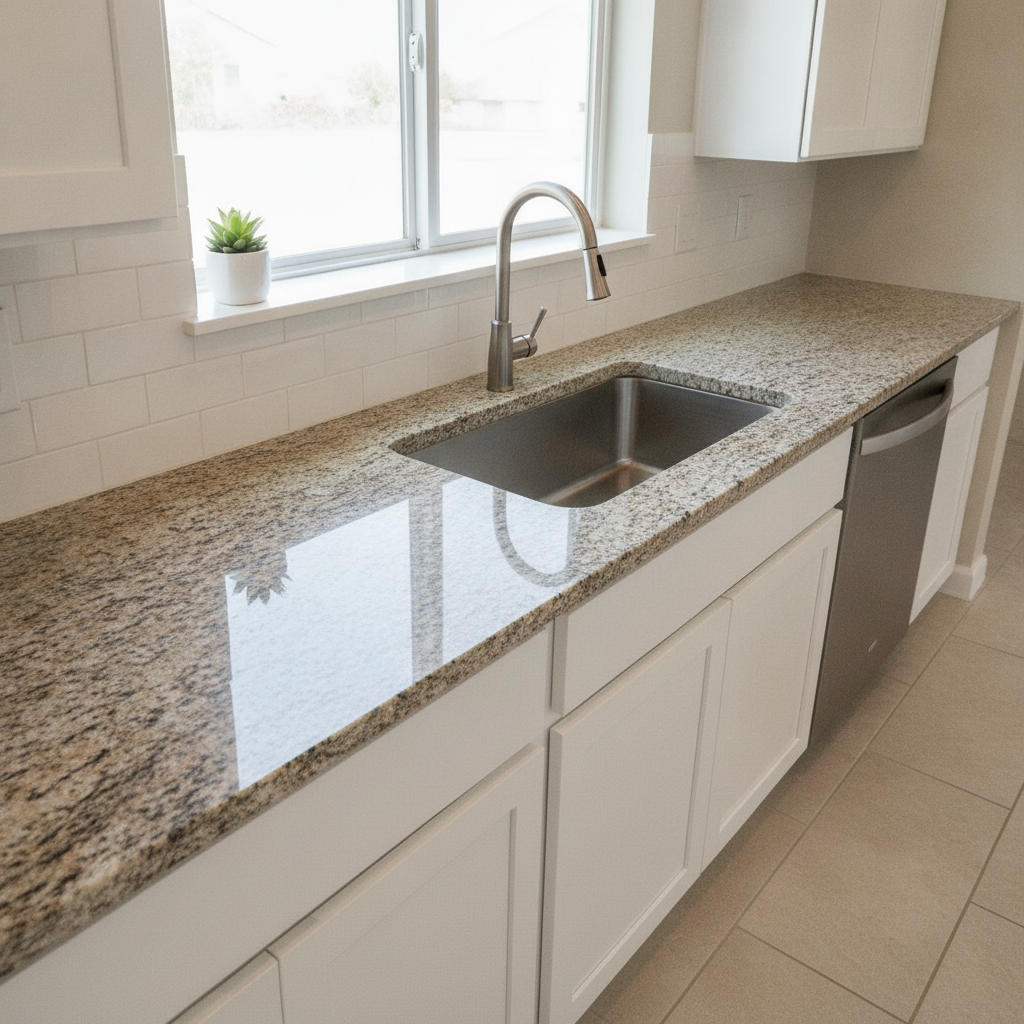
As of 2026, the real all-in installed cost for granite countertops in Texas runs $95–$185 per square foot — not the $40–$80 figures you'll find on national averages. The difference comes from stone origin, fabrication complexity, edge profiles, sink cutouts, removal, and installation standards. A quote that looks 30% cheaper than everyone else is almost always missing line items. Ask for a full written breakdown: slab, fabrication, edge profile, sink cutout, removal, installation, and sealing. That's the only apples-to-apples number worth comparing across shops.
When all seven checks come back clean — in-house crew, 2–3 installs per day, laser templating, slabs you can touch in a showroom, a fully itemized quote, seam placement confirmed before templating, and sealing included in the price — you've found a fabricator worth booking. For granite countertops in Austin, San Antonio, New Braunfels, and the surrounding Central Texas area, Fox Granite has been a family-owned, in-house fabrication and installation shop since 2010. Over 10,000 projects completed, transparent all-in pricing, precision digital templating, and a showroom in New Braunfels where you can see and touch the actual slabs before you commit. Contact us today to schedule your free in-home consultation and get a line-itemized estimate with no surprise fees.


BY APPOINTMENT ONLY
1379 Wald Road
New Braunfels, TX 78132
Austin, San Antonio, Cedar Park, Kyle, New Braunfels, Del Valle, Elgin, Lago Vista, Shady Hollow, Onion Creek, Buda, San Marcos, Lockhart, Temple, Wimberley, Dripping Springs, Bee Cave, Lakeway, Leander, Anderson Mill, Jollyville, Spicewood Springs, Round Rock, Georgetown, Pflugerville, Manor, Taylor, Manchaca, Mountain City, Hutto, West Lake Hills, Bastrop, Liberty Hill, Driftwood, Sun City, Steiner Ranch.