Granite Countertop Pricing in 2026: Why Two Quotes for the Same Slab Look Nothing Alike
💡 Quick Answer
Granite countertop installation in Central Texas costs $40–$200+ per square foot installed in 2026, depending on slab grade, edge profile, cutout count, and your fabricator's labor rate. A typical 40–50 sq ft kitchen at Level 1 or Level 2 granite runs $2,000–$4,500 all-in. The four things that move your price most are slab grade (Level 1 through exotic), edge profile upgrades ($10–$30 per linear foot over a standard eased edge), cutout count (sink, cooktop, faucet holes add $225–$625+), and whether your fabricator quotes all-in or hides templating, delivery, and removal as line-item surprises. As of August 2026, U.S. tariff actions have added 5–15% upward pressure on granite slabs imported from Brazil, India, and China — the dominant sources for mid-range and exotic granite — so quotes from early 2025 may no longer reflect current material costs.
📊 Key Takeaways
Every number below is a real price point or rule of thumb from 2026 granite countertop installation data — use these to gut-check any quote you receive.
$40–$55/sq ft installed
Level 1 builder-grade granite, Central Texas
$55–$80/sq ft installed
Level 2 mid-range granite, most kitchen remodels
$85–$150+/sq ft installed
Level 3 exotic granite with dramatic veining
$225–$625+ in cutout charges
Sink, cooktop, and faucet holes excluded from most headline quotes
10–15% slab waste
Material lost to cutouts and shaping — still billed to you
5–15% tariff cost pressure
On Brazilian, Indian, and Chinese imported granite slabs as of 2026
$10–$30/linear ft edge upgrade
Bullnose or ogee adds $300–$900 on a 30-ft kitchen perimeter
30–40% of installed price is labor
Why Austin fabricators cost more than smaller-market shops
Granite countertop installation in Central Texas costs $40–$200+ per square foot installed in 2026, and two quotes for the same slab can differ by $30–$50 per square foot before a single upgrade is added. The gap almost never comes from one fabricator overcharging — it comes from what each quote includes. Slab grade, edge profiles, cutout count, finish choice, slab thickness, delivery fees, old countertop removal, and whether the crew is in-house or subcontracted all affect the final price and the overall cost you pay. Several factors move granite countertops cost in ways that a headline per-square-foot rate simply cannot show. This guide maps every variable so you can put multiple quotes side by side and know exactly what you're comparing — and make an informed decision about which contractor is actually offering the best value.
Granite Countertop Pricing in 2026: What It Costs by Tier
Tier
Price range
What's included
Best for
Level 1 / Builder-Grade Granite
$40–$55 per sq ft installed
Standard slab, eased edge, one sink cutout, basic sealing
Wider slab selection, one decorative edge profile, one sink cutout, sealing
Most kitchen and bathroom remodels where aesthetics and durability both matter
Level 3 / Exotic Granite
$85–$150+ per sq ft installed
Statement slabs with dramatic veining, decorative edge profiles, full cutout package, sealing
Homeowners prioritizing natural beauty and unique patterns as the visual centerpiece of the kitchen
Rare / Ultra-Exotic Granite
$150–$400+ per sq ft installed
One-of-a-kind slabs (Blue Bahia, Van Gogh, etc.), custom edge profiles, premium fabrication and installation
High-end kitchen remodels, statement islands, or custom bar tops where rarity is the point
What You Get at Each Granite Price Tier
Level 1 / Builder-Grade Granite
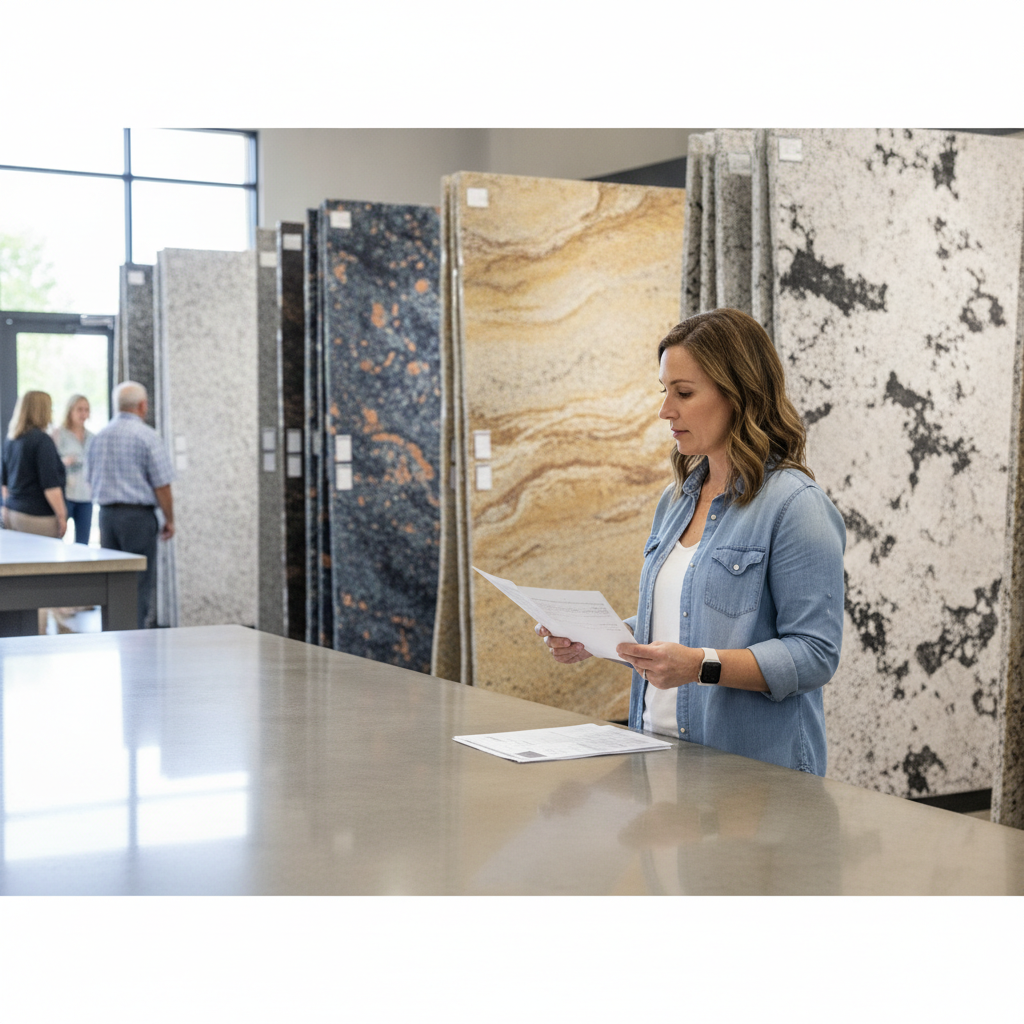
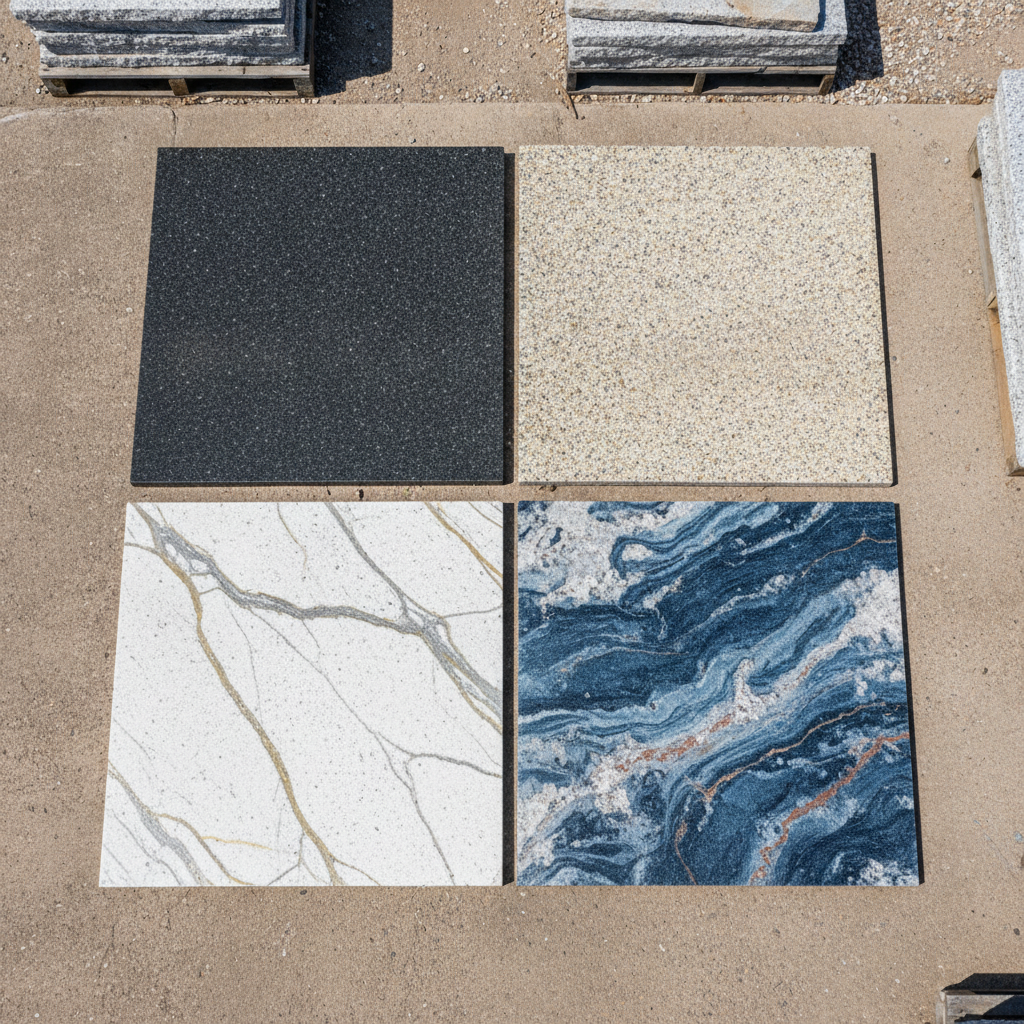
Level 1 granite covers the entry-tier slabs you'll see stacked near the front of most fabricator showrooms — consistent colors like basic black, beige, or brown, with tighter movement and fewer dramatic veining patterns. In Central Texas and San Antonio, installed prices land at $40–$55 per square foot in 2026, partly because proximity to Houston's stone distribution hub keeps material costs and delivery fees competitive. A typical 40-square-foot kitchen countertop project at this tier runs $1,600–$2,200 all-in when edge profiles stay simple and cutout count stays low. Most homeowners planning a budget-friendly remodel or outfitting a rental property find this category to be an affordable and highly durable choice.
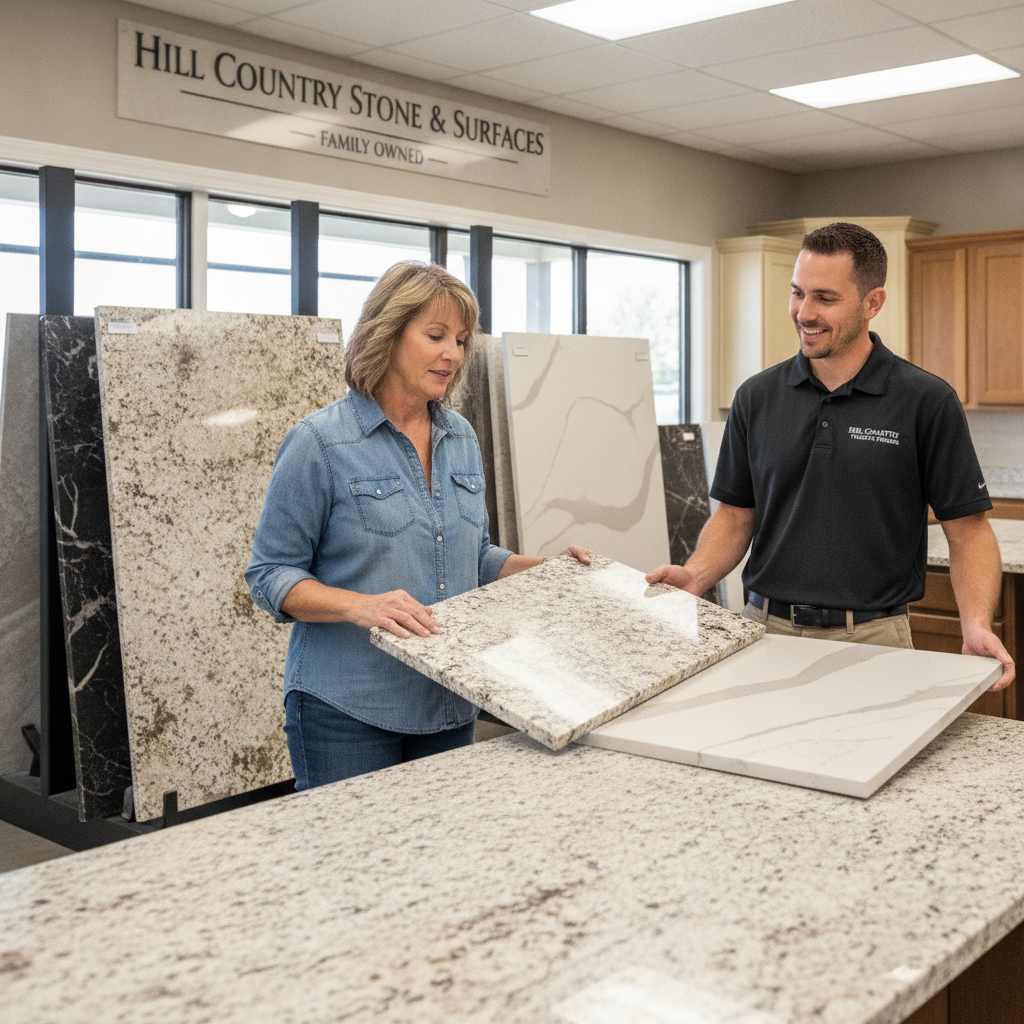
The catch: 'Level 1' is a marketing label, not a universal standard. One fabricator's Level 1 is another's builder-grade or entry-line, so the only way to compare granite grades across shops is to see the actual slab and confirm what the quote includes. Ask to see the slab, not just the grade name. This type of granite is a popular choice for practical installations where beauty and elegance matter less than durability and budget.
Level 2 / Mid-Range Granite
Mid-range granite is where most homeowners land. Installed prices run $55–$80 per square foot, and this tier covers granite slabs with more unique patterns, bolder color movement, and better overall aesthetic appeal than builder-grade stone. Many homeowners choose this mid grade category specifically because it offers a balance of quality and value — you get beautiful designs without the rarity premium of exotic stone. A 45-square-foot average kitchen at this tier totals $2,475–$3,600 before cutout upgrades or finish changes. Labor costs account for 30–40% of that installed price, which is why a fabricator in Austin or Georgetown charges more than one in a smaller market — not because the slab costs more, but because shop overhead and crew rates differ.
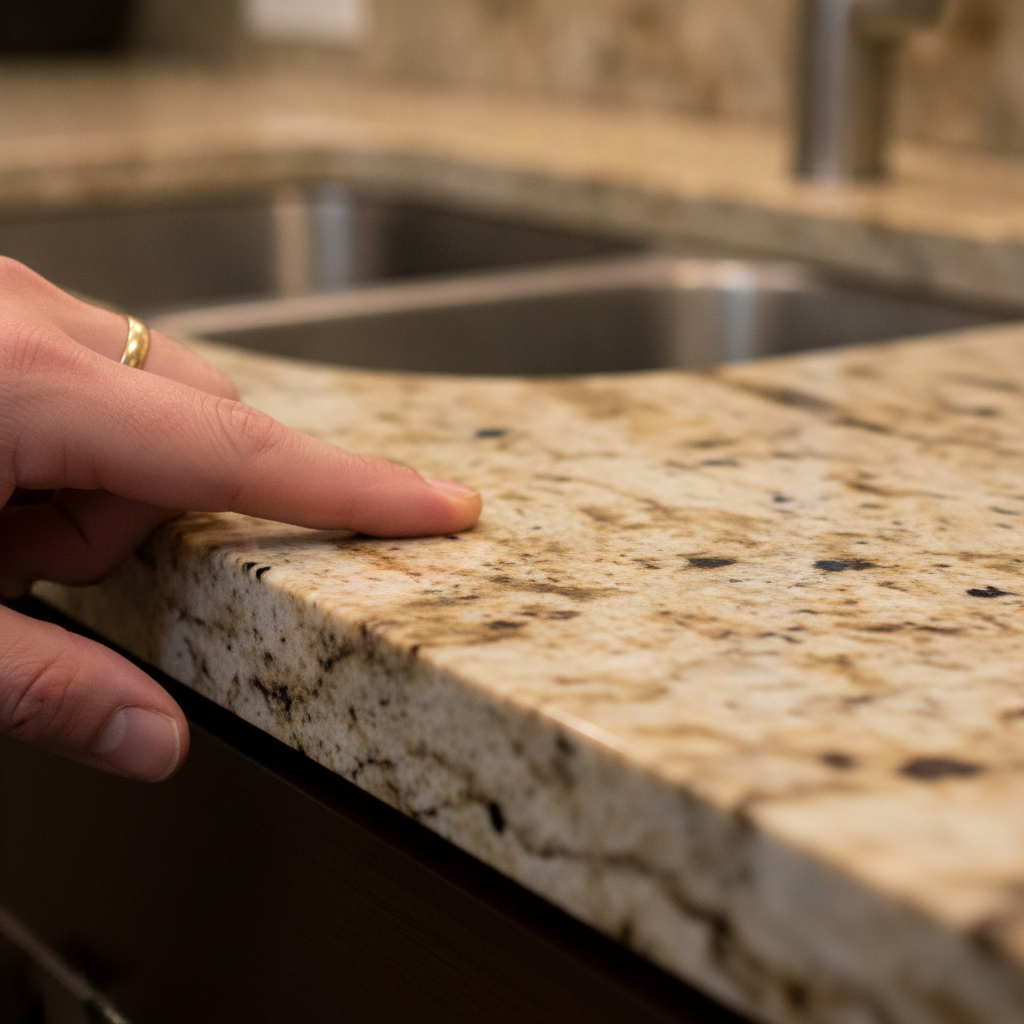
This tier is the clearest proof that the headline per-square-foot rate never tells the full story. Add a bullnose edge profile ($10–$30 per linear foot over a standard eased edge), an undermount sink cutout ($75–$250), and a cooktop cutout ($50–$150), and a $65 per square foot quote becomes an $80+ per square foot project before you've changed anything about the slab itself. These are popular countertop materials in this bracket, but the total cost depends heavily on what you add. Simpler edge profiles and fewer cutouts are smart ways to save money and keep the overall cost in check.
Level 3 / Exotic Granite
Exotic granite slabs — think bold veining, rare color combinations, or stones sourced from specific quarries in Brazil or India — start at $85 per square foot installed and climb past $150 for the most distinctive pieces. Higher grades require more careful templating and cutting because matching patterns across seams takes more labor and precision, which adds fabrication costs beyond the material price. Slab thickness also matters here: thicker slabs (3 cm) cost more than thinner slabs (2 cm) and add weight that can influence installation complexity. Many of these stones are imported from countries like Brazil, India, and Italy — origins that directly influence rarity and price.
Finish choices push prices further at this tier. A polished finish is the standard; a honed finish adds $10–$20 per square foot over polished, giving a matte, non-reflective surface texture. A leathered finish — a textured, matte surface with a slightly rustic feel — adds $15–$25 per square foot and is an increasingly popular customization option for homeowners who want a unique appearance and tactile texture that standard polished granite doesn't offer. As of August 2026, U.S. tariff actions have added 5–15% upward cost pressure on granite slabs imported from Brazil, India, and China — the dominant origins for most exotic granite sold in the U.S. — so quotes from early 2025 may no longer reflect current material costs.
Rare / Ultra-Exotic Granite
Ultra-exotic granite like Blue Bahia or Van Gogh commands $150–$400 or more per square foot installed. These are rare stones with dramatic, one-of-a-kind patterns and very limited slab availability — you're buying specific slabs, not just a grade. At this price point, the fabrication process is as important as the material: precision templating, careful nesting to minimize waste, and experienced in-house installation crews are non-negotiable. The beauty and elegance these slabs bring to a home are commanding, and for the right project they represent a lasting value that other materials simply can't replicate.
Slab waste runs 10–15% on most projects; on complex kitchen layouts with multiple cutouts, corners, and seams, it can push higher. Fabricators using stone-cutting equipment and nesting software model yield more precisely, which produces tighter estimates and reduces unexpected material charges. For these projects, the difference between an in-house crew and a subcontracted installation team is especially consequential — warranty gaps widen when fabrication and installation are handled by separate entities. Don't forget: cleanup and haul-away of stone offcuts can also vary depending on the shop, so confirm what services are included.
Pros and Cons of Granite Countertops
$40–$200+ per sq ft installed: granite countertop pricing spans a wide range, meaning there's a slab and budget fit for almost every Central Texas kitchen or bathroom remodel — from affordable builder-grade to luxurious ultra-exotic.
Heat resistance by nature: granite is a natural stone that handles heat from hot pots without the protective coatings that other popular countertop materials like quartz require — just don't make a daily habit of it.
Scratch-resistant and highly durable surface: granite is harder than most kitchen tools, making it one of the most durable countertop materials for daily cooking use — a better durability story than laminate, marble, or porcelain slabs in heavy-use kitchens.
Unique patterns guaranteed: no two granite slabs are identical, so your countertop will have natural beauty and vibrant colors — from classic gray and white to bold blue or red granite — that engineered surfaces can't replicate.
Strong resale value: granite counters remain one of the countertop materials buyers notice and expect at the mid-to-upper price points in Central Texas homes, making it a smart long-term investment for homeowners planning to stay.
Long lasting with proper sealing: a professionally installed granite countertop that gets regular sealing and periodic sealing every 1–3 years can last many years — decades in most cases — far outlasting laminate or other budget countertop materials.
Porous surface requires sealing: granite is a natural stone and needs proper sealing at installation and periodic sealing every 1–3 years after — skip it and the porous surface becomes vulnerable to staining and water damage.
No universal grading standard: 'Level 1,' 'Level 3,' and 'Premium granite' are marketing labels that shift from shop to shop, making it hard to compare two quotes on granite grades alone — always visit the showroom and look at the actual slab.
Hidden costs inflate the headline price: templating, fabrication costs, delivery fees ($150–$200+ per slab), countertop removal ($100–$200), and cutouts are almost always itemized outside the per-square-foot base price, inflating estimates significantly.
Slab waste adds real cost: fabrication loses 10–15% of material to cutouts, corners, and shaping — a 32-sq-ft slab yields only 27–29 sq ft of usable countertop, and that waste still gets billed regardless of project size.
Higher upfront cost vs. laminate: granite carries a higher upfront cost than laminate or tile, which can break a tight renovation budget even at the Level 1 tier — though the long-term investment in durability and resale value often makes sense.
Tariff pressure on imported slabs in 2026: U.S. tariff actions added 5–15% cost pressure on granite slabs from Brazil, India, and China — the sources for most exotic and mid-range granite — so older estimates may understate today's material costs.
How to Choose Your Budget and Compare Granite Countertop Quotes
Confirm what the quote actually includes Ask every fabricator to list templating, fabrication, delivery, countertop removal, cutouts, sealing, and plumbing reconnects as separate line items — a '$49 per square foot' advertised rate can reach $92 per square foot installed once those charges are added, and understanding every element is the first step to making an informed decision.
Standardize the slab grade you're comparing Because granite grades are marketing labels with no universal standard, ask to see the actual slab at each showroom rather than trusting 'Level 2' to mean the same thing from two different suppliers — the type of granite and its rarity determine more of your final price than the label does.
Count your cutouts before you compare totals Sinks, cooktops, and faucet holes all affect the overall cost: undermount sink cutouts add $75–$250 each, cooktop cutouts add $50–$150, and faucet holes run $25–$75 each — a kitchen with a sink, cooktop, and two faucet holes adds $225–$625 in charges that many headline quotes exclude.
Choose your edge profile early and price it in Edge profile upgrades over a standard eased edge cost $10–$30 per linear foot, so on a 30-linear-foot kitchen perimeter, choosing a bullnose or ogee profile adds $300–$900 to the total — pick your edge and ensure it's reflected in every quote you're comparing so the comparison is apples-to-apples.
Ask whether installation is in-house or subcontracted In-house installers are accountable to the same shop that fabricated your countertop; subcontracted crews paid a flat fee per job have less incentive for precision, and warranty claims can fall into the gap between two separate businesses — experienced professionals working as a unified team protect your investment.
Budget for sealing and factor in 2026 material costs Professional sealing costs $200–$350 per treatment and is sometimes excluded from low quotes — confirm it's bundled, and note that 2025–2026 tariffs have added 5–15% to imported granite slab prices, so quotes older than six months may no longer reflect current material costs for your specific type of granite.
The '$49 Special' That Becomes $92 Installed
A showroom advertising $49 per square foot for granite slabs isn't lying — they're quoting the material base price before templating, fabrication, delivery ($150–$200+ per slab), old countertop removal ($100–$200), cutouts, and sealing are added. One documented 2026 example: a $58 per square foot advertised slab became $118 per square foot all-in for a 52-square-foot kitchen once every line item was accounted for. Always ask for the all-in, installed price before you compare quotes side by side — that's the only number that lets you make a truly informed decision.
How much should I budget for granite countertops in Central Texas in 2026?
Budget $2,000–$4,500 all-in for a typical 40–50 sq ft kitchen using Level 1 or Level 2 granite. That range covers the slab, fabrication, standard edge profile, one sink cutout, delivery, and sealing. Add $300–$900 for a decorative edge profile, $75–$250 per additional cutout, and $100–$200 for old countertop removal if you're replacing existing counters. Exotic or ultra-exotic granite can push a full kitchen project to $7,000–$20,000+ depending on slab rarity, layout complexity, and finish choice.
What hidden fees inflate granite countertop quotes?
The most common charges excluded from headline per-square-foot rates are: templating labor ($150–$300), delivery fees ($150–$200+ per slab), old countertop removal ($100–$200 flat or $4–$10 per sq ft for heavy stone), sink and cooktop cutouts ($75–$250 and $50–$150 respectively), faucet holes ($25–$75 each), edge profile upgrades ($10–$30 per linear foot over a standard eased edge), sealing ($200–$350 per treatment), and plumbing disconnect/reconnect ($150–$350 when subcontracted). A $49 per square foot advertised rate regularly becomes $90–$120 per square foot all-in once these line items are added.
What affects granite countertop pricing the most?
Four variables drive most of the price difference between two quotes: slab grade (Level 1 at $40–$55/sq ft vs. exotic at $85–$150+/sq ft), edge profile choice ($10–$30 per linear foot above a standard eased edge), cutout count (each sink, cooktop, and faucet hole adds $25–$250 per opening), and local labor costs (fabricators in Austin charge more than those in smaller Central Texas markets because shop overhead and crew rates differ). Slab thickness also matters — 3 cm thicker slabs cost more than 2 cm thinner slabs in both material price and installation complexity. As of 2026, tariff-driven price increases on imported granite from Brazil, India, and China have added another 5–15% to material costs for mid-range and exotic slabs.
When do granite countertop prices spike?
Granite countertop installation costs rise when project complexity increases: more cutouts, complex kitchen layouts with multiple corners or seams, or kitchen islands that require additional templating and fabrication time. Ultra-exotic granite slabs (Blue Bahia, Van Gogh) spike in price when slab availability tightens — these are specific slabs, not a grade, so supply is limited. As of August 2026, tariff actions on imported granite from Brazil, India, and China have already added 5–15% upward pressure on material costs compared to pre-2025 prices. Spring and fall remodel seasons also tend to stretch fabricator lead times, which can push installation timelines and occasionally influence quotes from shops running at full capacity.
How can I save money on granite countertop installation?
Five concrete ways to reduce granite countertops cost: (1) Choose common colors like gray, beige, black, or brown — these are more widely available and carry lower material costs than rare or imported stones. (2) Opt for thinner slabs (2 cm) where structural support allows — thinner slabs cost less than thicker slabs. (3) Keep edge profiles simple — a standard eased edge is included in most quotes; upgrading to beveled, bullnose, or ogee adds $10–$30 per linear foot. (4) Ask about granite remnants for smaller projects like bathroom vanities — fabricators often sell remnant pieces at a significant discount since they'd otherwise go to waste. (5) Minimize cutouts where possible and do your own demolition prep on old countertops to reduce the removal charge of $100–$200.
Is granite still worth installing in a Central Texas home in 2026?
Yes, for most mid-to-upper-range homes in Austin, San Antonio, and New Braunfels, granite countertops remain one of the most recognizable upgrades buyers expect and notice — it supports resale value at the price points where Central Texas homes transact most frequently. Granite's heat resistance, superior durability, and unique patterns give it advantages that quartz and other popular countertop materials replicate imperfectly. The honest tradeoff: granite is a porous natural stone that requires proper sealing every 1–3 years, and the higher upfront cost compared to laminate requires budget planning. For homeowners planning to stay 5+ years, the longevity and resale value argument is strong. For short-term flips or rentals, Level 1 builder-grade granite or laminate are more cost-effective countertop materials.
How much does 30 square feet of granite countertop cost installed?
A 30-square-foot granite countertop runs $1,200–$1,650 at Level 1 pricing ($40–$55/sq ft), $1,650–$2,400 at Level 2 ($55–$80/sq ft), and $2,550–$4,500+ at Level 3 exotic pricing ($85–$150/sq ft). Those numbers assume a standard eased edge and one sink cutout. Add $150–$200 for delivery, $75–$250 for the sink cutout if not included, and $100–$200 for old countertop removal to arrive at your all-in total. On a 30-linear-foot perimeter, a decorative edge profile upgrade adds another $300–$900 depending on the profile chosen.
Is 3 cm granite more expensive than 2 cm granite?
Yes. Thicker slabs (3 cm) carry a higher price than thinner slabs (2 cm) — typically $5–$15 more per square foot depending on the slab grade — because more raw material is quarried and processed per slab. Thicker slabs are also heavier, which can add installation complexity and labor costs, particularly for large kitchen islands or overhangs that require additional support. Most residential kitchen countertop installations in Central Texas use 3 cm slabs as the standard for durability; 2 cm thinner slabs are more common for bathroom vanities or as a cost-saving option on budget projects.
Installing Quartz, Granite & Marble Countertops in Central Texas