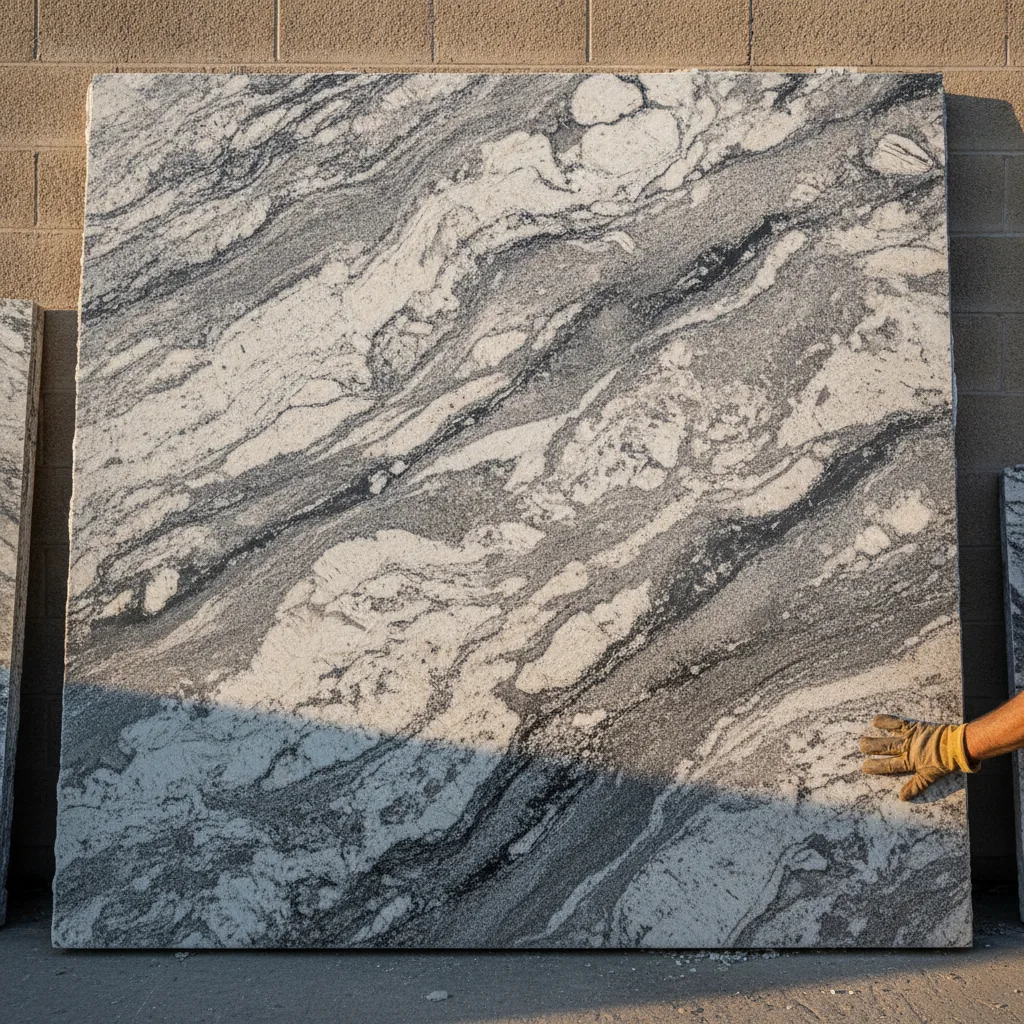
Granite counters and granite slabs describe different stages of the same product. A granite slab is the raw quarried stone — typically 55–65 inches wide by 110–130 inches long — and a granite countertop is what your fabricator produces after cutting, profiling, polishing, sealing, and installing that slab in your kitchen or bathroom. As of 2026, all-in installed granite countertops run $55–$175 per square foot in Central Texas, with most kitchens landing $70–$115 per square foot. The granite level system (1 through 5 plus Exotic) is a pricing convention based on rarity and visual complexity, not durability — a Level 1 slab lasts just as long as a Level 5. Always compare all-in installed quotes, never material-only prices.
Granite counters and granite slabs are the same product at two different stages — and mixing up those terms is how first-time buyers end up comparing quotes that aren't measuring the same thing. The granite slab is the raw quarried natural stone. The granite countertop is what a fabricator produces by cutting, profiling, polishing, sealing, and installing that slab in your specific kitchen or bathroom. This guide walks you through the full word chain: what granite counters actually are, how levels affect price (not quality), what happens inside a fabrication shop, and how to compare installed costs so you don't get burned by the most common pricing trap in the industry. Most Central Texas kitchen projects land between $70 and $115 per square foot all-in. Read this before you call a single fabricator.
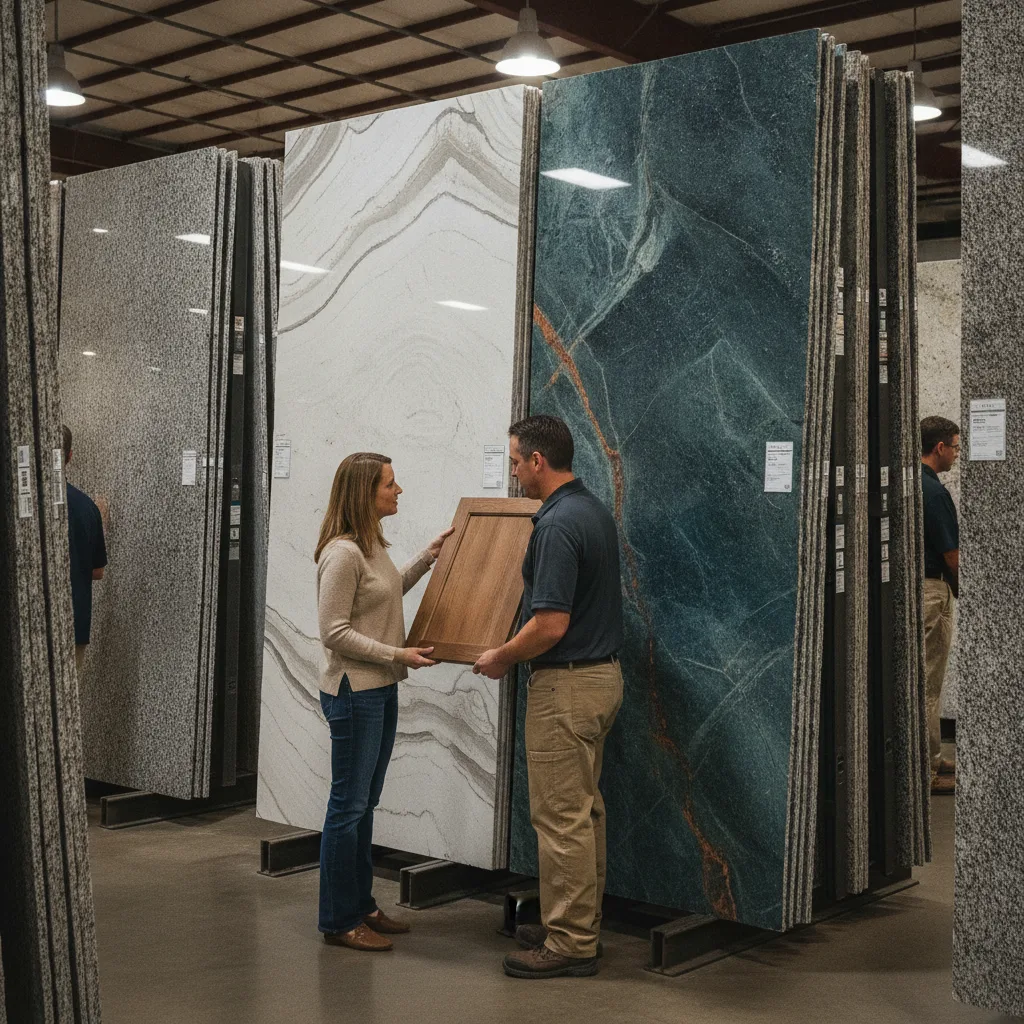
When most people say 'granite counters,' they mean slab granite: a single large piece of quarried natural stone, custom-cut and fabricated to fit their specific kitchen or bathroom. The finished product installed in your home is the granite countertop. The raw material it comes from is the granite slab. These two terms describe different stages of the same thing, and that gap is the root of most first-time buyer confusion.
Three distinct granite countertop products exist on the market: slab granite (custom-cut, single-piece, the clear standard for residential kitchens), tiled granite (pre-cut 12x12, 18x18, or 24x24 inch squares set in grout), and modular granite (pre-sized sections built for standard cabinet layouts). The vast majority of homeowners searching 'granite counters' want slab granite. Tile and modular options do exist, but they come with visible grout lines and a look that doesn't carry the same elegance, beauty, or resale value as a continuous slab. Fox Granite fabricates and installs slab granite — the type that gives your kitchen that clean, seamless surface.
A granite slab is typically 55–65 inches wide by 110–130 inches long, in either 2cm (3/4 inch) or 3cm (1-1/4 inch) thickness. Your fabricator takes that slab, cuts it to your exact countertop dimensions, adds your chosen edge profile, polishes the surface, seals it, and installs it. The slab is the starting point. The countertop is the finished result. Shopping begins at the slab yard, not the showroom sample box — and understanding that word chain before you make a single call will save you time and money.
If a quote references tile or modular granite but you want a seamless, single-piece surface, you're looking at two different products. Always confirm 'slab granite' is what's being quoted before you compare prices.
Granite levels — typically 1 through 5, plus Exotic — are a trade pricing convention based on rarity, color complexity, and country of origin. They have nothing to do with how hard, durable, or scratch-resistant the stone is. A Level 1 slab lasts just as long as a Level 5 slab. The level system was created by distributors, and no industry body standardizes it — which means the same slab can be labeled a different level at two different stone yards, sometimes for the exact same stone from the same quarry.
Here is what the levels translate to in installed cost as of 2026. Level 1 granite — think solid black, beige, or white with simple patterns, such as Uba Tuba — runs $40–$60 per square foot all-in. Level 2 materials like Santa Cecilia or Bianco Antico run $55–$90 per square foot installed. Level 3 and above — stones with bold veining, complex crystal patterns, or rare color combinations — climb to $100–$200+ per square foot. Exotic statement slabs with dramatic grey, white, and black movement can push past that range depending on the specific material and its origin.
The practical takeaway: if your fabricator quotes you a Level 1 material and you're eyeing a Level 3, you're not choosing between inferior and superior granite. You're choosing between simpler and more visually complex styles. Both will perform the same in your kitchen or bathroom over the long term. The level system is a price guide, not a quality ranking. Choose the stone that complements your cabinets, flooring, and overall space — and fits your budget — not the one with the higher level number.
Because level designations aren't standardized, a Level 2 at one yard may be labeled a Level 3 at another — sometimes for the same slab from the same quarry. Always compare slabs in person and compare all-in installed prices, not level numbers.
A small sample tile at a countertop showroom does not represent what a full granite slab will look like in your kitchen. Full stop. Granite is a natural stone with significant variation across each slab. The sample captures one small area of one slab. The full slab reveals the complete range of that material's crystal patterns, vein placement, and color shifts. What looks like a clean, light grey sample in the showroom might open up into bold black veining or warm brown and beige tones across a 10-foot countertop run.
No two granite slabs from the same quarry are identical. Consecutive slabs cut from the same block share a general color family, but each piece has its own pattern. This natural uniqueness is part of what makes granite countertops the perfect choice for homeowners who want a kitchen that's truly their own — and it's precisely why slab yard visits are essential, not optional. You're not selecting a product off a shelf. You're selecting a specific piece of natural stone that will live in your home for decades and create a warm and inviting atmosphere every time someone walks into the room.
When you visit a slab yard, bring your cabinet door sample or a photo of your kitchen. Hold the slab in natural light and look at the full surface, not just the area near the bottom edge. Ask which pieces from the same block are available if you need more than one slab for a larger kitchen. Fox Granite's New Braunfels showroom gives Central Texas homeowners the chance to explore a wide selection of granite, quartz, quartzite, and marble side by side — so you can find the ideal material for your specific space before committing.
Free
Photograph your current cabinets, flooring, and backsplash before visiting a slab yard — real reference images prevent color mismatches at the yard.
Free
Holding a physical sample against the full slab in natural light is the most reliable way to confirm color compatibility before you choose.
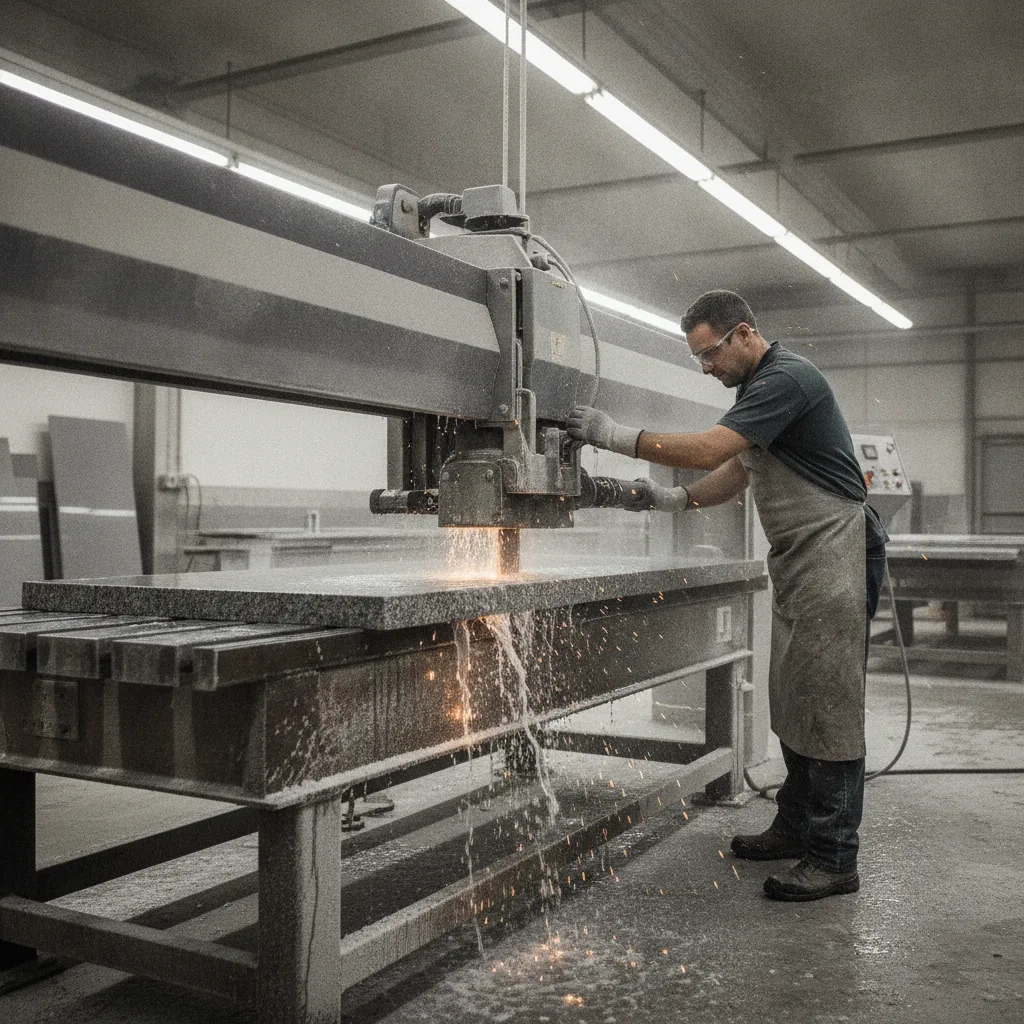
Most homeowners pick their slab and then see the finished countertop — without understanding what happens in between. The fabrication process is the step that transforms a raw granite slab into a finished, installed granite countertop, and it's where craftsmanship shows up (or doesn't). The full sequence runs: slab selection, precision templating of your exact countertop dimensions, digital layout to map where cuts fall on your specific slab, bridge saw cutting, sink cutouts, edge profiling, polishing, sealing, and final installation. Each step requires skilled hands and proper equipment.
Templating is the measurement step, and it's more critical than most buyers realize. A precise template captures your countertop's exact dimensions including wall variations and corner angles. Digital templating eliminates guesswork and reduces the risk of gaps or overhangs at installation. After templating, fabrication typically takes 1–3 weeks. Fabricators who run in-house production — like Fox Granite — can often complete installation within one week of the template date, providing a faster turnaround than shops that outsource cutting or finishing.
Edge profiling happens during fabrication, and it changes the look of the finished countertop more than most buyers expect. An eased edge gives you a clean, sleek, modern line. A beveled or half-bullnose edge adds dimension and warmth. An ogee profile adds a more traditional, elegant curve that complements classic kitchen styles. Additionally, this is a choice to make before fabrication begins — changing it afterward means going back to the shop. Ask your fabricator to show you physical edge profile samples before you sign off on the job. The right edge style completes the look of your space and adds to the overall elegance of the finished countertop.
Ask your fabricator where the seam will fall on your countertop before cutting begins. Seam placement affects the visual flow of the stone pattern and is easiest to adjust during the digital layout phase — not after slabs are cut.
Advertised per-square-foot granite prices almost always reflect material cost only — not templating, fabrication, cutouts, delivery, or installation. A quote showing $49 per square foot for a granite slab can become $92 per square foot once all installed costs are added. As of 2026, granite countertops in Central Texas run $55–$175 per square foot fully installed, with most standard kitchen projects landing between $70 and $115 per square foot all-in. A typical 45-square-foot kitchen project totals $3,800–$7,500 after every cost is included.
This pricing gap is where buyers get burned. Comparing a material-only quote from one company to an all-in quote from another and choosing the lower number is the single most expensive mistake granite buyers make. Always ask every fabricator for a single, all-in installed price that includes: slab material, templating, fabrication, any cutouts (undermount sink, cooktop), edge profiling, delivery, and installation. That is the only number worth comparing across bids. Depending on the scope, some fabricators also charge for plumbing disconnects or backsplash removal — ask specifically about those line items too.
Fox Granite's approach is transparent, all-in pricing with no surprise fees. One quote covers everything from slab selection through the day your countertop is installed. No add-on charges for standard templating or delivery within our service area. That's not a marketing claim — it's how we protect our customers from the lowball-then-add-on cycle that's common in this industry. When you get our quote, you're getting the real project number, not a teaser rate designed to look good before the invoice arrives.
To estimate your project: measure each countertop run in inches, multiply by the depth (typically 25 inches), divide by 144 to get square feet, then multiply by your all-in per-square-foot quote. Add 15–20% for waste and cutouts. That's your baseline budget check before any fabricator conversation.
Granite countertops are sealed at installation — every reputable fabricator does this. The question isn't whether granite needs sealing, it's how often. High-traffic kitchen countertops need resealing every 1–3 years. Lower-use surfaces like bar tops or bathroom vanity tops typically go 3–5 years between applications. The water drop test is the simplest field check: place a few drops of water on the surface and wait 30 minutes. If the water beads and stays on top, the seal is intact. If it absorbs and darkens the stone, it's time to reseal. The process takes about 30 minutes and costs $20–$35 in materials.
Day-to-day granite maintenance is straightforward: wipe spills promptly, especially acidic liquids like lemon juice, wine, or vinegar that can work into unsealed stone and cause stains. Use a mild soap and warm water or a pH-neutral stone cleaner for routine cleaning, and avoid harsh abrasive cleaners that can dull the polished surface and degrade the sealer. Granite is scratch-resistant and heat-resistant — but avoid using it as a cutting board or placing hot pans directly on it as a routine habit. Those practices won't cause immediate damage, but they stress the surface over time. A trivet or cutting board costs nothing and protects your investment.
Granite's timeless beauty and durability are why homeowners choose it decade after decade. The stone's natural patterns — whether bold black and white movement or quiet warm beige — create an inviting atmosphere that is equally at home in a sleek modern kitchen or a traditional family space. With basic care, granite countertops installed in Austin, San Antonio, or anywhere in Central Texas today will still look clean, elegant, and beautiful in 20 years. Marble, by comparison, requires much more careful attention to stains and etching. Granite is the easier natural stone to live with — and the more forgiving choice for busy kitchens.
$12–$18
Specifically formulated to clean granite without degrading the sealer — standard household cleaners can break down the seal over time.
$20–$35
The penetrating formula bonds with the stone to protect against stains rather than sitting on top of the surface where it can wear off faster.
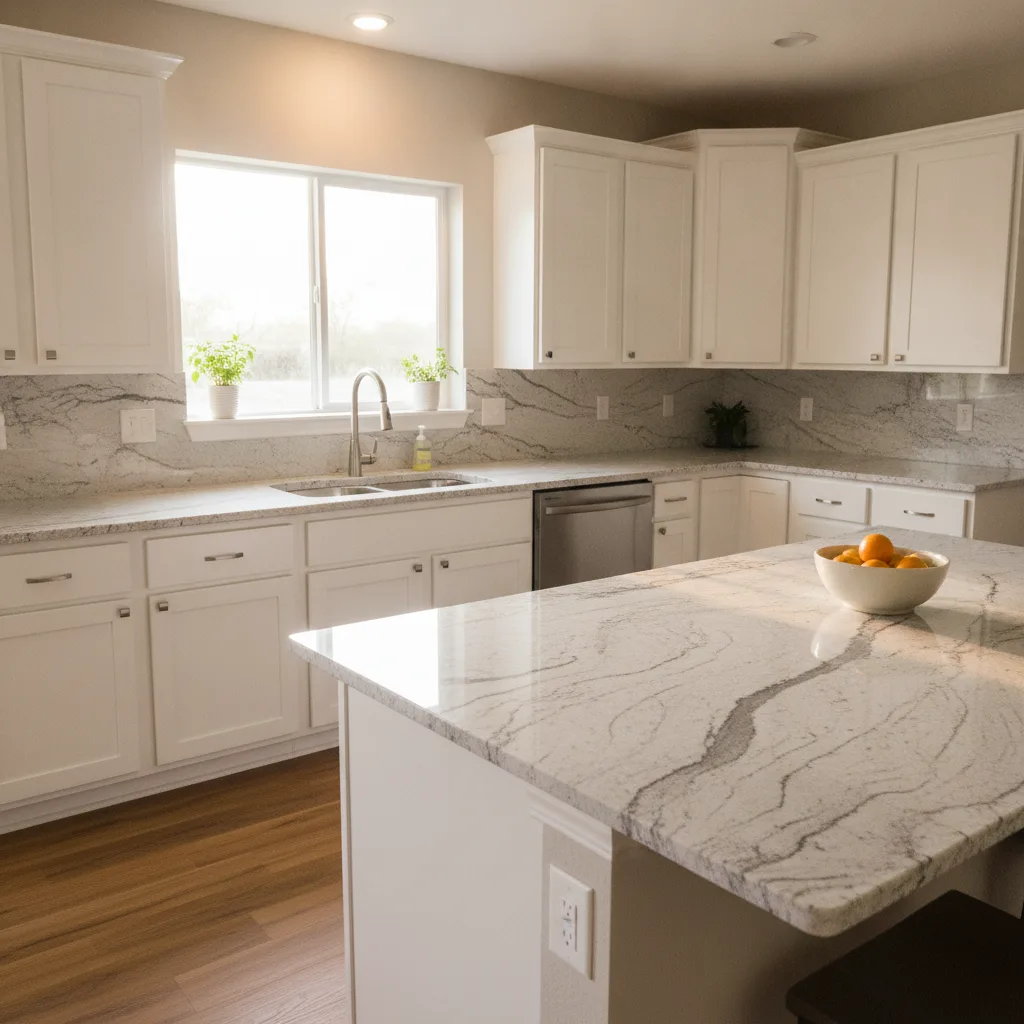
The single most expensive mistake granite buyers make in 2026 is comparing a material-only quote to an all-in installed quote and choosing the lower number. A $49 per square foot advertised granite price can land at $92 per square foot by the time templating, fabrication, cutouts, delivery, and installation are added. Always ask for one all-in installed price per square foot — then compare apples to apples. Fox Granite provides transparent, all-in quotes from the start, so there are no surprises on invoice day.
For granite countertop fabrication and installation in Austin, San Antonio, Round Rock, New Braunfels, San Marcos, and the surrounding Central Texas areas, Fox Granite is the clear choice. We're a family-owned team with over 15 years of experience, in-house fabrication, and a consumer-first process that takes you from slab selection to installed countertop with one all-in quote and zero guesswork. Watch our fabrication videos to see our process in action, then contact us to schedule your free in-home consultation — or visit our New Braunfels showroom to explore granite slabs, quartz, quartzite, and marble in person. When you're ready to make your choice, we'll guide you through every step.
Ready to get started? Contact Fox Granite today.


BY APPOINTMENT ONLY
1379 Wald Road
New Braunfels, TX 78132
Austin, San Antonio, Cedar Park, Kyle, New Braunfels, Del Valle, Elgin, Lago Vista, Shady Hollow, Onion Creek, Buda, San Marcos, Lockhart, Temple, Wimberley, Dripping Springs, Bee Cave, Lakeway, Leander, Anderson Mill, Jollyville, Spicewood Springs, Round Rock, Georgetown, Pflugerville, Manor, Taylor, Manchaca, Mountain City, Hutto, West Lake Hills, Bastrop, Liberty Hill, Driftwood, Sun City, Steiner Ranch.