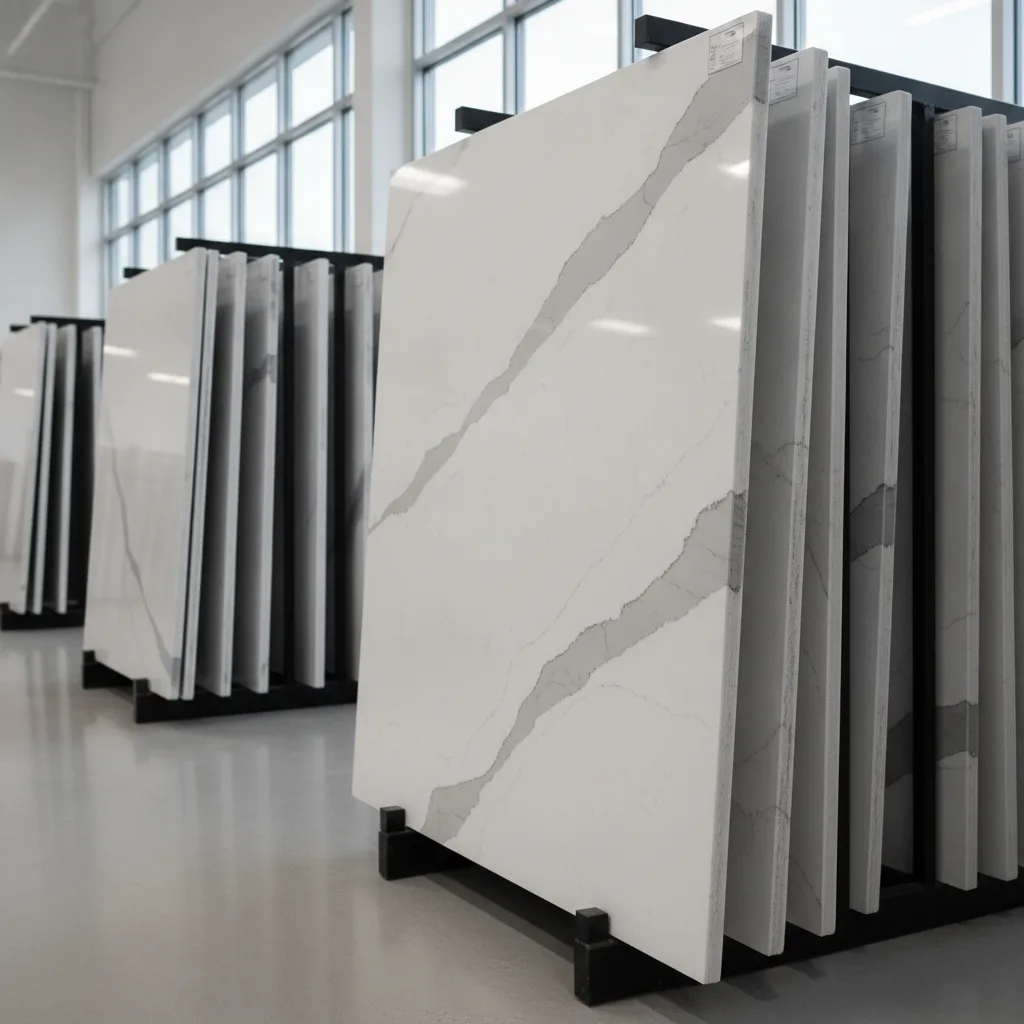
Engineered quartz countertops are made from 90–95% crushed natural quartz crystals bound with 5–10% polymer resin and pigments. "Engineered" describes the Bretonstone manufacturing process — invented by Italian company Breton S.p.A. and patented in 1974 — in which the mixture is compressed under vacuum, cured in a kiln, then polished to a final finish. That process is what makes engineered quartz non-porous (no sealing ever), scratch-resistant at Mohs 7, and available in virtually unlimited colors and patterns. The one real limitation: the resin binder can discolor above 300°F, so trivets near the stove are non-negotiable. Installed cost in Central Texas runs $70–$100 per square foot for mid-grade material.
Engineered quartz countertops hold 51% of the U.S. countertop installation market as of 2026 — and yet the word 'engineered' still makes some homeowners pause in the showroom. It sounds like a workaround. Like something less-than. It isn't. 'Engineered' describes a specific four-step factory process that takes crushed natural quartz — one of the hardest natural materials on Earth — and binds it under extreme pressure into a slab that's more uniform, more durable, and lower-maintenance than most natural stone. This guide walks through exactly what that process is, connects each manufacturing step to a real benefit you'll use at home, and gives you the cost and maintenance context you need to make an informed decision about whether quartz is the best material for your countertop project.
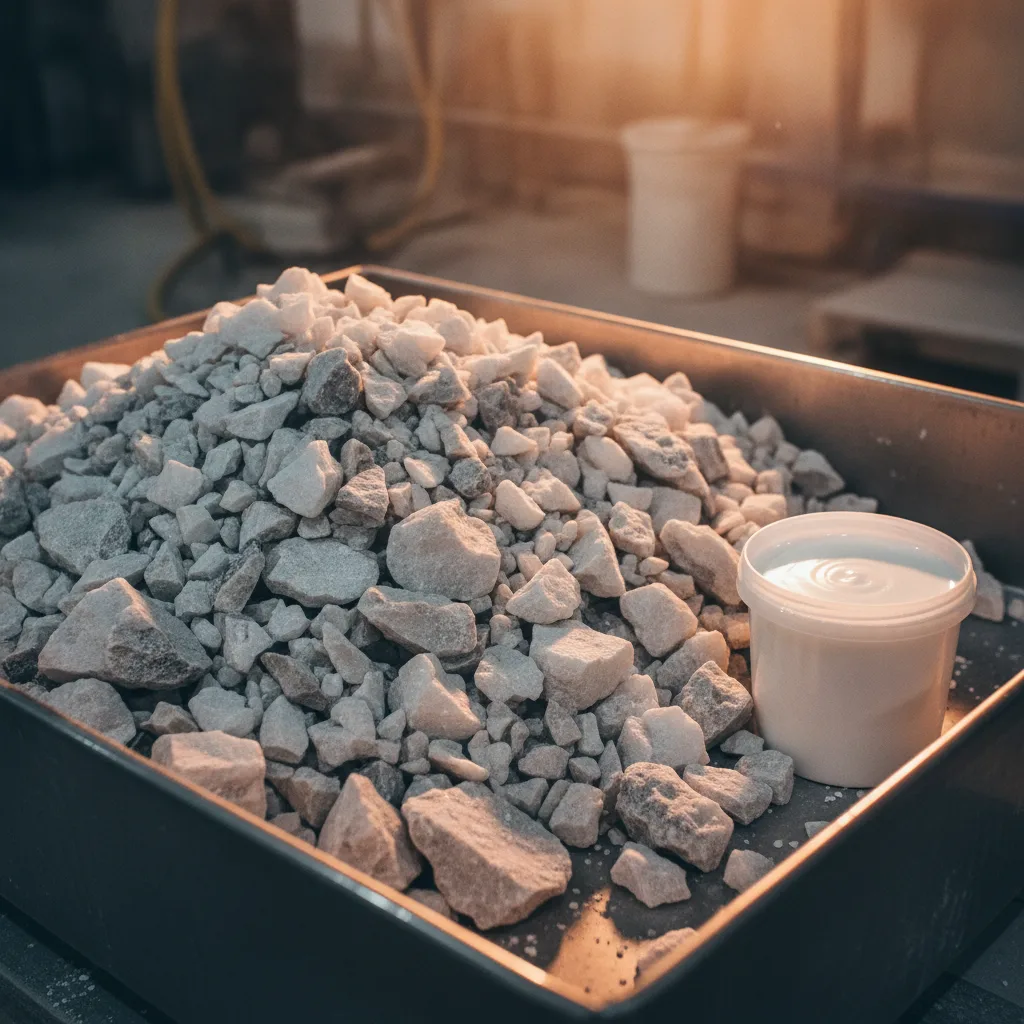
Engineered quartz countertops are made from 90–95% crushed natural quartz crystals combined with 5–10% polymer resin and pigments — and that combination is precisely what 'engineered' refers to. The word doesn't mean fake, cheap, or synthetic. It means the material was designed in a factory to perform better than quarried stone does straight from the ground.
Quartz is one of the hardest minerals on Earth. But in its raw, quarried form, it comes with inconsistencies: soft mineral pockets, natural fissures, and color variation that can't be controlled. The engineering process fixes all of that. Manufacturers take crushed quartz — a natural material — and bind it under extreme pressure and heat with a small amount of resin. The result is a slab that's denser, more uniform, and more durable than most natural stone countertops.
The term 'engineered stone' is used interchangeably with 'engineered quartz.' If you see either phrase in a showroom or on a product tag, they're describing the same category of material. Brands like Caesarstone, Silestone, and Cambria all produce engineered quartz using variants of the same core manufacturing technology. The properties that make the material popular — non-porous surface, consistent color, scratch resistance — are all products of this manufacturing approach, not brand-specific formulas.
Engineered quartz is not the same as quartzite. Quartzite is a natural stone quarried from the earth and requires sealing. Engineered quartz is a manufactured product. The names sound similar, but the materials, maintenance needs, and price points are different — and salespeople don't always clarify this upfront.
Nearly every major engineered quartz brand in the world uses a manufacturing method called the Bretonstone process, invented by Italian company Breton S.p.A. in the early 1960s and patented in 1974. Understanding this four-step process explains exactly where quartz gets its durability, its non-porous surface, and its design versatility.
Step one is mixing. Manufacturers combine 90–94% ground quartz aggregate with 6–10% polymer resin — polyester resin is the most common type — and pigments. The grain size selected at this stage controls the final look: coarser grains create a speckled, granite-like pattern; finer grains produce a smoother, more uniform surface. Some manufacturers also add recycled glass, mirror fragments, or reclaimed stone at this stage to create specialty eco-conscious product lines that still qualify as engineered stone. Step two is vibro-compression under vacuum. The mixture is poured into a mold and compacted using a process called vacuum vibro-compression. The vacuum removes every air pocket while simultaneous vibration and pressure lock the particles tightly together. This is the step that makes engineered quartz non-porous — the resin fills every void so there's literally no space for water, bacteria, or staining agents to penetrate.
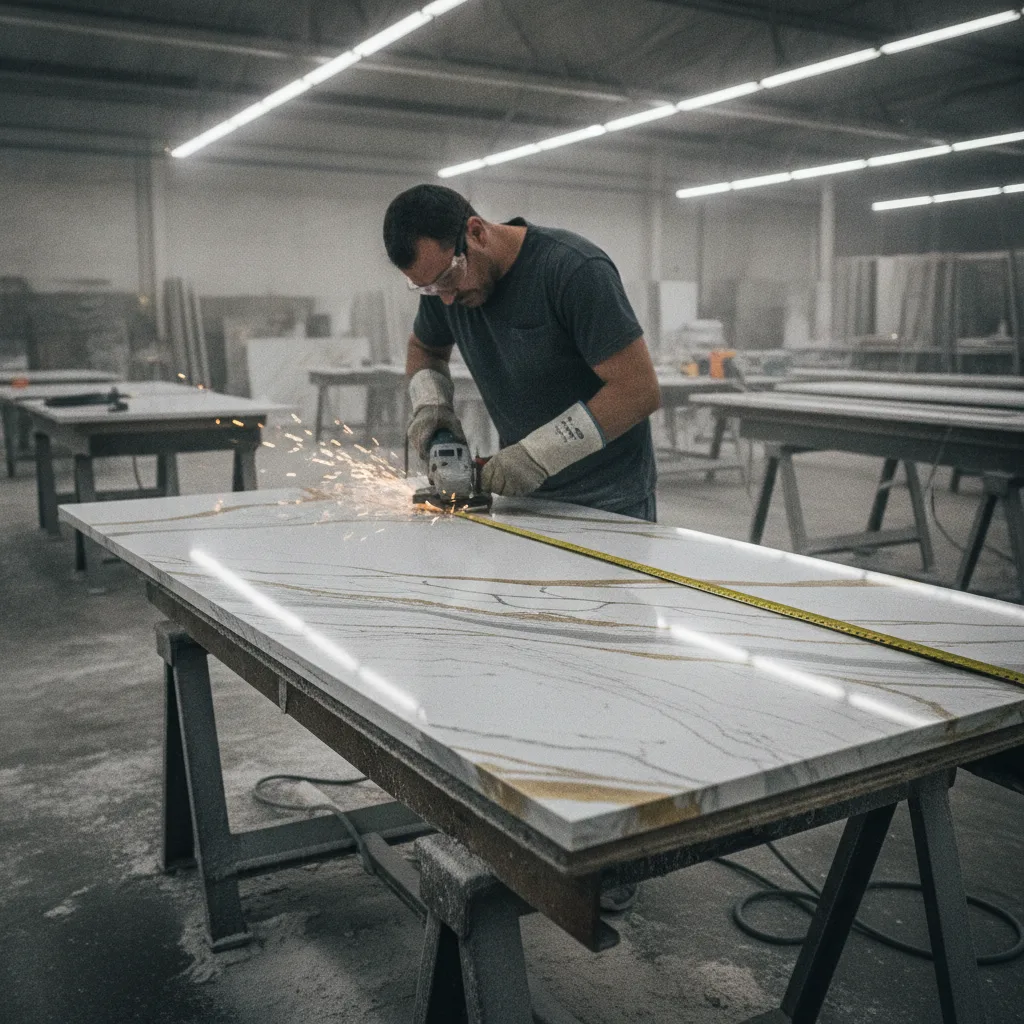
Step three is kiln curing. The compressed slab goes into a kiln and cures at approximately 100 degrees Celsius (212 degrees Fahrenheit), which hardens the resin binder permanently. Step four is grinding and polishing. The cured slab is ground to a precise thickness and polished to its final finish — the surface you'll run your hand across in the showroom. That's the full process. Four steps, each one creating a specific property you'll experience in your home.
Each step in this process directly creates a benefit you'll use every day. The vacuum compression step is why quartz never requires sealing. The pigment mixing step is why you can find a white, black, or marble-look color that matches your exact design vision. The kiln curing step is why the surface stays hard and durable for decades without special care.
Engineered quartz rates 7 on the Mohs hardness scale — one point higher than granite's typical 6–7 range and dramatically harder than marble's 3–4. That hardness is uniform across the entire slab. Natural granite has soft mineral pockets (feldspar, mica) where scratching is easier; engineered quartz doesn't, because the manufacturing process grinds everything to a consistent composition before compression. The result is a surface characterized by genuinely uniform scratch resistance, not average scratch resistance with vulnerable spots.
For a busy kitchen, that uniformity matters. Sliding a cast iron pan, setting down a heavy pot, or cutting near (not on) the surface won't leave scratches the way it might on marble or lower-Mohs materials. Quartz is scratch-resistant, not scratch-proof — a sharp knife dragged hard enough will still mark any surface — but day-to-day cooking rarely challenges it. Chipping is also unlikely under normal use; the compressed slab structure resists impact better than material with natural fissures. Durability is built into the material at the factory level, not added as a coating that can wear off.
The non-porous nature of engineered quartz also means it won't harbor bacteria the way porous stone can. Because the resin fills every void during manufacturing, water absorption is less than 0.03% — effectively zero porosity. Cleaning is straightforward: warm water, mild soap, and a damp cloth handle most messes. Avoid harsh chemicals like bleach or abrasive scrubbers — they won't damage the quartz crystals, but they can dull the resin binder's finish over time. These simple maintenance habits are all the surface needs to maintain its original look for decades.
Engineered quartz is heat resistant, but it has a firm limit: the polymer resin binder can discolor, warp, or crack when exposed to temperatures above approximately 300 degrees Fahrenheit. A pan coming off a stove or out of the oven can easily exceed that threshold. Setting a 400-degree cast iron skillet directly on your quartz countertop can permanently damage the resin — and that damage isn't repairable the way a chip in granite sometimes is. Safety around heat is the one area where the engineered nature of quartz creates a real constraint.
Hot pads and trivets solve this completely. Keep one near the stove and one near the oven. It's a simple habit that protects a surface you're likely paying $70–$100 per square foot installed to have. This heat sensitivity is the one area where natural granite has a practical edge — granite tolerates direct heat better because it has no resin binder. If you cook at very high volumes and frequently slide pans from burner to counter, it's worth discussing with your fabricator which material fits your actual habits before you purchase.
UV light is a separate consideration for outdoor applications. Engineered quartz is not recommended for outdoor countertops because prolonged UV exposure can cause the resin to discolor or fade over time. For outdoor kitchens and bar tops in Central Texas, granite and quartzite are more appropriate choices. Indoors, UV exposure through windows is typically not intense enough to cause issues, so a quartz countertop next to a sunny window is fine.
If you're planning an outdoor kitchen or patio bar top in the Austin or San Antonio area, quartz is not the right material. UV exposure and ambient heat cycles will degrade the resin over time. Fox Granite recommends granite or quartzite for any outdoor countertop project in Central Texas.
Because engineered quartz slabs are manufactured in a controlled factory setting, the color and pattern options are virtually unlimited — and that's a direct result of the engineering process. Pigments are added at the mixing stage, before compression, which means manufacturers can create realistic marble-look veining, bold solid colors, subtle speckled patterns, or anything in between. Natural stone can't achieve this: a quarried marble slab has the veining nature gave it, and that's the end of the conversation.
The versatility extends to consistency. If you order two slabs of the same engineered quartz color for a large kitchen island, they'll match. With natural stone, every slab pulled from the quarry is unique — a plus for homeowners who want that character, but a challenge when you need a precise color match across a large countertop project. This consistency, combined with the material's durability and low maintenance, is why quartz has become the most popular choice among homeowners and holds approximately 51% of the U.S. countertop installation market as of 2026, with a projected 7.0% CAGR through 2033.
Quartz works for kitchens, bathrooms, bar tops, office desks, fireplace surrounds, and walls. Additionally, some homeowners extend the material to backsplashes for a seamless look that enhances the visual space. Edge profiles — eased, beveled, bullnose, half-bullnose, ogee — are applied during fabrication and work with any quartz slab. The material is equally at home in a modern white kitchen, a bold black bathroom vanity, and a timeless transitional design. Few natural materials offer that style range combined with this level of durability.
Installed quartz countertops cost $50–$150 per square foot in 2026, with most Central Texas homeowners landing in the $70–$100 per square foot range for mid-grade material and standard edge profiles. A full kitchen project typically runs $5,000–$20,000 depending on size, material grade, edge complexity, and whether a sink cutout is included. Material alone — the slab before fabrication and installation — runs $15–$50 per square foot.
Price depends on several factors: the quartz brand and grade (entry-level vs. designer collections from brands like Cambria or Caesarstone), the edge profile you select, the number of cutouts for sinks or cooktops, and the fabricator's overhead structure. All-in pricing from a fabricator who does in-house cutting and installation tends to cost less than a multi-party process and typically has fewer surprise add-ons. Always ask for a full itemized quote before signing anything, and confirm whether templating, removal of old countertops, and plumbing reconnection are included.
For comparison: granite countertops in the same region vary depending on slab grade but run a similar installed price range. The practical difference is sealing. Granite requires sealing every 1–3 years — lighter granite colors need resealing every 6–12 months. Quartz requires zero sealing, ever. Marble requires sealing every 6–12 months and is vulnerable to etching from acids like lemon juice and vinegar, making it a less practical choice for high-use kitchens. Over a 10-year period, the maintenance difference between quartz and marble adds up in both cost and time — quartz delivers long-lasting value without the ongoing upkeep.
Measure your countertop run in linear feet and note the depth (standard kitchen counters are 25 inches deep). Bring that number — plus photos of your space — to your free in-home consultation. A good fabricator will template your kitchen before cutting a single piece of stone, so the final slab fits exactly and there are no surprises on installation day.
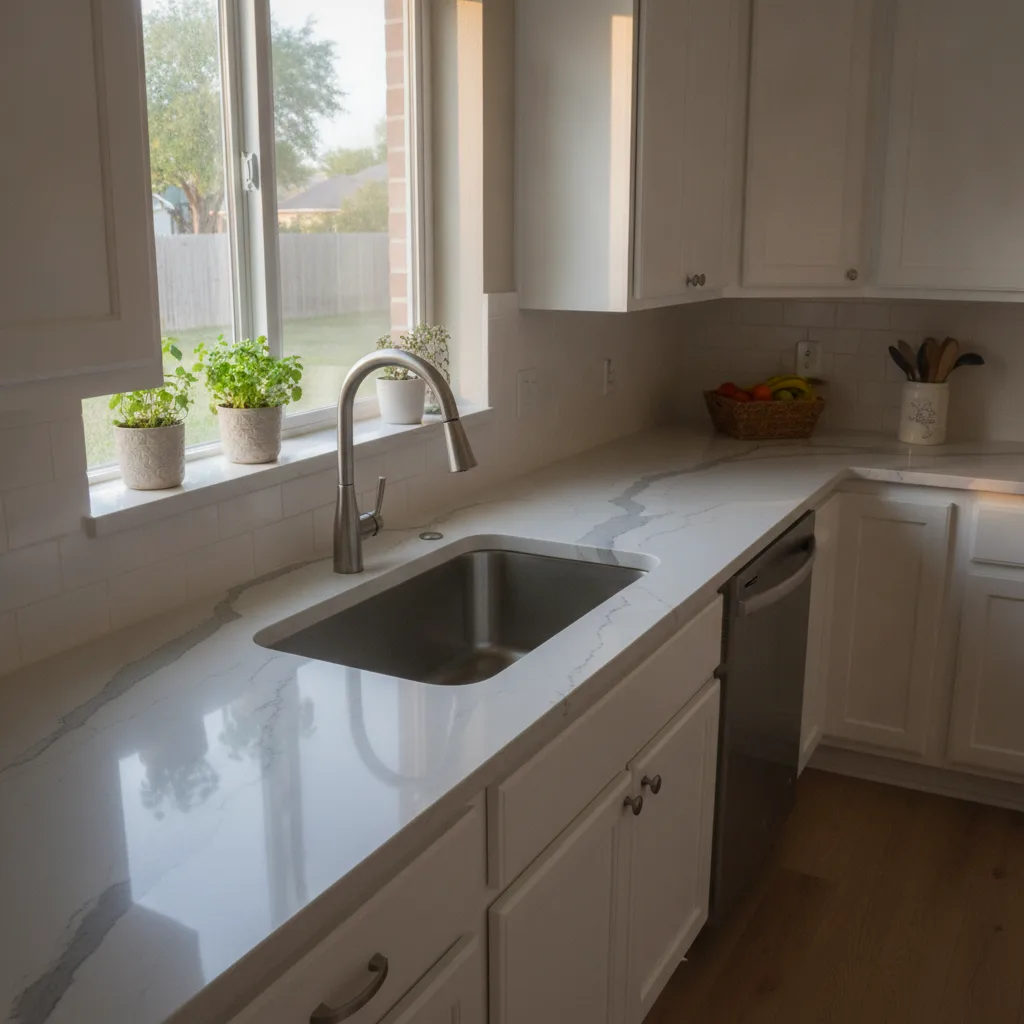
Quartz is non-porous, scratch-resistant, and durable — but it is not heat-proof. Placing a hot pan directly from the stove or oven onto your quartz surface can permanently damage the resin binder at temperatures above 300 degrees Fahrenheit. That damage typically looks like discoloration or a cloudy spot, and it's not fixable the way a granite chip can sometimes be repaired. Always use hot pads or trivets near the stove. It's the only daily habit engineered quartz asks of you — and it's an easy one to build.
When you walk into a showroom and see 'engineered quartz countertops' on a tag, you now know exactly what you're looking at: 90–95% natural quartz crystal, compressed under vacuum with polymer resin, cured in a kiln, and polished to a surface that won't harbor bacteria, won't require sealing, and will stay scratch-resistant for decades. The engineering is the point. For quartz countertops in Austin, San Antonio, New Braunfels, and across Central Texas, Fox Granite has been fabricating and installing countertops in-house since 2010. We'll walk you through every material option — quartz, granite, quartzite, marble — with transparent, all-in pricing and no surprise fees. Contact us today to schedule your free in-home consultation and see our full quartz slab selection in person.
Ready to get started? Contact Fox Granite today.


BY APPOINTMENT ONLY
1379 Wald Road
New Braunfels, TX 78132
Austin, San Antonio, Cedar Park, Kyle, New Braunfels, Del Valle, Elgin, Lago Vista, Shady Hollow, Onion Creek, Buda, San Marcos, Lockhart, Temple, Wimberley, Dripping Springs, Bee Cave, Lakeway, Leander, Anderson Mill, Jollyville, Spicewood Springs, Round Rock, Georgetown, Pflugerville, Manor, Taylor, Manchaca, Mountain City, Hutto, West Lake Hills, Bastrop, Liberty Hill, Driftwood, Sun City, Steiner Ranch.