Do quartz countertops stain? The short answer is yes — but not the way granite does. Quartz is non-porous, built from 90–95% crushed stone bound with 5–10% polymer resins, so liquids cannot penetrate the surface. The vulnerability is the resin binder. Heat above 150°F, UV exposure, harsh chemicals like bleach or ammonia, prolonged acid contact, and intensely pigmented substances left to sit can all react with that resin and cause discoloration. Most food and drink spills are reversible with mild soap, warm water, and a soft cloth. Heat scorch, UV yellowing, and chemical bleaching from undiluted bleach are permanent. Knowing which category you're dealing with determines whether you need a cleaning product or a fabricator.
Do quartz countertops stain? Yes — but not the way most homeowners expect. Quartz is stain resistant and highly resistant to everyday kitchen spills, but it is not stain proof. The surface is non-porous, composed of 90–95% crushed natural quartz crystals bound with 5–10% polymer resins, so liquids cannot soak into the stone itself. The resin binder is where the risk lives. Five specific threats — sustained heat, UV exposure, harsh chemicals, prolonged acids, and intensely pigmented substances left to sit — can all react with that resin and cause visible discoloration. Knowing which threat caused the problem tells you whether the damage is reversible with a $4 cleaning product or permanent and headed toward a fabricator conversation. For a $6,000–$14,000 installed countertop in an Austin or Central Texas kitchen, that distinction is worth understanding before you grab a sponge.
Quartz countertops are stain resistant but not stain proof — and the distinction matters for every cleaning decision you make. The surface is non-porous: 90–95% crushed natural quartz crystals bound with 5–10% polymer resins. Liquids cannot soak into the stone itself the way they do with granite or marble. The resin binder is the weak point. When homeowners report that their quartz countertops stain, the culprit is almost always a chemical or thermal reaction with that resin layer — not absorption through pores.
Unlike natural stone countertops such as granite, quartz requires no sealing at all. Granite is porous, which means a missed sealing cycle leaves the surface open to oil, red wine, and food dye soaking straight in. Quartz surfaces skip that risk entirely. In Consumer Reports standardized staining tests, quartz scored 2.3 points higher out of 100 than granite — particularly on tough substances like beet juice and food coloring after 20 hours of contact. That is a meaningful gap when you are choosing a countertop material for a busy Central Texas kitchen.
Five specific threats actually get through the resin: sustained heat, UV exposure, harsh chemical cleaners, prolonged acid contact, and intensely pigmented substances left to sit. Unlike natural stone counterparts such as quartzite — which handles heat and UV dramatically better — engineered stone quartz has real limits at the resin level. Each threat causes a different type of reaction. Knowing which category applies tells you whether the discoloration is reversible before you waste time scrubbing something that needs professional help.
When quartz countertops stain, the discoloration is a resin reaction — not absorption through the stone. The right fix depends on what caused the reaction, not just what the stain looks like on the surface.
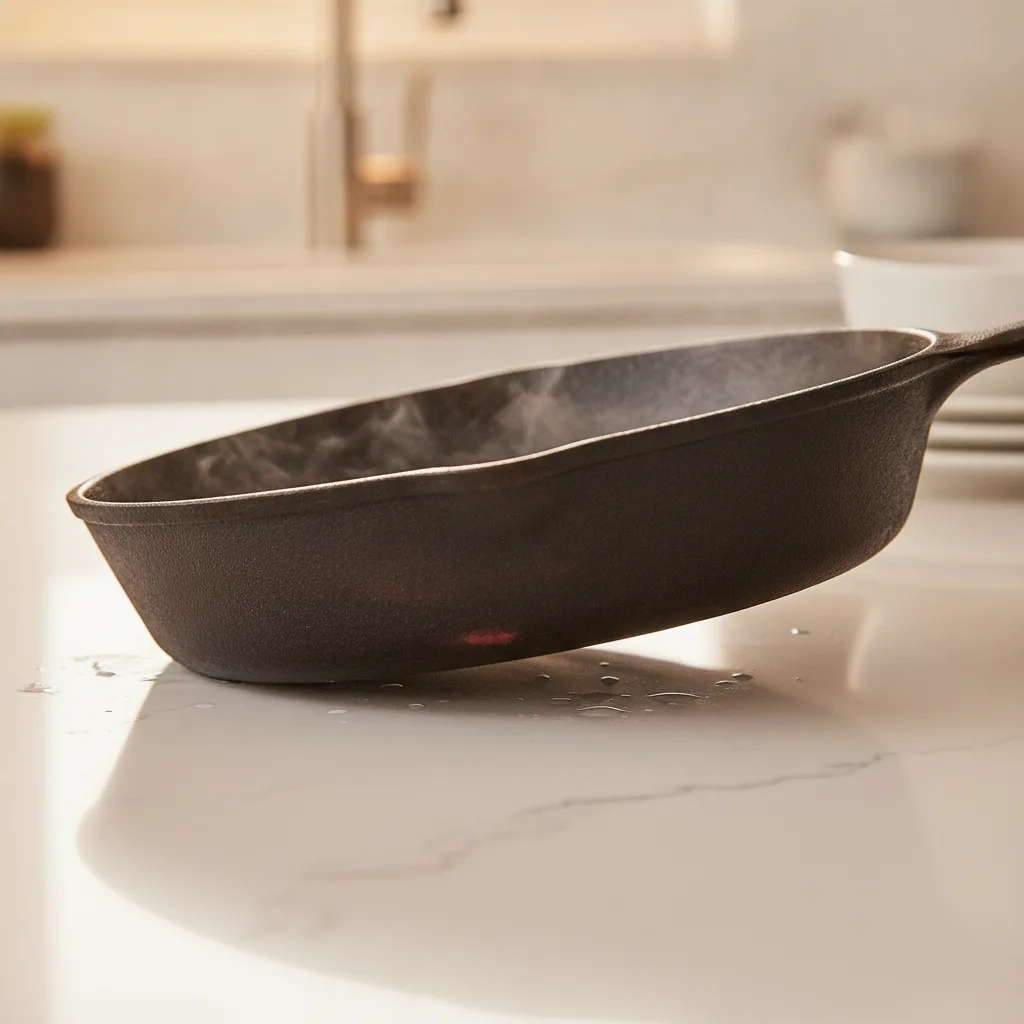
Heat is the most common cause of permanent quartz discoloration. A hot pan placed directly on the countertop surface can scorch or yellow the resin binder above approximately 150°F (65°C) — and that damage cannot be polished out. The resin's molecular structure is permanently altered, not just its surface appearance. Hot pots, a cast iron skillet pulled from the oven, or an electric griddle set directly on the surface are the usual offenders. Placing hot pots directly on quartz is the single fastest path to permanent damage, and trivets are not optional — they are necessary. UV exposure causes irreversible yellowing, especially on white quartz countertops or light-colored slabs near windows. The polymer resins used in quartz are UV-sensitive; prolonged direct sunlight triggers UV degradation that cannot be reversed. This is also why most quartz manufacturers void warranties for outdoor use.
Harsh chemical cleaners are the third threat — and the one most homeowners cause themselves. Bleach, ammonia, oven cleaner, drain cleaner, paint thinners, and nail polish remover chemically break down the resin binder, causing discoloration or loss of shine. Many homeowners reach for the strongest cleaning products available after a spill and create a bigger problem than the original stain. Undiluted bleach is especially damaging: a single heavy application can permanently alter the resin's color. Prolonged acids are the fourth threat. Lemon juice, vinegar, and tomato sauce used repeatedly will etch and dull the resin surface over time. Vinegar used once to remove hard water deposits is fine — using it as a daily cleaning solution degrades the resin binder. Finally, highly pigmented substances — turmeric, red wine, permanent markers, food dye, ink — can react with the resin if left to sit, but most of these are reversible if you act within a few hours.
The composition of quartz — Mohs 7 hardness for the quartz aggregate — makes it durable and resistant to scratches on the stone component. But that hardness does not protect the resin. Strong acids, bleach, and sustained heat all attack the binder, not the stone. White quartz and light-colored slabs show this discoloration more visibly than darker patterns, which is worth knowing before you choose a color.
$8–$25
Placed under hot pots and pans to prevent resin scorch above 150°F — the most common cause of permanent quartz damage
$10–$30
Keeps acidic foods like lemon juice and tomato sauce off the countertop surface and prevents the repeated acid contact that dulls the resin over time
Heat scorch, UV yellowing, and chemical bleaching from harsh cleaners are permanent — no home remedy fixes them. Food spills, hard water deposits, and most pigment stains are reversible with the right cleaning sequence in Step 4.
Most food and drink spills — coffee, red wine, oil, juice, tea — will not permanently stain quartz if you wipe them promptly. The non-porous surface means substances stay on top rather than sinking into the material. Clean spills immediately: use a soft cloth or paper towel to blot (not spread) the spill, then wash the stained area with warm water and a drop of mild dish soap. Rinse with a damp cloth and dry. Dawn dish soap is safe on quartz countertops — it is pH-neutral and will not damage the resin binder. That is the answer to one of the most common questions we hear.
Hard water deposits — those chalky white rings that form when water evaporates near your sink — are surface deposits, not true stains. They are calcium and limescale sitting on top of the quartz surface, not reacted into the resin. Gently scrape the deposit with a plastic spatula first, then clean with a mild pH-neutral cleaning solution. Do not use vinegar or bleach on these deposits; both will damage the resin while trying to remove minerals. Bar Keepers Friend (the soft scrub version, applied with light pressure in a circular motion on the stained area, then rinsed thoroughly) works well here and is one of the recommended cleaners for mineral buildup on quartz.
Cleaning quartz countertops regularly with the right cleaning products is what separates a surface that looks new after five years from one that looks tired. Avoid abrasive cleaners, abrasive materials, and abrasive cleaning products entirely — they scratch the resin's polished finish and create micro-grooves where pigments and oils accumulate. Stick to soft cloths, soft scrub products, and sponges without a scouring side. An abrasive pad used once causes visible dulling that does not reverse.
$4–$6
One of the recommended cleaners for mineral deposits and light stubborn stains on quartz — use the liquid soft scrub version, not powder, to avoid abrasive damage
$3–$8
Removes hard water deposits and dried food without scratching the resin surface — never use metal scrapers on quartz
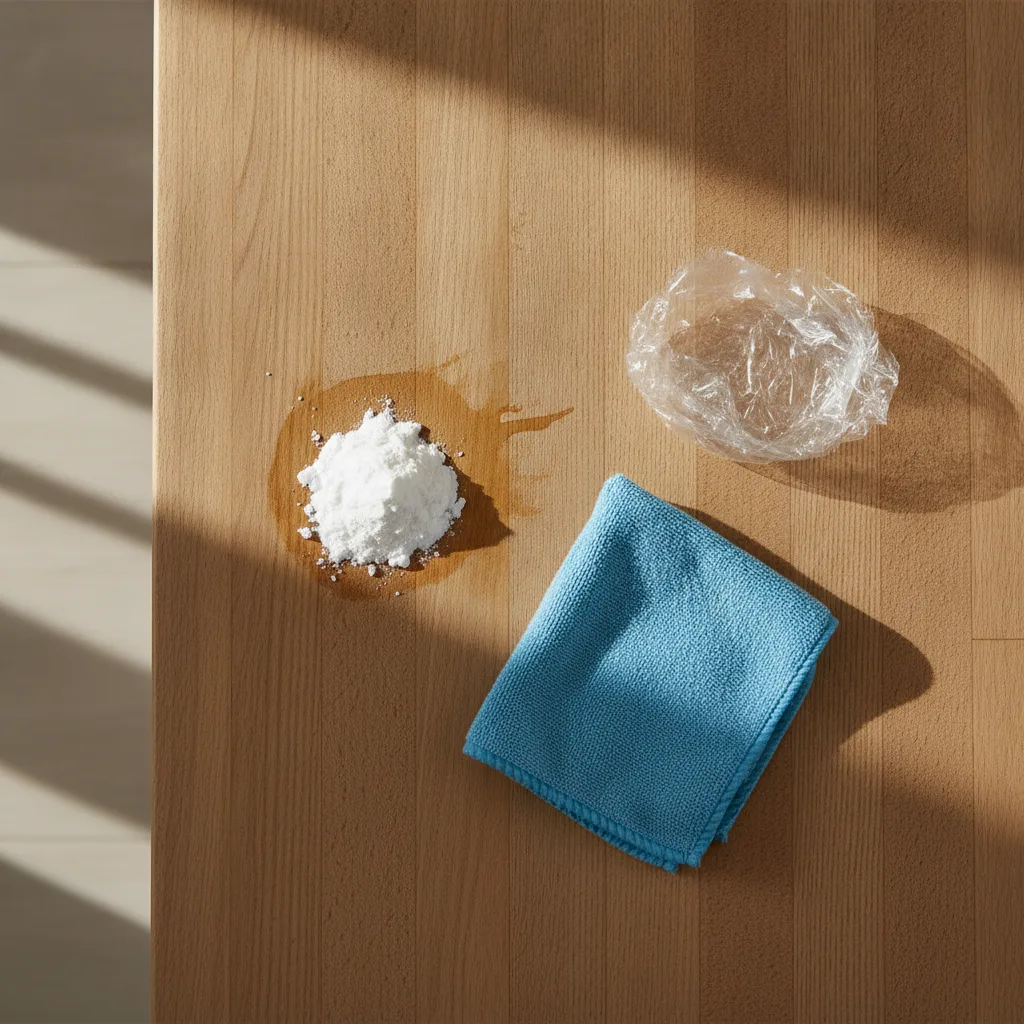
Stage 1 is mild soap and warm water — always start here, every time. Wipe the stained area with a soft cloth dampened with warm water and a drop of dish soap. Rub gently in a circular motion, then rinse and dry. This removes the vast majority of kitchen spills, including coffee, oil, and red wine caught within a few hours. If the stain is gone, stop. Do not escalate to stronger methods if you do not need to. Stain removal on quartz is almost always easier than homeowners expect when the first step happens quickly.
Stage 2 is a baking soda paste for tough stains. For oil-based stains, mix baking soda and water in a 1:1 ratio into a paste, apply it to the stained area, cover with plastic wrap, and let it dwell for 30 minutes. For organic stains — red wine, coffee, turmeric, or food dye — use a paste of baking soda and hydrogen peroxide (3%) instead. Same method, but let it sit 30 minutes to overnight under plastic wrap for stubborn stains. After the dwell time, rub gently with a soft cloth in a circular motion, then rinse thoroughly with warm water. The hydrogen peroxide breaks down pigment bonds in the resin without chemically attacking the binder itself — it is one of the few substances that is aggressive on the stain but gentle on quartz surfaces.
Stage 3 handles ink, marker, grease, and permanent marker stains. Apply isopropyl alcohol (at least 70%) directly to the stained area using a soft cloth. Let it sit for 2–3 minutes, then rub gently and rinse with warm water. Isopropyl alcohol at this concentration cuts through permanent markers, ink, and grease without damaging the resin. Do not substitute acetone-based nail polish remover — acetone is a harsh chemical solvent that attacks the resin binder and will cause discoloration rather than remove it.
$2–$4 per bottle
Combined with baking soda into a paste, it breaks down organic pigment stains on quartz without attacking the resin binder
$3–$6 per bottle
Safe, effective spot cleaner for ink, permanent markers, and grease on quartz surfaces — does not damage the resin at this concentration
Mild soap first. Baking soda paste second. Isopropyl alcohol (70%+) third. If none of these work after a full attempt, the discoloration is likely resin damage — not a surface stain — and home remedies will not fix it. Move to Step 5.
Resin damage from heat, UV, or harsh chemicals is not repairable with home remedies. When the resin structure itself is compromised — scorched by hot pots, yellowed by UV degradation, or chemically bleached by undiluted bleach or ammonia — the molecular structure has been permanently altered. No amount of scrubbing, baking soda paste, or isopropyl alcohol will restore the original surface. This is the critical distinction: if your three-stage cleaning attempt produced no improvement, you are looking at resin damage rather than a surface stain.
Professional restoration options include buffing and refinishing for surface-level resin damage, which can sometimes reduce the visibility of discoloration on honed or matte finishes. For polished quartz surfaces with heat scorch or deep chemical damage, slab replacement is often the only path to a fully restored countertop surface. White quartz countertops near south-facing windows in Austin homes are particularly prone to UV yellowing — if that is your situation, the fix requires addressing both the slab and the light exposure, or switching to a countertop material like granite or quartzite that handles UV without degradation. Quartzite and granite are natural stone and resist UV exposure far better than engineered stone.
Contacting your fabricator first is the right move when you are facing permanent damage. A reputable company can assess whether buffing is worth attempting, document whether the damage falls under a manufacturer warranty claim — Caesarstone, Cambria, and similar brands all maintain warranty programs — and give you honest guidance on replacement cost versus restoration. The conversation is always easier when the homeowner already knows which of the five threats caused the damage.
Most quartz manufacturers — including Caesarstone and Cambria — void warranties for heat damage caused by direct hot pan contact and for outdoor UV exposure. Check your warranty documentation before pursuing a professional restoration claim.
Preventing stains on quartz is significantly easier than removing them. Clean spills immediately — do not let red wine, coffee, turmeric, or food dye sit on the surface for hours. Always use trivets or silicone pads under hot pots, hot pans, and any cookware coming off the stove or out of the oven. Use a cutting board for acidic foods: lemon juice, tomato sauce, and vinegar-based dressings. Placing hot pots directly on the surface is the single fastest path to permanent damage on quartz, and it happens in kitchens across Central Texas every day.
Quartz countertops do not require sealing — ever. That is a significant advantage over natural stone countertops like granite, which need annual sealing at $15–$30 per application. Over 20 years, granite sealing adds $300–$600 in maintenance cost, plus real stain risk during any cycle you miss. Quartz's non-porous composition eliminates that burden entirely. The tradeoff is that quartz is more vulnerable to heat and UV than granite or quartzite, so the prevention habits above matter more with quartz than they would with its natural stone counterparts. That is an honest tradeoff worth knowing before you purchase.
For cleaning quartz countertops regularly, the recommended cleaners are straightforward: warm water and mild dish soap for daily use, Bar Keepers Friend soft scrub for mineral buildup, and isopropyl alcohol (70%+) for ink and grease. Avoid harsh chemicals — bleach, ammonia, oven cleaner, drain cleaner — abrasive pads, and vinegar as a daily cleaning solution. Keep direct sunlight off light-colored and white quartz surfaces where possible. UV-blocking window film on windows near the countertop surface runs $25–$80 per window as a DIY install, and it prevents the one type of quartz damage that is truly impossible to reverse.
$25–$80 per window (DIY)
Blocks the UV exposure that causes irreversible yellowing in white quartz and light-colored slabs near sun-facing windows
$8–$20
Non-slip heat protection under hot pots and pans — required with quartz, not optional, given the 150°F damage threshold
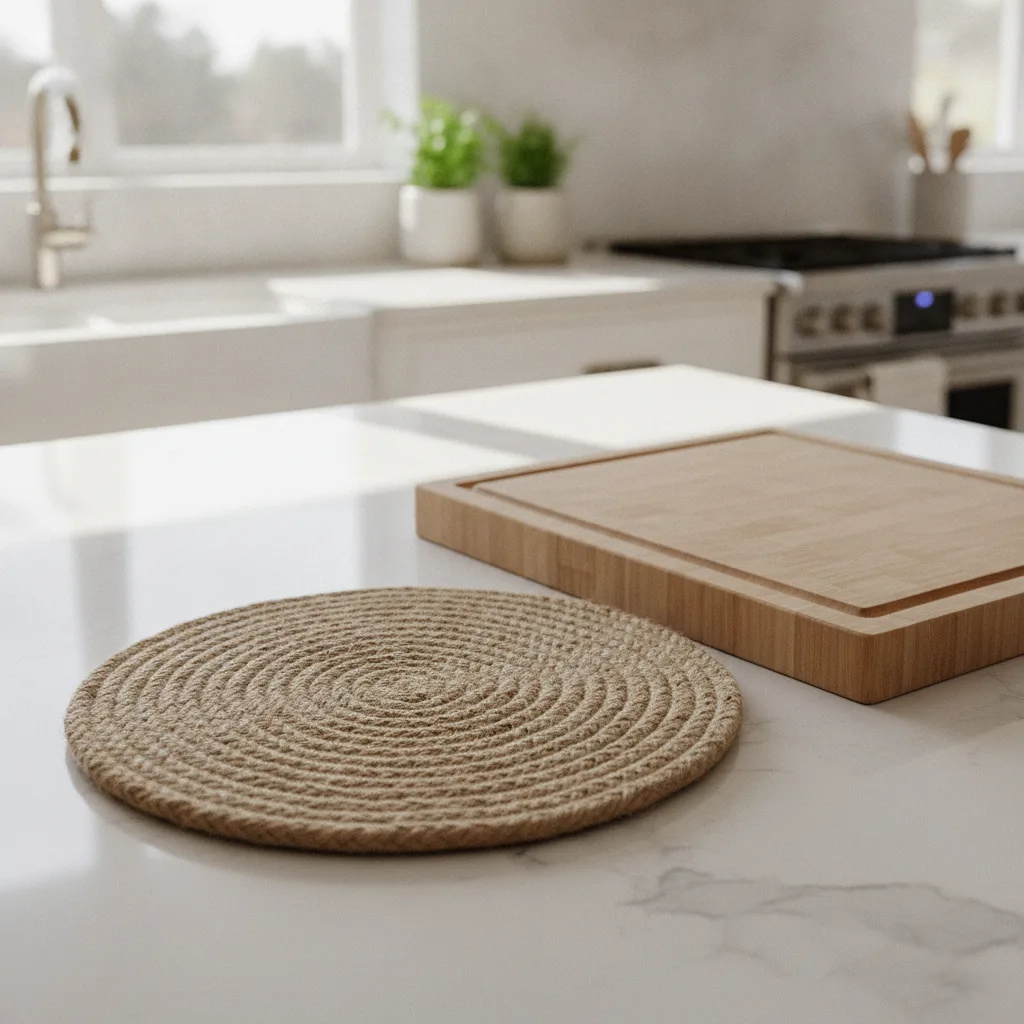
The instinct after a bad spill is to grab the strongest cleaner in the cabinet. On quartz, that instinct backfires. Undiluted bleach, ammonia-based cleaners, drain cleaner, and oven cleaner chemically damage the resin binder — turning a reversible food stain into permanent discoloration. The cleaning products you need are already in most kitchens: dish soap, baking soda, hydrogen peroxide (3%), and isopropyl alcohol. Use mild soap first, every time. Save the harsh chemicals for surfaces that can handle them. Quartz is highly resistant to food and drink — but not immune to the cleaners designed for industrial grime.
Quartz is one of the most stain resistant countertop materials available — highly resistant to everyday kitchen spills, easy to maintain, and it never requires sealing. But the resin binder has real limits around heat, UV, and harsh chemicals, and knowing those limits is what protects a $6,000–$14,000 investment in a Central Texas kitchen. If you are weighing quartz against granite, quartzite, or marble, the right answer depends on how you actually cook and where the countertop will live in your home. Fox Granite is a family-owned team with over 15 years of in-house fabrication experience, and we have helped thousands of homeowners across Austin, San Antonio, New Braunfels, Round Rock, and Georgetown choose the right countertop material with samples in hand. Contact us today to schedule your free in-home consultation — or visit our New Braunfels showroom to see the slabs for yourself.
Ready to get started? Contact Fox Granite today.


BY APPOINTMENT ONLY
1379 Wald Road
New Braunfels, TX 78132
Austin, San Antonio, Cedar Park, Kyle, New Braunfels, Del Valle, Elgin, Lago Vista, Shady Hollow, Onion Creek, Buda, San Marcos, Lockhart, Temple, Wimberley, Dripping Springs, Bee Cave, Lakeway, Leander, Anderson Mill, Jollyville, Spicewood Springs, Round Rock, Georgetown, Pflugerville, Manor, Taylor, Manchaca, Mountain City, Hutto, West Lake Hills, Bastrop, Liberty Hill, Driftwood, Sun City, Steiner Ranch.