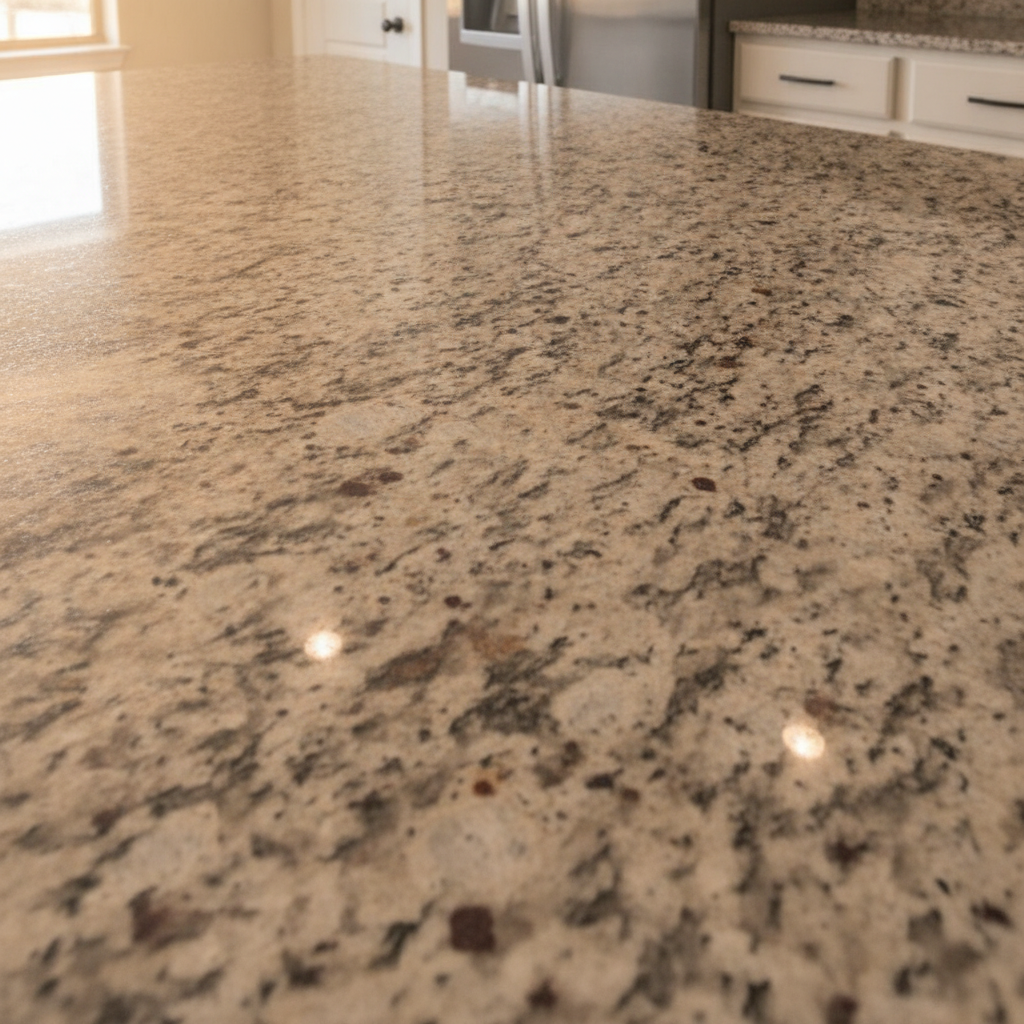
Yes, granite countertops emit radon gas — but in amounts so small they don't meaningfully raise indoor radon levels. The largest study ever conducted on this question (10,000+ individual radon flux measurements by Environmental Health and Engineering) found that even the highest-emitting granite slabs produce less than 0.4 pCi/L of additional indoor radon concentration — below average US outdoor air levels and well under the EPA's 4.0 pCi/L action level. The EPA, NRC, WHO, and Health Canada all agree: no special precautions are needed for granite countertops. Your real radon risk in Central Texas comes from the limestone bedrock beneath your home, where average indoor readings in Austin (5.20–6.14 pCi/L) and San Antonio (6.57–8.10 pCi/L) already exceed the EPA action level.
Granite countertops do emit radon gas — and gamma radiation too. That's a fact, not a scare. But the research is equally clear on the next part: the amounts emitted are so small that they make a negligible contribution to indoor radon levels in a typical home. Over 10,000 scientific measurements and multiple peer-reviewed studies have confirmed it, and every major regulatory body — the Environmental Protection Agency, the Nuclear Regulatory Commission, the World Health Organization, and Health Canada — agrees that no special precautions are needed for granite countertops. If you live in Austin, San Antonio, or anywhere on the Edwards Plateau, you have a real radon concern. It just has nothing to do with your kitchen stone.
Radon is a colorless, odorless radioactive gas produced naturally when uranium and thorium decay inside rocks and soil. It is present everywhere on earth in trace amounts — in outdoor air, in the ground beneath your home, and in small amounts inside natural stone like granite. The concern started making headlines around 2008 when isolated media reports suggested granite countertops might be a hidden radiation hazard inside residential kitchens. That panic stuck around long after the science settled it.
Granite is an igneous rock that contains naturally occurring radioactive elements — primarily uranium and thorium — baked in during its formation deep in the earth. As uranium decays, it produces radium, which in turn produces radon gas. Granite countertops can, in theory, emit radon gas and gamma radiation. The question isn't whether granite is radioactive at all — it is, at low levels, along with concrete, brick, and most other building materials. The question is whether radon emissions and radiation levels from granite countertops are high enough to matter for the people living in the house.
The short answer, backed by tens of thousands of measurements and multiple peer-reviewed studies, is no. The EPA, the NRC, the WHO, and Health Canada all agree: granite countertops present no meaningful radiation exposure risk under normal residential conditions. The science is settled. Your countertops are not your radon problem.
Even smoke detectors contain a small radioactive element (Americium-241) and are considered completely safe at normal exposure levels. Trace radioactivity in building materials is normal — what matters is the dose humans actually receive, not whether a material contains radioactive elements at all.
The largest study ever conducted on radon in granite countertops was commissioned by the Marble Institute of America and carried out by Environmental Health and Engineering (EH&E), a Cambridge, MA environmental science firm. EH&E conducted over 10,000 individual radon flux measurements across dozens of granite slab varieties and concluded that granite radon, even at higher measured emission rates, poses no meaningful health risk under any reasonable residential exposure scenario. Those findings were published in peer-reviewed journals and have not been seriously contested.
A separate peer-reviewed study published in the Journal of Exposure Science and Environmental Epidemiology tested 39 full granite slabs from 27 different varieties. The median whole-slab radon emission was just 3.9 Bq/m²/h, with a range from below detection limits up to a maximum of 79.4 Bq/m²/h. When researchers modeled what those measured emission rates would actually do to indoor air using the EPA's CONTAM air quality model, the resulting indoor concentration from countertops was less than 0.4 pCi/L — below the average outdoor radon concentration in the US, and well under the EPA's 4.0 pCi/L action level.
These aren't isolated findings. The Natural Stone Institute has aggregated scientific studies from multiple independent research groups, including air monitoring at granite quarries, and every study found radon concentrations at all measurement points below 0.3 pCi/L — less than average US background levels. Most granite countertops emit gamma rays and radon gas at levels that are diluted by normal kitchen ventilation before they can accumulate to concentrations that matter. The concern that granite countertops significantly raise indoor radon levels has been measured, modeled, and ruled out.
Free (EPA tool)
The peer-reviewed modeling tool used to calculate realistic indoor radon concentrations from measured granite slab emission rates — the gold standard for this type of exposure assessment.
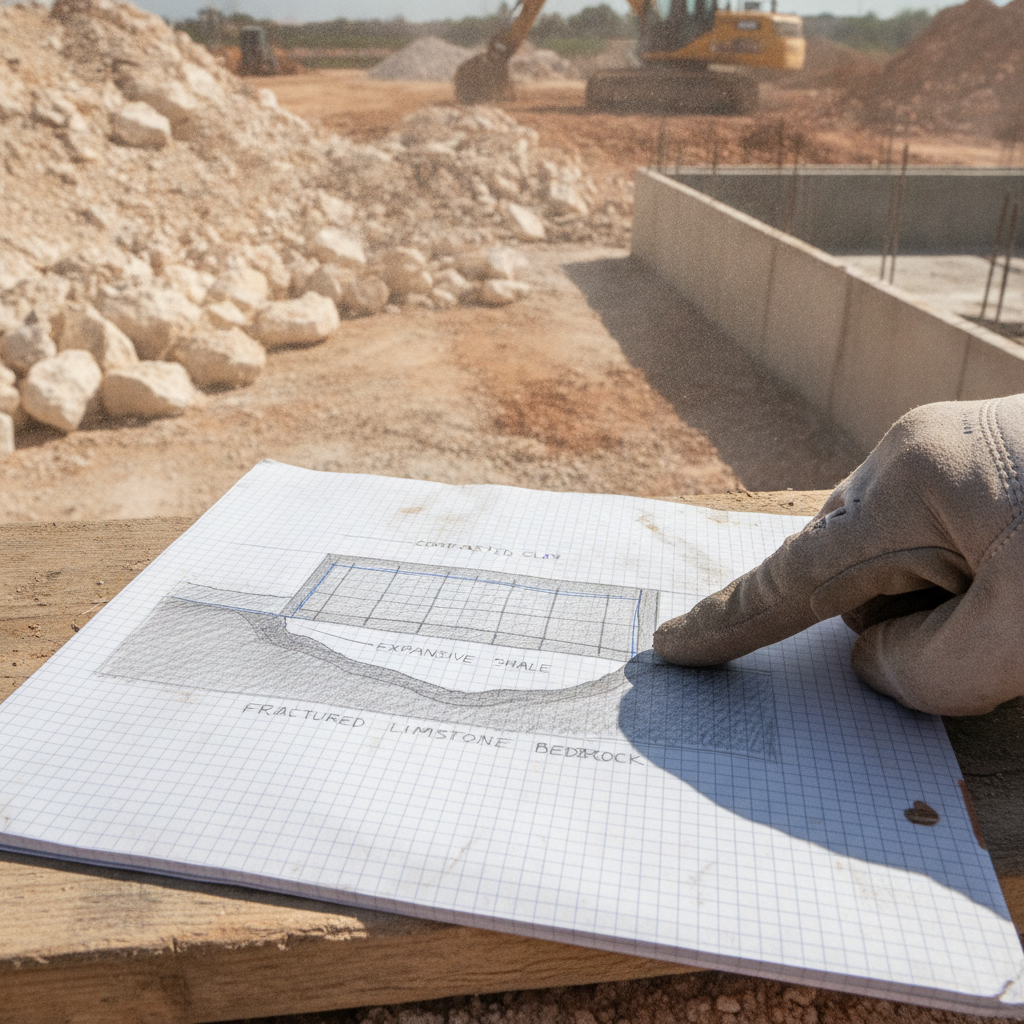
The soil beneath your home — not your granite countertops — is responsible for 95% or more of indoor radon. All building materials combined, including concrete, brick, and stone, contribute roughly 18.5% of total indoor radon, and countertops are only a fraction of that 18.5%. The EPA identifies ground-sourced radon seeping up through a home's foundation as the dominant driver in virtually every elevated-radon house in the US. Radon gas migrates through cracks in slabs, gaps around pipes, and porous concrete — and that pathway from soil to indoor air is the one that matters.
In Central Texas, this is a serious concern. User-submitted radon test data for Austin shows average indoor readings of 5.20–6.14 pCi/L — already above the EPA's 4.0 pCi/L action level — and it has nothing to do with granite countertops. The region sits on limestone bedrock from the Edwards Plateau, and that geology pushes radon gas upward through the soil and into homes at typically high concentrations. San Antonio data is even more striking: average indoor readings of 6.57–8.10 pCi/L, driven by the same Edwards Plateau limestone and local clay soils beneath slab foundations.
Radon is the second leading cause of lung cancer in the US, responsible for roughly 21,000 deaths per year. That danger comes from ground-sourced radon gas accumulating in enclosed spaces like ground-floor rooms and basements — not from the stone sitting on your kitchen cabinets. Approximately 1 in 15 US homes exceeds the EPA action level of 4.0 pCi/L nationwide, and in Austin and San Antonio that proportion is likely higher given local geology. The radioactive elements in Central Texas soil are the variable that needs attention — not the naturally occurring radioactive elements in your countertop.
Central Texas slab-on-grade foundations sit directly on ground that is typically high in radon-producing limestone bedrock. If you have not tested your home, test it — regardless of what your countertops are made of.
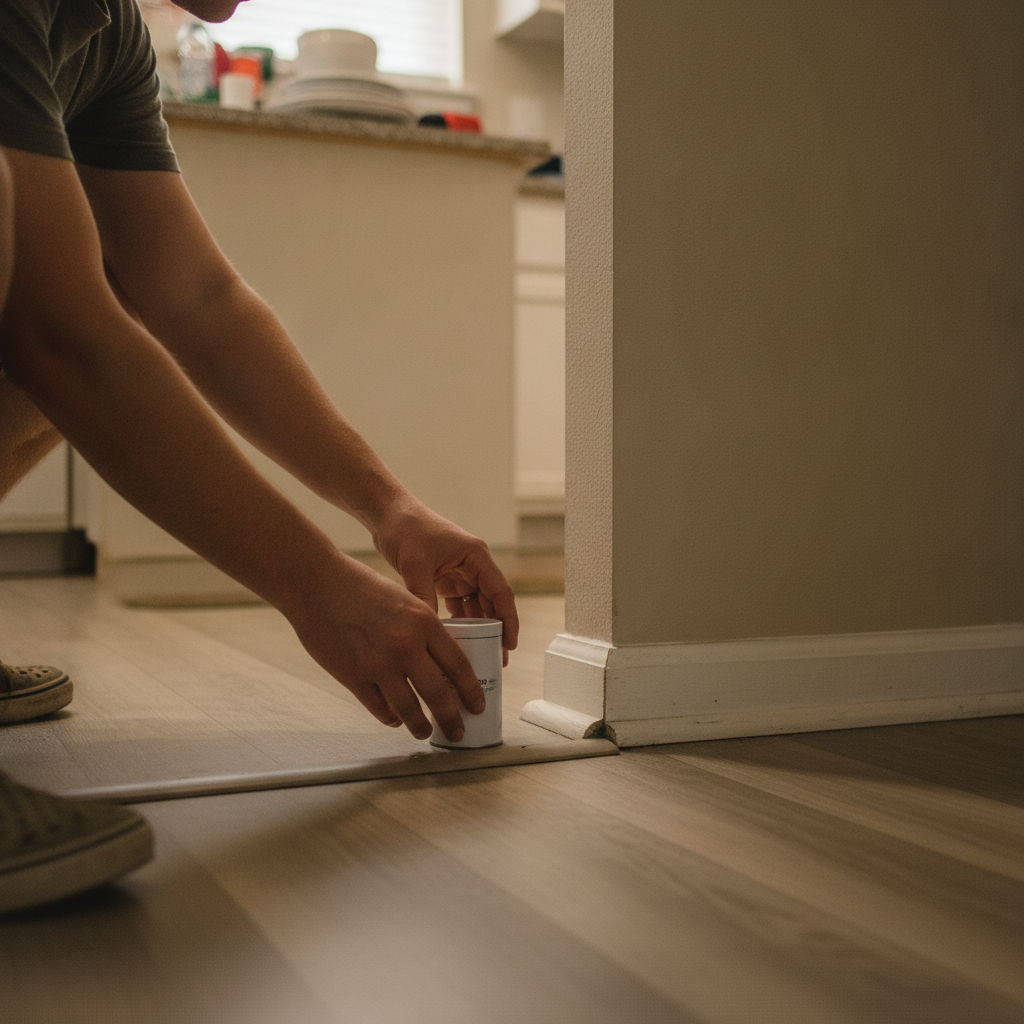
Home radon test kits cost $22–$63 at Home Depot or online, and they are the only way to know what radon levels actually exist in your home. A short-term charcoal canister test runs 48–96 hours; a long-term alpha-track test runs 90 days or more and gives a more accurate annual average. For Central Texas homeowners on a slab-on-grade foundation, a long-term test is worth the extra time given the region's elevated baseline radon concentrations. The Pro-Lab Long-Term Radon Test Kit, available for about $22 at Home Depot, is an EPA-accepted option that captures seasonal variation better than a 48-hour kit.
Place the test kit on the lowest livable floor of your home — typically the ground floor for slab-on-grade homes in Austin and San Antonio. Keep windows and doors closed as much as possible during the testing period. After the exposure window, mail the canister to the included lab and wait for your results report. The EPA recommends testing all homes, regardless of countertop material — quartz, granite, laminate, or anything else.
There is currently no agreed-upon method for measuring radon specifically from granite countertops, and the EPA has not established one. Radon emissions vary stone to stone and can vary within a single slab, making it impossible to generalize risk from one countertop sample to another. Testing the indoor air of your home is the only measurement that actually matters for your health. If you want ongoing radon awareness rather than a one-time snapshot, the Airthings Wave Plus digital monitor ($229) tracks radon concentration continuously and syncs to a smartphone app.
~$22 at Home Depot
EPA-accepted test type for accurate annual average radon readings; long-term tests capture seasonal variation better than short-term charcoal kits.
~$229
Continuous digital monitor with smartphone app; ideal for homeowners who want ongoing radon awareness rather than a single point-in-time result.
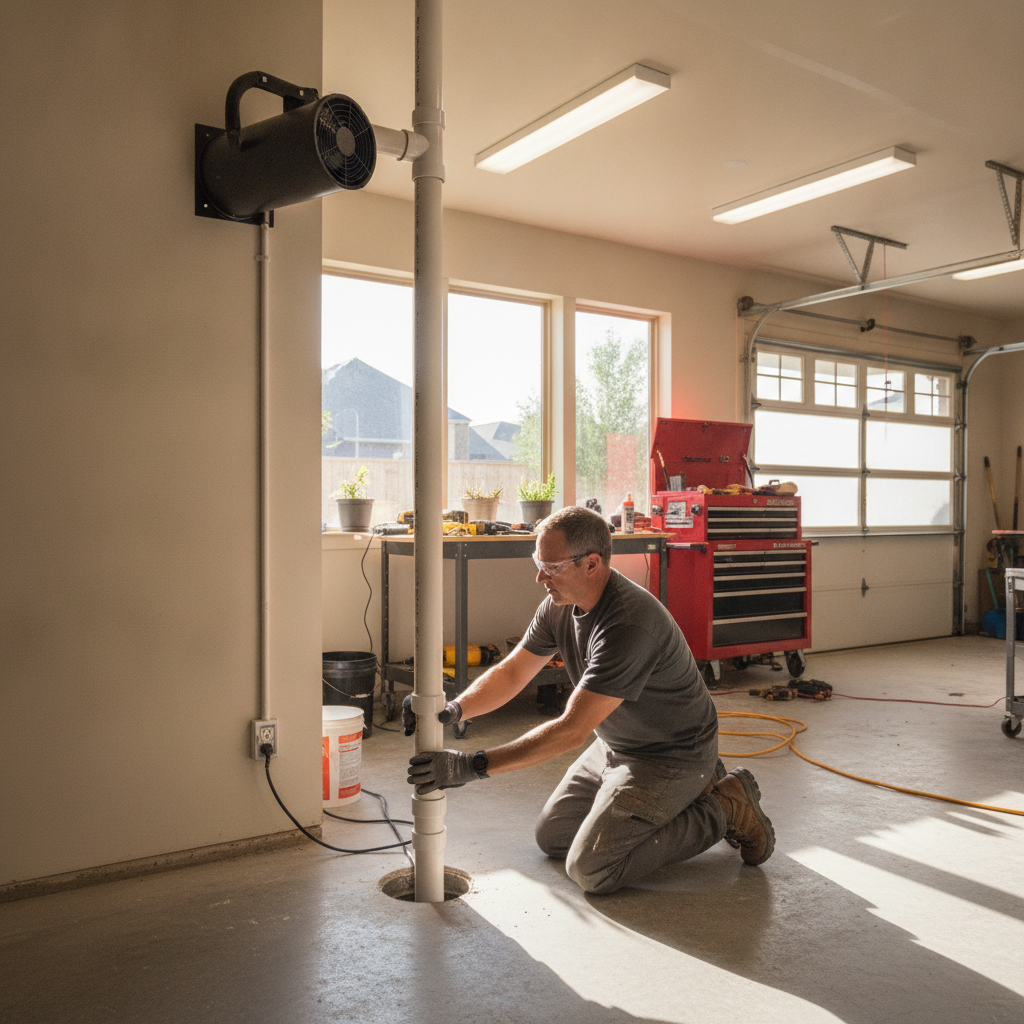
If your test comes back at or above 4.0 pCi/L, the EPA recommends installing a sub-slab depressurization system. This pipe-and-fan setup pulls radon gas from beneath the foundation slab and vents it outside before it enters the house. In Austin and San Antonio, professional installation of a sub-slab depressurization system typically costs $800–$2,000. That is a one-time fix that can reduce indoor radon levels by up to 99%. The EPA's Find a Radon Contractor tool at epa.gov helps you locate state-certified radon mitigators in Texas.
The EPA is direct about this: if elevated radon is found in a home with granite countertops, the answer is to mitigate the radon — not remove the granite. The countertops are not the source. Removing them would not move the needle on your radon concentration because the gas is coming from the ground, not the stone on your cabinets. Radiation exposure from countertops is not the issue; ground-sourced radon seeping through your slab foundation is.
Results between 2.0–3.9 pCi/L don't require immediate mitigation but warrant a follow-up long-term test and serious consideration of mitigation, given EPA guidance that no radon exposure level is entirely risk-free. Results below 2.0 pCi/L are considered low and don't require action. Whatever your result, document it. That information is valuable for your household and for any future buyer of the home.
Free
Locate state-certified radon mitigators in Texas; professional certification matters for sub-slab depressurization installation and post-mitigation testing.
After mitigation, always run a post-mitigation radon test to confirm the system is working. Don't assume the fan fixed the problem — measure it.
Granite countertops emit radon gas and emit gamma radiation in amounts so small that every major regulatory body — the EPA, NRC, WHO, and Health Canada — classifies them as presenting no meaningful radiation exposure risk. The peer-reviewed research is not ambiguous. Over 10,000 scientific measurements across many slab varieties, plus multiple independent studies from the Natural Stone Institute and others, have confirmed that most granite countertops make a negligible contribution to indoor radon in a typical home. Granite is safe. The danger from radon in Central Texas is real — it just comes from many sources in the soil beneath buildings, not from the stone installed inside them.
If you have been holding off on granite countertops because of radon concerns, the science says you can move forward. Granite is a durable, scratch-resistant, heat-resistant natural stone that has been quarried and used in kitchens for decades. It does contain naturally occurring radioactive materials at low levels — so does the concrete in your foundation, the brick on your exterior walls, and the rocks that make up your region's limestone bedrock. That is not a danger. It is geology. Radiation from these building materials stays well below regulatory concern thresholds, and normal indoor ventilation dilutes radon gas emitted from stone surfaces before it can accumulate.
At Fox Granite, we have been fabricating and installing granite countertops across Austin, San Antonio, and the Central Texas corridor since 2010. We hear the radon question from homeowners regularly, and we always point them to the same answer the science provides: test your home's air, not your countertops. If you are ready to see slabs in person, visit our showroom in New Braunfels or schedule a free in-home consultation. We will bring samples to you, answer every question you have — including the ones about radon and radioactivity — and help you choose stone with full confidence.
If you live in Austin, San Antonio, or anywhere on the Edwards Plateau, your soil geology is the real radon concern — not your countertops. Average indoor radon readings in both cities already exceed the EPA's 4.0 pCi/L action level. A $22 test kit from Home Depot is the right first step. If results come back elevated, an $800–$2,000 sub-slab depressurization system fixes the actual problem. Removing granite countertops would not reduce your radon exposure at all — the research is that clear.
For granite countertop fabrication and installation in Austin, San Antonio, New Braunfels, and the surrounding Central Texas areas, trust Fox Granite. We have completed over 10,000 projects since 2010, and we are happy to answer every question — including the ones about radon — so you can choose your stone with full confidence. Contact us today to schedule your free in-home consultation or get your free estimate.
Ready to get started? Contact Fox Granite today.


BY APPOINTMENT ONLY
1379 Wald Road
New Braunfels, TX 78132
Austin, San Antonio, Cedar Park, Kyle, New Braunfels, Del Valle, Elgin, Lago Vista, Shady Hollow, Onion Creek, Buda, San Marcos, Lockhart, Temple, Wimberley, Dripping Springs, Bee Cave, Lakeway, Leander, Anderson Mill, Jollyville, Spicewood Springs, Round Rock, Georgetown, Pflugerville, Manor, Taylor, Manchaca, Mountain City, Hutto, West Lake Hills, Bastrop, Liberty Hill, Driftwood, Sun City, Steiner Ranch.