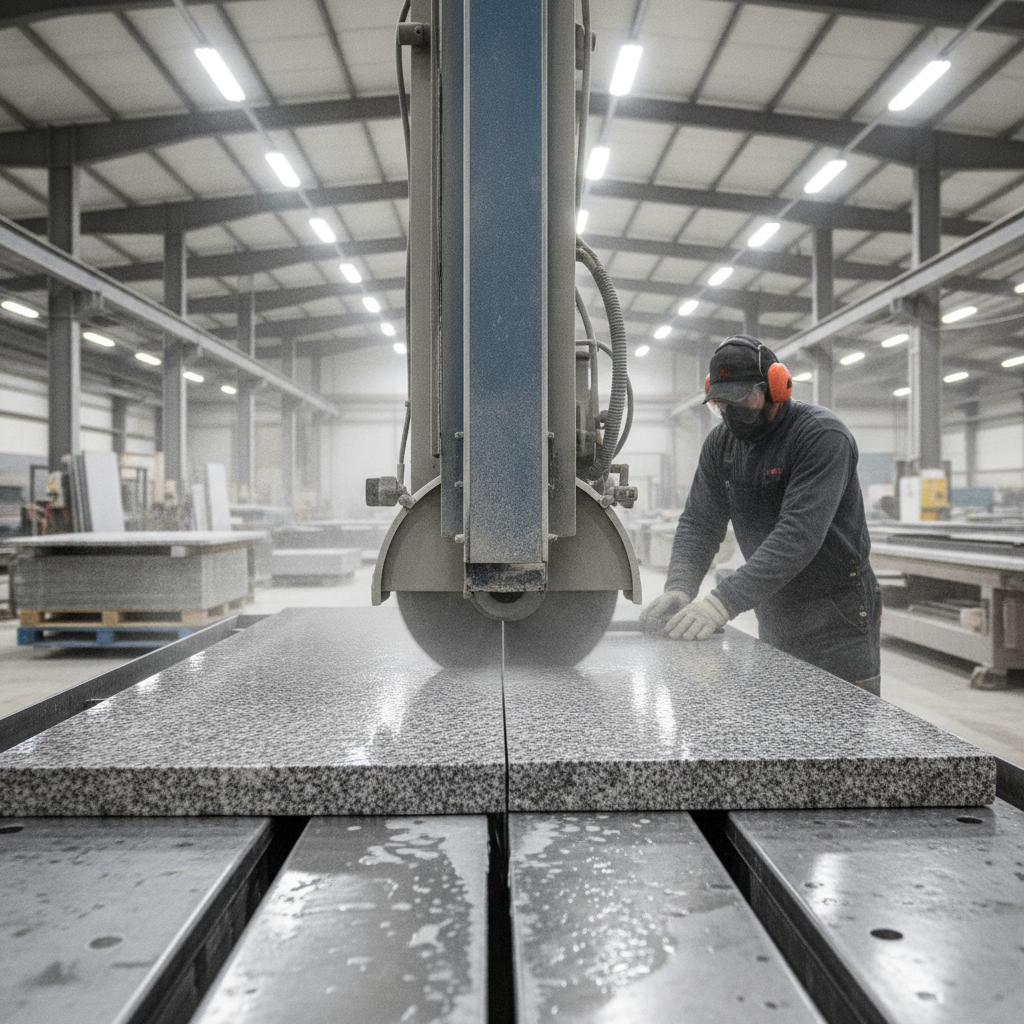
A circular saw can technically touch granite only with a diamond blade rated for stone and constant wet cooling — but it still fails for standard countertop work. Granite rates 6–7 on the Mohs hardness scale, and a standard 7.25-inch circular saw produces roughly 2 HP. Professional bridge saws run 15–30 HP. That gap explains why a circ saw overheats, glazes its blade, and risks micro-fractures before completing a cut through a 3 cm countertop slab. For small granite tile or thin pieces under 2 cm, a wet saw or angle grinder with a diamond blade can work fine. For a full kitchen countertop granite slab, the right tool is a professional bridge saw — and the right call is a fabricator.
A circular saw for cutting granite countertops is the first tool most homeowners think of — it's in the garage, it cuts through almost everything else, and a quick search turns up forum posts claiming it worked fine on granite. Here's what those posts leave out: the slab thickness, the motor power gap, the silica dust exposure, and what happens when a bad cut ruins a $1,200 piece of stone mid-kitchen remodel. This guide walks through exactly why a circular saw falls short on standard countertop granite, what tools actually work for small jobs, and what professional fabricators use — and why their equipment produces results no homeowner setup can replicate.
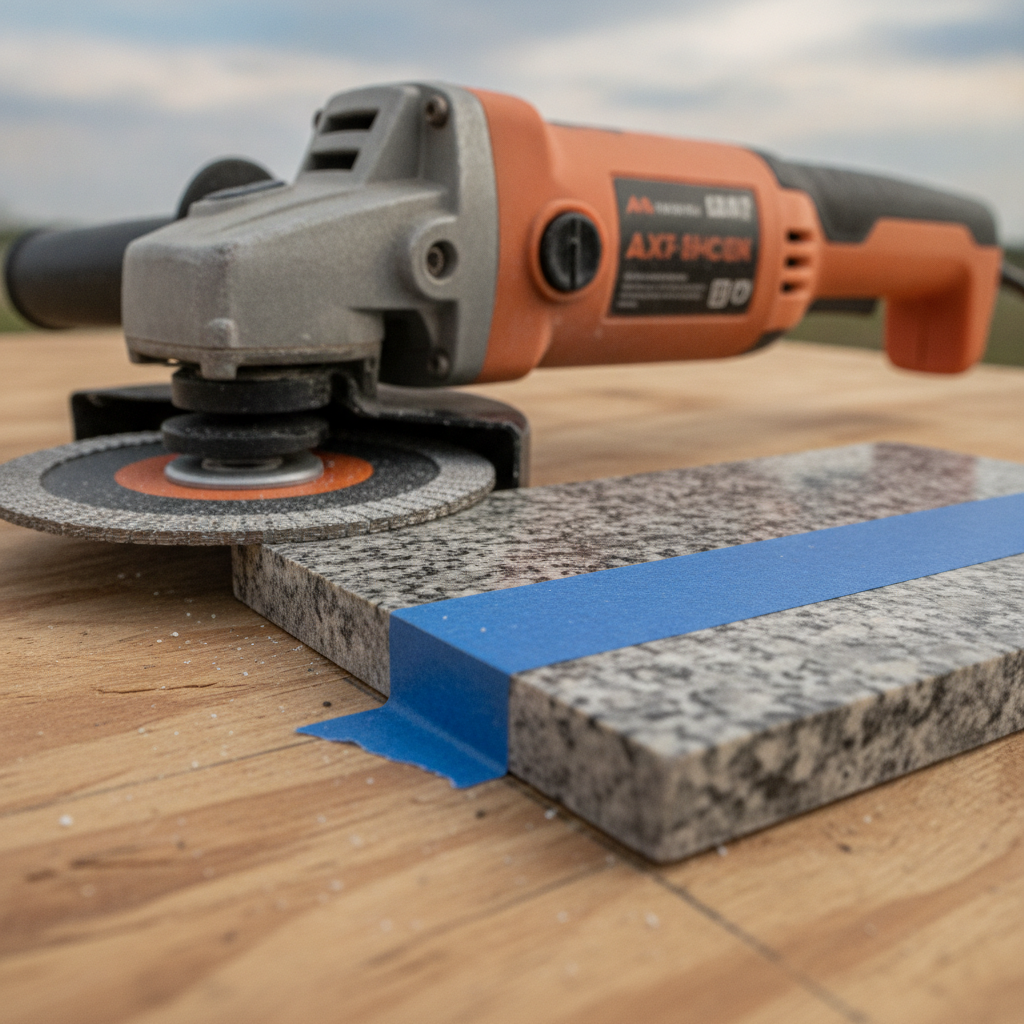
A circular saw for cutting granite countertops is technically possible only under very specific conditions — and those conditions rule out virtually every homeowner scenario. Granite rates 6–7 on the Mohs hardness scale, which is harder than a standard steel knife blade at Mohs 5.5. A regular wood-cutting or metal-cutting blade hits that surface and destroys itself rather than cutting through it cleanly. The stone wins every time.
Even with the right blade, the physics work against a handheld tool. A standard 7.25-inch circular saw produces roughly 2 HP. Professional bridge saws run 15–30 HP motors. That is not a small gap — it is the difference between barely scoring a granite slab and actually cutting through one with control. A circ saw at 2 HP will overheat, glaze the diamond blade, and risk micro-fractures in the stone long before you are halfway through a countertop.
The other problem is thickness. Industry guidance from tool professionals is clear: handheld tools like a circular saw or angle grinder are suitable only for slabs up to 2 cm (about 3/4 inch) thick. Standard countertop granite slabs are 3 cm. That extra centimeter matters enormously. A shallow cut that does not pass fully through a 3 cm slab leaves you with a scored surface and a granite piece that chips or breaks unpredictably when you try to snap or finish the cut.
Granite's crystalline structure makes it moderately brittle at unsupported edges. Even a clean shallow cut can trigger a crack that runs in an unintended direction — ruining a slab that costs $40–$80 per square foot installed.
If you are attempting a small cut on a granite tile or thin granite piece (not a countertop slab), a diamond blade is the only blade type that belongs anywhere near granite. Standard abrasive blades, wood blades, and general-purpose blades wear down almost instantly against stone. A diamond blade rated specifically for granite is non-negotiable. Consumer-grade diamond blades for a 4.5-inch circular saw run $13.85–$200 depending on quality — and the cheap end of that range shows its limits fast on anything harder than ceramic tile.
Even with a quality diamond blade, the blade requires constant wet cooling to prevent overheating, glazing, and premature wear. Glazing happens when the diamond segments overheat and the bond between diamonds and the blade matrix breaks down — the blade looks fine but stops cutting effectively. You will need a continuous water feed from a garden hose or a pump system to cut wet through any granite. Running a circ saw dry on granite without water creates heat that ruins the blade and generates granite dust at dangerous concentrations. A shop vac alone cannot catch the respirable silica particles produced — those are invisible to the eye.
Blade maintenance matters too. Professional shops dress their bridge saw blades every 40 linear feet of cutting using an aluminum-oxide dressing block. A glazed blade on a circular saw mid-cut means you are either stopping to redress it or forcing the blade — both situations increase the chance of a bad cut edge, chipping, or a cracked slab. Keep that in mind before committing to a long straight cut on any granite piece.
$25–$200
The only blade type that cuts granite without destroying itself; continuous-rim style produces a cleaner cut edge with less chipping than segmented blades
$50–$150 for the grinder
More maneuverable than a circular saw for small curved cuts on thin granite tile; still limited to slabs under 2 cm thick
$300–$1,000+
Provides a built-in water reservoir and a stable platform for square cuts — far safer than a handheld circular saw for small granite tile work
A diamond blade rated for concrete or ceramic tile is not the same as one rated for granite. Check the blade packaging for an explicit stone or granite rating before cutting. Using a concrete blade on granite produces unpredictable chipping at the cut edge and accelerates blade wear significantly.
Before any blade touches the granite slab, your setup determines whether the cut ends cleanly or in a cracked countertop. Lay the granite piece face-down on a flat, stable surface — plywood on sawhorses works well — with the cut line hanging just past the edge so the saw has full clearance. Use clamps to secure the slab firmly. Any movement during the cut translates directly into a chipped or jagged cut edge. A heavy granite piece shifts more than most homeowners expect, especially once water and stone slurry enter the picture.
Mark your cut line with blue tape first, then draw directly on the tape with a marker. The tape does two things: it gives you a visible straight line to follow and helps reduce surface chipping at the cut edge on the finished side. Run a straight edge or clamped guide board along the cut line so the circular saw baseplate rides against it for the full length of the cut. Square cuts on granite demand a guide — freehand cutting on stone is how you end up with a wavy line and a ruined slab.
Cover nearby walls and surfaces with plastic sheeting. Granite dust and stone slurry travel further than most homeowners expect, and the mess is significant. Set up a wet/dry shop vac near the work area to help catch dust and slurry between passes — but note that a shop vac without water suppression at the cut line is not your primary dust control. The vacuum helps manage the broader work area; wet cutting at the blade is what handles respirable silica at the source.
$5–$10
Marks the cut line clearly and reduces surface chipping at the cut edge on the visible face of the granite piece
$10–$30
Keeps the circular saw baseplate on a true straight line for the full cut length; freehand cuts on a granite slab consistently produce chipped or uneven cut edges
$60–$150
Clears stone slurry and larger particles from the work area between passes; not a substitute for wet cutting as primary silica dust control
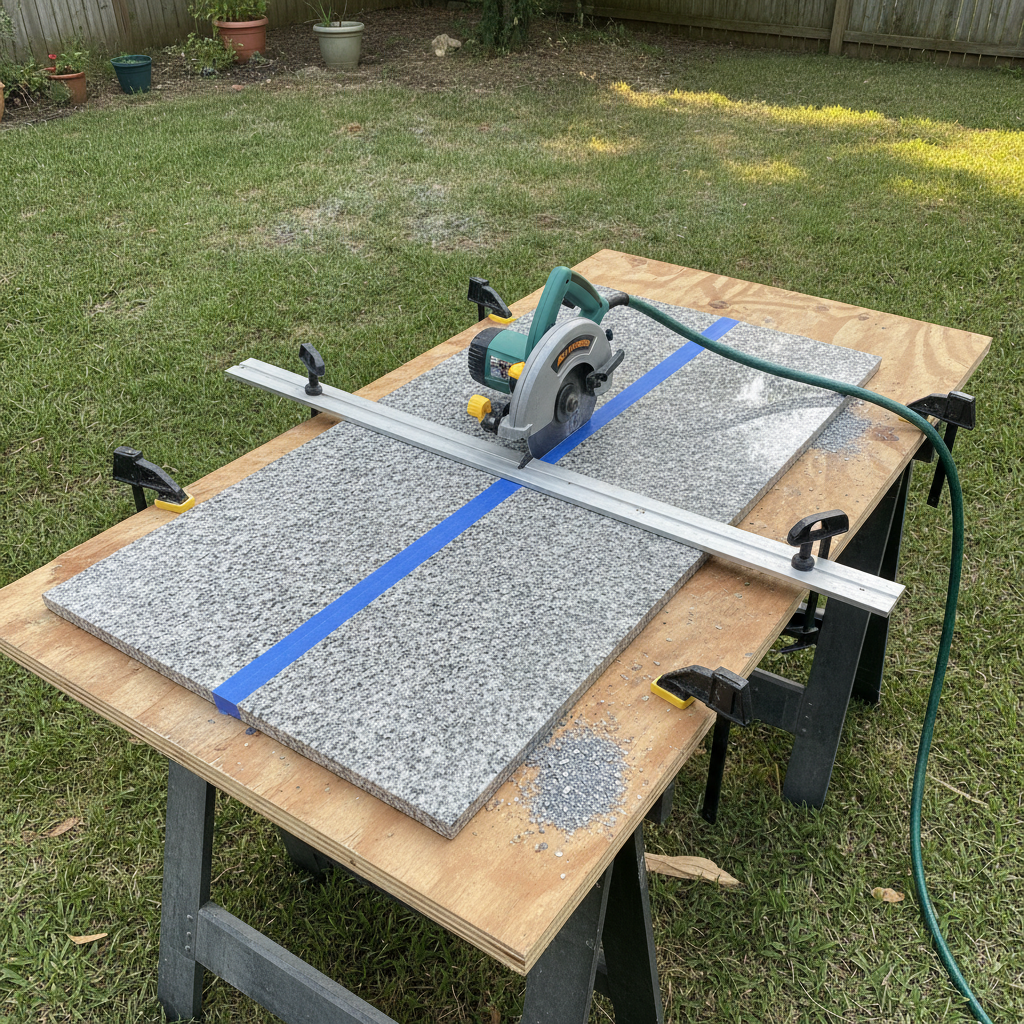
Cut wet — always. Connect a garden hose to a water feed attachment for the saw, or have a second person direct a steady trickle of water directly onto the blade at the cut line. The water keeps the diamond blade cool, suppresses granite dust at the source, and extends blade life significantly. As of 2026, OSHA's permissible silica exposure limit is 50 µg/m³ as an 8-hour time-weighted average, with an action level of 25 µg/m³. Dry cutting a granite slab with a circular saw in an enclosed space blows past those limits almost immediately. A standard paper dust mask does not filter particles at the size that matters — use an N95 or P100 respirator for every cut.
Set your blade depth to just slightly more than the slab thickness and make multiple shallow passes rather than one deep cut. On a 3 cm countertop slab, this approach still pushes the limits of what a circular saw can handle — but for thinner tile or granite pieces under 2 cm, progressive shallow cuts reduce the chance of the blade binding or the stone cracking mid-pass. Push the saw forward slowly and steadily. Forcing the blade creates heat, glazes the diamond segments, and increases the chance of the blade drifting off your straight line.
At corners or at the end of a cut, let the blade stop completely before lifting it from the stone. Pulling a spinning blade sideways out of a cut channel chips the cut edge and can bind the blade hard enough to kick the saw back toward you. For sink cutouts or any interior hole in a granite surface, drill a starter hole at each corner first — do not attempt to plunge-cut into the center of a granite slab with a circular saw. That is how slabs crack from the center out.
Wear an N95 or P100 respirator, safety glasses, and hearing protection for every cut. Granite contains up to 45–50% crystalline silica by weight. Respirable silica particles — small enough to inhale deeply — cause silicosis, an irreversible and potentially fatal lung disease. A basic dust mask does not filter particles at the size that matters here.
Professional granite fabricators do not use circular saws for countertop production. Full stop. They use bridge saws with 15–30 HP motors and CNC routers with 10+ HP spindles — machines that deliver plus-or-minus 0.05mm precision across a full granite slab. A 5-axis CNC bridge saw cuts, drills, and edge-profiles granite at roughly 25 square meters per hour, which is 45% faster throughput than non-automated methods while reducing material waste by 20–25%. A handheld circular saw at 2 HP, regardless of blade quality, cannot approach those numbers or that accuracy.
The price gap explains everything. Entry-level manual bridge saws cost approximately $13,000. Mid-range CNC machines run $30,000–$60,000. High-end 5-axis systems go $100,000–$195,000 or more. A small stone fabrication shop requires $150,000–$350,000 in startup costs to equip properly. That capital investment is what produces the flat, square, chip-free cut edge on a finished countertop — not technique alone. The equipment does work a circ saw physically cannot replicate, no matter how steady your hand.
Edge profiling makes this gap even clearer. A CNC router produces an ogee, bullnose, half-bullnose, or beveled edge profile in a single controlled pass. A circular saw produces a raw cut edge that still needs grinding, polishing through an 8-step grit sequence (50, 100, 200, 400, 800, 1500, 3000 grit, then a buffing pad), and finishing — work that requires additional tools most homeowners do not own and a skill set that takes years to develop. Skipping any step in that polish sequence leaves visible haze or inconsistent sheen at installation.
Professional in-house fabrication uses precision templating before any cut is made. Fox Granite's overlay template method captures the exact dimensions of your kitchen — including wall angles and cabinet positions — so every cut is planned to fractions of a millimeter before a single blade touches the slab.
A circular saw with a diamond blade is appropriate for one narrow use case: small cuts on a granite tile or thin granite piece under 2 cm thick, outdoors or in a well-ventilated space, cut wet, with an N95 or P100 respirator and proper eye protection. If your project falls outside that description — meaning you are cutting a standard 3 cm countertop granite slab for a kitchen remodel — a circular saw is the wrong tool. Not because the skill ceiling is too high, but because the equipment ceiling is. The tool physically cannot do the job at countertop slab scale.
The real question for any homeowner is not 'can I make this cut?' It is 'what happens if this cut is off by 2mm, or the slab chips at the sink cutout, or the edge cracks near one of the corners?' A granite slab costs $40–$80 or more per square foot. A bad cut on a countertop does not get fixed with sandpaper. It means a replacement slab, which erases any savings from attempting the cut yourself. For small jobs like trimming a backsplash tile or cutting a test granite piece for a fireplace surround, a wet saw or grinder with a diamond blade can work fine. For countertops, call a fabricator.
In Austin, San Antonio, and throughout Central Texas, Fox Granite handles the full process in-house: precision templating, bridge saw cutting, CNC edge profiling, polishing through the complete 8-step grit sequence, and professional installation. You get the output of $150,000 or more in fabrication equipment without touching a blade yourself. And you get a countertop that fits your kitchen exactly — not one that is close, or slightly chipped at the corner, or hazy from a polishing step that got skipped.
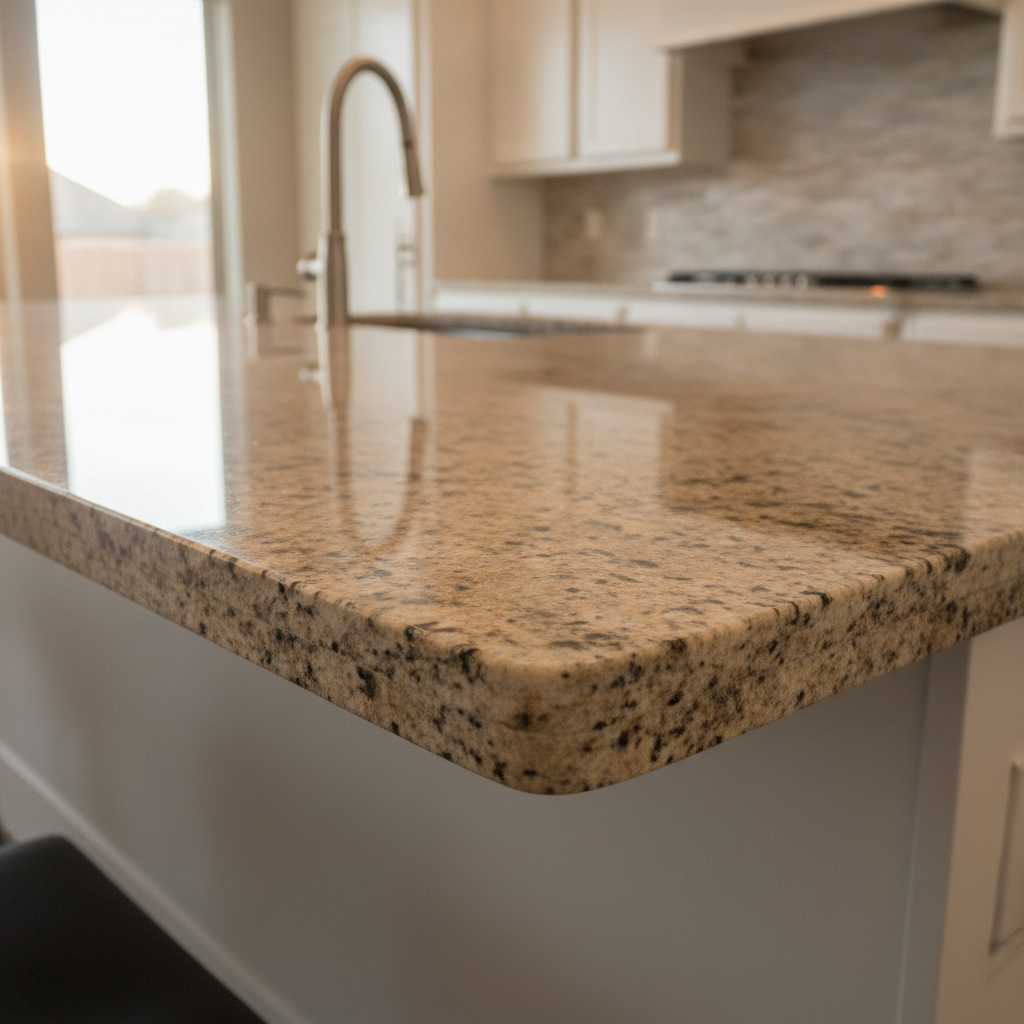
Granite contains up to 45–50% crystalline silica by weight. When you cut granite dry with a circular saw — even briefly — you generate respirable silica dust that is invisible to the eye and not stopped by a standard paper dust mask. As of 2026, OSHA's permissible silica exposure limit is 50 µg/m³ as an 8-hour time-weighted average, with an action level of 25 µg/m³. Dry cutting installed granite countertops indoors, near walls and cabinets with no ventilation controls, can exceed those limits in minutes. Silicosis — the irreversible lung disease caused by silica dust — has no cure. Always cut wet, always use an N95 or P100 respirator, and always work in a ventilated space. For any cut on a full countertop slab, let a professional fabricator handle it in a controlled shop environment with proper water suppression and exhaust ventilation.
When the cut is right, the countertop fits perfectly, the edge is polished clean through 3000 grit, and you never touched a blade. That is what professional in-house fabrication delivers. For granite countertop fabrication and installation in Austin, San Antonio, New Braunfels, and the surrounding Central Texas areas, Fox Granite's team uses professional bridge saws and CNC equipment to cut, profile, and polish every slab to plus-or-minus 0.05mm precision. Contact us today to schedule your free in-home consultation and see our work firsthand.
Ready to get started? Contact Fox Granite today.


BY APPOINTMENT ONLY
1379 Wald Road
New Braunfels, TX 78132
Austin, San Antonio, Cedar Park, Kyle, New Braunfels, Del Valle, Elgin, Lago Vista, Shady Hollow, Onion Creek, Buda, San Marcos, Lockhart, Temple, Wimberley, Dripping Springs, Bee Cave, Lakeway, Leander, Anderson Mill, Jollyville, Spicewood Springs, Round Rock, Georgetown, Pflugerville, Manor, Taylor, Manchaca, Mountain City, Hutto, West Lake Hills, Bastrop, Liberty Hill, Driftwood, Sun City, Steiner Ranch.