Cheap Granite Countertops Cost Guide for Central Texas Homeowners (2026)
💡 Quick Answer
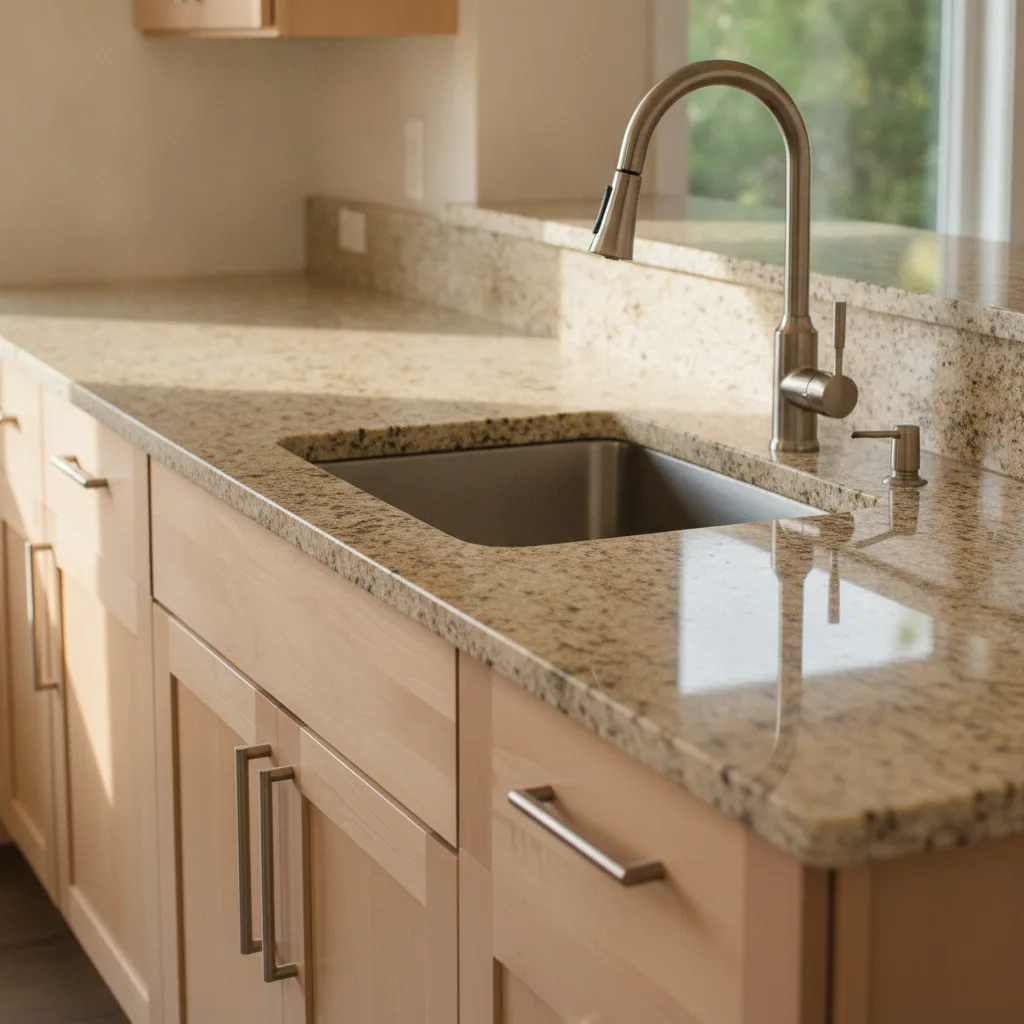
Cheap granite countertops cost $40–$60 per square foot installed for Level 1 entry-level stone — colors like Santa Cecilia, Uba Tuba, and Giallo Ornamental — covering stone, fabrication, a standard eased edge, and basic sink cutouts. In San Antonio, installed prices start around $35 per square foot. In Austin, Level 1 granite starts closer to $42 per square foot, with the city average near $80. The tradeoff at the low end is aesthetics, not durability: Level 1 granite shares the same Mohs hardness (6 to 7) as Level 3 exotic stone. The real risk is cheap fabrication — a "$49 per square foot" advertised special routinely lands at $85–$100 per square foot once templating, delivery, old countertop removal, and plumbing reconnects are added.
📊 Key Takeaways
Here are the price stats and rules of thumb every Central Texas homeowner should know before shopping for granite countertops in 2026.
$40–$60/sq ft installed
Level 1 entry-level granite, most U.S. markets
$35–$55/sq ft installed
San Antonio granite, Central Texas 2026 pricing
~$80/sq ft average
Austin installed granite price, Level 1 starts at $42
$49 advertised → $85–$100 actual
Low-ball quote reality once all fees are added
15–20% standard waste factor
Legitimate residential granite kitchen project
60–80% cost recovered at resale
Natural stone kitchens in competitive Texas markets
Reseal every 6–12 months
Budget granite vs. every few years for premium stone
6–7 Mohs hardness
Identical for Level 1 and Level 3+ granite
Cheap granite countertops in Central Texas run $40–$100+ per square foot installed depending on stone grade, fabrication quality, and how honest your quote actually is. In San Antonio, a Level 1 granite kitchen starts around $35 per square foot installed. In Austin, the same stone starts closer to $42 per square foot, with the city average landing near $80. The price you see advertised and the price you pay at project completion are often two very different numbers — and understanding why is the most useful thing a homeowner can know before signing anything. This guide covers all the details: what each price tier actually includes, where the tradeoffs are real versus exaggerated, and exactly how to read a quote before you commit.
What Cheap Granite Countertops Actually Cost in 2026
Tier
Price range
What's included
Best for
Level 1 Entry-Level Granite (Inexpensive Granite)
$40–$60 per sq ft installed
Stone, fabrication, standard eased edge profile, sink and faucet cutouts
Budget-conscious homeowners who want real natural stone durability without paying for exotic patterns
Mid-Range Granite (Level 2–3)
$60–$90 per sq ft installed
Wider slab selection, more pattern variation, upgraded edge profiles (beveled, half-bullnose), and standard sink cutouts
Homeowners who want more visual interest and a broader color palette without reaching into exotic-stone pricing
Homeowners prioritizing a one-of-a-kind look, resale appeal, or a high-end kitchen renovation with matching cabinetry
The Low-Ball Fabrication Trap
$49/sq ft advertised → $85–$100/sq ft actual
Thin slab (~3/8 inch, requires plywood backing), minimal finishing, reduced warranty, hidden fees for templating, delivery, and plumbing reconnects
Nobody — this tier exists to show what a suspiciously low quote actually delivers
What You Get at Each Price Tier
Level 1 Entry-Level Granite (Inexpensive Granite)
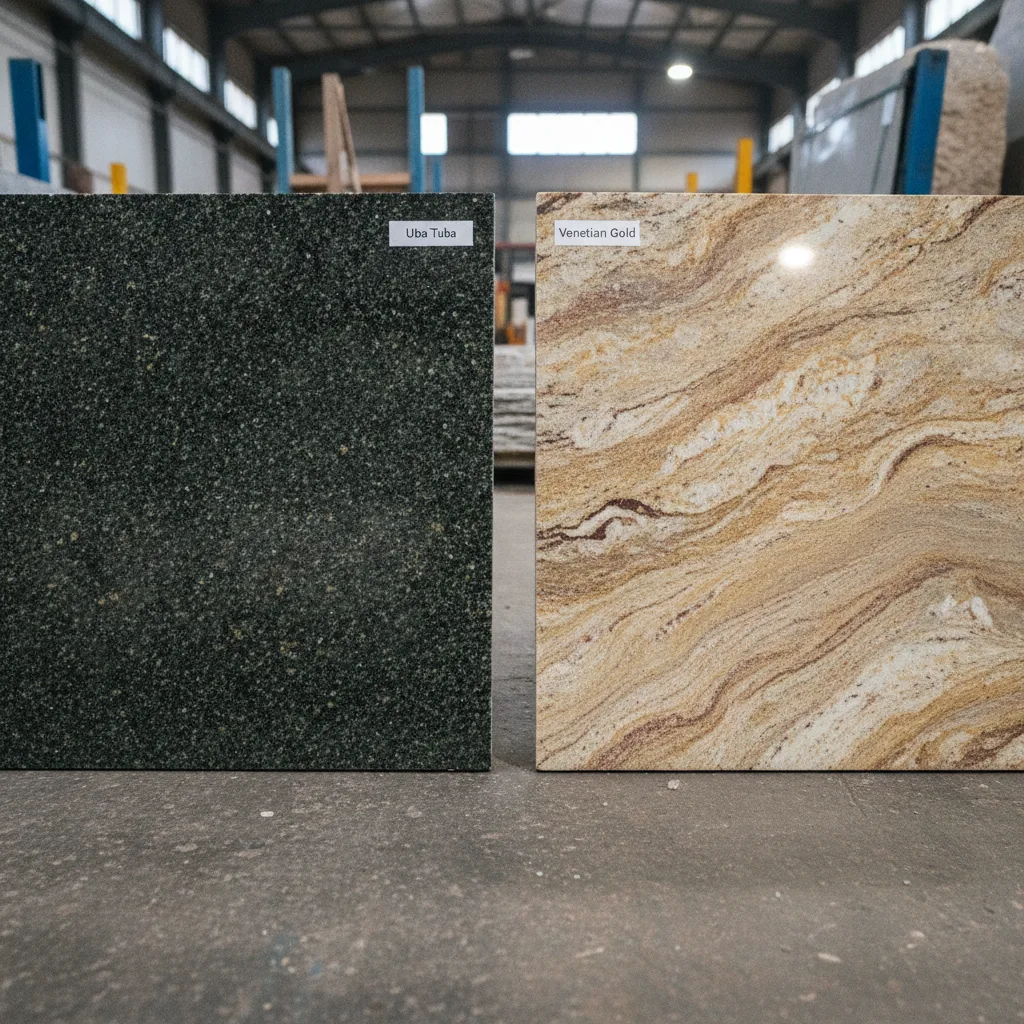
Level 1 entry-level granite — colors like Uba Tuba, Santa Cecilia, and Giallo Ornamental — runs $40–$60 per square foot installed across most U.S. markets as of 2026. In San Antonio, installed prices can start as low as $35 per square foot. The stone material itself costs around $15–$20 per square foot; labor, fabrication, and installation account for the remainder. A typical 45-square-foot kitchen project lands between $1,800 and $2,700 at this tier, before any add-ons.
The tradeoff at this price is aesthetics, not durability. Inexpensive granite shares the same Mohs hardness (6 to 7), scratch resistance, heat resistance, and porosity as Level 3 exotic granite. Simpler patterns and fewer color choices are the real difference. These stones are cheaper because abundant quarry supply keeps costs low — not because they are mined from inferior deposits or fabricated to a lower standard. If you want real natural stone and a real budget, this tier is genuinely doable.
Mid-Range Granite (Level 2–3)
Mid-range granite gives you noticeably more movement, color depth, and pattern variation compared to entry-level slabs. Venetian Gold and brown-toned granites with gold tones fall into this tier. At 45 square feet, a full kitchen project runs roughly $2,700–$4,050 installed. This is where most Central Texas homeowners land when they want a kitchen that photographs well and holds up to daily use.
Fabrication quality matters more at this tier — the stone is better, and poor seam placement or sloppy caulk will be more visible against a distinctive pattern. An experienced fabricator with in-house cutting capability makes a measurable difference in the finished result. If your cabinetry is mid-grade or better, this is where the stone and the cabinets reward each other visually.
Premium and Exotic Granite (Level 3+)
Level 3+ granite slabs start at $90 per square foot installed in Austin and can exceed $100 for rare patterns or complex layouts. A 45-square-foot kitchen at this tier runs $4,050–$4,500 or more, with complex island waterfall edges and pattern-matched seams pushing the total higher. The stone performs identically to Level 1 granite in daily use — same hardness, same heat resistance, same sealing schedule. You are paying for visual rarity and the extra fabrication time required to cut and match distinctive patterns.
Waste factors on exotic granite slabs with strong pattern movement can reach 35%, which adds real cost to the project. A supplier quoting you on a rare slab should be able to show you the waste calculation in writing. Marble and quartzite occupy a similar price band but carry different care requirements — granite remains the most forgiving natural stone countertop for kitchen use at any tier.
The Low-Ball Fabrication Trap
A '$49 per square foot granite' special routinely becomes an $85–$100 per square foot project once templating, fabrication, old countertop removal, delivery, and plumbing reconnects are itemized. The advertised slab price is not the installed price. This is not an edge case — it is a documented pattern in 2026 pricing data across Central Texas fabricators. Budget stone is usually fine. Budget fabrication is where homeowners get burned.
Low-ball quotes also frequently involve thinner slabs — around 3/8 inch — that require a plywood backer to function, versus the standard 3/4-inch (3 cm) slab used by reputable fabricators. Seam quality suffers, warranty coverage shrinks, and post-installation complaints about poor seam placement are the disputes most likely to escalate to formal legal conflicts. Cheap stone is a legitimate purchase. A quote that hides half its line items is not.
Pros and Cons of Cheap Granite Countertops
Same durability as premium stone. Level 1 granite rates 6 to 7 on the Mohs scale — identical to Level 3+ exotic granite. With proper care and sealing, an entry-level countertop lasts just as long. The minerals that make granite durable are present regardless of the grade classification a fabricator assigns.
Real resale value. Natural stone kitchens recover 60–80% of project cost at resale in competitive Texas markets like Austin and San Antonio. Buyers see granite countertops and assume the kitchen does not need immediate work — which reduces negotiation friction when you sell.
Heat-resistant and scratch-resistant surfaces. Granite countertops handle daily kitchen use — brief contact with hot pans, cutting board work — without the surface damage that laminate accumulates or the grout-line problems tile creates over time.
Abundant color choices at the entry level. Santa Cecilia, Uba Tuba, and Giallo Ornamental are affordable because quarries produce them at high volume. That supply consistency means predictable pricing year over year — not a quality shortcut taken somewhere in the production process.
Granite remnants cut bathroom and bar costs significantly. Leftover pieces from larger slab projects can cover a bathroom vanity top or bar counter for 30–50% less than ordering from a fresh slab. A good fabricator will show you available granite remnants before you commit to a full slab purchase.
Budget slabs need resealing every 6–12 months. Higher porosity in entry-level stone means oils, wine, and acidic liquids penetrate faster than they do in mid- and high-grade granite. Premium stone can hold its seal for several years. Budget stone cannot — factor in the ongoing maintenance cost and the creams or sealers you will need to buy.
Natural fissures and color variation are more common. Budget granite slabs more often show pitting, unexpected color shifts, or natural fissures compared to mid- and high-grade stone. A 4-inch chip sample will not reveal what the full slab looks like. Always approve the actual slab before it is fabricated.
Thin slabs require a plywood backer. Low-grade granite is often cut to around 3/8 inch and needs a plywood backing to reach functional durability. Standard 3/4-inch slabs mined and fabricated at mid-grade do not require this workaround. Ask your fabricator what thickness they are quoting before you sign.
Advertised prices rarely match installed prices. A '$49 per square foot' granite special commonly lands at $85–$100 per square foot installed after templating, fabrication, delivery, and plumbing reconnects. Verify all-in pricing in writing before you commit — the difference in that math is real money.
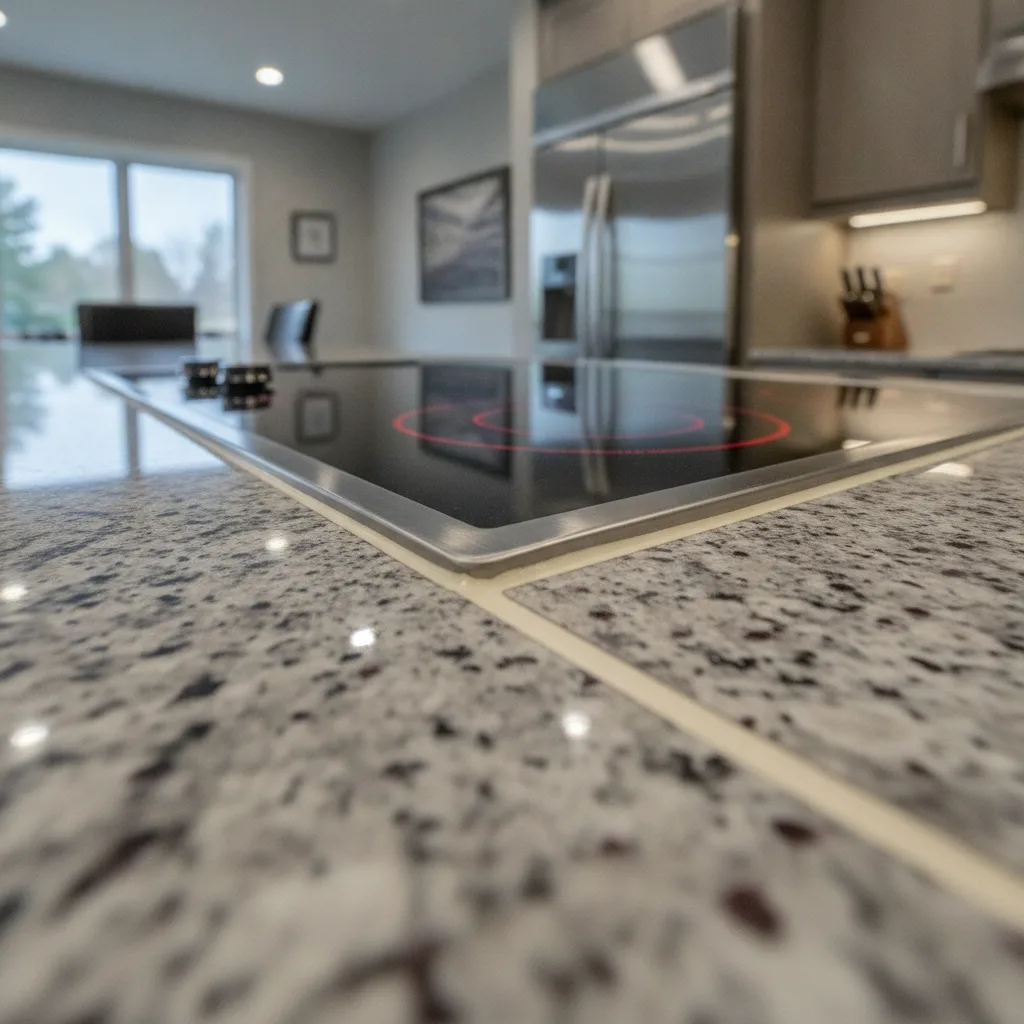
Poor seam placement is the top post-installation complaint. Budget fabricators cut corners on seam positioning near cooktops, sinks, and island edges. These disputes are the most likely to escalate to formal legal conflicts — and the hardest to repair after the stone is set.
Waste factor math can hide real project costs. The standard waste factor for a residential granite kitchen is 15–20%. A fabricator quoting 0% or 5% waste is either making a calculation error or padding the per-square-foot price elsewhere in the quote. Both scenarios cost you money.
How to Save Money on Granite Countertops: 6 Practical Steps
Get an all-in installed price, not a slab price Ask every fabricator for a single number that covers stone, fabrication, templating, delivery, edge profile, sink and faucet cutouts, and installation — because a $49 per square foot slab quote routinely becomes $92 per square foot once all those line items appear.
Approve the actual granite slab, not a chip sample Budget granite slabs vary more than mid-grade stone, so visit the yard and approve the specific slab you will install — a 4-inch chip will not show you the fissures, pitting, or color shifts that appear across a full kitchen counter.
Choose a standard eased edge profile to save money A standard eased edge is included in most base quotes; upgrading to an ogee or decorative profile adds $10–$30 per linear foot, so stick with the eased edge on a tight budget and spend the difference on a better slab.
Ask about granite remnants for bathrooms and bars Leftover pieces from larger slab projects can cover a bathroom vanity top or bar top at 30–50% less than ordering from a fresh slab — ask your fabricator what remnants are available before you place your order, and shop those first.
Verify the waste factor in your quote A legitimate residential granite project carries a 15–20% waste factor; if a fabricator quotes 0–5% waste, ask them to explain the math — because that number either signals a calculation error or the per-square-foot price is padded to compensate.
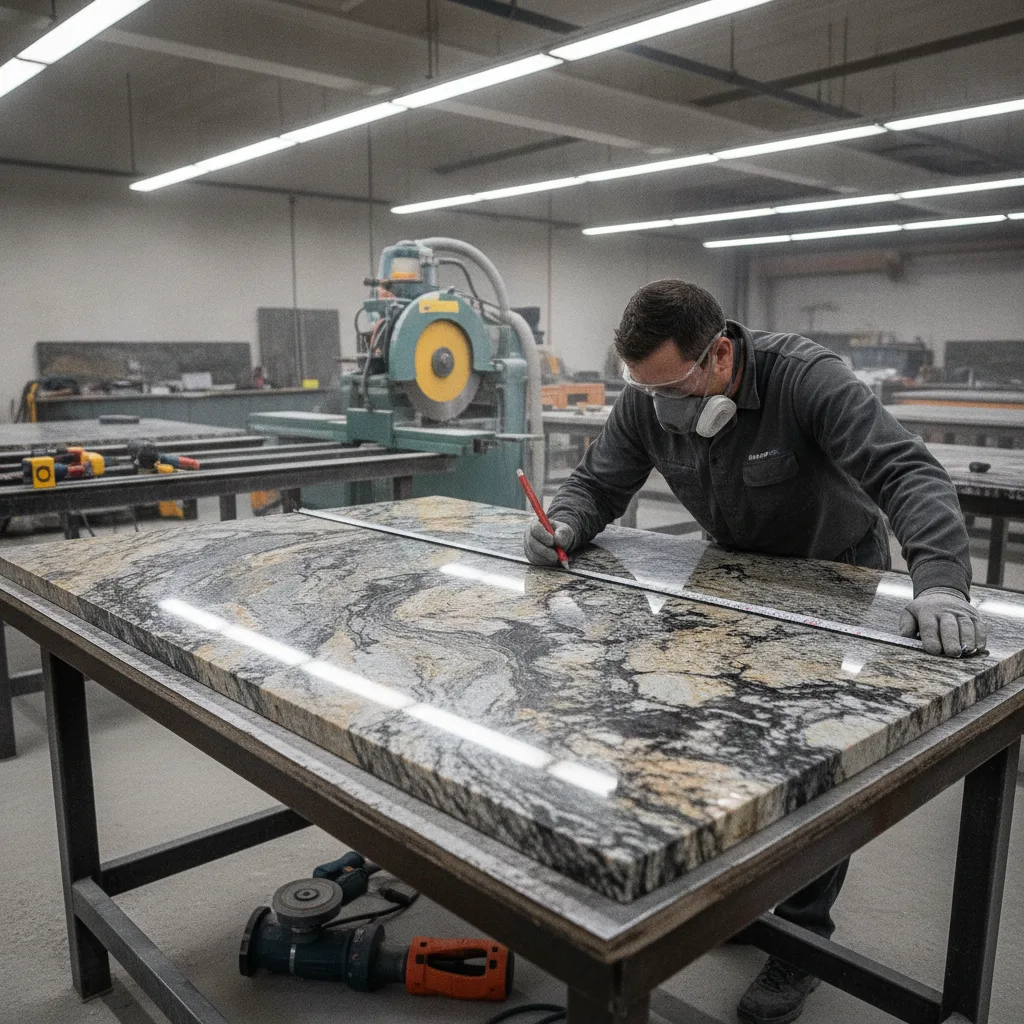
Confirm fabrication is done in-house, not subcontracted In-house fabrication means one team controls templating, cutting, and installation — which directly reduces seam placement errors, the single most common post-installation complaint and the dispute most likely to become a formal legal conflict.
The '$49 Per Square Foot' Warning
A low advertised slab price is not your installed price. In 2026, a '$49 per square foot granite' promotion commonly lands at $85–$100 per square foot all-in once templating, fabrication, old countertop removal, delivery, and plumbing reconnects are itemized. Before you sign a quote, ask for the total project cost in writing — every line item included. If a fabricator won't give you that number upfront, that is your answer.
For cheap granite countertops in Austin, San Antonio, and across Central Texas, the stone itself is rarely the problem — the fabrication is. Level 1 granite like Santa Cecilia, Uba Tuba, and Giallo Ornamental delivers the same durability as premium stone at $40–$60 per square foot installed. What separates a project you will love from one you will regret is who cuts it, how they place the seams, and whether the price you were quoted is the price you actually pay. Fox Granite provides all-in, transparent pricing, in-house fabrication, and a process designed to remove the guesswork from every step. Contact us today to schedule your free in-home consultation and get your free estimate.
Frequently Asked Questions
What are the cheapest granite countertops I can actually install in Central Texas?
The cheapest installed granite countertops in Central Texas are Level 1 entry-level slabs — colors like Uba Tuba, Santa Cecilia, and Giallo Ornamental — priced at $40–$60 per square foot installed in most markets. In San Antonio, that range starts as low as $35 per square foot. In Austin, Level 1 granite starts around $42 per square foot. These stones are inexpensive because quarries produce them in high volume, not because they are weaker or less durable than premium grades. A standard 45-square-foot kitchen lands between $1,800 and $2,700 installed at this tier.
What hidden fees turn a cheap granite quote into an expensive project?
The most common add-ons that inflate a low advertised price are templating fees, fabrication charges, delivery, old countertop removal, sink and faucet cutouts, edge profile upgrades, and plumbing reconnects. A "$49 per square foot granite" special that looks affordable at the showroom routinely lands at $85–$100 per square foot all-in once every line item is added. Before signing any quote, ask the fabricator for a single total project cost in writing that covers every step from template to final installation. If they will not provide that number, shop elsewhere.
What actually makes some granite cheaper than others?
Granite price is driven primarily by quarry supply and pattern rarity, not by durability or strength. Entry-level granite colors like Santa Cecilia and Uba Tuba are cheaper because quarries mine and produce them in large volumes, which keeps the per-square-foot stone material cost around $15–$20. Exotic granite slabs are more expensive because they are mined from smaller deposits, often in a single country or region, and their distinctive patterns require more fabrication time and generate higher waste. The Mohs hardness — 6 to 7 — is identical across all grades.
When do granite countertop prices spike in Central Texas?
Granite prices in Austin and San Antonio tend to spike during spring and fall remodel seasons, when fabricators are booked out four to six weeks and can be less negotiable on pricing. New home construction surges in Central Texas also tighten wholesale slab availability at the entry level, since builders buy Level 1 and Level 2 stone in bulk. If your project is flexible, late summer and January are historically slower periods for fabricators in the San Antonio and Austin markets, which gives you more leverage on scheduling and, in some cases, pricing.
What is the single best way to save money on granite countertops without sacrificing quality?
Ask your fabricator about granite remnants before ordering from a fresh slab. Leftover pieces from larger kitchen projects can cover a bathroom vanity, bar top, or laundry room counter at 30–50% less than a full-slab purchase. For a full kitchen, choosing a standard eased edge profile instead of an ogee or decorative profile saves $10–$30 per linear foot. Sticking to a Level 1 stone color with abundant quarry supply — Uba Tuba, Santa Cecilia, Giallo Ornamental — and getting an all-in installed price quote will protect you from both overpaying on stone and getting ambushed by fabrication add-ons.
Is cheap granite worth it for a Central Texas homeowner trying to build resale value?
Yes — for most homeowners, Level 1 granite is the most cost-effective natural stone investment in a kitchen or bathroom remodel. Natural stone countertops recover 60–80% of project cost at resale in competitive Texas markets like Austin and San Antonio. Buyers treat granite as a signal that the kitchen does not need immediate work, which reduces negotiation friction. The difference in resale perception between a Level 1 and a Level 3 slab is minimal — buyers see granite, not the grade level. The bigger risk to resale value is poor fabrication: visible seams, uneven surfaces, or sloppy caulk near sinks and cooktops are the details buyers and inspectors notice.
Is granite better than quartz for a tight kitchen remodel budget?
At the entry level, granite is typically cheaper than engineered quartz. Level 1 granite starts at $40 per square foot installed; entry-level quartz countertops start around $55–$70 per square foot installed. Granite is a natural stone mined directly from quarries, while quartz is engineered from crushed stone and resin, which adds manufacturing cost. For a budget-focused kitchen remodel, Level 1 granite delivers real natural stone character and durability at a price quartz cannot match at the low end of the market.