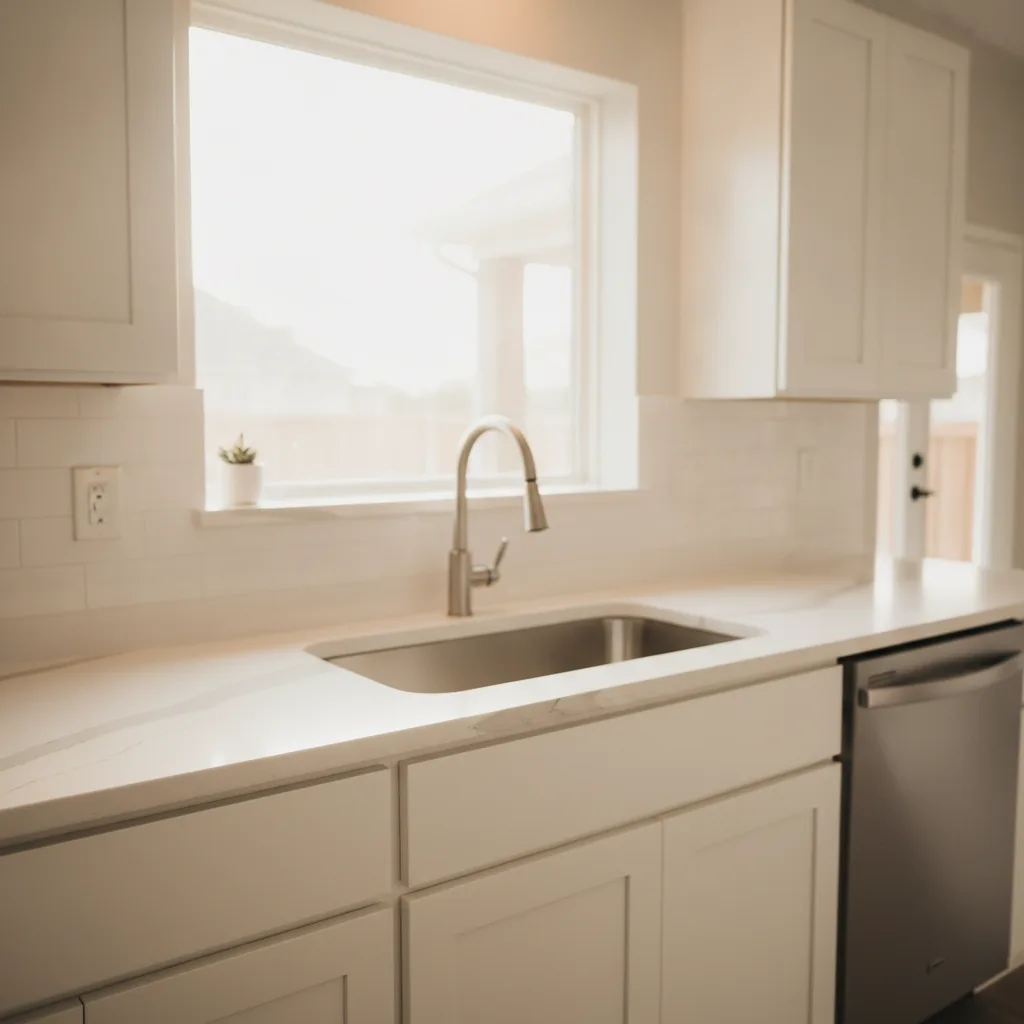
Caesarstone quartz countertops are engineered stone slabs made of 90–93% natural quartz mineral bound with polymer resins. They rate 7 on the Mohs hardness scale, never need sealing, and resist bacteria, mold, and staining better than granite or marble. As of 2026, installed pricing runs $55–$125 per square foot depending on the collection, with a typical kitchen project costing $3,300–$7,500 total. The brand carries a residential limited lifetime warranty — but only when a Caesarstone-certified fabricator installs the material and you register within 30 days. The two honest trade-offs: Caesarstone cannot handle direct heat above 300°F, and the standard product line is not rated for outdoor use.
Caesarstone quartz countertops are the original engineered quartz product — the brand literally invented the category in 1987 — and as of 2026 they remain a benchmark for quality, warranty coverage, and color range in the engineered stone market. For Central Texas homeowners comparing countertop materials for a kitchen or bathroom remodel, the decision comes down to understanding what quartz surface technology actually delivers versus natural stones like granite and marble, what the installed cost looks like across Caesarstone's different collections, and how the lifetime warranty works in practice. This guide covers all three in plain terms, with real numbers and no filler.
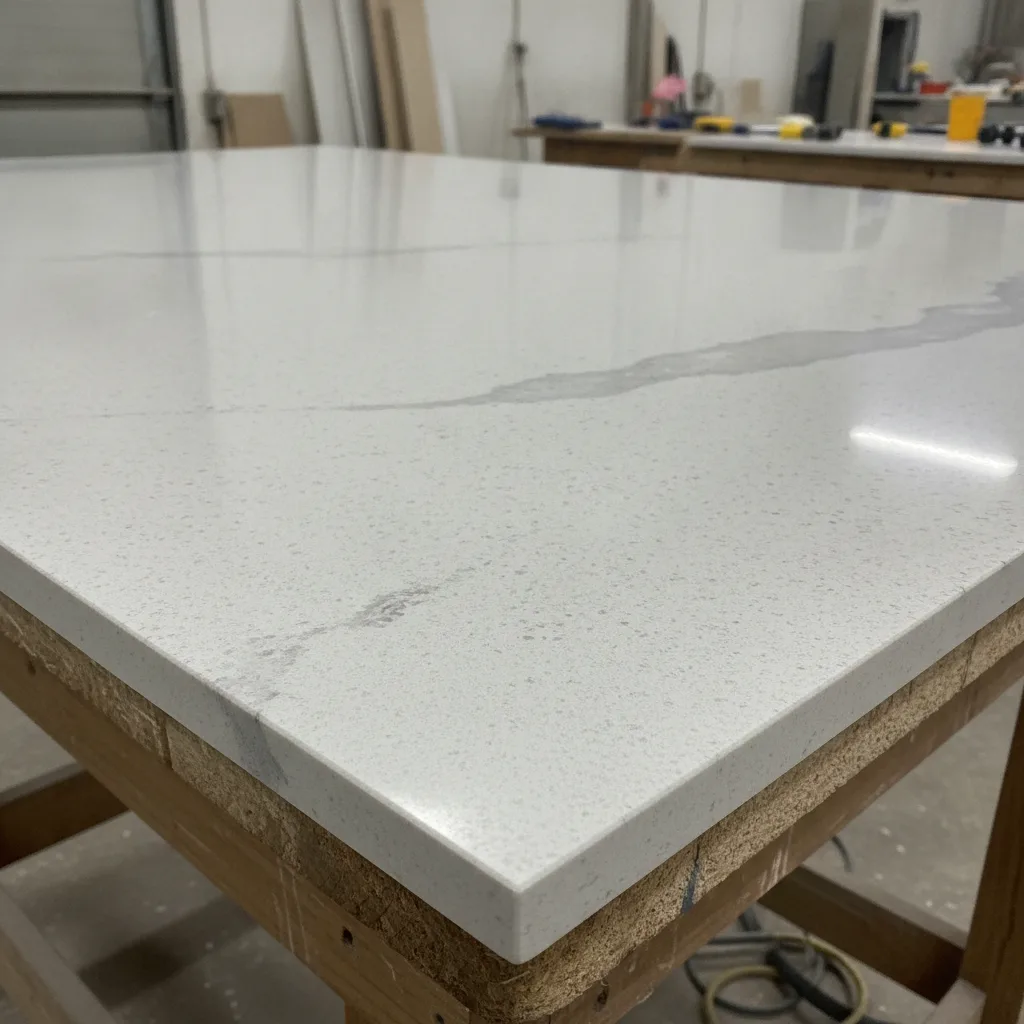
Caesarstone invented the engineered quartz countertop category in 1987, making it the original brand in a space that dozens of competitors have since entered. The slabs are composed of up to 90–93% natural quartz mineral, bound with polymer resins and pigments — that high quartz content is what puts the surface at 7 on the Mohs hardness scale, the same hardness as a steel knife blade. Competing brands like Cambria, Silestone, and MSI Q use the same material category, but warranty terms, color catalogs, and fabrication standards differ by brand.
Unlike granite or marble, which are cut directly from quarried stone, Caesarstone quartz is manufactured under controlled conditions. Every slab starts with the same engineered composition, so the color and pattern you view in the showroom is exactly what arrives on your countertop. There is no natural variation that produces a slab with a flaw or a weak vein running through it — a significant quality consistency advantage over natural stones.
The resin binders do more than hold the quartz particles together. They make the finished surface completely non-porous. That single property is responsible for most of Caesarstone's practical advantages: no sealing ever required, no bacterial absorption, and consistent performance across the full life of the surface. Caesarstone also carries GREENGUARD certification as a low-emitting surface and was the first quartz surface company to earn ISO 14001 environmental management certification — details that matter to people working through a green building checklist.
Caesarstone is the brand name; 'quartz countertops' or 'engineered quartz' is the material category. The non-porous, resin-bound surface properties are shared across brands in this category — what differs is warranty structure, available colors, and the certified fabricator network.
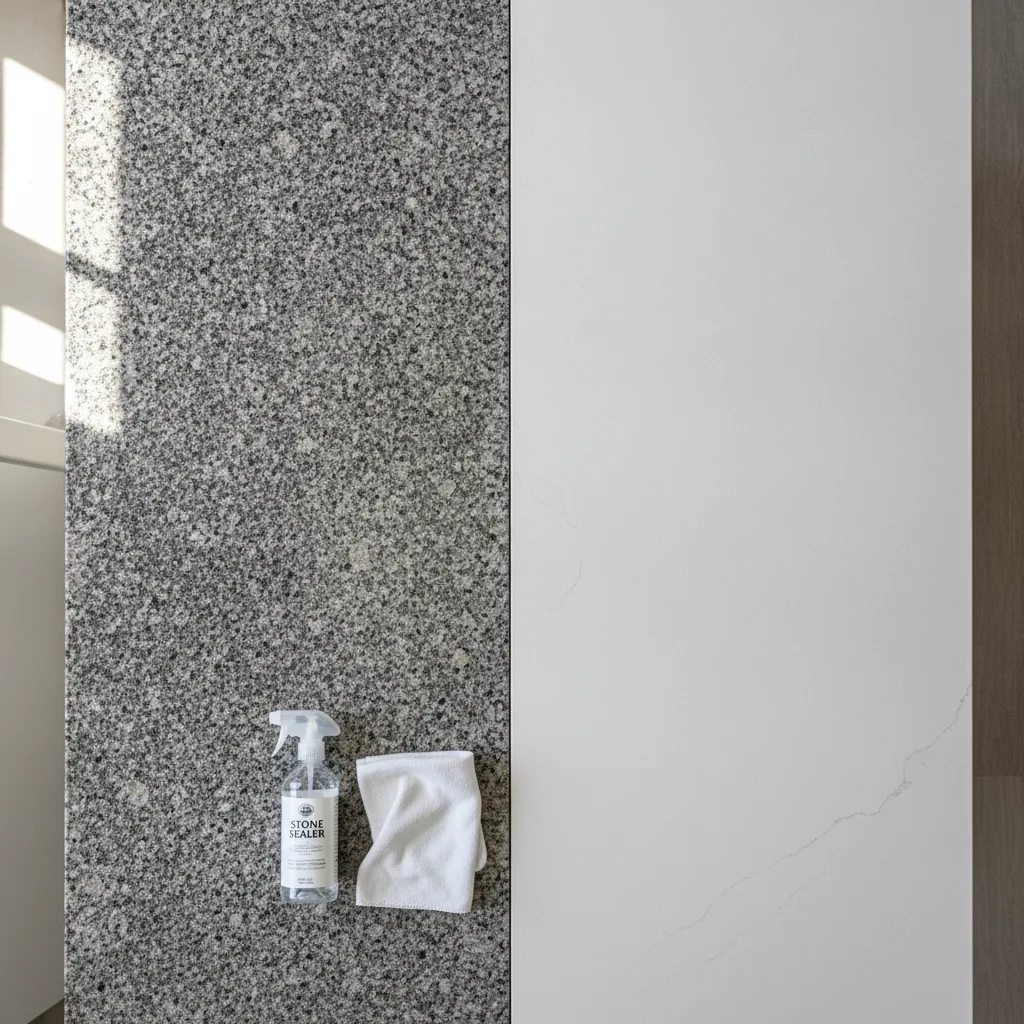
Granite and Caesarstone quartz countertops sit at opposite ends of the maintenance spectrum. Granite is a natural stone that requires sealing every 1–2 years to protect against staining and bacterial absorption. Caesarstone's non-porous quartz surface never needs sealing — not once after installation. For homeowners who cook daily and want a low maintenance kitchen, that difference in long-term care is real and cumulative over years of use.
Marble is the comparison that comes up most when people explore the Supernatural Collection. Marble rates only 3–4 on the Mohs hardness scale versus quartz's 7, making marble far more prone to scratching, etching from acids like lemon juice and vinegar, and staining. Caesarstone quartz eliminates all three of those weaknesses while delivering a beautiful aesthetic that people associate with marble. That combination of beauty and durability is the core value proposition of the Supernatural line.
Where natural stones outperform Caesarstone is heat resistance. Granite can handle a hot pan placed directly on the surface. Caesarstone cannot — temperatures above 300°F damage the resin binders, causing thermal shock cracks or permanent discoloration. That's the honest trade-off: Caesarstone wins on maintenance and scratch resistance; granite wins on heat tolerance. Both are great kitchen countertop materials. They fit different cooking habits, and your kitchen use patterns should guide the choice.
Always use trivets or hot pads with Caesarstone quartz countertops. Setting a cast-iron skillet or hot pot directly on the surface even once can permanently discolor or crack the resin. This is the one non-negotiable care rule for this material — everything else about maintaining Caesarstone is easy.
As of 2026, Caesarstone offers 60+ colors across 8 collections — more options than most homeowners will need. The four collections you'll encounter most often are Classico (solid classic tones, the entry-level price point), Supernatural (marble-look veining, launched in 2012 as the first veined quartz surface in the engineered stone industry), Motivo (textured and concrete-look finishes), and Airy Concrete (matte, low-gloss surfaces that elevate modern kitchens and bathrooms with a clean, architectural style).
The Supernatural Collection deserves extra attention if you want a marble look without marble's maintenance issues. Caesarstone was the first quartz surface brand to introduce realistic veining technology — a design standard that competitors adopted years later. Surprising to many homeowners: the veining runs through the full slab body, not just the surface, so the pattern holds through edge profiling and doesn't disappear at the cut edge. That's a quality detail that makes a big difference on finished countertops with decorative edge profiles.
Local distributors in Austin and San Antonio typically stock 15–25 colors from the full catalog. If you find a color outside that stocked range, expect a 4–8 week lead time for a special order. Confirm availability early in your project timeline — especially if you have a firm kitchen renovation deadline. Choose your color before finalizing your cabinet or flooring order, not after.
Free
Upload a photo of your kitchen or bathroom and preview Caesarstone colors in your actual space before committing to a slab.
Free through fabricators like Fox Granite
Real slab samples show true color, finish, and texture better than any screen — critical for matte and concrete-look collections where photos mislead.
Caesarstone quartz countertops cost $55–$125 per square foot installed in 2026, with a typical kitchen project running $3,300–$7,500 total. The collection you choose is the biggest price driver. Classico starts at $55–$60 per sq ft installed. Supernatural ranges from $70–$105 per sq ft installed. The exotic Concetto collection reaches $400–$500 per sq ft installed, putting it in a completely different budget tier than the rest of the line.
For smaller spaces, a bathroom vanity countertop in Caesarstone runs $300–$625 for a standard 4–5 sq ft surface. Labor alone accounts for $16–$26 per sq ft of that total, which is why quotes vary between fabricators. A certified fabricator who templates precisely and cuts in-house will have lower material waste and fewer callbacks than a shop that outsources cuts — and that efficiency shows up in the final price.
Budget honestly for edge profiles, cutouts, and sink installation — these are separate line items that add to the base material cost. An undermount sink cutout typically adds $150–$250 to a project. Get an all-in quote that itemizes fabrication, templating, edge profile, cutouts, and installation as separate entries. That structure lets you compare quotes across fabricators on an apples-to-apples basis rather than guessing what's included in a lump-sum number.
The Classico collection gives you the same non-porous, scratch-resistant quartz surface as the premium collections — just in solid, less complex colorways. If your design goals are met by a solid color or subtle pattern, Classico is the straightforward path to a perfect kitchen countertop at the lower end of the Caesarstone price range.
Caesarstone offers a residential limited lifetime warranty on quartz surfaces, but the coverage has two conditions most homeowners miss. First, the countertop must be fabricated and installed by a Caesarstone-certified fabricator — a shop that is not certified cannot activate the warranty, regardless of how good the finished work looks. Second, you must register the warranty within 30 days of installation. Miss that window and you lose the lifetime coverage.
The lifetime warranty covers the original owner only. When you sell your home, the next owner receives a prorated 10-year limited warranty instead — still meaningful coverage, but not the same as what you started with. If you're buying a home with existing Caesarstone countertops, ask the seller for the registration paperwork to confirm when the warranty was filed and which fabricator did the work.
What the warranty covers: manufacturing defects from the original installation date. What it does not cover: heat damage from pans set directly on the surface, chips from impact, and UV yellowing from outdoor exposure. Those three are the most common real-world failure modes — and all three are preventable with proper use and the right care habits from day one.
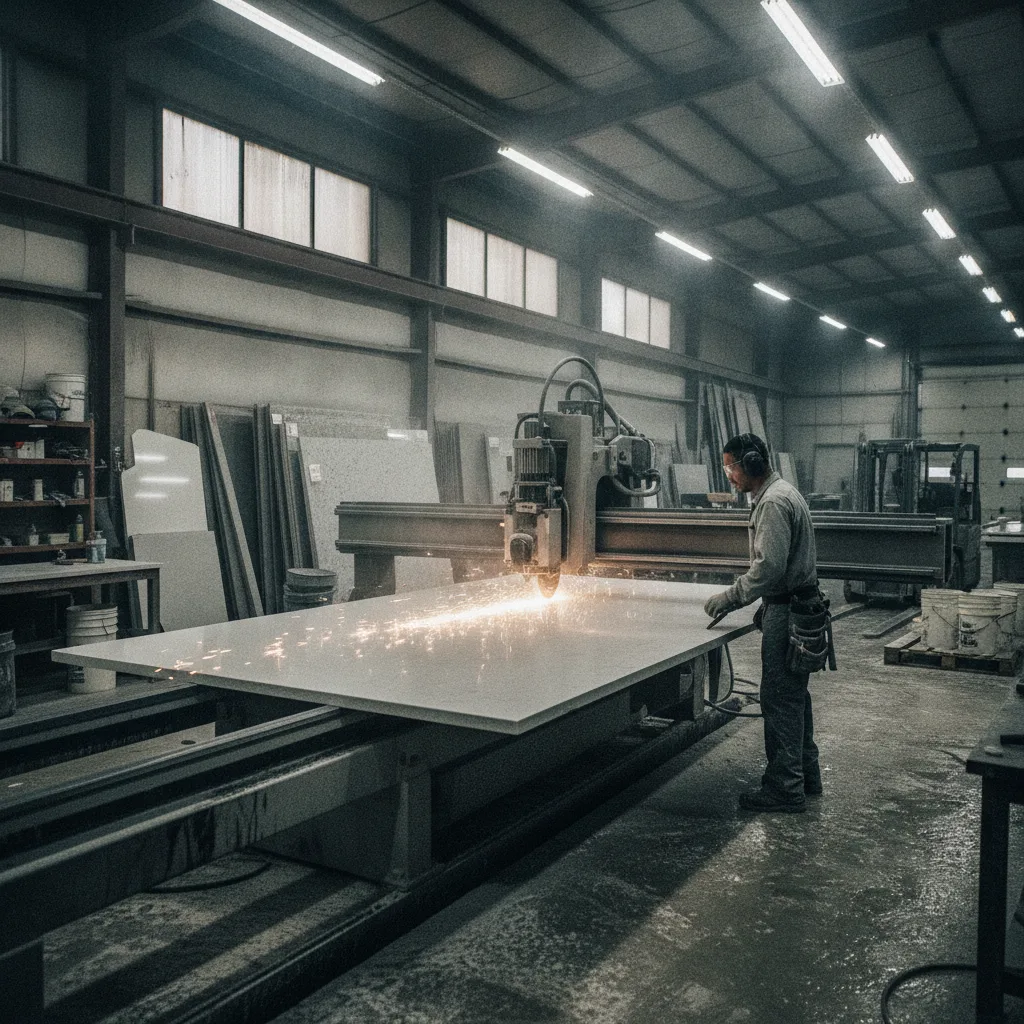
Choosing a Caesarstone-certified fabricator is not just about activating the warranty — it directly affects the quality of your finished countertop. Certified fabricators use precision templating methods that ensure tight seams and correct overhang, and they cut slabs with equipment and software calibrated for engineered stone. A poor cut on quartz creates stress points that show up as edge chips within the first year of use. The strength of the finished installation is a function of fabrication quality, not just material quality.
For kitchen countertops and bathroom countertops across Austin, San Antonio, and Central Texas, Fox Granite is a Caesarstone-certified fabricator with in-house fabrication, precision overlay templating, and professional installation handled by our own team — not subcontractors. We carry Caesarstone samples in our New Braunfels showroom so customers can view colors in person, in natural light, before selecting a slab. That in-person view is essential for accurately choosing matte, concrete-look, or veined finishes.
The process is straightforward: schedule a free in-home consultation, we bring samples to your space, take precise measurements, and provide a transparent all-in price quote with every line item visible. There are no handoffs to third parties. The team working on your quote is the team that installs your countertops. That continuity is how we protect the warranty and protect your investment.
Free
We bring Caesarstone samples to your kitchen or bathroom so you can view colors in your actual lighting — the most reliable way to choose a quartz surface color and confirm it works with your cabinetry and flooring.
Before signing any fabrication contract, ask the fabricator directly: 'Are you a Caesarstone-certified fabricator?' If they hesitate or say certification does not matter, find a different shop. Certification is the only way to activate the lifetime warranty, and it is also a reliable proxy for the fabricator's training standard on engineered quartz.
Prolonged direct sunlight is a real weakness for standard Caesarstone quartz. UV exposure causes yellowing or fading — particularly in lighter colors — and the standard residential warranty does not cover outdoor installations. Caesarstone does offer a specially rated outdoor collection, but it is a separate product line, and not every color is available in an outdoor-rated version. If you are planning an outdoor kitchen or bar top in Austin or San Antonio, ask your fabricator specifically about outdoor-rated quartz options before selecting any color from the standard catalog. Granite and quartzite are often the better functional fit for outdoor countertops in the Central Texas climate.
For homeowners across Austin, San Antonio, New Braunfels, and Central Texas who want Caesarstone quartz countertops done right, Fox Granite is the certified fabricator that handles every step in-house: templating, fabrication, and installation, all by the same team with no subcontractors. The result is a beautiful, low-maintenance quartz surface backed by a lifetime warranty that is actually registered and active from day one. Contact us to schedule your free in-home consultation and see the full Caesarstone collection in your own space.
Ready to get started? Contact Fox Granite today.


BY APPOINTMENT ONLY
1379 Wald Road
New Braunfels, TX 78132
Austin, San Antonio, Cedar Park, Kyle, New Braunfels, Del Valle, Elgin, Lago Vista, Shady Hollow, Onion Creek, Buda, San Marcos, Lockhart, Temple, Wimberley, Dripping Springs, Bee Cave, Lakeway, Leander, Anderson Mill, Jollyville, Spicewood Springs, Round Rock, Georgetown, Pflugerville, Manor, Taylor, Manchaca, Mountain City, Hutto, West Lake Hills, Bastrop, Liberty Hill, Driftwood, Sun City, Steiner Ranch.