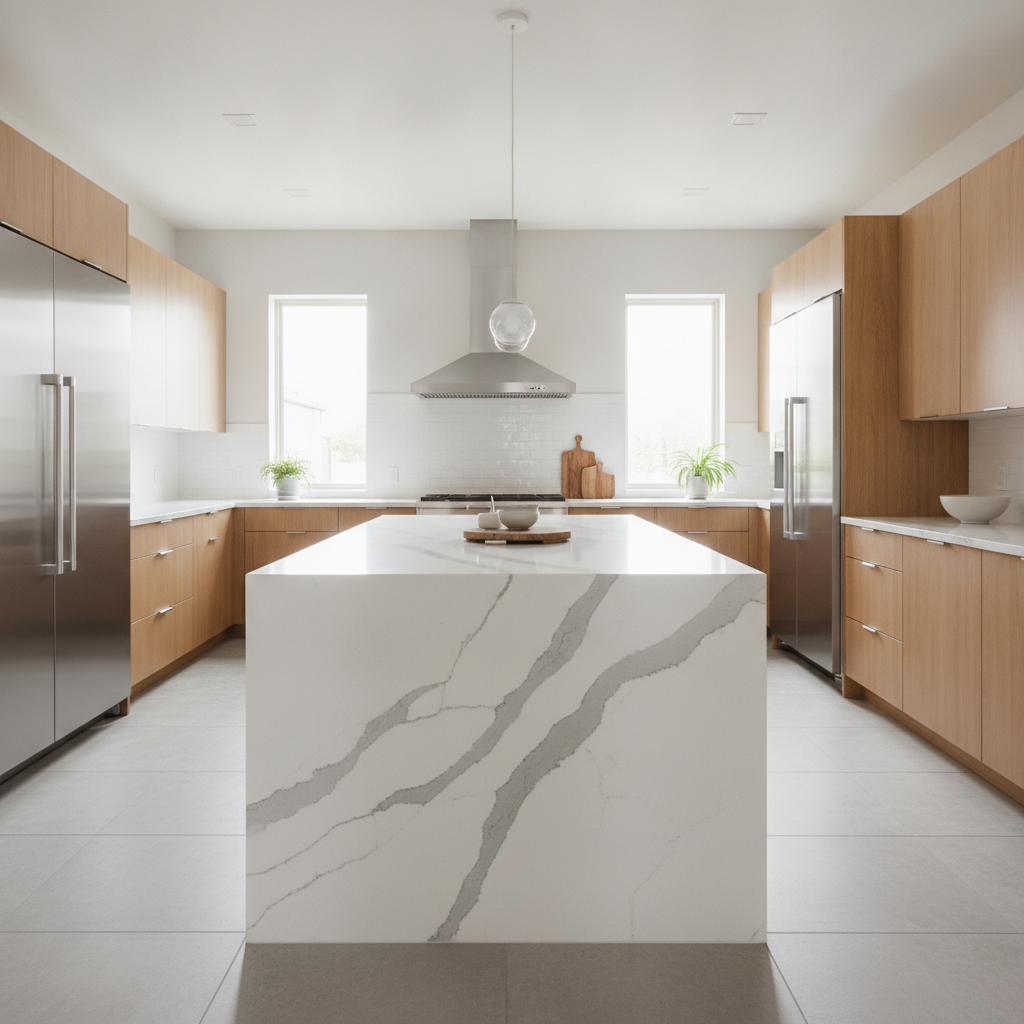
The best quartz countertop brand depends on your budget and priorities, not on which manufacturer runs the most ads. Cambria leads on warranty (transferable lifetime) and pattern depth, at $100–$250 per square foot installed. Caesarstone delivers classic, subtle-veining designs with a lifetime limited warranty at $60–$85 per square foot. Silestone adds a permanent N-Boost stain-resistant seal and eco-manufacturing credentials at $65–$100. MSI Q Premium gives you the lowest installed price — $40–$85 per square foot — with a lifetime limited warranty and GREENGUARD Gold certification. For outdoor countertops in Central Texas, skip quartz entirely: UV radiation degrades the polymer resin binders in every major brand within one to two years. Use granite instead.
The best quartz countertops for your kitchen — or bathroom — are not determined by which brand spends the most on advertising. They are determined by your budget, your design priorities, and the fabricators you hire to cut and install them. As of 2026, 78% of industry professionals surveyed by the NKBA expect quartz to be the most popular countertop material, and engineered quartz accounts for a projected 44% of all US kitchen countertop installs. With that kind of market saturation, the marketing noise around Cambria, Silestone, Caesarstone, and MSI is deafening. This guide cuts through it. You will get real installed price ranges, specific warranty terms, honest notes on where each brand wins and where it does not, and a clear answer on which situations call for granite instead. Read every step before committing to a purchase — the information here will help you avoid thousands of dollars in regret.
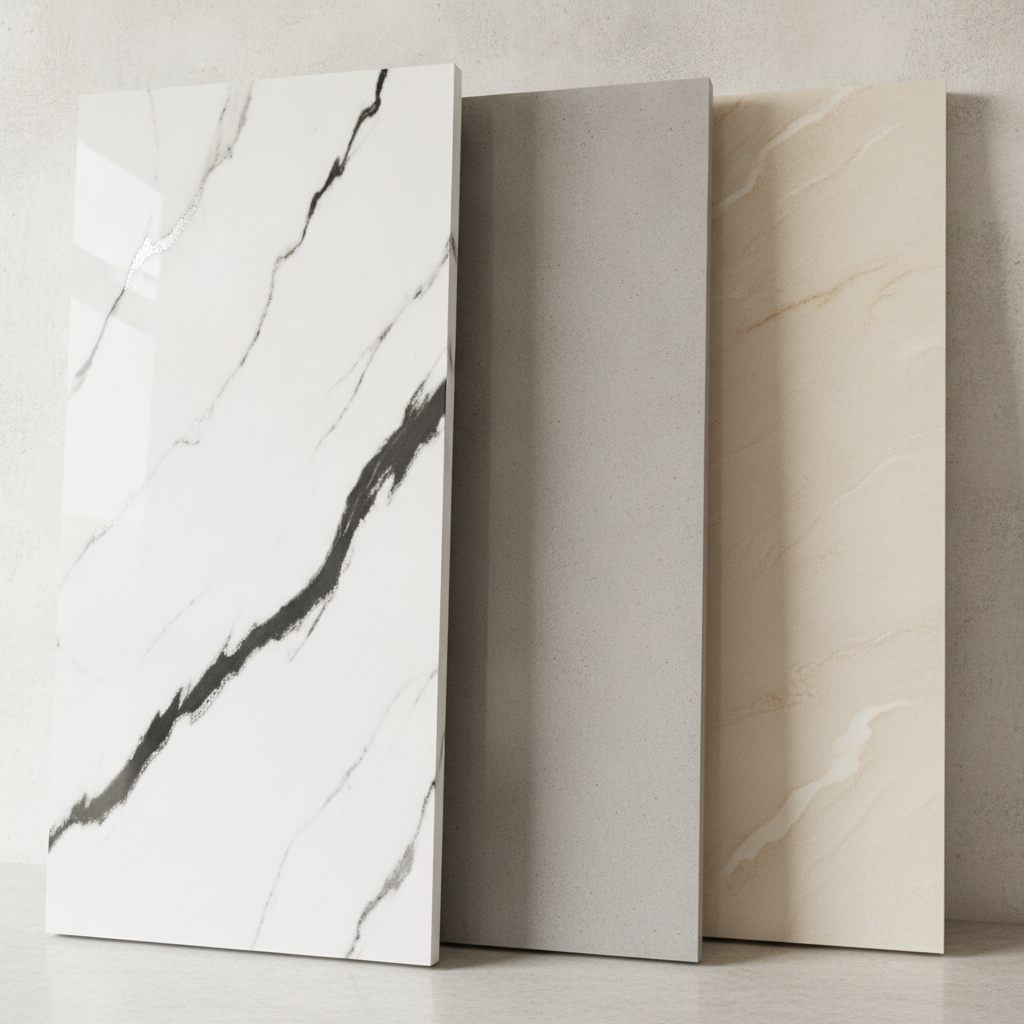
All quartz countertops are manufactured from 90–94% ground natural quartz crystals — a hard mineral aggregate — bound with 6–10% polymer resin binders, so the mineral base is nearly identical across brands. The real differences between Cambria, Silestone, Caesarstone, MSI, and other brands come down to pattern realism, color depth, slab consistency, warranty terms, and the quality control each manufacturer applies — not the quartz minerals themselves. When you compare products side by side at slab size, those differences become obvious in ways that a small chip sample never reveals.
Quartz content percentages do vary by product line. Caesarstone advertises 93% quartz content in its core lines; pigments, resins, and other aggregate materials make up the rest. Some budget engineered quartz surfaces manufactured in China or India use as little as 85% quartz. Higher quartz content generally produces a harder, more scratch-resistant countertop surface — quartz rates 7 out of 10 on the Mohs hardness scale — but the real-world difference between 90% and 93% is marginal under normal kitchen conditions. All five major brands use the patented Breton stone manufacturing process, which compresses the quartz, resin, and pigments under high pressure and heat to create a dense, nonporous slab.
Unlike granite, which is a natural stone with unique veining in every slab, engineered quartz surfaces offer a consistent appearance across the run. That consistent appearance is a genuine advantage for large islands and L-shaped kitchen layouts where matching patterns across full slabs matters most. It is also the core reason quartz has become the most popular countertop material heading into 2026 — and why so many homeowners love it for both kitchen and bathroom installations.
Brand marketing tends to overstate the performance gap between premium and mid-range quartz. A $150/sq ft Cambria slab and a $55/sq ft MSI slab both resist stains, both clean easily with mild soap and water, and both rate 7 on the Mohs hardness scale. The premium buys you pattern depth, warranty confidence, and domestic manufacturing — not a dramatically more durable countertop surface.
Cambria is the only major quartz brand manufactured entirely in the United States, operating out of Le Sueur, Minnesota. It carries a transferable lifetime residential warranty — the strongest coverage of any mainstream quartz brand — and offers 180-plus colors and designs. Installed pricing runs $100–$250 per square foot, making it 20–35% more expensive than comparable MSI quartz. That premium reflects domestic manufacturing, stricter quality control, and a warranty that transfers to the next homeowner if you sell. Cambria is sold exclusively through authorized dealers; you will not find it at big-box stores. Its Brittanicca and Brittanicca Warm lines are widely considered the most realistic marble-look quartz designs on the market — stunning at slab size, but they must be seen in person, not evaluated from a product photo or video.
Caesarstone, founded in Israel in 1987, was one of the first companies to commercially produce engineered quartz surfaces. It carries a lifetime limited residential warranty comparable to Cambria's and advertises 93% quartz content across its core lines. Installed pricing runs $60–$85 per square foot — competitive pricing that suits homeowners planning a design-forward remodel without pushing to the top of the budget range. Its design direction skews contemporary and minimalist — clean whites, subtle veining, and muted tones that work well in modern kitchens. Caesarstone's Statuario Maximus and Frosty Carrina are among the most popular countertop patterns in the market for homeowners chasing a classic marble look at a mid-range price. Caesarstone's elegant, restrained aesthetic appeals strongly to designers working on contemporary renovations.
Silestone, manufactured by the Spanish company Cosentino, differentiates itself with its HybriQ manufacturing process, which uses recycled materials, recycled water, and renewable energy. Its N-Boost surface technology provides a permanent built-in stain-resistant seal that never needs reapplying — a real low-maintenance advantage for busy households. Silestone carries a 25-year residential transferable warranty, shorter than Cambria's and Caesarstone's lifetime terms but still strong. Installed pricing runs $65–$100 per square foot. The Ethereal collection competes closely with Cambria Brittanicca Warm in the marble-mimic category, while the Loft collection covers concrete-look and industrial-style options well. Silestone has wide distribution including Home Depot, which makes pulling samples easy.
Free
Print or bookmark each brand's warranty page before your showroom visit — warranty transfer terms vary and matter if you plan to sell within 10 years.
Installed price ranges as of 2026: MSI $40–$85/sq ft, Caesarstone $60–$85/sq ft, Silestone $65–$100/sq ft, Cambria $100–$250/sq ft. Most homeowners pay around $95/sq ft for mid-range quartz with professional installation. Professional installation typically adds $15–$50/sq ft to the material cost, so always ask for an all-in price — material, fabrication, and installation together.
Budget-first family kitchen: MSI Q Premium gives you the most design options at the lowest installed price, with a lifetime warranty and GREENGUARD Gold certification for food safety. If your fabricator works with MSI regularly, you also get faster turnaround and better slab yield. The Calacatta Botanica and Miraggio Duo patterns deliver convincing marble-look veining without the Cambria price. For homeowners who want quality quartz without overspending, MSI is the clear starting point — great value, solid warranty, and wide availability across every Central Texas distributor network.
Design-forward renovation where the countertop is the centerpiece: Cambria or Caesarstone. Cambria gives you the deepest pattern library and the transferable lifetime warranty, which is worth it if you are staying in the home for decades and want coverage that conveys to the next owner. The beauty of Cambria's catalog is the detail and depth in its marble-look and bold designs — patterns that create a stunning focal point in a high-end kitchen or bathroom. Caesarstone is the smarter pick if you want a cleaner, more contemporary look at a lower cost, or if you are on a tighter timeline and need a widely available product. Both brands satisfy designers who want a beautiful kitchen without defaulting to natural stone, and both offer a variety of finishes including polished and matte options.
Eco-conscious renovation with low-maintenance priorities: Silestone. The HybriQ manufacturing process and N-Boost permanent seal are genuine differentiators, not just marketing language. For homeowners who want quality quartz without the periodic sealing that granite requires, Silestone's permanent surface protection and 25-year transferable warranty deliver strong long-term value. Its concrete-look options in the Loft collection are hard to match across other surfaces, and the brand's porcelain-adjacent aesthetic is increasingly popular with designers working on modern industrial kitchens. Silestone's designs also offer flexible color matching — from warm creams and off-whites to cool grays and charcoals — making it easy to find a color that suits your specific cabinet and flooring layout.
Ask your fabricator which quartz brands they cut most often before you fall in love with a specific color. A fabricator who processes a brand weekly knows how each slab behaves during cutting, how visible seams look in a finished kitchen, and how to position the pattern for minimum waste. That knowledge affects your final price and your finished result more than brand loyalty alone.
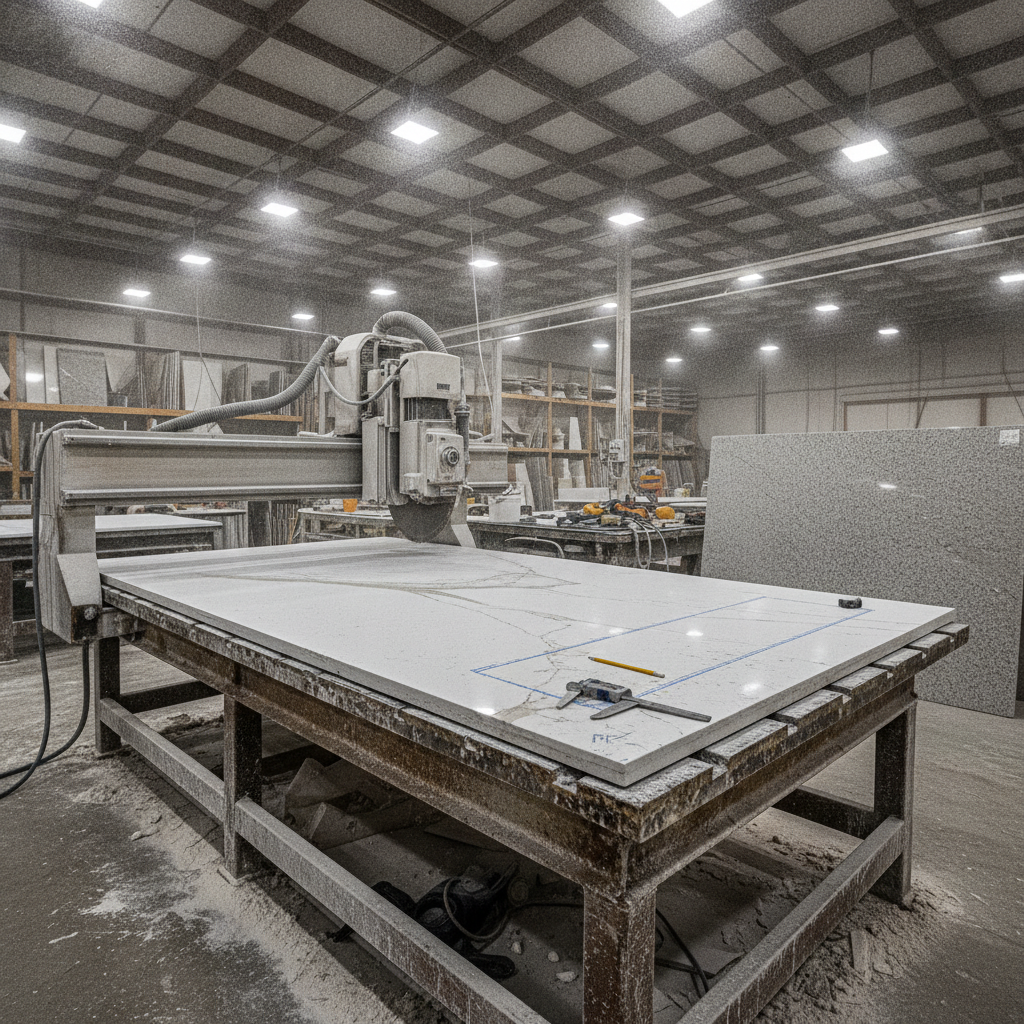
Quartz resists stains well and is a nonporous surface that does not harbor bacteria, but it has two genuine limitations every buyer should understand before choosing it over other surfaces. First, heat sensitivity: the polymer resin binders that hold engineered quartz surfaces together can discolor or crack under sustained high temperatures. Always use trivets near a cooktop or under hot pots — and keep hot pans, coffee makers, and electric pressure cookers off the countertop surface directly. No quartz brand warrants against heat damage from direct contact, and thermal shock from placing a 400-degree pan on the countertop is the most common cause of cracking that voids a warranty. This applies whether you are installing quartz in a kitchen, bathroom, or laundry room.
Second, and more critical for Central Texas homeowners planning outdoor kitchens: quartz should never be installed outdoors. Every major quartz manufacturer explicitly excludes outdoor use from their warranties. UV radiation degrades the polymer resin in quartz surfaces, causing permanent yellowing, fading, and warping within 1–2 years of direct sun exposure in a climate like Austin or San Antonio. No shade structure or UV-protective window film fully solves this problem. If you are building an outdoor kitchen, granite is the proven natural stone alternative — it contains no resin binder to degrade, and quartzite is also a strong option for outdoor countertops.
Unlike granite, quartz's nonporous surface does not require periodic sealing, and it does not harbor bacteria in pores or microfractures. That is a genuine maintenance advantage indoors. But avoid confusing nonporous with indestructible: harsh chemicals like bleach, prolonged UV exposure, and sustained heat all cause damage that warranties explicitly exclude. Mild soap and water handle 95% of cleaning needs. For tile backsplashes and other surfaces adjacent to your quartz counters, keep harsh grout cleaners away from the countertop edge — check the label before applying any cleaner near a quartz surface.
If your project includes any outdoor countertop surface, skip quartz entirely. No quartz brand warranties outdoor installation, and UV degradation to the polymer resin is permanent. Granite and quartzite are the correct natural stone choices for outdoor countertops in Central Texas. Fox Granite installs both — contact us before you finalize your material choice.
Small samples from a website or even a showroom chip are not enough to make a confident quartz selection. A 3-inch sample of Cambria Brittanicca Warm looks very different from a full slab — the veining scale, depth, and color variation only read correctly at slab size. This applies equally to marble-look patterns, concrete-look options, and any design with dramatic movement. Online photos of quartz slabs introduce additional color distortion from monitor calibration and photography lighting, making them nearly useless for final decisions. Even a video walkthrough of a slab cannot fully capture how the stone reads in a real room under real lighting.
Plan a showroom visit where you can view full slabs or large sample boards under lighting similar to your kitchen. Bring a cabinet door, a paint swatch, and a photo of your appliances. Quartz that looks warm and ivory in the showroom can read slightly cool and gray once it is surrounded by your specific cabinets and flooring. The best quartz brands offer a wide variety of designs and finishes, but the right choice for your space is one you have seen at real scale in your context — not on a screen. When you are planning a kitchen or bathroom renovation, this single step eliminates the most common source of post-installation regret.
Ask your fabricator which quartz brands they cut most often. A fabricator who works with a brand weekly knows exactly how that slab behaves during cutting, what the visible seams look like in a finished kitchen, and how to position the pattern to minimize waste. That fabricator-level knowledge produces better results than brand loyalty alone — and it affects your final cost, since better slab yield means less material cost passed on to you. Good fabricators will also help you explore the pros and cons of each design before you commit, and will check inventory at their regional distributor to confirm your chosen color is available on your timeline.
Fox Granite offers in-home consultations and can bring samples to your kitchen so you can evaluate colors in your actual space and lighting. This is the most reliable way to choose a quartz color — and it eliminates the single most common source of post-installation regret.
Quartz countertop pricing is only meaningful as a single all-in number. A $55/sq ft MSI slab price sounds affordable until fabrication, edge profiling, sink cutouts, seaming, and installation add $30–$50/sq ft on top. Ask every fabricator for one total price that includes material, fabrication, your chosen edge profile (eased, beveled, bullnose, half-bullnose, or ogee), undermount sink cutout if applicable, templating, and installation. That combined number is the only figure worth comparing across quotes — and it is the only way to make a fair comparison between a luxury Cambria project and a budget MSI project. A lot of homeowners learn this the hard way when a lowball quote turns into thousands in add-ons after templating day.
Watch for quotes that exclude templating or charge separately for each cutout. Precision templating — specifically the overlay template method — is what allows a fabricator to cut the slab accurately the first time. A shop that skips or rushes templating creates fitting problems that cost time and money after installation day. Visible seams in a finished kitchen are usually the result of poor templating or slab placement, not the quartz brand itself. When comparing quotes, add a line asking each team whether templating and sink cutouts are covered in the base price — the answer tells you a lot about how that company operates.
For Austin, San Antonio, and the surrounding Central Texas area, Fox Granite provides transparent, all-in pricing with no surprise fees added after templating. We work with a wide selection of quartz slabs — including MSI and other leading brands — and we fabricate and install everything in-house. No subcontractors, no handoffs, no mystery charges. Schedule a free in-home consultation and we will bring samples to your kitchen so you can see colors in your actual light before you commit. Email us or call to get on our calendar — our team is ready to help you find the perfect countertop for your home.
Your edge profile choice affects both costs and the final look of the countertop. Eased and beveled edges are typically included in base pricing. Ogee and half-bullnose profiles require more machining time and may add $10–$20 per linear foot. Ask upfront so there are no surprises on your final invoice.
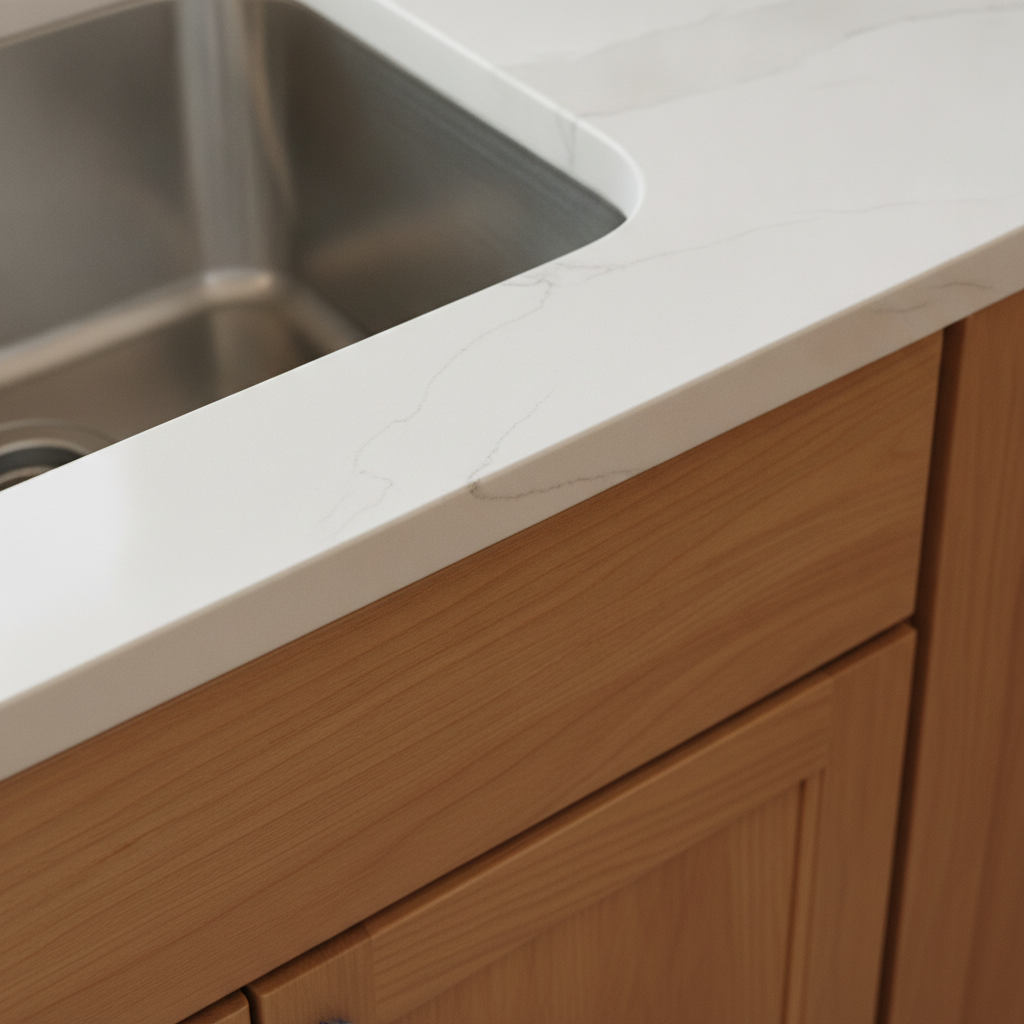
Every major quartz brand — Cambria, Silestone, Caesarstone, MSI, all of them — explicitly excludes outdoor use from their warranties. Central Texas summers deliver exactly the sustained UV exposure that degrades polymer resin binders, causing permanent yellowing and fading within 1–2 years. If your project includes an outdoor kitchen, patio bar top, or any exterior countertop surface, granite is the right material. It is a natural stone with no resin binder to degrade, and quartzite is also a proven choice for outdoor installations. Fox Granite fabricates and installs outdoor granite countertops across Austin, San Antonio, New Braunfels, and the surrounding area. Contact us before you finalize your outdoor countertop choice.
Choosing the best quartz countertops for your kitchen or bathroom comes down to four decisions: budget, design direction, warranty priority, and fabricator familiarity. MSI wins on price and accessibility. Caesarstone wins on clean, contemporary design at a mid-range cost. Silestone wins on eco-credentials, low maintenance, and its permanent N-Boost seal. Cambria wins on pattern depth and the strongest warranty in the market. For outdoor countertops in Central Texas, granite wins every time. Fox Granite is a family-owned fabricator with over 15 years of experience, in-house fabrication, and a showroom where you can view full slabs before you commit. We serve Austin, San Antonio, New Braunfels, and the surrounding Central Texas area with transparent all-in pricing and no subcontractors. Contact us today to schedule your free in-home consultation — we will bring samples to you and help you discover the perfect countertop for your home and your renovation.
Ready to get started? Contact Fox Granite today.


BY APPOINTMENT ONLY
1379 Wald Road
New Braunfels, TX 78132
Austin, San Antonio, Cedar Park, Kyle, New Braunfels, Del Valle, Elgin, Lago Vista, Shady Hollow, Onion Creek, Buda, San Marcos, Lockhart, Temple, Wimberley, Dripping Springs, Bee Cave, Lakeway, Leander, Anderson Mill, Jollyville, Spicewood Springs, Round Rock, Georgetown, Pflugerville, Manor, Taylor, Manchaca, Mountain City, Hutto, West Lake Hills, Bastrop, Liberty Hill, Driftwood, Sun City, Steiner Ranch.