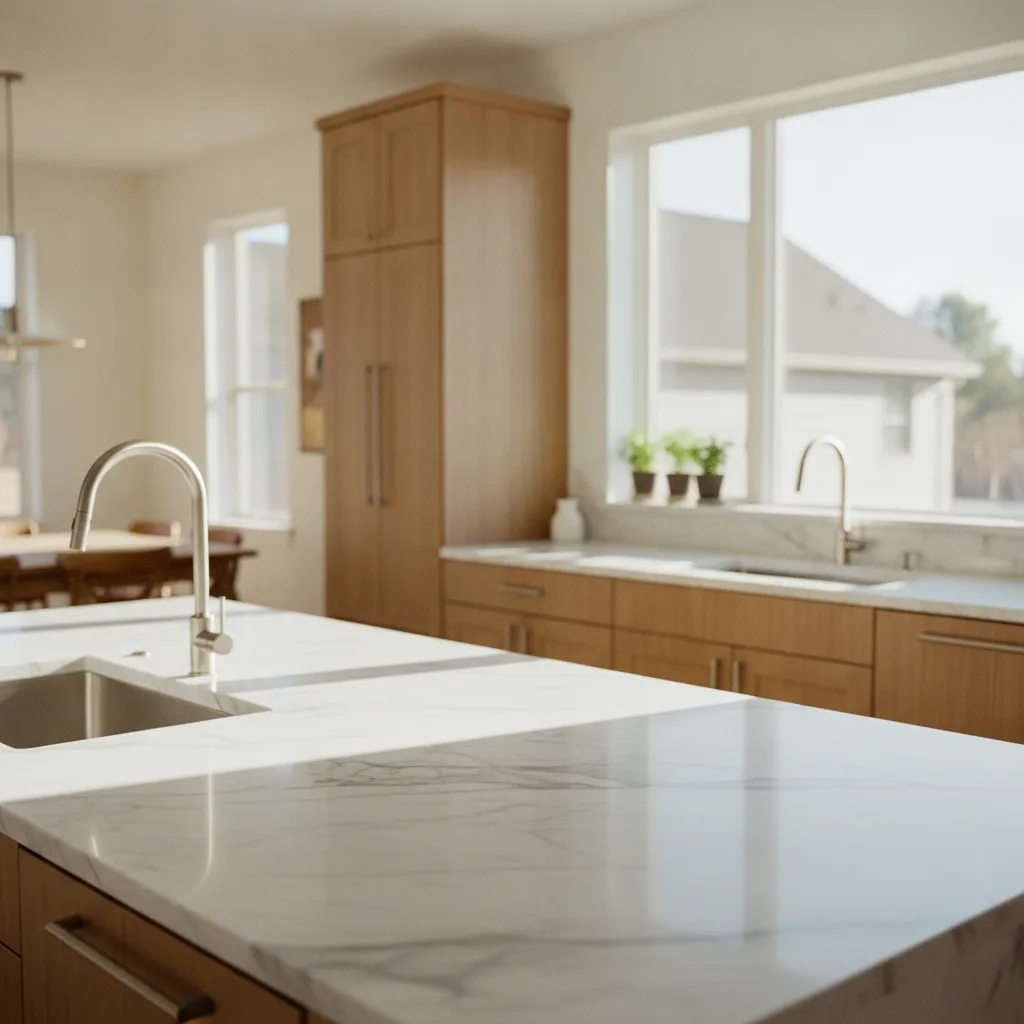
Austin marble countertops installed in 2026 run $75–$215+ per square foot depending on variety: Carrara starts around $75–$96/sq ft, Statuario falls between $107–$170/sq ft, and Calacatta reaches $160–$215+/sq ft. Marble is the right choice for homeowners who prioritize timeless character, accept natural patina over time, and use pH-neutral cleaners daily. It is the wrong choice for households that cook heavily with acidic ingredients and expect a showroom finish year after year. For those kitchens, quartzite countertops or granite countertops are the more durable natural stone option. Fox Granite serves Austin TX and all of Central Texas with in-house fabrication, transparent all-in pricing, and a free in-home consultation.
Austin marble countertops trade some durability for beauty that natural stone alternatives cannot fully replicate — and whether that tradeoff works for your household depends on specifics that a showroom visit alone won't resolve. This guide walks through real 2026 installed pricing for Austin TX, the etching distinction that most countertop articles miss, the honed-vs-polished decision, a maintenance schedule that actually fits real life, and a clear comparison between marble, quartzite countertops, and granite countertops so you can walk into a slab yard — or a Fox Granite consultation — already knowing what you want.
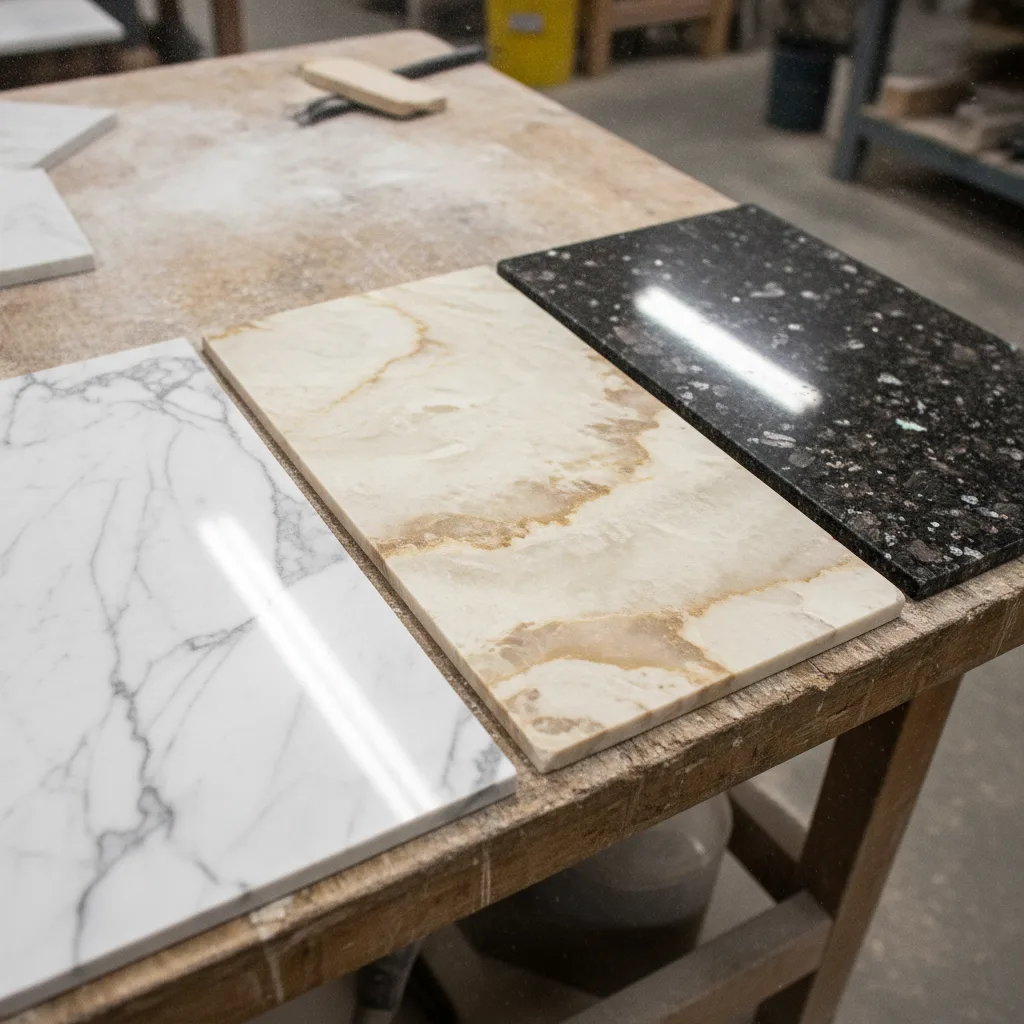
Austin marble countertops run $75–$215+ per square foot installed as of 2026, and the range is wide for a good reason: the stone variety matters as much as the square footage. Carrara — the classic white Italian marble with soft gray veining — starts around $75–$96/sq ft installed and is the most accessible entry point for natural stone slabs. Statuario falls between $107–$170/sq ft. Calacatta, the bold-veined white prized by designers and one of the strongest natural stone picks for statement kitchen islands, runs $160–$215+ per square foot. For a standard 55 sq ft Austin kitchen, that translates to a realistic budget of $4,100 on the low end and $11,800 or more for premium material (source: buildaustintx.com, October 2026).
Those figures include fabrication and installation, but not every quote does. When comparing estimates, ask specifically whether edge profiling, undermount sink cutouts, and sealing are included. A quote that comes in $800 lower sometimes reflects fabrication shortcuts or a sealer that was never applied. At Fox Granite, all-in pricing means no add-on surprises after the contract is signed — but that transparency is not universal in the Austin TX market.
Marble sits above granite countertops in price for most varieties. Granite countertops in Austin TX run $53–$117/sq ft installed — Level 1 slabs like Ubatuba or Baltic Brown from Brazil start at $53–$70/sq ft, while exotic Brazilian granites reach $96–$117/sq ft. If budget is the primary driver and natural stone character is what you are after, granite countertops are worth considering alongside marble, especially for high-traffic kitchen perimeters where the acid-resistance of granite adds real practical value.
Marble: $75–$215+/sq ft installed. Quartzite (Taj Mahal, Sea Pearl): $128–$192/sq ft. Granite countertops: $53–$117/sq ft. Marble-look quartz: $128–$160/sq ft. All figures are Austin TX installed pricing, 2026 (source: buildaustintx.com).
The single most misunderstood fact about marble countertops is that sealing cannot prevent etching. A sealer slows liquid absorption and protects against staining from oil, wine, or coffee soaking into the stone. Etching is a different problem entirely: when acid contacts polished marble — lemon juice, vinegar, tomato sauce, certain cleaning sprays — it dissolves the calcium carbonate in the stone at a microscopic level, leaving a dull mark. That mark is not a stain. No sealer stops it. It is the nature of the material, not a maintenance failure.
Homeowners who cook with acidic ingredients daily and expect a showroom finish every year tend to regret marble. Homeowners who accept that the surface gains character over time — a patina that some describe as antique or lived-in — often love it for decades. That split is not spin; it is the honest difference between satisfied and dissatisfied marble owners. Your comfort with that tradeoff is the first real decision to make before you ever view slabs at a showroom.
Marble is also softer than most people expect. It rates 3–4 on the Mohs hardness scale, compared to quartzite at 7 and granite, which is harder than marble but softer than quartzite (source: MSI Surfaces). A dropped cast-iron pan can chip a marble edge. A dragged ceramic pot can scratch a polished surface. These are not reasons to avoid marble — but they are reasons to be honest about how your kitchen actually gets used day to day.
Etching equals a chemical reaction from acid contact. Staining equals liquid absorbed into the stone. Sealing addresses staining. Nothing addresses etching except choosing a honed finish — which hides etch marks far better than polished — or accepting the patina as part of the stone's character.
Honed marble is the finish most experienced fabricators recommend for busy Austin kitchens, and for a straightforward reason: its matte surface absorbs etch marks without the stark contrast that a polished surface shows. A lemon splash on honed Carrara is nearly invisible; the same splash on polished Carrara leaves a dull ring that stands out against the sheen. The tradeoff is porosity — honed marble needs sealing every 3–6 months versus every 6–12 months for a polished surface (source: granitegranite.com, slabwise.com).
Polished marble earns its place in spaces that see fewer acidic spills: bathroom vanity tops, powder rooms, fireplaces surrounds, bar tops, and suites where daily kitchen cooking is not happening. The reflective finish shows off the depth and translucency of the stone in a way honed cannot match — and in those lower-traffic rooms, the sealing schedule is far more relaxed, often stretching to 2–3 years for a bathroom vanity. If you are upgrading a powder room or a master bath, polished marble makes a strong case for itself.
Both finishes require pH-neutral cleaner for daily wiping. Standard dish soap and most spray cleaners are acidic enough to dull marble surfaces over time. This is not complicated maintenance, but it does mean swapping out whatever cleaner is currently under the sink. Our team walks you through the full care routine during your free in-home consultation, and we bring samples of both finishes so you can see the difference in your kitchen's actual light — not showroom lighting.
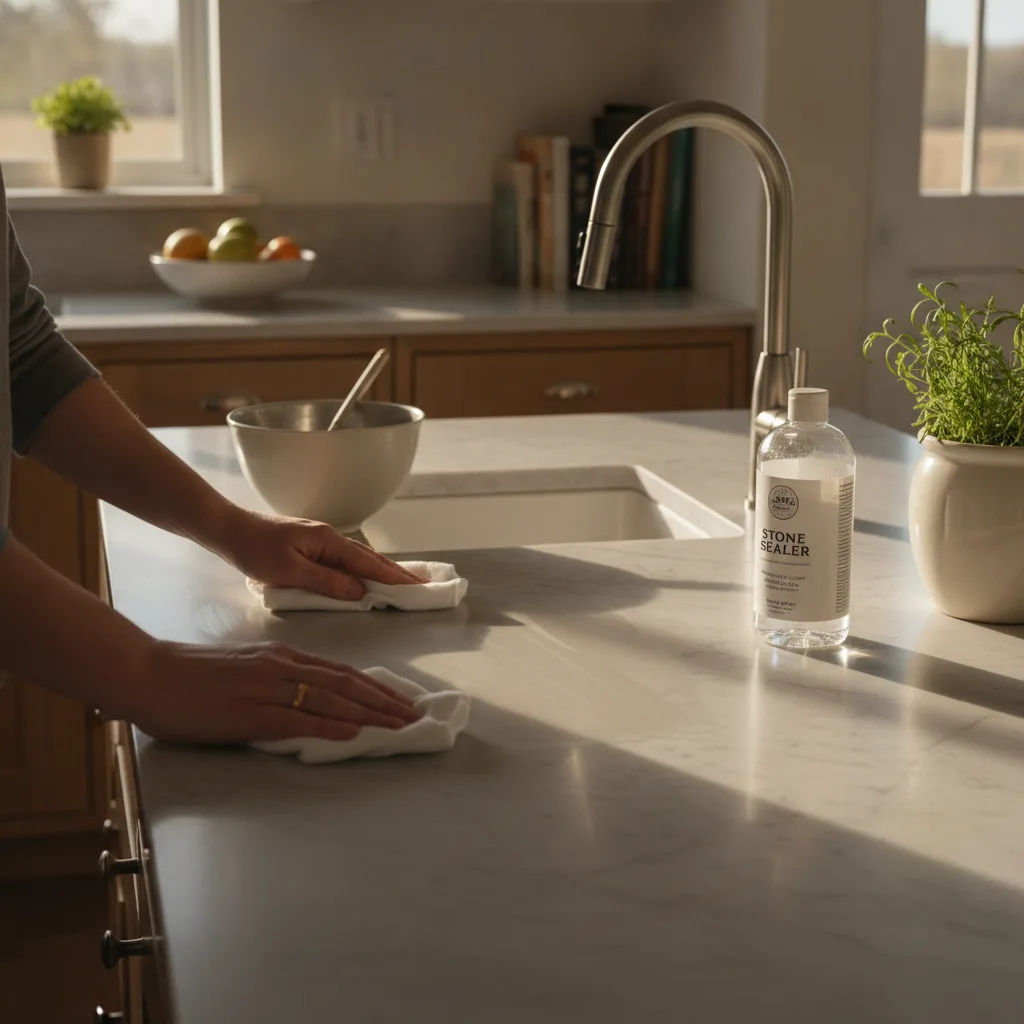
Kitchen marble should be sealed within 24–48 hours of installation and resealed on a regular schedule from that point forward. The most reliable maintenance trigger is not a calendar date — it is the water bead test. Drop water on the surface. If it beads up, the sealer is working. If the water absorbs into the stone and darkens the surface, it is time to reseal. Most homeowners find this test takes about 30 seconds and removes all the guesswork that comes with tracking a rigid schedule (source: slabwise.com).
DIY marble sealers are available at home improvement stores, and the resealing process is manageable for most homeowners: clean the surface thoroughly, apply the sealer with a cloth, let it penetrate for the manufacturer's specified dwell time, then wipe away the excess. A honed kitchen countertop needs this every 3–6 months under regular cooking use. A polished kitchen surface runs 6–12 months. A bathroom vanity in a powder room that sees light use can go 2–3 years between coats.
Fox Granite applies a professional-grade sealer at the time of installation. Maintenance from that point forward is on the homeowner — but it is genuinely not difficult. The clients who struggle with marble upkeep are usually the ones who were not told the schedule upfront. We make sure you leave the installation day knowing exactly what your stone needs, which surfaces to avoid wetting for 24 hours, and which cleaner to keep on hand going forward.
Use the water bead test — not a calendar — as your sealing trigger. Drop water on a dry surface. If it absorbs rather than beads, seal within the week. This test works equally well for marble, quartzite countertops, and granite countertops.
Marble performs best in spaces that see fewer acidic spills and less daily kitchen abuse: bathroom vanities, powder rooms, fireplace surrounds, bar tops, and baking stations. For a dedicated baking counter, marble is genuinely one of the strongest material choices available — it stays cool to the touch, which is a real advantage for pastry work, and most baking does not involve the acidic ingredients that cause etching. For kitchen islands used daily for heavy cooking, quartzite countertops or quartz countertops are the more durable choice. Granite countertops hit a practical middle ground: natural stone character, acid-resistant surfaces, and the lowest installed price among natural stone options in Austin TX.
A strategy Austin designers and our own clients use frequently: marble on the island for visual impact, with granite countertops or quartz countertops on the working perimeter. You get the timeless character and the statement veining where it is most visible, and you get the durability where the cutting boards, citrus, and hot pans land. This two-surface approach also opens up real design flexibility. It is one of the stronger countertop trends heading into 2026, with interior designers specifically calling out slip-matched marble islands as a standout look (source: Homes and Gardens, 2026).
Marble is heat-resistant in the everyday sense — it handles ambient kitchen heat well and stays cool to the touch in a way quartz surfaces and tile cannot match. Rapid temperature swings are the exception: setting a sheet pan straight from a 450-degree oven onto cold marble, or placing frozen items on marble that has been sitting in direct sun near a window, can cause cracking. Use trivets as a baseline habit for any natural stone surface, not because marble cannot handle warmth, but because eliminating thermal shock protects the slab long-term.
Quartzite is the most common natural stone alternative Austin homeowners choose when they want marble's look without marble's maintenance anxiety. True quartzite rates 7 on the Mohs scale, does not etch from acids, and is less porous than marble — a meaningfully more durable countertop for an active kitchen. Popular quartzite slabs like Taj Mahal, Sea Pearl, and Mont Blanc run $128–$192/sq ft installed in Austin TX, which often puts premium quartzite countertops above basic Carrara marble in price. The visual catch worth knowing: in showroom blind tests, polished Taj Mahal quartzite and Carrara marble are nearly indistinguishable at first glance (source: Countertops Palm Beach). If the look you want is white marble, true quartzite can deliver it with better durability.
The biggest quartzite risk in the Austin market is mislabeling. A significant share of stones sold as quartzite at slab yards are actually soft marble, dolomite, or calcite-bearing material that will etch just like marble. The field test: apply a drop of lemon juice or white vinegar to a hidden spot on the slab and wait 10 minutes. True quartzite shows zero change. Calcite-based material — the mislabeled kind — shows a dull etch mark. Run this test on any slab a yard calls quartzite before you commit. Do not rely on the label. Architects, designers, and experienced fabricators who work with natural stone slabs regularly will tell you the same thing: verify at the slab yard, in person.
Marble-look quartz countertops (Cambria and similar brands) and large-format porcelain slabs (Dekton, Neolith) are the engineered alternatives. Quartz is non-porous, never needs sealing, and resists staining and stains well — but it lacks the translucency and natural geological movement of real stone, and it cannot match marble's timeless character. Porcelain slabs are UV-stable, which makes them a strong choice for outdoor spaces and outdoor kitchens in Austin's climate, completely heat-resistant, and non-porous — but they can chip at edges and require specialized fabrication equipment that not every local fabricator has. If you are exploring surfaces for walls, backsplashes, or floors in addition to countertops, porcelain and tile open up a wider range of applications than natural stone slabs alone. One point worth noting: an Infinity Surfaces-style infinity edge detail on porcelain requires a fabricator who has worked with the material before. Craftsmanship and equipment matter as much as the material itself.
Before purchasing any slab sold as quartzite: apply a drop of white vinegar or lemon juice to a hidden spot. Wait 10 minutes. Wipe clean. True quartzite shows no change. Soft calcite stone — the mislabeled kind — shows a dull etch mark. Run this test in person at the slab yard, not on a 4-inch sample square.
No two marble slabs are identical, and this is not a cliché — it is the reason that viewing full slabs in person before committing is the single most important step in the entire process. Two Carrara slabs from the same Italian quarry can look radically different in veining density, color warmth, and pattern scale. Veining that reads subtle on a 4-inch sample can be dramatic and busy across 55 sq ft of countertop. A slab that looked bold in the yard can feel washed out in your kitchen's actual light. Austin homeowners who discover the mismatch after installation almost always trace it back to the same root cause: they chose from a sample rather than from the full slab. Our New Braunfels showroom lets you view stone slabs at scale, in real light, with our team available to pull options side by side.
Fox Granite's process starts with a free in-home consultation. We bring samples to your kitchen so you can see how marble, quartzite, granite countertops, or quartz countertops read against your actual cabinetry and lighting. From there, precision templating using our overlay template method ensures every cut is exact. In-house fabrication with state-of-the-art stone-cutting equipment means your slabs are cut and finished by our own team — not subcontracted out. Our specialists handle the full project from template to installation, and most Austin area clients complete that arc in about a week. Builders and designers working on larger projects can ask about our trade program for multi-room or multi-unit work.
If you are still weighing marble against quartzite or granite countertops, that conversation is exactly what our team is built for. We have guided Central Texas homeowners through this decision for over 15 years, and we would rather help you discover the right stone for your actual life than upgrade you into the wrong one. Contact us today to schedule your free consultation, or visit our New Braunfels showroom to view stone slabs in person and explore what genuinely fits your home, your kitchen, and your household.
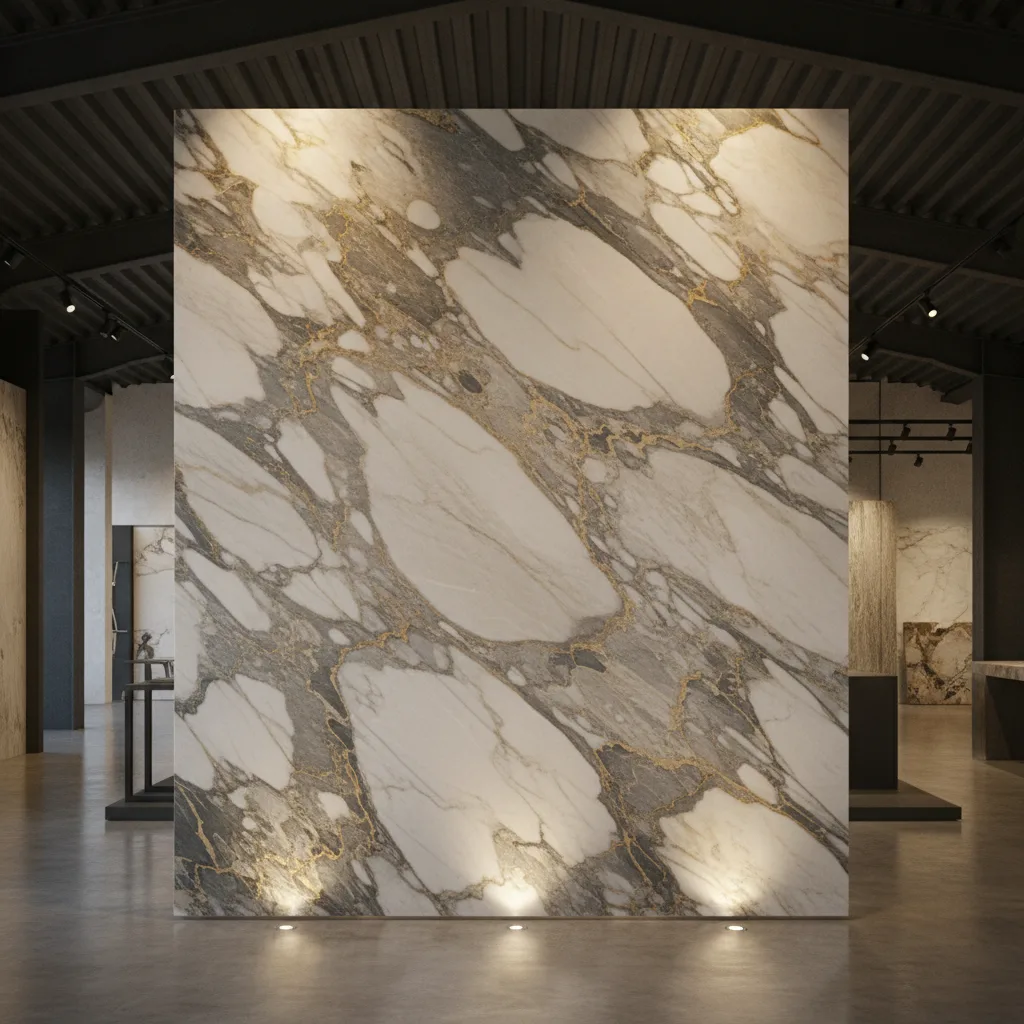
The single most common regret Austin homeowners share after a marble installation: they selected the stone from a small sample in a showroom, and the full slab looked completely different across their countertop. Veining that seemed subtle on a 4-inch square can be dramatic and busy at full scale — or a slab that looked bold on a sample can feel washed out in your kitchen's actual light. Always view full slabs in person before you commit. Fox Granite's New Braunfels showroom lets you do exactly that, and our team can pull multiple slab options side by side so you are choosing with confidence, not guessing.
For Austin marble countertops, quartzite countertops, granite countertops, or quartz countertops across Austin, San Antonio, New Braunfels, and the surrounding Central Texas areas, trust Fox Granite. We are a family-owned team with over 15 years of in-house fabrication experience, transparent all-in pricing, and a free in-home consultation that starts with honest advice — not a sales pitch. Contact us today to get your free estimate, or visit our showroom in New Braunfels to view stone slabs in person and find the countertop that is genuinely right for your home.
Ready to get started? Contact Fox Granite today.


BY APPOINTMENT ONLY
1379 Wald Road
New Braunfels, TX 78132
Austin, San Antonio, Cedar Park, Kyle, New Braunfels, Del Valle, Elgin, Lago Vista, Shady Hollow, Onion Creek, Buda, San Marcos, Lockhart, Temple, Wimberley, Dripping Springs, Bee Cave, Lakeway, Leander, Anderson Mill, Jollyville, Spicewood Springs, Round Rock, Georgetown, Pflugerville, Manor, Taylor, Manchaca, Mountain City, Hutto, West Lake Hills, Bastrop, Liberty Hill, Driftwood, Sun City, Steiner Ranch.