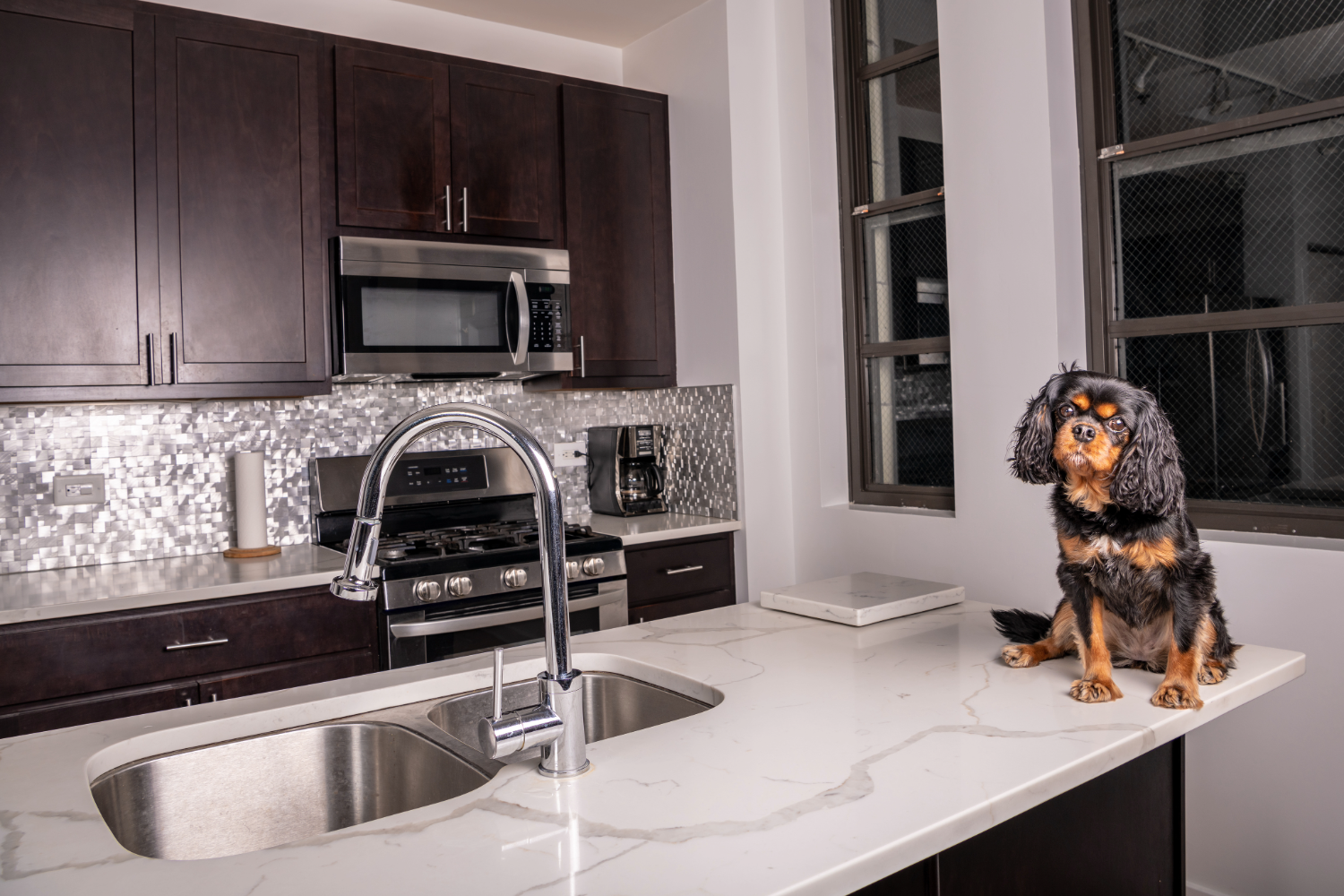
Yes. Quartz countertops are one of the best surface choices for pet-friendly homes. They are non-porous, scratch-resistant, easy to clean, and built to handle the daily chaos that comes with living alongside animals.
Why Countertop Material Matters in a Pet-Friendly Home
Pets introduce a specific set of challenges that most countertop materials were not designed with in mind. Dogs jump up, cats roam freely, water bowls overflow, and muddy paws find their way onto every surface. Over time, the wrong material will absorb stains, trap bacteria, show scratch damage, or require constant upkeep just to stay sanitary.
In kitchens especially, surfaces that come into contact with pet fur, saliva, and tracked-in debris need to be easy to disinfect. Porous materials absorb moisture and organic matter, creating conditions where bacteria and mold can grow beneath the surface where no cleaner can reach. For pet owners who prepare food on the same surfaces their animals brush against, this is a real concern.
A countertop that shows visible scratching or staining after a year or two in a pet-filled home becomes a source of frustration rather than function. Choosing a material rated for high-impact, high-traffic use pays off over the lifespan of the surface, especially in homes with large or active dogs.
Some premium surfaces require annual sealing, specific pH-balanced cleaners, or professional polishing to maintain their integrity. For busy households already managing feeding schedules, vet appointments, and daily cleanups, a countertop that demands extra attention is a liability. Low-maintenance materials are the practical choice.
The Benefits of Quartz for Pet Owners
Quartz is an engineered stone made from ground quartz crystals bound with polymer resins. That resin binder is what sets it apart from natural stone — it fills every pore and gap in the surface, making it completely non-permeable. For pet owners, this single characteristic drives most of the practical benefits.
Because the surface has no pores, pet urine, saliva, food residue, and water cannot soak in. Messes stay on top of the surface, where they are easy to wipe away. There is no risk of odors or staining becoming embedded in the material over time, which matters in homes where accidents happen and feeding areas see daily spillage.
Quartz ranks a 7 on the Mohs hardness scale. Pet claws, even from large dogs, do not come close to the hardness level required to scratch quartz under normal use. Everyday contact from animals jumping up, pawing at the surface, or walking across it will not leave visible marks. The surface holds its appearance without any special protective treatment.
A damp cloth and mild dish soap handle routine cleanup. There are no sealers to reapply, no specialty products to stock, and no annual maintenance schedule to follow. Pet hair wipes away easily from the smooth surface, and the countertop can be disinfected with standard household cleaners as long as harsh solvents and undiluted bleach are avoided.
Quartz does not fade, discolor, or lose its finish from regular cleaning the way some surfaces can. It is available in a wide range of colors and patterns, and mid-tone finishes with natural variation do a better job hiding pet hair and dust between wipes than stark white or solid dark surfaces. Matte finishes tend to be more forgiving in high-use areas than high-gloss options.
Getting the most out of quartz alongside pets does not require a complicated routine. A few consistent habits keep the surface in good condition for the long term.
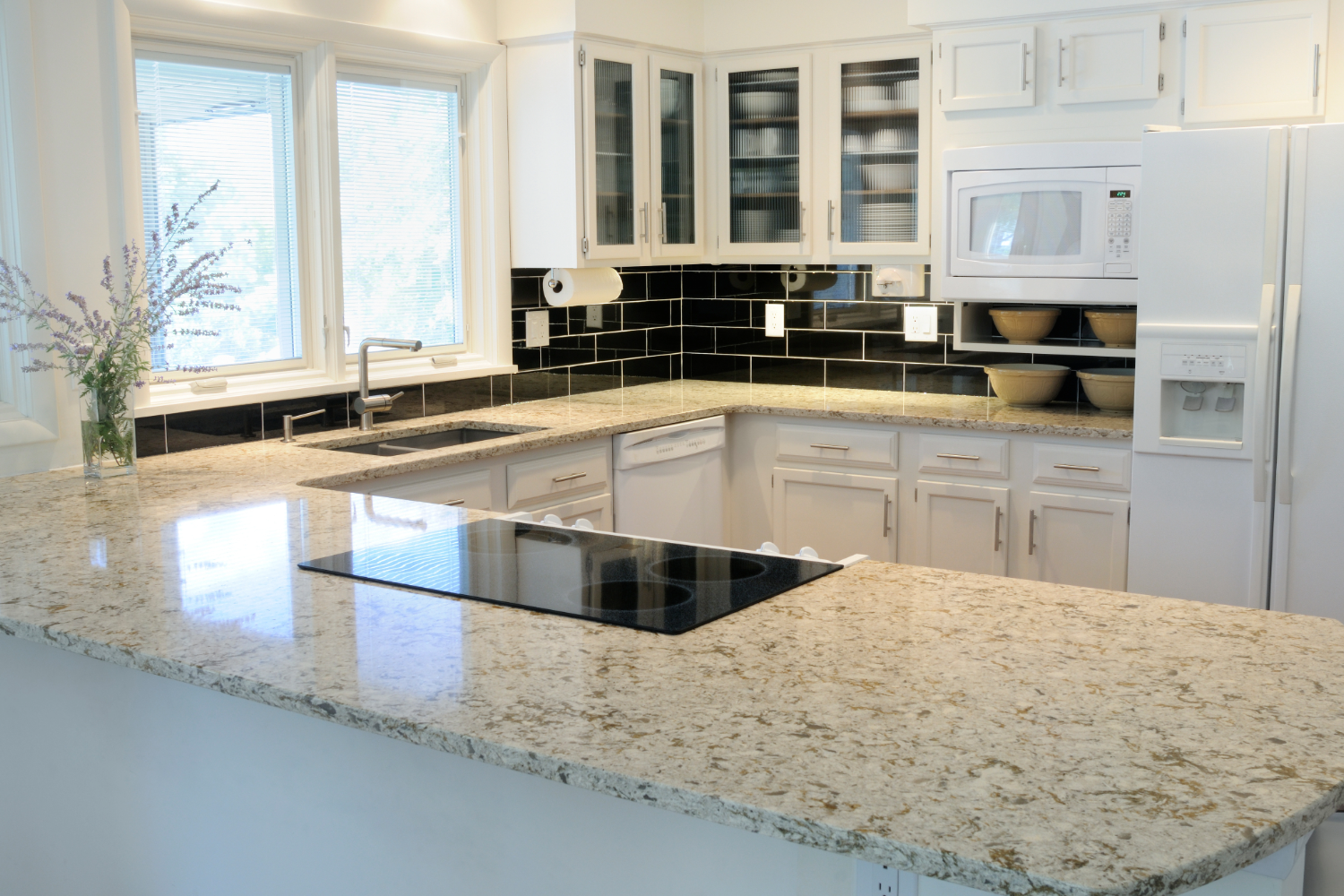
Even though quartz does not absorb liquids, leaving pet food, water, or waste sitting on the surface for extended periods is not ideal. Prompt cleanup keeps the surface hygienic and prevents any residue from drying and requiring extra scrubbing, which can wear on the finish over time.
A simple mat or tray under pet water bowls eliminates the constant moisture exposure at a single spot on the counter. Placing a cutting board or trivet in areas where hot cookware might land is also good practice. These small additions extend the life of the surface significantly with minimal effort.
Lighter quartz surfaces show paw prints and pet hair more readily between cleanings. Mid-tone finishes with veining or speckled patterning tend to look cleaner longer in homes with shedding animals. Discussing finish options with your installer before committing is worth the time, particularly if you have multiple pets or a large, high-shedding breed.
Quartz is not limited to kitchens. Because it handles moisture, daily cleaning, and heavy use without special maintenance, it translates well to any room in the home where pets are active. The rooms below are the most common places pet owners find it makes a real difference.
The kitchen is the most common application and ideal for pet owners because:
If pets come in from outside through a mudroom, quartz surfaces in that space:
For households that bathe dogs at home:
Quartz countertops in Austin, TX, are a well-matched choice for pet-friendly homes. The non-porous surface addresses the hygiene concerns that matter most when animals share living spaces. The hardness handles daily wear without requiring extra protection. The low-maintenance care routine fits the reality of a busy household.
There are trade-offs to weigh, particularly around upfront cost and sensitivity to heat and certain chemicals. But for pet owners who want a surface that stays clean, stays looking good, and requires minimal effort to maintain, quartz is a reliable, long-term investment. Visit our shop or contact our team to start planning.


BY APPOINTMENT ONLY
1379 Wald Road
New Braunfels, TX 78132
Austin, San Antonio, Cedar Park, Kyle, New Braunfels, Del Valle, Elgin, Lago Vista, Shady Hollow, Onion Creek, Buda, San Marcos, Lockhart, Temple, Wimberley, Dripping Springs, Bee Cave, Lakeway, Leander, Anderson Mill, Jollyville, Spicewood Springs, Round Rock, Georgetown, Pflugerville, Manor, Taylor, Manchaca, Mountain City, Hutto, West Lake Hills, Bastrop, Liberty Hill, Driftwood, Sun City, Steiner Ranch.