Affordable Countertop Materials Ranked: Where Marble Fits on the Price Spectrum in 2026
💡 Quick Answer
In 2026, installed countertop costs for a standard 40 sq ft kitchen range from $600–$1,600 for laminate, $1,600–$3,600 for entry-level quartz or granite, $3,000–$4,800 for Carrara marble, and $6,000–$10,000+ for Calacatta or exotic stone. Laminate is the cheapest countertop material on the market. Quartz holds 51% of the residential market and is the most popular choice. Carrara marble sits at $75–$120 per square foot installed — genuinely accessible within the natural stone category, but not a budget option. For Central Texas homeowners in Austin or San Antonio, regional labor rates move the number by 15–20%, and edge profiles can add up to $875 on a typical kitchen.
📊 Key Takeaways
Every number below is an installed cost for a Central Texas kitchen or bathroom project as of October 2026 — material plus fabrication plus labor, all in.
$15–$40/sq ft installed
Laminate: the cheapest countertop material available in 2026
$40–$90/sq ft installed
Entry-level quartz and Level 1–2 granite: the mid-range sweet spot
$75–$120/sq ft installed
Carrara marble: accessible natural stone entry point in 2026
Edge profile upgrades on a standard 25-linear-foot kitchen
15–20% higher in Austin vs. San Antonio
Regional labor rates shift the same slab's installed cost significantly
20–40% savings
Using remnant slabs for smaller vanity and kitchen sections
Every 6–12 months
How often marble requires resealing; quartz never needs it
Countertop materials in 2026 span a tenfold price range — from $15 per square foot installed for laminate to $300+ per square foot for exotic marble — and that spread creates real confusion for Central Texas homeowners trying to set a realistic budget. The most affordable kitchen countertops are not what they were a decade ago: high-quality laminate from Wilsonart now mimics stone convincingly, entry-level quartz from MSI competes directly with Level 1–2 granite on price, and Carrara marble sits at an accessible price point within the natural stone category that many homeowners do not expect. This guide ranks every major countertop material by installed cost per square foot, shows where each one lands for a standard 40 sq ft kitchen, and gives you a straight answer on where marble fits — not as an aspirational dream, but as a specific material with a specific price, real maintenance requirements, and a clear audience it serves well.
Countertop Materials by Price Per Square Foot: What You'll Pay in 2026
Tier
Price range
What's included
Best for
Budget Countertop Materials
$15 – $75/sq ft installed
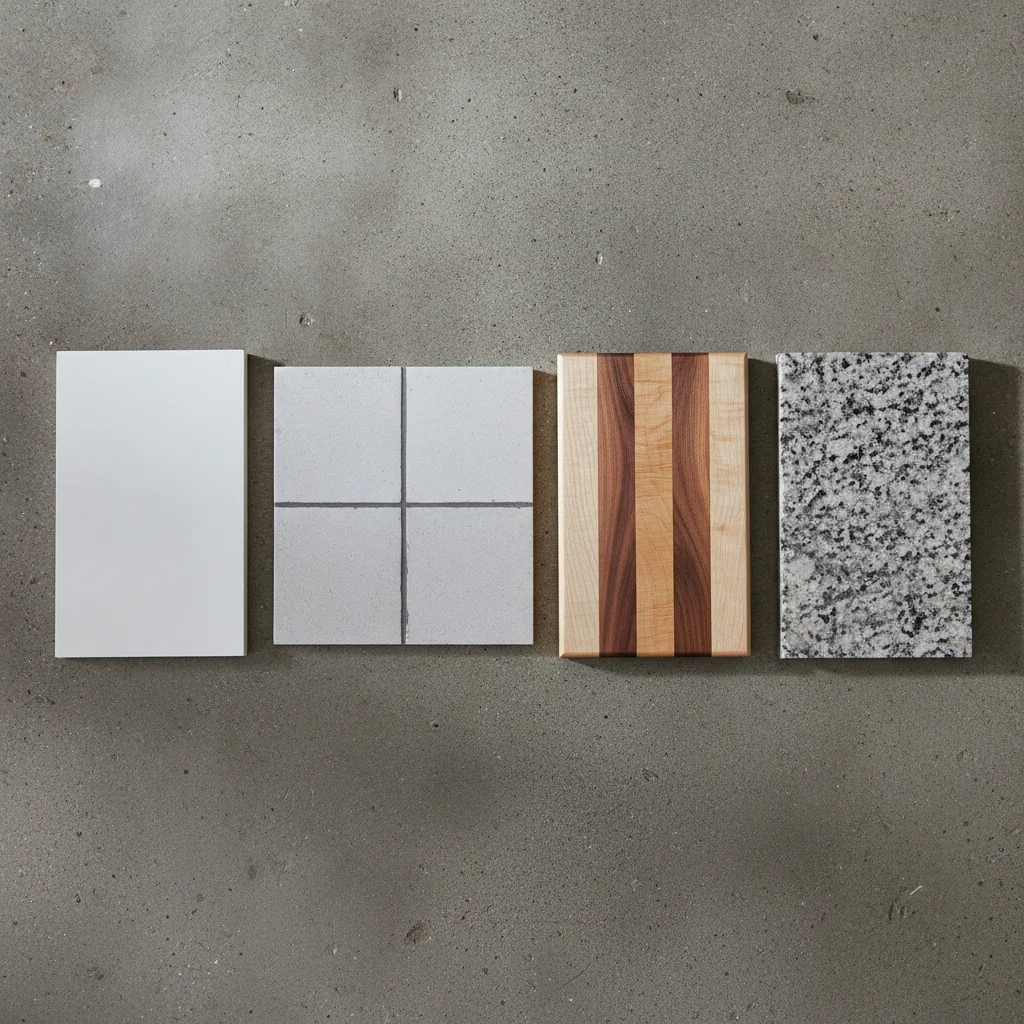
Laminate (Wilsonart, Formica), ceramic/porcelain tile countertops, and butcher block — the most affordable kitchen countertops available in 2026
Rental properties, secondary spaces, or tight renovation budgets where low upfront cost is the priority
Mid-Range Countertop Materials
$40 – $90/sq ft installed
Entry-level quartz (MSI), solid surface (Corian-class) with integrated sinks, and Level 1–2 granite — affordable kitchen countertops that feel like a genuine upgrade
Homeowners who cook regularly and want a durable, low-maintenance surface without paying natural stone prices
Natural Stone Entry: Carrara Marble
$75 – $120/sq ft installed
Carrara marble slab fabrication and professional installation — the most accessible affordable countertop option in the natural stone category
Marble-curious homeowners in Austin and San Antonio who cook lightly and want real stone character, not an engineered look
Premium Natural Stone
$130 – $300+/sq ft installed
Calacatta and Statuario marble, exotic marble varieties, and rare quartzite slabs — the high end of the natural stone spectrum
Homeowners prioritizing a showpiece dream kitchen and willing to commit to natural stone maintenance and fabrication complexity
What You Get at Each Price Tier: Countertop Materials Compared
Budget Countertop Materials
Laminate is the cheapest countertop material on the market at $15–$40 per square foot installed, putting a standard 40 sq ft kitchen at $600–$1,600 all-in. High-quality laminate from Wilsonart or Formica now prints stone and marble patterns that are convincing at normal viewing distance, making laminate a real option for budget-conscious renovators who want a fresh look without a major spend. The trade-off is durability: laminate cannot handle direct heat from hot pans, chips at edges over time, and is vulnerable to moisture damage near the sink. Hot pads are not optional — direct heat causes bubbling that leaves the surface structurally unsound.
Tile countertops — ceramic or porcelain — run $15–$60 per square foot installed and share laminate's low upfront cost. The catch is grout maintenance: cement grout lines stain quickly and require sealing to stay clean; skipping grout maintenance leads to discoloration that is hard to reverse. Switching to epoxy grout reduces that upkeep significantly but adds to install cost. Butcher block countertops fall in the $35–$75 per square foot installed range — warm, sandable, and refinishable, with good repairability over time. End grain butcher block handles cutting boards better than face grain but costs more to fabricate. Both require regular oiling; skip it for a season and the wood dries, cracks, and loses its sealed surface. Neither option is heat resistant at the surface level — trivets are required around hot pans.
Mid-Range Countertop Materials
Entry-level quartz from domestic manufacturers like MSI runs $40–$70 per square foot installed and is now the most popular countertop material in the U.S., holding 51% of the residential market as of 2026. It is non-porous — meaning it never needs sealing — scratch-resistant, and heat resistant up to a point. Trivets are still recommended for hot pans to avoid heat damage to the resin binder. Budget quartz in veined patterns that replicate Carrara marble starts around $55–$80 per square foot installed, giving homeowners the marble aesthetic with none of the etching risk or sealing schedule. For a 40 sq ft kitchen, entry-level quartz runs $1,600–$2,800 all-in — the clearest cost-effective option for everyday use in a high-traffic kitchen.
Solid surface (Corian-class) countertops run $40–$130 per square foot installed and offer integrated sinks, making them a genuine advantage for seamless bathroom vanity tops and kitchen islands where grout lines or sink seams would otherwise collect debris. Level 1–2 granite — think Ubatuba or Santa Cecilia — comes in at $40–$90 per square foot installed, undercutting marble's entry price while delivering greater scratch resistance and heat resistance. For a 40 sq ft kitchen, granite at this tier runs $1,600–$3,600 total, putting real natural stone squarely in the budget countertop category for homeowners willing to commit to sealing every 12 months.
Natural Stone Entry: Carrara Marble
Carrara marble is the entry point for real marble countertops, running $75–$120 per square foot installed in 2026 for a standard-grade slab. For a 40 sq ft kitchen, total project cost lands at $3,000–$4,800 — above mid-range quartz but below premium engineered stone options from brands like Silestone or Caesarstone at the top of their range. In the San Antonio market, standard-grade marble installed costs average $57–$75 per square foot; Austin-area projects run higher at $107–$125 per square foot, reflecting regional labor rates and material availability. That gap — 15–20% higher in Austin — is not negotiable; it follows labor costs in each market.
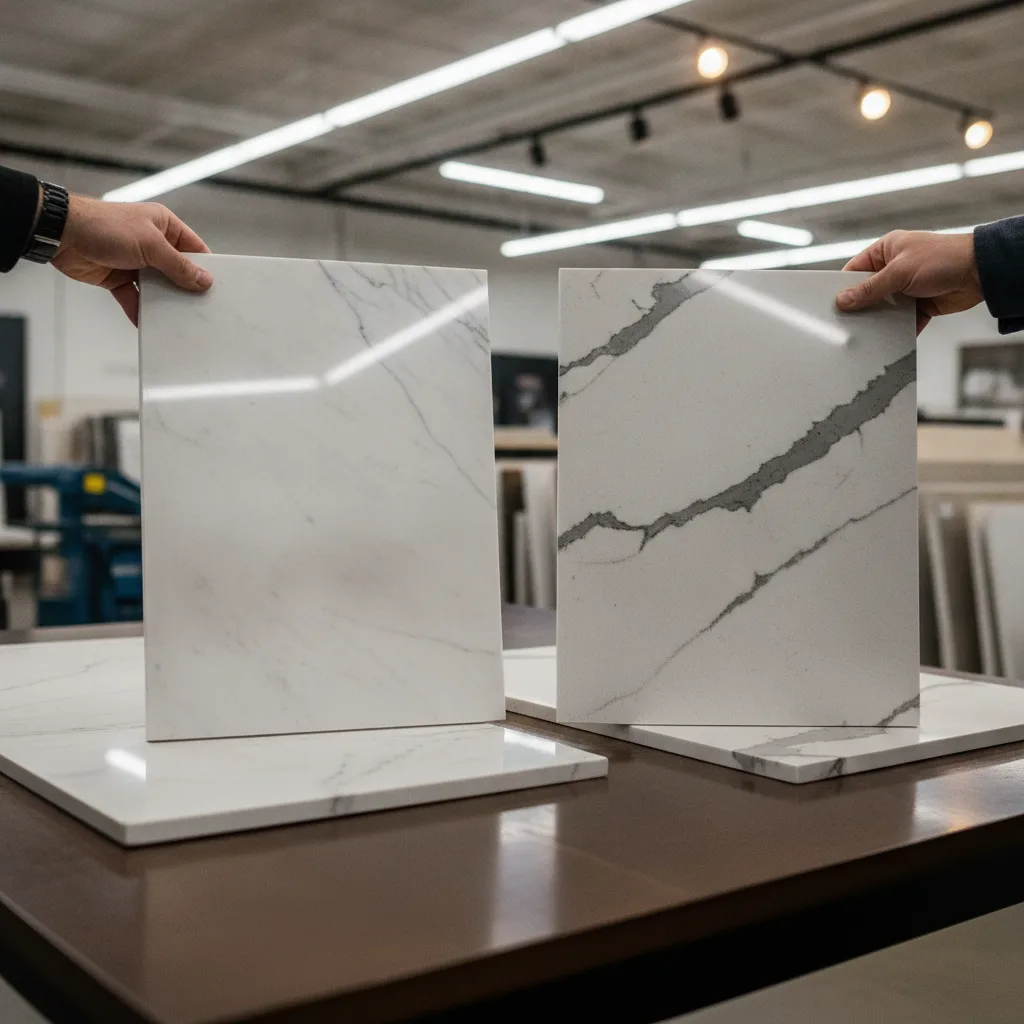
Carrara sits above budget materials in price but is genuinely affordable compared to other Italian marble varieties. It requires sealing every 6–12 months and etches from acidic spills like lemon juice or vinegar, leaving dull marks on the polished surface that require professional buffing to remove. For homeowners who understand that trade-off and love the real veining and cool surface feel of natural stone, Carrara makes sense. Families who cook heavily should weigh marble-look quartz at $55–$80 per square foot installed — which delivers similar veining patterns without the sealing schedule or etching risk. The NKBA benchmarks natural stone countertops at $70–$100 per square foot installed; Carrara skews toward the upper half of that band in most Central Texas markets.
Premium Natural Stone
Calacatta marble runs $150–$250 per square foot installed — roughly 2–3x the cost of Carrara — driven by limited quarry supply and intense demand for its bold, dramatic veining. Statuario marble comes in at $130–$220 per square foot installed, and exotic marble varieties like Calacatta Borghini or rare quartzite can reach $300–$400+ per square foot. For a 40 sq ft kitchen at Calacatta prices, total project cost lands between $6,000 and $10,000. Premium quartz from Silestone or Caesarstone competes at the lower end of this tier at $70–$120 per square foot installed, delivering a non-porous, low-maintenance surface at a price below most exotic marble.
At this price level, fabrication complexity adds real cost. Exotic stone requires experienced fabricators using precision stone-cutting software to avoid cracking or wasting an expensive slab. Edge profiles matter more here too: a standard eased edge is included at no charge, but an ogee or double-ogee profile adds $20–$35 per linear foot. On a 25-linear-foot kitchen, that is up to $875 in added fabrication cost — a hidden charge that many homeowners miss when comparing quotes. Always confirm that edge profiles, sink cutouts, and templating are included in your all-in number before you commit to a specific project.
Pros and Cons of Affordable Countertop Materials
$600–$1,600 all-in: laminate is the cheapest countertop material available — a 40 sq ft kitchen can be done for less than most appliance repairs, making it the go-to for rental properties and tight renovation budgets.
No sealing, ever: entry-level quartz and solid surface countertops are non-porous, meaning zero annual maintenance cost — a real advantage over granite and marble, which require sealing every 6–12 months to stay clean and resist stains.
Carrara marble at $75–$120/sq ft installed: is genuinely affordable within the natural stone category — not a budget countertop option overall, but accessible compared to Calacatta at $150–$250/sq ft and a real alternative to premium quartz at the same price point.
Level 1–2 granite at $40–$90/sq ft: gives homeowners real natural stone with scratch resistance and heat resistance at a price that competes directly with mid-range engineered stone — and it pairs well with existing cabinets without requiring a full kitchen overhaul.
Marble-look quartz at $55–$80/sq ft: replicates Carrara's veining patterns without the etching risk, sealing schedule, or higher installed cost of real marble — the rational trade-off for high-traffic kitchens and families with heavy cooking habits.
Remnant slabs cut costs by 20–40%: bathroom vanity tops and small kitchen sections can often be cut from remnants at a fabricator's shop, bringing natural stone countertop costs well below standard slab pricing on smaller projects.
Laminate cannot handle direct heat: hot pans set directly on laminate cause heat damage and bubbling — hot pads and trivets are not optional, they are required to keep the surface structurally sound and prevent permanent damage.
Tile grout is a maintenance commitment: cement grout lines on tile countertops stain quickly and require regular sealing; skipping grout maintenance leads to discoloration that is difficult to reverse without re-grouting.
Marble etches — and that is permanent without refinishing: acidic spills (lemon juice, wine, vinegar) dull the polished surface of marble, creating etch marks that require professional buffing to buff out; homeowners who cook heavily will see this often.
Edge profiles add $0–$35/linear foot: a standard eased edge is included at no charge, but upgrading to an ogee or double-ogee on a 25-linear-foot kitchen adds up to $875 in fabrication cost — a hidden cost many homeowners miss when comparing quotes.
Butcher block countertops require ongoing oiling: end grain and face grain wood countertops both need regular oiling to resist moisture damage — skip it for a season and the wood dries, cracks, and loses its sealed surface.
Austin installs run 15–20% higher than San Antonio: regional labor rates mean the same standard-grade marble slab costs $57–$75/sq ft installed in San Antonio but $107–$125/sq ft installed in Austin — your zip code moves the number significantly on any natural stone project.
How to Set Your Countertop Budget: 6 Steps for Central Texas Homeowners
Rank your priorities: looks, durability, or low maintenance Homeowners who cook heavily every day should prioritize scratch-resistant, non-porous surfaces like entry-level quartz ($40–$90/sq ft installed) over marble — even if Carrara fits the budget on paper — because cooking habits determine how quickly a high-maintenance surface shows wear.
Measure your square footage and linear edge footage A standard 40 sq ft kitchen with 25 linear feet of exposed edge can swing $0–$875 in edge profile costs alone, so knowing both numbers before you contact a fabricator keeps your total project cost realistic and prevents sticker shock at the quote stage.
Set your installed-cost budget, not your material-only budget Professional installation labor runs $30–$50/sq ft on most countertop projects, which means a $50/sq ft material can finish at $80–$100 per square foot installed once fabrication, templating, and countertop installation are factored in — always budget for the all-in number.
Ask about slab remnants for smaller projects Bathroom vanity tops and small kitchen sections can often be cut from remnant slabs at a fabricator's shop, reducing your material cost by 20–40% on natural stone countertops like granite and Carrara marble — ask specifically before assuming you need a full slab.
Lock in your edge profile before finalizing your quote Choosing an eased or beveled edge profile (included standard or $5–$12/linear foot) versus an ogee ($12–$20/linear foot) or double-ogee ($20–$35+/linear foot) can save or cost hundreds on your final fabrication bill — decide before the quote is written, not after.
Get an all-in quote that includes sink cutouts and sealing A complete countertop installation quote should cover fabrication, templating, sink cutouts, and professional sealing for natural stone — any quote that lists these as separate line items on a new countertop is an early signal of add-ons that will widen the gap between estimate and final invoice.
The 'cheap quote' trap: material price vs. total installed cost
A fabricator quoting $45/sq ft for entry-level quartz sounds like an affordable countertop deal — until the sink cutout, edge profile upgrade, and templating fee each appear as separate line items. A 40 sq ft kitchen that starts at $1,800 in materials can finish at $3,200+ when those costs land. Always ask for a single all-in number that covers fabrication, countertop installation, cutouts, and finishing before you compare quotes across fabricators.
For Austin, San Antonio, and the surrounding Central Texas area, Fox Granite gives you straight answers on material costs — no lowball quotes, no surprise fees. We fabricate in-house, handle templating and installation ourselves, and bring slab samples to your home so you can see the actual material before you commit. Whether you are deciding between budget quartz and Carrara marble, weighing laminate against solid surface for a rental property, or just trying to figure out what your new countertop should actually cost in 2026, we will walk you through every option at a price that makes sense for your specific project. Contact us today to schedule your free in-home consultation.
Frequently Asked Questions
What is the most affordable countertop option in 2026?
Laminate is the cheapest countertop material available in 2026, running $15–$40 per square foot installed. A standard 40 sq ft kitchen comes in at $600–$1,600 all-in. High-quality laminate from Wilsonart or Formica now mimics stone patterns convincingly, making it a legitimate choice for tight renovation budgets and rental properties — not just a fallback. Tile countertops (ceramic or porcelain) also fall in this range at $15–$60 per square foot installed, though grout maintenance adds long-term upkeep costs that laminate does not carry.
What is the cheapest way to buy countertops and keep total installed cost low?
Three moves cut countertop costs without sacrificing quality. First, source remnant slabs from a fabricator's shop — smaller kitchens and bathroom vanity tops can often be cut from remnants at 20–40% below standard slab pricing. Second, stick with a simple edge profile: an eased edge is included at no charge by most fabricators, while an ogee or double-ogee adds $20–$35 per linear foot. On a 25-linear-foot kitchen that difference reaches $875. Third, get a single all-in quote that includes fabrication, templating, sink cutouts, and countertop installation — quotes that itemize each step separately consistently finish higher than the opening number suggests.
What affects countertop price the most: material, labor, or extras?
All three move the number, but extras are the most commonly underestimated. Professional installation labor runs $30–$50 per square foot on most countertop projects in 2026, so a $50/sq ft material can finish at $80–$100 per square foot installed once fabrication, templating, and cutouts land. Edge profiles add $0–$35 per linear foot depending on complexity. Sink cutouts, regional labor rates, slab thickness, and seam placement all push the final number further. Austin-area installs run 15–20% higher than San Antonio for the same standard-grade slab, purely on regional labor.
When do countertop prices spike in Central Texas?
Spring and early summer drive the highest demand for countertop installation in Central Texas, as homeowners accelerate kitchen remodel projects ahead of the school year. Fabricators in Austin and San Antonio typically book 3–5 weeks out during March through June, and some charge a modest scheduling premium during peak season. Late summer through early winter (August through January) is the most budget-friendly window to schedule fabrication and countertop installation — lead times shorten and fabricators are more willing to negotiate on templating fees or absorb the cost of simple edge profile upgrades.
What looks like marble but costs significantly less?
Marble-look quartz at $55–$80 per square foot installed is the most direct answer. Entry-level veined quartz from MSI replicates Carrara's veining patterns without the sealing schedule, etching risk, or higher installed cost of real marble. For homeowners who cook heavily or have kids in the kitchen, this is the rational material choice — you get the look without the maintenance. High-quality laminate from Wilsonart also now offers stone and marble patterns at $15–$40 per square foot installed, though the surface texture and edge detail read as laminate up close.
Is marble worth it as a kitchen countertop for a Central Texas homeowner?
Marble is worth it for homeowners who cook lightly, love the real veining and cool surface feel of natural stone, and commit to the maintenance schedule. Carrara marble at $75–$120 per square foot installed is a genuinely accessible price within the natural stone category — comparable to premium quartz from Silestone or Caesarstone, which runs $70–$120 per square foot installed. The honest trade-off: marble requires resealing every 6–12 months and etches permanently from acidic spills like lemon juice or vinegar without professional buffing. Families who cook heavily every day will see those etch marks quickly. For that audience, marble-look quartz at $55–$80 per square foot installed delivers the same aesthetic without the upkeep cost or etching risk.
Can I replace kitchen countertops without replacing my cabinets?
Yes — countertop replacement is independent of cabinet replacement in nearly all cases. A fabricator templates directly off your existing cabinets and existing counters, cuts the new slab to fit, and installs it without touching the cabinet boxes. The one exception: if your current cabinets are out of level by more than 1/4 inch, the fabricator may need to shim before installation to keep level surfaces across the span. This is common in older Central Texas homes and adds a modest labor charge, but it does not require new cabinets.
Are concrete countertops a good affordable option for a Central Texas kitchen?
Concrete countertops run $65–$135 per square foot installed in 2026 — above entry-level quartz and comparable to Carrara marble's lower range. They require sealing, are prone to cracking along seams over time, and demand an experienced fabricator to pour and finish correctly. Concrete countertops offer a distinctive industrial character that no engineered stone can replicate, but they are not an affordable option by price — they sit squarely in the mid-to-premium tier. For homeowners drawn to the look, concrete makes sense as a specific project choice when aesthetics outrank maintenance convenience.